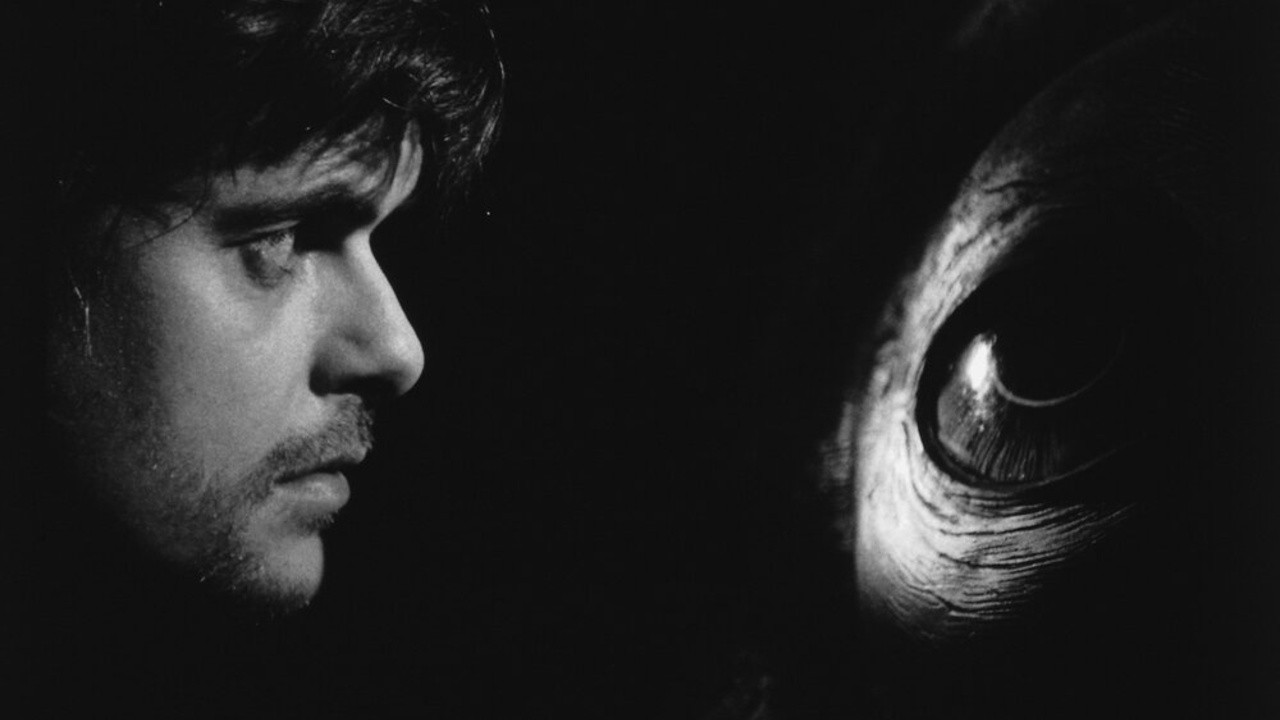
The land is prey to unrest, gangs wander the streets of the capital, a catastrophe of terrifying proportions is imminent. Valuskha, a sometime postal worker and visionary, advocates a dogged utopia: he continues to go into raptures over the miracle of creation in his battle with obscurantism. –Quinzaine des Réalisateurs
Born in 1955, Hungarian filmmaker Bela Tarr began making amateur films at the age of 16, later working as caretaker at a national House for Culture and Recreation. His amateur work brought him to the attention of the Bela Balazs Studios (named in honor of the Hungarian cinema theorist), which helped fund Tarr’s 1979 feature debut Family Nest, a work of socialist realism clearly influenced by the work of John Cassavettes. The 1981 piece The Outsider and the following year’s The Prefab People continued in much the same vein, but with a 1982 television adaptation of Macbeth, his work began to change dramatically; comprised of only two shots, the first shot (before the main title) was five minutes long, with the second 67 minutes in length. Not only did Tarr’s visual sensibility move from raw close-ups to more abstract mediums and long shots, but also his philosophical sensibility shifted from grim realism to a more metaphysical outlook similar to that of Andrei Tarkovsky. After 1984’s… read more
Perfect in every sense of the word. Couldn't have asked for a better way to start this year.
Last week I posted my selection of the decade's best movie posters: a post which attracted a remarkable amount of attention, not least from
Bela Tarr and Christopher Nolan are surprisingly similar directors. Their styles are as far apart as and respectively similar to those of Schubert and Wagner, but both are obsessed with the same themes… read review
Béla Tarr is clearly unfamiliar with the tool of editing. His “Werckmeister Harmonies,” a trudging, lumbering 2 ½ hour slog very much reminiscent of the dead whale carcass at its center, is quite the… read review
Werckmeister Harmonies
2000
Directed by Bela Tarr
Written by Laszio Krasznahorkai
Music by Mihaly Vig
Cinematography by Patrick de Ranter
read review
In Bela Tarr’s mysterious, slowly unfolding world, there is trouble ahead when a circus group comes to town. This is not a Fellinesque kind of circus. There are no sad clowns to be found here. Something… read review