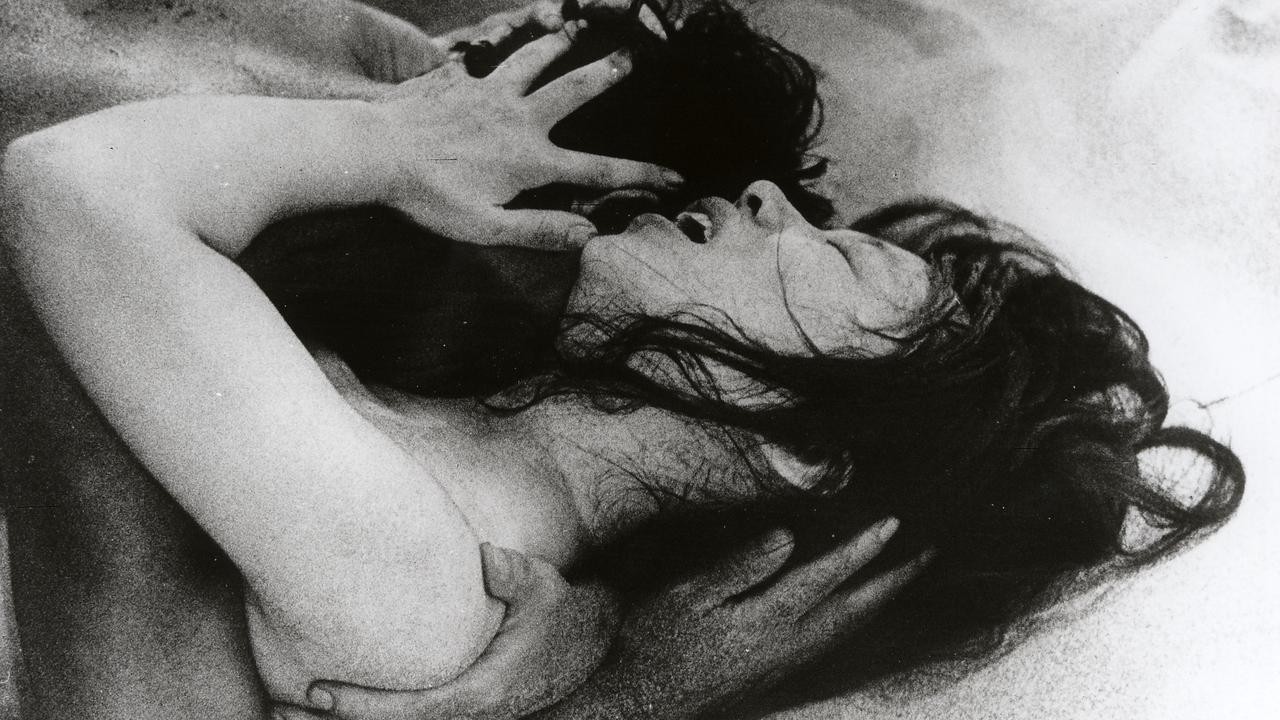
One of the sixties’ great international art-house sensations, Woman in the Dunes was for many the grand unveiling of the surreal, idiosyncratic worldview of Hiroshi Teshigahara. Eija Okada plays an amateur entomologist who has left Tokyo to study an unclassified species of beetle that resides in a remote, vast desert; when he misses his bus back to civilization, he is persuaded to spend the night in the home of a young widow (Kiyoko Kishida) who lives in a hut at the bottom of a sand dune. What results is one of cinema’s most bristling, unnerving, and palpably erotic battles of the sexes, as well as a nightmarish depiction of everyday Sisyphean struggle, for which Teshigahara received an Academy Award nomination for best director. —The Criterion Collection
Hiroshi Teshigahara (勅使河原 宏, Teshigahara Hiroshi?, January 28, 1927 – April 14, 2001) was an avant-garde Japanese filmmaker.
He was born in Tokyo, son of Sofu Teshigahara, founder and grand master of the the Sogetsu School of ikebana. He graduated in 1950 from the Tokyo National University of Fine Arts and Music and directed his first film, Pitfall (1962), in collaboration with author Kōbō Abe and musician Tōru Takemitsu. The film won the NHK New Director’s award, and throughout the 1960s, he continued to collaborate on films with Abe and Takemitsu while simultaneously pursuing his interest in ikebana and sculpture on a professional level.
In 1965, the Teshigahara/Abe film Woman in the Dunes (1964) was nominated for an Academy Award and won the Special Jury Prize at the Cannes Film Festival. In 1972, he worked with Japanese researcher and translator John Nathan to make the movie Summer Soldiers, a film set during the Vietnam War about American deserters living on the fringe… read more
A beautifully surreal Japanese film that accompanied by a rather unsettling soundtrack by Toru Takemitsu. The meaning of the story could be interpreted in a number of different ways since there are no clear answers, but after my initial viewing, I think the movie is about the sense of confinement that comes from marriage and domestic life. Definitely one to watch multiple times over to reveal new layers.
Sand, sex and dread. Loved it. It's images were absolutely stunning, some of the best black and white cinematography I've ever seen. This is a perfect example of sounds and visuals working together to create a unique atmosphere and feeling, one that ended up being quite unsettling. The film felt like I was diving into a kind of primordial consciousness. A haunting experience that is truly unforgettable.
CC#394: Spatially evocative - minutiae, sweat, dread - accentuated and done justice by a piercing audio and crisp overall release. Though its initial, startling effect wears off, its pace is so fragmented yet fluid, its framing so vibrantly intimate as to allow beguilement to pave way for captivation, in sheer palpability - all before its slow descent into sensual heights, and its insular tract on the nature of suppression and survival. One can only wonder, however, whether the shorter cut - unfavoured - would tighten up just slightly its prolonged malady.
Estamos a cultivar para sobreviver, ou a sobreviver para podermos cultivar?
Por mais que tentemos escapar ao sistema, à ordem das coisas, tendemos sempre a voltar à mesma situação… read review
Woman in the Dunes is a classic Japanese film from 1964 that explores themes of society, alienation and human nature from a very offbeat point of view. It has become a film who’s images and meanings… read review
Woman In the Dunes is one of the greatest Films I’ve ever seen. It’s a sparkling gem in the Japanese Films of the 1960s. I was captivated in the first few minutes alone, and already had a sense that… read review
Woman In The Dunes read review
The strength of Hiroshi Teshigahara’s Woman In The Dunes lies in its resistance to the temptation to tell the audience exactly what they want to hear…