Illustrations by Antonio Carrau.
Notebook is covering the Locarno Film Festival with a cycle of close reads written by the participants in the Critics Academy.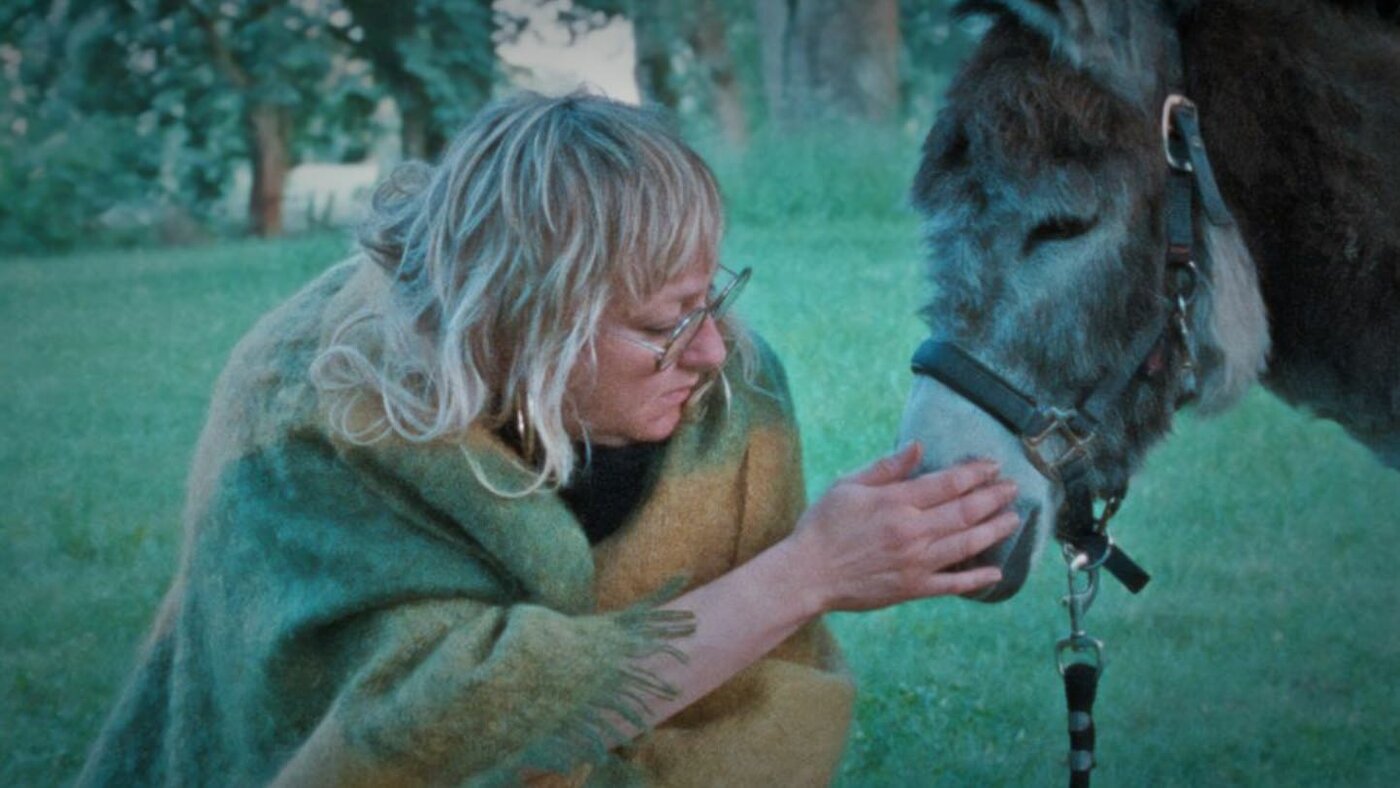
Donkey Days (Rosanne Pel, 2025).
In the twisted fables of family dramas, one can always feel a spark of kinship, or at least a sense of solidarity. Donkey Days (2025) unpacks the causes and effects of ancestral trauma through a comically grotesque and chaotic script, which forgoes coherent exposition to climb peaks of emotional intensity alongside its characters. Dutch filmmaker Rosanne Pel’s second feature plunges directly into the heart of a lifelong tension between two sisters, whose suffering revolves around food. In the film’s opening scene, roughly intercut with the opening credits, a group of women dine in a tastelessly expensive restaurant with grandiose pretensions—the kind of place where dessert is spread across the table and meant to be eaten off its surface. Here, the film’s three central personalities are introduced: impulsive Anna, arrogant Charlotte, and their eccentric, inattentive mother, Ines, in whom the sisters’ qualities are united.
What happened between the three of them—and who betrayed whom—remains deliberately obscure until the mounting pressure within Anna bursts in an intense confession to her friends. She tells a story about an overweight person on an annual family trip to rural France. There, they were subjected to a restrictive diet imposed by their family, and drove themself to exhaustion while attempting to run away. As Anna downs several glasses of red wine, it becomes clear that she is speaking about herself. Pel identifies food as the source of the sisters’ trauma, which also casts a specific light on its appearance throughout the film. A brief remark by Ines about Charlotte’s thinness—along with the force-feeding of an egg to Anna—reveals how little love the mother has for her daughters. Instead, Ines reserves her genuine affection for donkeys, beasts of burden which—in the films of Robert Bresson and Jerzy Skolimowski, in particular—have often brought a touch of tenderness and humanity to the screen. Here, they serve as the catalyst for the family’s psychosis. The film’s title is justified midway through, when Ines, in a typical moment of impudence, reveals to her daughters that she has a special room adorned with photographs of donkeys, and that she admires and financially supports the animals through generous donations. Overeating and undereating, respectively, become the sisters’ subconscious means of drawing attention to themselves—or, at least, away from the donkeys.
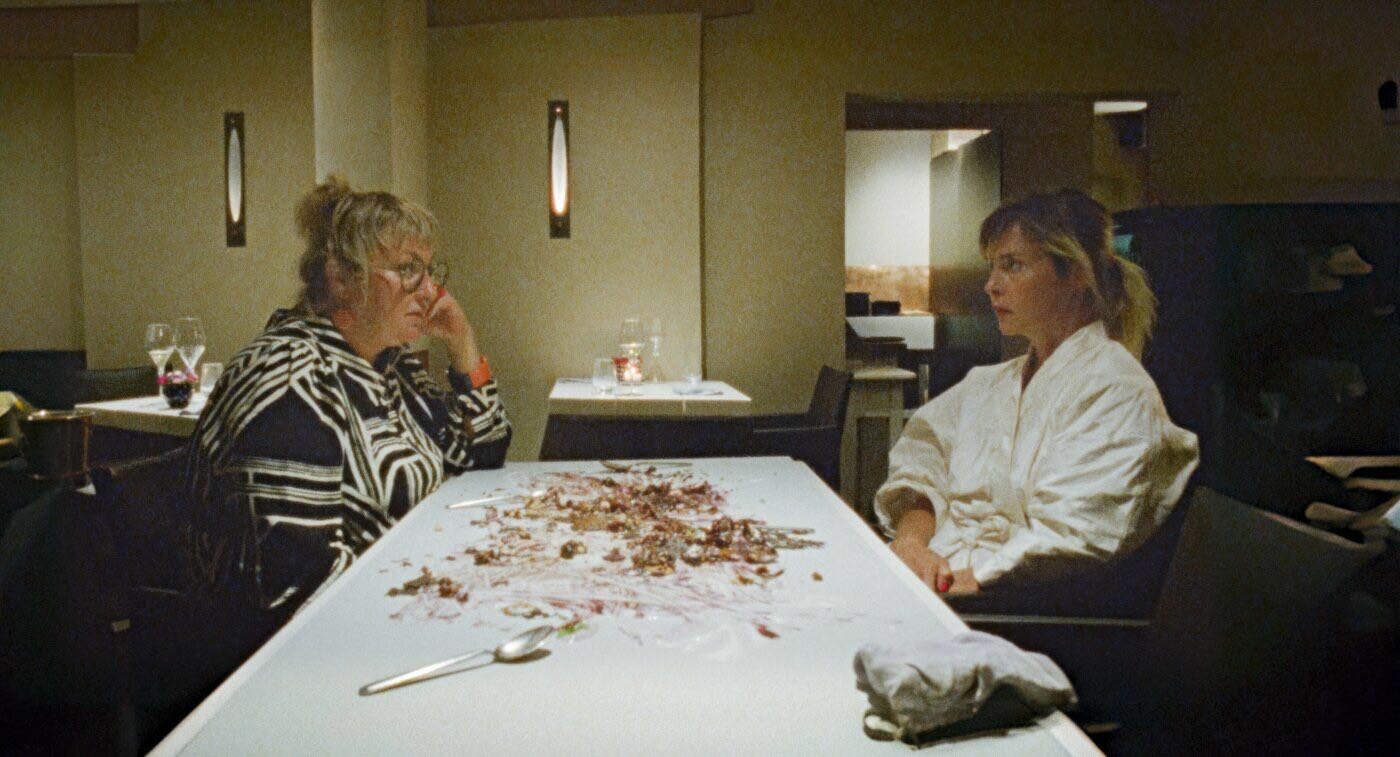
Donkey Days (Rosanne Pel, 2025).
Pel deftly weaves this tragicomic narrative from the same cloth as the Dogme 95 canon: It’s clear from her handheld camera, which captures her heroines in both hysteria and sadness, as well as the improvisatory style of her talented actresses, who wind their way through serpentine mise-en-scènes in sprawling rooms. But what truly gives Donkey Days its Vinterbergian touch is the dramatic setup at the heart of the story—a toxic family gathered around the dining table, where the aim is not to eat but to fight. At the same time, Pel is confident enough to borrow humor from American family comedies from the first decade of this century, using rather familiar—yet still hilarious—narrative tricks to ironically upend expectations. At one point, a birthday party becomes a funeral after an unexpected death. The film’s eclectic form and expressive dramaturgy create a sense of fragmentation that mirrors the sisters’ own perception of the world and of themselves, while the mother’s laconic nature lends her an emblematic quality.
Pel packs the film with dinner parties, strong morning cocktails, and unnecessary snacks, but none of them look remotely appetizing; in this cold, monochromatic atmosphere, food simply appears inedible. And yet, the film would not be as remarkable if it merely situated food as a motif with straightforwardly Freudian undercurrents. Pel uses cuisine to comment on urban life in Hamburg, deliberately portraying the city’s unappealing restaurants and cultural offerings in caricature. High-class eateries are full of overdetermined fusion food design, overwhelmed with acidic colors and fuzzy plating, transporting the viewer two decades back in time, when this approach to cuisine was considered trendy and innovative. The same applies to the city’s equally bizarre menu of cultural leisure. An evening might end in a claustrophobic nightclub, where spectators watch performers slide naked across wet tiles—a spectacle which is intended to be fun and transgressive, though a reverse shot of Anna’s vacant reaction indicates it has had another effect. Shooting on 16mm film, Pel gives everything a distinctly melancholic tone, suggesting a movement toward obsolescence, while the mother’s countryside estate, with its wide rooms and smoky gray garden, implies that these vexed familial relationships are perennial, even primordial. Food here becomes an instrument of control and judgment, but also a mirror of habitual contentment. Above all, Donkey Days presents a world in which everything is rendered tasteless—in every sense of the word—and doomed to collapse under the psychic weight of a mother’s domineering presence.

Keep reading our coverage of Locarno 2025.