Blue Heron (Sophy Romvari, 2025).
While Sophy Romvari’s new film Blue Heron (2025) is her debut feature, it also feels like a culmination. It sums up a constellation of subjects the filmmaker has probed from different angles and with different formal approaches across her short films: her relationship to her family history, the defining traumas of her early life, and the tricks of memory.
The past, in Romvari’s films, is at once palpable and remote, like oxygen. Her parents and three brothers emigrated from Hungary to the Vancouver area around the time the Iron Curtain fell; she was the baby of the family and the only one born in Canada. Her father originally trained as a cinematographer, but Romvari has said that she was only dimly aware of this growing up; mostly he just took a lot of pictures. Her paternal grandfather, whom she met only once, was a prolific production designer particularly known for his work with István Szabó—though looking at his credits, I wonder if the Romvaris went to see his handiwork in Evita (Alan Parker, 1996) when Sophy was a little girl.
That sense of touching at a distance, through a medium, is the subject of her earliest shorts, Nine Behind (2016) and It’s Him (2017), in which movies facilitate connection with absent relatives; grief is displaced and sublimated further in Romvari’s hybrid documentaries and essay films about the death of companion animals. The blend of tender-to-the-touch subject matter and structural conceit culminated in Romvari’s thesis film, Still Processing (2020), in which she unboxes never-before-seen photographs of her childhood, taken by her father, and featuring many images of her older brothers Jonathan and David, who both died young. Filmed in a sterile conference room, and framing its therapeutic exercise as part of a process of cataloging and digitization, Still Processing constructs and then deconstructs a photographic apparatus for confronting almost unimaginable pain.
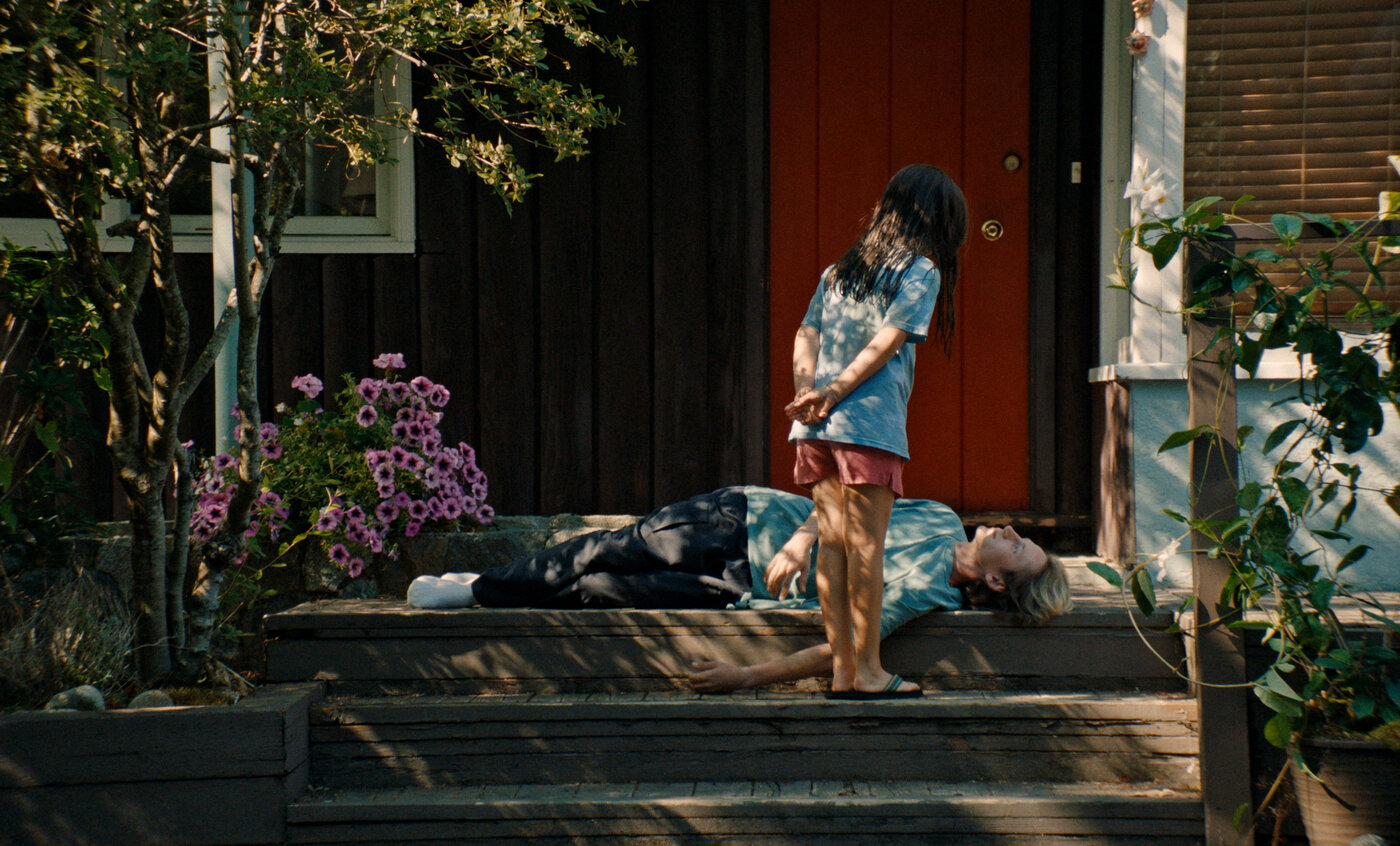
Blue Heron, which won the First Feature Competition at the Locarno Film Festival, is, for its first movement, a beautiful and narratively straightforward period piece about a late-90s childhood, following the family of eight-year-old Sasha (Eylul Guven) as they settle on Vancouver Island. Sasha, the youngest of four children and the only girl, looks up to her oldest brother, Jeremy (Edik Beddoes), who has fine features and a brooding attitude, and moves through her childhood as both a vague and indelible presence, bestowing her a keepsake—a blue heron keychain she doesn’t know was shoplifted—even as he flummoxes and frightens his parents with increasingly strange and oppositional acting-out.
The film eases into the longueurs of childhood, while also pricking up its ears to the muffled frictions of adjustment to a new home, coming through mostly in the accents of Sasha’s parents (Iringó Réti and Ádám Tompa), and their increasing anxiety over their eldest son’s well-being. Sasha’s father, like Romvari’s, is an accomplished but amateur photographer, and one day, during the panic when Jeremy is brought back home by the police, he hands off his camera to Sasha—in this moment, we realize that what we have been watching is not just the prelude to a tragedy, but the birth of the artist who will someday attempt to make sense of it.
Photos taken in the film’s first half recur, like other talismanic objects, in its second. Grown-up Sasha (now played by Amy Zimmer) is a filmmaker, at work on a project that involves interviewing clinicians and social workers about her brother’s case file, gradually filling in the gaps in her and our knowledge (and understanding). Blue Heron’s time jump in this second half initially seems to herald a shift to the more academic and retrospective approach of Still Processing, but the movement from experiencing to remembering is not as clean as it first appears. As the pain stays fresh, the film keeps mutating, fluidly merging timelines to evoke confusion and loss of control as Sasha struggles with a past that becomes both more present and more elusive the tighter hindsight grasps at it.
Blue Heron is an open wound and a living archive, steeped in both sense memory and the personal-historical record built up, on the cusp of the digital era, through pictures that travel with millennials from phone to phone through the 21st century. Wrenching and analytical, it’s also simply very well made, and I was happy to talk to Romvari about how she pulled it off.
***
Blue Heron (Sophy Romvari, 2025).
NOTEBOOK: You've worked with young actors before, on It’s Him, which feels like a precursor to this one, and which was your last fiction film. What did you learn from that—or, conversely, did you have hesitations going into this project about working with kids?
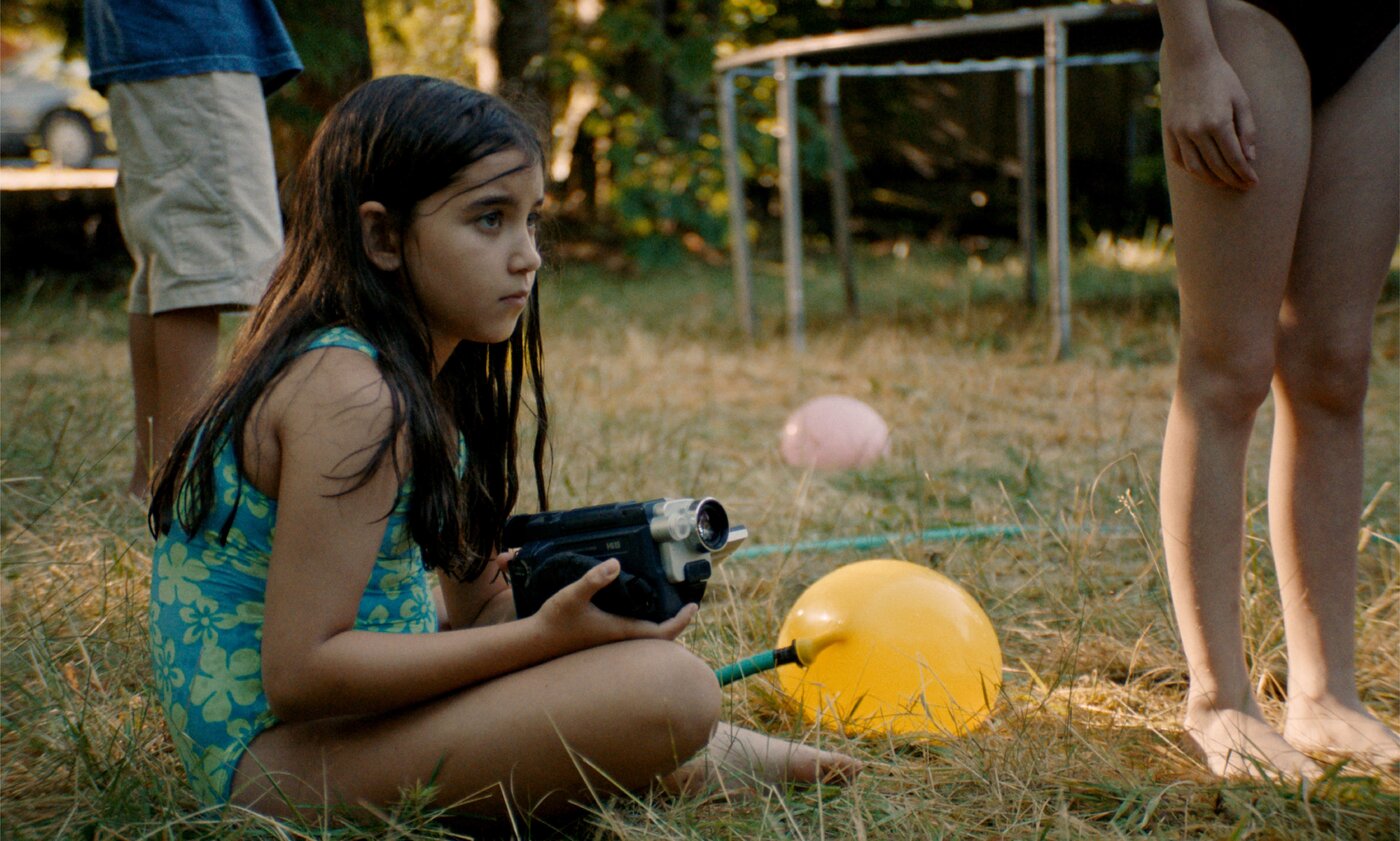
SOPHY ROMVARI: It’s the number one thing people tell you not to do, to work with children, especially on your first feature. Don't work with children or dogs. And I said, “How about both?” One is my own dog [Hector, a longhaired dachshund], so that was easy, but for children it's really a matter of environment and keeping expectations in line with what a kid is. All the scenes when the kids are playing were in the script, but it's about creating the atmosphere for them to just be kids.
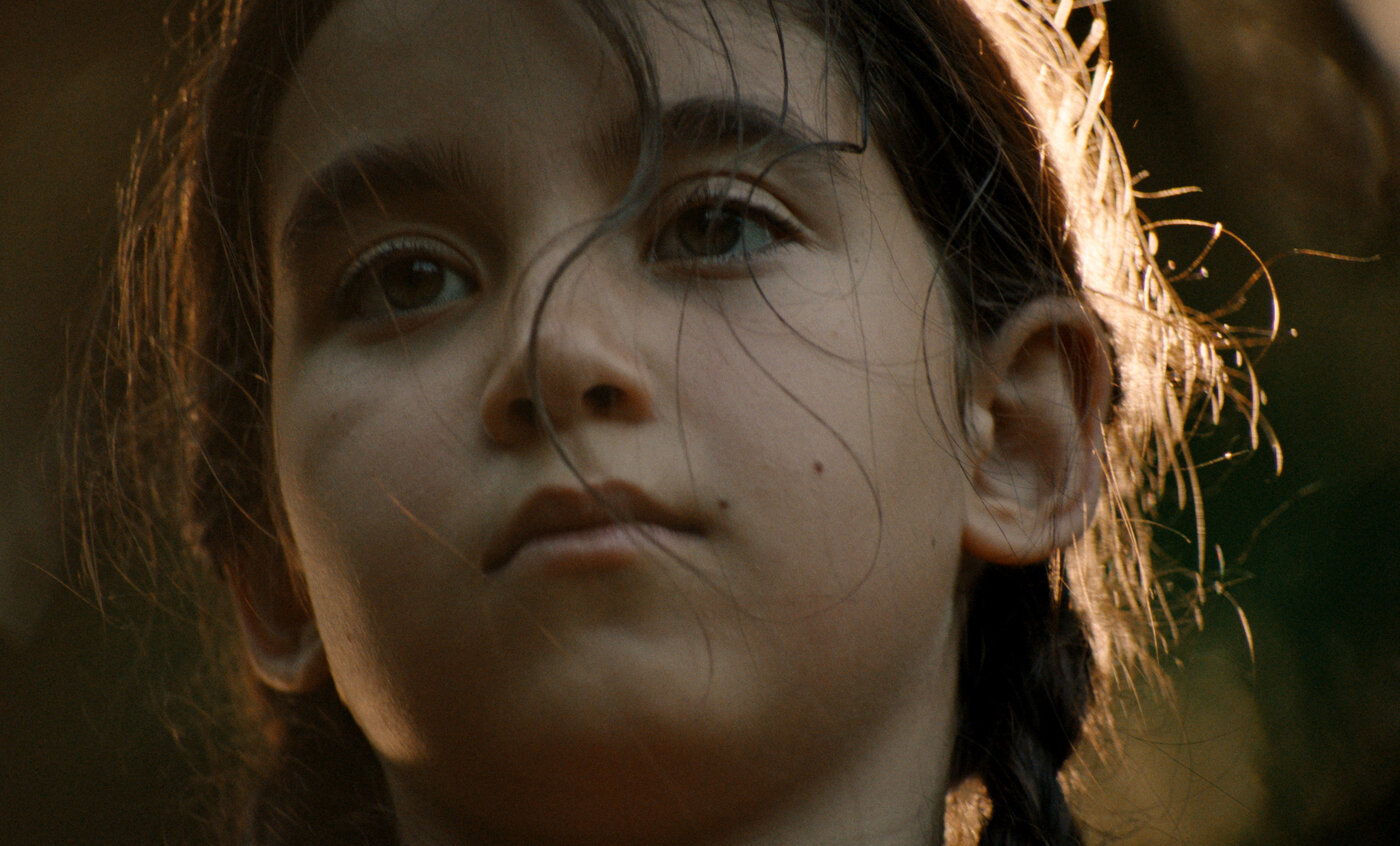
Obviously, Sasha had a lot more on her plate in terms of performance and dialog. And to be honest, [Eylul Guven] is just an exceptionally talented young actor. This is her first role, and she was very mature and adept, and actually very easy to direct, because she took feedback, took notes—I don't know, she can act.
NOTEBOOK: Were you giving her more internal or external direction—like, “This is how you're feeling,” or “I need a bigger face here”?
ROMVARI: She really locked into the character, so there weren’t many times I had to tell her to change the tone. It was more just getting variety. And then there were also times we would do something—I think our focus puller came up with the term—that we called 50/50, which is when we would just start recording without letting anyone know. There's moments where the children are playing or doing something interesting, and we would start to roll and not have a big “Ok, action" moment. It would allow for more naturalistic little moments.
NOTEBOOK: Did you do a lot of takes?
ROMVARI: Not a ton. We were shooting digitally, which allowed us the freedom to do longer takes. But we didn't do many. We had a lot of freedom shooting with a long lens, so there wasn't something like, “Ok, we have to hit this dolly mark”—that's oftentimes why there are so many takes, unless you're, you know, doing Blue Is the Warmest Color [Abdellatif Kechiche, 2013] or whatever and shooting thousands of takes. Especially with children or with nonactors—and I was working with both, the actor who plays Jeremy is a street-cast nonactor—I think the more takes you do, the more stilted it becomes. Oftentimes the first or second take was the best. The only times we did more was during the more dialog-heavy scenes, and that was because the first takes were more like a rehearsal.
NOTEBOOK: When I think about camera choreography for children, I think how taxing it must be to force a small child to hit their mark.
ROMVARI: There's a few things I pulled from Cassavetes, and one was this long lens shooting style. He did it more for stealing locations, but also [the long lens] creates more distance between the technology and the performance. With children, especially, it creates more freedom and less self-consciousness to not have people right in your face. There's a scene where [Sasha’s] lying on the couch delivering some of her dialog. That staging occurred because she was waiting there between takes. And I was like, “Oh, can you do your dialog from there?” And we just rolled rather than being like, “Get up. Do this now here.”
Blue Heron (Sophy Romvari, 2025).
NOTEBOOK: You and I are millennials, and we can look back at a comprehensive archive of our childhood in photos and home movies; this is a novel thing that's still being metabolized by cinema. The archival turn has changed documentaries, but it also affects how we remember our own childhood, and it's beginning to affect how we conceive of fictional coming-of-age narratives, like Aftersun [Charlotte Wells, 2022] has camcorder stuff. You have a unique relationship to the archive of childhood—Still Processing is very much about that—but it's also universal.
ROMVARI: I do have a unique relationship to it, just because my archive was made by an artist. As an artist, I have a desire to see the work that my dad did, but it just so happens that I was the subject, along with my siblings, because that was where his fascination and limitations led him as a photographer and cinematographer. It also lends itself to me wanting to include archive in my own work. It's a big part of how I grew up and saw the world: It should be documented, and it shouldn't be only important things that are documented. It's the small things—[my dad] wasn't just recording birthday parties. It really helped me see the world through the nuance of daily life. That obviously makes its way into the character of the father, but also me as a filmmaker, I'm interested in things that you wouldn't necessarily record.
NOTEBOOK: So, my mom works at a place called the Center for Grieving Children. And one of the things she says, about working with young kids who are experiencing loss, is that it's actually very important to use the words “die” and “dead.” You can't say that it's like they've gone to sleep, because people wake up. You can't say they've gone away, because people who go away—
ROMVARI: Come back.
NOTEBOOK: And one interesting thing about this film is that for so much of it, in both sections, Jeremy is both present and absent. That must be very true to experience, but also tricky to handle.
ROMVARI: I was working briefly with this clinic in Toronto, the Grief Centre, where we were planning to show some of my work to the children. My thesis, Still Processing, was about using filmmaking as a form of grief therapy, which is something I would like to teach, eventually (in coordination with, you know, psychological experts). The clinic itself ended up getting defunded, which sucks, but part of what they were asking me to do was to help put together a pamphlet about complicated grief, because it's a very specific type of grief. This film is about the acceptance of an outcome that you can't change, and the complications of not being able to.
Blue Heron (Sophy Romvari, 2025).
NOTEBOOK: To talk about millennials: Pop culture is so present in our archive of childhood, but that's a huge challenge for an indie filmmaker. Charlotte Wells, when I interviewed her for Aftersun, emphasized how strongly she was advised to come up with a plan B for using a very important song from her childhood, “Losing My Religion”; director Ricky D’Ambrose for many years was planning for The Cathedral [2021] to have a very specific autobiographical pop soundtrack that he eventually had to rethink. How do you remember a pop culture–saturated childhood within your budget?
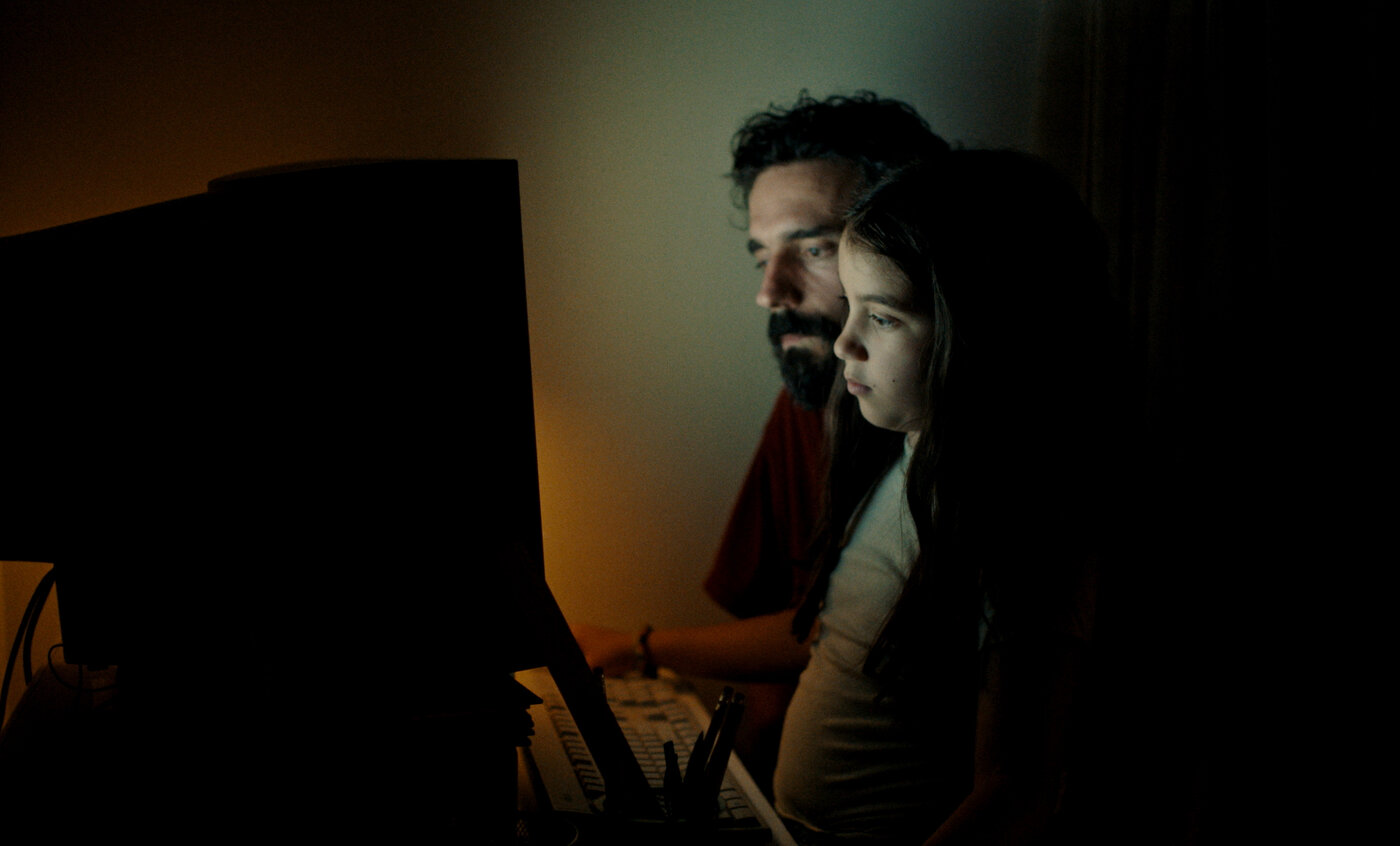
ROMVARI: Oh, I could do a whole lecture on this. It was written into the script that all the music, especially in the first half, was to be diegetic, that it would come mostly from the father's computer or radio or whatever, and it was like the character himself is curating the artistic world around the children. It was important to me that the music was period-appropriate, that it was real music, and—this is what really put me in a corner—that it was my dad's taste. Which also became, later, my own taste, or very close to it. There's some classical music, there's experimental New Age 80s adjacent music; it's a character's taste, so I didn't want it to be all over the map.
The hardest part of making this film, I think, was locking and licensing. I was losing my mind, because every day I would find a new song as an alt and then it'd be like, “Oh, that song's $50,000,” “Oh, that one's $60,000,” so it was just a Whac-A-Mole of, like, which combination of songs can you afford? There'd be songs that were surprisingly affordable—the King Crimson one was not terrible. I knew it was going to be a difficult and expensive process, but this is the one thing we did not budget for, so then we had to raise more funds in order to cover the music costs. Everyone said, “Sophy, do a score.” And I said, “No.” And I think it was worth it.
NOTEBOOK: You stage a recurrent scene that I remember from my childhood: It's an endless summer day, but you've been outside all week, and you're just sprawled in front of the TV all afternoon. Am I correct in assuming that, like another Canadian filmmaker, Nathan Fielder, you found some royalty-free television to put in Blue Heron?
ROMVARI: Actually, there was a company called Concerned Children's Advertisers who made all these experimental, strange ads for children, about bullying or media literacy —
NOTEBOOK: The “house hippo!”
ROMVARI: It's about media literacy, which is so apt to the movie and its themes. It's an iconic thing in Canada—any millennial will recognize it. But they went defunct, and we couldn't get hold of them. We're working under the assumption that this film would have been in line with their ethos. You should look at some of them on YouTube, they're very strange, they feel like handmade, artist-made shorts.
Blue Heron (Sophy Romvari, 2025).
NOTEBOOK: To stay in the 90s for a little longer: I love the costumes, as somebody who wore a lot of Tevas and cargo pants and long sleeve t-shirts and shirts with wolves on them. What was your collaboration with your costume designer?
ROMVARI: Maria Katarina, my costume designer, is one of the most meticulous people I've ever met. She didn't do any costume that was not legitimately period. And she also was not getting things that were from the 90s—they were 80s into 90s, because she was taking into account the family's economic status, like, wouldn’t they have hand-me-downs?
She submitted a pitch package; one of the films she referenced was Rollercoaster [Scott Smith, 1999], which is a 90s Vancouver film. It's a very Gus Van Sant-y film that's not widely seen; there was a lot of the aesthetic from that. Then there was a good amount of pulling from my own family archives. I gave her free rein—I didn't want her to recreate my family. A big part of [Jeremy’s] character was hiding in his own oversized clothes. For the parents—I'm pretty firm that this film is not an immigrant film; they are immigrants, but their circumstances are not due to them being immigrants—but they're not dressing in this typical North American 90s way, either.
NOTEBOOK: Speaking of styling Jeremy, you said you street cast Edik Beddoes.
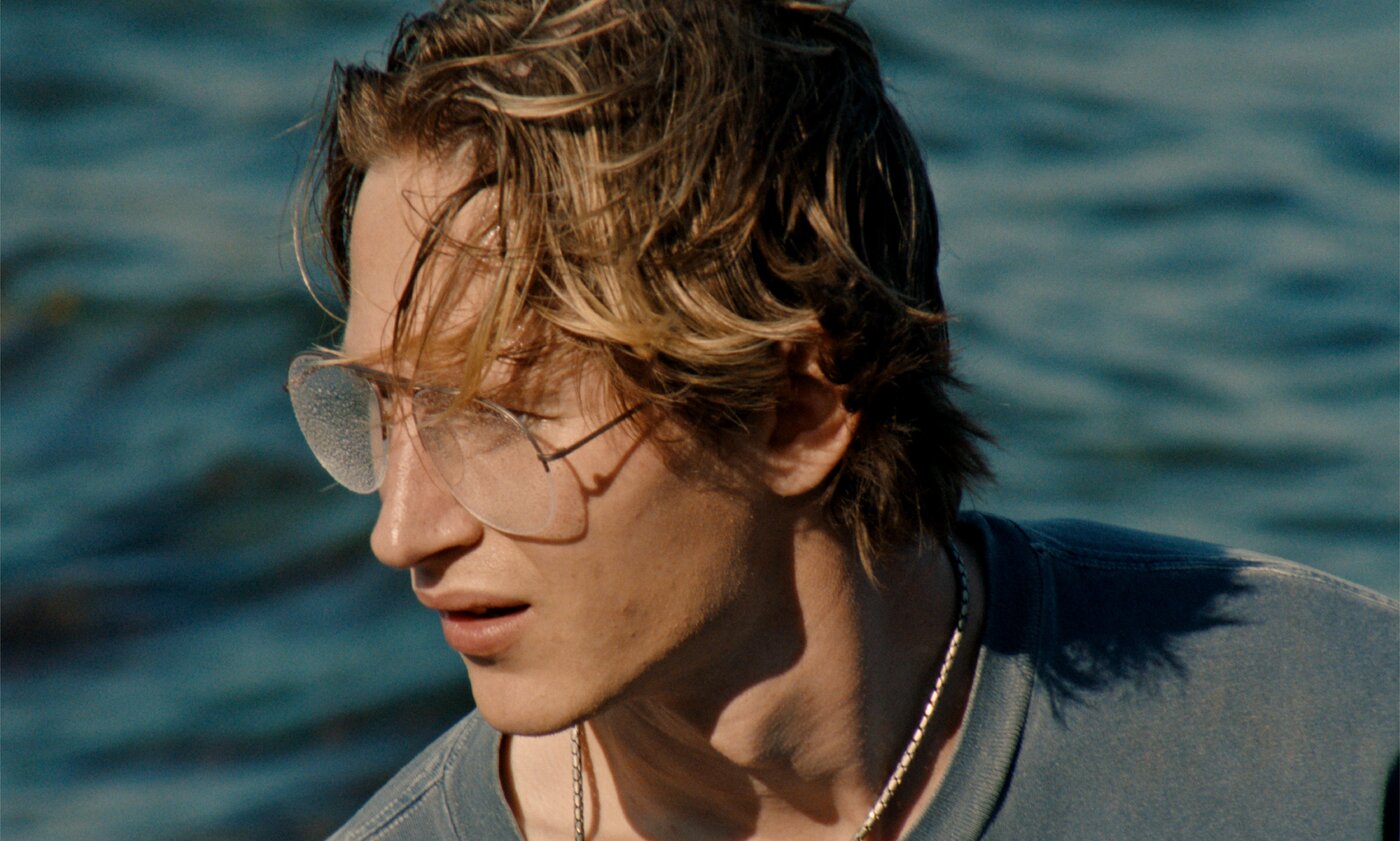
ROMVARI: He had never acted before. I saw a 10-second clip of him talking about playing video games and that was enough for me to want to interview him. He had a special presence, a nervousness about him that was great for the screen. He just had this honesty. I had seen I don't know how many auditions of teenagers yelling and trying to be “the bad teenager” or whatever, and there needed to be a subtlety to the character. This character—it's obviously based on my brother, but he's so different from my brother. [Beddoes is] more calm and withdrawn than my brother was; my brother was extremely enigmatic and hyperactive and childlike. These were things I knew I couldn't ask a nonprofessional actor to do, or even a trained actor—it would come across as phony. So I took the strengths of his presence and tried to shape the character around that, his withdrawn nature and erraticness.
There's certain things, when you're trying to do autobiographical films, that you just shouldn't try to recreate, because it's not even the point, but it also is just going to read as forced and false.
NOTEBOOK: So much of this film is a child's perspective on family life, so there's a lot of looking down the hall, listening through half-open doors, looking out the window to the yard or from the yard into the house. How specific were you when you scouted the house? How did the layout of your location affect what you were doing?
ROMVARI: With everything on this film, from the script onwards, I wasn’t really compromising, because I had made shorts for so long, and I knew how to write for a budget. Looking for the house, I had an aesthetic in mind, but I also knew that we needed to find something that we didn't need to renovate. It was a question of, “How many parts of the house can we find that we don't need to reshape?” So for example, we could not rent a house that had an updated kitchen—that was maybe the hardest task, because most houses, even if the rest of the house is not renovated, the kitchen is the one room that's been updated. I was not looking for my own home, but there were details in the house that had 90s texture, like the wood paneling. And there were also interesting shapes in the house that I was drawn to: The doorways are often rounded, which I thought was a beautiful touch.
The main thing was that [cinematographer] Maya [Bankovic] and I had decided we wanted to shoot, but mostly light, from the outside of the house. Since this house is one level, we didn't have to have lights way up high. We could shoot from outside and be as unobtrusive as possible. We tried to not put equipment in the house, as much as possible. The huge windows were a benefit as well.
Blue Heron (Sophy Romvari, 2025).
NOTEBOOK: To continue with geography and perspective, the childhood section moves in and out of Sasha's perspective, but also shows the parents in private. It's not strictly a close third-person perspective, like in Henry James’s What Maisie Knew, it’s a little bit floating omniscient. Is that something that changed in the shoot, in the edit, or was that the balance you always had in mind?
ROMVARI: It was, at the script level, important to me that the film was not dogmatic in its perspective, because the film reveals itself to be about memory, and I don't think you only remember the things that you see or hear. I think you remember the things you heard about later, and you can imagine the scenarios that you think might have happened. You can remember your parents talking in bed, but you weren't there.
That was important for me to try to get across visually, because as a kid—but also as an adult—you identify with your parents so much that you can absorb this parentified role, where you're remembering, “How did they feel?” That was a big part of this character, her concern for her own parents—maybe through her own desire for more, she wants more from them. But then there's also this desire to put herself in their place and to understand and empathize.
That's the nice thing about film: You can show memory through perspectives that are not so strict. I spent a lot of time looking at other coming-of-age type movies, and as an adult watching those movies, I often felt limited in understanding those children. When you imbue a child with memory, you can give them more than just, “What are they seeing?” There's more credit to be given to the way kids perceive the world.
NOTEBOOK: You shot chronologically, and Amy Zimmer came in midway with a history to build on already. Did she look at footage, or had she just read the script? Was there anything special you did?
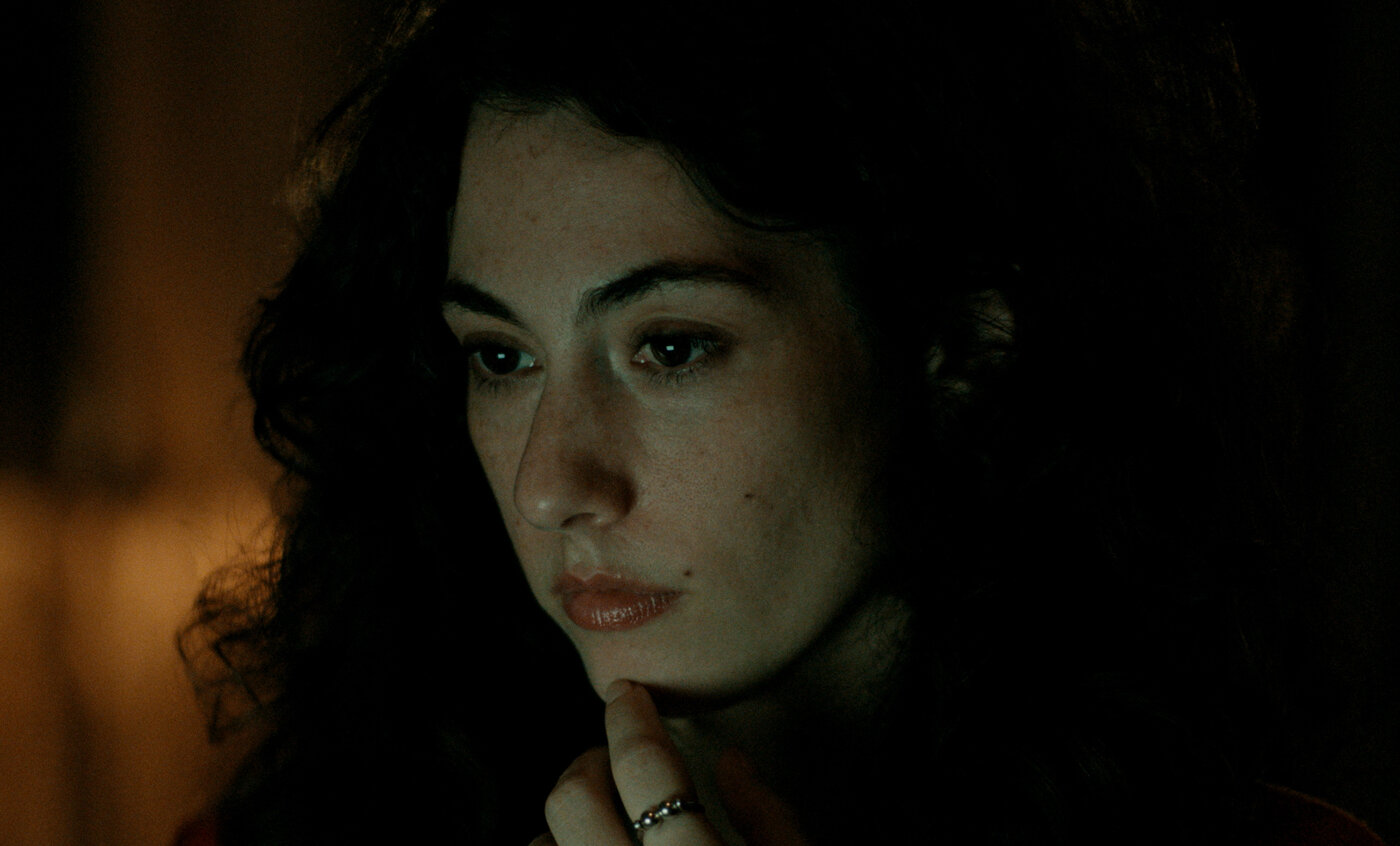
ROMVARI: Her role was a hybrid role, where because she was playing a character that was only in half the film, and also a character who had to have these memories in order to play the role, we did a lot of prep beforehand. We had a shared Google Doc where I was sharing old photos and memories and voice notes and some psychological reports, even. I made her a curated syllabus of films I thought would be interesting in terms of performance. It was called “Subtle Woman Cinema.”
NOTEBOOK: Who were the subtle women?
ROMVARI: Her performance is quite internalized until it's not, so I was trying to find reference points for her, of women listening, restrained performance. Sybil [Justine Triet, 2019] was one of them—women who are recording conversations was a big part of it. Vengeance Is Mine [Michael Roemer, 1984], Secrets and Lies [Mike Leigh, 1996], Not a Pretty Picture [Martha Coolridge, 1976], Domestic Violence [Frederick Wiseman, 2001], and The Eternal Daughter [Joanna Hogg, 2022]. So a lot of mother-daughter themes, interplay between documentary and fiction, women recording conversations on their iPhones. You know, it's a niche, but it's my niche.