
The Current Debate connects the dots around a topic of the critical conversation.
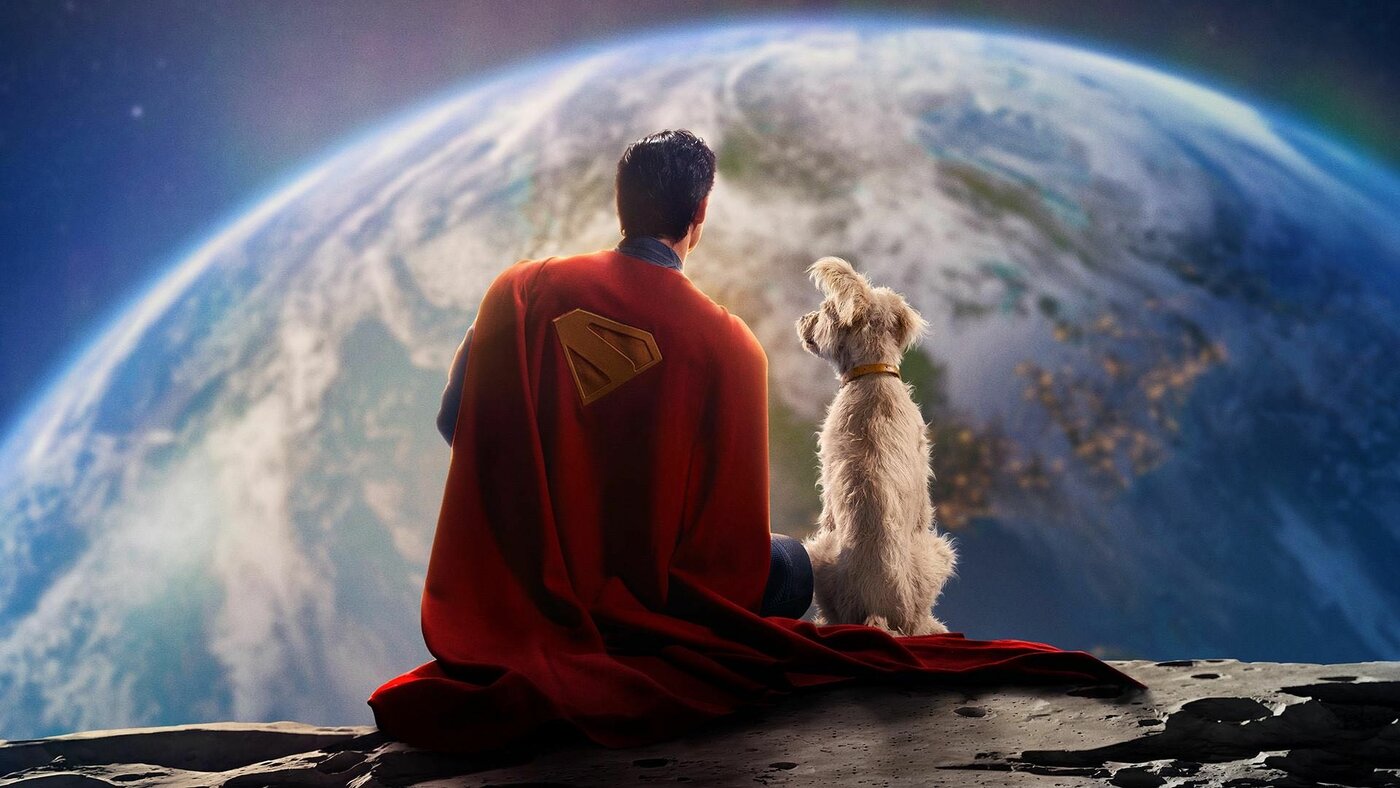
Superman (James Gunn, 2025).
“I don't really think there was ever superhero fatigue,” James Gunn told NPR a few days after the release of his Superman (2025), “but I do think there was sort of a superhero gold rush for a minute.… And then after a while, people kind of got sick.… There were too many crappy movies.” That Lycra-clad characters recently had the entertainment industry in a chokehold is a polite understatement (whether their dominance is a thing of the past remains to be seen). But to deny the growing indifference to recent releases from Disney’s Marvel Cinematic Universe and its rival, Warner Bros. Discovery’s DC Extended Universe, feels somewhat wishful.
Though they had been box-office pulverizers all through the 2010s, by the turn of the decade superhero movies were beginning to sputter with a series of financial and critical disasters. “This year,” Maya Phillips remarked for The New York Times in December 2023, “has been a prime example of what happens when a pop-culture movement takes hold of an industry and then overreaches.” The DCEU alone had been churning out such duds as Shazam! Fury of the Gods, The Flash, Blue Beetle, and Aquaman and The Lost Kingdom (all 2023); the studio’s Extended Universe was scrapped, and Warner Bros. Discovery CEO David Zaslav touted the recently appointed cochairs and co-CEOs of DC Studios, James Gunn and Peter Safran, as the creatives that would “drive a more unified creative approach that will enable us to realize the full value of one of the world’s most iconic franchises.”
Seen in this light, “Superman isn’t just a new film, or even the first in a potential series of films,” Nicholas Barber writes at BBC. “It’s the launch of a whole new cinematic universe.” Gunn, who’d helmed Marvel’s Guardians of the Galaxy trilogy (2014–23) and DC’s The Suicide Squad (2021), was effectively tasked with revitalizing a whole genre while breathing new life into a studio still dealing with the aftermath of its recent misfires. And he also needed to pacify a toxic fandom still convinced that Superman’s previous warden, Zack Snyder, had been betrayed by unscrupulous industry bigwigs (Snyder loyalists took action against his successor, sharing spoilers, negative reviews, and reserving cinema tickets in bulk).
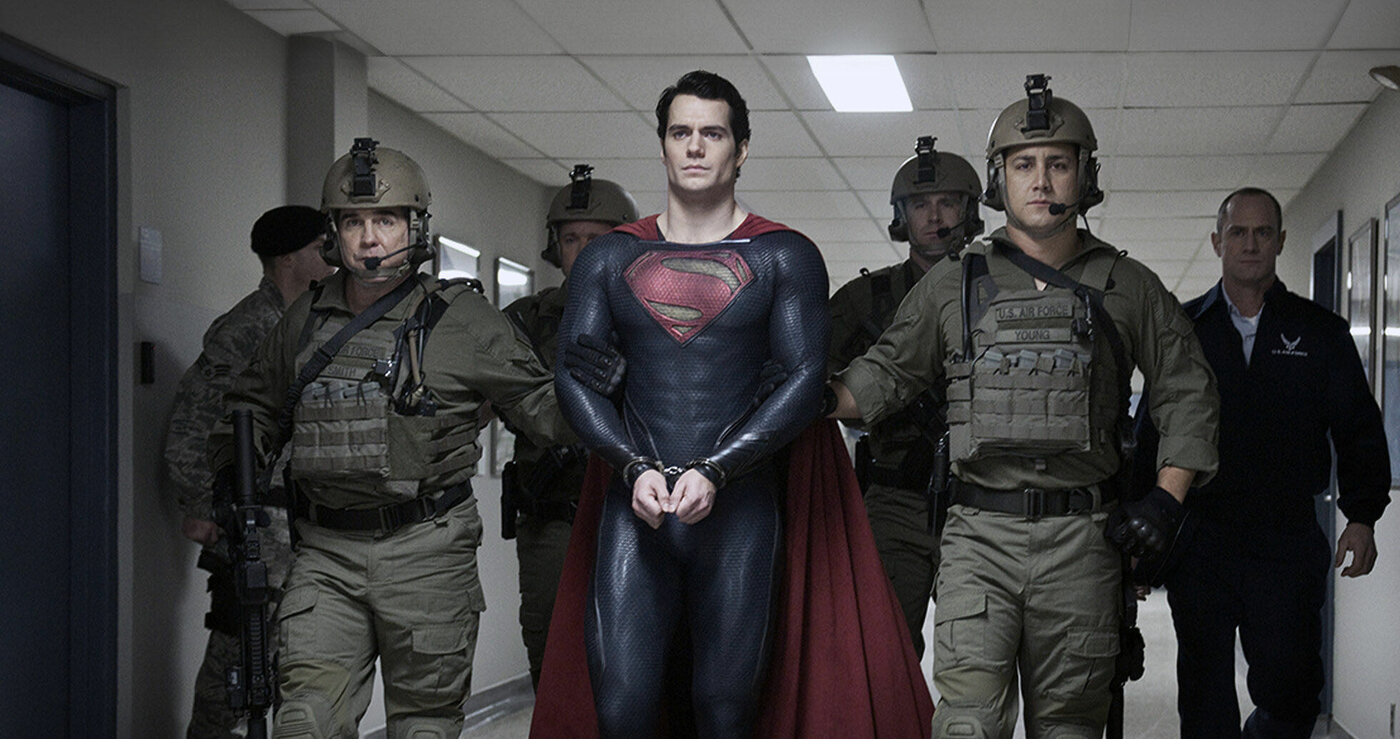
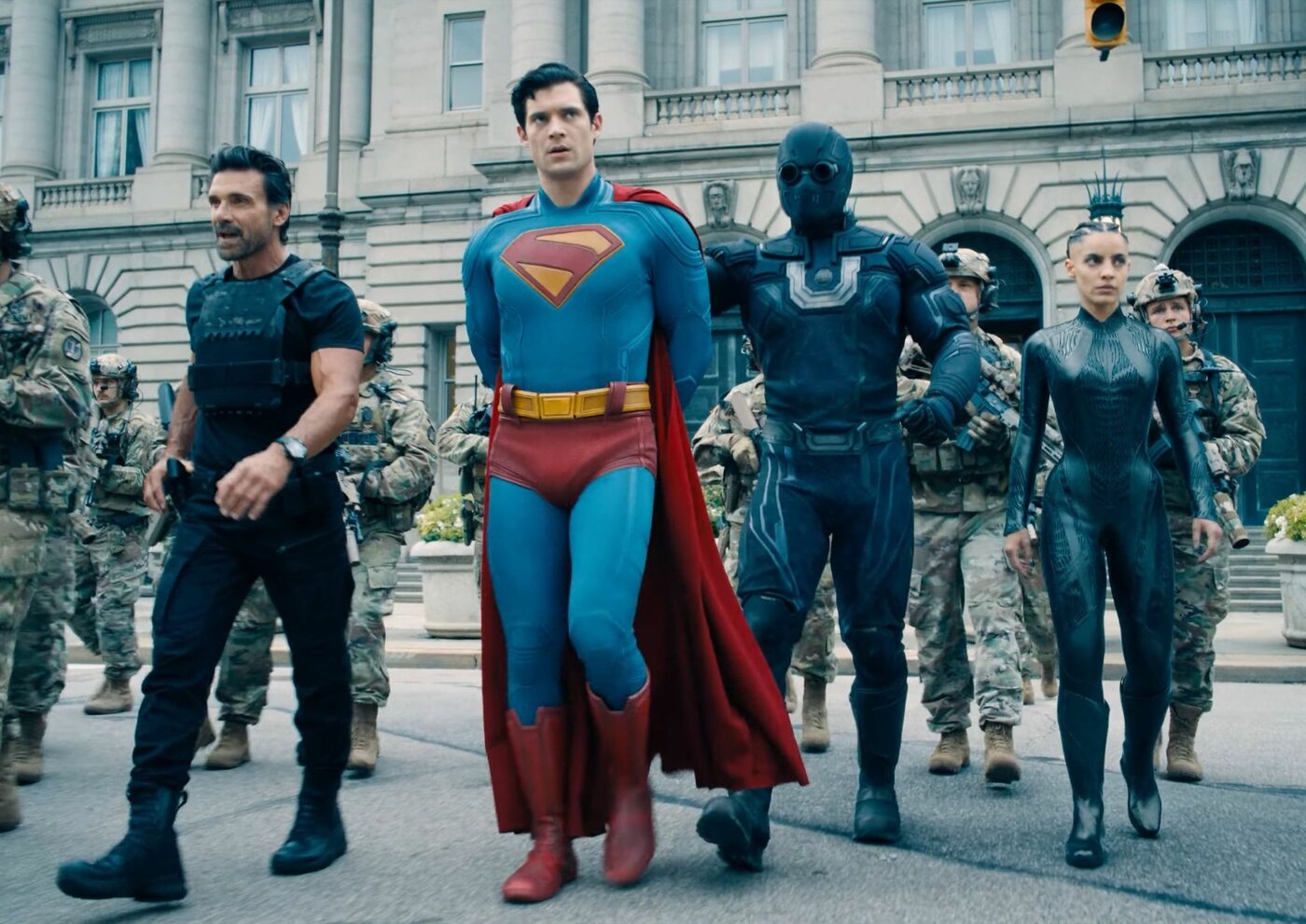
Top: Man of Steel (Zack Snyder, 2013). Bottom: Superman (James Gunn, 2025).
To be clear, Gunn’s version of the caped crusader couldn’t be more different from Snyder’s. “Back in the heady, optimistic days of 2013, Hollywood believed that audiences had the emotional capacity to handle a grave, somber take on Superman, in the vein of Christopher Nolan’s dark Batman trilogy,” Richard Lawson writes at Vanity Fair. “And so the industry gave us Zack Snyder’s Man of Steel, with its stately cinematography, swelling Hans Zimmer score, and enough ersatz political and moral profundity to keep a subreddit busy all summer.” Not only did Gunn replace Henry Cavill—who’d played the title role in that film and its follow-up, Snyder’s Batman v Superman: Dawn of Justice (2016)—with a new lead, David Corenswet. He also traded Snyder’s po-faced solemnity for a refreshingly frivolous register. The writer-director approaches the material “with a mixture of sincerity and irreverence that makes his new movie feel like a window being thrown open to a sunny day after years of oppressively dour DC action,” Alison Willmore argues at Vulture. “Gunn tends to nail the right tone with superhero material,” Alissa Wilkinson echoes at The New York Times:
He mixes big-hearted themes with a dash of real-world allusions and a good-natured understanding that all of this should be treated as if it’s a bit silly because, let’s face it, it is. Guys in capes zooming around, humans with magical powers that let them make big punching fists out of matter and energy, tech billionaires consumed by envy who hang out in shadowy lairs trying to control the universe, I mean, come on.
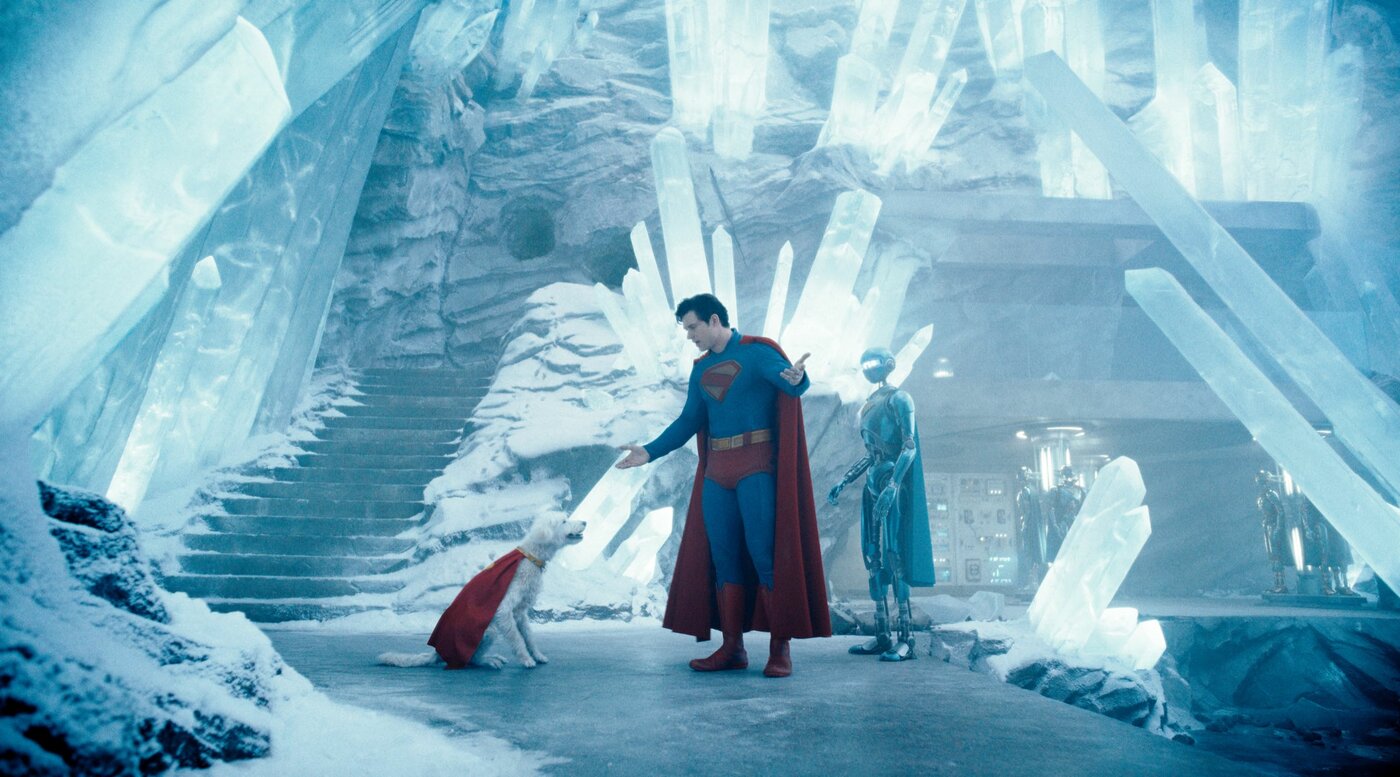
Superman (James Gunn, 2025).
Invigorating as the tonal shift is, Superman’s alleged novelty deserves closer scrutiny. For all its campy flourishes and comic-book nonsense, to claim that “the film’s biggest surprise is how steadfastly it avoids merely copying the MCU formula,” as Jake Cole suggests at Slant, strikes me as misguided, chiefly because Gunn here seems to have rehashed the approach he took in his earlier Marvel endeavors. “Predictably,” Adam Nayman contends at The Ringer, Gunn “styles Superman as a structural clone of The Suicide Squad and Guardians of the Galaxy—a sprawling, noisy ensemble piece that tries to elevate a claque of second-tier superheroes to the headliner’s level by association while also kidding their also-ran status.” Superman might be the titular protagonist, but Gunn is just as smitten by the countless side characters Kar-El/Clark Kent brushes shoulders with, a vast cast that comprises his Daily Planet posse and fellow Metropolis residents (Rachel Brosnahan’s Lois Lane, Skyler Gisondo’s Jimmy Olsen); Justice Gang members Green Lantern (Nathan Fillion), Hawkgirl (Isabela Merced), and Mister Terrific (Edi Gathegi); archenemy Lex Luthor (Nicholas Hoult) and his minions; the thuggish president of the fictional Eastern European country of Boravia (Zlatko Burić); and, last but certainly not least, Superman’s dog, Krypto, a CGI creature that’s as maddening to control as it is to look at. Not unlike the Guardians of the Galaxy trilogy, Richard Brody argues at The New Yorker, “Superman is a group movie in which the interactions of many characters, with their gibes and quips and whimsical bonhomie, decorate the churning action, offering catchy distractions but little substance.” Like the film’s political pretensions,
Gunn’s skill set in developing a batch of antic characters and episodes proves similarly wide and thin; it’s altogether different from the art of exploring the full potential of an idea or delving into the character of a lonely hero. The superheroic team and Lex’s cabal fight one another amid catastrophes in which fungible people are served up as collateral damage without ever getting individual voices. The top-down superspectacle follows the track of its plot with mechanical obstinacy, reserving its hearty empathy for humanity in general without imagining any particular people in it outside the protagonist’s immediate circle of friends and enemies. All of Metropolis and the world at large—in which Superman claims free scope of action—are simply backdrops. Despite touches of menace, “Superman” feels crafted for children. The sense of evil has nothing cosmic or metaphysical about it; there’s no grandeur and no wonder to Gunn’s universe and, although there’s much discussion of the defining quality of one’s actions and choices, the film’s superheroes seem thin, constrained, and undefined. Gunn is admirably overflowing with imagination, but he squanders his best material.
It’s not just that the journey “feels rote and regurgitated,” per The Washington Post’s Ann Hornaday, or that “the quippy, sometimes snarky attitude [Gunn] injected into The Suicide Squad and Guardians of the Galaxy—which “at first invigorated the comic book form”—now feels “played out.” It’s that Superman rushes through its bombastic ideas and outlandish characters far too swiftly for any of them to leave a lasting mark. “Skyscrapers collapse, monsters stomp through Metropolis, and people zip into different universes,” Nicholas Barber notes at BBC, “but Gunn is in too much of a hurry to instill these momentous events with any of the wonder of [the franchise’s first installment,] 1978's Superman: The Movie—however often he drops in John Williams’ classic fanfare—so none of them seems to matter.”
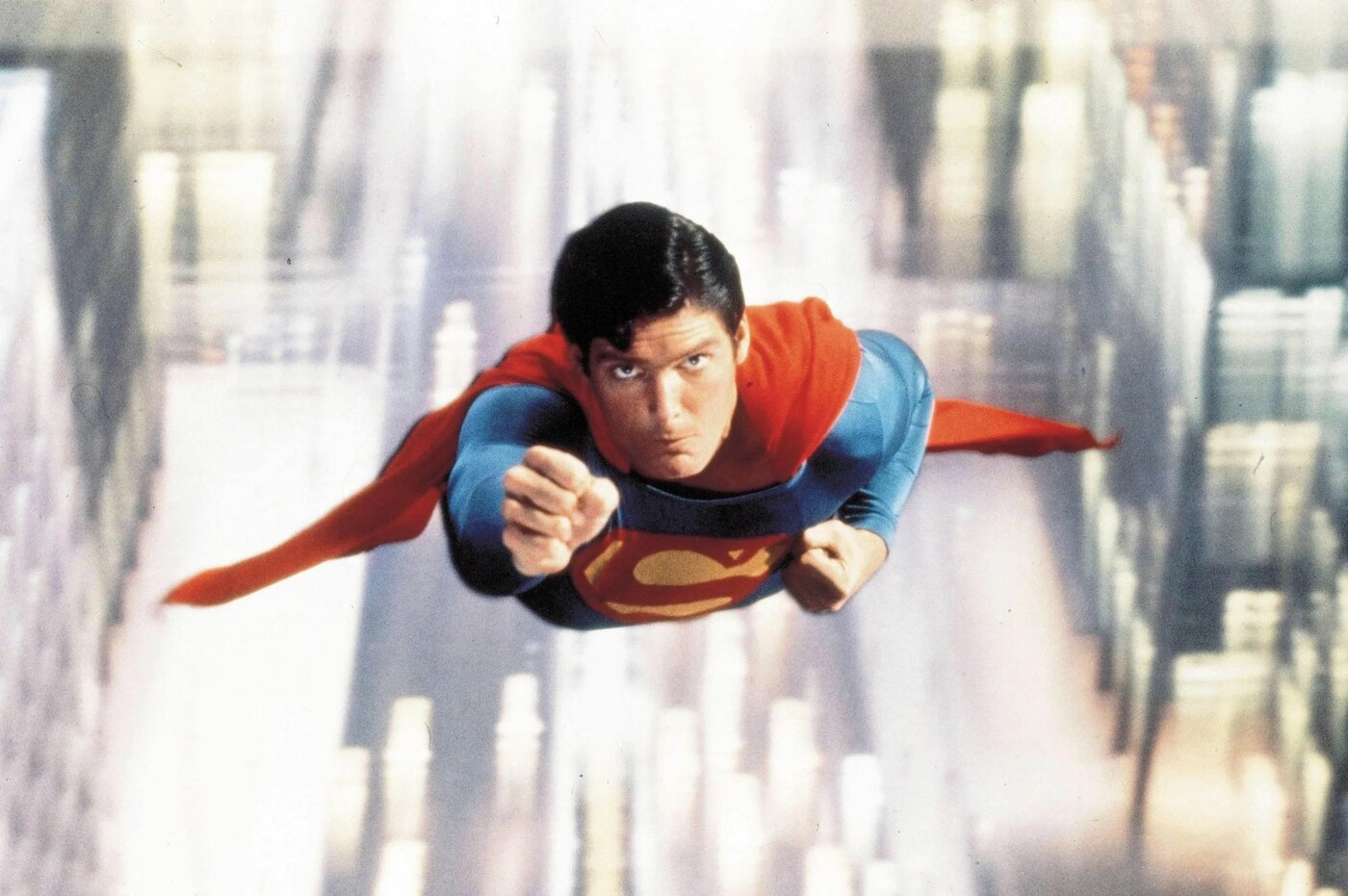
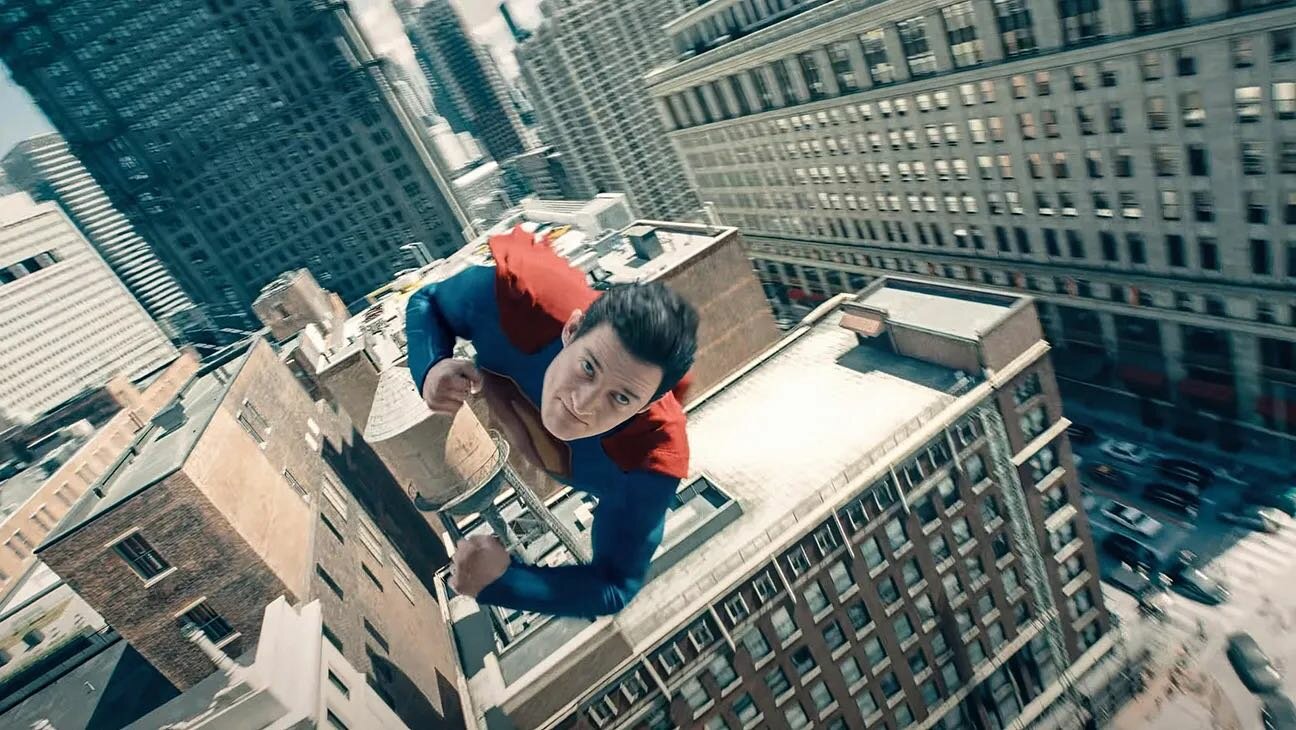
Top: Superman: The Movie (Richard Donner, 1978). Bottom: Superman (James Gunn, 2025).
If there’s any sense in which Superman does depart from canonical superhero blockbusters, it’s Gunn’s decision to do away with his protagonist’s origin story. Instead of peddling Superman’s genesis via flashbacks, Gunn condenses it into a handful of title cards: his film kicks off three decades since an extraterrestrial baby was shipped to Earth, three years after the baby, now grown, announced himself as Superman, and three minutes since his first defeat at the hands of one Hammer of Boravia, an armor-clad villain on Lex Luthor’s payroll. Few fictional characters can rival the universal popularity Superman has accrued since he first graced the pages of Action Comics in 1938. That the eleventh motion picture featuring Supe should elide his flight from the dying planet of Krypton and the childhood spent with his adoptive parents in rural Kansas makes narrative sense, sparing Superman of some superfluous exposition. The problem is that Gunn’s reticence to explore his protagonist’s backstory extends to the rest of his cast as well. We are given no “reasons to be invested in these characters beyond the mere fact of their existence,” Maureen Lee Lenker writes at Entertainment Weekly. “Gunn relies on the fact that the audience knows who these characters are and what they stand for, forsaking interpersonal storytelling for a shorthand that diminishes the gifts of his stellar cast.”
The in medias res approach may be a course correction to the way superhero movies have begun to feel like homework, alienating neophytes with storylines that stretch across different films and franchises, and suffocating the action with flashbacks designed to catch everyone up. “Even for dedicated fans,” to borrow again from Maya Philips at The New York Times, “the amount of prerequisite knowledge required to watch any M.C.U. movie or show nowadays is tantamount to a college course.” Or perhaps to expect a superhero blockbuster to afford its title character a complicated past and rich inner life was always unrealistic—especially at a time when so many modern franchises, to draw from a seminal 2019 New York Times op-ed by Martin Scorsese, are “market-researched, audience-tested, vetted, modified, revetted and remodified until they’re ready for consumption.” (Far from bringing what Screen Daily’s Tim Grierson identifies as an “auteurist sensibility to superhero films,” Gunn strikes me as something closer to a director-manufacturer, a craftsman operating within a committee-sanctioned formula designed to cater to our ever-shrinking attention spans and desire for relatively familiar, risk-averse spectacles.)
But Superman is no ordinary superhero, and Gunn must square his own irreverence with the character’s defining trait: an unwavering, big-hearted idealism. Created on the eve of the Second World War by Jerry Siegel and Joe Shuster, two Jewish American men whose families fled the pogroms in Eastern Europe, Superman was always a kind of extraterrestrial refugee animated by a contagious belief in humanity’s capacity for good. He fought corrupt politicians, plutocrats, and even brought Hitler himself to justice. “Historically,” Jesse Hassenger points out at Polygon, “Superman would appear in PSAs against racism or in favor of public work projects.” Kind, optimistic, and nonpartisan, “he belongs to everyone,” per Time’s Stephanie Zacharek, and the “Superman temperament is one thing James Gunn gets right in his otherwise sub-mediocre reboot.” That’s in no small part to Corenswet’s performance: His Superman “is very much a citizen of the Earth, a flawed and struggling human who makes mistakes and tries to fix them,” Dana Stevens writes at Slate, as Gunn “taps into the optimistic and kid-friendly tone of Richard Donner’s 1978 Superman: The Movie and 1980’s Superman II without seeming, as Bryan Singer did in 2006’s Superman Returns, to pay those classics solemnly reverential homage.”
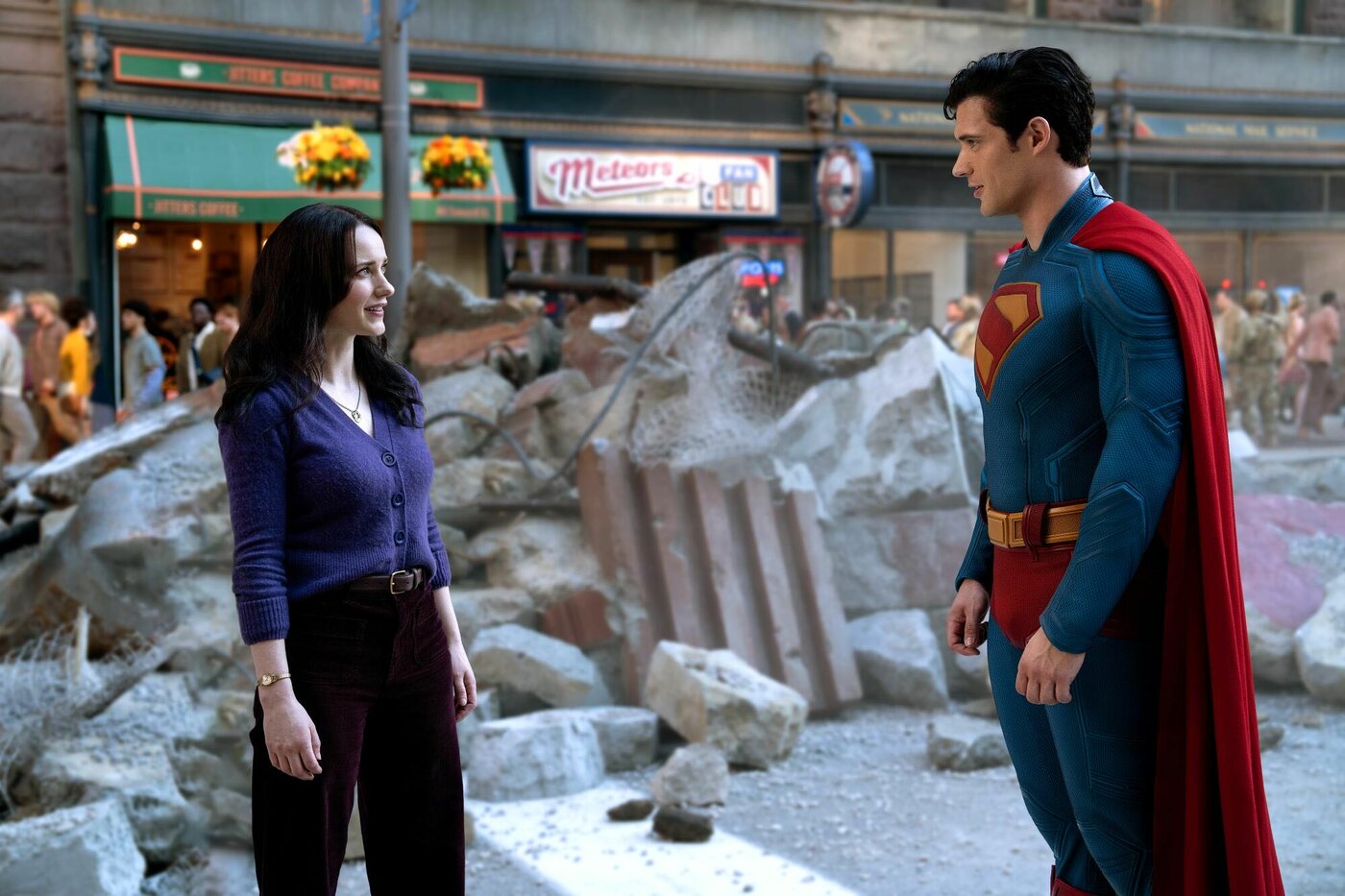
Superman (James Gunn, 2025).
So why is it that the film seems to struggle to believe in its own earnestness? There’s a moment early on when Corenswet tells Brosnahan’s Lois Lane that maybe caring about others, in an era where people are primed to see empathy as a weakness, is “the real punk rock.” It’s an intriguing proposition, but Superman isn’t all that interested in probing it. That’s because Gunn “isn’t that punk rock” but “pop punk”, Amy Nicholson remarks at the Los Angeles Times; the director “doesn’t do sincerity, so this Superman comes off as obtuse and overwhelmed,” and the few times we arrive at a moment that should register as touching—see Superman’s family reunion with his adoptive parents—“the movie stiffens up.… It’s as though Superman isn’t sure how to be earnest without whacking us over the head with it.” In retrospect, this paradox might well be the film’s most fascinating aspect; as Adam Nayman astutely observes, Superman “finds a filmmaker defined, at his best and worst, by glibness dealing with a character whose legacy is sincerity itself.” Is it any wonder that the film, per IndieWire’s David Ehrlich, “never quite figures out how to make a spectacle of Superman’s humanity”? Superman needs to straddle silliness and sincerity, and “very few superhero directors are better than Gunn at threading that needle.”
But here—in a movie so freighted with its own importance, a movie that strains to be more fun and more galvanizing than any he’s made before—his contradictory ambitions can’t help but get knotted together.… Gunn is right to recognize that a certain amount of silliness is key to Superman’s charm, but here it mostly just distracts from the seriousness of what’s at stake. It’s hard to make a comic book come to life at the same time as you’re trying to bring life into a comic book, just as it’s hard not to admire Gunn for trying. But it’s even harder to care if a man can fly when there isn’t any gravity to the world around him.
At the time of writing, Gunn’s first film as DC Studios’ new custodian has already raked in over $500 million, nearly $300 million in the US alone, a figure impressive enough to trigger an enthusiastic response from Marvel Studios’ own boss, Kevin Feige (“Look at Superman,” he recently told Deadline, “it’s clearly not superhero fatigue”). It bears noting that the MCU has reasons of its own to rejoice: Matt Shakman’s The Fantastic Four: First Steps opened with a solid $118 million in late July, the third-best start for a Marvel title since Black Panther: Wakanda Forever (2022). Maybe exhaustion comes in waves, and Gunn will live up to Zaslav’s mandate to squeeze the IP for all its worth. But as it stands, Superman seems less the start of a new renaissance for the genre than an example of a director struggling to reconcile his idiosyncrasies with all that his superhero represents.