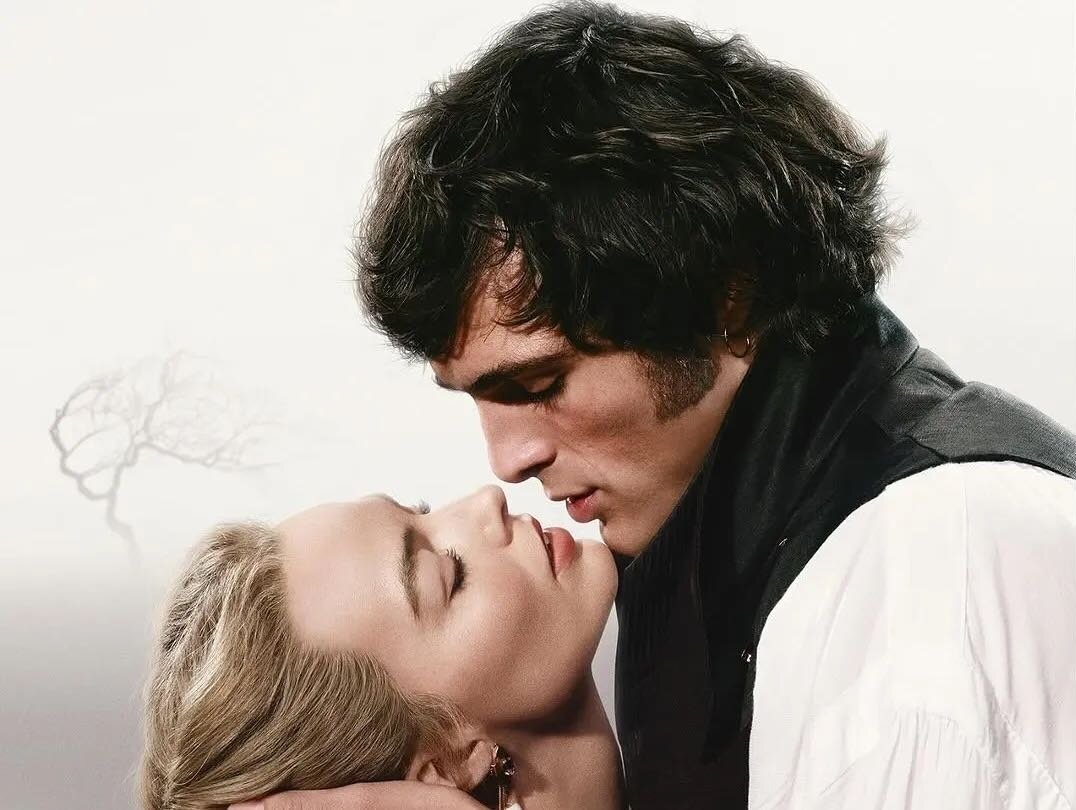
“Wuthering Heights” (Emerald Fennell, 2026) poster detail.
From the day it was published, no one has quite known what to do with Emily Brontë’s novel Wuthering Heights, which appeared quietly under the androgynous pseudonym Ellis Bell in 1847. A Gothic tale with a dizzying plot structure, idiosyncratic grammar, and irredeemable characters, Wuthering Heights spurns conventional Victorian purifiers like love, sacrifice, and religion in order to center violence and suicidal yearning. In her book The Brontë Myth, Lucasta Miller shows that early reviewers largely agreed the novel was unforgivably “coarse.” Some baffled critics conceded it was an undeniable work of genius, if unpleasant to experience. Some provocateurs who relished in shunning convention, like the poet Algernon Charles Swinburne, pushed jittery Victorian buttons by openly declaring their love of the book.
Brontë died one year after seeing Wuthering Heights published, and the novel’s reception so scandalized her reputation that her sister Charlotte felt the need to defend her—and their sister Anne, who wrote the even more reviled The Tenant of Wildfell Hall—in a now-famous foreword to the second printed edition of the volume, which appeared in 1850. By then, it had emerged that the so-called Bell brothers—Charlotte, Anne and Emily—were, in fact, rural, unmarried women, hence the scandal. “The writer who possesses the creative gift owns something of which he is not always master—something that, at times, strange wills and works for itself,” Charlotte wrote.
The novel fell into semi-obscurity until roughly the 1920s, when the combined forces of Freudianism, the shadow of the First World War, and more progressive ideals brought it back into the spotlight. Wuthering Heights made more sense to a scarred postwar public, who might have seen it as a mirror of sorts: People were bad, after all. Since then, the story has been continually adapted for stage, screen, radio, and television; it has inspired songs and ballets and operas. Though it has the force and scope of myth, it’s impossible to extract from it any neat lessons, or to answer with any confidence a simple question: What is Wuthering Heights about?
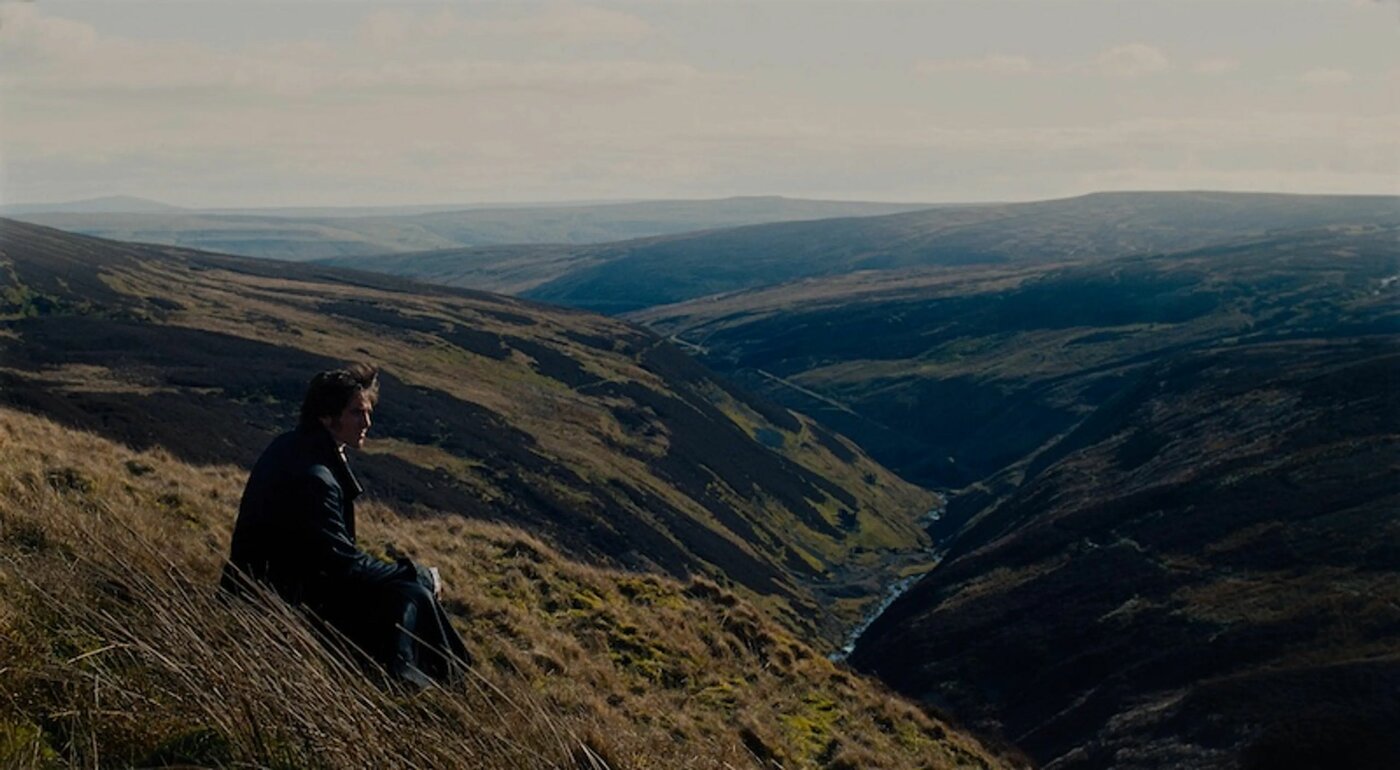
“Wuthering Heights” (Emerald Fennell, 2026).
Where Hollywood is concerned, Wuthering Heights is about love. Readers of the book reflexively flinch at that description; the novel sprawls long beyond the central romance, if it can be called that, between Catherine and Heathcliff. Saying that Wuthering Heights is about love would be like saying that Dracula is about real estate—it is and it isn’t. There is a tale of obsession and devotion at the center of the labyrinthine narrative, but love doesn’t drive the plot so much as haunt it. The parts of the novel that do superficially focus on love follow a more traditional plot arc—our protagonists meet, they fall in love, they fail to marry, they meet again—which is perhaps why most adaptations tend to focus exclusively on this section.
As it advances, the novel moves through layers of unreliable narration: it starts with an interloper on the Yorkshire moors, Mr. Lockwood, who has come to the northern country in search of a “perfect misanthropist’s heaven.” Soon, he learns that his misanthropy has nothing on the barbarism of the neighboring estate, Wuthering Heights, whose owner, Mr. Heathcliff, is his landlord. He is told the story of that haunted, harsh place by the servant Nelly Dean, who—like the late Catherine Earnshaw, her brother Hindley, and Heathcliff himself—grew up there. She tells him of Heathcliff’s arrival on the Heights as a foundling brought home from Liverpool by the patriarch Mr. Earnshaw, and the turbulent codependency, almost a disturbing oneness, he developed with Catherine. After Catherine agrees to marry their affluent neighbor Edgar Linton, Heathcliff leaves the moors and returns, years later, mysteriously wealthy. In a plot to enact his revenge on the malicious Hindley, who tortured him as a child and has become drunk and debt-addled with age, Heathcliff buys the Heights and makes Hindley’s life hell. More such vengeful acts ensue.
Any work of adaptation requires compromise: When distilling a hefty tome spanning two generations of a family into a narrative of, say, 120 minutes, any filmmaker would have to pick their targets, which sometimes means narrowing the scope of the story. The first cinematic adaptation of the novel was released in 1920, a now-lost silent film by A. V. Bramble that was billed on the poster as “Emily Brontë’s tremendous Story of Hate.” Despite this acknowledgment of the darker themes of the story, the film’s accompanying program notes assured viewers—inexplicably, the film targeted families—that love would win out in the end. In this version, “Heathcliff’s face lost its hardness and became beautified with hope and faith.” It reformed the source material’s “coarseness” into a journey of redemption.
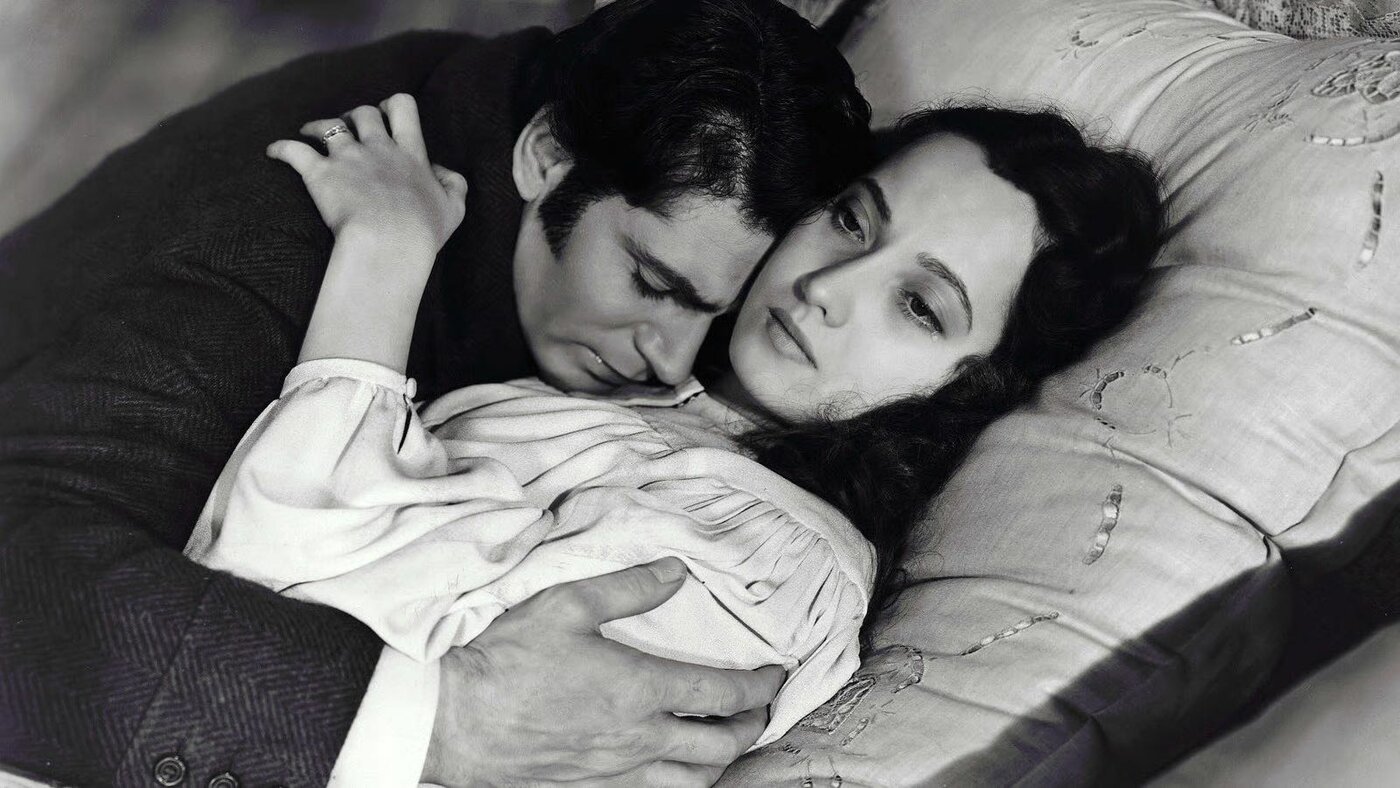
Wuthering Heights (William Wyler, 1939).
The second, and most enduring, adaptation of Wuthering Heights followed suit. Released in 1939, directed by William Wyler, and produced by Samuel Goldwyn, this version cemented the tale’s reputation as an “epic love story.” The film reinterprets Heathcliff (Laurence Olivier) and Catherine’s (Merle Oberon) tormented devotion according to a lady-and-the-tramp paradigm, shot beautifully in a gauzy, soft light that evokes a glittering dreamscape. In Brontë Transformations, her survey of Brontë adaptations across the centuries, the scholar Patsy Stoneman highlights the film’s warring gender dynamics and “cultural nostalgia,” evinced by aesthetic choices in costuming and music, to draw a parallel with Gone With the Wind, released later that same year. (In his TCM introduction to Wyler’s Wuthering Heights, Ben Mankiewicz reports that Olivier wanted Vivian Leigh to play Cathy, but Oberon had already been cast. Leigh ended up playing Scarlett O’Hara instead.)
In the effort to repackage a Gothic ghost story as a moralistic drama, the script of Wuthering Heights, cowritten by Ben Hecht and Charles MacArthur, dignified Heathcliff and devalued Cathy. He is spiritually virtuous and pure where she is materialistic and avaricious. His violence is justified by Cathy’s capriciousness: He is driven to slap her in the face when she provokes his anger by calling him “a stable boy,” a “thief,” “servant,” and “beggar” with “dirty hands.” Cathy’s fatal illness elevates her to her perfected form as a docile, feminine invalid.
All of this works to transform Cathy and Heathcliff’s demented love into the kind of relationship that would resonate with a 1930s audience. If Brontë’s original depiction relied on the desire for spiritual unity, even selflessness—“I am Heathcliff,” goes Cathy’s famous line—Wyler’s version brings it back down to earth. Revising the source material, Hecht and MacArthur had two main obstacles: It’s not very manly to yearn, though that is Heathcliff’s modus operandi, and whatever virility he does have would disappear were he to submit to Cathy, that “wild, wicked slip,” as the servant Nelly puts it.
The solution, Stoneman writes, was to move “from the melodramatic assumption that the story is motivated by ‘the monster Heathcliff’ to a more modern fear that the ambitious woman is the source of all its trouble.” (We can only dream of a version that would have Katharine Hepburn as Cathy.) The overall implication is that Cathy and Heathcliff are star-crossed lovers because he is too poor to be a suitable husband, not because they wanted, as Joshua Rothman put it in The New Yorker, “a futile, suicidal transcendence, which is incompatible with love, and possibly with life itself.” Having been duly tamed by the imposing man and her illness, Cathy can finally be happy with Heathcliff in the afterlife, where there is no money, class, or social status. In the image that ends the film, their ghosts set off toward Penistone Crag, their cherished spot atop the moors, hand in hand. Love wins out—again!
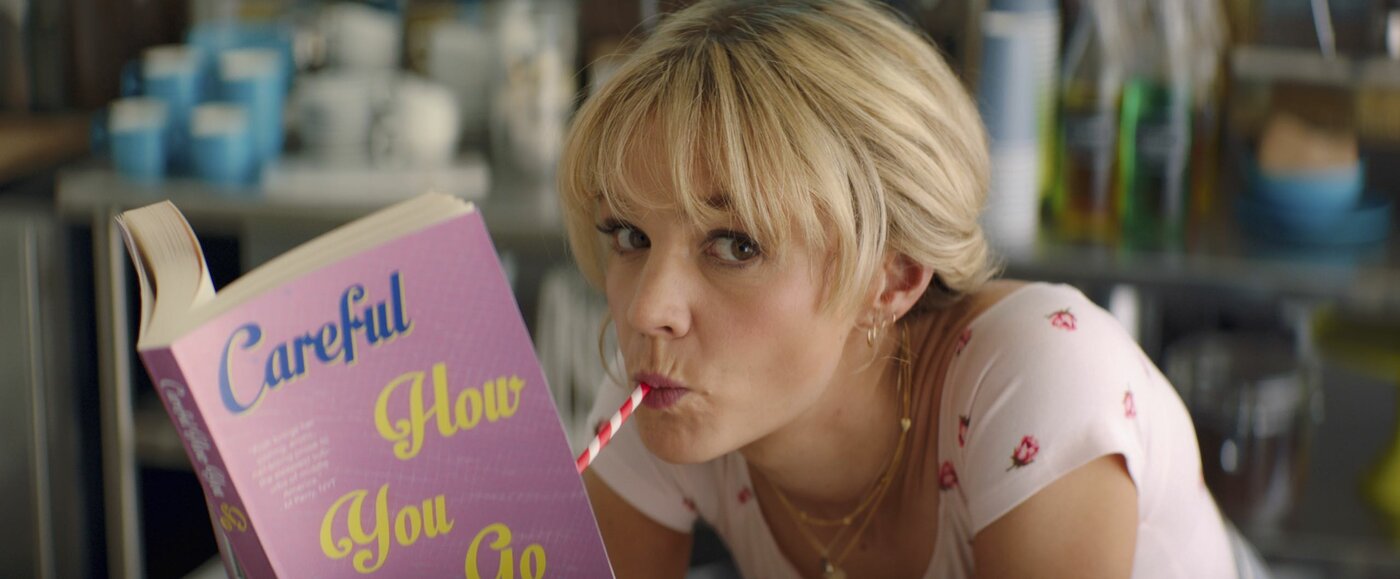
Promising Young Woman (Emerald Fennell, 2020).
Even before she got to Wuthering Heights, the English filmmaker Emerald Fennell had already been working through Brontëan themes. In her debut Promising Young Woman (2020), Carey Mulligan played Cassie, a medical school dropout whose life was derailed after her best friend Nina died by suicide in the aftermath of sexual abuse. Overcome with grief, Cassie proceeds to systematically enact her revenge on men, baiting scumbags into taking her home by pretending to be too drunk to stand, only to reveal herself to be sober and vengeful.
As a character driven by a blind need for revenge, Cassie is Heathcliffian. Life so abuses Heathcliff that he loses the ability to feel for others. He only loves Cathy, but even then, he’s not exactly affectionate—as she is dying, he tells her: “I have not one word of comfort. You deserve this.” In her inability to connect to her boyfriend Ryan (Bo Burnham), her coworker Gail (Laverne Cox), or her parents, Cassie seems to lack the foundation of spirit that allows you to love someone else. Yet no matter how much Cassie loved Nina, it seems improbable that the event that ruined Nina’s life could so motivate Cassie to ruin everyone else’s. Whatever deep, troubling darkness is motivating Cassie to action never surfaces; this kind of narrative restraint afflicts every Fennell project. Satisfied with the mere idea of such deep, troubling darkness, she refrains from plumbing the depths and showing us her findings.
Promising Young Woman divided audiences: Where some saw a feminist, post-MeToo statement, others saw a cheapening of those very ideas. Ultimately, though, the film earned Fennell the sheen of prestige and acceptance into the mainstream with five Oscar nominations, including one for Best Picture and a win for Original Screenplay. By the time her sophomore feature Saltburn came out in 2023, it was primed to reinforce the lines that had been drawn in the sand: You were either with the freaks or against them. So far, so Brontëan.
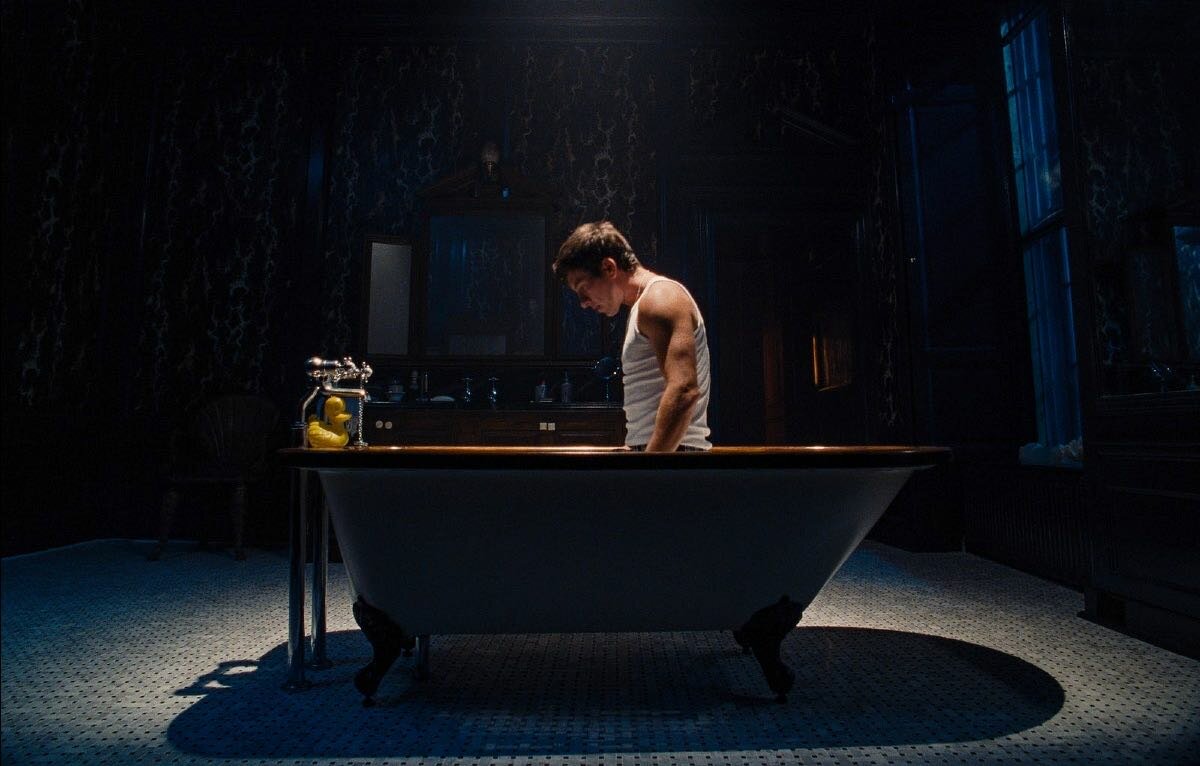
Saltburn (Emerald Fennell, 2023).
A more hostile film than Promising Young Woman, Saltburn wasn’t embraced or acclaimed in the same way, but it did establish Fennell as a director of a particular sensibility—splashy, arch, extravagant—with a penchant for courting controversy. Saltburn is an openly obscene retelling of the (also relentlessly adapted) Patricia Highsmith novel The Talented Mr. Ripley, built around a striking juxtaposition between the British aristocracy’s claustrophobic, incestuous social relations and their palatial estates. Oliver (Barry Keoghan), a first-year at Oxford, schemes his way into the life of the titled Felix (Jacob Elordi), the object of his desire and aspiration—like Ripley with Dickie Greenleaf, Oliver is caught between wanting to be Felix and to have sex with him.
Endless discourse brewed over the film’s graphic imagery, which—in a Brontëan nod—contains at least one instance of necrophilic desire. These moments of depraved sexual activity nearly eclipse the character development supposed to scaffold Oliver’s increasingly unhinged attempts to possess and embody Felix; discussing the movie, a friend recently referred to a moment he called the “cum-tub-slurp”: Oliver drinks the bathtub water into which Felix has ejaculated. Clips and memes depicting such explicit moments between beautiful people proliferated; Saltburn resonated with an online public trained to divorce compelling imagery from any larger context.
Fennell’s name is now synonymous with racy movies starring Hollywood’s hottest movie stars. Everything about the marketing for “Wuthering Heights”—starting with the scare quotes that establish an ironic relationship to the source material, through the erotic teasers, Charli XCX soundtrack, and tag lines advertising “the greatest love story of all time”—suggests a product engineered to fulfill a specific market demand. The poster, modeled on Gone with the Wind’s emblematic one-sheet, promised audiences an epic melodrama, a notion helped along by Wuthering Heights’ misrepresentation as a romance. Combined with the increasingly dominant place smut has in popular culture—evident in the frenzy surrounding romantasy novels and the TV adaptation of Heated Rivalry (2025–)—the buzz campaign around Fennell’s “Wuthering Heights” conspicuously targeted the “horny chick-lit” market.
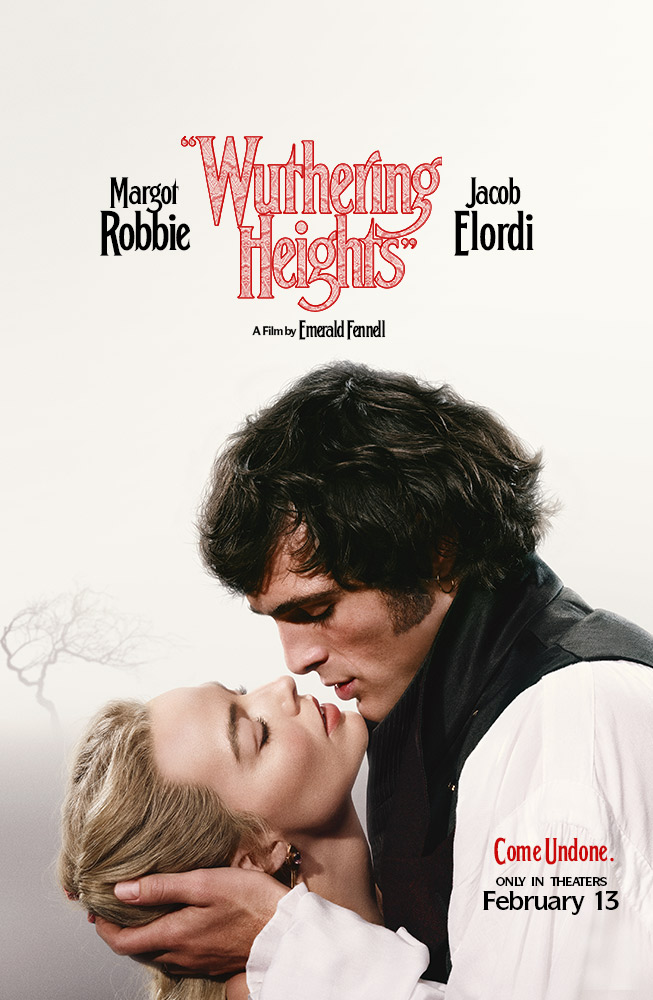
Yet, foregrounding the erotic undertones of Wuthering Heights is not an unreasonable, new, or even unscholarly approach. In her introduction to its Barnes & Noble Classics edition, the critic Daphne Merkin suggests that the novel has an “unharnessed libidinal energy.” Passionate desire, and even lust, are such powerful features of Brontëan writing that even Charlotte’s chaster Jane Eyre was accused, way back when, of being too sexually explicit. Considering Wuthering Heights’ historical reputation for scandal and the modern appeal of the bodice-ripping genre—the Victorians were prudish, so seeing them let loose registers as transgression—Fennell seemed like a natural fit, game to highlight the darker themes of a novel that has been routinely sanitized by priggish Hollywood.
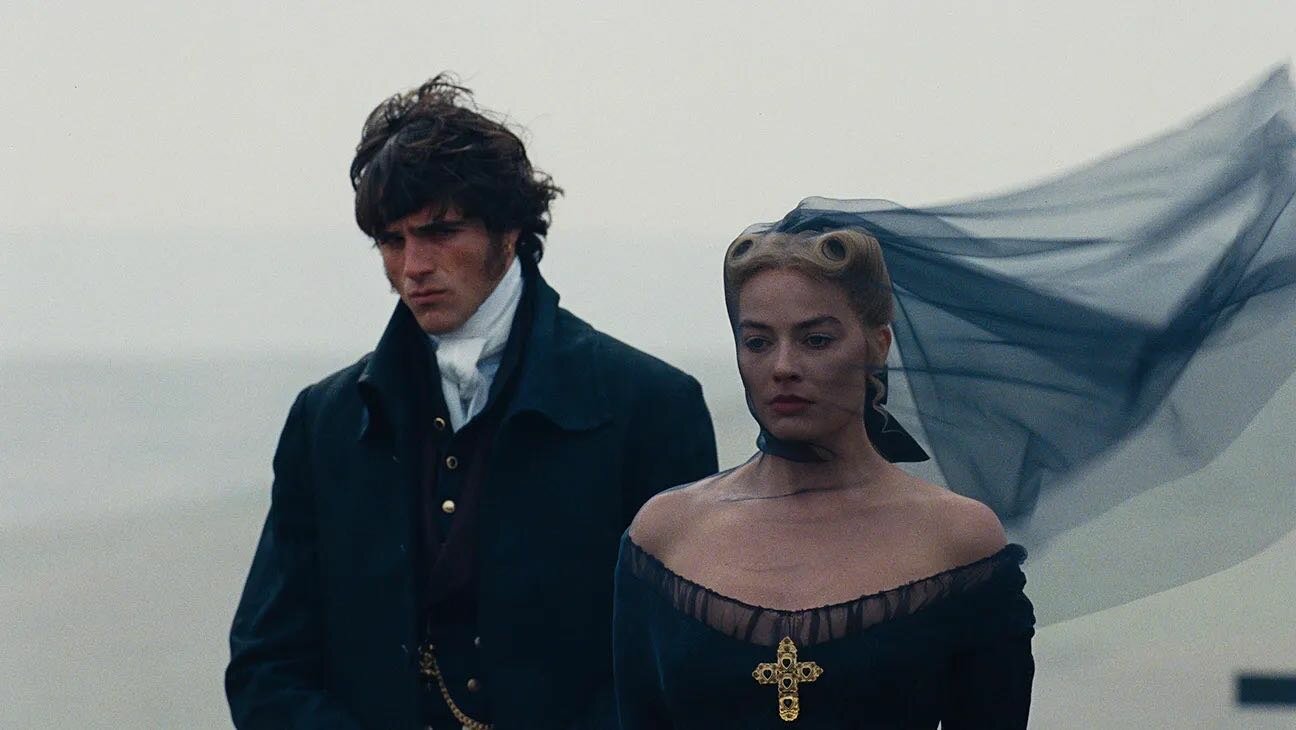
“Wuthering Heights” (Emerald Fennell, 2026).
“Wuthering Heights” opens with auspicious textural detail: Cathy and Nelly, still children, attend a public hanging. We hear it before we can see it, and the fated man’s grunting sounds more like pleasure than pain; indeed, he has an erection. At first they look apprehensive, but soon Cathy and Nelly join in the crowd’s cheering. Their walk home is littered with public displays of desire—people touch, kiss, and have sex on the street. This opening both acknowledges the source material’s conflation of sex with death and situates Cathy within a world where there is little difference between the two, which is a perceptive touch: Other films tend to depict their home, the Heights, as a remote dwelling completely isolated from external influence. But the film never delivers on the daring interpretive promise of its opening sequence.
Most Wuthering Heights adaptations axe the book’s second generation of characters, victims of Heathcliff’s revenge against Cathy’s brother Hindley, a violent boy who tortures Heathcliff for being his father’s favorite. Fennell goes one further and writes Hindley off altogether. Mr. Earnshaw takes his place as the drunk owner of the Heights, a mercurial but sensitive man who “rescues” Heathcliff from his thuggish father. Liberated from Hindley’s malice, Cathy and Heathcliff—along the constantly sidelined Nelly—are depicted as mischievous kids in a half-Dickensian, half-Tim-Burtonesque environment, where cruelty is played for laughs. The spindly trees, along with costumes that call to mind the Queen of Hearts, give the film the look and feel of a dark fairy tale, in which the protagonists will purify themselves of a lurid world through trial and sacrifice.
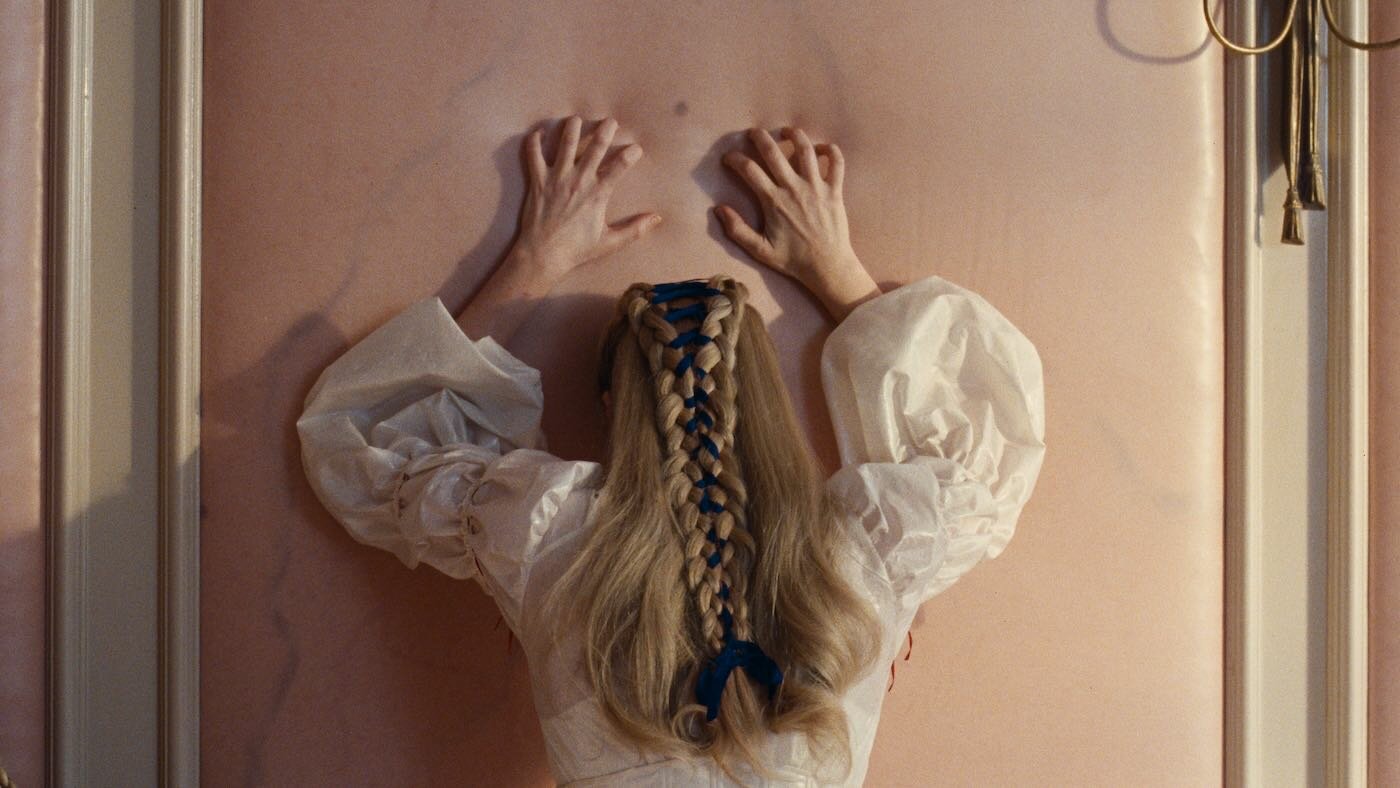
“Wuthering Heights” (Emerald Fennell, 2026).
Throughout her life, Emily Brontë obsessively developed a fantasy world called Gondal with her sister Anne, a practice which informed her novel: Fennell’s use of the moors as the backdrop to a dark fairy tale suits the source material’s undertones. But this world-building crumbles as Heathcliff and Cathy get older, and particularly when Heathcliff returns from God knows where. About a third of the way into the film, Fennell abandons the dark Disney mood she had built—though its elaborate sets and costumes, increasingly at odds with the unfolding narrative, remain—as if suddenly remembering she had to deliver on the expectation of hot sex between hot movie stars. Cathy, played by a bratty Margot Robbie, watches the servants Joseph and Zilla make sex toys out of barn tools. Heathcliff—a pouty, imposing Jacob Elordi—covers her eyes and mouth. It’s Cathy’s sexual awakening. Later, when Heathcliff finds her masturbating on the moors, she nearly dies of shame, though he is more than happy to sniff her fingers and “follow [her] to the end of the world like a dog.”
In Brontë Transformations, Stoneman points out that Cathy and Heathcliff are not so much each other’s objects of desire as they are each other’s alter egos. Their love is a Romantic ideal that aims for spiritual unity and transcendence; for them, “consummation is a matter of souls, not bodies.” So, Fennell makes a story of carnal passion out of a story of spiritual yearning. It’s a misreading of the novel, but it’s not without precedent. Andrea Arnold’s Wuthering Heights (2011) similarly skips the book’s second generation, dwells on Cathy and Heathcliff’s childhood, and foregrounds the violent eroticism in their relationship. There is no room for spiritual desire in Arnold’s world—she roots her film in the textural details of the moors: the wind, the grass, the silence, the birds. The film’s main innovation, besides the uncommon but textually accurate casting of Heathcliff as a person of color, is to lock the viewer in Heathcliff’s perspective. The effect is that cruel, monstrous Heathcliff is humanized. He is portrayed as a boy cheated by a broken system, whose human right to love, affection, and attachment is denied by the unjust impositions of class and race. In other words, we sympathize with his violent resentment.
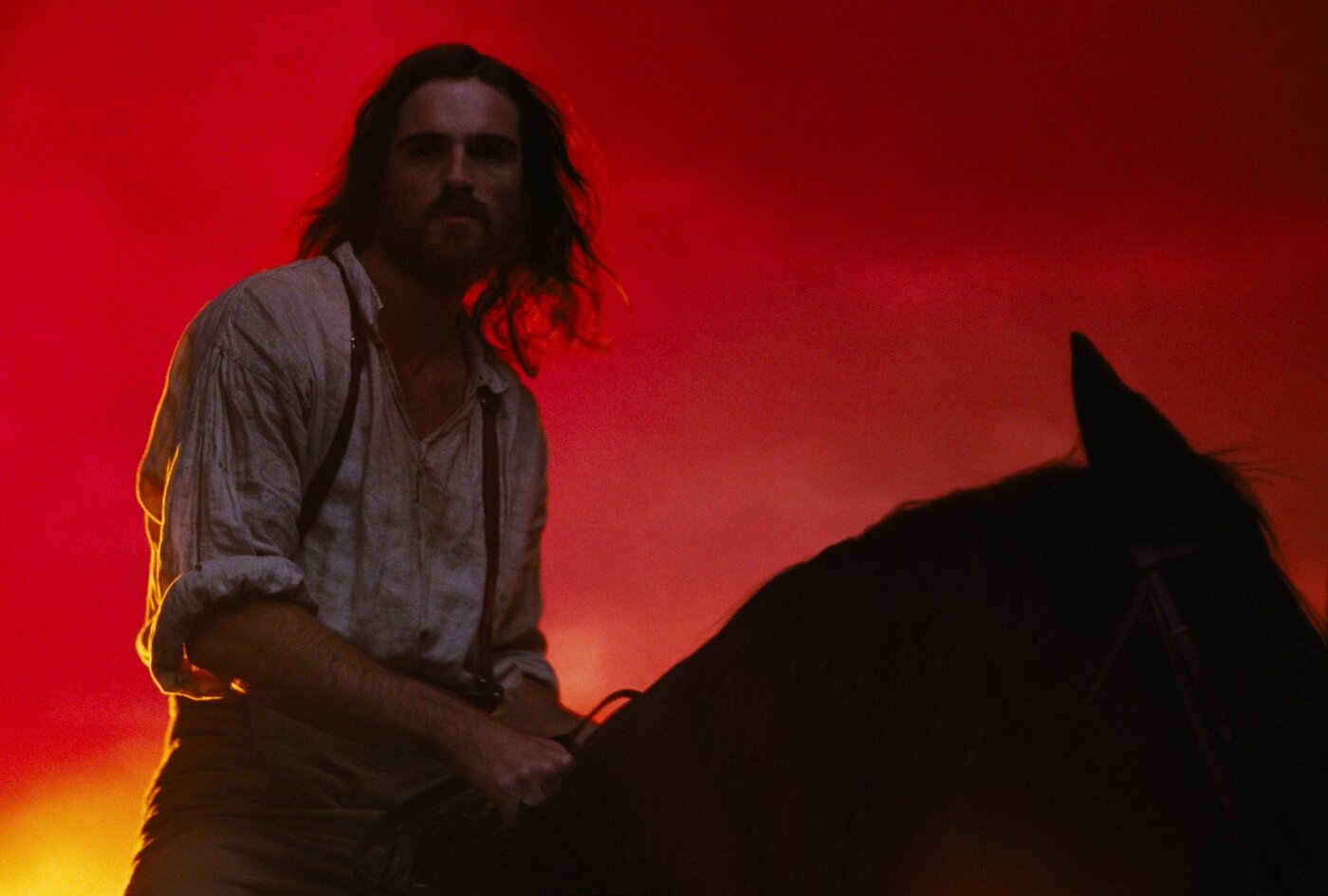
“Wuthering Heights” (Emerald Fennell, 2026).
The problem with Fennell’s centering of sexuality is that it becomes the only thing motivating Heathcliff, whose interiority dissipates. By eliminating the object of his vengeful ire in Hindley, his elemental darkness shifts from a titanic, suicidal rage to a shallow, sexy moodiness. Played skulkingly by Jacob Elordi, Heathcliff comes off like a scruffy Edward Cullen, a real danger only to himself. When Isabella—Edgar’s ward rather than his sister in an inconsequential revision played sharply by Alison Oliver—takes an interest in him, Cathy warns her that Heathcliff is “rough” and would “crush her like a sparrow’s egg.” But we have seen no such evidence of this wickedness. Heathcliff’s roughness is telegraphed through his work in the stables and his taciturnity, but he isn’t cruel. In fact, the only time we see him engaged in physical violence is when, in childhood, he takes a beating from Earnshaw to spare Cathy.
Following Wyler’s lead, Fennell’s Heathcliff is spiritually pure, a simple beast who has no desires, needs, or attachments other than his love for Cathy. Heathcliff’s treatment of Isabella in the novel is so painful as to be nearly intolerable. Isabella works herself up into believing that by loving him, she can reform Heathcliff’s hatred—that her affection is capable of awakening in him a need for human warmth. No such thing happens. Among other things, he hangs her beloved dogs on trees and beats her into submission. In “Wuthering Heights,” Isabella willingly enters a sub/dom relationship with Heathcliff, who is amused by her horniness. When Nelly (Hong Chau) is horrified upon seeing her chained to the hearth, Isabella winks.
Cathy, meanwhile, is given a familiar conundrum: Should she marry for love or security? As the plot of “Wuthering Heights” advances on misunderstanding, missed letters, and overheard conversations, it increasingly falls into Austenian rather than Brontëan lines, moving it decisively into costume drama territory. Robbie’s girlish wilfulness recalls, if not the charming obstinacy of Elizabeth Bennett, then the fickleness of Merle Oberon’s characterization in Wyler’s 1939 version. Fennell’s “Wuthering Heights” has a lot more in common with Wyler’s film than it does with the source material: The emotional beats, smoothed over to follow the more modest marriage plot rather than the book’s generational revenge narrative, are borrowed from Hecht and MacArthur’s adjustment of the story.
Descending further into alcoholism with age, Mr. Earnshaw gambles away all of the family money—a fate that, in the book, befalls Hindley in the aftermath of his wife’s death in childbirth—leading them to ruin. Shivering by a cold hearth, Cathy laments to Heathcliff that she “shall have to throw [herself] at Mr. Linton after all,” as they hardly have money for firewood. Heathcliff breaks his own chair and lights it on fire so that Cathy may be warm. It’s his way of implying that they need not let such frivolous concerns as financial stability stand in their way: They will improvise. Still, Cathy—ambitious, avaricious woman—can’t resist Edgar’s proposal, or the plentiful rooms, chocolates and ribbons of Thrushcross Grange.
A scorned Nelly—who is typically overlooked, making her presence a welcome, though tacked-on, surprise—ensures Heathcliff overhears Cathy say that to marry him would degrade her, out of spite. Immediately after accepting Edgar’s proposal, Cathy realizes her mistake and runs to retract her decision, a plan that is only thwarted by the fact that Heathcliff has already left. The implication is that a happy ending was possible for the pair, who would have accepted a less-affluent life in exchange for sentimental attachment. Wyler follows through on this notion by having Cathy and Heathcliff’s ghosts happily haunt the moors; Fennell channels her energies into operatic declarations of love and regret. “Why did you betray your own heart?” Heathcliff demands of Cathy as a rainstorm rages on, before complimenting: “Kiss me again, and let us both be damned.” This demand, wistful rather than harsh, leads the way to physical attachment.
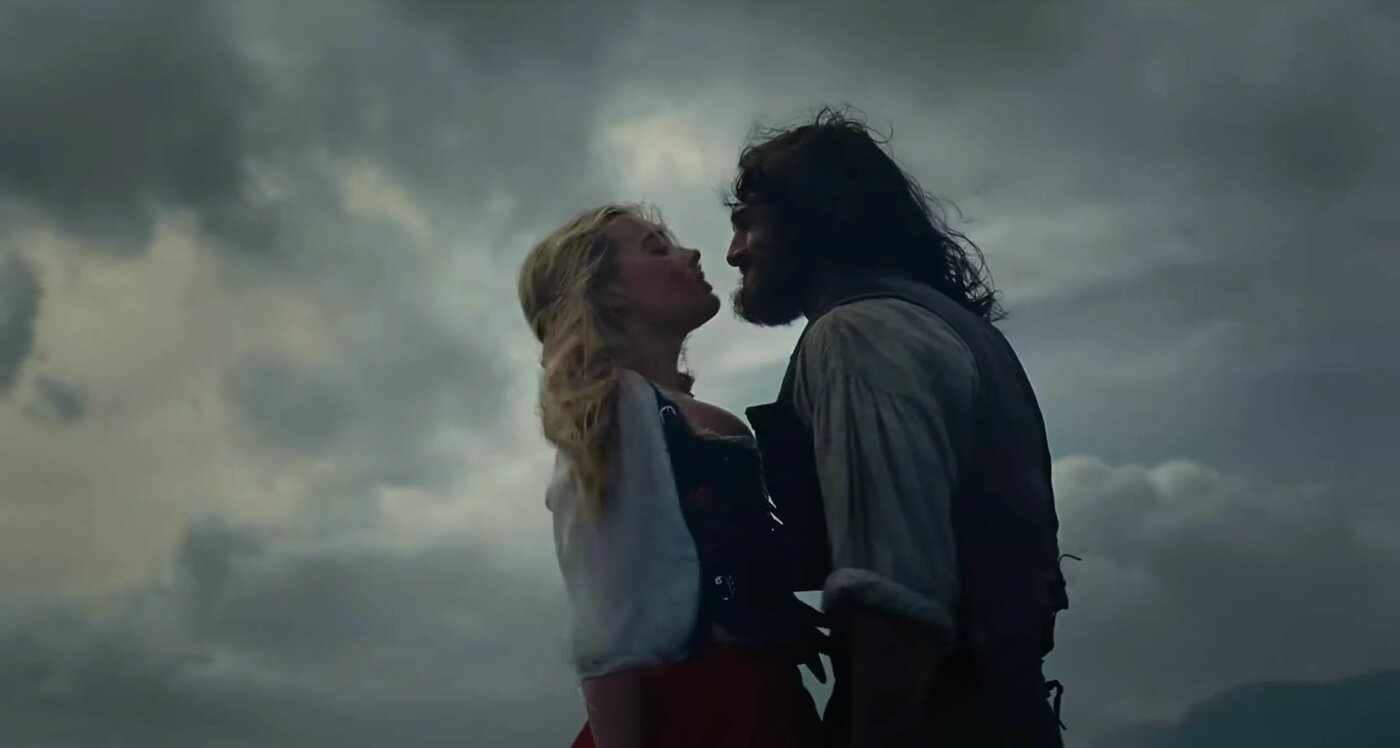
“Wuthering Heights” (Emerald Fennell, 2026).
“Wuthering Heights” never recovers from Heathcliff’s return. After a slapstick opening, a music-video-like montage of parlor games and opulent Christmases, and a decisive swerve into inert erotica, the film’s disparate tones fail to cohere. An interpretation has to do just that: interpret. It is incumbent on the interpreter to offer something new in place of what already exists, which is especially vital for a perpetual, enduring muse like Wuthering Heights. Taking The Talented Mr. Ripley as its template, Saltburn scans as a better work of adaptation than “Wuthering Heights” because it succeeds in building a coherent, detailed world in which Oliver can aspire and fall from grace. “Wuthering Heights” lacks any such specificity. The quotes around the title remind the viewer that the filmmaker is putting herself at a remove from her own material. Even the sex, framed in conventional static wide shots over breathy music and absent of any darkness or longing, is vanilla.
Too often, graphic imagery serves as a crutch for Fennell, who relies on it in lieu of character development. Cathy and Heathcliff can’t keep their hands off each other. They have sex every available minute on every available surface. But once their love has been consummated, there is nowhere for the story to go. When Cathy meets her end, she doesn’t die of desire; she dies as if her purpose in the story, which was to have sex with Heathcliff, had been fulfilled.
Despite her reputation as a provocateur, Fennell’s work is too timid, too unwilling to get involved with the darkness it gestures vaguely toward, to truly stir any controversy. You can only push the audience so far while courting the A-list and the box office. Emily Brontë scandalized readers with her violence, her coarseness, her strangeness. When her sisters Charlotte and Anne went to London to oust themselves as women to their publisher, Emily stayed home. She had no interest in the public—she preferred to live in her head, in service of the freedom of her imagination. She honored the “creative gift” that “wills and works for itself,” a gift Fennell abandons in a self-referential sprint toward moody, shallow surfaces.