
The Journey (Peter Watkins, 1987).
At Radio Canada, preparations are underway for Ronald Reagan’s 1985 summit with Canadian prime minister Brian Mulroney. Filmmaker Peter Watkins and his crew have been allowed into meetings where the broadcasters plan their coverage down to the second. Everyone must synchronize their watches: A discrepancy of 40 seconds, one participant warns, could throw off the day’s work. A shot requested at 17:02 might be missed if recorded 30 seconds later. “One thing is certain: there can’t be anything unexpected tonight,” another member of the team declares. Security officials will provide the presidential route, street by street, allowing the text to be prepared beforehand. “What you don’t have is the images.” Even the moment Reagan is scheduled to go behind the curtains to shake hands has been fixed: 9:03, already too late for the broadcasters’ purposes. Watkins’s voiceover draws our attention to the “constant emphasis on control and brevity.” What will later arrive in the viewer’s living room as news has, in one sense, already happened. Reality need only supply the pictures.
The scene occurs several hours into The Journey (1987), Watkins’s fourteen-and-a-half-hour documentary investigation of nuclear weapons, militarism, and the media through which people come to understand them. I watched it as part of the British Film Institute’s 2026 retrospective, System Critical: The Radical Films of Peter Watkins, where the film was presented across five programs, each followed by a discussion, reflecting an emphasis on audience engagement that Watkins himself, and later his sons, had communicated to the organizers. The British filmmaker, who died last year, spent much of his career questioning war, state power, mass media, and the apparatus through which public experience is organized. He called the dominant, standardized audiovisual language of cinema and television the “Monoform”: a repetitive structure of abbreviated time and space, rapid editing, constant camera movement, and dense sound which, he argued, leaves viewers little space for reflection. Rastko Novaković calls The Journey Watkins’s clearest critique of the Monoform “by example,” offering an eloquent formulation of the concept: More than a mere mode of editing, “[i]t is first and foremost a social relation,” grounded in the separation between the producers of mass media and its consumers. At Radio Canada, we see the labor that goes into producing this relationship: synchronized clocks, predetermined schedules, and commentary prepared before the event, with the images left to complete an account whose form has already been settled. Against this model, The Journey asks spectators to undertake some of the work broadcasters reserve for themselves: connecting dispersed facts, images, and lives into an account of the systems that bind them.

Japan, in The Journey (Peter Watkins, 1987).
At the outset, Watkins describes the film as an investigation of systems that “deprive us of information and participation.” Across the film, those exclusions take shape in decisions about military spending, education, public communication, and the organization of political life. Early on, The Journey visits the Pantex plant in Texas, where thousands of separately manufactured components finally become a nuclear weapon. Workers at other factories might claim that they produce only parts, not bombs; Pantex is where the parts disclose the whole. The distinction reverberates throughout. The film moves among a cooperative farm in Mozambique, French nuclear tests in Polynesia, an anti-nuclear campaign organized along the route of the “White Train,” which carries nuclear warheads from Pantex to military bases, American universities receiving military contracts, and families examining photographs of Hiroshima’s victims around kitchen tables. At first, these materials accumulate beside one another before their connections become fully legible.
At a community meeting in Toulouse, France, a participant distinguishes having heard about French nuclear testing in Polynesia from being able to see “the process in full.” “I would be lying if I said I had never heard of the tests”: There are news flashes, short articles—“you always know someone who has read something.” The problem is that this scattered knowledge never coheres into an account of the relations involved. The Journey works on that gap, returning to places and conversations until an apparently separate fact acquires a history and connections that its first appearance could not disclose. Watkins makes these relations perceptible through changes of scale and devices that expose the presentation of information. Maps pull outward before locating each new place; government evacuation procedures are reenacted so that living people have to try to carry out plans devised on paper by distant bureaucrats. Statistics appear in white against black; in an American family’s kitchen, Watkins arranges dozens of grocery bags to compare the cost of nuclear weapons with what the money could buy in food. During excerpts from television news, electronic sound effects mark cuts, overlays, and graphic manipulations, making its construction audible. This precision is not confined to the logic of the argument; it also governs the film’s audiovisual texture. The globetrotting film’s many languages are channeled through two recurring translators, who introduce themselves at the start with characteristically Watkinsian exactness, listing the languages each will translate. Their steady voices counterbalance a multiplicity of textures: family conversations, public meetings, news broadcasts, reenactments, music, ambient sound, and the filmmaker’s own voiceover.

The Journey (Peter Watkins, 1987).
Across these different devices, the movement between scales is central to the film. A fact becomes a body; a geopolitical relation becomes a route on a map; “the Russians” become a family in Leningrad. The systems Watkins investigates become perceptible through the people, objects, and infrastructures in which they take material form. The reverse movement, however, is more tenuous. Particulars accumulate rapidly, but the film does not always step back to generalize them. A discussion with a French-Algerian couple about the gulf between classical Arabic on television and the language people actually speak can initially seem to belong to another film altogether. Much later, questions of who controls the language of public life returns through Polynesian schooling and an Australian worker joking that politicians must attend one special school to learn how to speak as they do, and journalists another in order to understand them.
At fourteen and a half hours, the delay becomes a source of pressure in itself, emotional as well as intellectual. Across the five screenings, that pressure became physical: One had to remember, lose track, grow tired, reconsider. At intervals, Watkins measures the film’s own duration against the money being spent on the arms race while we watch, making those fourteen hours part of the political process the film describes. Somewhere in my notes from the middle, I wrote, “learning must be worked for.”
The labor is not rewarded evenly. During some stretches I lost my sense of development: another family conversation, or another statistic extending a point apparently already made. It was difficult to tell whether the film was repeating itself or whether the demands of sustained attention had worn down my capacity to register its variations. In the final parts, however, previously separate strands begin to converge and the film’s conceptual and stylistic metabolism intensifies. Australia’s uranium is connected to French testing in Polynesia; Watkins’s formal interventions grow more forceful, at one point placing a protester’s photograph over Mulroney’s televised face while the protester’s voice displaces his. As accumulation begins to gather into argument, the connections now emerging make apparent how much of the work Watkins has been asking spectators to undertake for themselves all along.
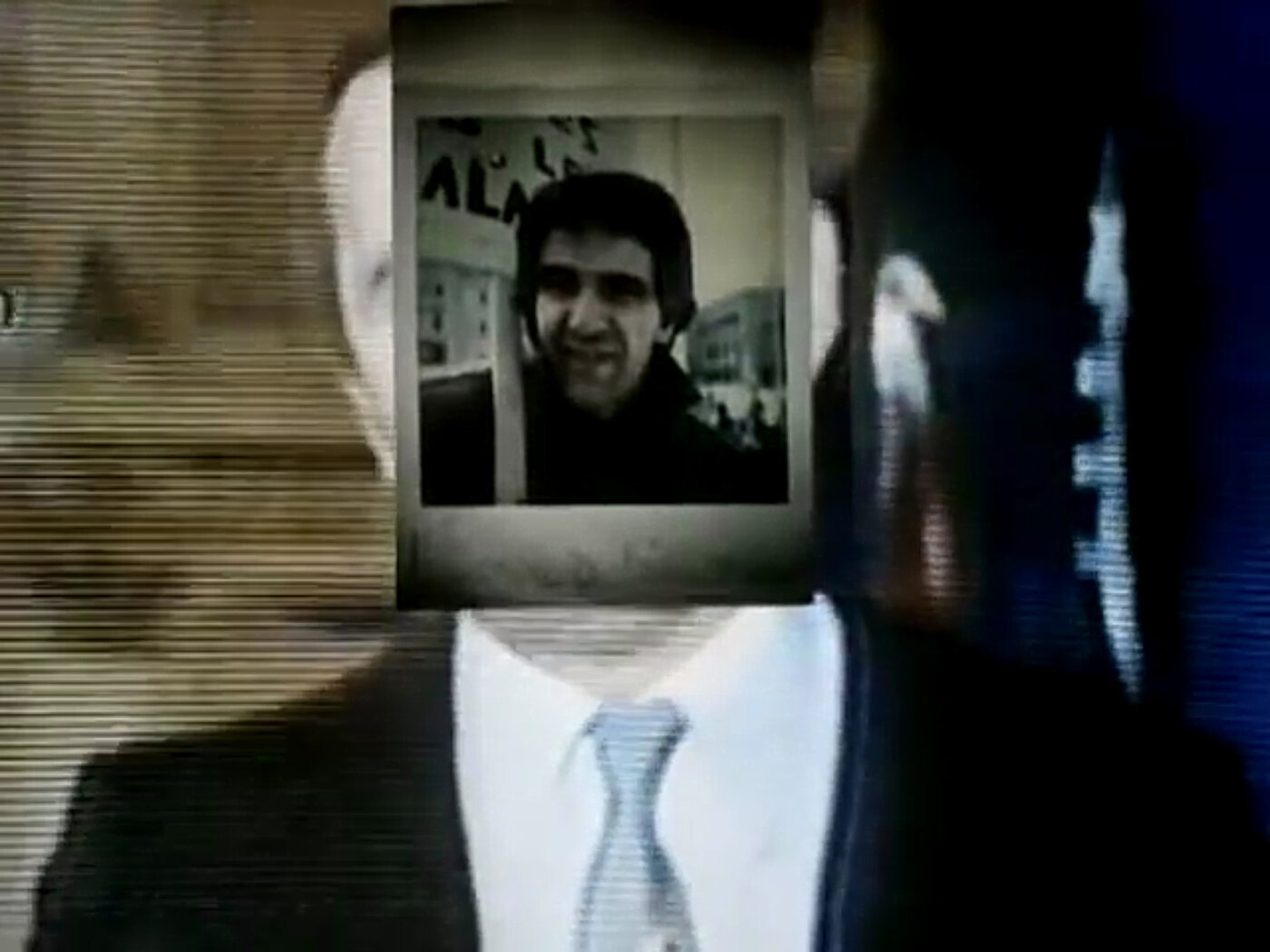
The Journey (Peter Watkins, 1987).
One of the film’s quietly revealing moments comes through an American woman who has been speaking sympathetically about the detrimental effects of US interests in Mexico. Asked what Americans might do, she proposes buying food for Mexicans and teaching them how to cook. The suggestion that Mexicans need American culinary instructions gives her paternalism a comic irony, but the comedy sharpens a more serious problem. She speaks with genuine concern and a sense of responsibility, yet the remedy she proposes leaves intact the relation she wants to change. Awareness of the problem has not in itself generated a solution adequate to the predicament. A quotation that appears near the end of the film seems worth recalling: “Against a great enemy, a small remedy would not produce a small result. It would produce no result at all.”
That contradiction shadows The Journey’s wager on the spectator. Watkins allows the connections among militarism, media, education, racism, colonialism, or gender to emerge through accumulation and juxtaposition. What remains less settled is why these relations take the forms they do. The film maps connections among states, military industries, corporations, universities, and broadcasters with extraordinary specificity, while class interests and imperial competition are rarely named as forces organizing those relations. That reticence may be inseparable from Watkins’s refusal to settle the argument in advance, but it increases the conceptual work the spectator must supply. An active viewer, however, is not automatically an adequate interpreter; what one makes of these connections depends on the ideas, experiences, and assumptions one brings into the film.
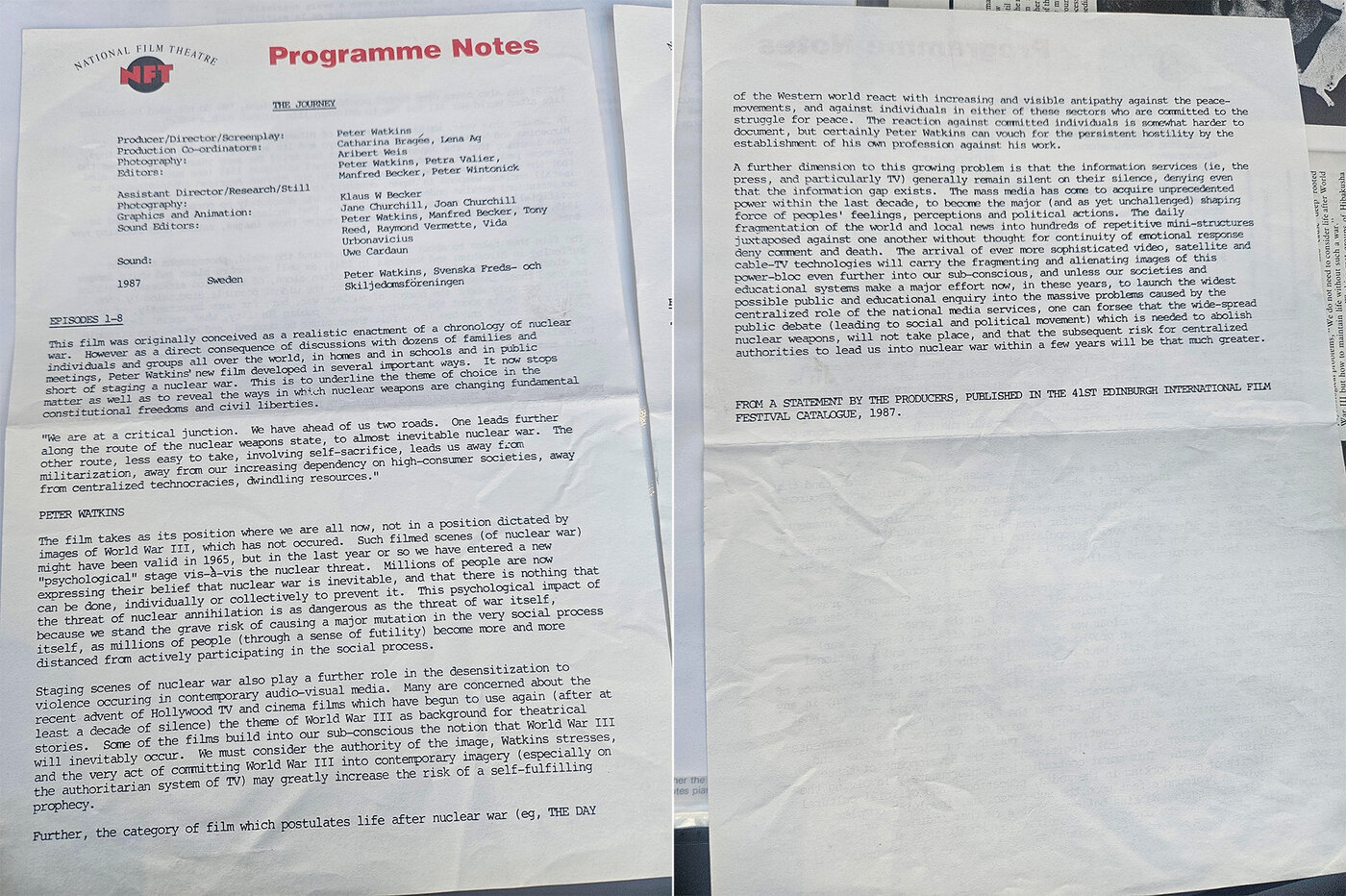
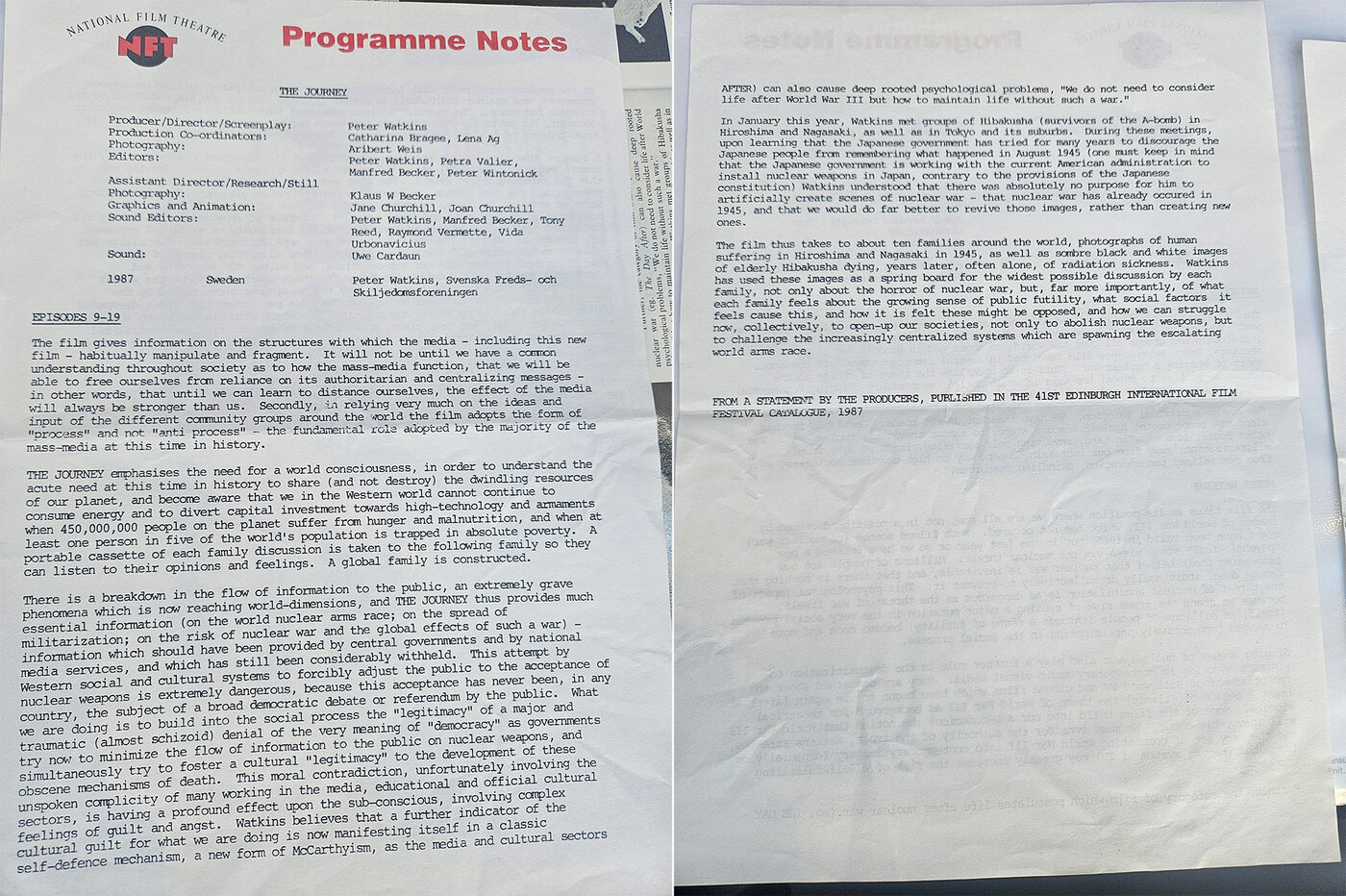
Program notes from The Journey's first screening at the BFI in the 1980s, courtesy of Patrick Watkins, brother of Peter.
That contingency became visible in the discussions following the BFI screenings. Watkins had designed The Journey for such encounters. Its nineteen sections, each around 45 minutes long, end with a question mark inviting discussion; in 1990, he and Vida Urbonavicius completed a 339-page User’s Guide proposing ways to use the film in educational settings. His interest in participation extends across his work. In Punishment Park (1971), performers improvised from their own political convictions; The Freethinker (1994) was made over two years with 24 students; and La Commune(Paris, 1871) (2000) involved performers in researching and debating the revolutionary history they were reconstructing. At the BFI, that invitation to participate was extended to the audience. Viewers questioned the political uses of images from nuclear atrocities, the usefulness of Watkins’s concept of the Monoform, the possibilities of media education, and the relation between information and action. Some also asked whether his interview technique itself manipulated the families he films. The question matters because Watkins’s alternative to predetermined meaning does not abolish mediation: He still chooses the families, poses the questions and constructs the encounters through selection and juxtaposition.
The conversations sometimes moved far beyond the immediate scenes we had watched. Yet one conclusion returned several times: People needed better media literacy, more education, stronger critical thinking. There is an obvious truth in this, but the ease with which the solution presented itself troubled me. Among spectators who had spent fourteen hours examining the workings of mass media, it risked placing the problem elsewhere, with those who had yet to acquire the critical habits we were exercising in the room. After a film that had traced the relations between schools, broadcasters, universities, corporations, military industries and states in such detail, the appeal to education seemed curiously detached from the conditions under which it might take place. Who is supposed to provide this education, through what institutions, in whose class and material interests, and from what position outside the interlocking structures Watkins has spent so long mapping?
The audience discussions could themselves become political. At one point the conversation turned toward the BFI itself—its funding, programming decisions, and the fact that a sold-out screening of Watkins’ final film, La Commune, was taking place in a smaller screening room while The Empire Strikes Back (1980) occupied the largest auditorium, leaving many unhappy about missing the rare chance to see Watkins’s final work on the big screen. A film concerned with the organization of public culture had helped produce a discussion about the institution in which we were watching it. The tension between the retrospective’s commitment to Watkins and the institution’s other programming priorities, illustrated by that allocation, did not diminish its value; it gave Watkins’s questions another material setting.

Australia, in The Journey (Peter Watkins, 1987).
But discussion can also become its own form of closure. To recognize media manipulation or the interests governments conceal may leave the spectator in the comfortable position of an already-informed critic, even a sort of schoolmaster standing above the uninitiated and abstractly calling for more education. Yet the institutions and social relations Watkins examines also shape the critic’s own position. Understanding and action are not two neatly separated stages, the first completed before the second begins; attempts to change those conditions can themselves transform our understanding of them, as ideas encounter material obstacles, conflicting interests and possibilities that could scarcely have been anticipated from a distance. The anger, solidarity and doubt that The Journey can provoke may contribute to such a process, but what becomes of those experiences depends on how they are taken up beyond the screening.
Watkins’s achievement lies partly in refusing to disguise that problem. The same form that gives the spectator unusual responsibility also reveals how limiting spectatorship can be. The Journey can open political thought without supplying a method for political action, and the distinction matters precisely because the intensity of watching, discussing, and recognizing may feel like action in itself. Yet the film also searches for forms of relation that move beyond isolated spectatorship. The White Train carries nuclear warheads from Pantex across the United States; the same railway links communities which begin communicating and organizing against it. An infrastructure built to move weapons becomes, however partially, a network for resistance. The film itself constructs an analogous network of circulation. A family near Glasgow records a tape for a family in Leningrad, who watch it and reply; Watkins then shows the exchange to people in Japan, Mexico, Tahiti, Australia, and the United States. Asked how often they have seen an ordinary Soviet family on television, viewers confront the distance between the geopolitical category of “the Russians” and the people speaking from a living room. As the tapes pass between households, the participants become interpreters of one another, taking on some of the work otherwise reserved for broadcasters. The warmth of these encounters is palpable, although the passage from interpersonal recognition to political explanation proves less straightforward.
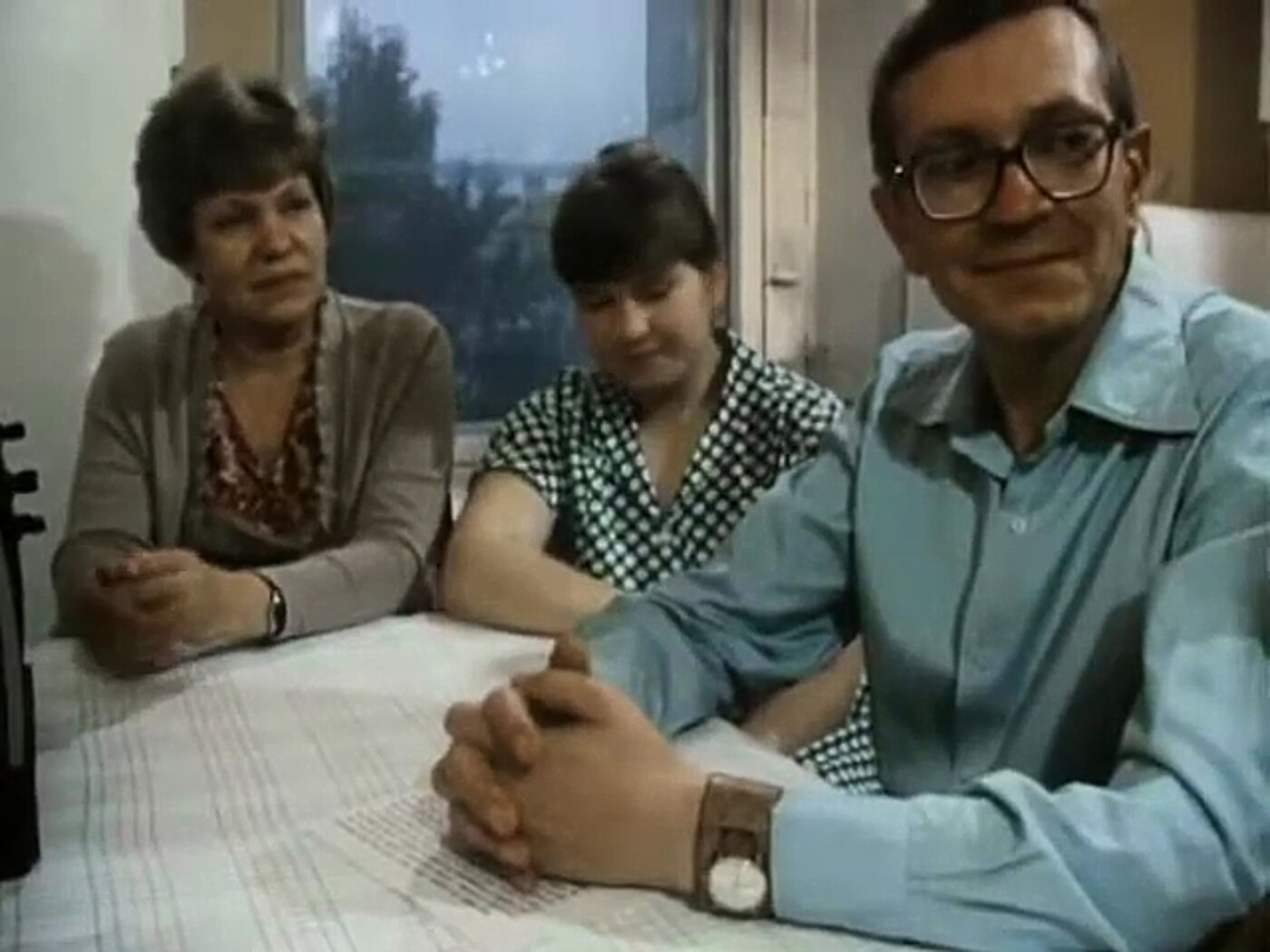
Leningrad, in The Journey (Peter Watkins, 1987).
One former US arms worker recalls that friends with different political views continued to support him after he left weapons production out of moral outrage. He reasons that if one country took the first step toward peace, others might reciprocate. The analogy grows from real solidarity, but relations between individuals are not equivalent to relations between states pursuing competing material interests. Watkins’s humanism is at once a source of the film’s force and, when treated as an explanation of international politics, a possible limit. The political value of these exchanges depends on what people make of them, not on contact alone. Near the end, as Watkins begins acknowledging the hundreds of people who have taken part, The Journey does not gather its fourteen hours into a final explanatory synthesis. The credits themselves remain porous to the world outside the film, as the closing titles instead direct viewers to local peace, social justice, and development-education groups, as well as film distributors, for information about resource guides, media research projects and other ways they might “carry on the work” of the film. An address and telephone number for its international coordinator at the Swedish Peace and Arbitration Society are also provided. The film thus extends its work beyond the screening, proposing avenues for further research, discussion, and collective activity.
That closing invitation leaves intact an uncertainty which is perhaps less a defect to be solved than the terrain on which Watkins’s political cinema operates. The Journey points spectators toward forms of collective activity, but it cannot turn spectatorship into political action, and its openness offers no protection against partial or inadequate conclusions. What it can do is make passive reception more difficult: slow down the circulation of ready-made meanings, reconnect that which conventional media forms fragment, and create situations in which images, information, and people can begin to act upon one another. Political art cannot complete that journey for us; Watkins’s wager is that it might alter where we begin.