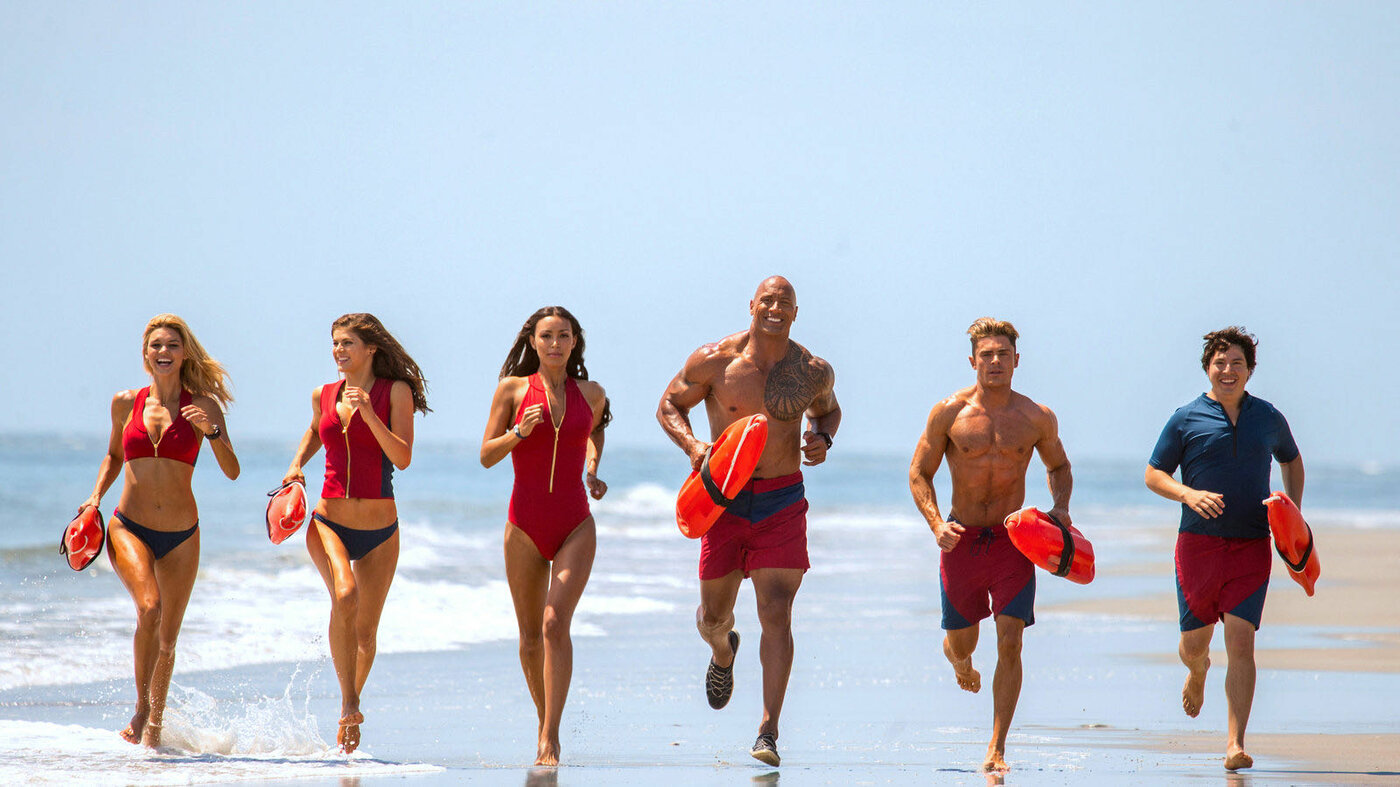
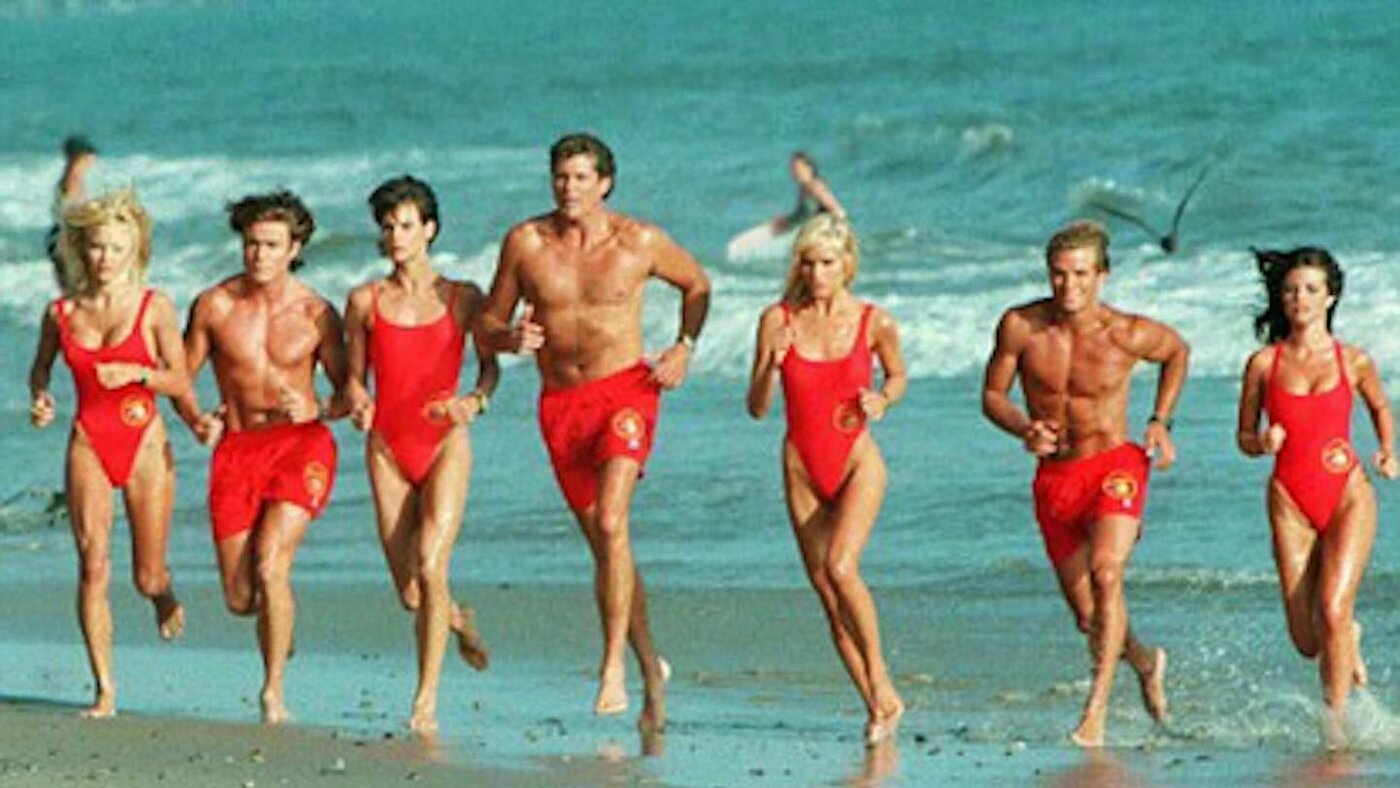
Top: Baywatch (Seth Gordon, 2017). Bottom: Baywatch (1989–99).
In Seth Gordon’s Baywatch (2017), Matt Brody, a disgraced swimmer-turned-lifeguard played by Zac Efron, listens to his coworkers describe various crimes and mysteries that have rocked the shores of their popular, surprisingly dangerous beach. “Everything that you guys are talking about sounds like a really entertaining but far-fetched TV show,” he says with sardonic disbelief.
Brody’s statement is an acknowledgement of Baywatch’s parentage: the successful NBC drama of the same name that ran from 1989 to 1999. The show became massively popular in syndication—by 1996, it was the most-watched show in the world—and kept David Hasselhoff’s star aloft while launching Pamela Anderson’s into the stratosphere. Elements of the series became culturally ubiquitous, particularly its opening credits, which featured its attractive cast running in slow motion along the beach with all the right parts of their bodies bouncing or staying firm. No one considered it sophisticated fare—it was candy. It was TV.
For decades, film studios have found bankable ideas on the small screen, turning shows, with all their catchphrases, formulaic storylines, and beloved characters, into movies or franchises, but often with winking antagonism. Efron’s line shames the film’s source material in a ritual dressing-down found in many television-to-film adaptations, implicitly reinforcing the historic, cultural, artistic, and economic distance between the two mediums. This friction dates to a film-industry recession in the early 1950s, when the growing television audience was cutting into box-office sales. Studios introduced larger formats, like VistaVision, Cinerama, and CinemaScope, to emphasize the sheer size of the cinema screen, reminding viewers that they couldn’t get the full movie experience at home.
Prestige TV—a term often associated with HBO’s programming beginning in the 1990s, from The Larry Sanders Show (1992–98) to Oz (1997–2003) to The Sopranos (1999–2007)—has attempted to collapse the perceived artistic distance between the two mediums. Silver-screen adaptations of pre-peak-TV shows, however, give us a crucial vantage on cinema’s relationship to television in the days before Severance (2022–) and The White Lotus (2021–). Feature films like Dragnet (1987), The Brady Bunch Movie (1995), and The Beverly Hillbillies (1993) rely to varying degrees on ironic reflexivity, often mining laughs from the differences between movies and TV in that era. Though television-to-film adaptations adopt a variety of forms and tones, ranging from straight-faced reboots with new actors (think: Mission Impossible, 1996; The Equalizer, 2014) to larger-canvas facsimile of their source material (right down to the same cast, as in Sex and the City: The Movie, 2008; Entourage, 2015), the big-budget reflexive comedy is the genre that exposes how film thinks about TV.
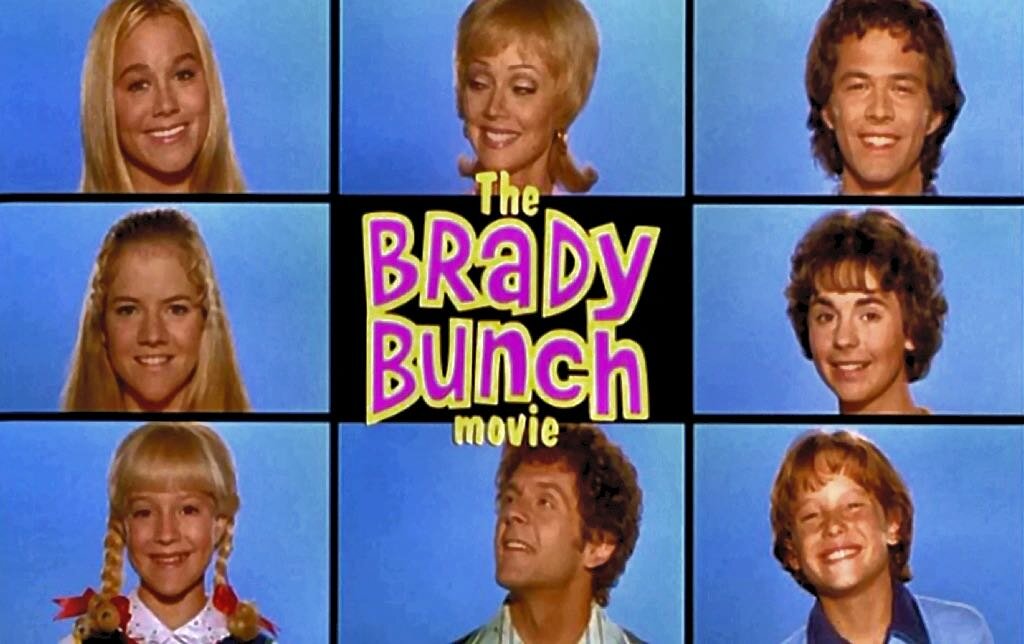
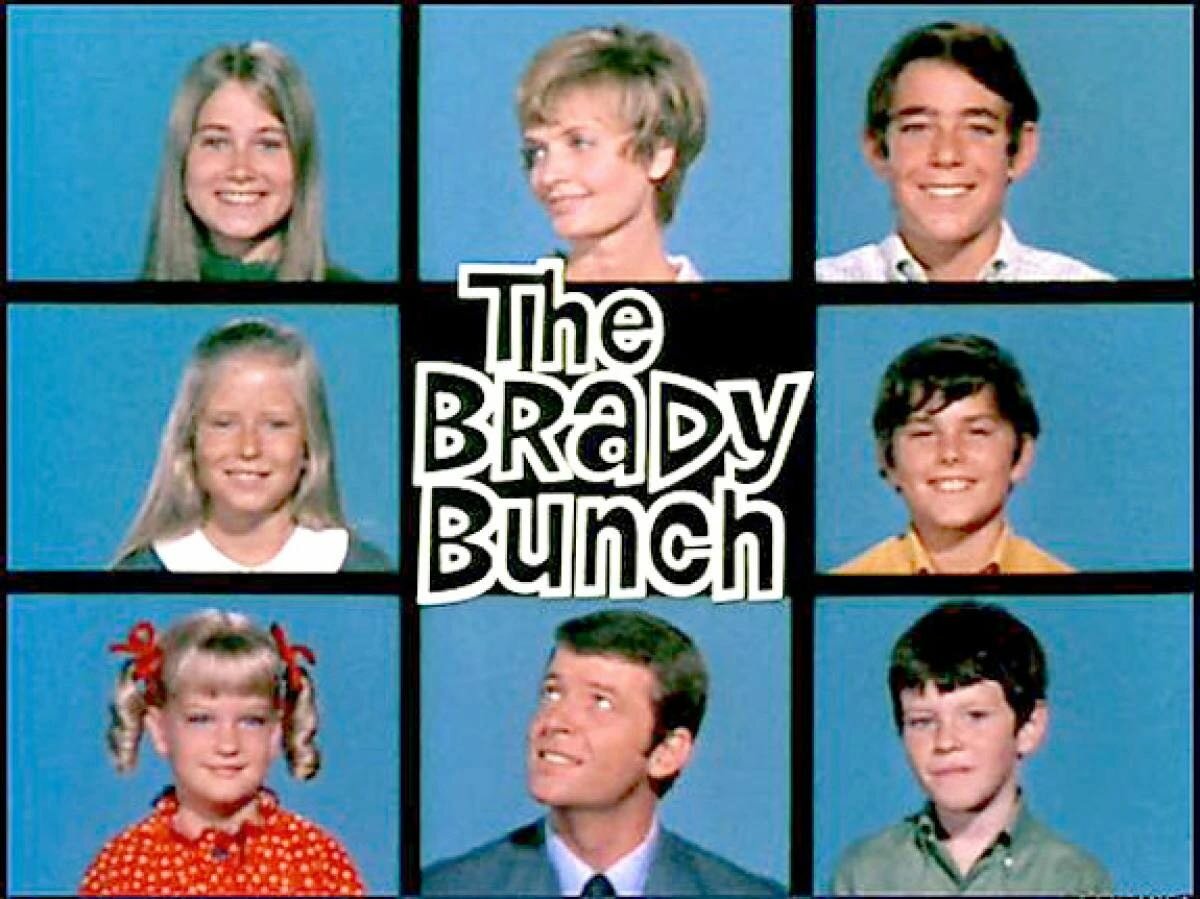
Top: The Brady Bunch Movie (Betty Thomas, 1995). Bottom: The Brady Bunch (1969–74).
The 1990s ushered in a wave of blockbusters based on TV’s bygone classics, like The Addams Family (1991) and The Flintstones (1994). Among them, The Brady Bunch Movie (1995) stands out. Not only does Betty Thomas’s film satirize both the clean-cut image of the original series and the crasser culture of the 1990s, but it also elucidates the formal tensions between television and cinema in a radically disjunctive way. Thomas drops the titular Bunch—and a soundstage replica of the original Brady compound (including the backyard, matte-painting sky and all)—into the late grunge era, ’70s fashion sense and sensibilities completely intact. Through retro lighting, framing, and music, Thomas recreates the aesthetic of the show on the big screen, keeping the stagey sitcom form uncannily intact. When the film moves outside the Brady home, however, its style becomes more naturalistic, abandoning the chipper score and sitcom-friendly camera placements for the cacophony of the outside world and ’90s rock. When Cindy (the youngest one, in curls) leaves the Bradys’ backyard and enters that of their neighbors, she steps off of the turf of the soundstage and onto the grass of a real-world lawn. She remains unnaturally innocent and oblivious to this aesthetic change, but the world she finds herself in is cynical and coarse. The film’s humor comes from this gee-whiz-meets-Gen-X dynamic—bell bottoms meet butt cuts, polyester meets punk, goody two-shoes meet slackers.
The dynamics and activities of the Brady family are largely faithful to, if not fully lifted from, the original series. Small comic choices emphasize the predictability of the characters’ actions and reactions. On the big screen, the show’s quaint and safely familiar characterizations appear exaggerated, and at times pathological (Jan’s obsessive jealousy toward Marsha swells into full-blown psychosis when she begins to hear demonic voices). On TV, the Bradys were a normal American family, but now, on film, they are bizarre. The actors portraying the Bradys aren’t playing them as idealized family members of the late 1960s and early 1970s, as the series’ original actors were; they’re comedic actors slyly riffing on this idealization. Much of the film’s comic tension comes from their refusal to respond to their contemporary circumstances, as when Mr. Brady (Gary Cole) keeps presenting his boss at the architectural firm with the same design, that of the 1960s modern Brady house. Cole never blinks, but continues with the same warmth and aw-shucks optimism through every successive rejection of it. His reality seems to be unfolding on another plane, and his performance, so unmovable and nonreactive, scans as stylized. The Brady Bunch Movie highlights the artificiality of the Bradys’ world, which was a bit too smooth around the edges even when it was on the air. That the family, or essentially the sitcom itself, is frozen in the early ’70s even though it’s the ’90s also evokes the nature of syndication, which keeps contemporary viewers watching shows from previous decades even as culture has moved on.
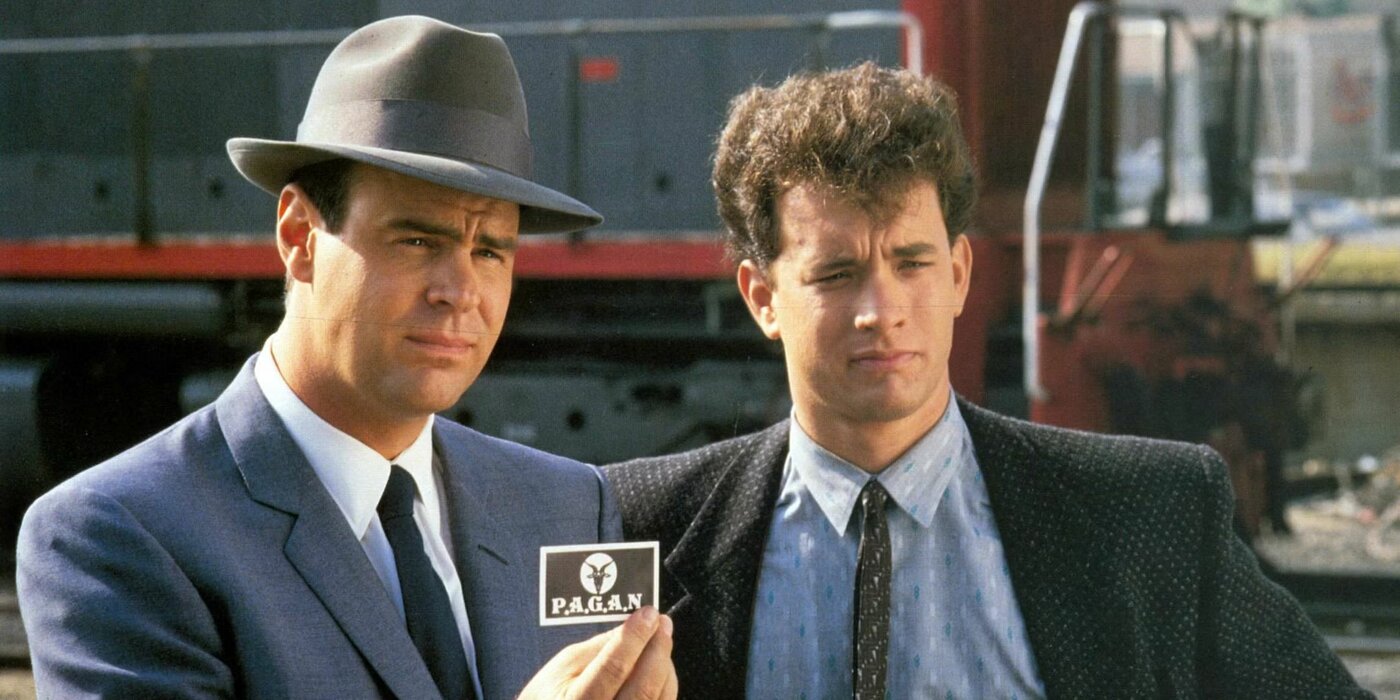
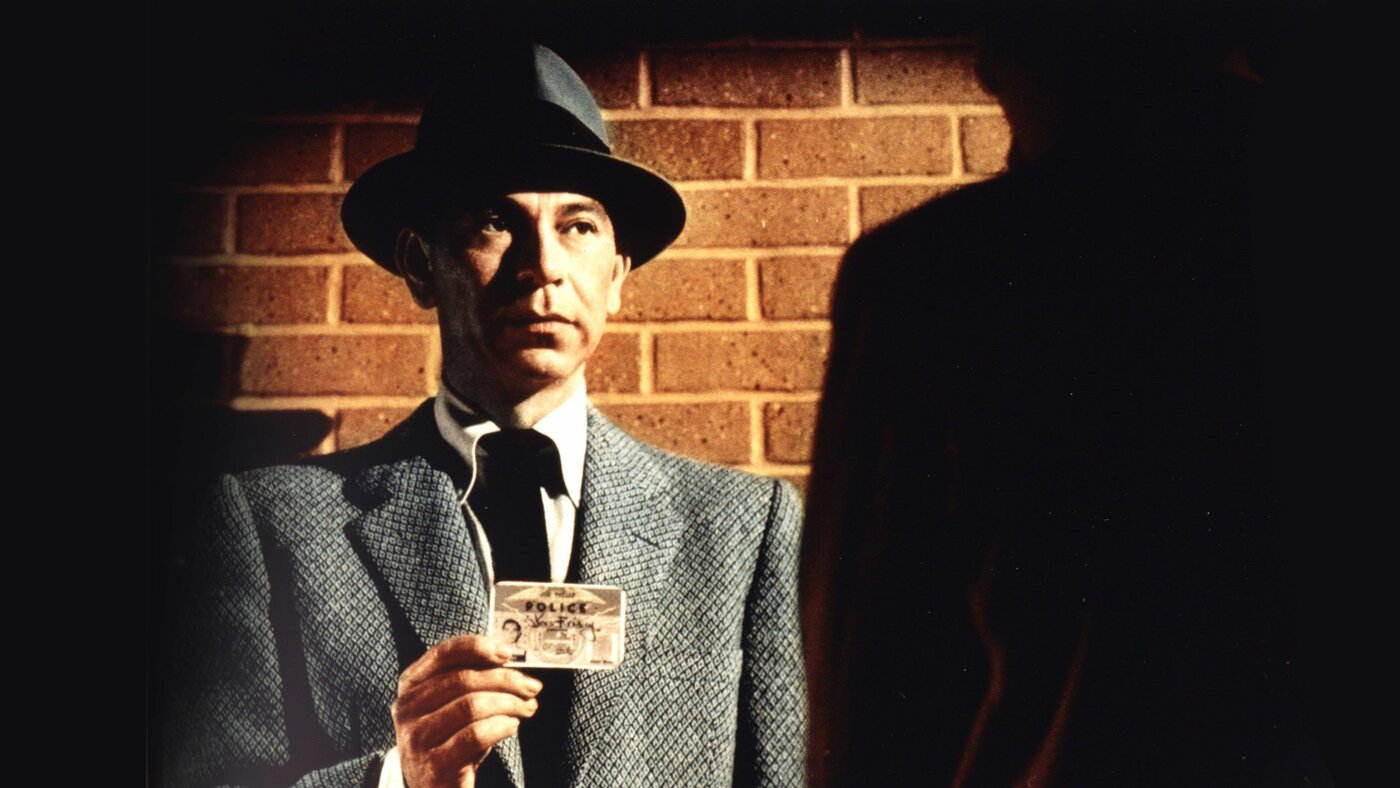
Top: Dragnet (Tom Mankiewicz, 1987). Bottom: Dragnet (Jack Webb, 1954).
In 1978, John Fiske and John Hartley’s Reading Television was the first book to undertake an in-depth cultural exploration of television. In his introduction to the second edition, Hartley illustrates how TV, in its early decades, was met with derision by academics and critics. Watching television was defined as a behavior—one with a largely negative cast—and thus serious study was relegated to a branch of psychology; critical focus wasn’t on the programs themselves, Hartley explains, but on how detrimental the act of watching television was to society as a whole. “Throughout television's short history, academic and a good deal of journalistic criticism of the medium were dedicated to ‘disciplining’ it as if it were a disorderly child,” writes Hartley. This sense of constant punishment inevitably had an impact on what did appear on television, which sought “to make itself as safe as possible, not to be too adventurous, to be disciplined in the way that a boarding school is supposed to be disciplined—by prohibition and uniformity. [...] Its aspirational philosophy was to ‘aim low and miss’ like Homer Simpson, because it feared regulation.”1
Such an attitude spawned whitewashed, formulaic shows like The Brady Bunch (1969–74), Happy Days (1974–84), and their predecessor Leave it to Beaver (1957–63, which got its own winking big-screen comedy adaptation in 1997 and a made-for-TV feature-length reunion show, Still the Beaver, in 1983). The Brady Bunch Movie makes aspects of Hartley’s argument explicit: From the 1950s through the late ’80s, many shows on television were characterized by a risk-averse approach to content, with production teams policing themselves to avoid political and legal repercussions. For sitcoms like The Brady Bunch, these dynamics led to heavily moralistic storylines, with the networks’ conservative demands tethering scripts to family-oriented themes and avoiding topics like drugs, alternative sexuality, corporate greed, and middle-class financial peril—all of which are covered in Thomas’s film. But such sitcoms’ limitations were also formal, adhering strictly to the multi-camera, in-studio set-up. There were a few notable exceptions during this period, like the satirical soap operas Soap (1977–81) and Mary Hartman, Mary Hartman (1976–77). And by the late ’80s, there were a number of sitcoms, like Married… with Children (1987–97) and Seinfeld (1989–98), that still utilized this formal setup, but did so while rejecting rigid and morally upright messaging.
In Tom Mankiewicz’s Dragnet (1987), Dan Aykroyd’s interpretation of Joe Friday embodies the traits Hartley uses to describe TV: He resorts to euphemism, defers to authority, plays it safe, conforms to regulations, and even gets his kicks reading a magazine called American Moral Companion. He’s a fish out of water in late-1980s Los Angeles, here a hotbed of crime and moral degradation, but with the compensatory benefit of sex, drugs, and rock ’n’ roll. Friday’s partner, Pep Streebeck (Tom Hanks), acts as a Virgil figure of sorts, leading the out-of-touch detective through the real LA of 1987. Jack Webb’s original procedural (1951–59, 1967–70) began as a radio drama before spawning several television and TV-movie incarnations in the ’50s, ’60s, and ’70s, and even one earlier, by-the-book big-screen outing (1954). Mankiewicz’s Dragnet trades the staid drama of his source material for comedy, updating its tone in the same way it remixes the show’s famous theme song for the opening credits (a fabulous dance track by Art of Noise, with Joe Friday’s “just the facts, ma’am” catchphrase sampled liberally). The film finds humor in the fact that Aykroyd’s Friday—canonically the nephew of the ’60s series’ Joe Friday—is such an earnest, retro dork, stuck in his ways. As in The Brady Bunch Movie, there is a larger critique of American mores at play in Dragnet, which hinges on an anachronistic character’s entrance into a contemporary world. Here, Friday resists even approaching the speed limit while driving for fear of breaking the law, even when pursuing a suspect, inadvertently creating the vehicular chaos he’s trying to avoid. Streebeck eventually becomes so frustrated with his partner’s excessive caution that he no longer allows Friday to drive.
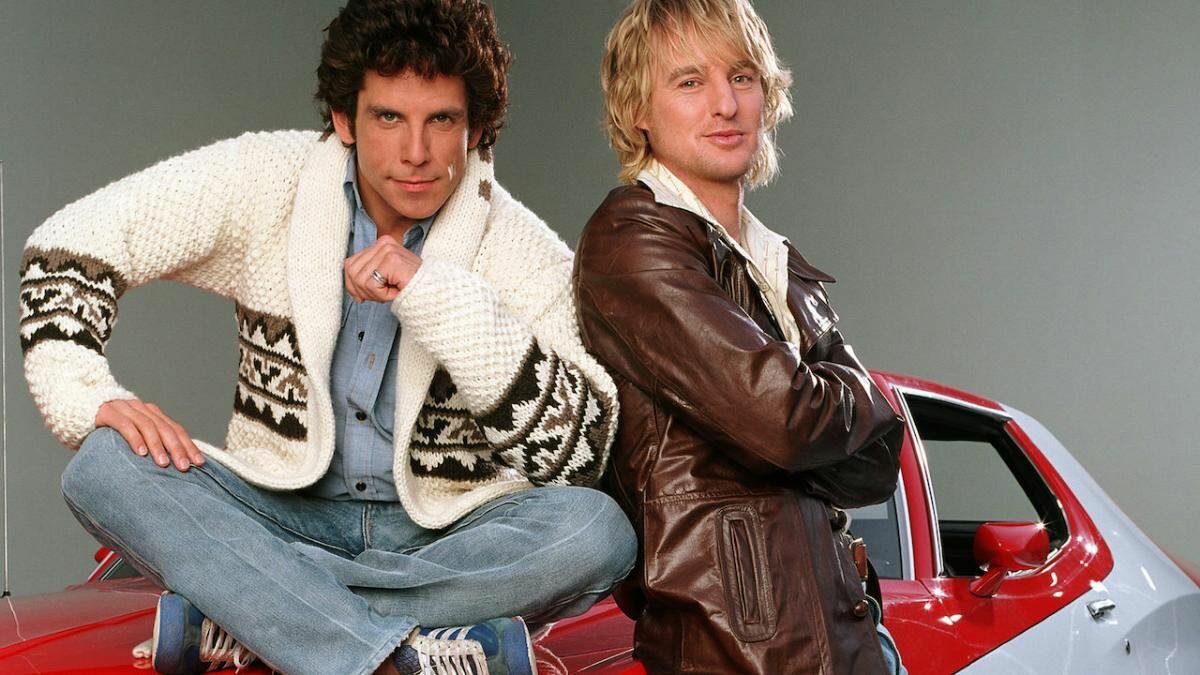
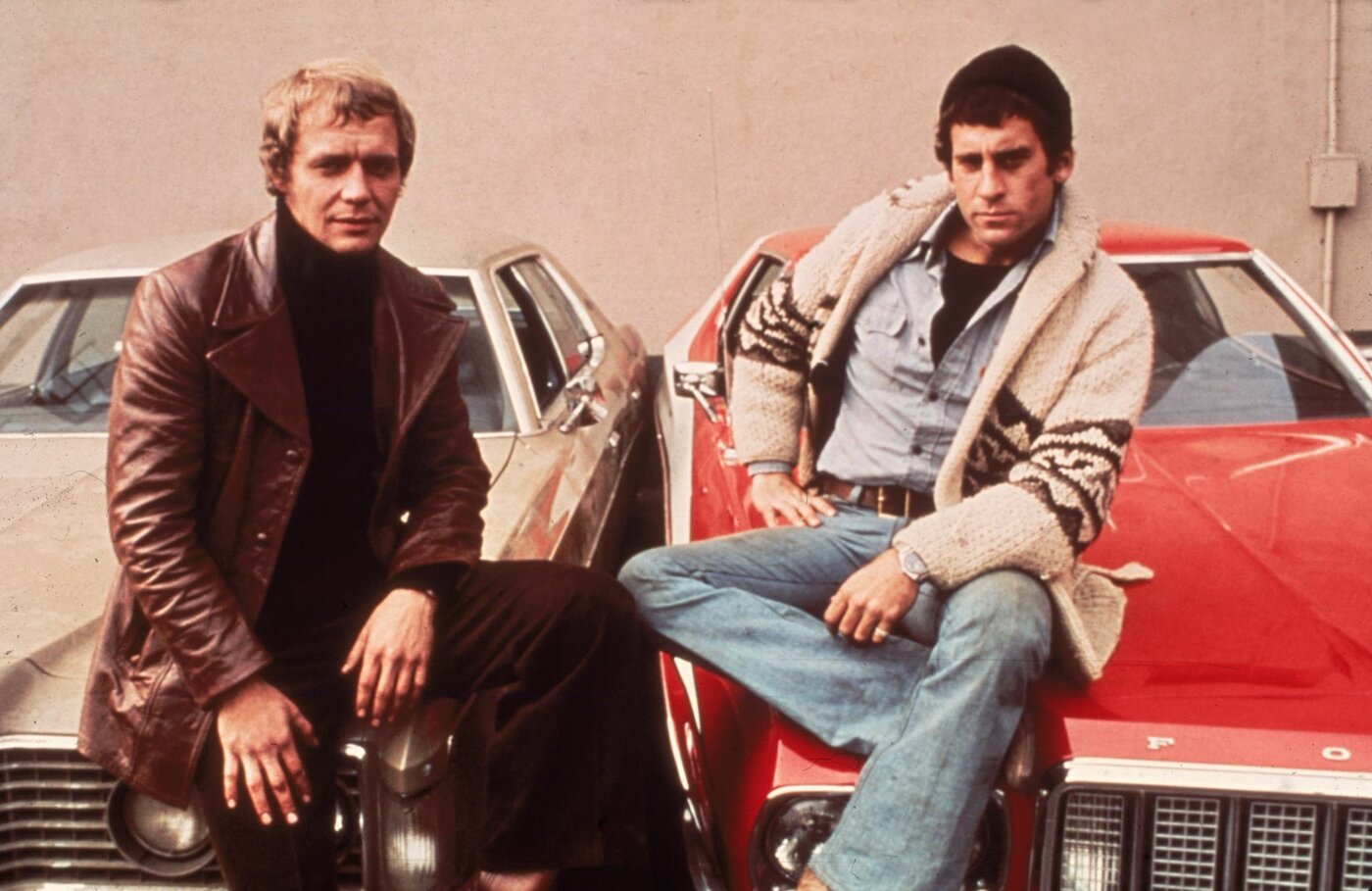
Top: Starsky & Hutch (Todd Phillips, 2004). Bottom: Starsky & Hutch (1975–79).
The Fox television network, launched in 1986, changed the calculus of what was acceptable on the airwaves with comparatively brazen series like Married with Children (1987–97), The Simpsons (1989–), and Cops (1989–). Other networks, in an effort either to compete or to adapt to a general shift in cultural tone, began to take more risks with profanity and nudity. ABC’s NYPD Blue (1993–2005) showed Dennis Franz’s naked butt in one 1995 episode, a major cultural event and controversial ratings sensation that contributed to the founding of the Parents Television Council. By the 2000s, FCC standards had entered a gray area, with murky boundaries between “obscene” language, which was prohibited, and "indecent" language, a vaguer tier of sexual or excretory references, which could air late at night after children had supposedly gone to bed (the word “shit,” for instance, made its television debut on Chicago Hope in 1999). This paved the way to edgier, raunchier film adaptations of television properties. The 2000 adaptation of Charlie’s Angels, a bombastic PG-13 spy romp, riffs on the hotness of the ’70s television series’ stars through excessive sexual jokes and elaborate setups that leave its actresses nearly naked or miming sex acts. The Ben Stiller and Owen Wilson–fronted Starsky & Hutch (2004) delights in violence and drug use, leveraging both to claim a form of perverted realism.
Films like 21 Jump Street (2012) and Baywatch, produced well after this shift had taken place, also seized on this culture of permissiveness in a cruder, more sophomoric way than had their ’80s and ’90s source material. Both take their respective shows’ premises and add profanity, drugs, excessive gore, and sex to the mix, reifying previous decades’ understanding of TV as a sanitized medium through the films’ winking vulgarity, newly emboldened in R-rated, big-screen contexts. But this particular strain of adaptation takes a tediously ironic approach that now feels like a stale cultural relic. Profanity may give these adaptations a veneer of realism in attitude, but the adult drama is missing, and their simplistic narratives don't stray all that far from those of the original programs. Instead of a more complex, ambiguous reinterpretation of a television show, viewers are getting the “but what if they cursed?” formula, with gratuitous profanity lifted from better works: think Scarface (1983), Goodfellas (1990), Clerks (1994), and Superbad (2007)—or even South Park: Bigger, Longer & Uncut (1999), which makes the locus of its narrative the very idea of profanity itself.
Formally, this wave of adaptations remains as conventional as the shows they hope to lampoon, eschewing the thoughtful critique and experimentation of The Brady Bunch Movie for cheap, often homophobic teenage-boy chuckles and throwaway groaners about their status as remakes. When giving Officers Schmidt (Jonah Hill) and Jenko (Channing Tatum) their assignments to infiltrate a high school, just as Officers Hanson (Johnny Depp) and Penhall (Peter DeLuise) had in the original 21 Jump Street series (1987–90), Deputy Chief Hardy (Nick Offerman) addresses the remake phenomenon explicitly: “Fortunately for you two, we’re reviving a canceled undercover police program from the ’80s and revamping it for modern times. You see, the guys in charge of this stuff lack creativity and are completely out of ideas, so all they do now is recycle shit from the past and expect us all not to notice.” Of course, everyone notices, and in a landscape that, by 2012, was already rife with horror remakes, franchise revivals, and late-era sequels, noticing was the whole point—a supposed driver of fan interest, ticket sales, and online debate. Offerman’s line was designed to cheekily get ahead of the criticisms that tend to swarm the endless recycling of old material and characters in new movies. But it also seems to channel the filmmakers’ own frustrations, questioning why it's necessary to hitch one’s wagon to existing intellectual property, no matter its reputation, in order to get a project off the ground.
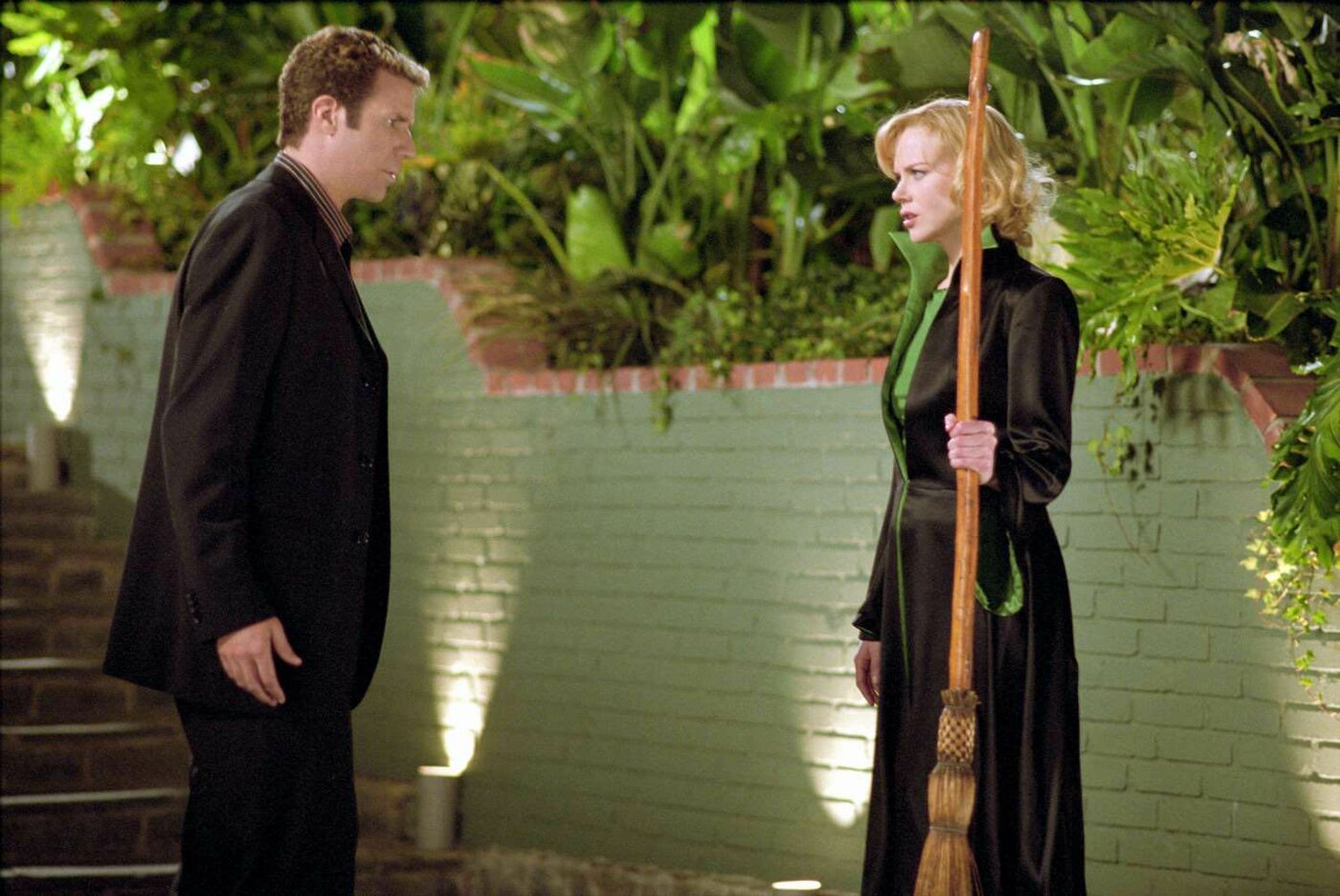
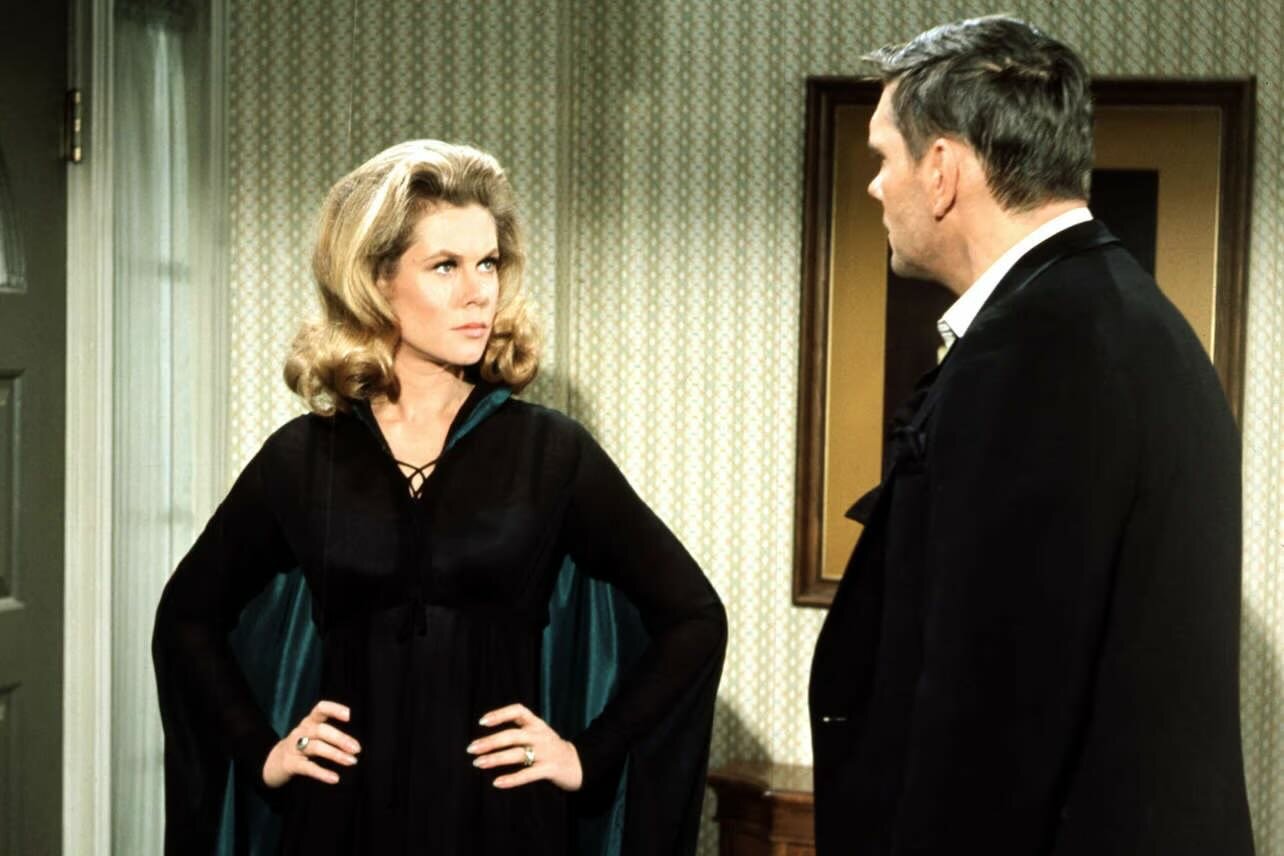
Top: Bewitched (Nora Ephron, 2005). Bottom: Bewitched (1964–72).
Rather than recycling IP and peppering in cheap contemporary references, Nora Ephron’s Bewitched (2005) considers and builds on its source material in a more conceptual fashion. Ephron does not dress Bewitched (1964–72) down as a low-grade cultural product, but treats it as good art, the basis for a larger work of fantasy. In this way, Bewitched, the film, represents the most mutated form of TV adaptation, folding the Y2K era’s fever for metanarratives (with films like Being John Malkovich, 1999, and Adaptation, 2002, and TV shows like Arrested Development, 2003–19) into a seemingly more psychologically realistic romantic comedy. In the world of Ephron’s film, the sitcom Bewitched exists, and Nicole Kidman, who happens to be a real witch herself, is cast as Samantha in a contemporary remake of the show. It’s a cute premise that pokes fun at the making of television and inflated celebrity ego, but beyond this, it doesn't offer much in the way of a meaningful cinematic interrogation of TV. Bewitched is simply a springboard for Bewitched the movie, which, in the end, turns out to be a pretty direct adaptation of the show, one meta-step removed. Unlike the Brady Bunch Movie, which unflinchingly adheres to its bizarre fish-out-of-water concept, the remake conceit facilitates a practical, diegetic reason for Bewitched to mimic the style of the series, and then pulls away from it to establish a sense of realism and reflection in Kidman’s character’s actual life and romantic sagas. Nicole Kidman, a movie star, also offers Bewitched an emotional depth that was once considered exclusive to the big screen, her copious tears creating distance between the original’s cartoonish flatness and Ephron’s hoped-for three-dimensionality.
Ephron’s film is more like Christopher Nolan’s take on Batman than Thomas’s brilliant Brady Bunch satire, inasmuch as they both attempt to lend depth and realism to pop culture properties. Both Ephron and Nolan give audiences permission to enjoy the shows and characters from their childhoods, now in adult sizes. Ephron’s film takes its subject seriously and considers its validity as worthwhile drama prima facie, a perspective that would have been unthinkable in earlier decades. During the boom of TV adaptations in the early ’90s, films like The Beverly Hillbillies (1993), The Addams Family, and The Flintstones served as opportunities for satirical critiques, kitschy throwback fun, or cartoons come to life. As brilliantly executed as the Flintstones movie is, it’s not supposed to be understood as an isolated work severed from the context of the original Hanna-Barbera show. Nolan’s Dark Knight movies, on the other hand, are more of an outlet for the director’s vision and thematic interests than a direct reproduction of the comics and graphic novels they’re partially drawn from; they explore many of the same ideas, such as vigilantism, the moral ambiguity of justice, and what means are acceptable in the pursuit of a greater good, that are present in the director’s other work.
By the 2010s, the hunter had become the hunted. TV began to critique movies: Scream Queens (2015–16) riffed on slasher films, Feud (2017) dramatized film history (notably, both were created by Ryan Murphy, a celebrant of film culture, but a TV auteur), and Documentary Now (2015–22) parodied both acclaimed nonfiction works and their fawning, stodgy critical adoration. Nowadays, when classic sitcoms like Frasier (1993–2004), Will & Grace (1998–2006), Full House (1987–95), or Roseanne (1988–97) are rebooted, it’s telling that they don’t hit multiplexes as big-budget adaptations, but rather stay in their native format, revived as episodic series on cable or streaming services. Any high-minded critique of their formulaic premises, their cringeworthy storylines and characters, or the passé aspects of their original period can be handled on television, which itself has purportedly matured to the level of cinema. Shows like Succession have embraced cinematic visual language and production value, open-ended story structures, and improvisatory acting techniques. Given the clear inheritance prestige shows have accepted from cinema, a Succession, White Lotus, or Severance big-screen adaptation would feel redundant. A conventional feature film would theoretically be more limiting, requiring a roughly two-hour running time and a closed narrative—structures these shows readily eschew. The type of television shows that films formerly parodied are largely gone from the conversation, barring the errant, conservative-coded Tim Allen sitcom (which is always essentially a spiritual reboot of previous Allen-fronted fare, anyway). To attempt something reflexive like The Brady Bunch and Dragnet, film adaptations would have to shift their focus to less respected yet ubiquitous modes of TV: “unscripted” dating shows, housewife dramas, true crime, and reality competition fare. But TV has already done a fine job of lampooning itself with shows like The Kroll Show (2013), and most recently, The Curse (2023–) and The Rehearsal (2022–).
If so much cinematic language has been adopted by television, it brings popular cinema to a critical inflection point. To truly hold a candle to television, the movies must evolve, and not only toward bigger and bigger productions and franchises that respawn like endless television seasons. If the logic of these ’90s adaptations holds, a big-screen spin on Vanderpump Rules could be a witty, critically-minded crowd-pleaser, but that’s not quite an evolution. A revitalized cinema would call for new forms of film grammar, putting TV back on the defensive and daring it to catch up.
- John Hartley, introduction to Hartley and John Fiske, Reading Television (2nd ed., 2003), xvi. ↩