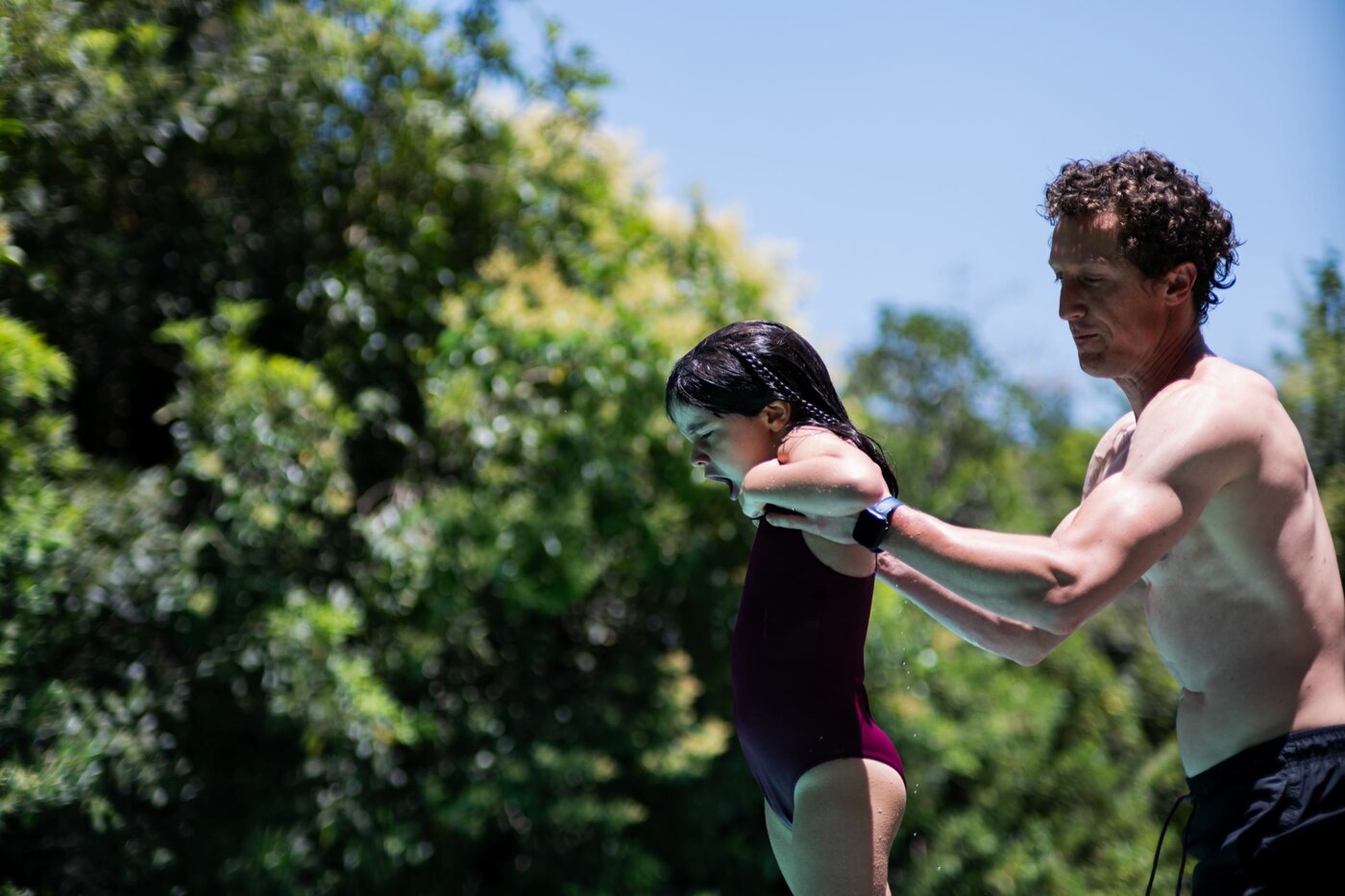
Cristóbal (Benjamin Westfall) prepares to drop his daughter, Julia (Rosa Puga Vittini), into a swimming pool. All photographs by the author.
When Dominga Sotomayor was five years old, a fire tore through the commune on the outskirts of Santiago where her family lived. “I never saw the fire,” she recalled three decades later, “because I was in a water tank with a friend, thinking I would survive there. I heard all the screams, I knew it was a big fire, but I never saw the fire itself. So it was all in my imagination.” That childhood memory—remaining in darkness, up to her waist in water while a fire raged around her—became a kind of origin story for her cinema.
In Too Late to Die Young (2018), the memory is reinterpreted: Two little girls wade into a river as the air around them thickens with smoke from a nearby fire. Sotomayor transforms the fear of the invisible into a moment of confrontation, restaging her own concealment into exposure. Yet the feeling of her harrowing childhood experience remains—the sense that fear moves first through one’s skeletal structure, via vibration and sound, and that what we imagine can be more terrifying than what we finally face.
In her latest film, Swim to Me (2025), water returns as a motif, but its meaning shifts. What was once a source of shelter now becomes a battleground. The film opens with a six-year-old girl, Julia (Rosa Puga Vittini), being tossed into a swimming pool by her father, Cristóbal (Benjamin Westfall), who insists she will learn to swim by instinct. Unlike the opaque tank of Sotomayor’s childhood, the pool is crystalline—its transparency is merciless. Everything is visible: the family, the nanny Estela (María Paz Grandjean). The scene is also captured by the home’s closed-circuit security cameras. Here, water no longer protects; it reveals, exposes, and endangers.
I was on set as the sequence was filmed. It was the height of summer in Chile, the sun’s reflection bouncing off the pool tiles. Rosa laughed between takes as Dominga, barefoot, jumped into the pool beside her to demonstrate how to convincingly swim poorly. The moment, both playful and tense, carried the same undercurrent of unease that ripples through the finished film.
Between opacity and transparency, absence and observation, lies the terrain of Sotomayor’s cinema. Too Late to Die Young unfolds in a commune of modest means, where class distinctions blur in dust and smoke; Swim to Me enters the glass-walled home of an affluent family, where inequality is built into the architecture itself. The house becomes what Sotomayor calls a “terrarium”: an ecosystem of constant visibility where inside and outside collapse into each other. Estela’s small cabana, set apart from the main structure with a frosted-glass door, embodies that dynamic—a space both included and excluded, accessible at all hours yet just beyond reach.
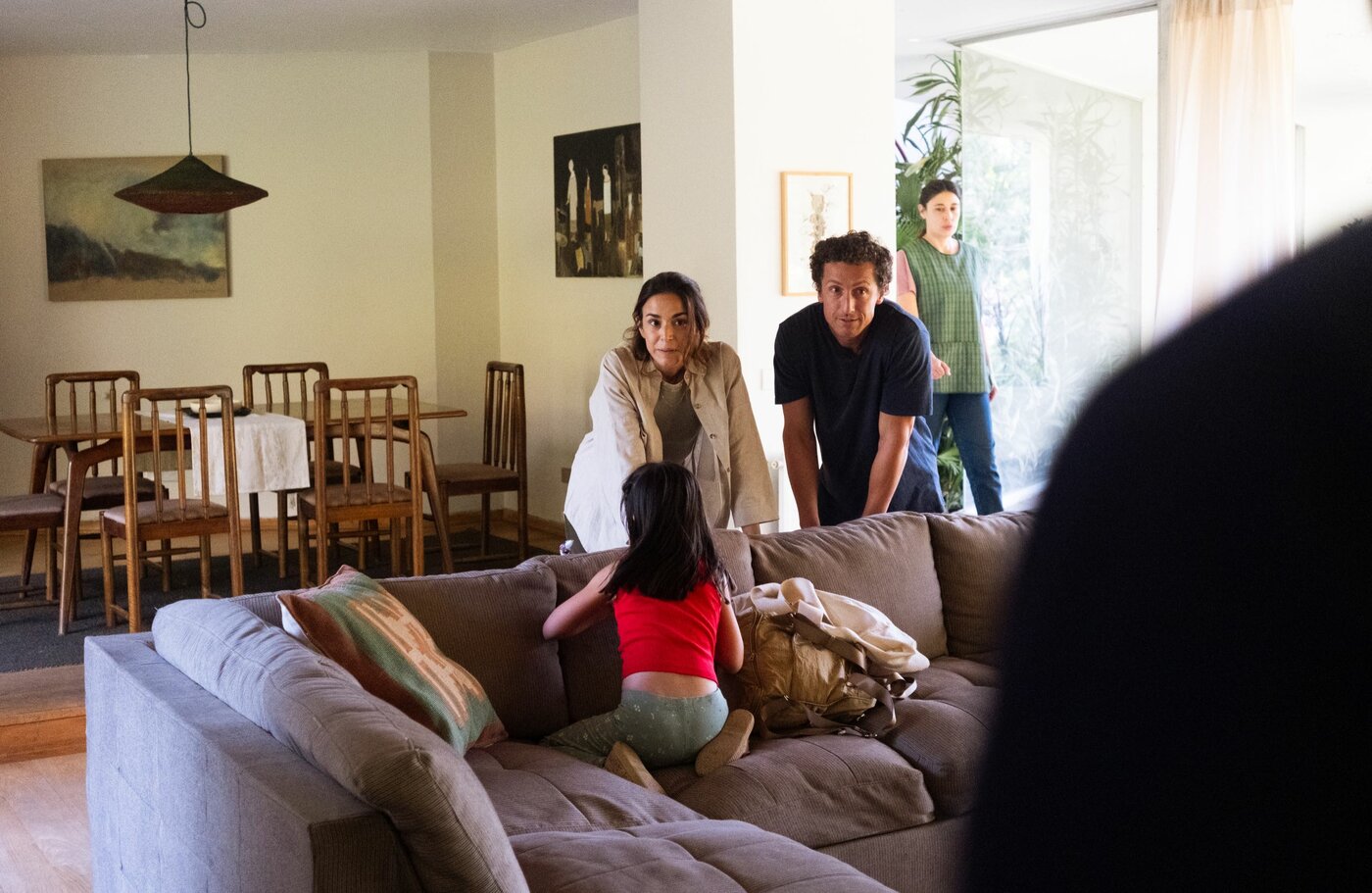
Sotomayor directs a scene in the family’s living room with Mara (Iganaia Baeza), Cristóbal (Westfall), Julia (Vittini), and Estella (María Paz Grandjean).
The film is an adaptation of Alia Trabucco Zerán’s 2022 novel, Limpia, which is narrated by Estela. Sotomayor translates her voice into action, gesture, and silence. Estela’s ghostlike presence hovers at the edge of every frame—visible yet unacknowledged, always part of the household but never fully included. Her bond with Julia becomes the spark that ignites the film’s combustible core. “Estela and Julia are a family inside a family,” Sotomayor tells me. Their tender intimacy turns at times to cruelty, an unease that can never be fully resolved.
Swim to Me is not about open conflict but about the violence of the everyday: a careless Christmas gift, a father scolding his daughter for singing “slum tunes,” the death of a neighborhood dog. These small moments accumulate into what Sotomayor calls “a tragic structure”—the impossibility of having someone work inside your home without reproducing inequality.
The film’s New Year’s Eve party was shot just days after the real celebration that rang in 2025. The night of the shoot, time folded in on itself with every take. We reached midnight again and again, until a decade vanished in the space of a single evening. The crew must have been exhausted but didn’t show it—their focus never wavered. The repetition, the music, and the choreographed embraces blurred performance and reality, echoing the film’s own rhythm of ritual and interpersonal dissonance.
Sotomayor’s personal world seeps into every frame. At that party, the DJ is her longtime collaborator Catalina Marín. Elsewhere in the film, her mother, Francisca Castillo, appears briefly on a bus. A portrait of Castillo painted by Sotomayor’s grandmother hangs above the parents’ bed. Estela wears the director’s own green-and-pink kimono, while other costumes were designed by Sotomayor’s partner, Francisca Tuca. These heirlooms turn the film into what Sotomayor calls her “box”—a place to collect people and objects before they disappear.
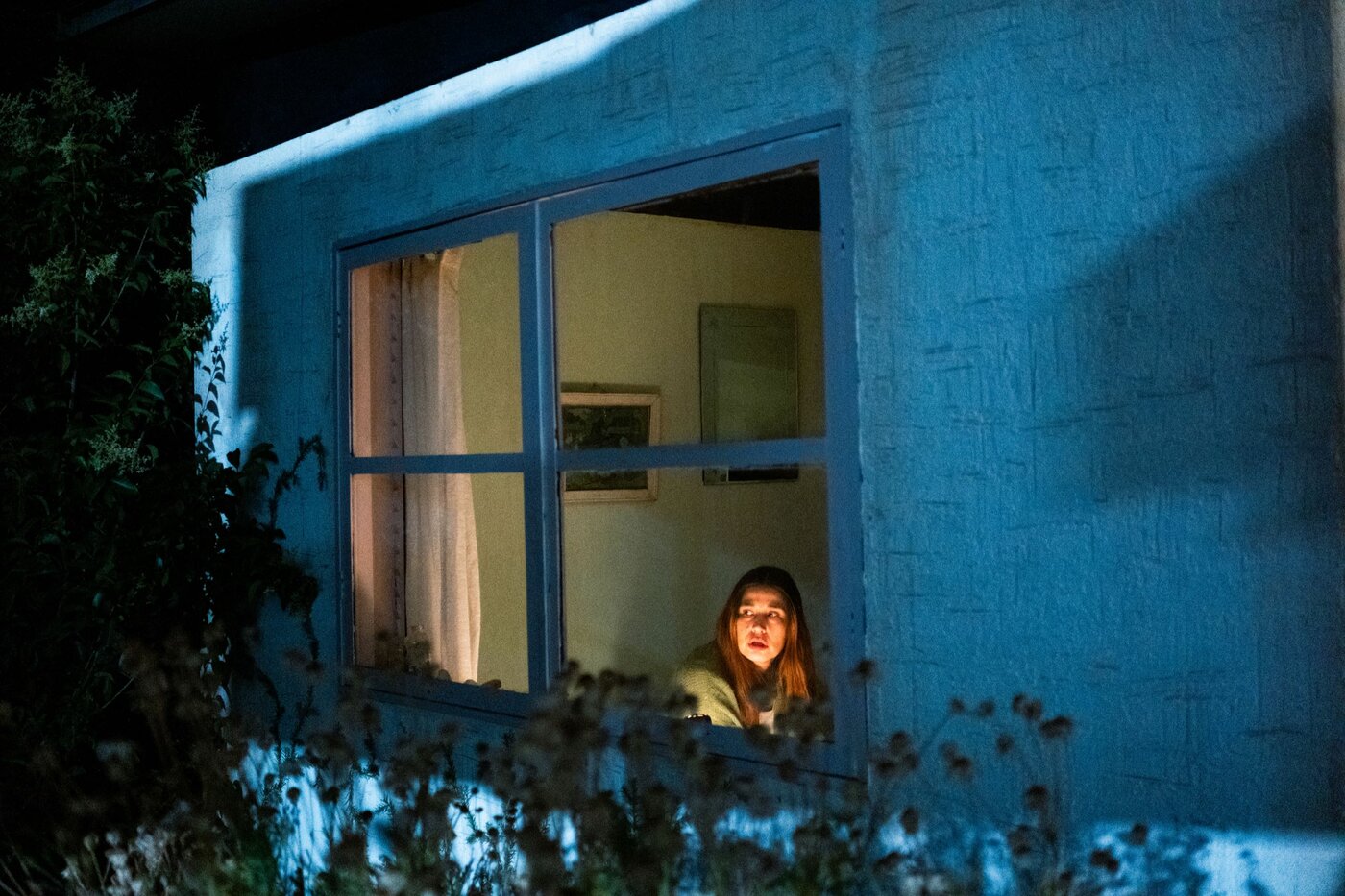
Separated from the main house, Estela gazes at the pool from her cabana.
Working again with cinematographer Bárbara Álvarez (Thursday Till Sunday, 2012), Sotomayor shot with minimal equipment and abundant natural light, creating a space where actors can inhabit and immerse themselves in the environment without interruption. The camera glides through windows and reflections, its movements so fluid they feel almost instinctive, as if responding to the rhythm of the house itself. Watching them work together, I thought of Lucrecia Martel’s The Headless Woman (2008): domestic space rendered porous, vibrating with invisible tension, danger trickling into the repetitions of daily life.
There are no saints or villains in Swim to Me; violence is diffuse, empathy conditional. The house holds it all—light and suffocation, intimacy and distance—and, like Sotomayor’s earlier films, it never resolves into a single truth.
The following conversation traces these thresholds while touching on so much more, from adaptation to childhood, from artistic collaboration to the ethics of filming children. Much like the house at its center, Swim to Me is full of reflections and invisible borders.
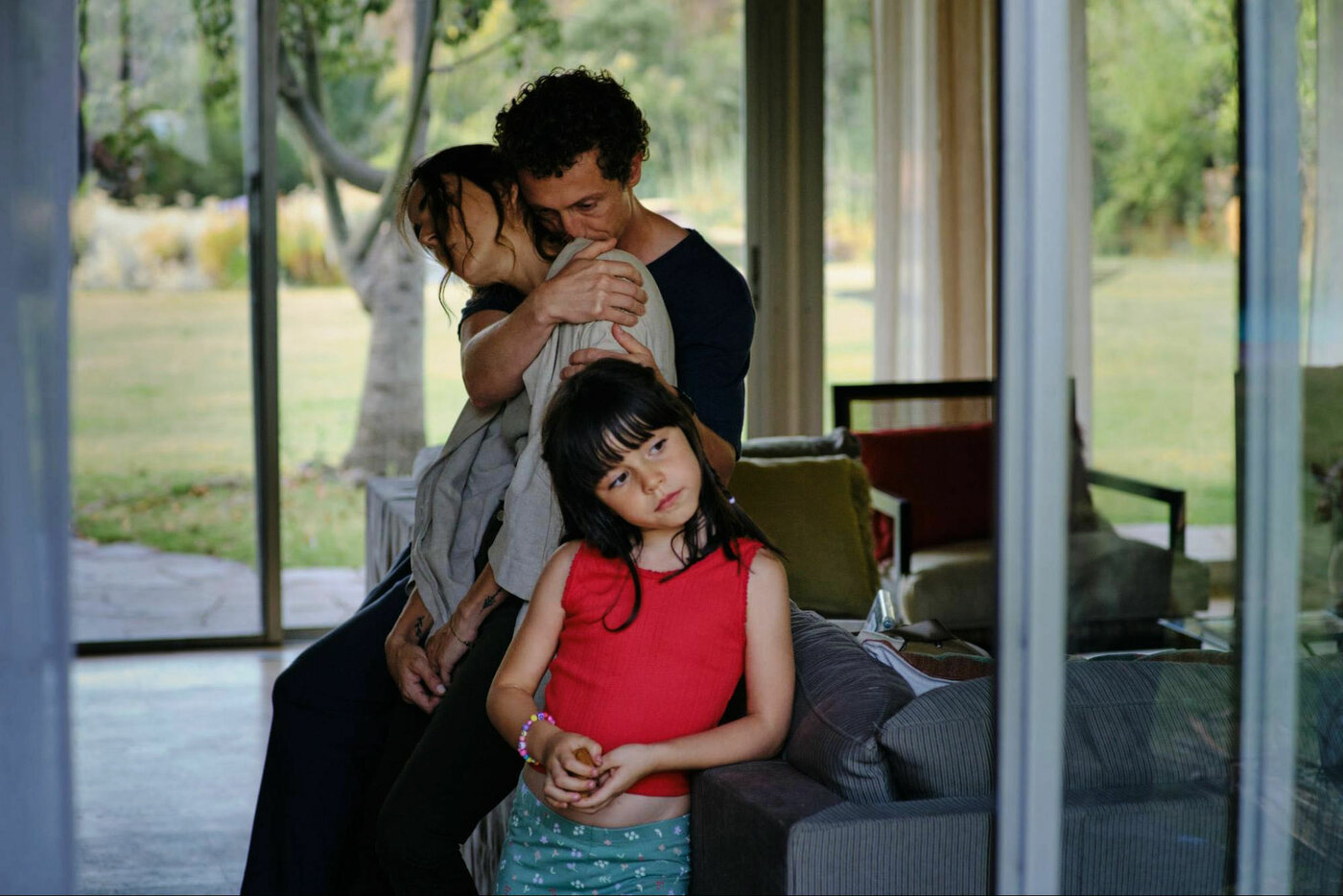
Cristóbal and Mara embrace as Julia stands before them.
SOFIA BOHDANOWICZ: Swim to Me is a film about layers: of space, of vision. Characters appear clearly, and are at times invisible, or obscured by glass. We see reflections: They’re physically close, but always separated. Your stories usually take place in a working-class setting. In your earlier films you often returned to your own childhood: Too Late to Die Young revisits your adolescence in a commune outside Santiago; Thursday Till Sunday follows a modest family road trip. But in Swim to Me, you turn to an affluent family in a wealthy neighborhood. For your fourth feature, why flip the coin?
DOMINGA SOTOMAYOR: I was invited to direct the adaptation of a novel, and what fascinated me was the character of Estela. She carried me through—her mystery, her rebellion, her intelligence. Most importantly, she’s not a victim. Domestic work in Latin American cinema is often portrayed from a victim’s point of view, but Estela felt layered, ambiguous.
What stayed with me from the novel was her relationship with the little girl, Julia. I’m always moved by connections between adults and children when there’s no obligation of love—no duty, just the possibility of care. That ambiguity is what drew me in.
I didn’t want to make a political film about class or power. From the outside, the family looks fine…beautiful house, an apparent equilibrium. But in the daily repetitions, the way things are said, small violences start to float in. Not obvious structures of power, at least not in Chile. But still tragic.
I thought of Estela as ghostlike. She’s always present yet unseen, reflected through windows, visible but transparent. She belongs to the house and doesn’t belong. That’s where the violence lives, in those micro-moments: in the way they look at Estela, in the way they treat her every day. I wanted to show how the social structure of having someone working in your home is so deeply wrong. There’s no way that ends well. For me, the film is really about the connection between two people, the nanny and the little girl. There is the illusion they can connect, that they are on the same frequency for a while. A family inside a family. I liked the idea that Estela’s room is like a small house inside the house.
There is always something between them: Julia is always looking at Estela through glass. They are close, but never really together. And for that layer to disappear, something violent would have to happen.
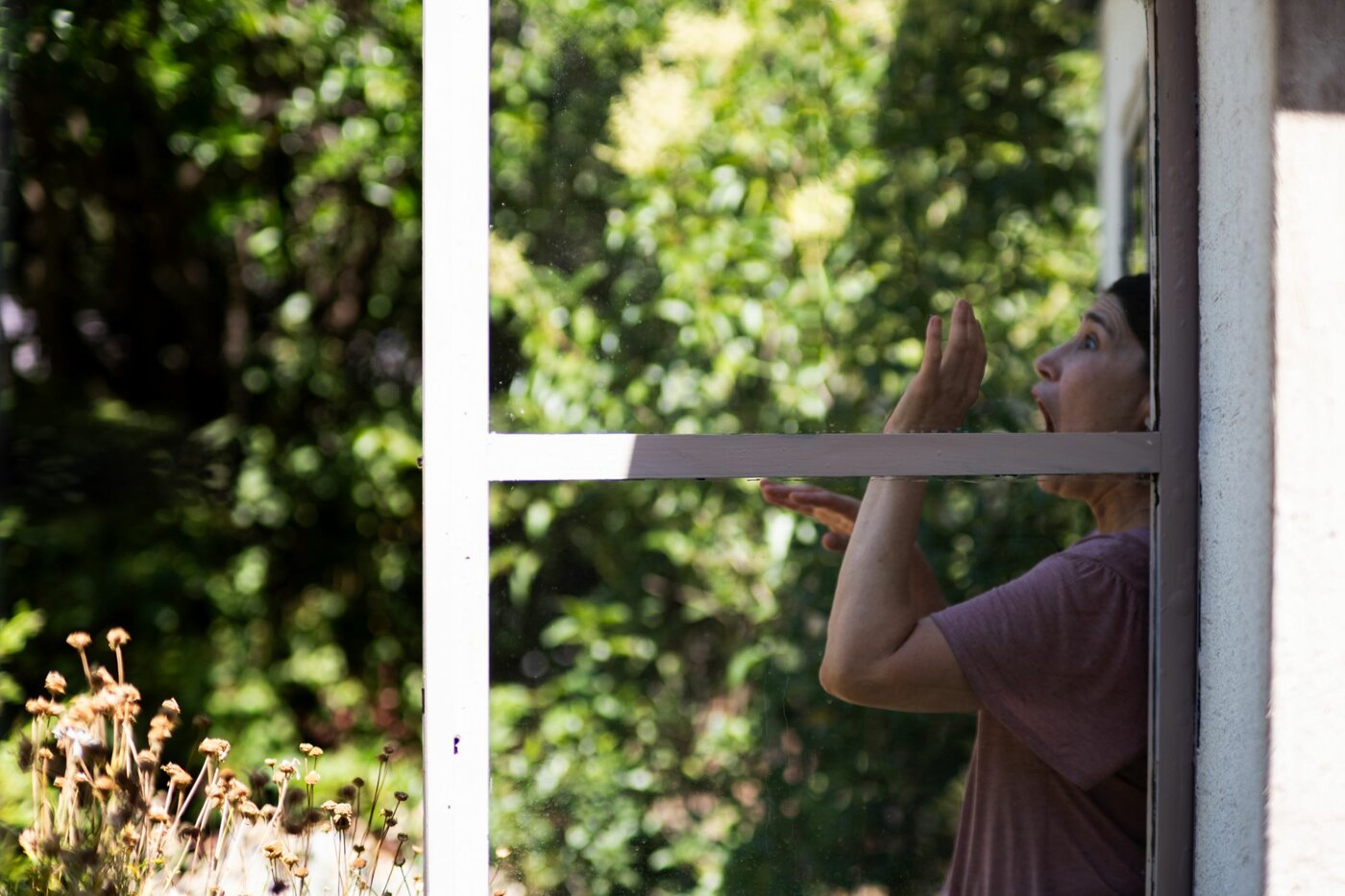
Estela watches Cristóbal and Julia play tennis, the ball hurtling toward her.
BOHDANOWICZ: Their relationship feels both intimate and repulsive. Julia is often cruel, as in the scene where she puts dirt in Estela’s mouth. It’s rare to feel repelled by a child protagonist. How did you strike that balance?
SOTOMAYOR: That was in the script. I worked with Gabriela Larralde (Elena Knows, 2023), and from the start we wanted to avoid the cliché of the sweet girl and the good nanny. Julia knows she has power. She’s not pure.
I never had a nanny myself, but I knew people who cared for me briefly. There were contradictions. Someone could say, “I won’t take care of you.” So what is love? The parents in the film are sweet in words but physically absent. Estela is tough but present. Like at the pool, when she insists Julia wear a cap she says, “Who’s going to pick the lice out of your hair? Me? No?” That’s not tender, it’s real. I didn’t want to make the kind of film where the nanny is a dream, a destiny, where she becomes “family.” Because she isn’t.
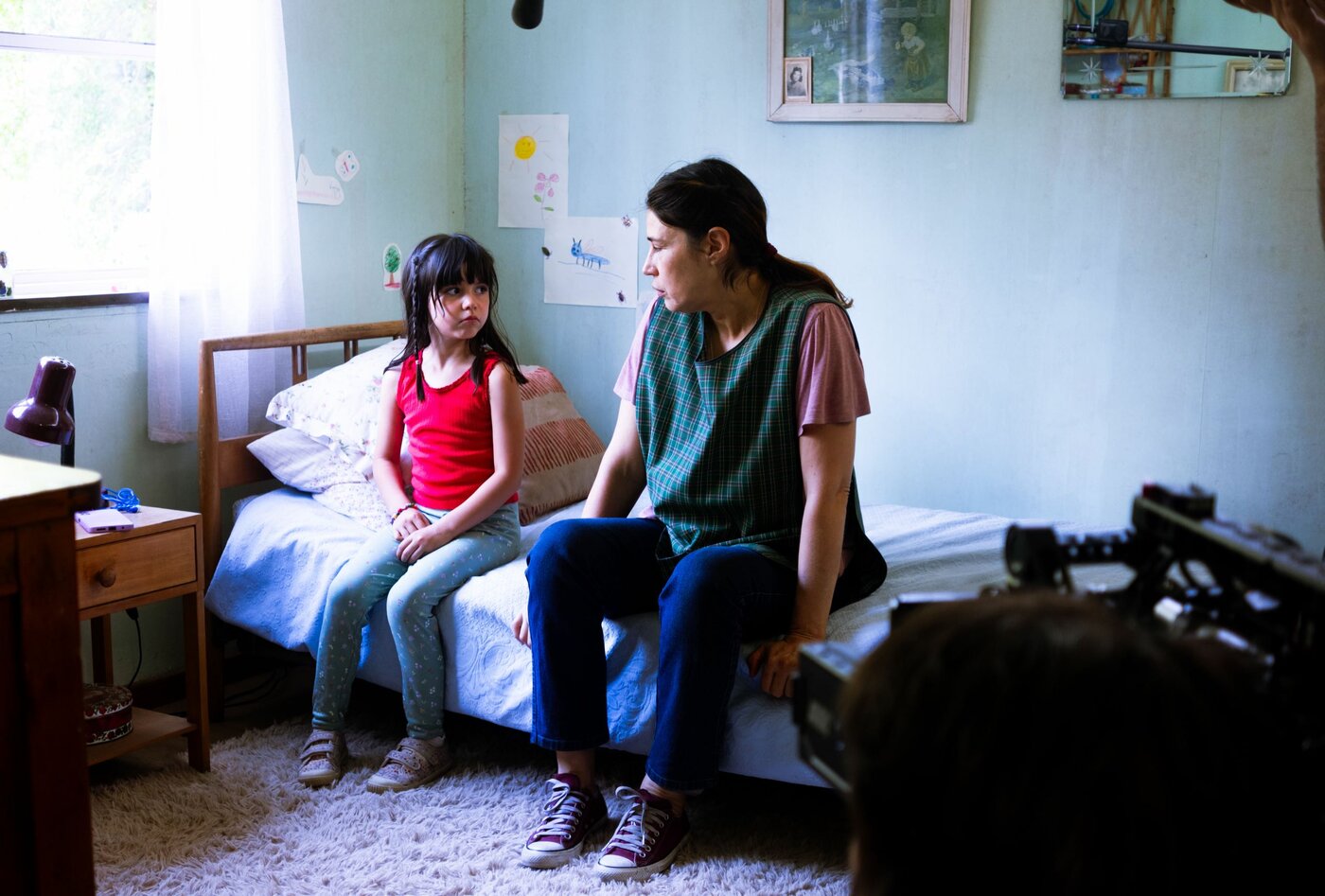
Julia visits Estela in her cabana, a quiet refuge apart from the main house.
BOHDANOWICZ: There’s a frankness in the way the parents hire Estela—partly from their neglect, partly from how they navigate the relationship with their daughter. There’s no subtlety; we sense the imbalance from the beginning. It feels lived-in.
SOTOMAYOR: María Paz was with us almost the whole time, shooting in the house with Julia. Ignacia and Benjamin, the parents, came only for a few days [at a time]. So the dynamic was already in the film. Estela and Rosa were always together. The parents were strangers, like visitors. María Paz was really working all the time. She ended up loving Rosa, but it wasn’t easy.
They care for each other, but they didn’t choose one another. It’s an encounter between two solitudes. I wanted to explore this gray zone of morality. If I were Julia’s mother, and the nanny took my daughter to the hospital on a motorcycle after a stranger's dog bit her, maybe I’d be upset. Or maybe not. It depends how you see the world. Estela and the mother have different values. For me it’s about how you define an act of love.
The book is darker; it gives Estela no air. I wanted the film to have more layers. In cinema, to show tragedy, you need to also show a possibility of freedom. I wanted moments where the connection feels possible. To give Estela some light—love with the girl, the boyfriend, glimpses of happiness—so I could blow it out. Life is complicated. Even if it ends badly, there are always moments that are true and beautiful.
It was a challenge to create intimacy in a big production. I told María Paz: “Stay in your bed. Don’t be distracted. This is your room.” She made it her own, always resting there. She carried the film. And in a way she was living something similar, being asked to connect with this child actor. When the shoot ended, it was over. But after two months together, I think she was really moved.
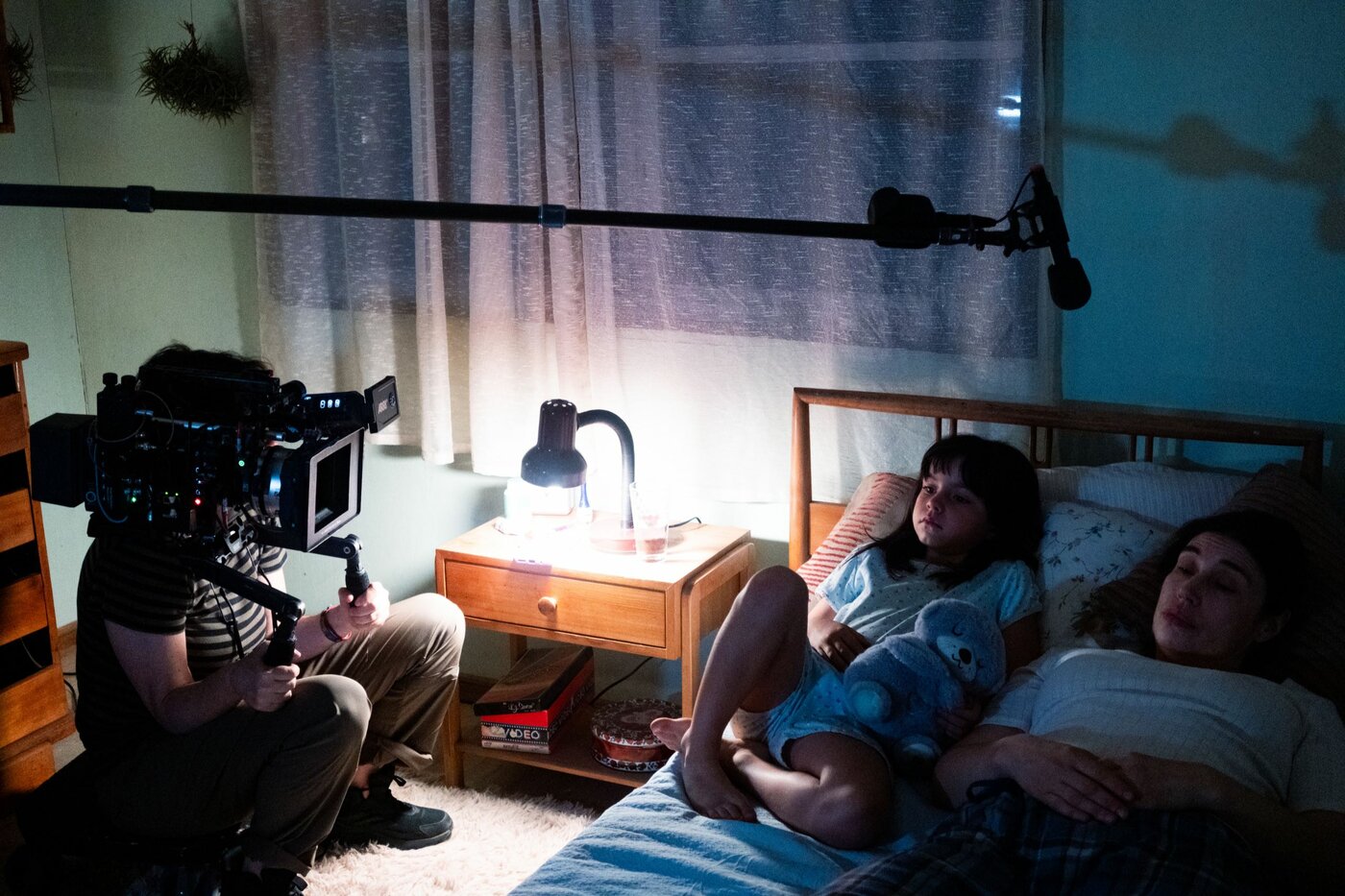
Cinematographer Bárbara Álvarez films Rose Puga Vittini and María Grandjean in a nighttime scene in Estela’s cabana.
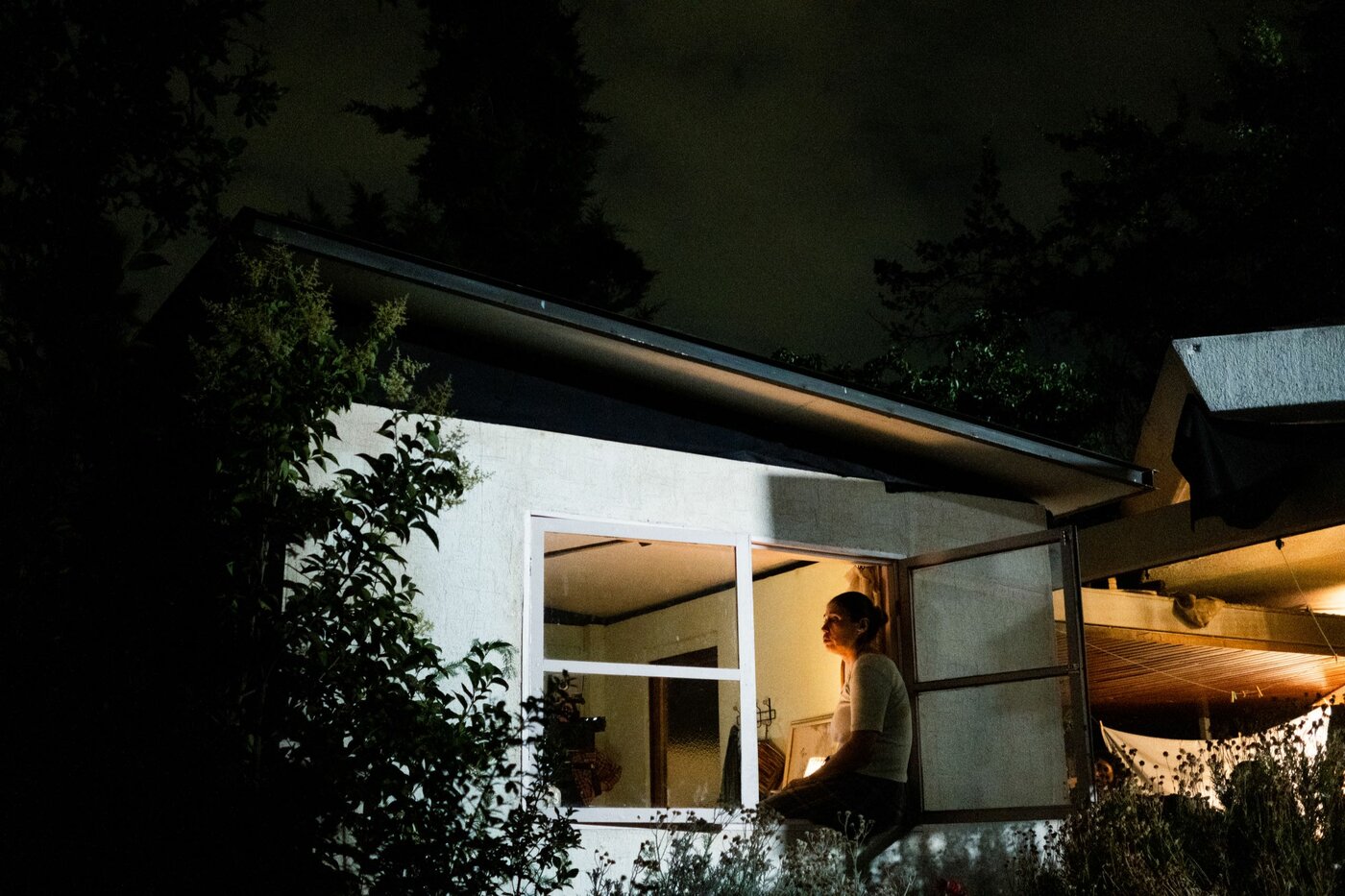
Estela smokes on the ledge of her windowsill.
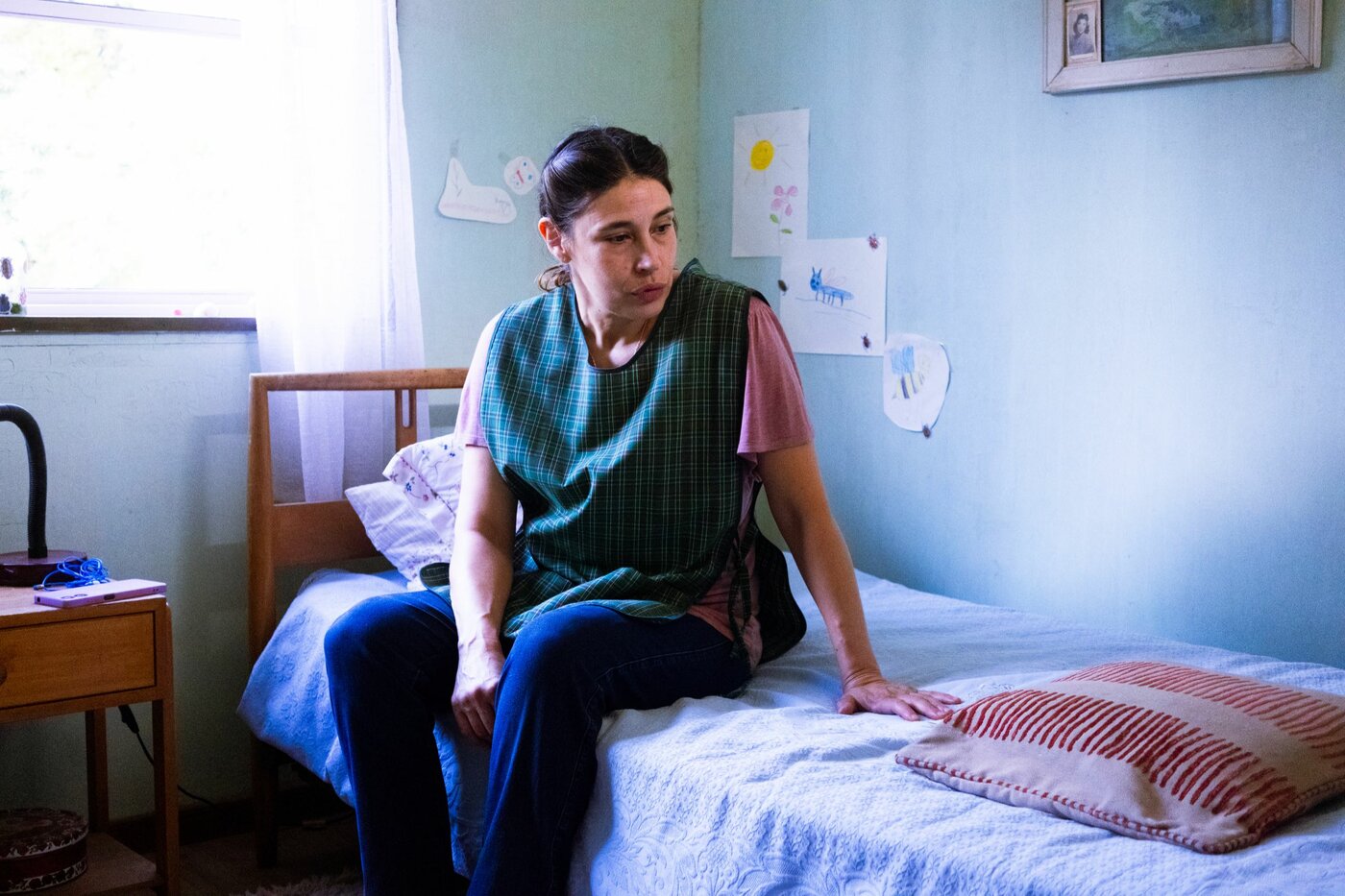
Estela takes a breath before crossing back over the threshold of the main home.
BOHDANOWICZ: In most films, the child is lovable, but Julia doesn’t emotionally manipulate us there. There are likable traits, but she’s really the product of this bourgeois home. On set, Rosa was so charismatic, everyone loved her. But her character reads differently.
SOTOMAYOR: Yes, I really focused on not letting the audience be manipulated by the little girl. I liked that she’s a little annoying. The book has a nice moment where there’s an illusion—she seems like a sweet kid but then she shifts. Eventually she starts saying “Estela” in the exact same voice as the mother. She knows how to control people with her tone.
On set, Rosa was like a little boss. She had everyone’s attention, and she knew it. If she didn’t want to shoot a scene, she knew she could stop it. For me, everything comes down to the script and the casting. And she had it. She’s a force. She always wanted to win—sometimes with sweetness, sometimes with intensity.
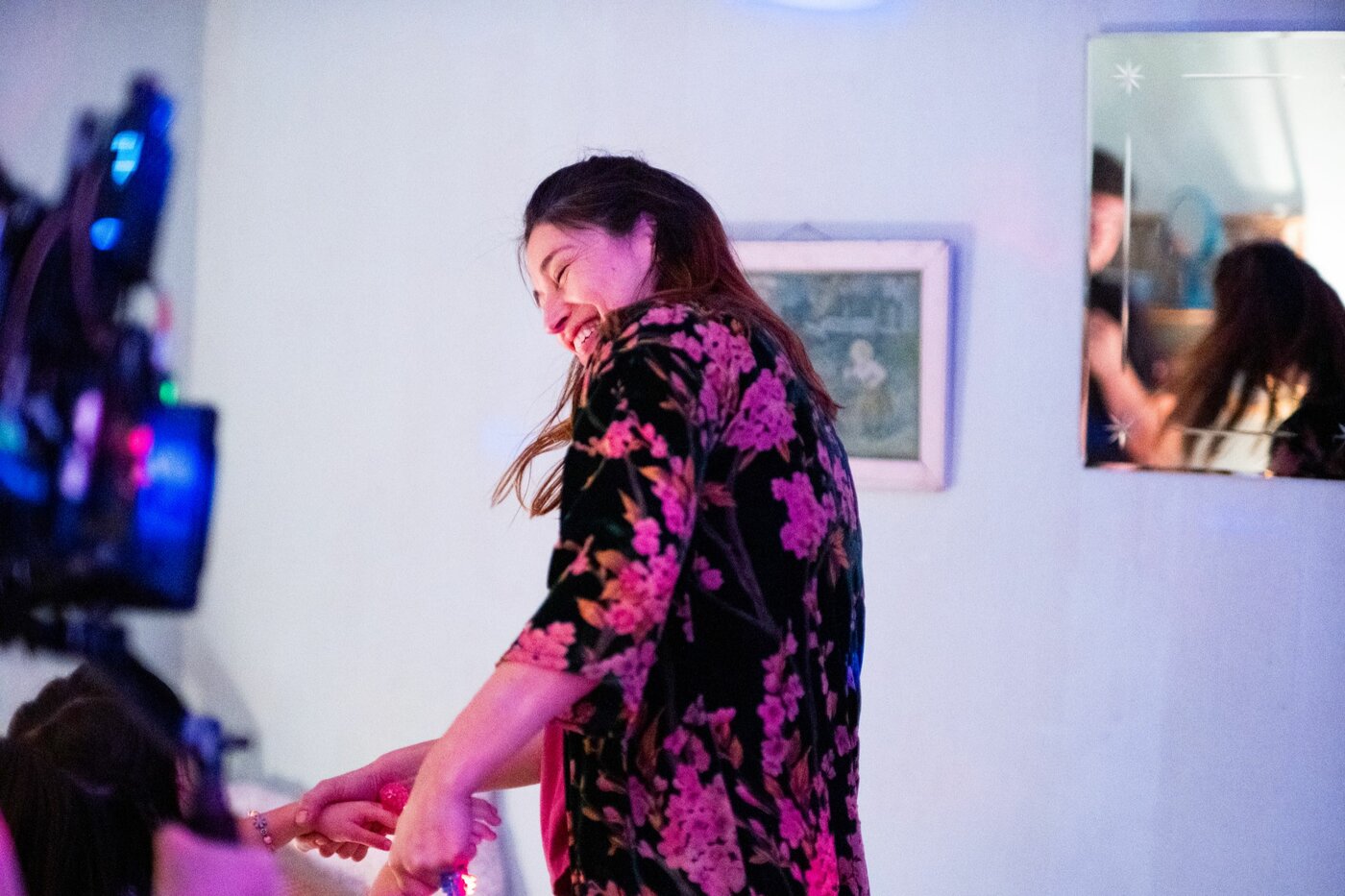
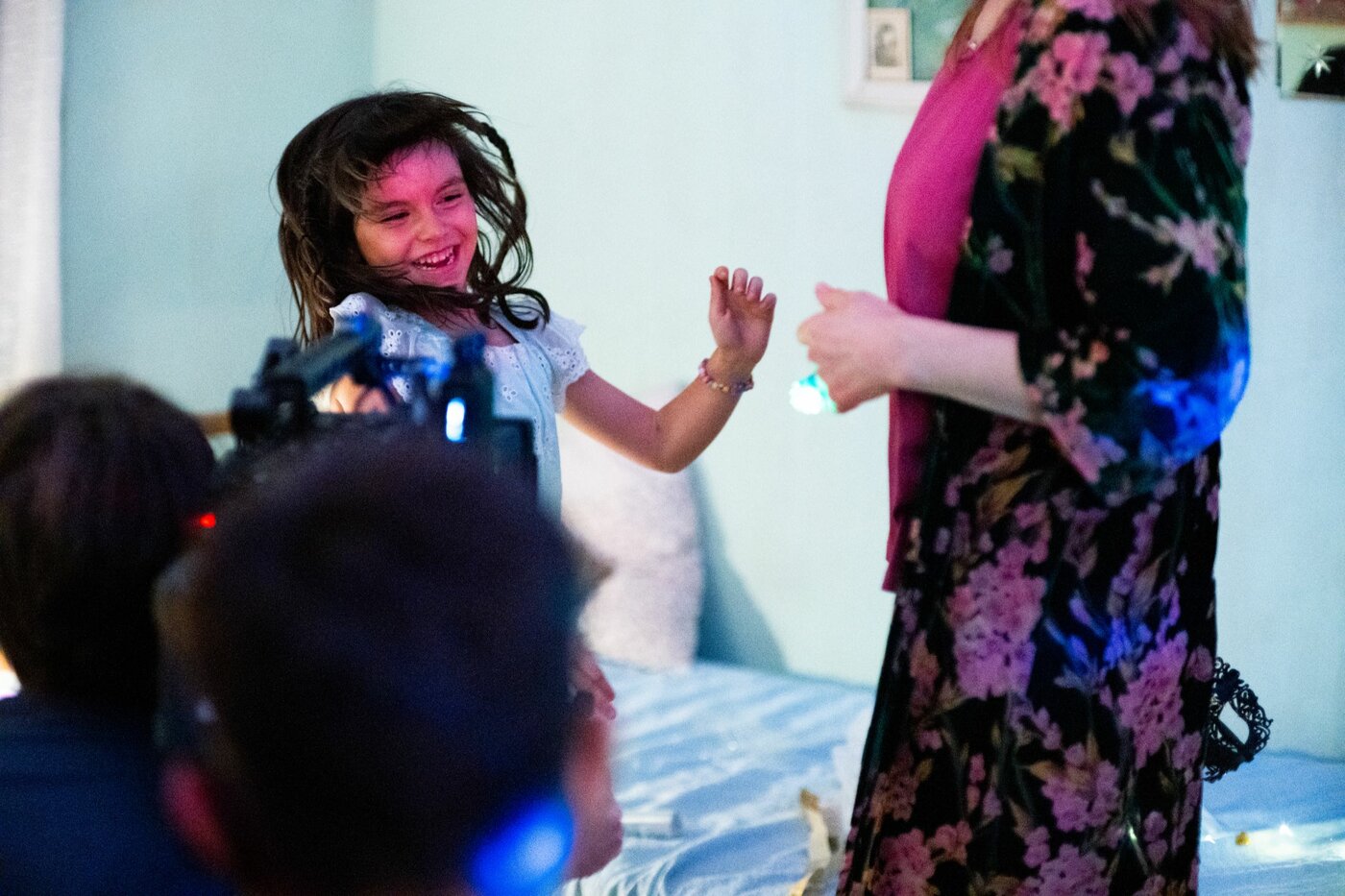
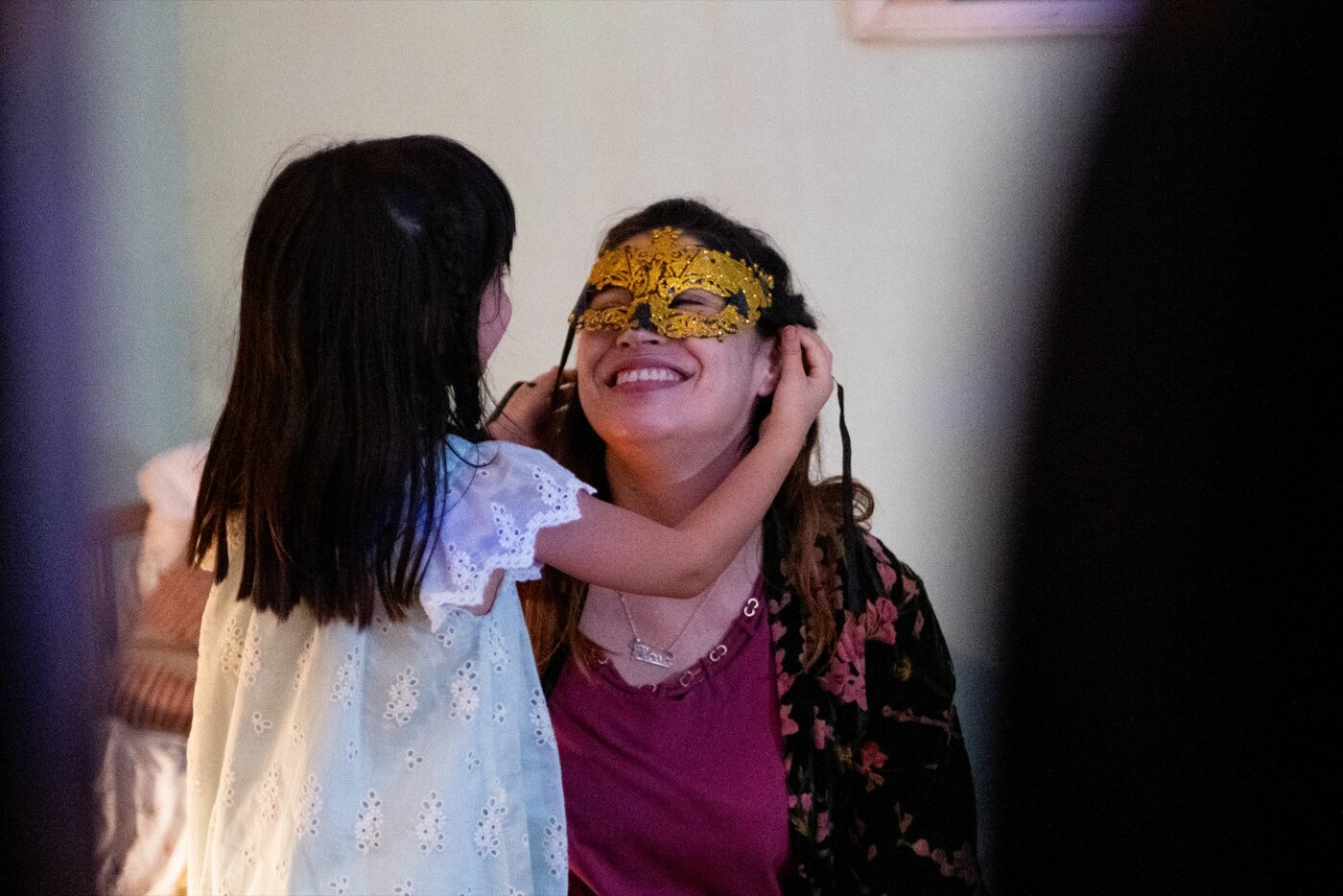
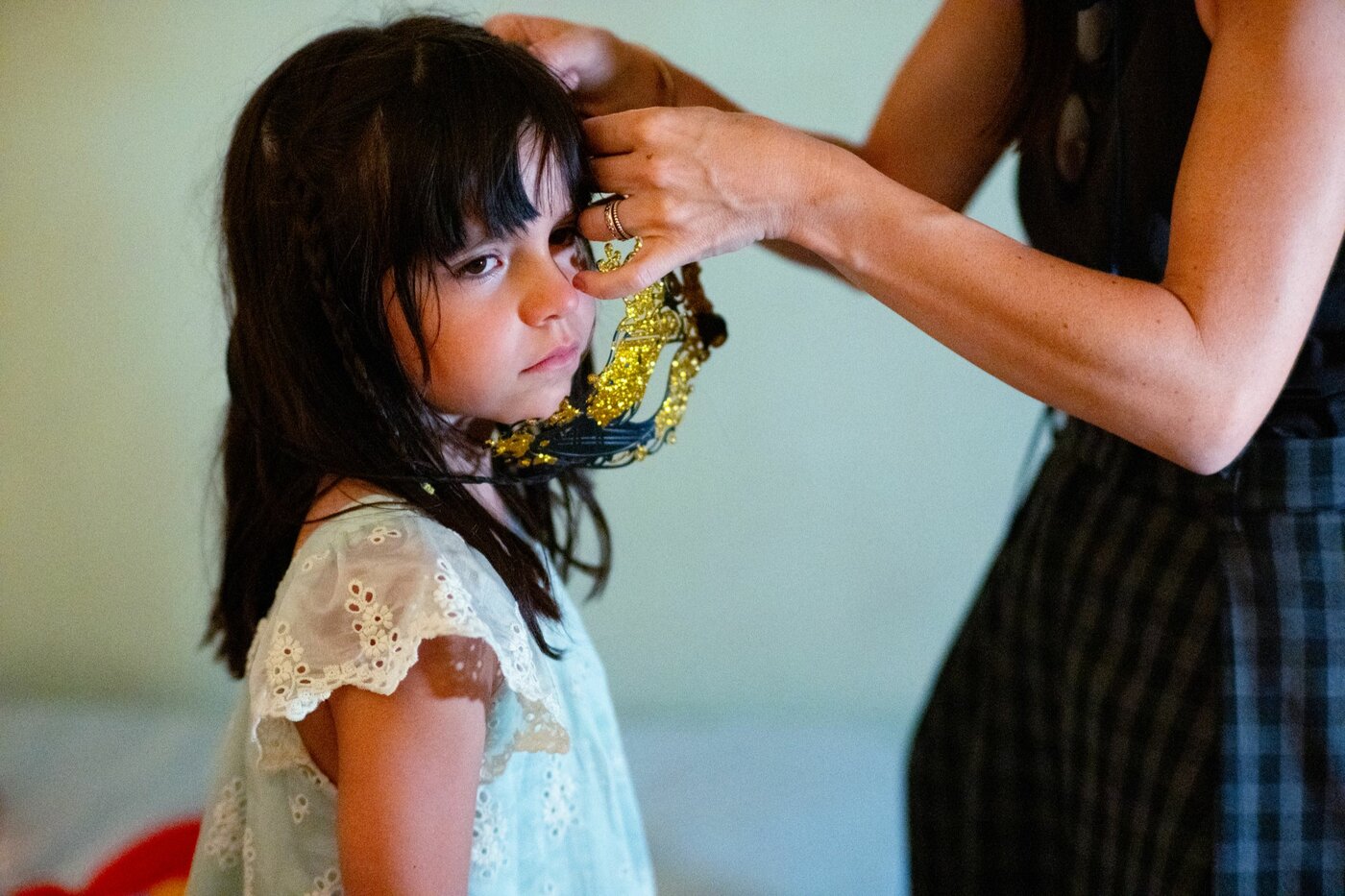
Álvarez captures Julia and Estela dancing alone, away from the noise of the New Year’s party.
BOHDANOWICZ: Let’s talk about the adaptation. Estela narrates the book, but in the film, her words transform into action.
SOTOMAYOR: The book was very difficult to adapt. It’s in the first person, set over seven years. It’s beautifully written, but the film has to be something else. Films cannot be books.
I used the book as a starting point to find the film I wanted to make. I felt like I swam into the book and took little pieces that made sense to me in terms of film—in terms of feelings, not necessarily structure. Scenes I wanted to make, not just to shoot.
The first thing that appeared to me was the relationship between these two characters, and the idea of telling it over one summer. I didn’t want the seven-year story of the nanny and Julia. I wanted a very short, intense period. In the book, Estela even says at one point, This could also be the beginning. For her, the story starts when the father teaches her to swim. So I used that second beginning as the beginning of the film.
The novel’s strength is Estela’s voice, but I didn’t want a voiceover. Instead, I tried to understand between the lines, to find the soul of it. To portray Estela in actions, in the way she reacts to the parents, to Julia. For me, the film has its own nature. It was very spontaneous, and it happened quickly. We wrote the script in three months, then went to preproduction. I was enthusiastic about this strange relationship. And also about making a portrait of a nanny slightly different from the ones I had seen in Latin America.
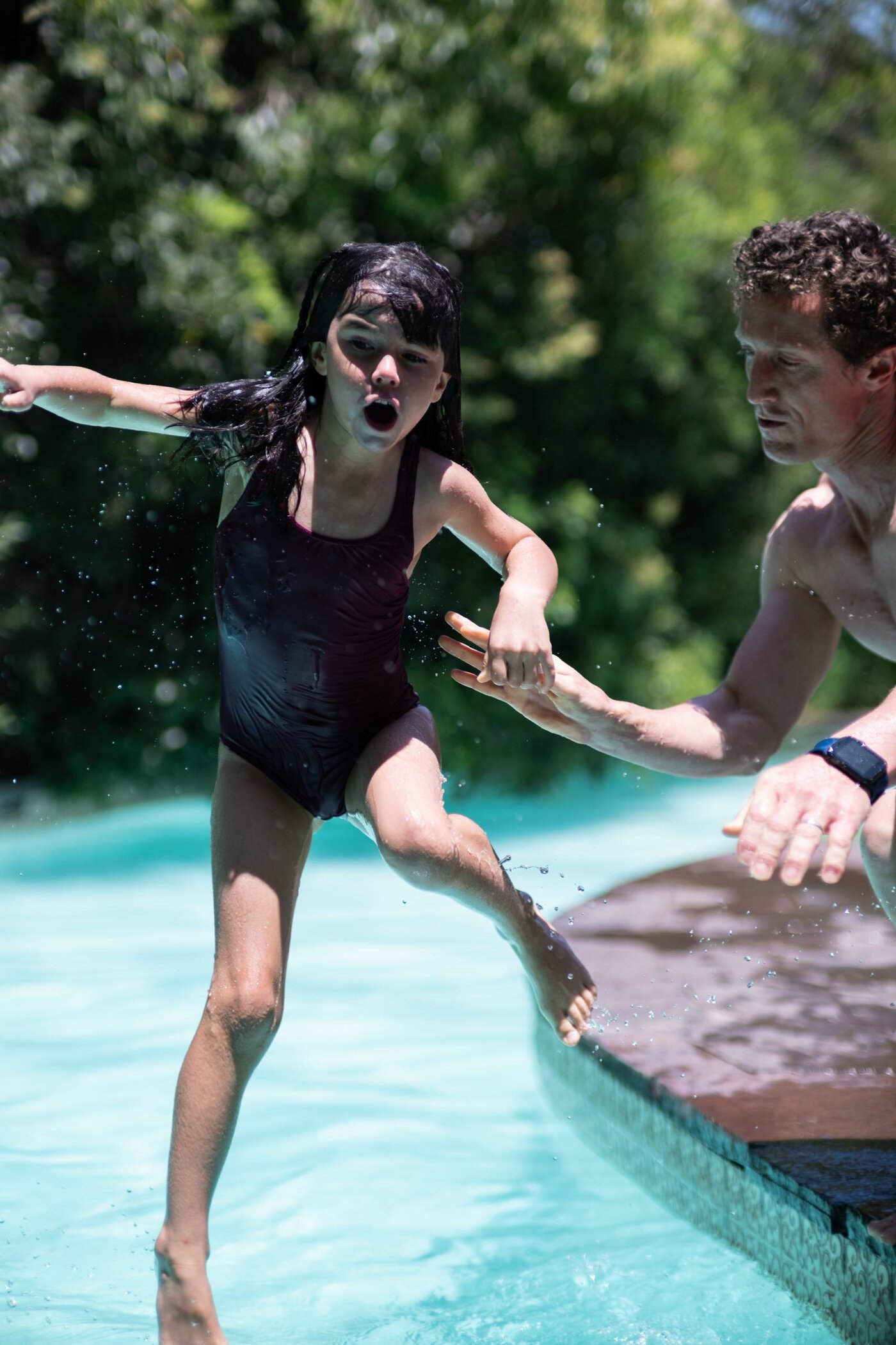
Julia is tossed into the pool by her father.
BOHDANOWICZ: Can you talk more about the violence that appears in the details of everyday life?
SOTOMAYOR: As a Chilean, we are used to the inherent violence of having someone working inside your home. For me, just the idea of Estela’s “house inside the house” is violent. Her room is small, not really a room, a sign that she is part of the family but not part of it. Even the window on her door is violent. She has no privacy. That transparency was important for me—it shows the blurry border between her and the family.
There’s also the violence of not letting her have a normal day. She always has to put their priorities first—the father has an operation, the mother has her pain. And the key moment, of course, is when she’s not allowed to travel, even with a family emergency. That was the starting point. I wanted to avoid obvious depictions—washing dishes, cleaning. Instead the house looks quiet, in equilibrium. But beneath it, tension grows until it ends badly.
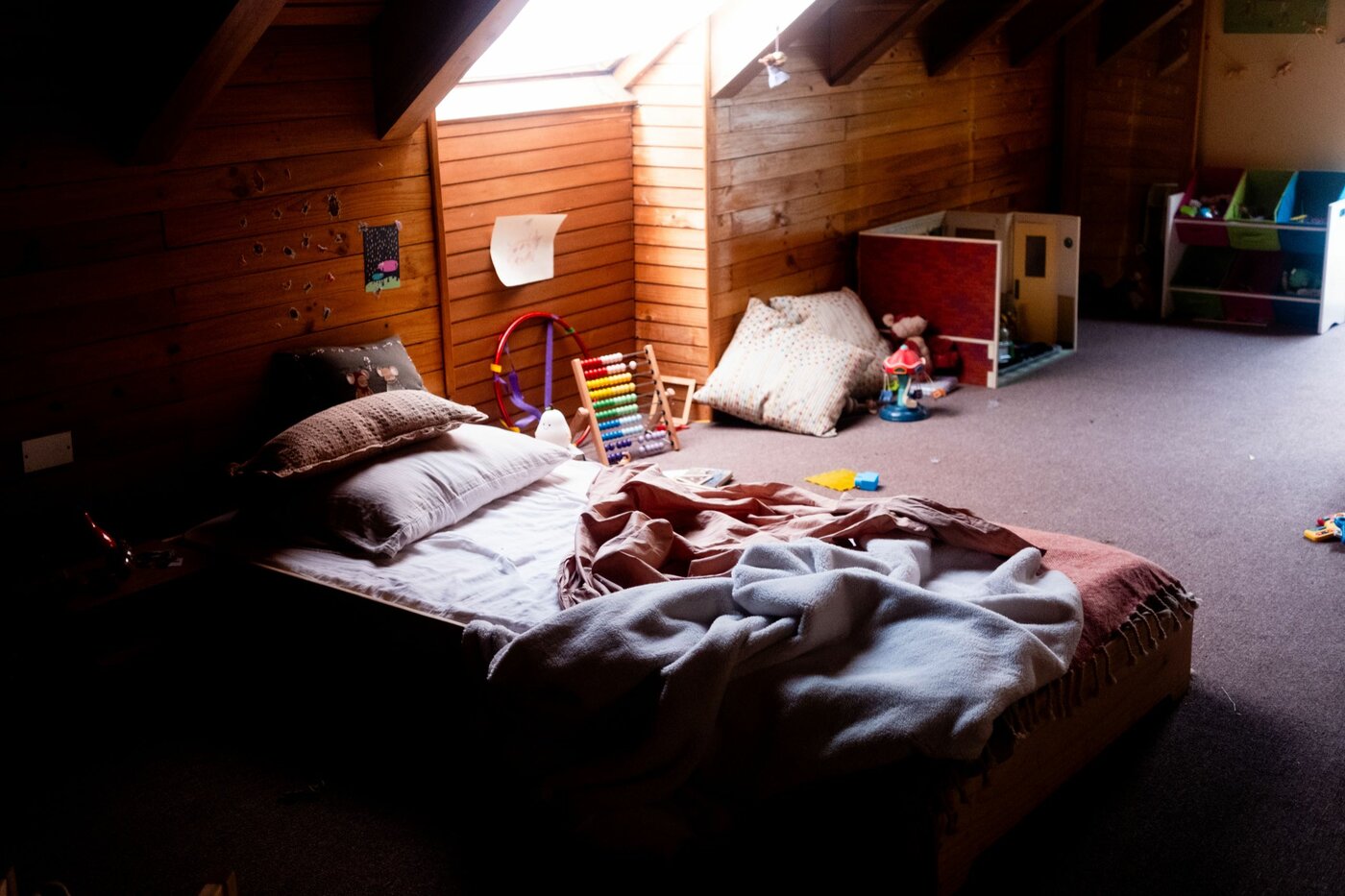
Julia’s bedroom.
BOHDANOWICZ: What struck me when I visited the set was how alive the house felt. Julia’s room, Estela’s space, the parents’ room—you could move through each one. Photographing it, I felt life unfolding.
SOTOMAYOR: From the start, I thought of the house as a main character. It was alive, constantly transforming. Working with a child also made having a single location practical—we could move quickly if she was tired, react fast, shift scenes.
I wanted transparencies between spaces: Estela’s room and the garden, the living room and the garden. We used a Steadicam to follow her around, to connect those spaces. Everything had to be fully dressed so it felt real, especially for Rosa. She could move around, visit her room, and understand the space as part of her character.
I imagined a house inherited from the husband’s mother—too big for them, messy, with no time to clean properly. A mix of modern objects with old paintings and heavy furniture. That weight was important. For me, Estela is the hidden wisdom of the house. She’s everywhere and nowhere—reflections, windows, points of view.
BOHDANOWICZ: The house has so much light, but it’s exposed, almost dangerous. You wouldn’t want to spend the night there. Someone could watch you bathing if they walked by at the right, or wrong, moment.
SOTOMAYOR: Yes, the attention to windows was very intentional. There’s light, but also the contradiction of being constantly observed. Like a terrarium, a little ecosystem with plants inside and out.
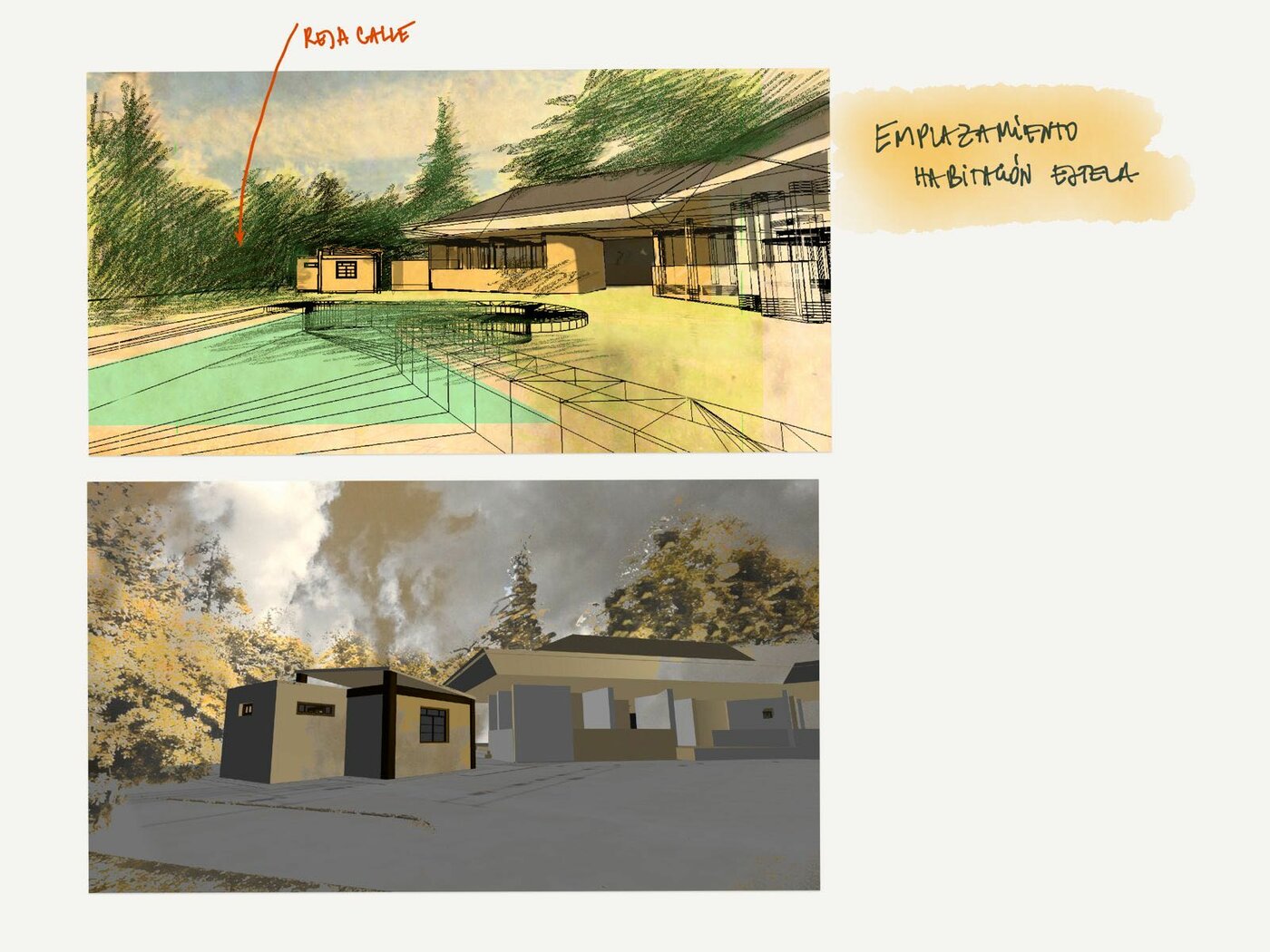
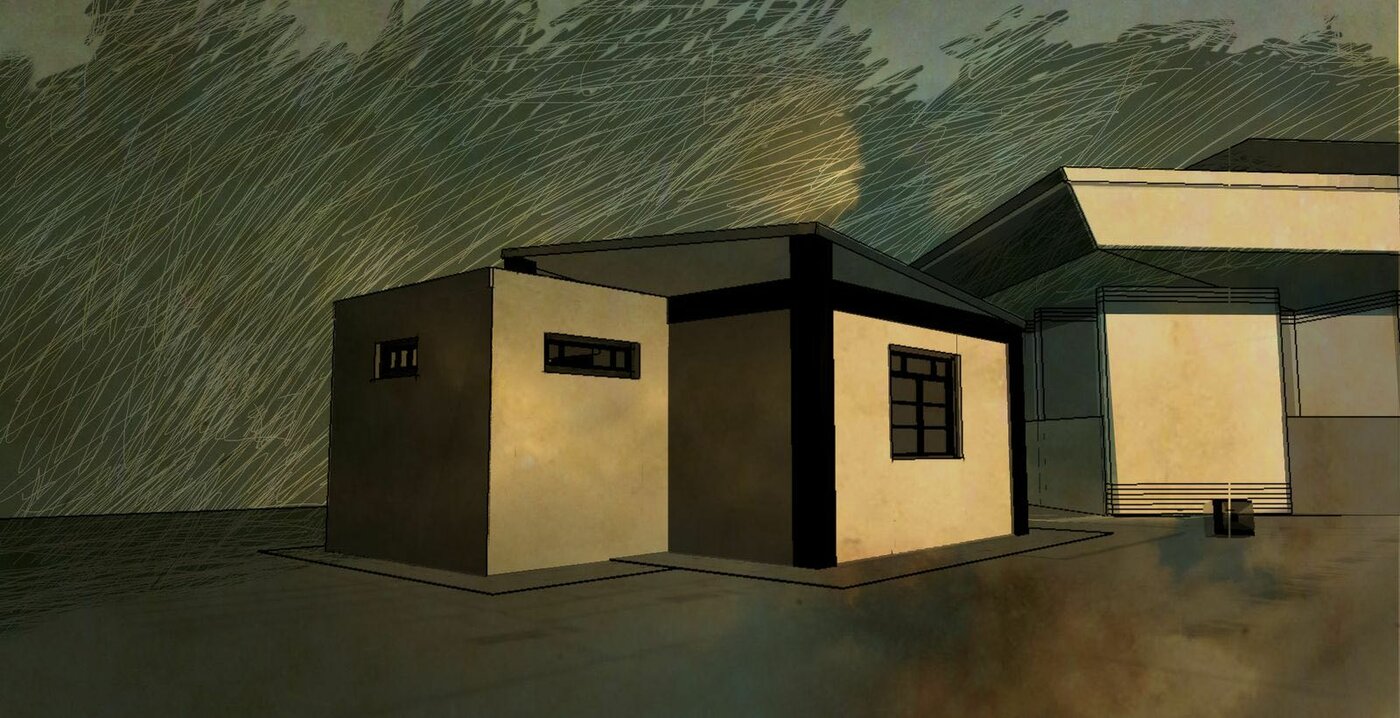
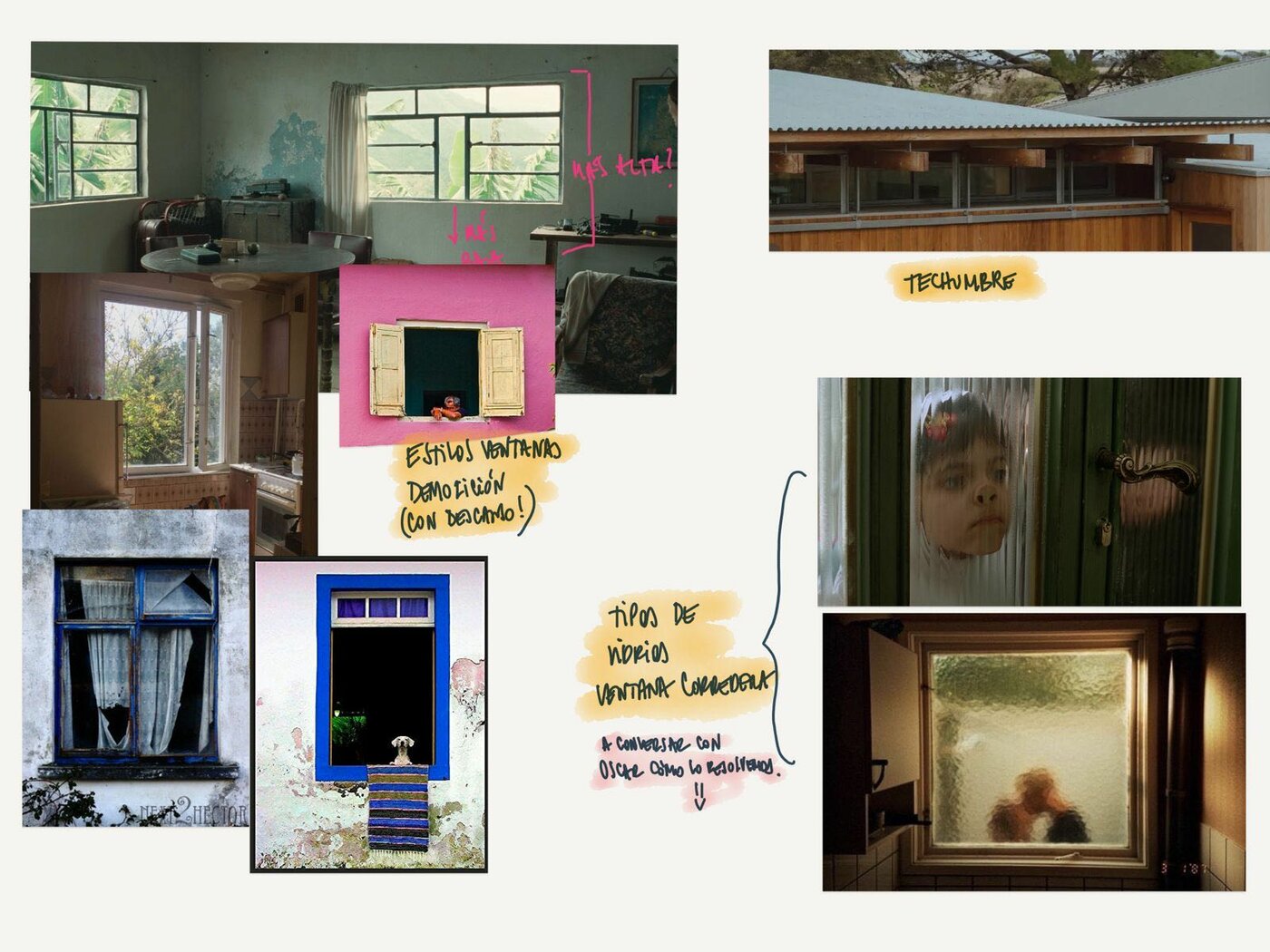
Digital sketches and 3D renderings of the family home by production designer Agostina De Francesco.
BOHDANOWICZ: Can you talk about integrating your friends, family, and heirlooms into the film?
SOTOMAYOR: For me, cinema is capturing something before it disappears. It’s my box, a way to save things I love. My grandmother’s paintings are always in my films. My family, my objects—they naturally come in. So the films become documents of them.
It’s a matter of taste, too. Every object is chosen by me. It’s very natural, but also different, because this project started from someone else’s character. I needed to create a shape of my own, something not in the book but born from it.
BOHDANOWICZ: The film interprets the book through your eyes and experience. And when you do that, inevitably pieces of yourself—artwork, clothing, memories—enter the film.
SOTOMAYOR: Yes. Cinema is about where you put the camera. That choice is always personal, even if it’s also impersonal.
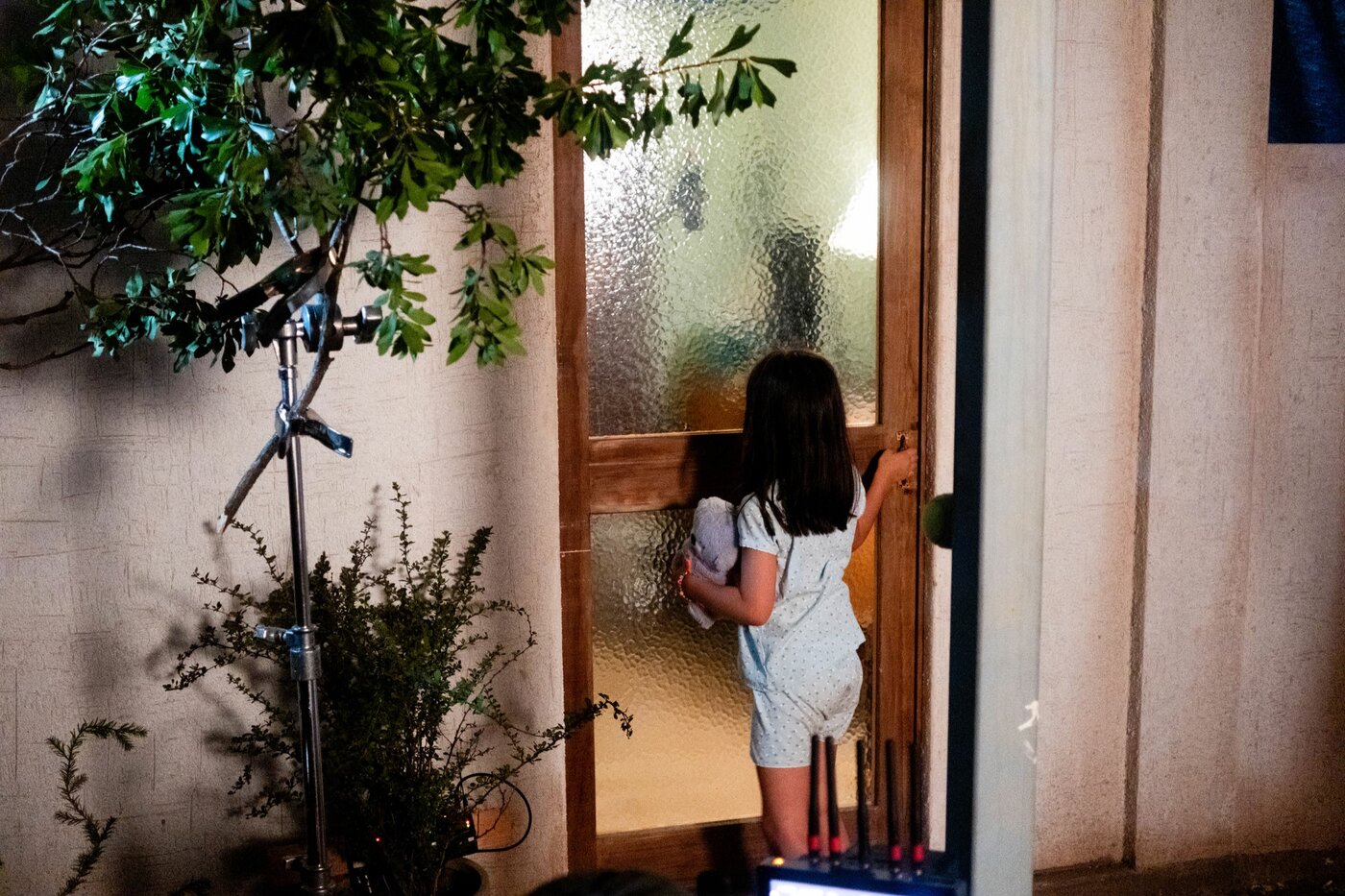
Julia stands outside Estela’s cabana.
BOHDANOWICZ: Rosa, who plays Julia, looks a lot like you. And so does the girl in Thursday Till Sunday. Your films often reflect your childhood: Too Late to Die Young is about your adolescence, Thursday Till Sunday your earlier childhood. I feel this film is another iteration of your childhood, but from a different perspective.
SOTOMAYOR: It’s funny, maybe by accident this film feels very close to me, though my childhood was different. My parents didn’t leave me at home. I wasn’t raised by nannies. But I connected deeply to this family, maybe because in my own childhood I was often in rooms with people like Estela.
So it becomes layered. It’s about roles—nanny and child here—but really it’s about the bond. There’s something pure in their connection, a shared focus beyond themselves. That connects with my own childhood, which I spent watching adults instead of other kids. It was difficult and beautiful. Maybe filmmaking is my way to understand it, to forgive myself for not understanding at the time.
And yes, Rosa even looks like me. Maybe that’s why it feels almost psychoanalytical. My mother found her—she’s the granddaughter of friends. There was a big casting process, many girls, but I always had Rosa in mind. She turned six while we were filming. She’s a force, with true star quality. What convinced me is that I wanted to see her all the time. She’s funny, too—during the casting, she said she loved to write and read, but she didn’t actually know how yet. For me, directing kids is about choosing well and treating them well. You can’t invent that kind of presence.
Of course, it was still a challenge. A six-year-old brings high energy to the set, everyone is aware of them, adjusting around them. But Rosa was amazing.
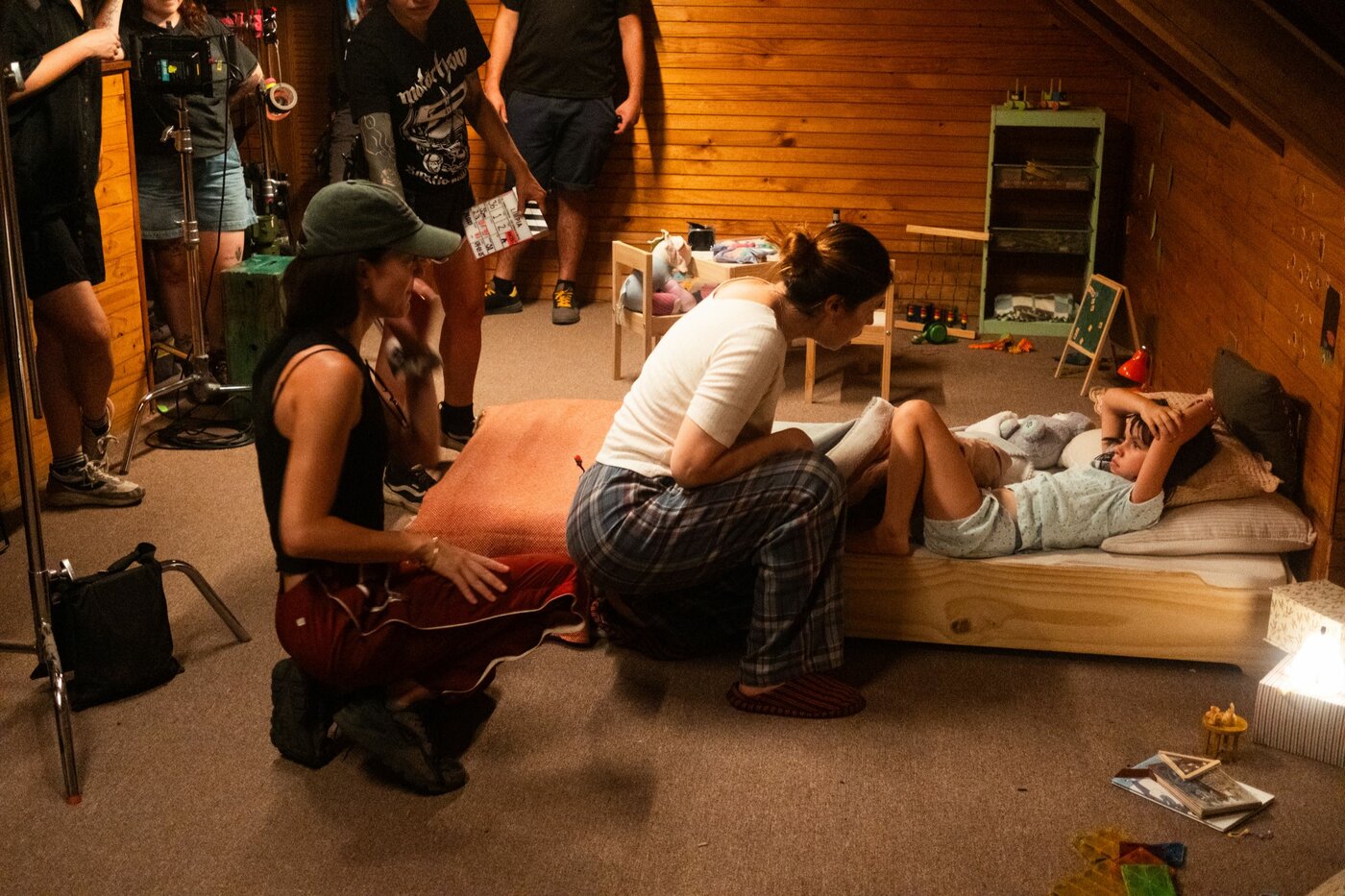
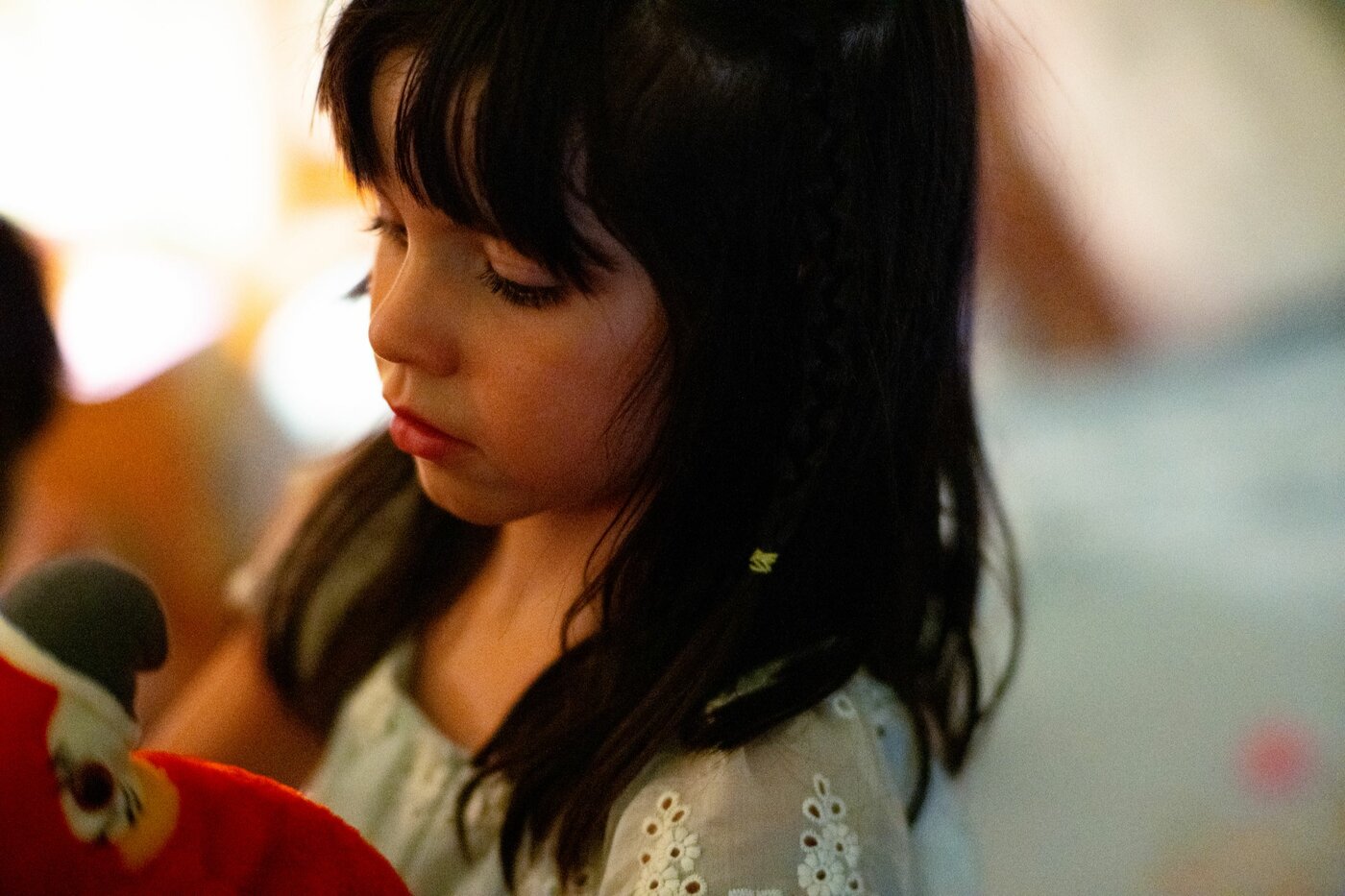
Dominga Sotomayor directs Vittini and Grandjean during a scene in Julia’s bedroom.
BOHDANOWICZ: You get a lot of your philosophy of working with actors from your mother, Francisca Castillo, who’s an incredible performer. What did you learn from her in working with children? On set I remember watching your dynamic with Rosa—you were very attentive. During the swimming lesson scenes you jumped in the pool with her, pulling her out and wrapping her in a towel. You were more than a director, you were swimming beside her.
SOTOMAYOR: I’ve been thinking a lot about working with kids. It’s not just “work.” It’s almost like an adoption. For a time, I become a parent. It’s intense and very intuitive. Rosa and I had a very strong connection. My philosophy here is simple: To have emotional responsibility, with kids and with adults.
Something I learned in earlier films is that the child has to want to do it. I don’t convince anyone, not the kids, not the parents. It has to come from them. In a way, I’m adopting the whole family for the shoot. And when you make a film with a child, 60 or 70 percent of your energy goes to that. Of course, that brings contradictions. I’m taking a child from real life into a fiction, and then returning her to real life. She will never be exactly the same again. That’s a huge responsibility. I still see Rosa often. She learned to swim on set, made new friends. She was happy, but also tired. We worked short days, with an acting coach and clear protocols. It’s not for everyone—working with children demands enormous energy.
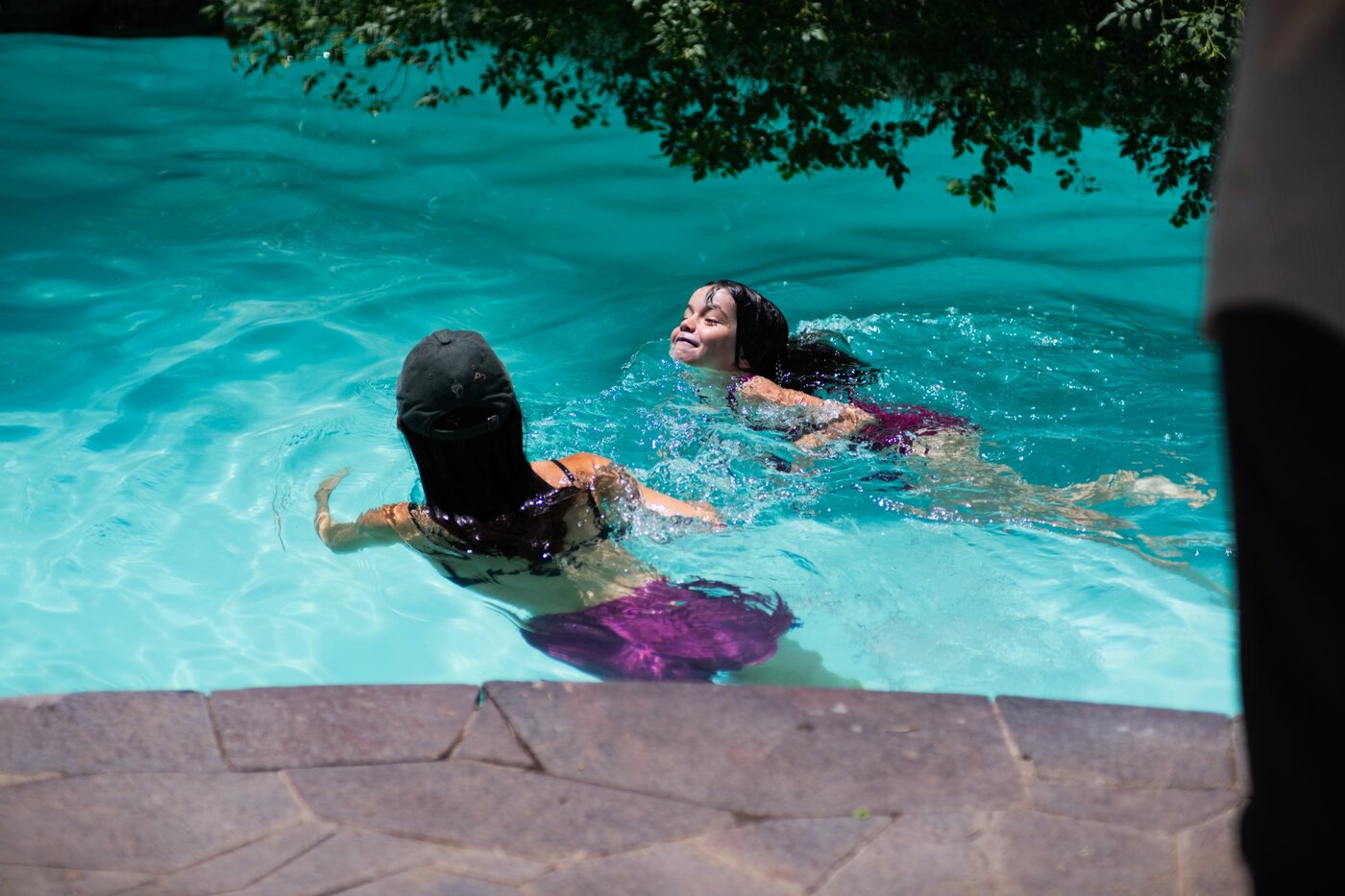
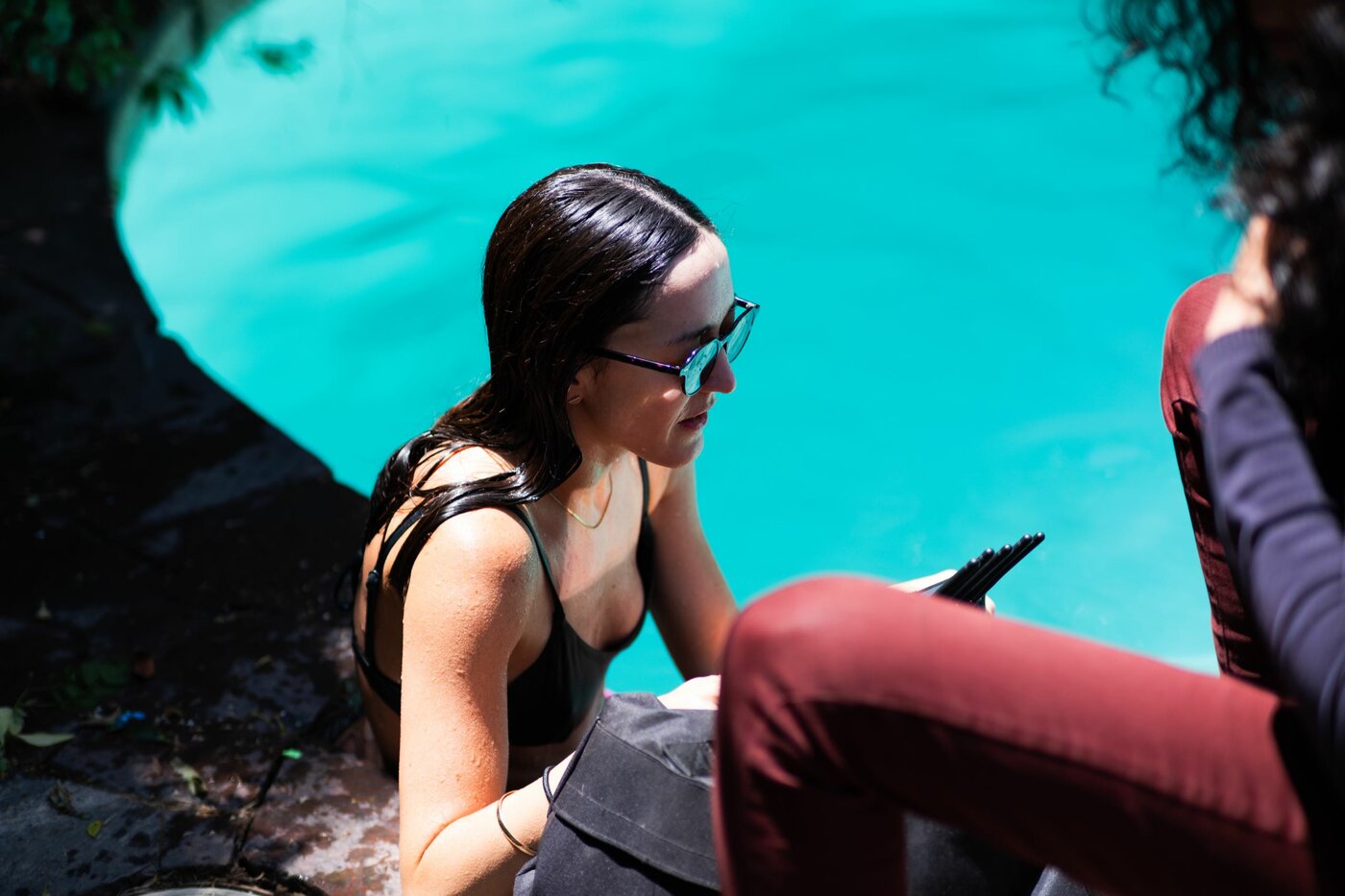
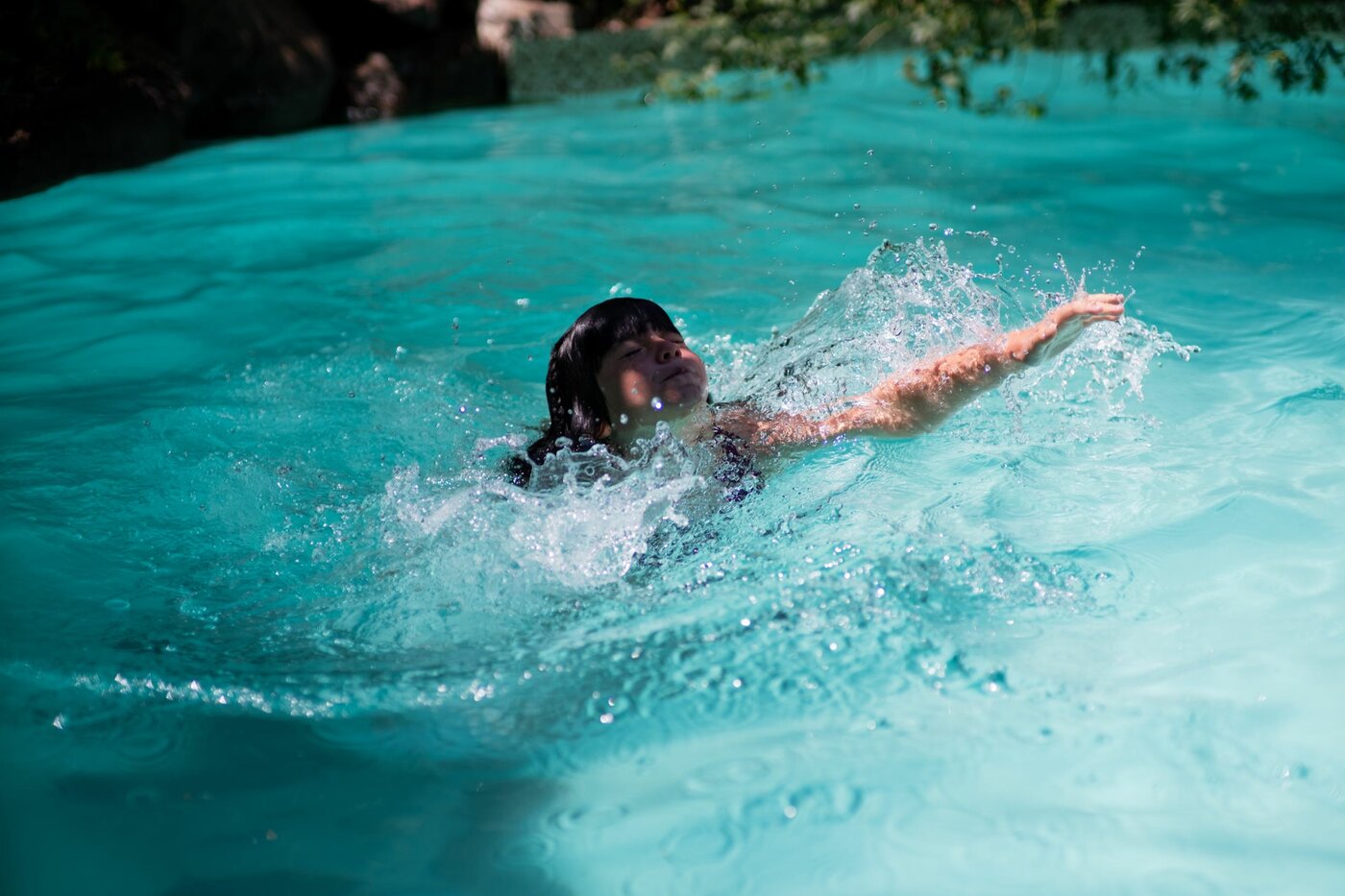
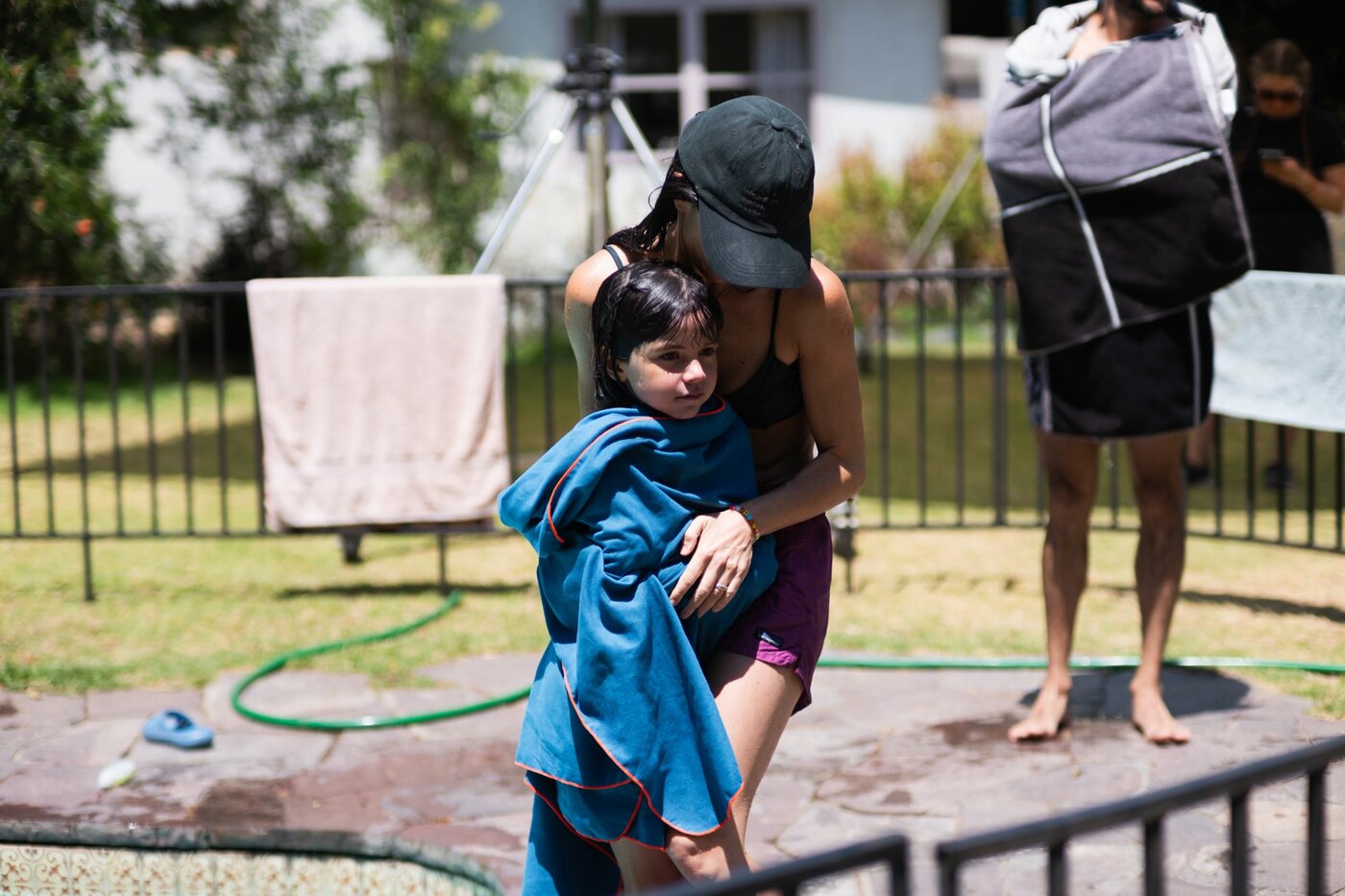
Sotomayor joins Vittini in the pool to guide the scene.
BOHDANOWICZ: What I loved was how the structure protected Rosa. She had acting doubles, which gave her space and time to rest. I remember you saying to the kids during the swimming lesson: “We are all Julia. Rosa is not the only one. You are all part of this character.” It created an empowering environment.
One little girl said, “I am the body of Julia and Rosa is the face.” Another said, “Rosa is the double of my face.”
SOTOMAYOR: Yes, they all felt important, not like extras. Each was invited for a skill—swimming, being on a motorbike. They supported the character of Julia as a gang.
This time I pushed harder. Rosa wasn’t just being herself; she was acting. She’s not like Julia at all—Rosa is always happy, dancing, talking. We would ask her, “Does Julia like water?” She’d say, “No.” Then: “Does Rosa like water?” “Yes, I love it.” It was a psychological preparation, helping her understand Julia as someone else.
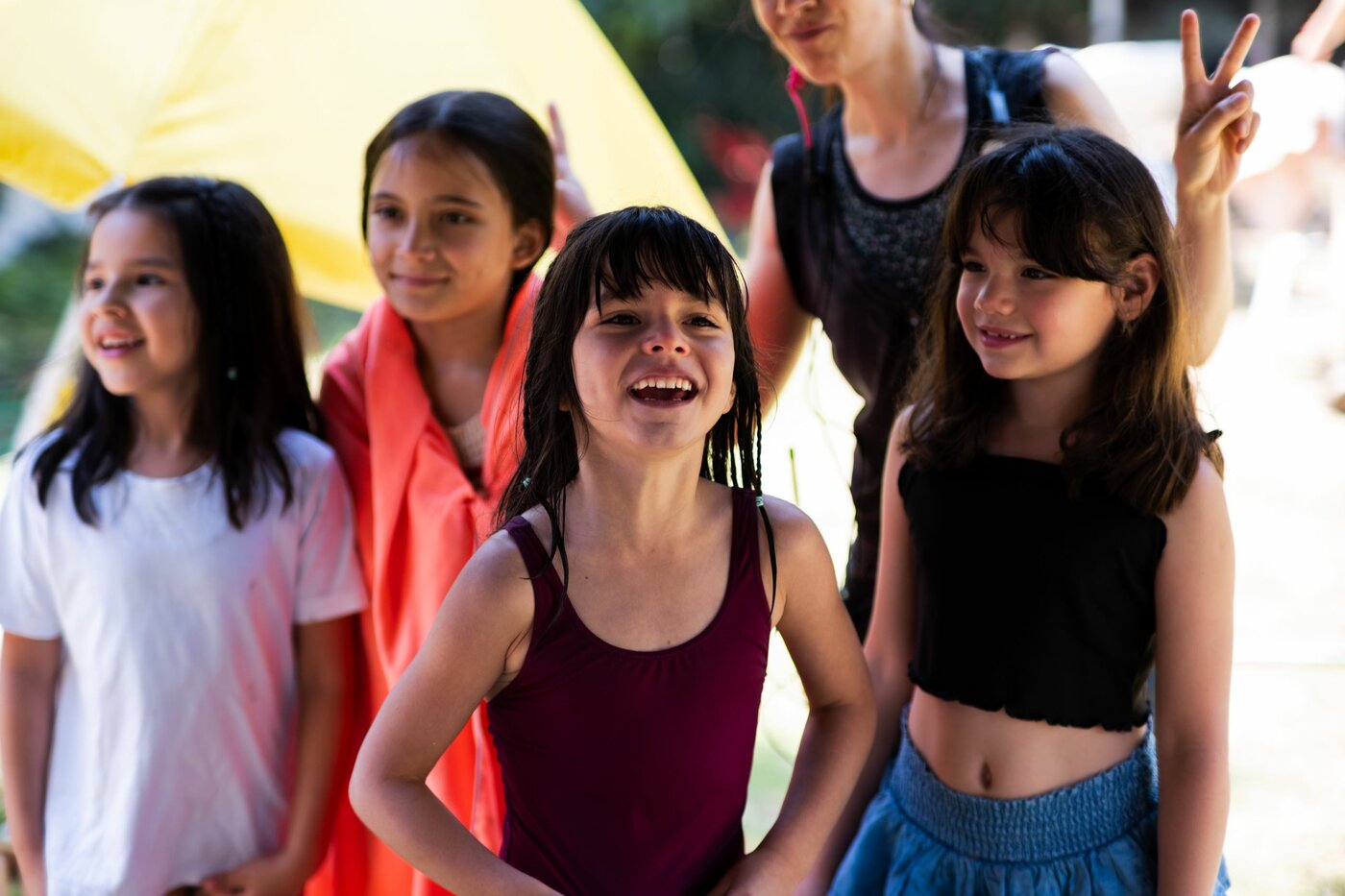
Vittini celebrates the end of the shoot with her doubles, the many versions of Julia.
BOHDANOWICZ: Your investment really paid off. You gave her a world with context, but also followed through from set life into real life. That’s rare.
SOTOMAYOR: At the end, the film is a document of the shoot itself. A document of a period of time spent in a place. It becomes a kind of visual museum. It was important to create that community in the house. It was our house for a long time.
BOHDANOWICZ: On the topic of community, this is your second time collaborating with Bárbara Álvarez. It was striking to see how effortless your rapport was with her and the entire crew.
SOTOMAYOR: Yes. We worked together fifteen years ago, on something very planned, very academic, shot on Super 16. This was the opposite. No storyboard, just ideas. Preproduction was short.
Bárbara was very moved by the script. She shared my sense of Estela as abandoned, invisible, always seen through reflections and windows. She’s close to the actors, very sensitive, and I think you can feel that in the way she frames María Paz.
We made decisions on the spot. Some rules were clear: handheld in Estela’s room, warm tones, choreographies with the windows, some ideas for water. But mostly it was about following the heart of the film. I didn’t want anything baroque or artificial. I wanted something close to Estela’s emotion.
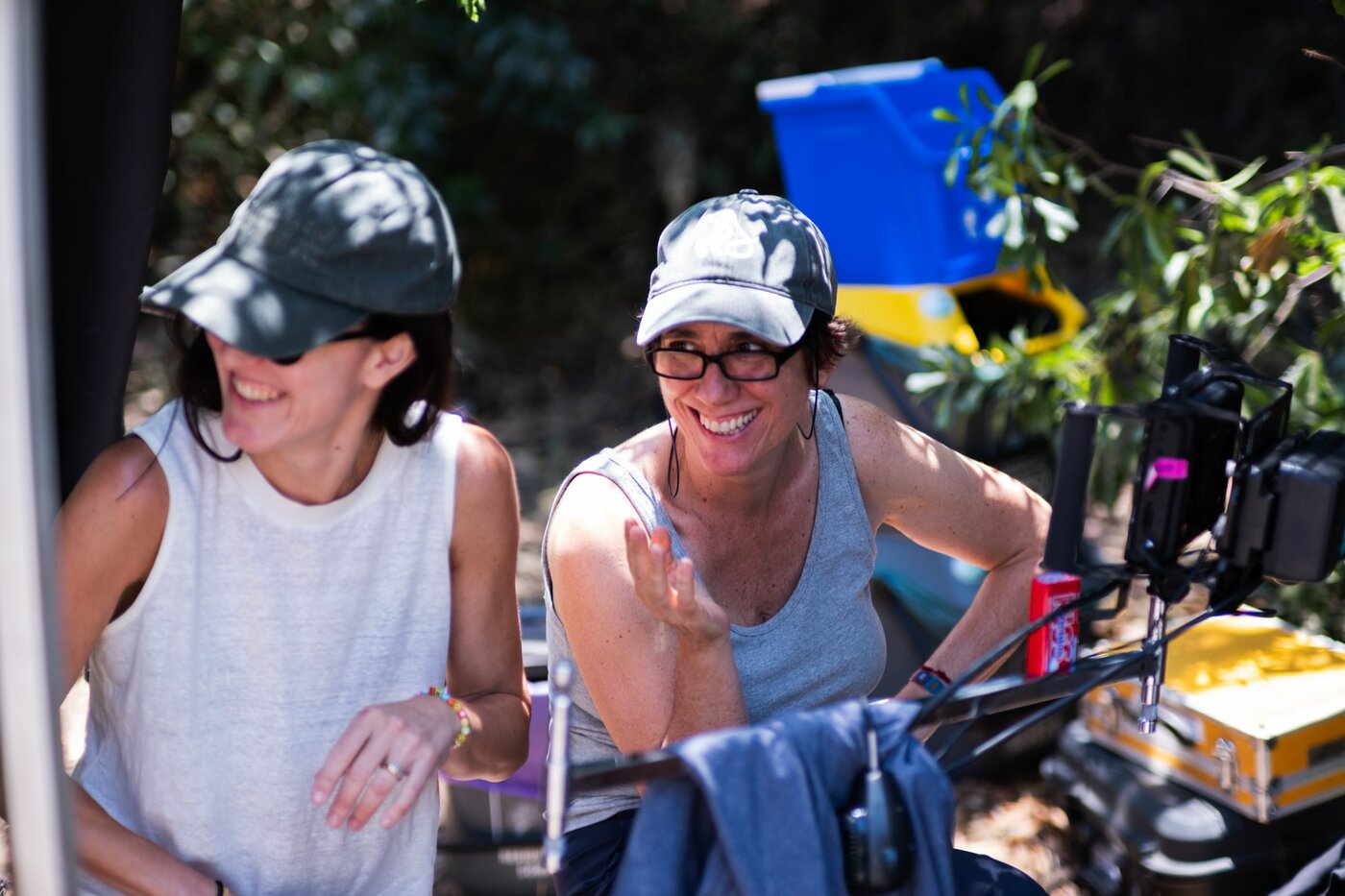
Sotomayor and Álvarez set up a shot by the swimming pool.
BOHDANOWICZ: What impressed me in your working with Bárbara was how much natural light you used. Many DPs build complicated setups, but on your set the actors could really immerse themselves. It felt real, and you didn’t shoot tons of coverage—you were confident, selective. Maybe that comes from your history together?
SOTOMAYOR: For me, less is always better. On Thursday Till Sunday we shot Super 16, and the film stock helped balance inside and outside light. Here we used the Arri 35, also very light sensitive. It made things easier—we could expose for the house and the patio at the same time.
I get bored repeating shots. After three takes, usually the energy is gone. So I trust the editing. If we have a good shot, we move on. With Rosa we had little time, it was like fishing. If I could, I’d have prepared more, but this was the rhythm of the project.
I always want to try something new. In this film, I wanted to stay close to tension, close to Estela’s emotion, not run away.
BOHDANOWICZ: Did you have visual references, or were you inventing something new together?
SOTOMAYOR: There weren’t many references. We had some pictures, a mood board. Roma [2018], and La Nana [2009] in Latin America, were thematic references. They were just close in terms of story, but I wanted something different. Bárbara and I worked like a small team, even inside a big one. Mostly it was improvising.
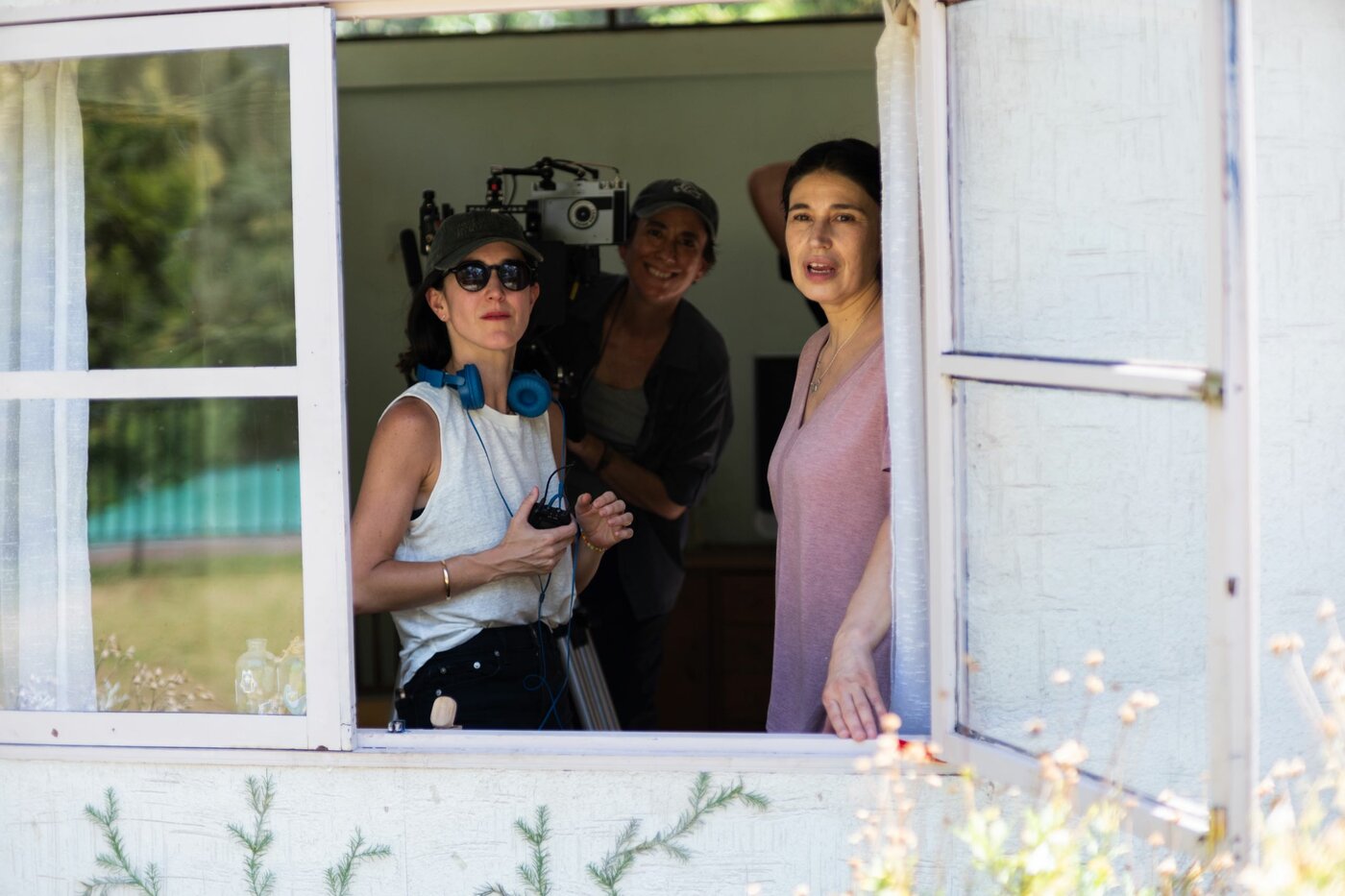
Sotomayor, Álvarez, and Grandjean set up a shot in Estela’s cabana.
BOHDANOWICZ: I also admired how natural you were in leading such a big set, especially with a child at the center. You make it look easy. Where does that come from?
SOTOMAYOR: Maybe because I’m not stressed in life either. I try to enjoy the moment. If you put good people together—actors, crew—it can’t be so bad. There’s no fear.
With kids it’s different. You plan, but then you react. It’s high-energy; you invent things all the time. Solution after solution. Sometimes I’d take many takes with Rosa until she was lost, then ask María Paz to reset. There was no fixed method, only keeping it alive. My big failure would be to just portray the book. For me cinema has to be alive, otherwise it’s nothing.
BOHDANOWICZ: Exactly. The best cinema defies its subject. It’s a rebirth.
SOTOMAYOR: Yes, it has to be against something…
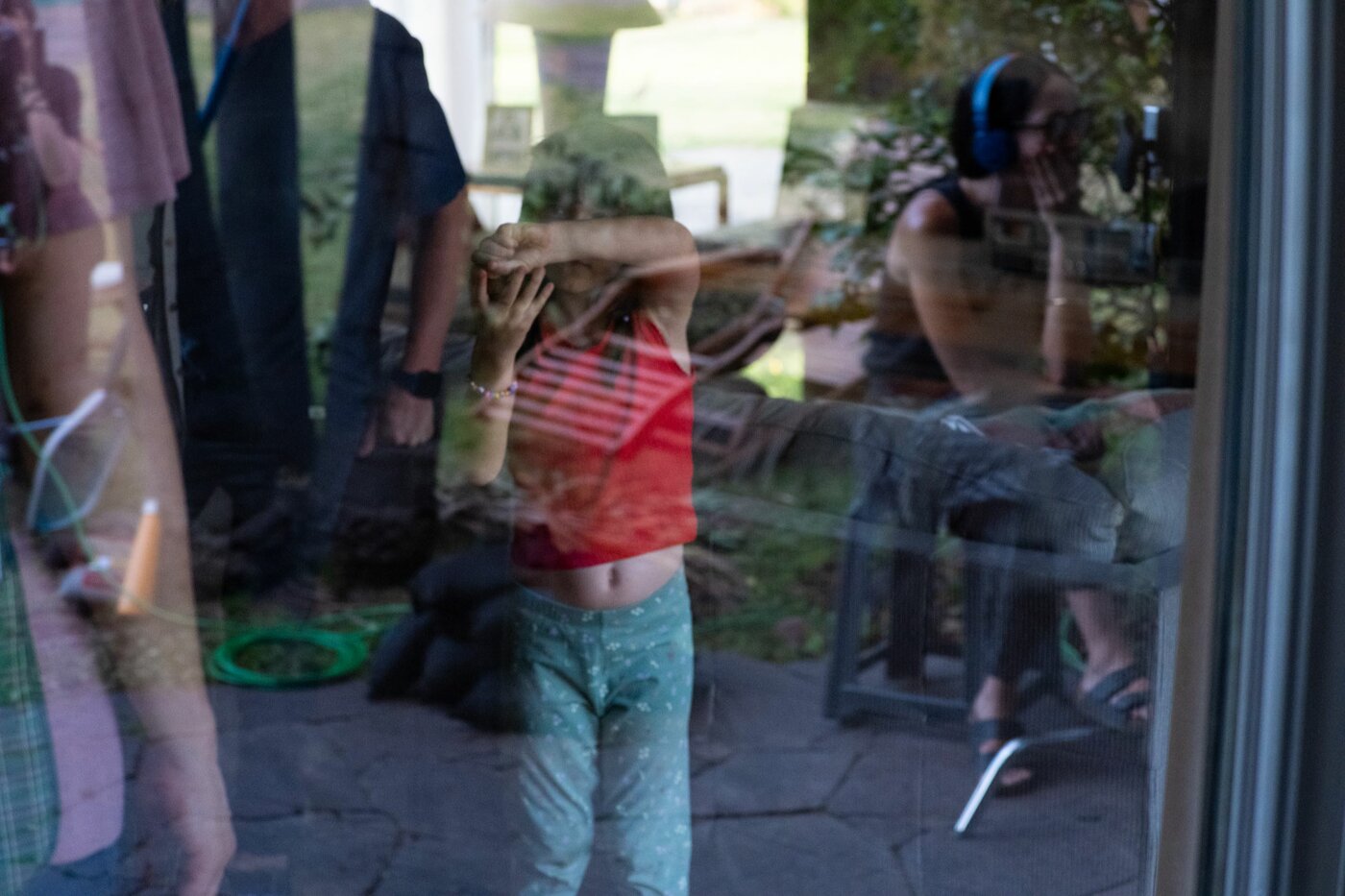
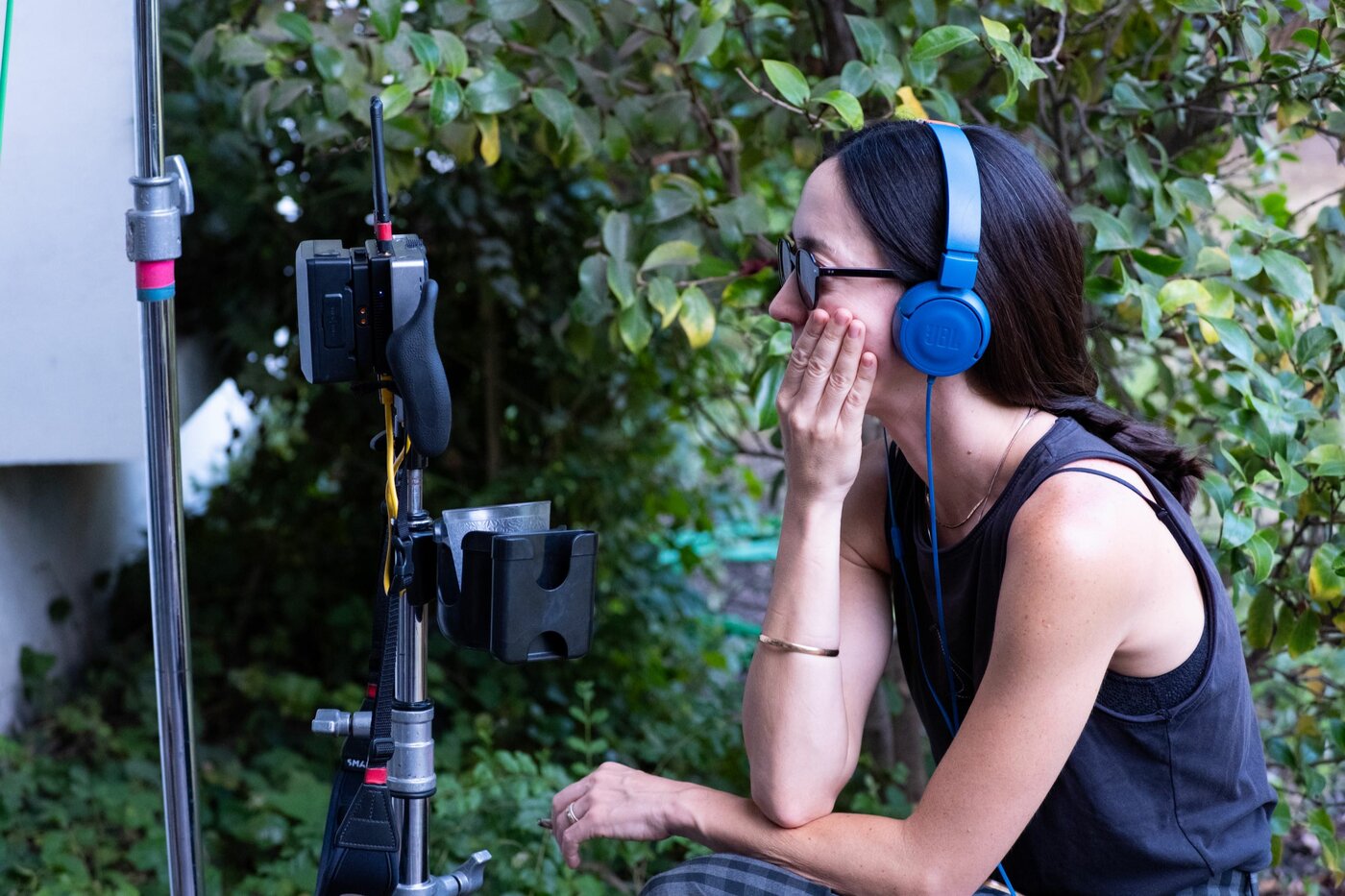
Through a sliding glass door, Vittini rehearses a scene while Sotomayor watches on her monitor.
BOHDANOWICZ: You just finished postproduction. How are you feeling, and how do you want people to feel when they watch the finished film?
SOTOMAYOR: I don’t think about the room, or try to say directly that cinema is political. But it is.
You haven’t seen the finished film yet. For me it’s painful, uncomfortable, but moving. It let me get close to an experience I never lived, but that I feel very near to.
I hope it makes people think about themselves, about the structures that they live in, about micro-politics. We’re in a delicate time politically, with the right wing gaining strength. I hope the film helps us wake up, notice the violence around us, and think about how to respond.
For me the hope is simple: that each film leaves behind a trace, opens a thought, a feeling…another way of seeing the world more transparently.