
Dear Danny, dear Blake,
It is 9 am and the press room is still empty as I begin typing; the Boulevard de la Croisette is waking up, and so am I, crouched over my laptop while the few TV screens on the walls around me are broadcasting festival highlights for a non-existent audience. This 79th edition is just a few days old, so the monitors inside the Palais du Festivals still feature snippets of the opening press conference. Remember this year’s Berlinale? Barely three months since jury president Wim Wenders opened a pandora’s box of op-eds and online screeds when he claimed that filmmakers have to “stay out of politics,” it feels as though an ever-growing number of journalists are using access to festivals to prod guests into revealing their allegiances. To be clear, it’s not that I don’t think it’s important to challenge state-funded institutions and their fêted invitees about their politics. It’s that I find it increasingly hard not to see this as a performative shtick—a ritual that almost feels nauseatingly theatrical: press conferences have become the place where artists come to clear their credentials, and so it was for the main competition’s jury led by Park Chan-wook. But for every pointed answer you could rally behind—like that of screenwriter Paul Laverty, who spoke about the power of corporations over artificial intelligence and expressed his solidarity for all creatives blacklisted by Hollywood for opposing the ongoing genocide in Gaza—there were others that rang utterly defanged if not outright dangerous, like Demi Moore’s suggestion that “AI is here, and so to fight it is a battle that we will lose.”
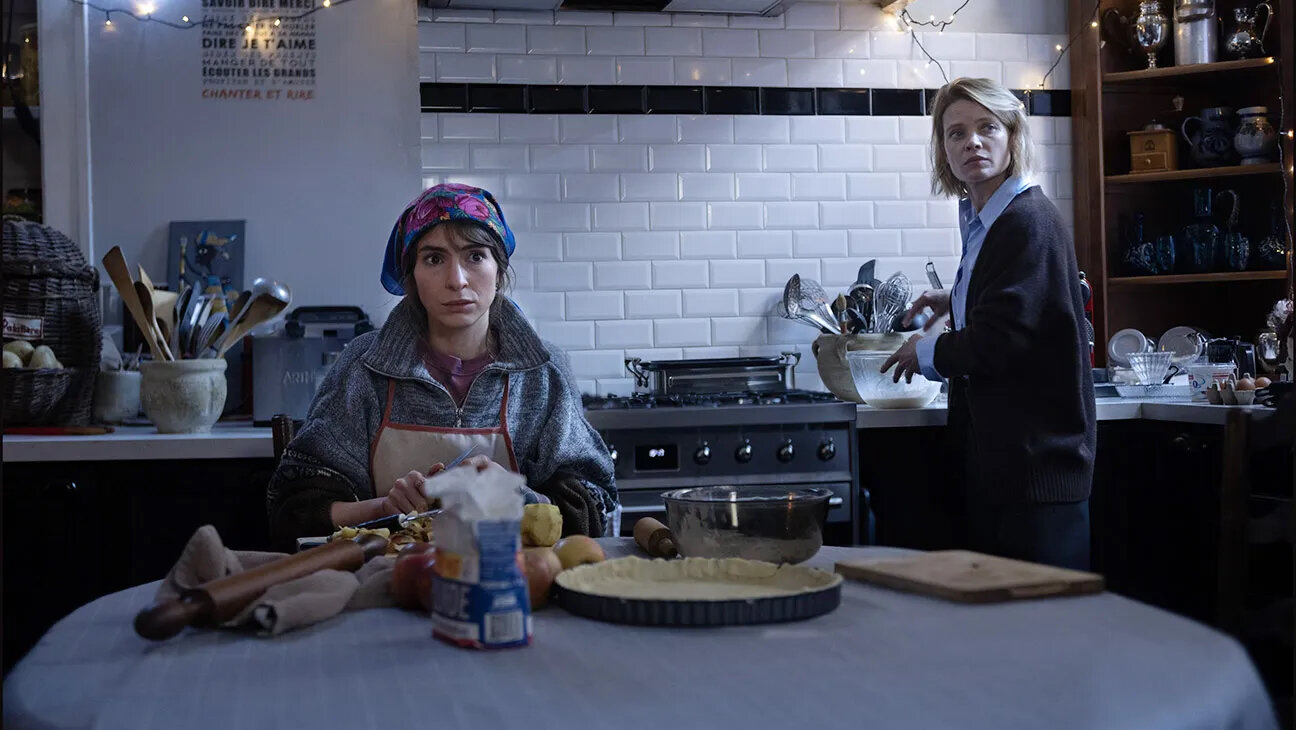
Diary of a Chambermaid (Radu Jude, 2026).
Skewering people’s well-meaning naïveté and virtue signaling has long been at the forefront of Radu Jude’s cinema, and his Diary of a Chambermaid (all titles 2026 unless otherwise stated), offers another chapter in his exploration of capital and misery, one that’s closer to the smaller scale of Kontinental ’25 (2025) than what’s arguably his magnum opus, the gargantuan—in title and size—Do Not Expect too Much from the End of the World (2023). At 94 minutes, this is one of the director’s shortest features, and ranks among his most formally accessible. A “variation” on the eponymous 1900 novel by Octave Mirbeau, it centers on Gianina (Ana Dumitrașcu), a young Romanian who’s left her daughter back home to drum up some cash as an in-house maid for an affluent couple in Bordeaux (Vincent Macaigne and Mélanie Thierry). True to its title, Diary unfurls as a journal spanning three months—late September though Christmas—in Gianina’s life abroad, each day a segment of various lengths, with the action, such as it is, restlessly moving between France and her Romanian village. Footage from back home comes in the shape of video calls and clips the the woman is sent from her child; the French section seesaws between the rehearsals of a theatrical adaptation of Mirbeau’s book, in which Gianina’s been cast as the lead, and fragments of her everyday routine, shot in a more traditional style.. So far so Jude: like its forebears, Diary is both in sync with our screen-infested 21st century—though nowhere near as the Tik-Tok-saturated Do Not Expect—and determined to ridicule a particular type of liberal personality. Thierry and Macaigne play a naively charitable duo whose magnanimity is exposed as something darker. Jude couches Gianina’s gig as a modern form of indentured servitude; her bosses, shamelessly oblivious to her needs, routinely reduce to an “authentic” representative of a second-tier Europe of the “East” that they’ve hired to cook, clean, and corroborate their own clichés about the Union’s poorest.
Gianina doesn’t quite comply, nor does the film. Part of me fears the shorter runtime will lead some to write this off as a minor doodle—the same fate that befell critical debates around Kontinental ’25. Diary, however, is everything but. As in Jude’s finest, animating his latest is a seditious desire to do away with trite generalizations about his protagonist’s class and background. The whole film is anchored on a clash of competing narratives—is Romania really as poor as these bourgeois expect it to be?—and for every stereotype about the country Gianina is forced to comment on there are moments that suggest a much more complex reality. I’ll remember Diary for a heated dinner table chat about the war in Ukraine—which includes a snuff clip of Ukrainian soldiers killing their Russian counterparts—but also for one of Jude’s frequent montages, this time a string of abandoned construction sites in rural Romania that plays over a folktale Gianina narrates to the couple’s child, about a young prince who leaves his family to search for the valley of eternal life, and, having found it, succumbs to nostalgia, so leaves the enchanted place to return to the childhood turf only to find his parents dead and new buildings erected where his old haunts once stood, and dies a homesick man. It felt like a terrific précis of Jude’s overarching project: to dissect the breakneck speed at which our neoliberal world order keeps building over its own ruins, and rescue the history of its victims from oblivion.
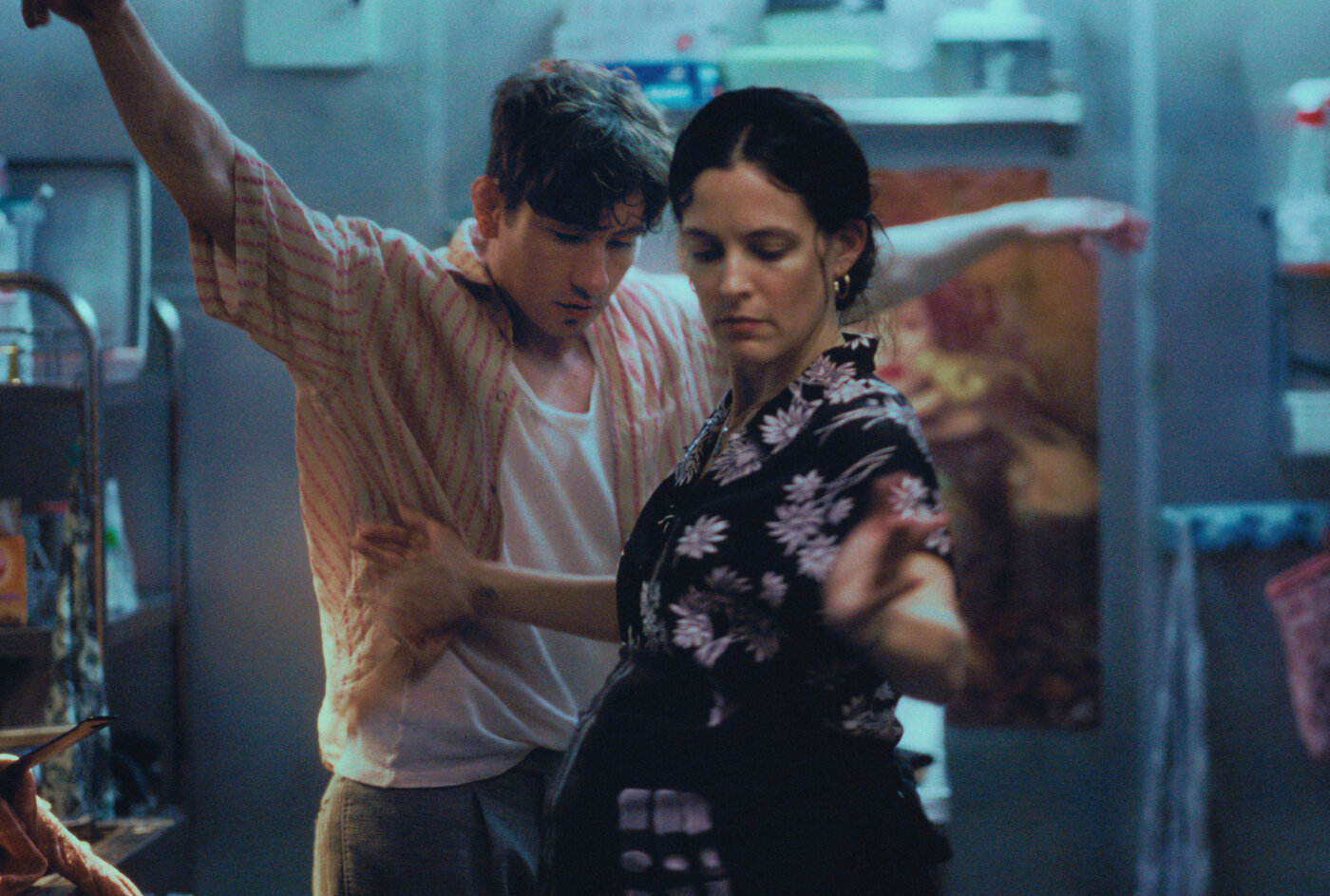
Butterfly Jam (Kantemir Balagov, 2026).
Diary of a Chambermaid premiered in an auteur-stacked Directors’ Fortnight, which this year will premiere new features by such veterans as Lisandro Alonso, Bruno Dumont, Dominga Sotomayor, and Alain Cavalier, and opened with Kantemir Balagov’s Butterfly Jam. To call that a disappointment would be an understatement. The director’s previous, Beanpole (2019) was among the highlights of my first trip to the Croisette; a few minutes in, his third feature began triggering a growingly ominous déjà vu. After Andrea Arnold’s Bird (2024), another film that required you to believe Barry Keoghan could be a father to a teenager who looked barely younger than him, the 33-year-old actor returns as a washed-up American-Circassian dad to a boy who’d more likely pass for his brother, Temir (Talha Akdoğan), a wrestling prodigy itching to leave the New Jersey city of Newark behind. But the age gap is hardly the only thing that strains credulity here. Cowritten with Marina Stepnova, this is Balagov’s first English-language project, and the lost in translation feel shows: there’s a stilted, unnatural quality to the dialogues that makes it hard to imagine anyone could ever speak like these people. This is, at least ostensibly, a portrait of an immigrant family stranded just a few miles away from the American Dream made city: shot by Jomo Fray (RaMell Ross’s cinematographer in Nickel Boys [2024]) with a handheld camera that feels more assaultive than kinetic, Butterfly Jam is punctuated with wide shots of New York’s skyline looming over New Jersey like a distant mirage. And while Keoghan’s Azik, his older sister Zalya (Riley Keough) and best friend Marat (Harry Melling) often toggle between English and their Old World tongue, Kabardian, that’s about as close as Balagov ever gets to evoking an “authentic” feel of the milieu. Claustrophobically keyed to the family at its center, by the time this chamber drama widens to account for other members of Azik’s community in its final stretch, the effect is almost jarring. Who are all these people? I jotted down on my notes, though the question, in retrospect, might as well apply to the film’s principals.
All we know about Azik is that he runs the family business with Zalya, has a disarming propensity for being swindled, and that his signature dish, the delen—a Circassian fried bread pie—is delicious enough to potentially land him a gig at a new, bigger restaurant in town. But the young man—as virtually everyone else around him—is written in the broadest of strokes, and hard as he might try, Keoghan cannot animate a character that’s crafted as a poster boy for fragile masculinity (this is a testosterone-fueled film where the words “you are weak” hang over men as a curse). Whatever Balagov might have to say about his spiritually broken drifters, Butterfly Jam cannot seem to figure out which kind of movie it wants to be, landing somewhere between a mob-adjacent drama and a sort of urban fairytale without ever synthesizing its disparate parts into a cogent whole. Halfway through, Aziz catches wind of a strange sighting: a pelican’s showed up in Newark from god knows where and started nesting on the city’s shore. The bird becomes a significant fixture, and an embodiment of the kind of rote surrealism Balagov mines; it’s not that his previous were free from odd visions, but where those moments in works like Beanpole felt organic, here they come across as tacky, as is the choice to bathe everything—from clothes to decor—in fifty shades of pink.
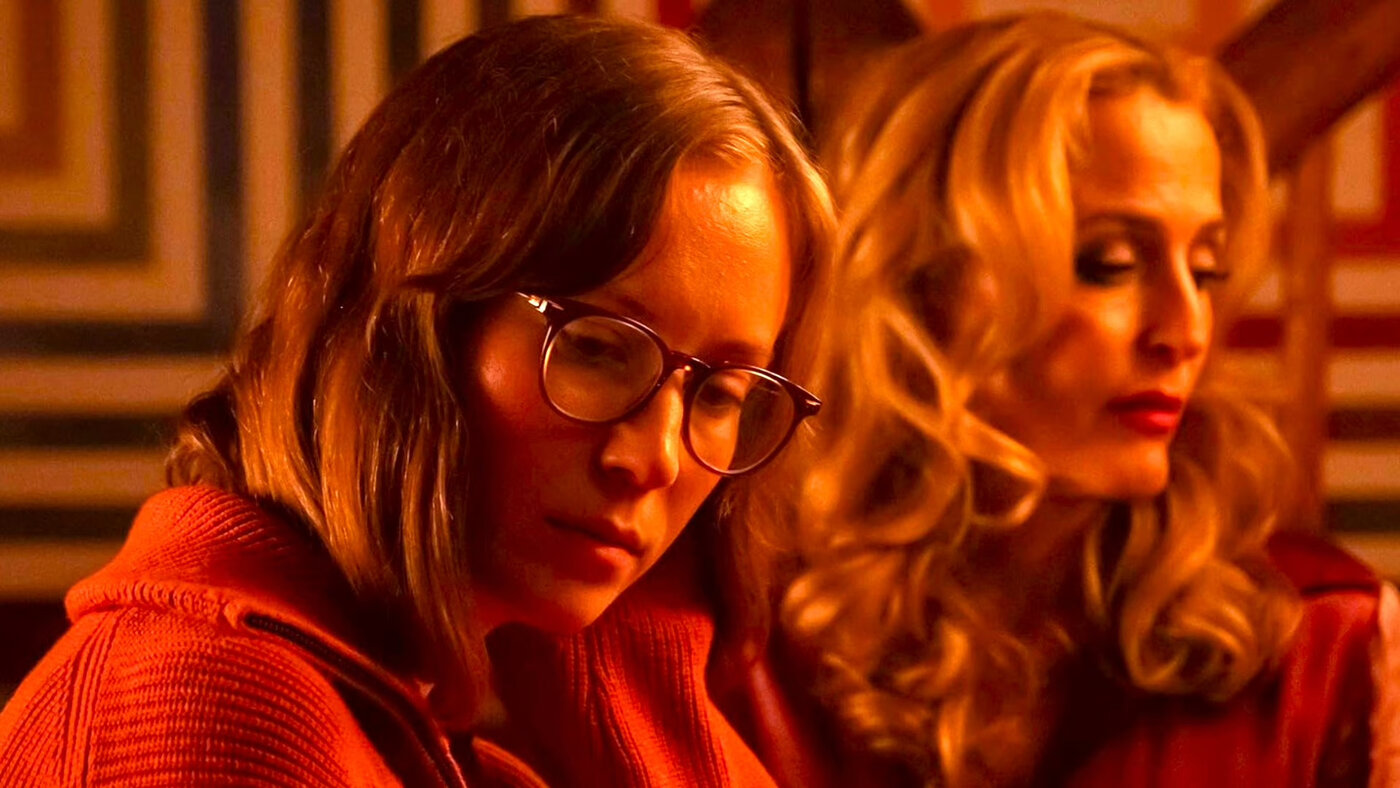
Teenage Sex and Death at Camp Miasma (Jane Schoenbrun, 2026).
I had a lot more fun with another opener, Teenage Sex and Death at Camp Miasma, which kicked off this year’s Un Certain Regard. Jane Schoenbrun’s third feature was an early festival standout, and in my book something of a revelation—that rare queer film that doesn’t qualify as such purely by virtue of the kind of characters that populate it but earns the descriptor in a much more fundamental sense: it’s a work that relishes in subverting conventions and genre tropes, beckoning you into a universe that’s decidedly, refreshingly weird. In interviews, Schoenbrun had pitched it as Portrait of a Lady on Fire (2019) set in a Friday the 13th (1980) sequel, and the movie delivers on that promise, weaving gore into the steamy romance between a young queer filmmaker, Kris (Hannah Einbinder), and Billy Presley (Gillian Anderson), the retired actress who played the “last girl” in the first instalment of a horror franchise Kris has been hired to reboot. A slasher haunted by a serial killer dressed in a forensic suit and an air vent helmet, Camp Miasma came out in the early 1990s and was Billy’s last acting credit; as the saga swelled into a series of progressively egregious sequels, the woman retreated into anonymity and turned the summer camp where the film was shot into her home and mausoleum (think Norma Desmond in 1950’s Sunset Boulevard, here refashioned as a stoner with a Southern accent surviving on candy and Kentucky Fried Chicken).
Kris, 29, and Billy, more than twice her senior, belong to wildly different generations, and like I Saw the TV Glow (2024), Schoenbrun’s latest furthers her concern for the gulf between digital natives and their elders. You could read Miasma as a millennial filmmaker’s attempt to wrestle with the legacy of the Clinton-era media diet of their youth and its restrictive possibilities for self-expression. Indeed, it’s telling that the original Camp Miasma should have elected a non-binary teen as its monstrous killer, and it’s not lost on Kris that this, from the vantage point of our 2020s, is just the kind of “problematic” detail a studio would hire an openly queer filmmaker to paper over so as to ship the franchise back into the market. Schoenbrun wastes no opportunity to lampoon Hollywood’s hypocritical posturing, but it’s a testament to their exquisite writing that the satire never feels preachy or one-sided. It’s not just the industry that gets pilloried, but the rigid lens through which Kris approaches her craft and the B-movie that changed her life when she all too precociously first saw it at age eight. “You’re talking about it too academically,” Billy chides her early on; Camp Miasma was always and first and foremost a film about “fluids and flesh.” So is Schoenbrun’s own, which, at the risk of oversimplifying an astonishingly rich work, boils down to a creative and emotional awakening. Heads will roll, bodies will be sliced, and orgasms reached; amid all the blood and viscera, Kris understands there’s no sense in suppressing her desires, and on recognizing herself in a fictional character, surrenders to their overwhelming force. To make a movie, Schoenbrun seems to suggest, is to rediscover one’s body—what’s more thrilling than a work that argues cinema can be a liberating machine?
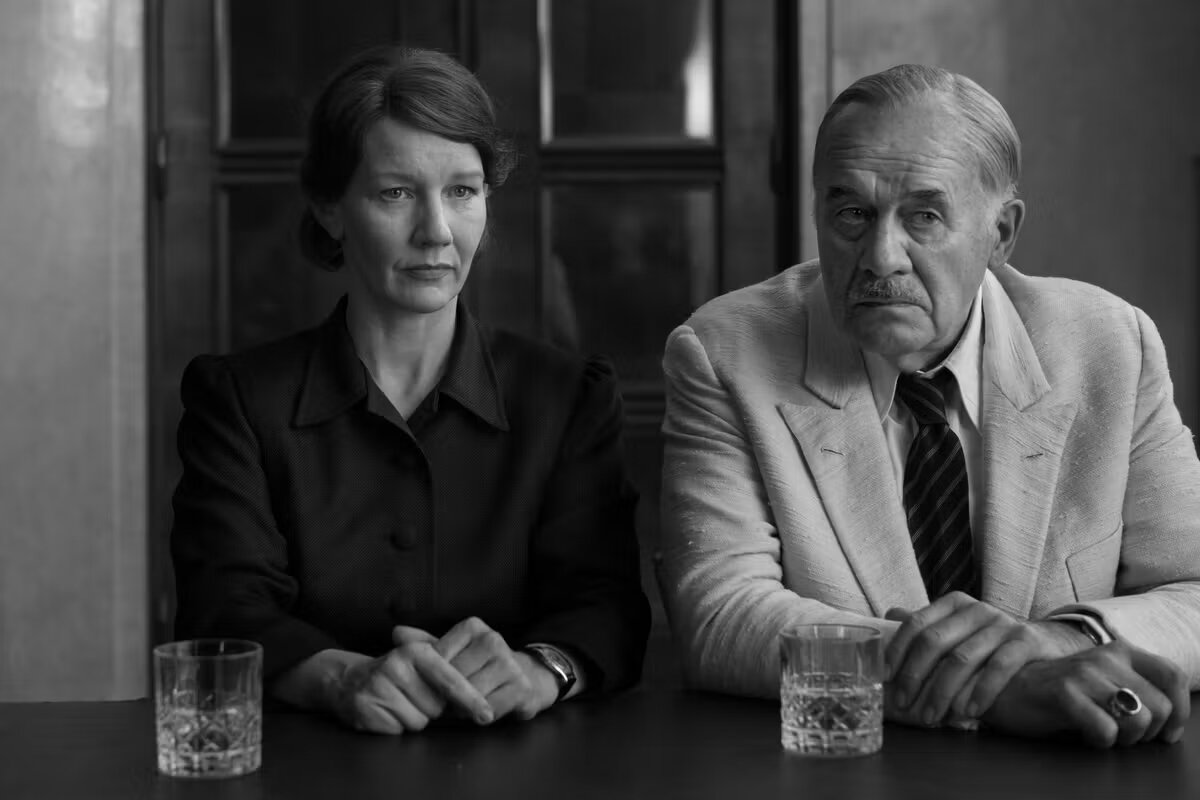
Fatherland (Paweł Pawlikowski, 2026).
A film about a cult movie, Miasma stands a good chance of becoming one itself—it is Schoenbrun’s best to date. The same can be said for Paweł Pawlikowski and his newest film, Fatherland. In its simplest terms, his latest period piece charts literary titan Thomas Mann’s 1949 homecoming trip to Germany with his daughter Erika—twenty years since he won the Nobel Prize for Literature and sixteen since he fled the country to settle in the US. But the film hangs on a question that swells that premise into something much larger: what’s the difference between one’s home and heimat? There’s no exact English equivalent for the term—which roughly translates as a state of belonging that transcends geographical boundaries—and you can think of Fatherland as sketching a tentative definition. The year is 1949; the country, already fractured between the capitalist West and the communist East, is a wasteland of derelict buildings on both sides. Erika (Sandra Hüller) is escorting her father (Hanns Zischler) on a journey that echoes Viktor Sjöström’s in Bergman’s Wild Strawberries (1957). Mann has returned to the native turf to pick up a few accolades: the Goethe Prize in Frankfurt, and another award in the Soviet-controlled Leipzig. For timeframe and textures, Fatherland feels like a spiritual sequel to its predecessor, Cold War (2018), similarly lensed in black and white and framed in a boxy Academy aspect ratio. But where that film often moved like a self-destructive ballet, swooning with its two doomed lovers, this one is a much more somber, almost austere affair. Pawlikowski’s longtime cinematographer Łukasz Żal traffics almost exclusively in static shots that heighten the film’s sepulchral moods. We begin with a phone call between Erika and her brother Klaus (August Diehl), a writer who’d die of an overdose in Cannes, of all places, early into his dad’s voyage home, and a large part of Fatherland concerns the aftermath of that tragedy on the father-daughter duo. Zischler plays the writer as an aloof figure who reacts to his son’s passing with barely a shrug. “Klaus is dead,” he tells Erika, and for a second I forgot I was watching Thomas Mann and thought back to the first three words of Albert Camus’s The Stranger.
Still, his reaction is of a piece with a work that’s resolutely immune to loud, tear-jerking moments; I kept expecting Fatherland to detonate, but it’s not that kind of film, and it’s all the more effective for that restraint. Save for a late altercation in which Erika finally calls her father a “cold-blooded narcissist” hiding in a “temple of words,” this is a movie where no one ever raises their voice, where Zal’s medium close-ups leave sorrows to surface on the actors’ faces; a lip twitching on Hüller’s communicates immense swaths of feeling. Pawlikowski likes to stage his films with an audience watching, and so much of Fatherland consists of shots of Erika looking at her father speak to throngs of enraptured people, and Mann himself staring at the choirs who sing for him. The war is over, but the film layers its memory like geological strata, and repeated images of destroyed buildings suggest the way in which landscapes enshrine traumas in their crevices and contours. I fear I’m painting Fatherland as a lugubrious watch. It isn’t—not entirely, at least. For a film drenched in grief, a rebellious lust for life courses through it, and in a coda modeled after Cold War’s own, Thomas and Erika find solace listening to Bach’s “Jesu, Joy of Man’s Desiring” from a battered church organ. It is one of Pawlikowski’s most engrossing sequences.
Fatherland moved me like few other films have at the festival, this or any other year; I left the theatre knowing I couldn’t bring myself to watch anything else. So I cancelled my last ticket of the day, Asghar Farhadi's Parallel Tales—a smart decision, in retrospect—and schlepped all the way up to the cemetery where Klaus was buried here in Cannes. Le Cimetière du Grand Jas is far bigger than I’d pictured it, a maze of cypress trees and gravestones stretching over an entire hill that watches over the city, so vast I immediately got lost. I was about to give up when I bumped into someone else wearing a festival badge. It was a young Polish critic who’d made the trip for the same reason, and together we spent a good half hour roaming the place until we found what we’d be looking for. Klaus is buried in sector 16, in case you fancy a visit, and his tomb is a slab of marble atop which people had left some pebbles. We smoked a cigarette, picked a stone, and added them to the mix. On the way home the clouds that had stalked the Croisette in the morning were all gone and the sky was rinsed clean and the air smelled of jasmine; it had been a while since I last felt so at peace. I hope your screenings made you travel, too. Isn’t this why we come here, after all?
Warmly,
Leo
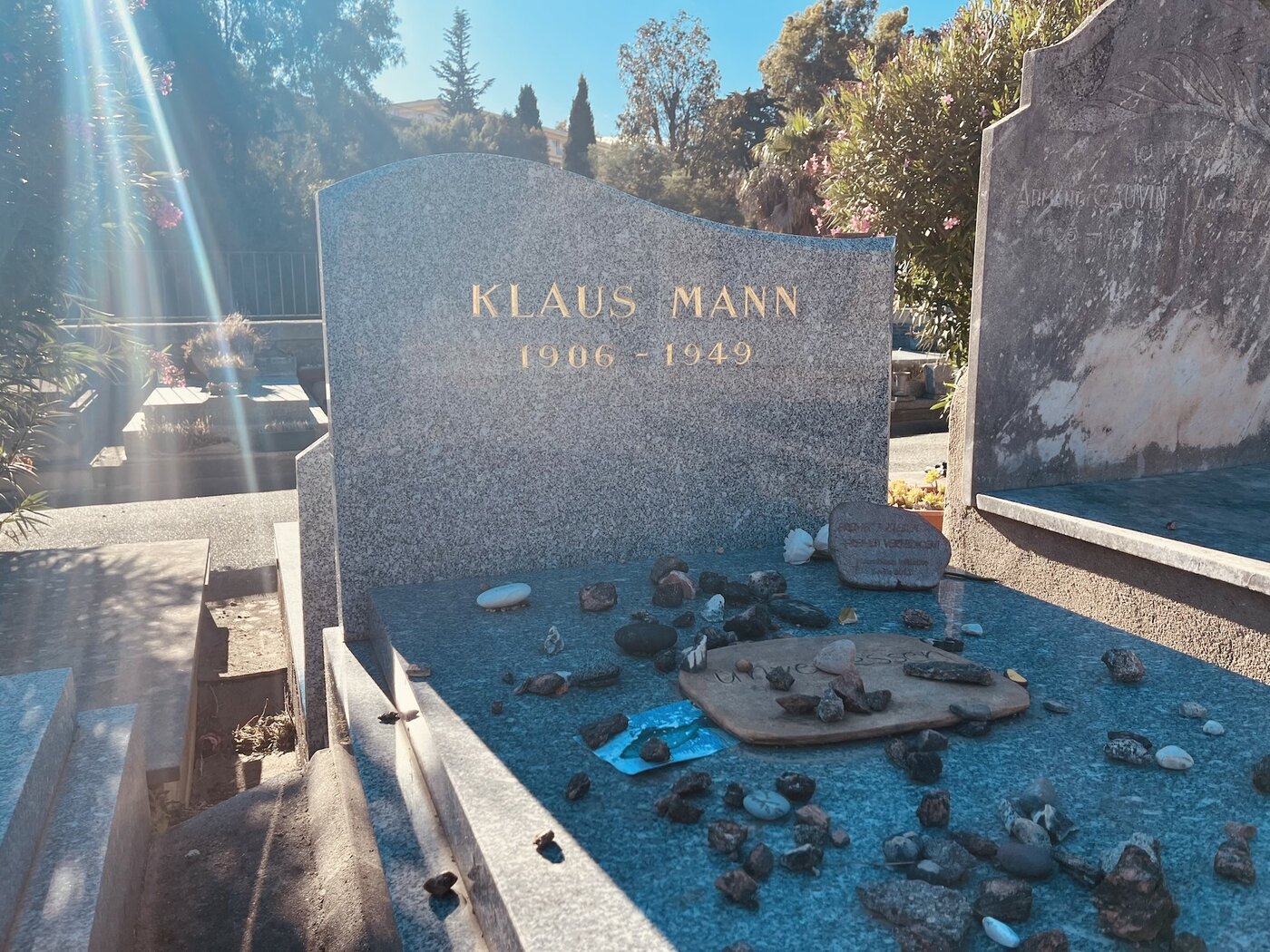
Klaus Mann's grave in Cannes. Photo by Leonardo Goi.

Illustrations by Ionut Vancea.