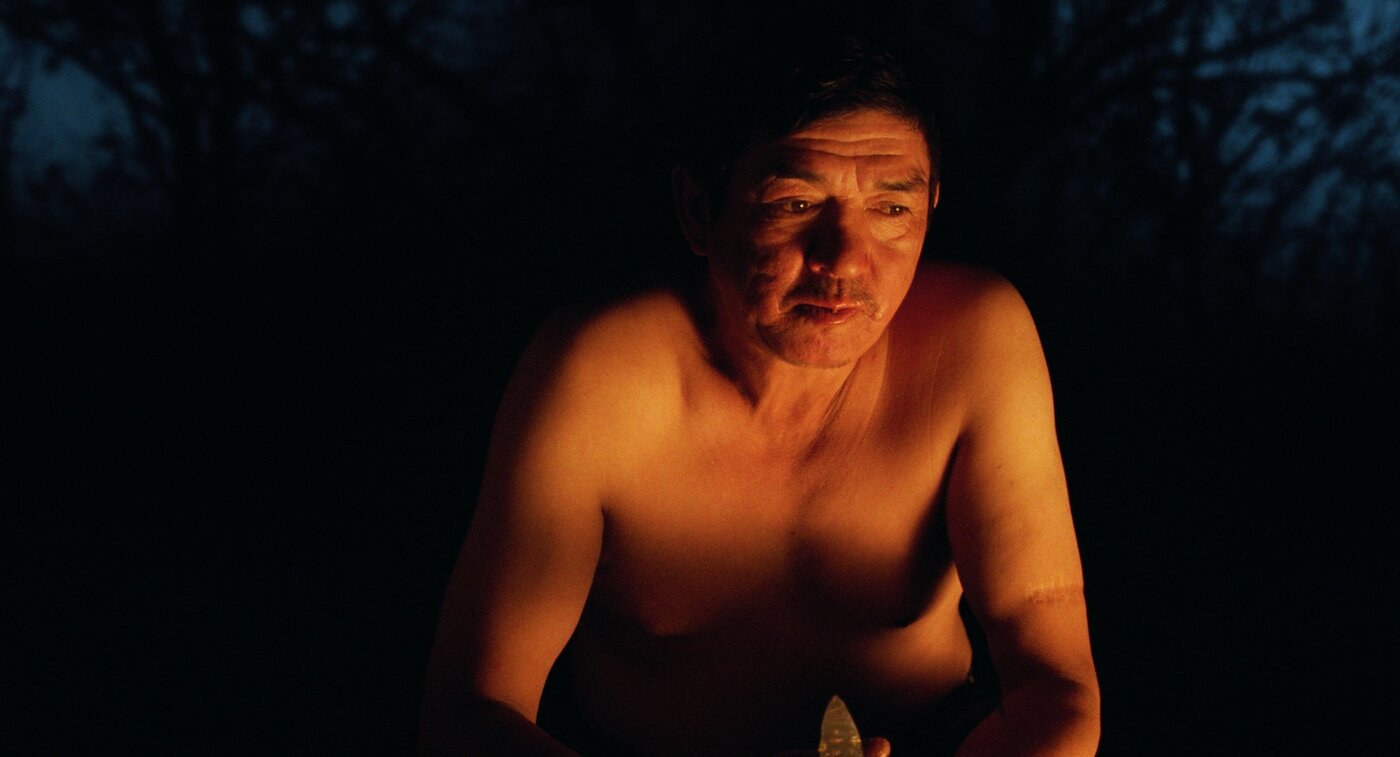
Double Freedom (Lisandro Alonso, 2026).
Dear Leo and Blake,
I think it is apt you bring up the trolling at press conferences and Q&As that is prevalent at film festivals in the same dispatch you introduce Paweł Pawlikowski’s Fatherland (all films 2026 unless otherwise noted), a movie structured around different countries and ideologies jockeying to claim a major artist as their own. Disinterested in Thomas Mann as a person or his art as an expression, all they look for is currency, cache, and legacy. The artist is only a pawn in a larger game played around the film’s evocative edges and off-screen space. Released ten or twenty years ago, this delicate, deceptively small-scale film wouldn’t have felt as big or hit as hard as it does now, where the very body of an artist feels like a battleground fought over in proxy wars by ruthless and uncaring forces seeking above all to silence expression and discourse in the name of false freedoms.
There’s another distressing—though far less important—performative trend on display at Cannes, which is for members of the media, in press-only screenings, to applaud the festival’s iconic animated logo as it unspools before a premiere, as well as to cheer when certain production or distribution company logos appear before a film. When the screenings at the festival are public premieres, they play to an audience understandably thrilled to be there, and often one working for these very companies—and these cheers feel wonderfully celebratory. But at press screenings, I worry that the appearance of such responses speak towards the encroaching culture of fandom in the accredited media, of a press whose role is to hype packaged experiences and endorse a commercialized zeitgeist rather than assess and interpret freely what plays before them.
Of course, the Cannes name does carry a great deal of meaning for film culture, and like any venerable institution, legacy is something that the festival is always very conscious of. Each edition seeks new opportunities to buttress and polish its importance, fêting both deserved and questionable celebrities of the past, and reviving film history in its Cannes Classics section. Sometimes these legacies get muddled at cross purposes, trying to honor French cinema, court Hollywood, shepherd film history all at the same event. On the one hand, a screening of The Fast and the Furious (2001); on the other, bringing the 88-year-old Armenian master of experimental editing, Artavazd Pelechian, to the festival with restorations of his classic short films. Cinema’s legacies (and paradoxes) are vast indeed.
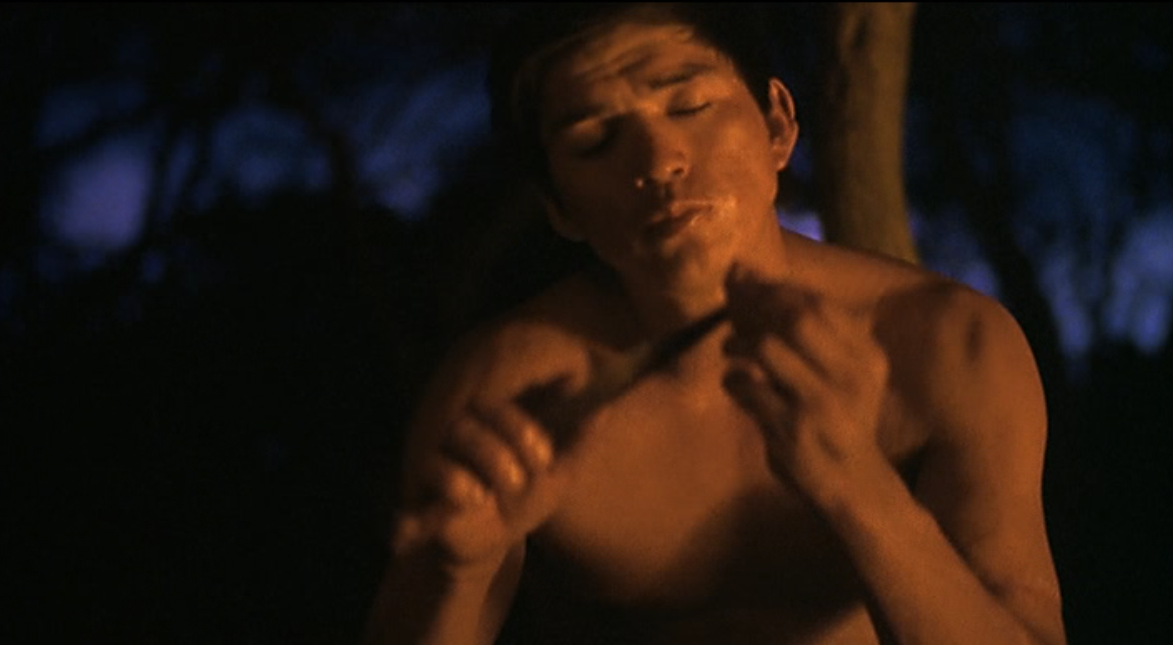
La libertad (Lisandro Alonso, 2001).
And then there’s another kind of legacy, one not of reputation or import, but of filmmaking—that is, the tradition of making movies in a certain way. This kind of celebration is less glamorous but more fundamental because it’s about recognizing craft, aesthetic, and ethos. This year, such a celebration could be found in the Directors’ Fortnight sidebar in one of the most unexpected sequels in film history. Unasked for but nevertheless enthusiastically received, Lisandro Alonso’s Double Freedom is follow-up to the Argentine director’s bracingly spare, quasi-documentary 2001 debut La libertad, about the daily life of a young woodcutter. Miraculously, the completely unpretentious minimalism of the original film comes to us intact decades after such stripped down slow cinema became de rigour and then passé in the festival world.
After two movies of larger scope and ambition, one very successful (Juaja, 2014), one less so (Eureka, 2023), Alonso has returned to his roots wherein simply spending time watching someone doing their daily activities is justification enough to observe, to film, and to appreciate. La libertad began and ended with its protagonist, Misael (Misael Saavedra), eating before the fire of his woodland hovel, and the sequel starts with literally the same shot, with nothing changed but an older man and an older world. The life on display is simple: one of solitude, accompanied by a loyal dog and exquisite birdsong; one of daily labor and routine, and its minor differences and divergences. And the filmmaking rightly shares a similar simplicity: Shot on 35mm by the original’s cinematographer, Cobi Migliora, but unadorned; with beauty welcomed but never sought. (Until, that is, a passing moment of beatific arboreal wonder.) A new wrinkle: Misael has a sister (Catalina Saavedra, no relation) who has been institutionalized for decades and needs to be released to his care due to the failing state of national healthcare. She thus joins her brother in an ambiguous freedom: He, nearly but not totally self-sufficient, and she, liberated from a crumbling asylum and a medicated mind. This resumption from 2001 is a radical gesture: we still see that under austere circumstances a certain kind of freedom can be maintained for two decades, both Misael’s independence and that of the independent filmmaker. With no intellectualization or romanticization of the scenario, we’re only given the presence of people in their spaces and doing things—a material realism that achieves metaphysical power because it grants the patient viewer the time to watch and wonder. It’s a gift to be reminded of these core legacies of the cinema, and to trace a continuity of these pleasures from the past to the present and, hopefully, the future.
With film productions big and small being financially risky endeavors, there’s obviously something funny about the idea of banking on the anticipation of a sequel to such a lauded but unexploitable film. (Believe it or not, Alonso is next working on a remake of Abbas Kiarostami’s 1997 Taste of Cherry—imagine, there’s now intellectual property value in slow art cinema!) But the commercial safety of tying new art to preexisting works is a tactic as old as cinema itself, which has always sought the aura of established (and bankable) respectability. Movies based on older works could be found across the Croisette, from Radu Jude’s puckish version of Diary of a Chambermaid and Andrei Zvyagintsev's Minotaur, a remake of Claude Chabrol's La femme infidèle (1968), to Parallel Tales, Asghar Farhadi’s dreadful revamp of Krzysztof Kieślowski’s Dekalog: Six (1989), and social media influencer Jordan Firstman’s surprisingly touching debut, Club Kid. Pairing an immature adult (Firstman) with an endearing ragamuffin (Reggie Absolom), Firstman’s film follows in the venerable footsteps of Chaplin (The Kid), Vidor (The Champ), and Sandler (Big Daddy) and showcases the longevity of cinema's playbook for sentimental storytelling, giving an old scenario a colorful new coat of paint.
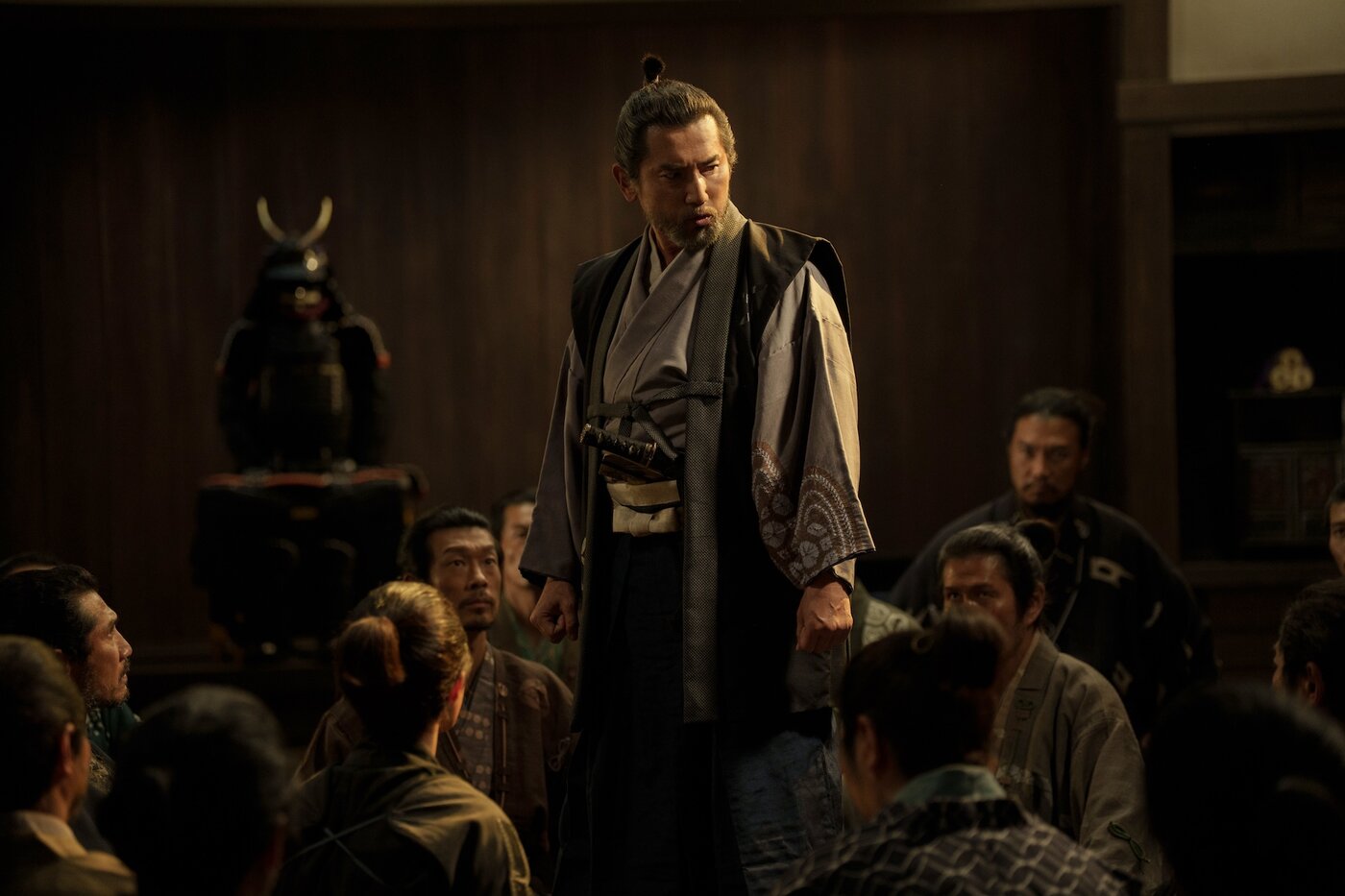
The Samurai and the Prisoner (Kiyoshi Kurosawa, 2026).
As Radu Jude radically reconfigures Octave Mirbeau, so do Nigerian directing duo (and brothers) Arie and Chuko Esiri take up the dazzling panorama of Virginia Woolf’s Mrs. Dalloway and adapt it to modern Nigeria with their ambitious sophomore feature, Clarissa. Cutting back and forth in time from hopeful young adults to the same characters settled and compromised in middle age, the film boldly creates a mosaic of a privileged class of Nigerians navigating their own personal, romantic, and ideological journeys, and maps these broadly on the country’s own evolution and self-identity. Notably, it has cast actors at these two ages with startling similarity: They seem like they really could be the grown-up or younger, hungrier versions of each other, deepening the connections from the past to the present. While not always able to so eloquently juggle the film's many leaps in time and across storylines, after their attention-grabbing debut, This Is My Desire (2020), the expanded scope the Esiris’ Clarissa is so impressive that it confirms the duo as a major emerging voice in art cinema. I expect their next feature will premiere in competition.
Kiyoshi Kurosawa has also turned to a dizzyingly intricate book for his Cannes entry, The Samurai and the Prisoner: Yonezawa Honobu’s Naoki Prize-winning novel Kokurōjō, about the real historical figure of Murashige Araki (Motoki Masahiro), a clan leader during warring states period of 16th-century Japan historically maligned for his inscrutable, possibly dishonorable behavior. There were three Japanese films in the official competition this year, and Kurosawa’s first pre-20th century jidaigeki (period film) was not among them. It is undoubtedly the film’s stiff, heady strangeness that excluded it from the competition: an uncharacteristically protracted and talky rather than uncanny or bloody take on the genre, but one that, over time, nevertheless gets under your skin.
Set during the siege of Araki’s castle, the clan leader faces four mysterious deaths, one per season, that structure the story and form the subject of Araki’s conversations with an enemy envoy he has imprisoned rather than executed (Suda Masaki, kept chained up like the child-killer suspects in Kurosawa’s two versions of The Serpent's Path). From these talks, Araki increasingly finds insight into the bizarre occurrences taking place in his castle, as well as an unexpected solace that builds an intimacy between captor and captured. Shot with the cool, methodical restraint of midcentury samurai films, and more talked through rather than puzzled out, the mysteries disappointingly don’t carry the satisfaction of locked room solutions, but like the palace in Fritz Lang’s 1958 “Indian Epic,” the castle’s formal spaces shift from feeling like the beautiful walls of safety to confines ruled by secret machinations. Despite the wartime setting, this is not at all an action movie but rather a twist on how the safety of enclosed worlds can recreate the conditions of imprisonment. That Araki stands his ground boldly but ignominiously on a policy to not only preserve his prisoner, but in fact to avoid killing all together, all the while scheming to end the larger war around him, centers Kurosawa's cerebral, discursive, and ultimately abstract wartime film ironically on the theme of mercy in a society at war with itself.
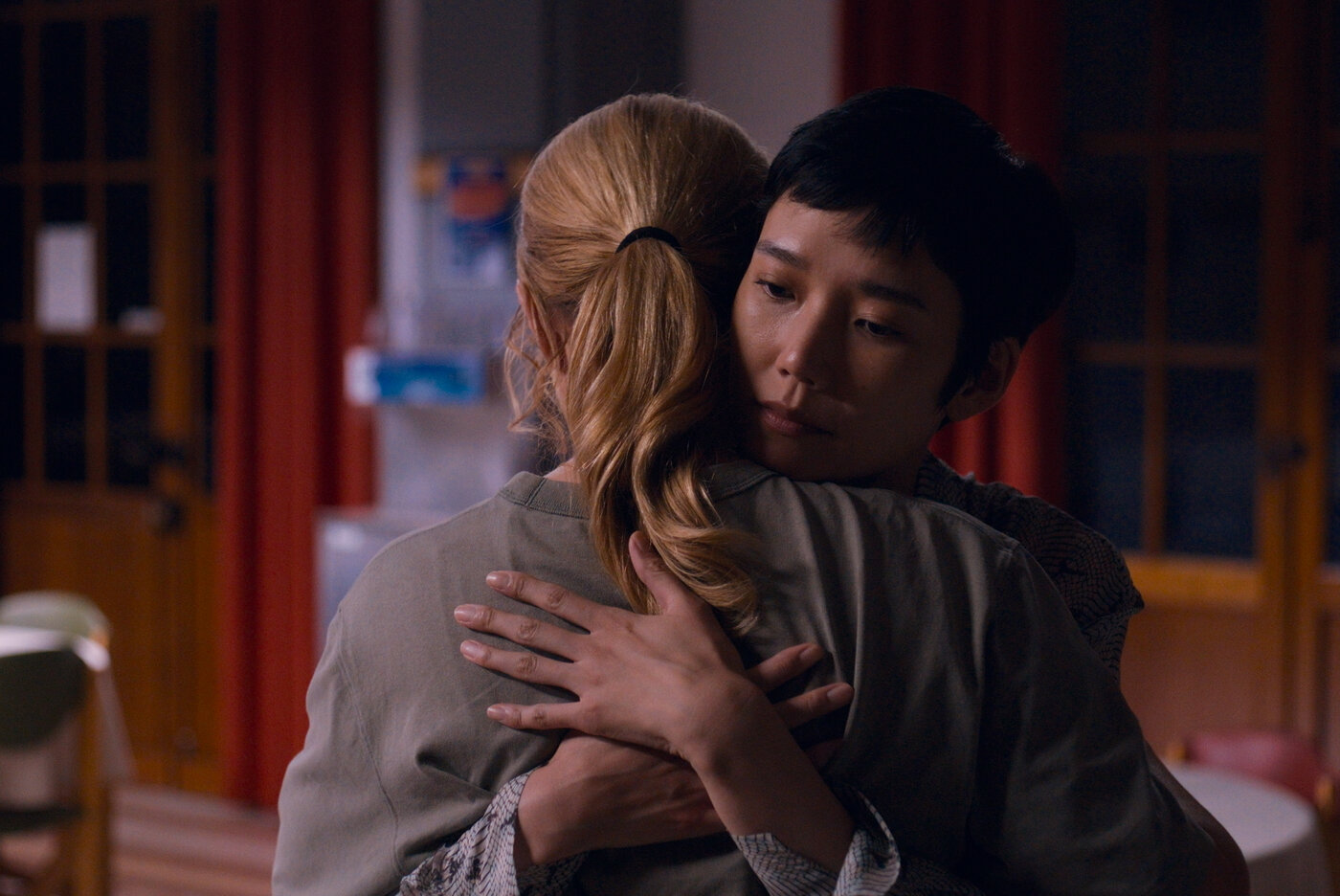
All of a Sudden (Ryusuke Hamaguchi, 2026).
While Kurosawa was not in competition, a one-time student of the director was. As far as adaptations go, nowhere on anyone’s bingo card was Maho Iono’s 2019 When Life Suddenly Takes a Turn: Twenty Letters Between a Philosopher with Terminal Cancer and a Medical Anthropologist, but Ryusuke Hamaguchi has not only done it, but turned into a sublime, languidly engrossing paean to having hope in impossible situations—making All of a Sudden an unexpectedly companion piece to Kurosawa’s samurai picture. Fundamentally also a tête-à-tête, in this case between a director of a palliative care center (Virginie Efira) and a Japanese theater director (Tao Okamoto), the two meet over an act of kindness and bond through their shared vision of their vocations working towards something positive. The dialog-heavy three-hour-plus runtime of Hamaguchi’s new film flies by as we watch these two figures discover and explore a sudden friendship, shared ethos, and something deeper.
Shooting mostly in Paris and working both French and Japanese (with Efira learning Japanese for the role), Hamaguchi uses extended exposition on the state of eldercare in France’s healthcare system as a synecdoche for larger societal challenges, without losing either the detailed specifics of the setting nor the human drama of those working towards easing people’s suffering. With the theater director presenting a play about blurring the lines between what is considered unhealthy and healthy, institutionalized and free, Hamaguchi again folds into the story the therapeutic and explorative power of art, as with Uncle Vanya in Drive My Car (2021). The film pushes the limit of discursive dialog and, with comical directness akin to Lang’s chalkboard crime-doesn’t-pay lecture in You and Me (1938), even includes a whiteboard-drawn demonstration on the basic failures of capitalism. Yet all is grounded in the effusive, deeply felt soul bond between these two women, evoked so beautifully by Efira and Okamoto, a connection both intellectual and sensual, moral and spiritual. Hamaguchi and cowriter Léa Le Dimna reduce their lives to the bareness of their vocations and those immediately around them, so that we get a pure and extremely intense meeting of two people that carries that metaphysical charge of one of Hamaguchi’s great guiding spirits, Jacques Rivette. Above all, it’s a film about working to accept the possibilities of hope, and not as some pat or easy conclusion, but—and this is where the film’s worrisome length reveals itself as essential—is something earned over discussion, over time (in a recurring motif, we see scenes take place as the sun rises or sets behind characters), and earned in the meeting place between two caring people.
In a world where day after day seems blacker than black, and a festival whose films tend to revel in such darkness, to encounter such an immense work about facing the impossible and working towards both personal and systemic change feels like the most welcome of benedictions. That's certainly worth clapping and cheering for.
Warmly,
Danny
Illustrations by Ionut Vancea.