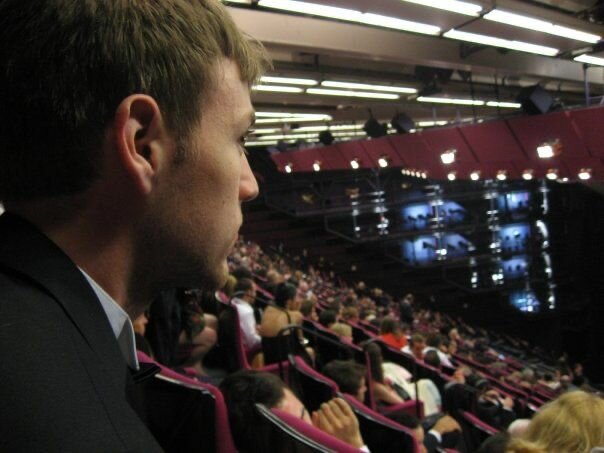
The author takes in the cavernous Grand Théâtre Lumière for the first time.
Dear Leo and Danny,
Greetings from the other side. With another edition of this singularly manic event having come to a close last Saturday, the dust still settling after the unveiling of a contentious, by-now typically staid palmarés, I returned home in a state of exhaustion, but with small inklings of anticipation and reflection. The line, as ever, keeps moving. Whatever deficiencies I felt in the work presented to us this past fortnight will no doubt subside once I’ve seen the offerings at the festivals in Locarno, Venice, Toronto, and beyond. And let’s not forget, next year brings with it Cannes’s 80th anniversary, which festival head Thierry Frémaux no doubt intends to commemorate with a bang. Per usual for this festival’s round-numbered birthdays, the iconic animated ascent up cinema’s stairway to heaven will be accented with the names of auteur darlings of yore—brace yourself, Danny; the demonstrative fandom will grow louder yet!—a list that feels more yearnful, less celebratory to me each time it comes around. With increasingly frequent regularity, we’re invited to reflect on the cinematic glories and legacies of a likewise increasingly distant past. A year from now, we’ll see reminders of what we have and what we lost—Godard, Kiarostami, Resnais, Lynch, Varda, and De Oliveira, to mention a small percentage of the departed artists whose new work I looked forward to appearing in Cannes lineups barely a decade ago, and who made weathering this festival’s storm more bearable.
This year I celebrated a Cannes birthday of my own. I flew to Europe 20 years ago for the first time in my life and attended the festival as part of the Cannes Cinéphiles program. My most anticipated films of the 2006 edition were Babel and Volver, neither of which I managed to see during my trip. I rented a cheap tuxedo and held up placards in front of the Palais for several entire days, begging for invitations to whatever was screening in the Lumière that night, for which I was occasionally rewarded, such as when a kind woman handed me an iridescent ticket to the gala premiere of Richard Kelly’s mad Southland Tales, a screening I’ll remember for the rest of my life not least because of the discomfort I felt watching it seated beside Marilyn Manson and Dita Von Teese. I saw my first Aki Kaurismäki film, Lights in the Dusk, without English subtitles at the Théâtre de la Licorne, and I saw David Cronenberg speak after a screening of The Dead Zone (1983) presented at the Quinzaine. That same week, I was introduced to the Romanian New Wave via Corneliu Porumboiu’s 12:08 East of Bucharest, one year before one of his compatriots would shock the film world by taking home the Palme d’Or.
Returning this year, twice the age I was then, I recall those experiences in hazy memories that might as well belong to a different, if not entirely unfamiliar person, whose taste I barely share but still recognize. The currency of taste, indeed, is a dominant part of being and watching movies at festivals, not least in Cannes. Tracking conflicting opinions on critic grids, gauging consensus of this group against that one, and the discrepancies between critics and jurors is part of the fun and paranoia of being here—I’m damn near constantly second- and triple-guessing my own opinions on anything, immediately after or sometimes during a screening. I like to think I haven’t hardened my positions and sensibilities toward movies or any other art, even as I stress the importance of keeping a handle on what makes one’s opinions and senses distinctly one’s own. On the festival’s penultimate day this year, I encountered a young woman who casually struck up a conversation with me and a colleague as we waited for Léa Mysius’s The Birthday Party (all titles 2026 unless otherwise noted) to begin—the final of 22 Competition films to screen for press. She was covering the festival for a Harvard newsletter, and asked, as one does in such situations, what I’ve seen that I liked. We disagreed on most things; my favorites were near the bottom for her and vice versa, and our small talk reached a polite stalemate when it became clear our preferences weren’t going to budge despite the valiancy of our arguments.
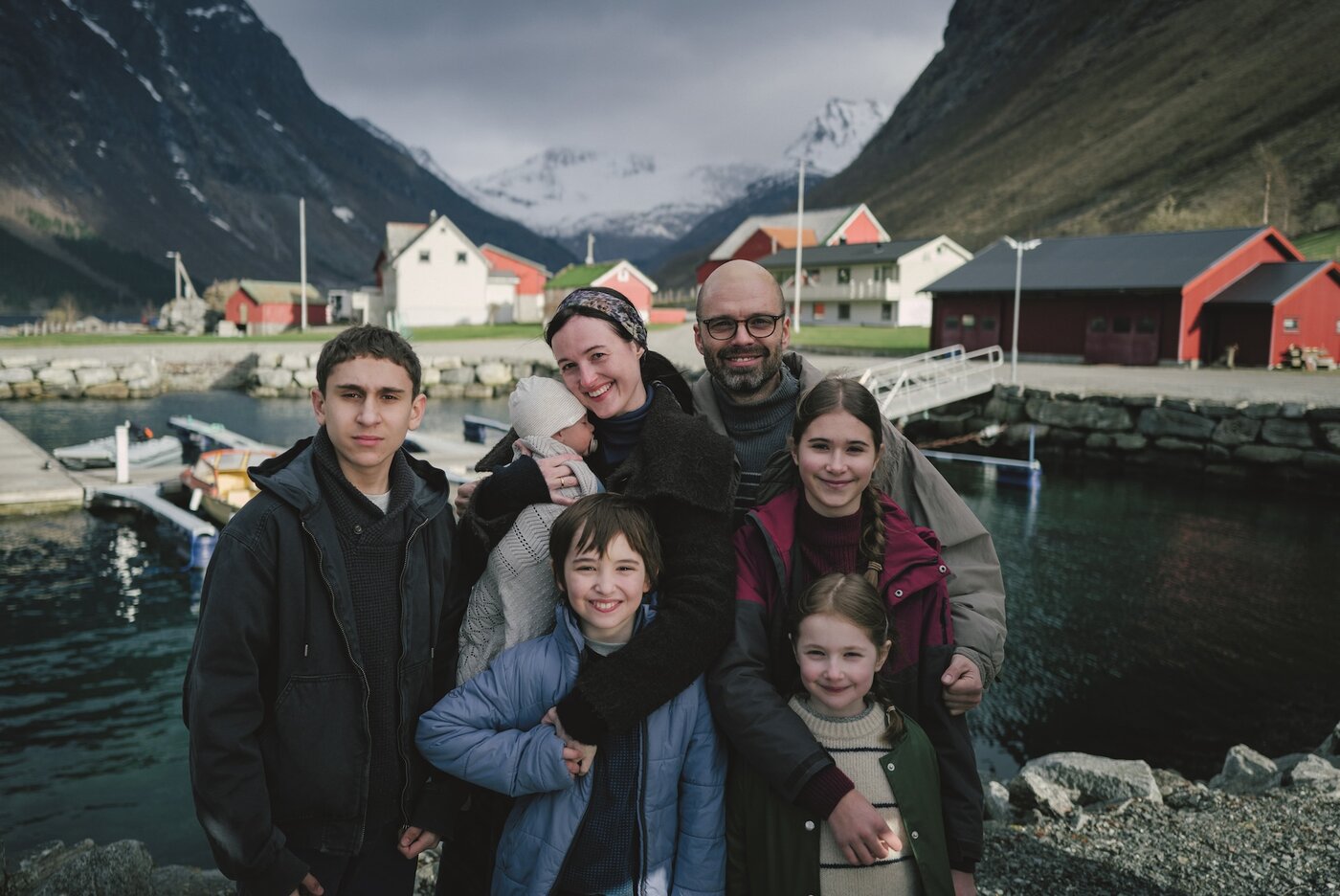
Fjord (Cristian Mungiu, 2026).
The crux of our brief discussion was the latest film from Cristian Mungiu, whose work I might call formative (Beyond the Hills, for one, just about wiped the floor with me here in 2012), and who has remained consistent in his interests since I started paying attention to him. He favors a handheld, naturalistic brand of realism, and is drawn to moralistic narratives centered on Romanian individuals who get looped into a taut bureaucratic knot with an unforgiving state or organization. Fjord, which earned him his second Palme, again follows this template, albeit with the drama relocated to a cozy Norwegian village, and with a cast headlined by arthouse stars Renate Reinsve and Sebastian Stan (who was born in Romania, but has obviously achieved far greater international clout than anyone Mungiu has worked with before). The diasporic nature of the production befits the narrative, which concerns a deeply Evangelical couple—Mihai (Stan) and Lisbet (Reinsve) Gheorghiu—who move with their five children from Romania to Norway for a calmer lifestyle after the death of Mihai’s parents. The family’s religious and conservative values are at odds with the progressivism of local laws and customs, and they almost instantly come under scrutiny from child protective services after one of the girls shows up to school with bruises on her body. The Gheorghiu’s lifestyle is merely outdated by most modern standards, but downright barbaric by Norwegian ideals, and this initiates a confrontation between two nations’ opposing positions on the socio-political spectrum.
Mungiu is fully aware that his film will be seen predominantly by left-leaning audiences—the default position of contemporary arthouse cinema spectators—and Fjord’s stakes rely on that assumption. How will such an audience feel if asked to sympathize with characters who live by anti-LGBTQ+ values? Or if they are presented with antagonists who are hardline progressives? Norwegian law, as embodied by the social workers, lawyers, and judges in the film, are represented as too extremist, too unempathetic to speak to or for the world we live in, yet the film is protected by the iron proof shield of being based on real events. Yes, Mungiu did his research. The filmmaker spent many months investigating recent news stories describing similar cases in Denmark, Sweden, and Norway, all of which exemplify the roiling tensions between conservatism and progressivism that presently exist in Nordic countries.
But it is also worth noting that Mungiu didn’t opt to re-enact any of these sources exactly, and instead wanted to fictionalize this phenomenon (i.e. render it unreal) in a nevertheless realist arthouse package. While watching the film, I thought of Lars von Trier’s Dogville (2003), a film that keenly abstracted its deranged fable into a barrage of signifiers, which released it from the shackles of verisimilitude. It became art. Realism is not real life, but a stylistic decision—a deceptively liberal one, at that—frequently used and abused to insist that a fictional world is actual rather than manufactured. The circumstances that lead to the Gheorghiu family being investigated and prosecuted in Fjord are so psychologically fraudulent, so clearly avoidable—if only a single one of these characters could act outside of the fate that Mungiu has prescribed for them, the entire conflict would collapse—that the film only functions as a sadistic exercise in engineering doublethink in an audience that it knows has already made up its mind. Some call that complexity; I’m inclined to go with “bullshit.”
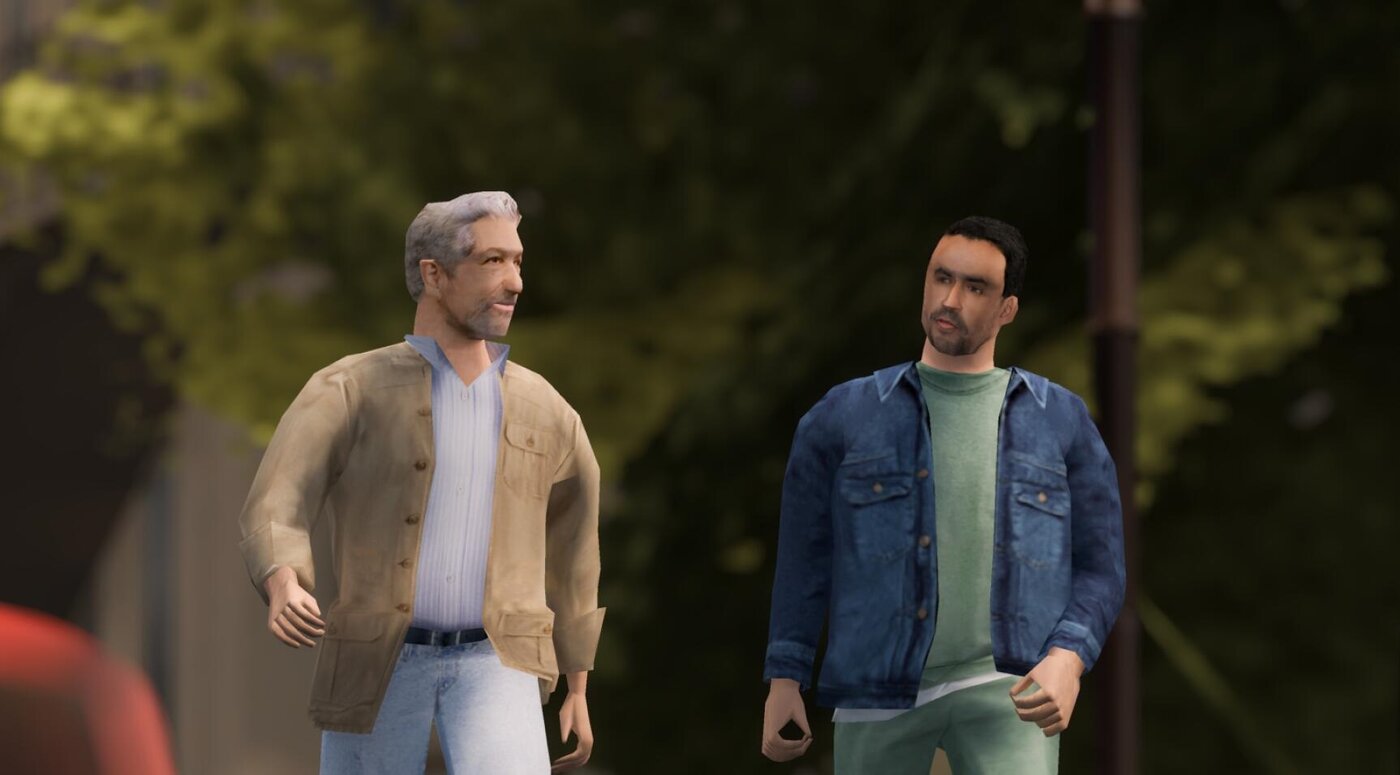
Vertiginous (Quentin Dupieux, 2026).
Restaging ideology wars is arguably the easiest and most direct way for a film to be contemporary. Alternatively, I saw at this year’s festival far more interesting trends speaking to the instability of our world, especially through narratives that represent identity and selfhood in variably fluid states. Some of them even explored the plasticity of the cinema image to intensify their interrogations. Quentin Dupieux’s Vertiginous—the director’s second new film to premiere in Cannes last week—is the most radical in that regard. This is a 68-minute animation that was apparently made very quickly, and combines crude motion capture techniques with PlayStation 1-esque graphics (it looks like some combination of early Grand Theft Auto, The Sims, and Second Life). Dupieux has a penchant for conjuring brilliant short film concepts and then half-developing them, and this one is no different. Two men (voiced by Alain Chabat and Jonathan Cohen) become convinced that they’re living in a simulation, supported by hundreds of pieces of visual evidence scattered throughout their supremely low-res environment—a bird flying in place; blinking dog shit, a baby birthed without an umbilical cord—and it’s in these miniature ideas that I thought Dupieux might finally be on to something with this one.
Like a half-loaded jpeg, the movie only works if you squint at it. The characters exist as mouthpieces for Dupieux to spout mostly expired philosophies about representation and the absence of free will (James N. Kienitz Wilkins’s The Misconceived, an IFFR premiere earlier this year, offers deeper reflections on these matters), such that I was mostly interested in the formalist properties in Vertiginous. As an entry in the machinima tradition, it’s no Phil Solomon, whose work with GTA at the end of his life (Last Days In a Lonely Place [2007], Still Raining, Still Dreaming [2008], et al) is a reference point that does Dupieux few favors. For a film as aggressively visual as this one is, I wish it had been more curious about mining its surface for more material poetry, and spent less time forging fake visual defects for quick entertainment. I appreciate that someone thought to make a (barely) feature-length comedy in such a pointedly “poor” mode, to borrow Hito Steyerl’s terminology, and it made me wonder if the half-completed FX work in Na Hong-jin’s Hope was so troublesome for many viewers because it simply wasn’t bad enough to be good.
Tension in an artwork is always a matter of difference. I believe it was you, Danny, who, in a past festival dispatch that it’d take me an eternity to locate, articulated a hypothesis about the splendor of watching a new film—one just released into the world—which is sparked by the fact that what we’re about to see could literally be anything. The film begins, and in that instant we could be subjected to an infinitely vast range of material information, bombarding us with audiovisual stimulants we can only process sensually, because their meaning is fundamentally mysterious. We don’t yet know why we’re being shown what we are, and our bodies are tasked with figuring it out. But this initial explosion of possibilities quickly dissipates. The film world stabilizes into a steady aesthetic, its focal points are revealed, and intentions are clarified. The field of possibilities narrows exponentially in these first minutes, and we start to experience things we’d expect, almost exclusively. Apologies for invoking Donald Rumsfeld, but I’ve come to describe this trajectory as a balance of knowns and unknowns. In any time-based art, whether experimental or narrative, the unknown elements are served to us and subjected to our personal processes of reason and logic. We desire to know and understand them, and so we quickly do, in turn extinguishing their mystery. It is then up to the artwork to supplement what we now know with new, compatible, and/or complementary unknowns, so that our desire for knowledge remains active, in a constant state of generation. For me, this ability to suspend my desire for understanding and discovery—as general and abstract as it seems—is essential to a great film.
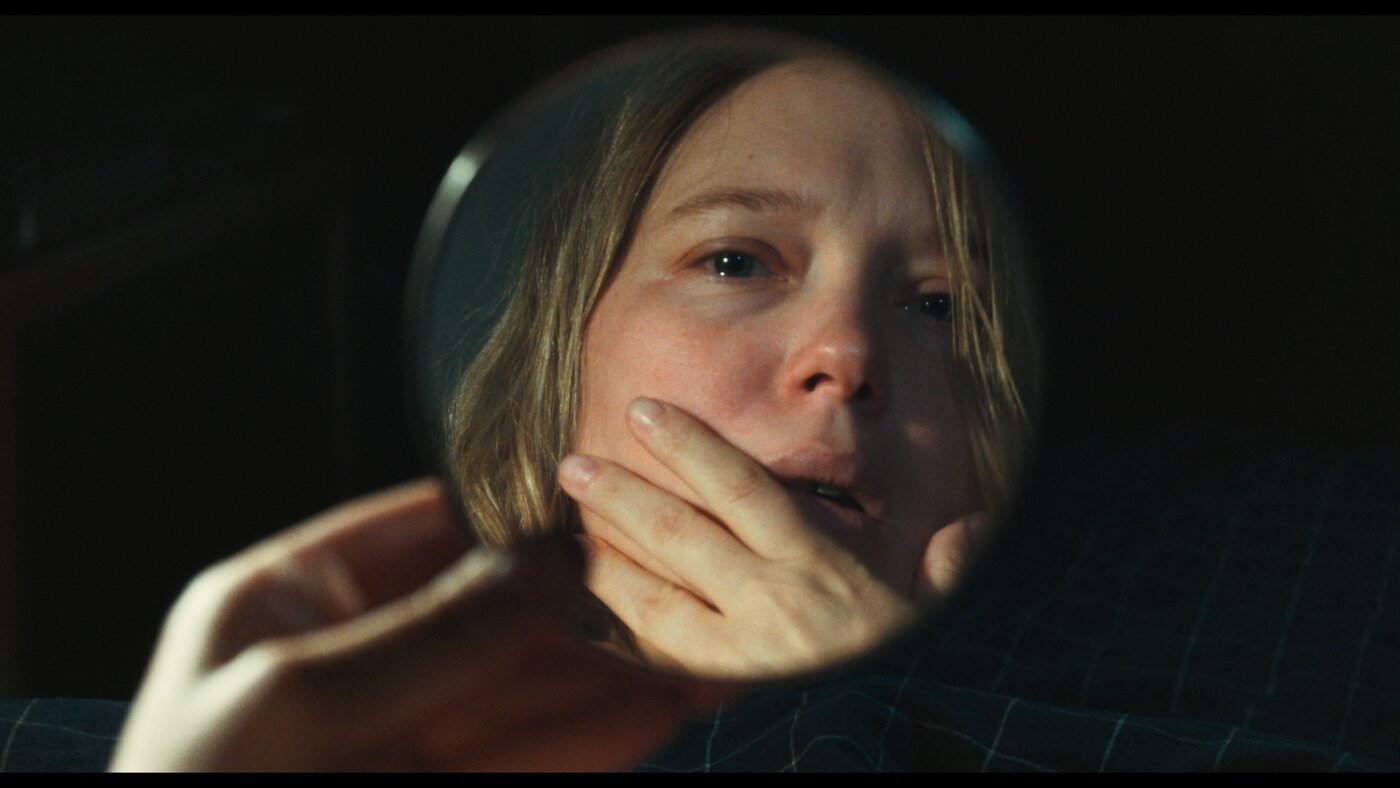
The Unknown (Arthur Harari, 2026).
I’m sure it is no mystery at all, however, that the preceding sentences exist to set up my thoughts on what ended up being far and away the biggest delight of Cannes for me, which is Arthur Harari’s The Unknown. Harari had earlier impressed me as a director and writer, with, respectively, Onoda: 10,000 Nights in the Jungle (2021) and his partner Justine Triet’s Anatomy of a Fall (2023), but here his artistry reaches new heights, adopting a late-modernist approach that I’d have no problem filing alongside works from the likes of Kieślowski, Antonioni, and Lynch. I haven’t read Le cas David Zimmerman, the 2024 graphic novel co-written by Harari and his brother Lucas from which this film was derived, but I’m not sure I ever want to—so dizzying and delicate are its mysteries, I’d worry it would render this world too comprehensible.
Set in present-day Paris, a photographer named David (played by a gaunt, fragile Niels Schneider) is taken to a New Year’s Eve party where he takes a pill, locks eyes with an enigmatic woman named Eva (Léa Seydoux), and follows her into a back room where they have quick, animalistic sex. Through spare dialogue and a camera that zooms and thrusts our attention across and into myriad halls and mirrors, Harari crafts a reverie of fluctuating identities, body dysphoria, and techno-alienation out of a series of unanswered questions, and manages to represent what it actually feels like to live and exist in a world where, via search engines, geo-tracking, and hive mind forum communities, no question ought to go unanswered. After David inexplicably wakes up in Eva’s body, he does what any rational person would do in the year 2026, and googles for information about new hallucinogenic drugs on the market as well as advice on dealing with a swapped body. He tracks down his former body with Apple’s Find My Phone app, and later connects with a man on Reddit who claims to have lost his schizophrenic sister years ago to a sudden body swapping incident.
Harari flirts with the ridiculous while maintaining a firm grasp on sincerity, and The Unknown is as mesmerizing as it is because it allows the viewer to effectively (and affectively) embody an intersubjective perspective on the world, whereby the increasing disassociation we feel towards our own bodies is treated as a serious and defining development of modern life. It’s an allegory for cinema-going, too, yes, and it takes that task seriously as well. But the allure of this film’s confidence to keep expanding, to unremittingly fall deeper into itself with each new scene, nearly every shot, is one that easily transcends its function as cinema. It goes so far as to encompass the sense that only ever being able to exist as ourselves, bound into a single body and consciousness for life, feels further from an absolute than ever. Watching the film for the second time on the festival’s final day, I felt myself in a constant slide into a harrowing abyss not unlike the one I was swallowed up by in the final minutes of Lynch’s Twin Peaks revival. Rather than screaming into the void of a life lost in time, The Unknown stares plaintively onto distant hills, where bodies and space recede into infinity.
From a festival with so few surprises these last few years, I’m encouraged to have left town having been introduced to at least one film I can look forward to spending my life getting to know. It’s not every day we notice ourselves having been meaningfully transformed, however slightly, into something new.
Warmly,
Blake
Illustrations by Ionut Vancea.