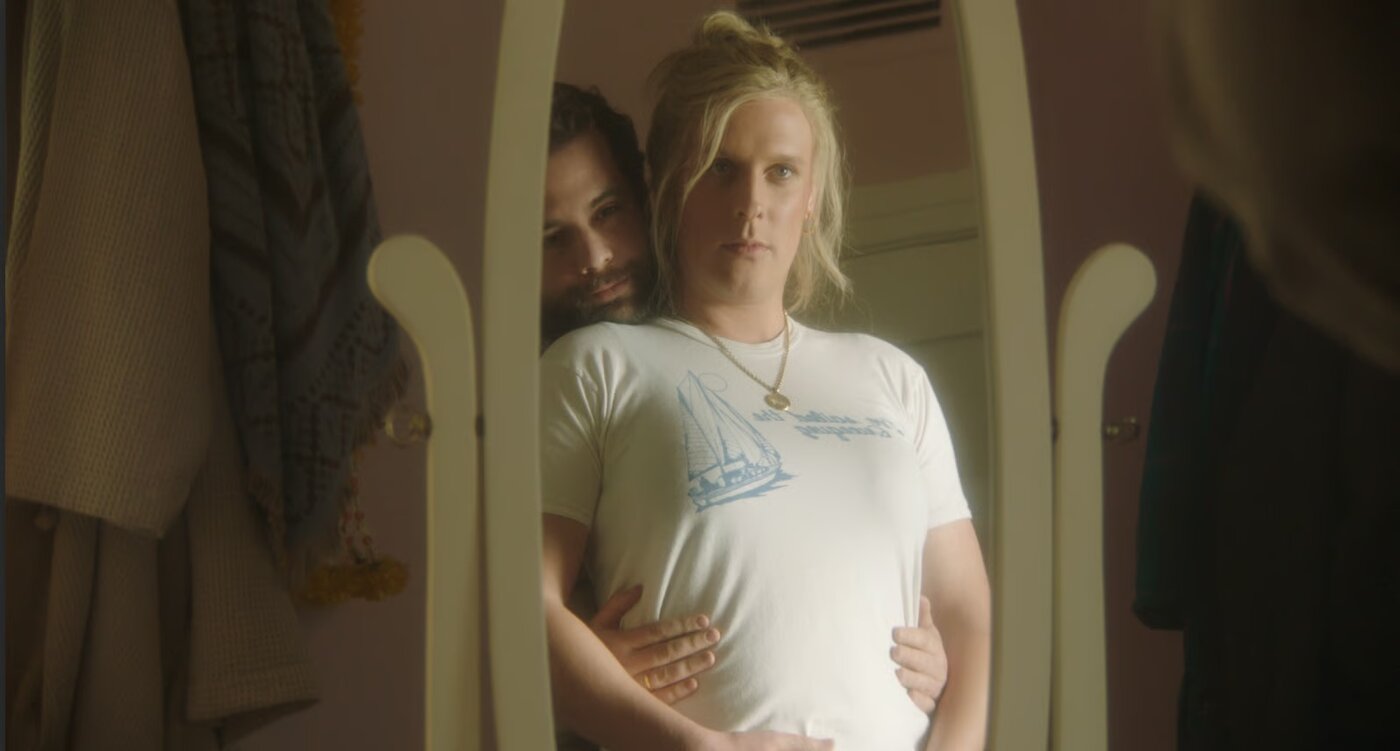
Maddie's Secret (John Early, 2025).
Over a decade ago, in an interview with the Hollywood Reporter, Lady Gaga said the following oft-memed statement: “Talented, brilliant, incredible, amazing, show stopping, spectacular, never the same, totally unique, completely not ever been done before, unafraid to reference or not reference, put it in a blender, shit on it, vomit on it, eat it, give birth to it.” She may have been describing Ryan Murphy at the time, but the sentiment has become gay secondhand for talking about something iconic. The “unafraid to reference or not reference” bit is especially essential, particularly as we continue to see more and more features that seem, at the surface level, like pastiches of other works. John Early’s feature debut Maddie’s Secret (2025) is one such film—and one to which I’d apply all of Gaga’s loving terms—with many critics referring to it as parody due to its blatant and shameless referential vibes.
But what exactly distinguishes a potentially mean-spirited parody from one whose parodic intent is actively and lovingly engaging with—and sometimes challenging—the formal and thematic approaches of its subject? It’s the difference between David Wain’s They Came Together (2014) and the Wayans’ Scary Movie franchise. Where the latter revels in contempt for that which they are mocking, its most recent target being a nonexistent trend of “woke” horror, the former feels lovingly designed to mirror the very romantic comedies it is also making fun of. Rather than just being a string of references and jabs, Wain’s film is of a piece with the genre it is lampooning, in the same way that Walk Hard: The Dewey Cox Story (2007) is a great biopic and Popstar: Never Stop Never Stopping (2016) is a terrific celeb documentary despite being designed as a critique of them.
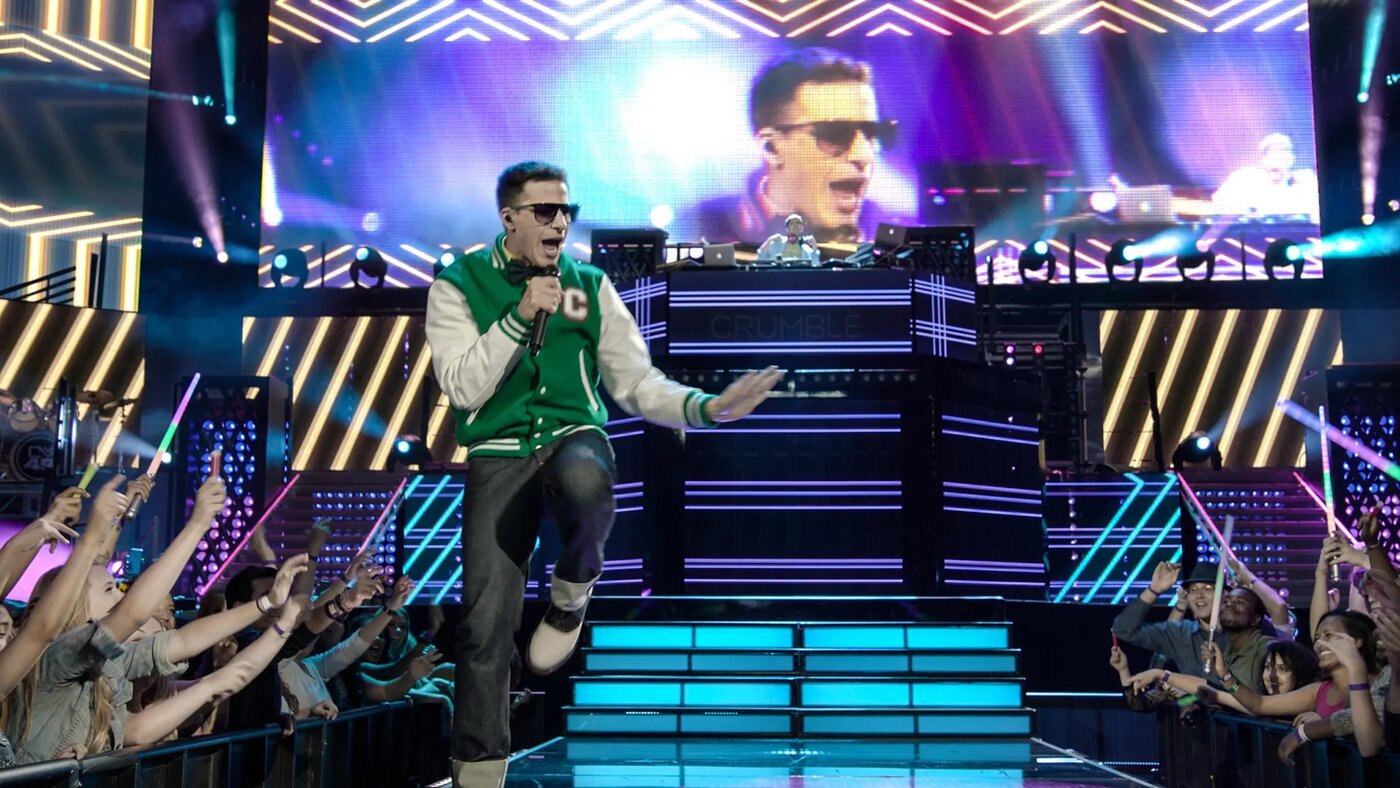
Popstar: Never Stop Never Stopping (Jorma Taccone & Akiva Schaffer, 2016).
Maddie’s Secret is just as upfront about its pastiche, openly referencing the NBC TV movie Kate’s Secret (1986) in both its title and the touchy subject matter of bulimia nervosa. Early, in full drag, plays the titular Maddie, whose seemingly idyllic life and meteoric rise to stardom in the world of short-form kitchen content is upended by a relapse of her dormant eating disorder. It is, at once, poking fun at contemporary content creation (trading in Bon Appétit for GourMaybe and featuring a knock-off of The Bear titled The Boar) and the gender politics of a certain kind of moralistic TV movie—A Friend to Die For (1994), Perfect Body (1997), Student Seduction (2003)—while also earnestly being interested in Maddie’s life, work, and struggles. For as many jokes as it features, none of them come at the expense of Maddie herself, with Early’s sincerity and attention to detail on full display.
Parody, then, seems like the wrong word for Maddie’s Secret and other films in the same vein, which end up feeling more like old school drag. Early’s history of impersonation, down to his exquisite reenactment of Showgirls, isn’t so far from what drag performers have been doing for decades. Though he has, in interviews, noted that he never considered his performance to be “drag,” that doesn’t diminish that it very much is drag. There’s no condescension or joke built into the fact that he is a woman, much in the same way that one never questions Divine as a mother in Polyester (1981) or Hairspray (1988), but it is still the artform of drag, simply manifested earnestly. Drag is not just about lip-syncing—though Early knows how to nail that, as seen in his The Characters episode that concludes with Early, Cole Escola, and Tommy Do performing The Jones Girls’ “Who Can I Run To?”—but, rather, reinterpreting the texts being cited and lending them a new layer.
Too often in our contemporary arts landscape, drag leans toward a shallow form of tribute, of performers more interested in mimicking pop stars than questioning any of the art they’ve created. Look at a classic performer like John Epperson, better known as Lypsinka, who uses varied audio recordings to weave their own stories. In Chloë Sevigny’s short doc Toxic Femininity (2024), the viewer watches as Epperson pieces together and flawlessly performs monologues by Judy Garland and Joan Crawford, some of the audio coming directly from the actresses at their lowest points (including Garland’s own audio recording diary). Without historical context attached or directly stated, the way that Epperson delivers these words makes them feel a part of Lypsinka’s own tragic memoirs rather than mimicry. What Early does with Maddie, quoting familiar tropes and archetypes throughout, is the same; reference is used as a means of fleshing out something new rather than simply gesturing toward the past.
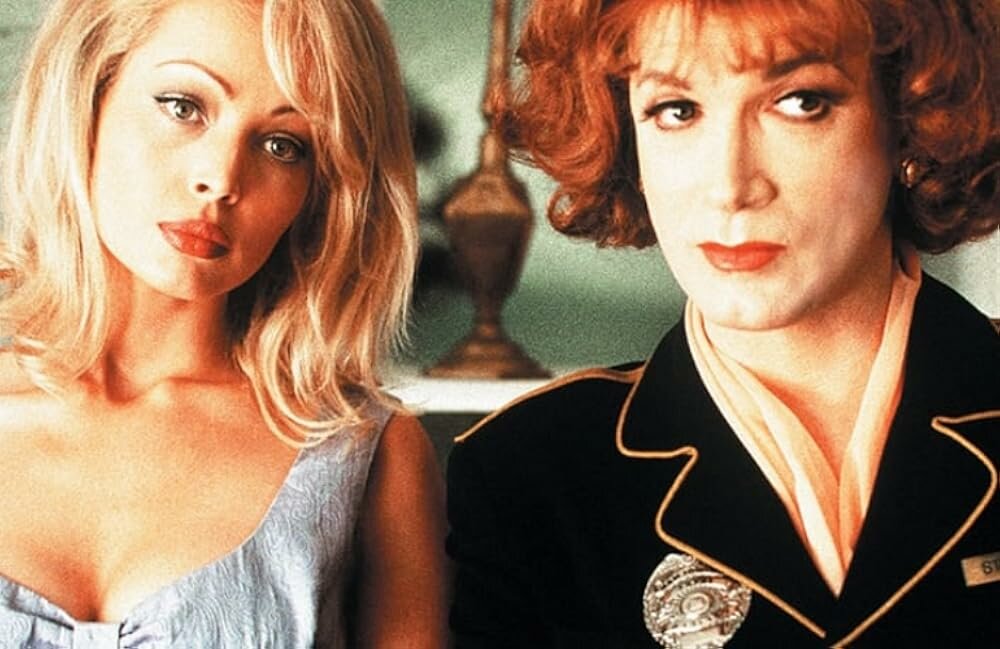
Psycho Beach Party (Robert Lee King, 2000).
A better analogue for Early would be Charles Busch, the brilliant playwright and performer behind Psycho Beach Party (2000) and Die, Mommie, Die! (2003). These plays and their film adaptations are spoofs to some extent—of 1950s psychodramas, 1960s beach movies, and psycho-biddy pictures of the same era—but they are primarily working in the realm of homage, much like Early, who even revels in quoting Hitchcock’s Marnie (1964) in his feature. A sense of humor is built into them, with Busch constantly joking about the tropes of these subgenres, but it is more about creating a work of art that fits in naturally alongside its inspirations.
Cole Escola, one of the descendants of Busch’s style of camp and drag and a frequent collaborator of Early, serves as an ideal example of how these homages can sometimes hew closely to the past, like Our Home Out West (2023), and other times completely upend it, like their hit play Oh Mary! (2024), which actively rewrites the history of the Lincoln administration. Escola can play both the ingénue in the former (much like Early’s Maddie) and the absolute monster that is Mary Todd Lincoln, but it’s the commitment to character that makes them both ring true in spite of being a bit ridiculous. It’s the same approach Amy Sedaris takes to her wealth of original characters (from Strangers With Candy to At Home with Amy Sedaris): Even if you’re laughing at the situations they get into, they’re never anything less than actual human beings. The love these artists have for the characters they write and embody is palpable, foregrounding empathy where others might resort to mockery.
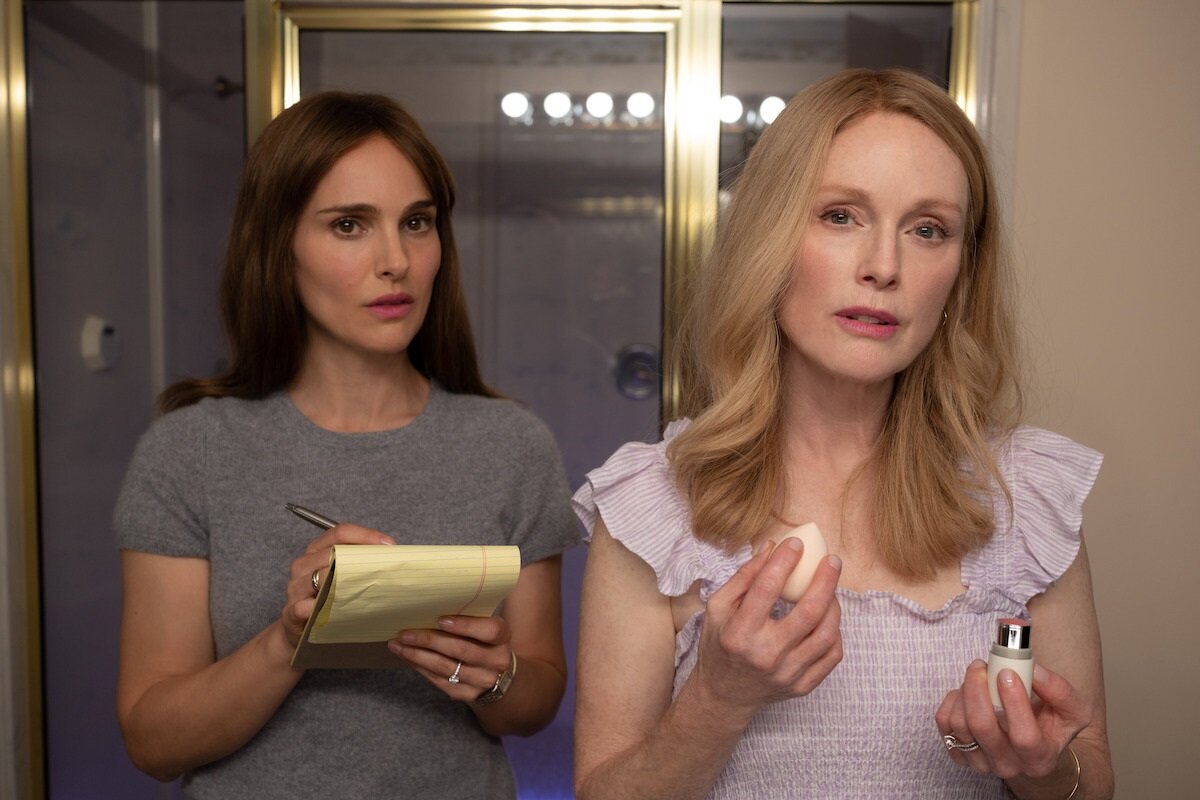
May December (Todd Haynes, 2023).
So many of these comedic pieces are intended to open the door for further exploration of their inspirations, as good reference should do. It’s why many of our best queer filmmakers are comfortable citing classic melodrama, with Douglas Sirk being one of the most referenced among folks like Pedro Almodóvar, Rainer Werner Fassbinder, Todd Haynes, and François Ozon. The reverence for their work goes hand in hand with the willingness to play with it, as evidenced by a film like Haynes’s May December (2023), which was written by alt comedy staples Samy Burch and Alex Mechanik (themselves collaborators of Early and Maddie’s Secret co-star Kate Berlant). That film’s balance of familiar melodrama and abnormal comic sensibility—of a piece with the Burch/Mechanik short film Family Dinner (2013)—found many questioning how seriously it should be taken and how appropriate it was to laugh at (or with) Haynes’s feature.
That confusion extends all the way back to Haynes’s Superstar: The Karen Carpenter Story (1987). At this point in time, no one would look at Haynes’s use of Barbie dolls to depict Carpenter’s life story, down to her struggle with her eating disorder, as a work making fun of Carpenter or her eating disorder, but, on the surface, it’s easy to see why someone would be hesitant. Any kind of subject matter that could be the focus of an afterschool special could easily veer into the terrain of unrepentant ridicule. And a gay man playing with dolls to tell a story about bulimia sounds closer to Ryan Murphy’s brand of ill-conceived historical fiction than anything substantial, just as a comedian donning a wig and padding to play a woman could signal, to some, a sense of superiority over the material. But the way in which queer men like Early and Busch (as well as non-binary performers like Escola) approach the material is with love, not contempt. Fueled by love, including a mixture of deeply felt appreciation and respect, the embracing of camp aesthetics can result in a film just as impactful as the original subject to whom homage is being paid.
Camp, oft considered to be winking or ironic by design, isn’t quite so removed from earnestness, and that sincerity is part of why camp can often be so compelling. It can be weaponized as a means of exploring deathly serious subjects through a stylization that doesn’t take itself quite so seriously in order to attain greater impact. As Susan Sontag wrote, “Camp involves a new, more complex relation to ‘the serious.’ One can be serious about the frivolous, frivolous about the serious.” The beats and aesthetics of melodrama, though easy to make fun of, are camp in their own right—a distinct stylized approach to the “serious” that heightens the emotions the creatives are attempting to convey. Comedy and melodrama, then, are not antithetical to each other, but rather two pieces that require a deft hand to make them work together.
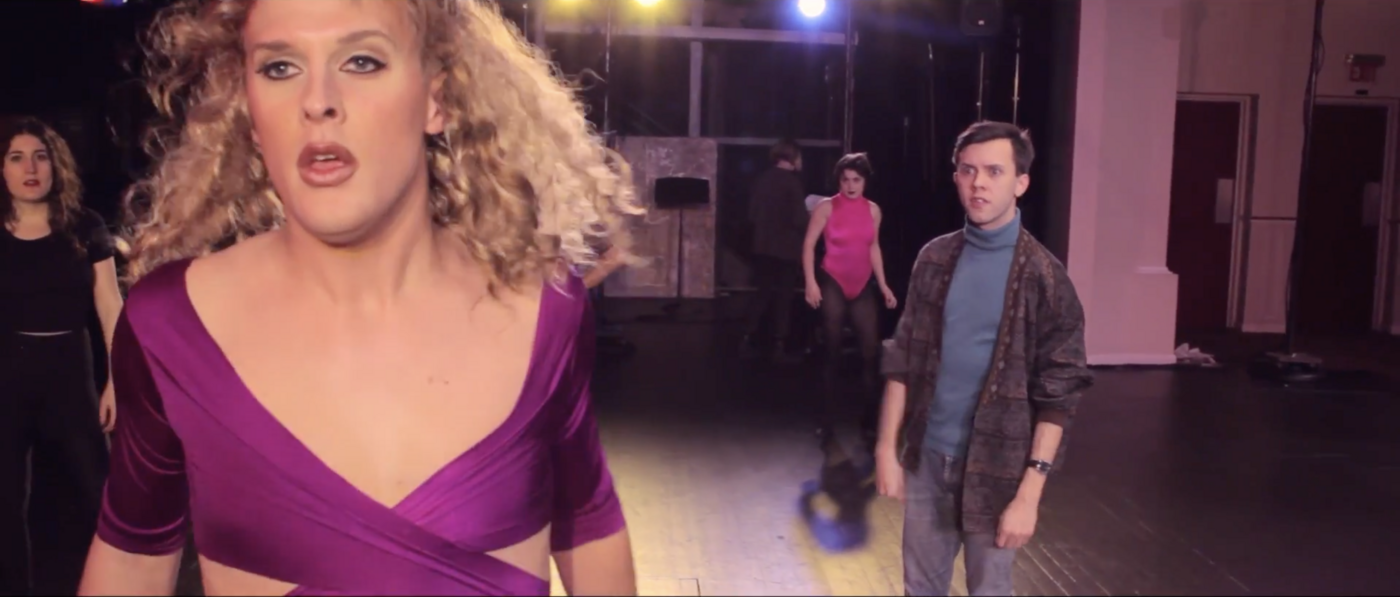
John Early's First Rehearsal (Drew Tobia, 2013).
This is why so many people take great pleasure in making fun of, say, whatever the latest Lifetime movie is, or the kind of films that Mystery Science Theater 3000 would laugh at not with. One of the core inspirations for Maddie’s Secret is none other than Paul Verhoeven’s Showgirls (1995), itself a film whose pitch-black sense of humor was once considered terrible, progressed into “so bad it’s good” territory, and has finally attained the status of once-misunderstood masterpiece. Though Verhoeven could never be credited as a filmmaker empathetic to his morally dubious characters, his camp approach in this film is key to understanding our relationship… to just how heightened and comedic a filmmaker can take melodramatic filmmaking. His work, especially Showgirls, is designed in a way that is both lowbrow and highbrow: unafraid to indulge in dialogue that may sound idiotic while delivering a timeless tale of how fame and power corrupt.
Just like Showgirls’ Nomi Malone can be both a stripper and a dancer, art can straddle the line between high and low, between funny and tragic. That is the beauty of drag and of camp: It allows us to unabashedly embrace and play with works that are reviled as much as those that are adored. What Early and his contemporaries are doing isn’t new by any means, but it does offer us a chance to explore other material in the same vein and the myriad influences without which they would not exist. Just as drag can pull from material as varied as memes and tossed-aside quotes, and classic films and musical hits from the last century, works like Maddie’s Secret follow suit in the way they build off of an existing canon. It isn’t just about queering that canon, though certainly queerness has a lot to do with the way these texts are interpreted and remixed. Rather, what these works do is show how a long cultural history can be positively and repeatedly reshaped into fresh stories whose comedy is inextricable from their sincerity.