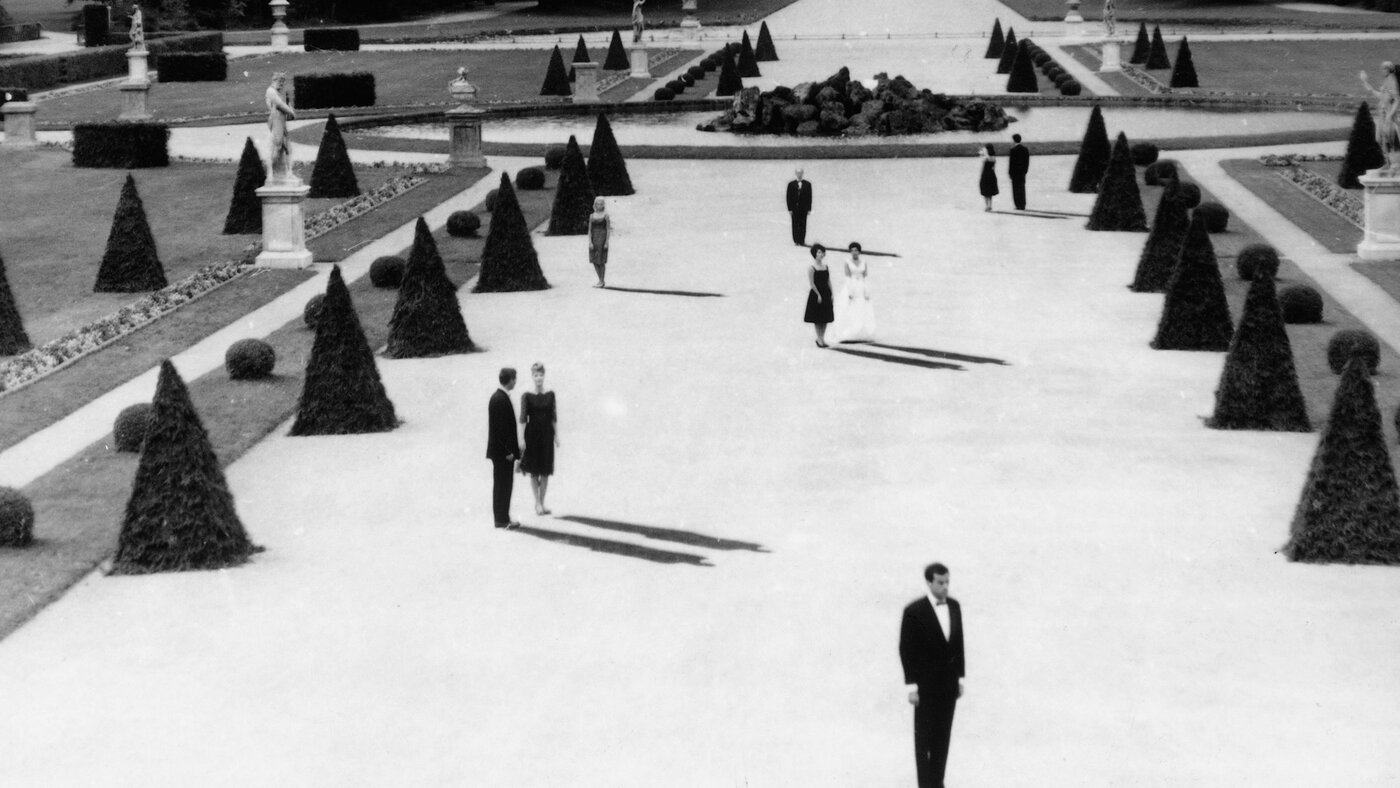
Last Year in Marienbad (Alain Resnais, 1961).
1
Although it’s seldom acknowledged, one of the supreme pleasures of movies is the confusion and uncertainty often prompted by the beginning of a story, when we’re not yet fully tuned in to what’s going on. As in our sleeping dreams, a sense of infinite possibility stretches before us. That seemingly limitless vista soon disappoints once it is foreshortened into something real and recognizable, such as a place, an environment, a mood, a character, a theme, a genre, or a plot. Yet without these comfortable anchors, something that resembles prenatal bliss envelops our ignorance, and the fact that we can imagine almost anything makes the start of a film with all of its possibilities seem peculiarly and even exclusively ours. This is another way of saying that the less we know about something, the more our imaginations and expectations can come along to fill in the gaps. So the pleasure I’m talking about is a kind of shameless narcissism, albeit one that feels healthy because of its spur to our creative impulses.
2
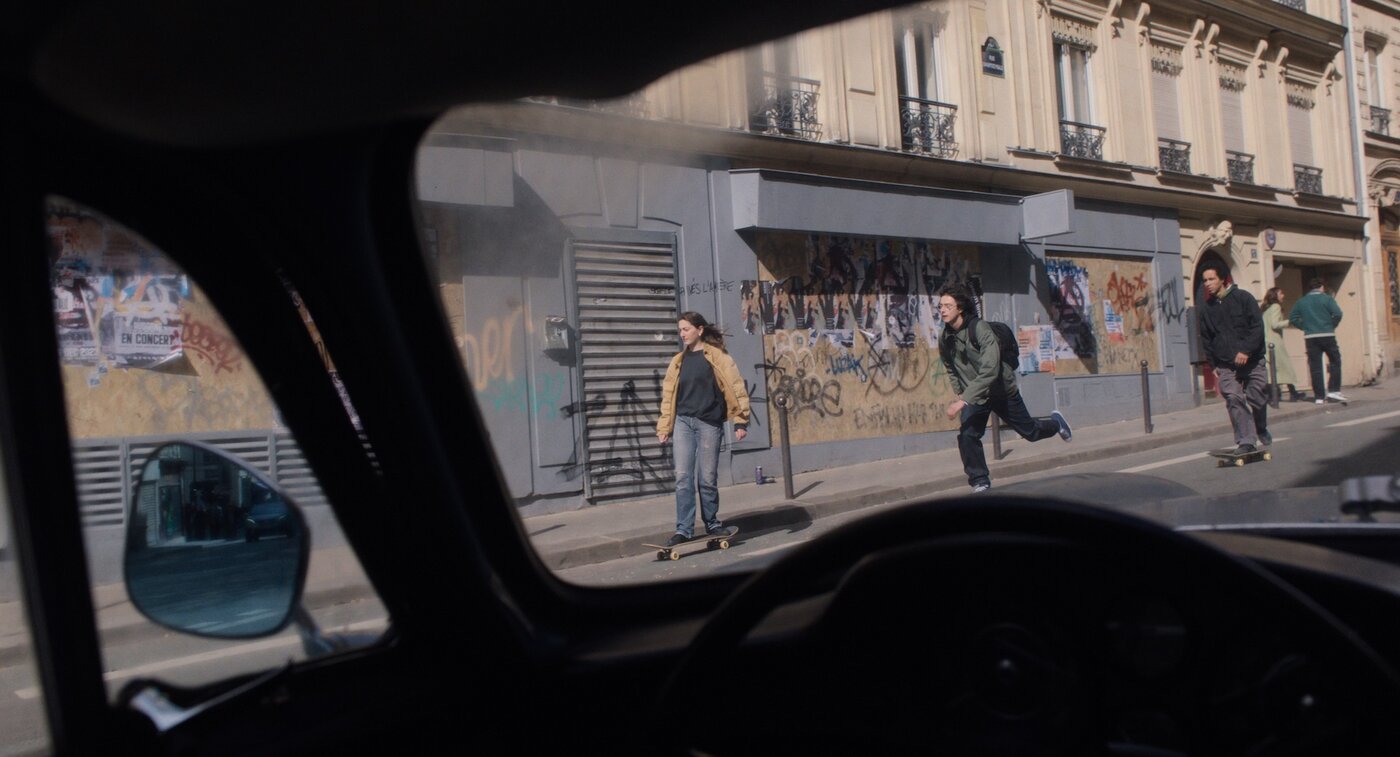
Father Mother Sister Brother (Jim Jarmusch, 2025). Courtesy of MUBI.
It’s also seldom acknowledged that cinema is interactive, becoming a collective experience even when we’re alone thanks to our phones, social media, and other tools used to convey our impressions afterwards. But because illusions of presence and motion are generated by viewers providing continuity to still frames as they’re being projected, with ourselves as the links between a projector and a screen, this means that the “movie” exists only inside us, even if we prefer to think of it being located elsewhere.
A movie is expected to explain itself on some level. We agree to be nudged along by the crafty and creative individuals who make it easier for us to follow and understand. But this process also entails our unconscious filling in all the blank spots between the projector and the screen (suggesting presence) and those between individual still images (suggesting motion). This adds up to a form of collaboration we can all accept with pleasure, a creative form of acquiescence that we simply experience as moviegoing.
Thanks to Jim Jarmusch’s minimalism, we partially become engaged with the title characters of his 2025 film Father Mother Sister Brother by speculating on some of the details about them that the director chooses to exclude. An inability to fill these gaps may produce boredom, but a capacity to participate effectively means becoming Jarmusch’s fellow artist, an ideal spectator, making the title characters ours as well as his.
3
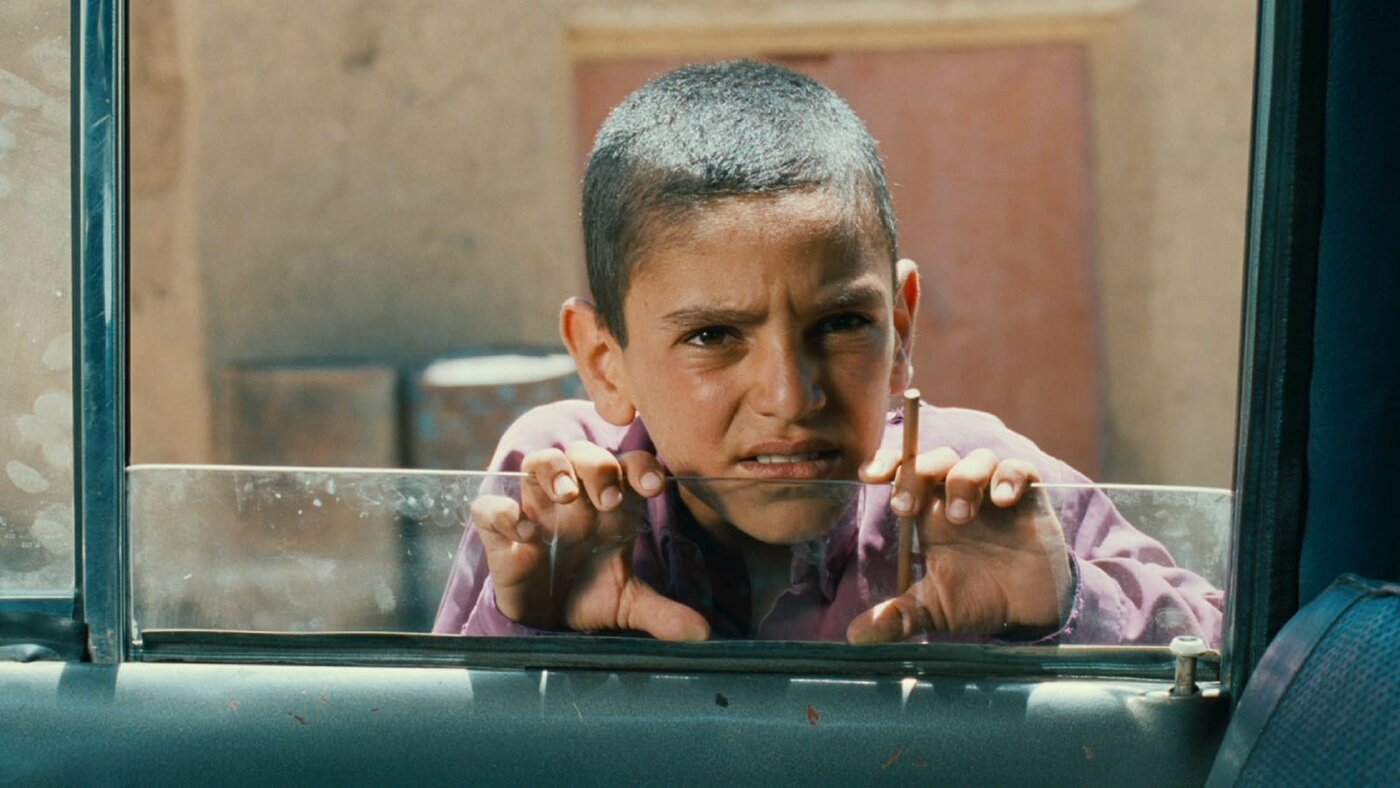
The Wind Will Carry Us (Abbas Kiarostami, 1999).
Some of cinema’s finest artists—Erich von Stroheim, Alfred Hitchcock, Orson Welles, Stanley Kubrick—manage to entertain as well as provoke us. Some, such as theatrical and literary-minded Patrick Wang and hyperactive Romanian gadfly Radu Jude, are better equipped to get us to think creatively, while others—I’d pick Steven Spielberg—deal more with our passive reflexes, and with feelings more than thoughts. Similar distinctions can be made between moviegoers, some of whom might shift from being passive viewers of Spielberg’s Disclosure Day (2026) to active viewers of Jude’s Do Not Expect Too Much From the End of the World (2023) or Wang’s A. Rimbaud (2026). Some of the fiercest debates among cinephiles tend to be about which filmmakers and which moviegoers belong in each category.
“I want to give an audience a hint of a scene. No more than that,” Welles told an interviewer in 1938, a year before the stage and radio director flew to Hollywood to become a filmmaker. “Give them too much and they won’t contribute anything themselves. Give them just a suggestion and you get them working with you. That’s what gives the theatre meaning: when it becomes a social act.” Sixty-five years later, when I was writing an essay about Iranian director Abbas Kiarostami—famous as a storyteller for his missing pieces and withheld information—it seemed appropriate to start with this quotation. It is this social act—the viewer interacting with the work’s ambiguities—that is created when Kiarostami refuses to explain why the protagonist of Taste of Cherry (1997) wants to die by suicide (or even whether or not he succeeds), and when the protagonists of And Life Goes On (1992) and Through the Olive Trees (1994) fulfill their own monomaniacal missions. Similar experiences keep us engaged with Wellesian mysteries, starting with “Rosebud” in Citizen Kane (1940), even (and especially) after they remain unsolved for Welles’ characters, obliging us to determine what they might mean. And by the time Kiarostami made The Wind Will Carry Us (1999), his last feature to be shot on film (and for me his richest) before he switched to video, his compulsion to omit certain things extended to keeping many of his characters partially or wholly off-camera—not to create mysteries about them but to keep them from distracting or diverting us.
The advantage of most mystery stories that are eventually resolved for audiences and characters alike is something we like to call “closure”—the satisfaction that comes from settling a nagging question, thus leaving us free to forget this particular story and to embark on another one. But if we’re denied this satisfaction and the nagging questions remain—as in Michelangelo Antonioni’s L’avventura (1960), where the film’s starting protagonist, Anna (Lea Massari), inexplicably disappears from the story and her absence is never resolved or explained in the remainder of the film, in spite of all the efforts of other major characters to find her. This understandably made many viewers feel cheated—the film was roundly booed when it premiered at the Cannes Film Festival—but the aftereffects of this frustration remained and became part of the film’s haunting theme. It wasn’t a film one could easily forget a week later, because its mysteries lingered, becoming in effect mysteries about life and existence and what remains unknowable about them.
Indeed, one could argue that solving mysteries is the first step to forgetting them. In the movies, solvable mysteries are thus part of an entertainment model already predicated on consumption, digestion, and a comforting sense of oblivion after reaching a conclusion. But having an unsolved mystery stuck in your craw, part of an aesthetic model, requires creative adjustments.
4
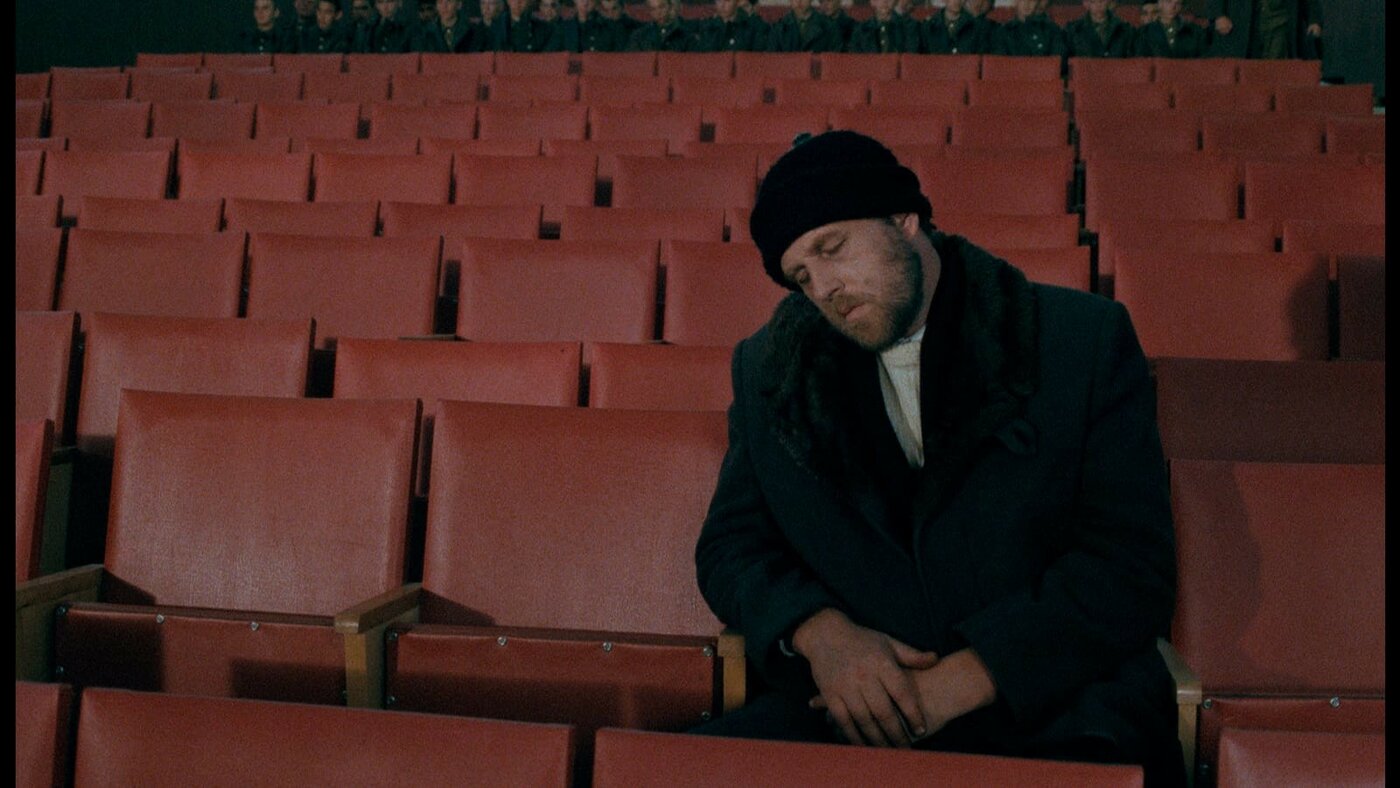
The Asthenic Syndrome (Kira Muratova, 1989).
Welles, Antonioni, and Kiarostami were hardly alone in using absences to spark an audience’s participation. Robert Bresson often used sounds to replace images, and Carl Dreyer reinvented the spatial coordinates of certain scenes in The Passion of Joan of Arc (1928) and Ordet (1955) as they unfolded in order to provoke our personal investments in their plots. In Ordet, the camera’s seeming encirclement of two seated characters talking, a troubled adult and a trusting little girl, without ever moving behind them creates an unconscious miracle, one that we aren’t even supposed to notice, in order to prepare us to accept a conscious miracle soon afterwards.
Provoking our unconscious collaboration is a guiding principle for many such filmmakers, including such disparate names as Jacques Tati, Alain Resnais, Michael Snow, Jacques Rivette, James Benning, Béla Tarr, Kelly Reichardt, Pedro Costa, and Patrick Wang.
The transgressive Soviet and post-Soviet filmmaker Kira Muratova turned a story about one character into a film that another character was watching in her 1989 masterpiece The Asthenic Syndrome. And Radu Jude keeps us readjusting to an ever-shifting environment of hypocrisies and contradictions by interrupting his own social critiques to explore a particular setting, inserting a literary quotation à la Jean-Luc Godard, or injecting a character’s alternative avatar, in Bad Luck Banging or Loony Porn (2021) and Do Not Expect Too Much from the End of the World, films as comically unsettled as their titles.
Another Muratova ploy for displacing her viewers while replacing her protagonists comes in her final feature, Eternal Redemption: The Casting (2012), where one encounters the same lines of dialogue spoken by different actors in different settings. One can be irritated about or titillated by (or both) the meaning of this before discovering that the fictional director of these scenes died before completing a film, leaving the producers befuddled about what to do with this footage. One can share their befuddlement and/or reflect that Muratova might have been anticipating her own death in 2018. You might say that to make this movie ours, we have to do something more than imbibe it. In short, we must embrace its mysteries in order to complete it, and bring our life experiences to enhance and inflect its elusiveness.