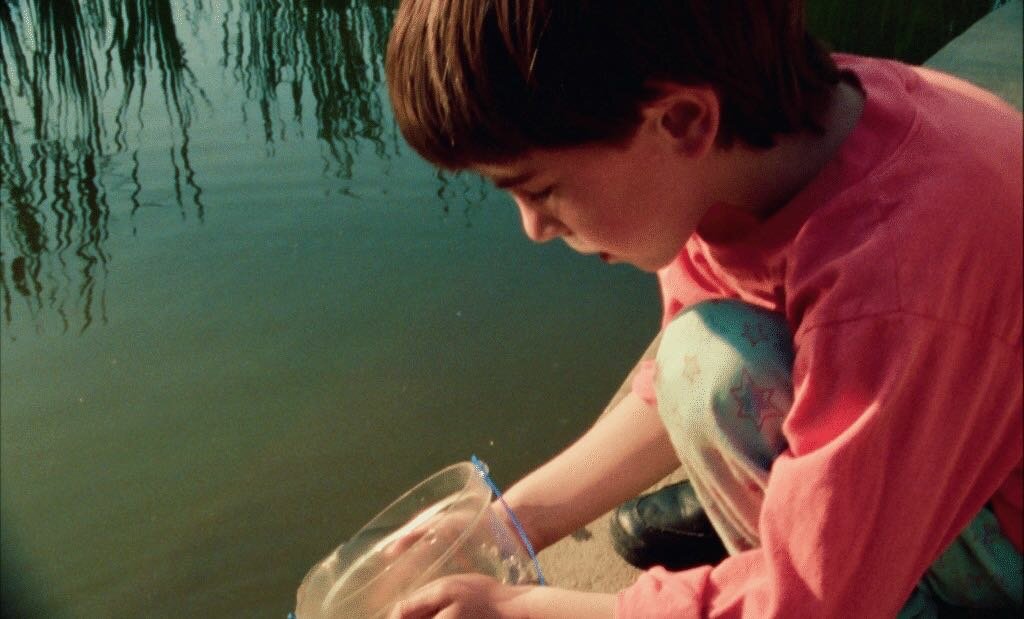
Remake (Ross McElwee, 2025).
For almost half a century, Ross McElwee has been mining the minutiae of his own life: pointing the camera toward those closest to him, then turning it back on himself. His latest documentary Remake (2025) is his most impactful yet: the culmination of a lifetime of wrestling with the cinema of the self.
Born and raised in North Carolina, McElwee studied under cinema verité pioneers Richard Leacock and Ed Pincus at MIT’s graduate film program in the 1970s. He soon began making memoir films of his own and taught film at Harvard for more than thirty years. Although his films feature varied forms and stories, a through line is found in the relation of his private life to greater universal truths. His sustained attention to everyday detail gives these elemental questions a deeper resonance; such a commitment to personal immediacy risks a level of vulnerability few other autobiographical filmmakers have dared to display. In Sherman's March (1986), a fresh-faced McElweeused the life of the Civil War military general William Tecumseh Sherman as a point of departure to ponder the filmmaker’s own awkward, albeit earnest, romantic entanglements against the backdrop of the Cold War. In Time Indefinite (1993), McElwee explores life, death, and mortality in the aftermath of a trio of personal tragedies and the arrival of Adrian, his baby son. And in Photographic Memory (2011), he connects his struggles relating to Adrian, now an adolescent, to his own memories of young adulthood—triggered by a return to a town in France where he’d lived when he was slightly older than Adrian, also trying to work out his role in the world.
In his films, friends and family become recurring characters, aging with him, sometimes resenting becoming drawn into his art and resisting his gaze. But as he films them, he never shies away from interrogating his role as a filmmaker, but also as a husband, father, friend, or a citizen of the world. In continuing to turn the inward outward, McElwee’s films show how bringing the viewer into a private sphere is not just a generous act, but a necessary one, allowing us to bridge the gap between our subjective experiences. As McElwee’s camera captures intimate details from his own life, he is able to document sensations, emotions, and questions that are universal, but not easily articulated. This allows us to reframe our own experiences through his depictions of his own.
The central figure of Remake is Adrian, who died in 2016 of a drug overdose following protracted struggles with addiction. In this moving study of his son’s life and their relationship, part loving tribute and part angry treatise, McElwee recontextualizes footage he shot of Adrian for his earlier films, which he weaves together with previously unseen home video. In parallel to this are a series of sequences—including an unexpected musical performance—that emerged after an ill-fated attempt by a Hollywood filmmaker to adapt Sherman’s March into a fiction film. But the most important component is McElwee’s incorporation of footage shot by Adrian himself: ski films, music videos, and rushes from a documentary project about substance addiction that Adrian had been developing. As McElwee presents this material, he muses in voiceover on the way his bond with Adrian changed over time. He questions his own role in bringing Adrian into his films, and wonders how these experiences may have affected him; he recounts the family’s struggles to support Adrian with overcoming his mental health issues, and timelines the final years of Adrian’s life with an exacting specificity that must have been punishing to compile.
Through such an open airing of his doubts, anxieties, and palpable anguish, McElwee delivers what might be his most personal cinematic reckoning: a goodbye message to his son that he views as their final dialogue, cocreated across time. It is also an angry outcry against the broken political systems that led to this loss. I spoke with McElwee at DocLisboa in October about what it takes to make such a film.
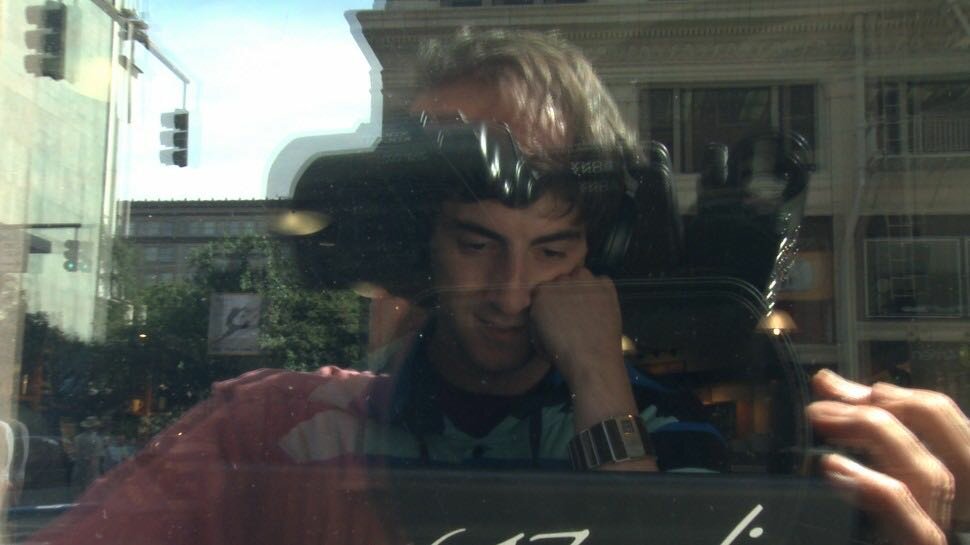
Photographic Memory (Ross McElwee, 2011).
NOTEBOOK: I wanted to begin by asking you about the timeline of the film. It reworks and remixes footage that you shot from the 1980s up until the 2000s, but you also shot new material for it. When did you begin working on this film, and how did it evolve into its current form?
ROSS McELWEE: It’s been fourteen years since I last finished a film. I started off in 2008 making a very different film. I got a call out of the blue from a Hollywood producer who wanted to remake Sherman’s March as a fiction film, with real movie stars and so forth. People were interested in seeing the result of me filming this situation, and I got a little bit of funding. That was the film I was making from 2008 up until 2016, which is when my son Adrian died.
I was still committed to shooting things for the original concept. But my heart wasn’t in it at that point. It just seemed frivolous. If I market myself as an autobiographical filmmaker, how could I overlook this catastrophic thing that had happened in my personal life? And so I set everything aside for close to a year and a half. But I realized I wanted to create something about my son’s death, and found that a way to begin could be to start writing about how I felt about footage of my son. I hired an assistant to go through the moments in which my son had appeared in my previous films and select two film grabs from each. I couldn't look at the footage. It was too heartbreaking. I just couldn't believe that he was gone.
I thought that I would either end up writing a book and that would be my main subject, or that by writing about my feelings of him being in my films and about what was going on in our life, it would direct me away from writing and toward making the film I was supposed to be making. So that began in 2016, but in late 2017 I started going through the footage myself. I wrote 150 pages, and I actually sent the book off to a literary agent at one point, but that’s not the most important thing to me. It was an exercise by which I could begin to confront and deal with the reality of what happened to Adrian.
And then the more I looked through the footage of him as a child, the more I realized that—like most children—he was a joyful, wonderful child, who was loved deeply by his parents. But he also had this kind of performative edge that I recognized early on. That was one of the reasons why I filmed him—which was frequently his idea. I say this somewhat defensively, but I was not filming him all the time. It doesn't matter how many times I say that; people always end up writing that Ross McElwee “can’t stop filming his family.”
NOTEBOOK: As if it is some kind of compulsion.
McELWEE: I do film my family and friends. But I also take on larger subjects too. There's a lot of footage in Remake that’s shot by Adrian. I am basically sharing the authorship of the film with my son. After I began putting together some of the footage I had of Adrian as a young child, I also delved into his Facebook pages, and his hard drives, and discovered what he was filming. He had told me he wanted to make a film of what was happening in his life in Colorado, but I didn’t know too many details about it. But as I began looking at the footage, I could see his interest in his friend’s struggles with opioid addiction. In one of his interviews, Adrian explains how one of his friends invited him to snort powdered heroin. That's how it all began, and from then on he too was hooked. He ended up going to rehab and so on, until his overdose.
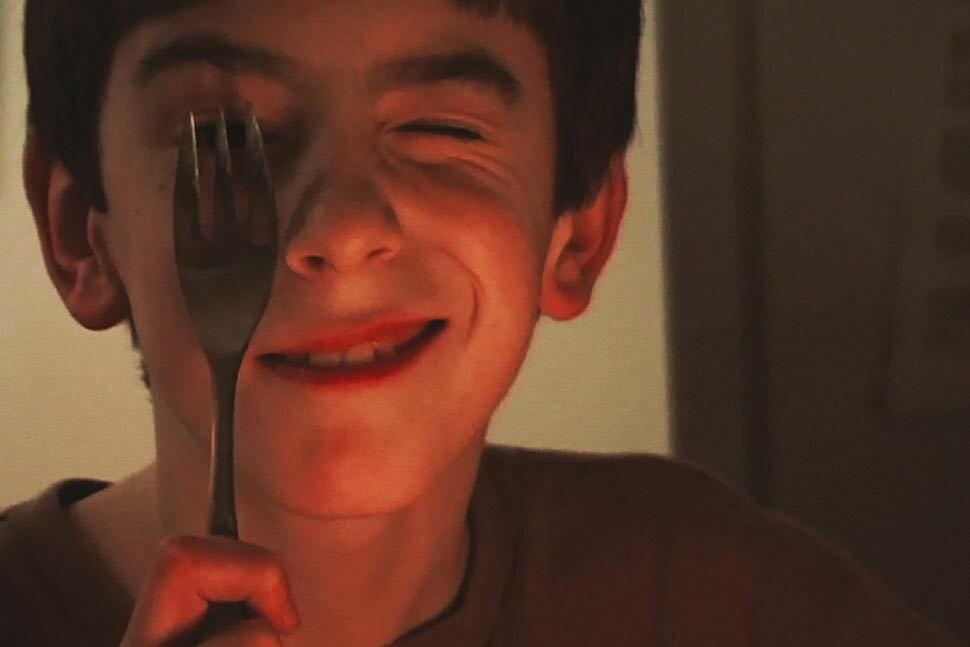
Remake (Ross McElwee, 2025).
NOTEBOOK: How did you go about editing the film?
McELWEE: I had worked with Mark Meatto before on Bright Leaves [2003]. We met when I was teaching. He was young, very smart, and had a lot of energy. And he helped me make the transition from film into digital. Bright Leaves was shot on Super 16mm, but we decided that we would digitize all the footage and abandon the film itself as a substance to work with. Before that I had worked with assistants, but having a coeditor was a real break for me.
For Remake, I started off doing a rough edit of the footage that I thought would probably be most useful to use for a film that was no longer about the remake of Sherman’s March. Then I asked Mark if he wanted to join this project, and so he began pulling together a few scenes. Then he had a day job that he had to go and work on for a number of months. I continued editing alone, and then he would come back. I owe a lot to Mark for not giving up on the project, because I would say, “I can’t do this anymore.” We ran out of money, but it was also just very difficult to work on this film.
The other person who was important was Joe Bini. He and I were mentors at the Sundance Documentary Edit Lab, where younger editors and their director-producers would come to show a portion of their film to seasoned editors like Joe Bini. I was there talking to some of the people who needed advice about direction, and Joe was more hands-on for the editing. That’s where we met and we became friends. He shared work a few times, and then I showed him a cut of what I had managed to pull together of Remake—it was quite a bit longer than it is now. He watched the whole thing, and said, “Let me know if you ever feel like finishing this,” because he thought it was worth devoting time to. Eventually we were able to bring him in. He shares the editing credit with me.
One other thing I should also say is my wife was critical to finishing the film. She’s a filmmaker. There were times before Joe joined us or when Mark wasn’t available and I was on my own, feeling lost about how to make this film. She kept pushing me on.
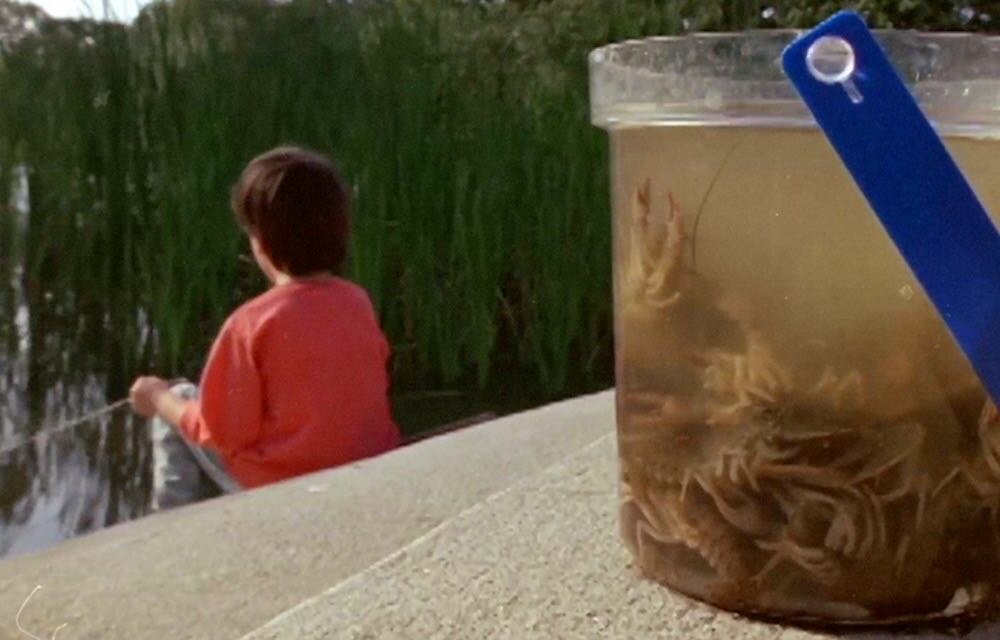
Remake (Ross McElwee, 2025).
NOTEBOOK: How did you balance your own needs for the project with the guidance of these more neutral viewers? What sort of feedback did you receive?
McELWEE: If I ever gave the impression that I always edited things in a vacuum, it’s not true. Really, I always depend upon showing the work, first of all to a small circle of filmmaker colleagues, and then to broader audiences who don't know me at all. I know filmmakers who feel they don't need to do test screenings, but I’ve done them for every one of my films. [I screened Remake for] a younger audience—students at a small university in New Jersey. One thing that I had always wondered was whether this film would make sense to people who are 20 years old. Firstly, they are probably not acquainted with this kind of filmmaking. Secondly, by and large, they're not married and they don’t have children, so they’ve never experienced a deep connection to a child and what it’s like to lose that. But younger audiences have responded so well to this film so far, and I think this is because Adrian is their age. He’s in his twenties, and so that was a very real world to them. And I think bouncing off of his portrayal of his own life and then going back to me means that they see me in the role of their parents. That’s one thing that we sensed in the New Jersey screening.
NOTEBOOK: That's true for me. I’m slightly older than Adrian was when he died, but my father’s your age, I think. He was born in 1947.
McELWEE: Yes, me too. Give my best to him. Is he in good health?
NOTEBOOK: He’s okay, yeah. Not doing too bad.
McELWEE: ’47 was a good year.
NOTEBOOK: Right. I suppose there were many children born then—just after the war. For me, as someone of Adrian’s generation, I think his footage communicates what it was like to be a young person in that 2010s era, via the sorts of images people were creating, and the cultural references—the skiing and the rock music. But I also think the film resonates today because everybody is always filming or photographing, and posting themselves online. There are a lot of tensions that arise from that self-representation, of wanting to be seen and not wanting to be seen. But I think that in your practice—and for other autobiographical filmmakers of your generation—there was an intentionality about capturing your life and your family, before the current era where everyone’s doing that without thinking about it. So I really think the film resonates with young people because of the way that it wrestles with the good parts of being seen and performing for the camera and the problematic aspects too.
McELWEE: I had wondered about that. I was going to make the film no matter what, on my own terms, but maybe for younger people, doing this isn’t so remarkable.
I do think that there’s a direct connection between the kind of filmmaking I was doing 35 years ago—and the other films in which the filmmaker’s personal lives were a component—and the explosion of social media. As you said, people are constantly dealing with representations of their own images and of other people in their lives. But within all this artificiality, the truth is embedded in what you’re saying. I think that is one truth that unfortunately we’re dealing with now. If you think about our president in the United States, here’s a reality TV star. He was actually a terrible businessman, but he made it as a reality television star. And that kind of attitude—just get their attention and then distract them with something else and keep moving through an agenda that is being plotted by somebody else—it’s all interconnected in this social media phenomenon which is just a governing fact of life at this point. And I do think that maybe the autobiographical film movement provided a genesis for that, or at least for those in the next generation who encountered it and kept doing it, maybe more overtly than we did. My films have always had some important component of my life in them, but I wanted them to be embedded in the broader world, to have some other message. That’s something I don't often see on TikTok, Instagram, or YouTube. There is not always much attention paid to the rest of the world.
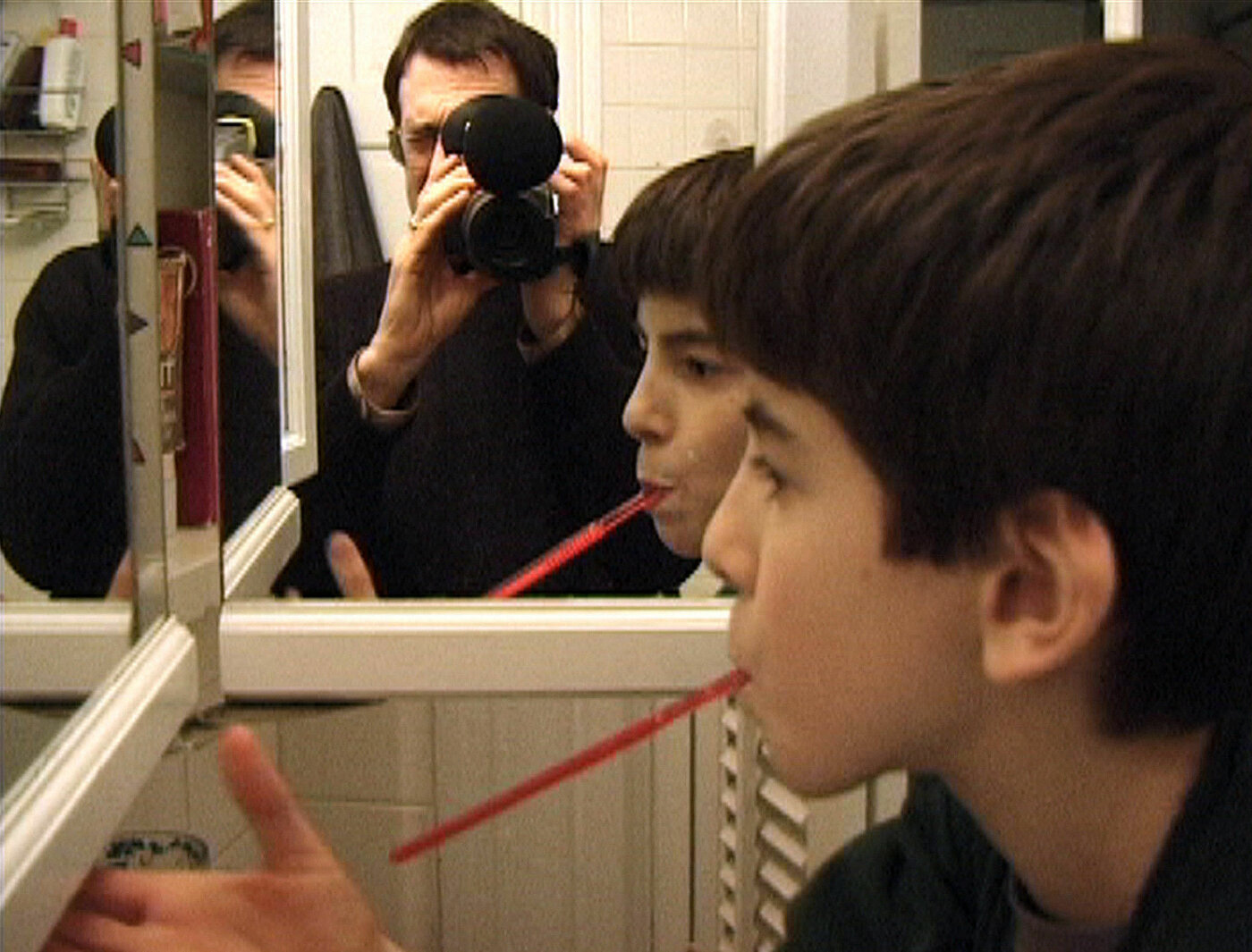
Photographic Memory (Ross McElwee, 2011).
NOTEBOOK: With the narration in your films, how do you balance explaining the footage or telling the story, and stepping back and letting people judge the image? I think this film leaves a good amount of space for the viewer to interpret what they’re seeing and relate it to their own lives. But do you ever feel like you're over-editorializing something?
McELWEE: There’s no single answer. It’s not as if there’s a formula that I use. It's intuitive, and it's really about having a dialogue with the footage: That means thinking about what was going on in my own life at that time and parsing how it might be of interest to other people. And that’s where my test screening came in, because sometimes it has to be a feeling. The main risk in making these kinds of films is striking the balance between revealing enough to seem authentic and honest, but also not talking too much about yourself. It’s just very hard to get right. I mean, some people will always say, “Oh, God, who cares?”
NOTEBOOK: At one point Adrian asks something like, “When are you gonna start making real movies, dad?” I used to work for a documentary film festival, and you brush up against this ridiculous idea of the documentary filmmaker moving on to make “real” fiction films. Or a filmmaker wins a first feature prize for their first fiction film, but they’ve made nine documentary features before it. So that line made me laugh, because of what it evokes in the context of Sherman’s March being remade as a fiction film. How have you remained so committed to documentary, or to autobiographical filmmaking, through all these years?
McELWEE: One reason is that about ten years ago, I realized I didn't have a choice. I've never tried to write a fiction film. It's just not me. But that was one of the reasons why I was so intrigued by this possibility of the remake of Sherman’s March, because I thought it was a way I could really explore the concept of documentary and fiction. They’re two poles, constantly circling each other, trying to see what the other thing is. Documentaries try for a kind of fictional thematic development to hold audiences’ attention. And of course, fiction films are always chasing the veracity of documentaries. I’ve explored those connections in some of my other films. In Remake, it’s frankly there just to provide the viewer with a little bit of comic relief because everything else is just so sad and tragic. I swore to myself that I didn't want to make a film that is almost two hours long that is only about death and loss.
NOTEBOOK: I think you do that quite well with that subplot of the remake. We can see that it's sort of absurd, but you're not looking down on that world and the producer character.
McELWEE: Listen, I love fiction. For a while I was addicted to streaming platforms. I see lots of fiction films.
NOTEBOOK: It's more about this idea that the line between fiction and documentary can blur. In that fiction remake case, it seems like the blurring didn't work?
McELWEE: I hate to keep delving back into politics, but look at the original line from fiction to reality: the present government of the United States. What is truth? I’m old. I’ve already retired from teaching. I think maybe I still have one film in me, but it’s time to get out of the business, because nothing seems true anymore.
NOTEBOOK: One of the things I wasn't expecting in Remake was the anger, which I found to be the most moving aspect of the film, and maybe the most universal. Even if you’ve not experienced grief, you can understand the anger that you're feeling. I wanted to ask how that section about anger came in.
McELWEE: Well, it’s more like—how did that come out of the film? That’s really what the film was going to be about. How the hell did this happen? Where were the culprits that were supposed to be legislating and governing the use of OxyContin? Why are the cartels in Mexico continuing to be able to bring over the fentanyl, which is what killed my son? The whole thing is so infuriating. Then I thought about all the other films that have dealt with the opioid crisis. It’s been said in so many different ways. One of the most effective was All the Beauty and the Bloodshed [2022]. I think what Laura Poitras realized was really intelligent. You need another component. And for her, the other component was Nan Goldin’s photography.
NOTEBOOK: Yeah. I guess people tune out if the whole thing is the message?
McELWEE: I thought I'd have cards appear throughout Remake that would provide the rising number of deaths from the opioid crisis. And the idea was originally this: The filmmaker keeps filming his life, and this absurd fictional film about his documentary, while 25,000 people in the United States die of overdose. And then more regular life happens in the film, and then there's another card that appears. 75,000 people die of overdose that year, and life goes on. That was a leitmotif I wanted to try. It stayed in the cut for a while, but it started to seem unnecessary, because, by the time 2017 or ’18 comes around, people were more than aware of the opioid crisis. Every time I tried to write something explicit about this catastrophic tsunami of overdoses, it seemed not to have the kind of potency I had in my other films, mainly because I don’t think I’ve tied a subject that I’m familiar with to a direct timeline. In the end, I let it explain itself.
NOTEBOOK: I think it works. And to your point about the background and the foreground of an autobiographical film, your world and the world, having that story told through an individual is more impactful than it would have been through a generalized lens. Numbers can wash over you, but when it’s someone in your life, it is harder to ignore.
McELWEE: Yeah, statistics don't stay with people, ever since Hiroshima and World War Two. And we see this right now in Ukraine and Gaza: you get to the point where the numbers don’t matter. Even images too.