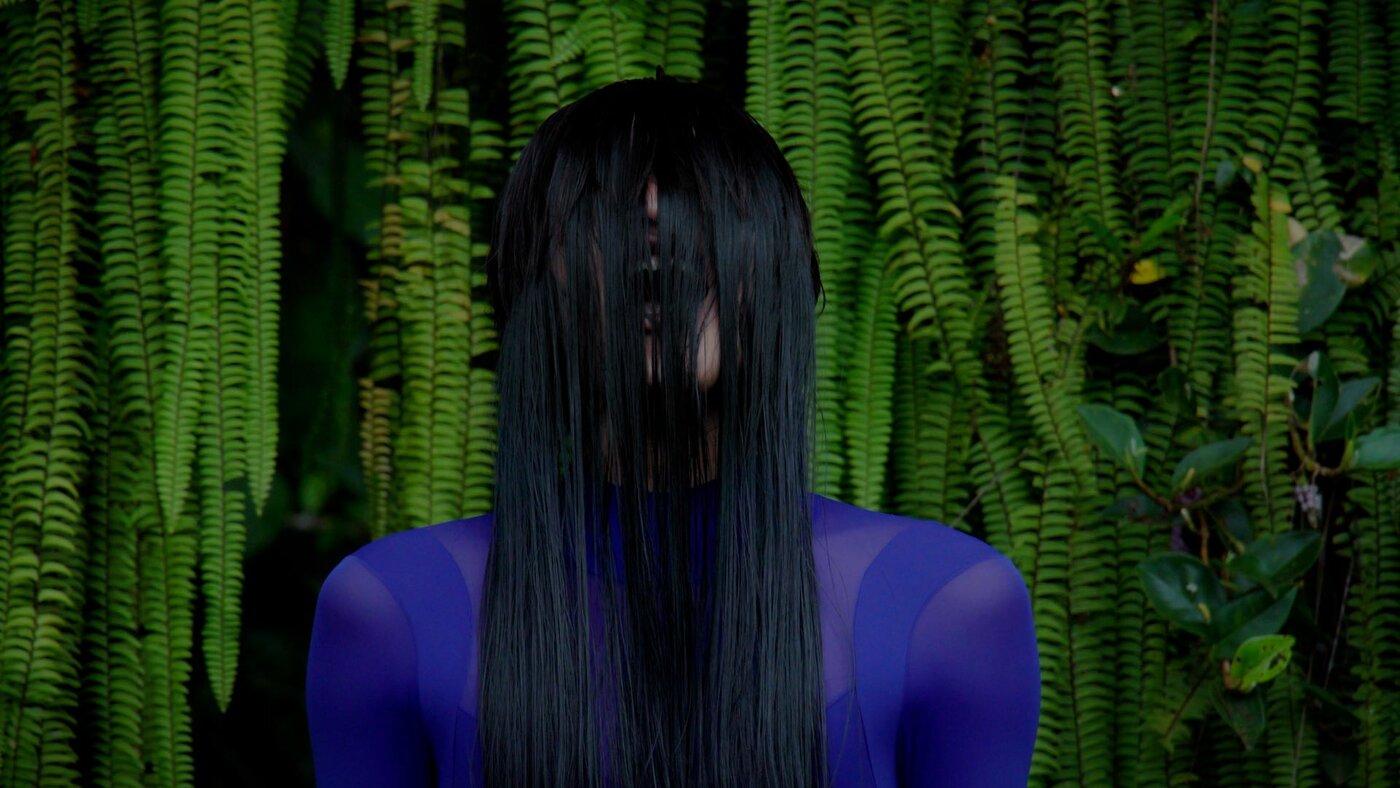
Natalia Escobar and Simon(e) Jaikiriuma Pateau's Aribada is now showing exclusively on MUBI in the series Brief Encounters, as well as in the series Pride Unprejudiced: LGBTQ+ Cinema.

In the mythology of the Emberá-Chamí people from western Colombia, the Jaibaná, a Chamí shaman, possesses the power to control the spirits known as Jais. They utilize this power to protect their community and its territory. “Aribada” is a mythological being that has evaded this control and now wreaks havoc as an undead monster, half human, half jaguar.
Inspired by the cosmology of the Emberá-Chamí people, and with the intention to decolonize the language of cinema, our film creates a space where fiction, documentary filmmaking, and performance art are woven together, portraying contemporary Indigenous queer culture as a place where being trans and Emberá belong together—a living culture where old and new myths, Emberá visual art, and electronic Guaracha music combine in a contemporary transcultural utopia. For us, Emberá culture is not confined to the past, but is also present and future, and being a trans person is not a modern Western identity, but something that has existed and continues to exist in every culture.
In Aribada, religious iconography, colonial images, and symbols such as horses and the colonial architecture of “la finca” are constantly questioned visually and narratively as traditional white symbols of domination. In our film, the Colombian “coffee finca,” historically owned by white patriarchal men, is inhabited by a community of Emberá trans women where Jais coexist and live with them. Through the use of digital media, the “Aribada” contacts them using a live transmission on a streaming channel. Here, “Aribada” is not the monster for what it is known for. The real monster is the transphobic violence and structural racism against which our protagonists resiliently fight by existing, preserving their language, and striving to realize their utopia.
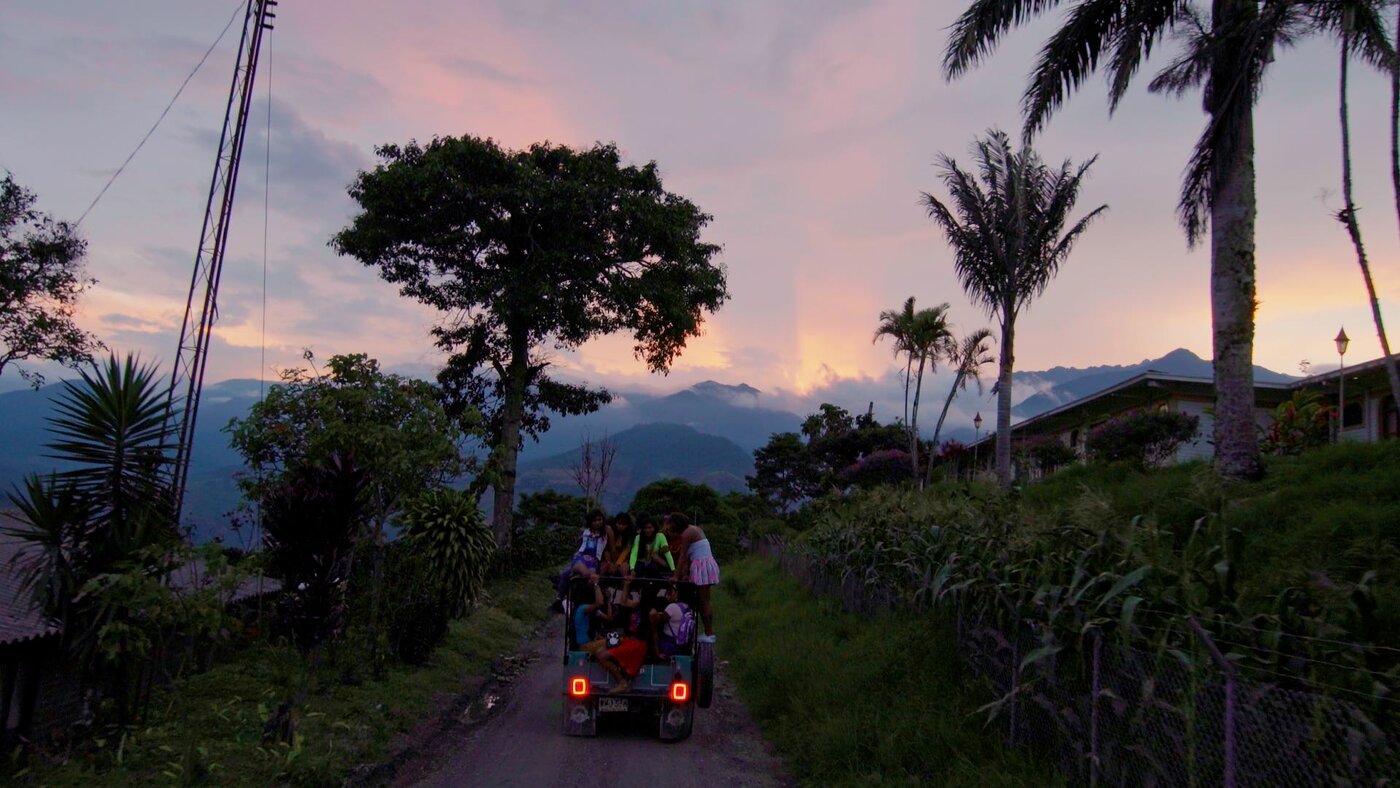
"When the Spanish arrived, they had the Bible and we had the land. They forced us to close our eyes… When we opened our eyes, we had the Bible and they had the land.”
—Rubiel Aricapa, Embera music teacher
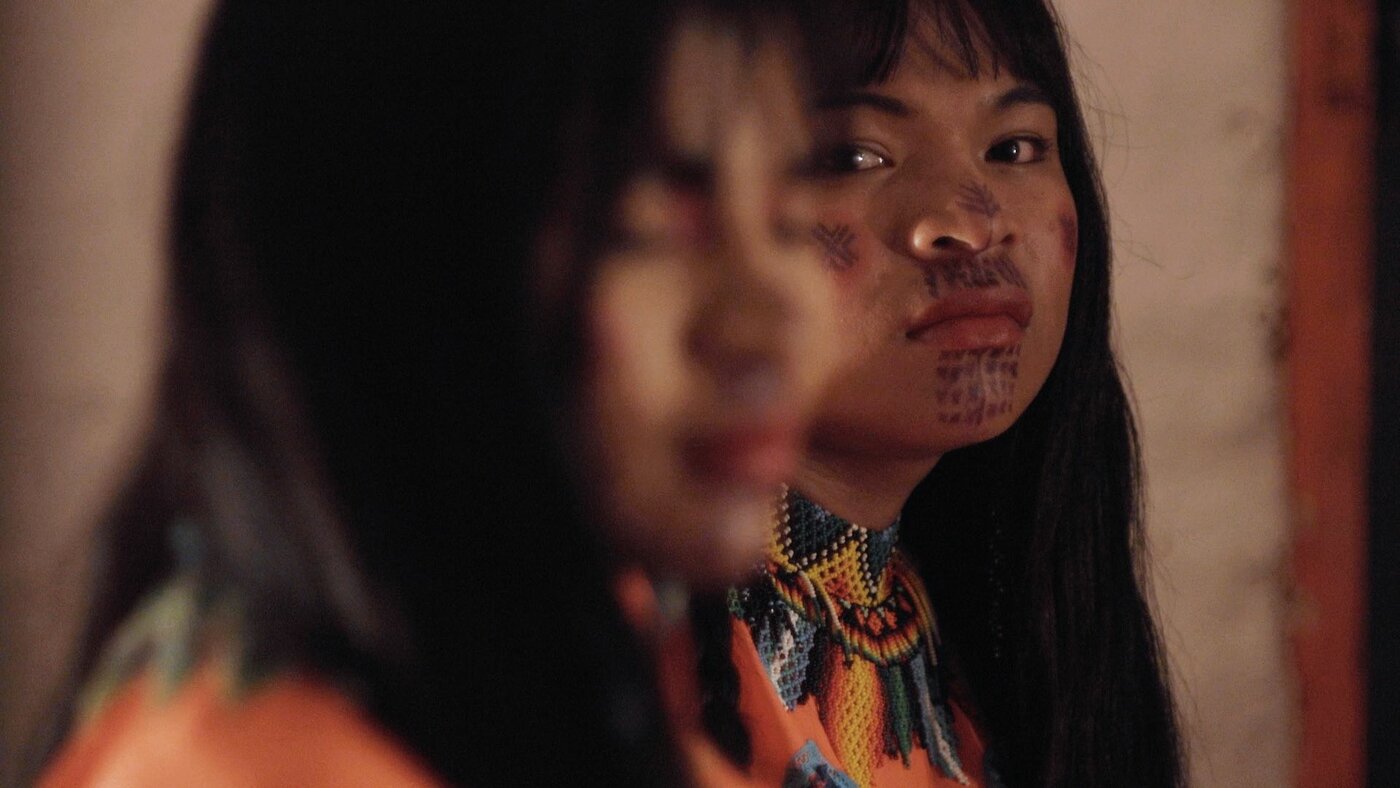
“We feel really happy because the Emberá trans girls are art, and now we are in a film. We have never seen Emberá trans girls in films. We feel really proud!”
—Zamanta Enevia, leader of the Traviesas community
When we began working on this project with Las Traviesas—a community of indigenous Emberá-Chami and Emberá-Katio trans women who live in Santuario, Colombia—it was very inspiring to see the work they were doing to regain control over their bodies, reaffirm their identities, and empower themselves to construct their own community. They are actively working toward emancipation from imposed constrictions and defining their own form of family, community organization, and administration. They have escaped from the patriarchal control in their traditional indigenous communities that previously governed their bodies and desires, a control that until recently even led to severe punishment practices including death.
Las Traviesas aspire to gain political and legal recognition from both the Colombian state and the Emberá governor’s council for the community they are building. They aim to demonstrate that there are many ways of being an Emberá woman. Witnessing their determination made us wonder: how can we develop a project that contributes to strengthening their community bonds and identity formation processes?
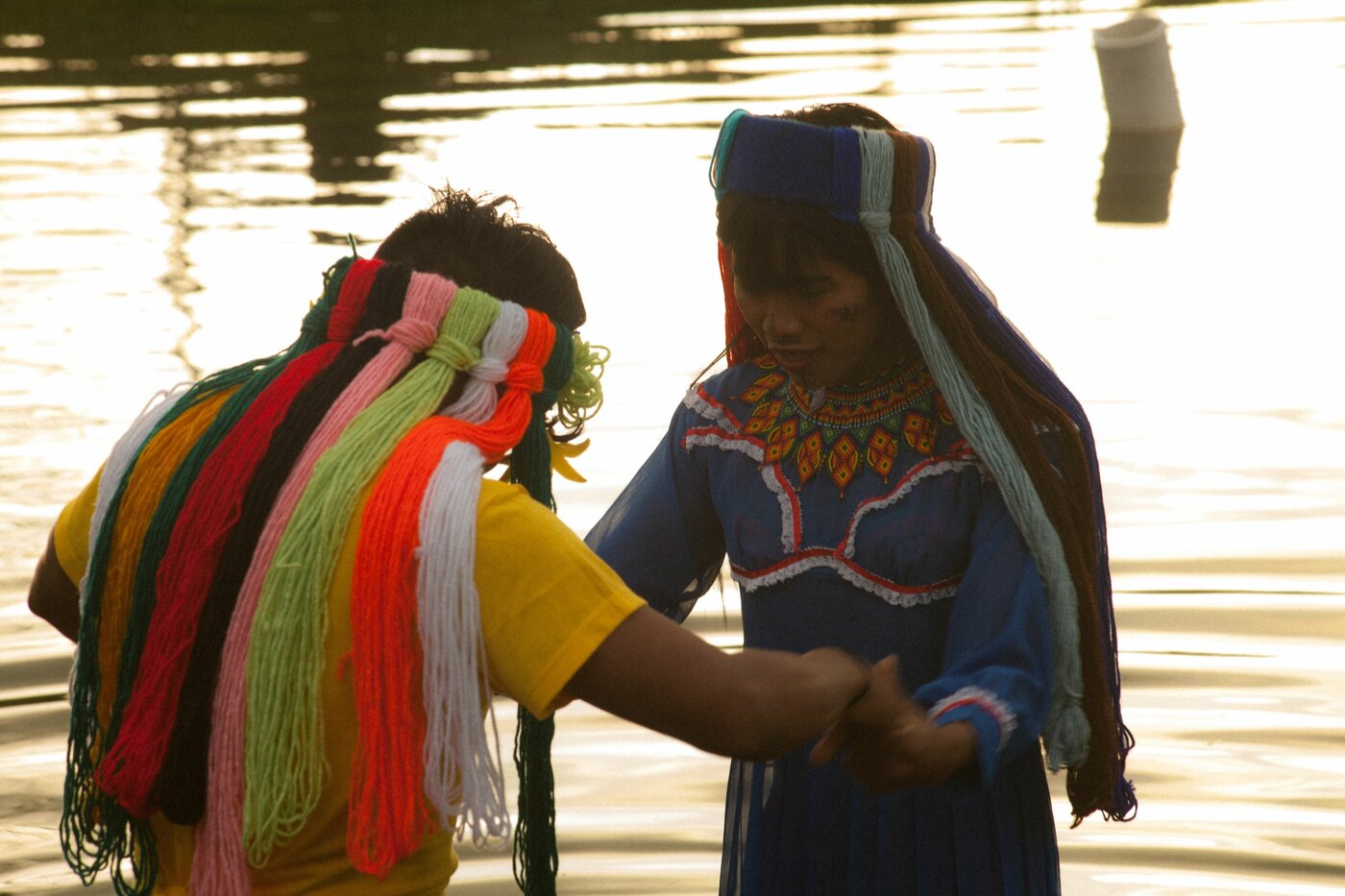
During the pre-production of the film we were living in a farm in Santuario, Colombia, where we set up a creative laboratory/artist residency, creating a space for an exchange of knowledge. We organized some activities according to the community's desires, we invited some artists to lead workshops on monotype printing, twerking, experimental film, photography, and performance, and in exchange, we learned Emberá music, cosmology, beading, and traditional rituals.
Over a three-month period, these different artistic disciplines were put in dialogue with each other. Patriarchal and colonial narratives were challenged by developing an experimental blend of performance, film, sound, and speculative fiction: trans*futurism. Different works were developed through shared experiences and inspired by the Emberá cosmovision, the retelling of dreams, and imagination exercises. Most importantly, these processes allowed us to get to know each other and build trust.
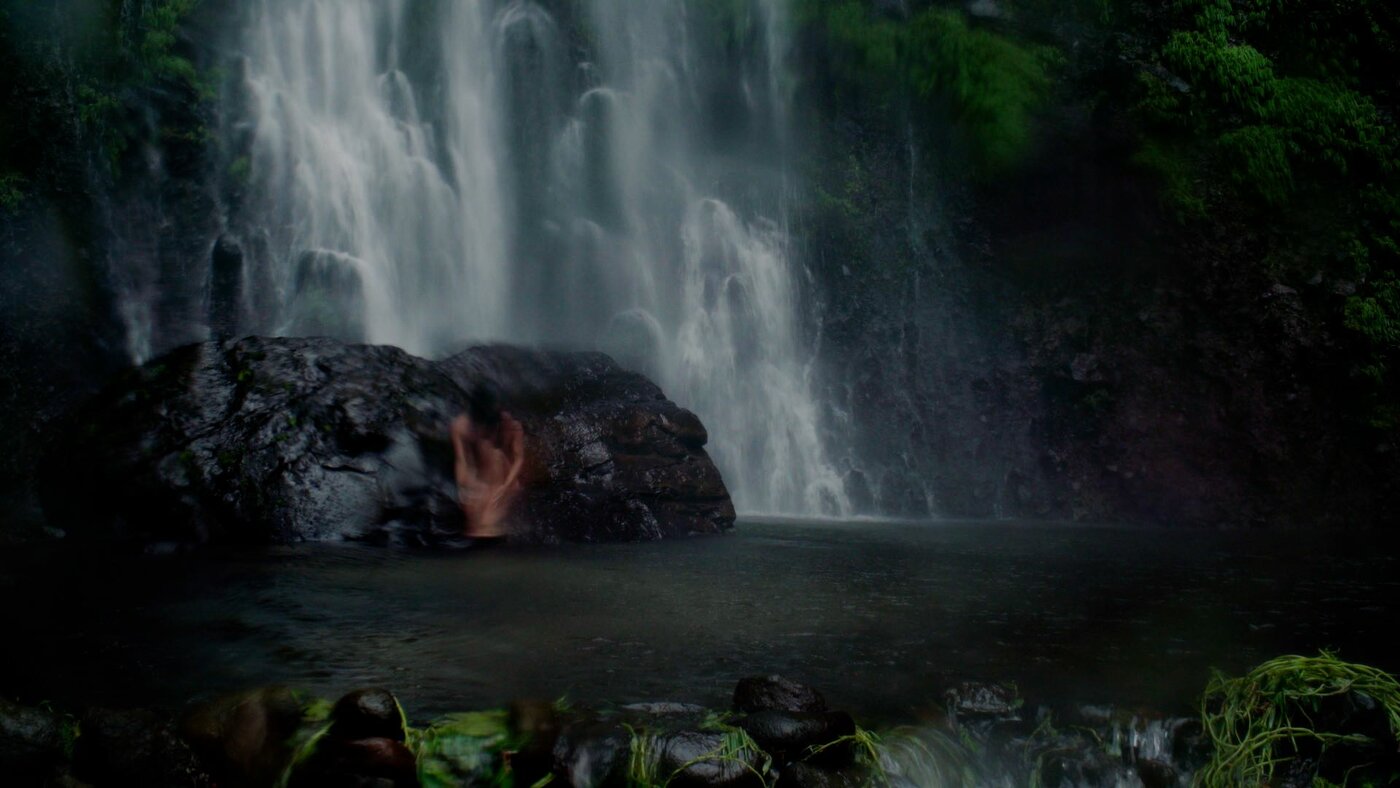
The Emberá people have a very rich and fascinating cosmology that includes different myths, rituals, and symbols. One example is the belief that waterfalls are portals to different worlds. Another is the belief that in the direction of the flowing waters of the rivers there is the Karráworld, which is the world of the unborn Emberá people. Their conception of temporality, the separation between mythological time and actual time, is also very interesting: mythological time is seen as a circle.
Their beadwork is extraordinarily intricate, and it seems to tell a story or map out a journey to the unconscious mind. All of these provide a lot of inspiration for thought and create decolonial and experimental abstract narratives. We believed in the power of these concepts and imagery and let them guide us to create Aribada.
Las Traviesas choose to identify, classify, and present themselves based on their unique constructions of reality, which may differ from the processes commonly associated with white-mestizo cultures. As an illustration, they adopt the name "Traviesas," derived from the noun "travieso (-a)," which translates to "across," "oblique," "cheeky," or "naughty." Depending on the context, it can also carry a sexual connotation. Additionally, "traviesa" refers to the secondary coffee harvest, known as "traviesa" or "mitaca," typically conducted six months after the main harvest.
The girls are also creating their own new myths. They are changing traditional Emberá codes and queering them—for example, by using other materials or colors for the clothing other than those worn by Emberá cis*women. These processes of self-representation by the Traviesas in relation to the local construction of gender and sexuality were the core of our film.
Today it is more important than ever to conceive spaces where we can recognize and reconnect with each other, a place where we can imagine new narratives that remind us that another world is possible—and that we have the power to create it.