Kurdwin Ayub’s Moon (2024) is now showing on MUBI.
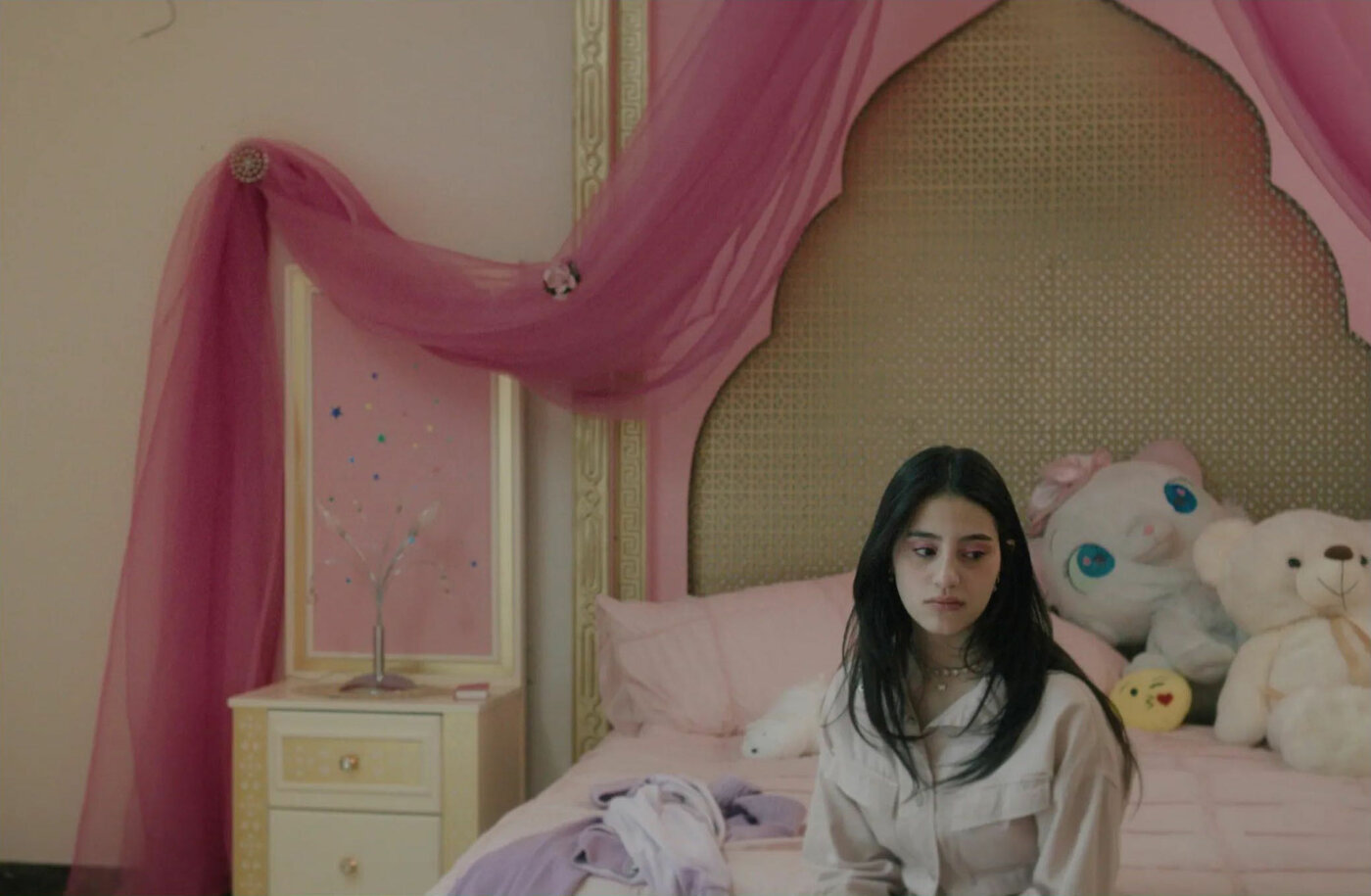
Moon (Kurdwin Ayub, 2024).
I remember one occasion that shaped me to this day: I grew up with Kurdish Iraqi parents who were paralyzed by the trauma of war and displacement. We were so isolated. They had to start over from scratch in Austria. We had no money, nobody felt secure.
I love my family—everything changed—but when I was younger, I had to be the nice, calm, perfect girl who just stayed at home. I wasn’t allowed to be anywhere but in school and at home. I also know what violence means… One day I gathered all my courage to write about how I felt in an essay for an Austrian teacher. I was so nervous when I got it back, but the only comment at the end of the paper was, “Get a hobby, maybe?” I still remember that. It changed a lot for me.
So I wanted to tell a story about people who have hope for a better future but are a bit naïve, holding on to an old mindset—like “the Westerners will come to help us.” Because I live in Europe, I chose the Western perspective in my movie, so that my Western audience has a mirror. They see a European woman seeking a better future in the Arab world because power dynamics are gradually shifting in our time. The Gulf states, for instance, have become influential players. The situation of people with migrant backgrounds in Europe is a separate issue—one that requires differentiation.
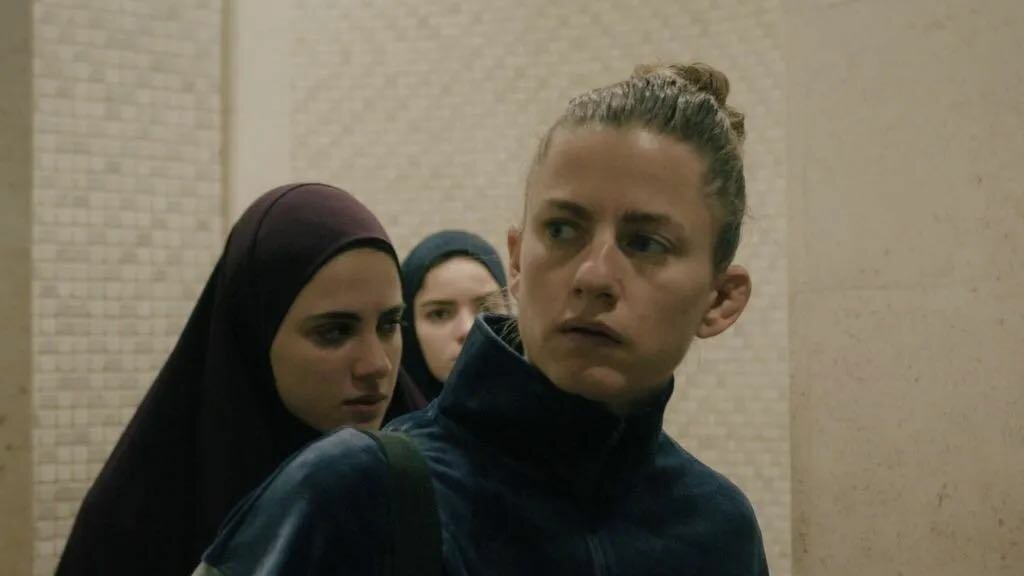
Moon (Kurdin Ayub, 2024).
In my film, the Western woman sees things, but not the whole story, not the complete truth. And with only the information she has, she asks herself: Does she believe this woman enough to help her? The audience is drawn into the suspense of whether the Western woman will save the Arab. Expectations are tempered by reality.
So at the end of the film, you might think: Is Europe going to help them? Or is it just watching? Is Europe allowed to help us, or is it white saviorism? Can Europe help at all? I don’t like to judge. I’m trying to bring fictional narratives to reality. And I would rather leave my audience with all these questions. I don’t like them to feel good after my film, I want them working on themselves to get better.