Illustrations by Antonio Carrau.
Notebook is covering the Locarno Film Festival with a cycle of close reads written by the participants in the Critics Academy.
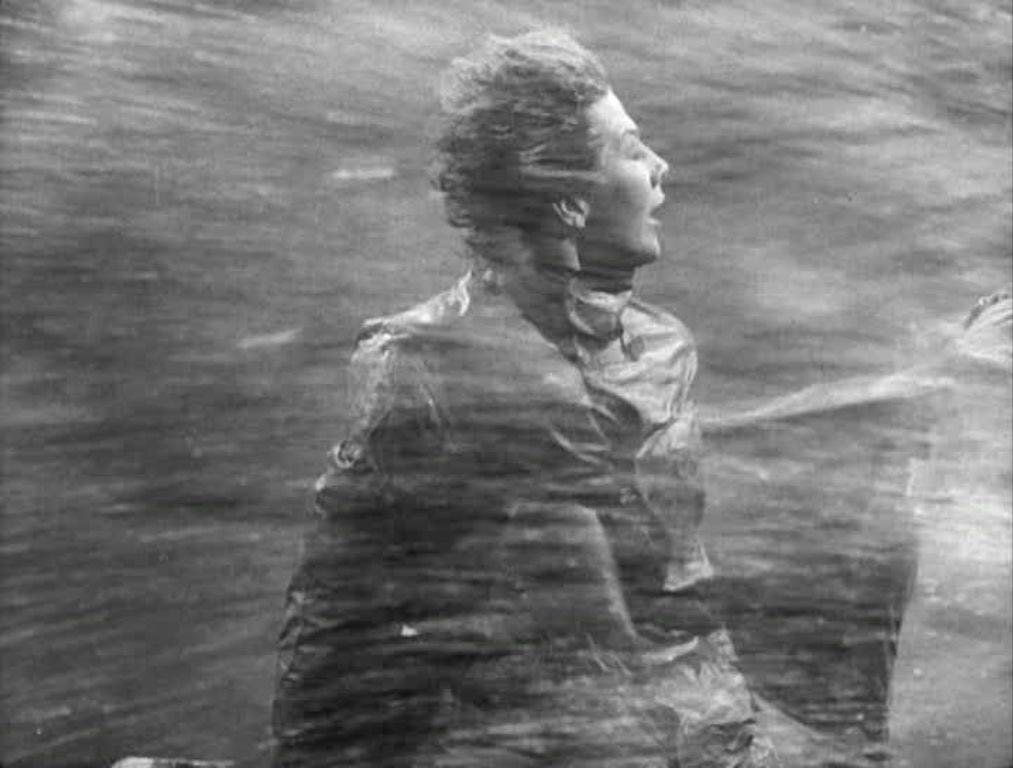
I Know Where I’m Going! (Michael Powell and Emeric Pressburger, 1945).
In Michael Powell and Emeric Pressburger’s I Know Where I’m Going! (1945), headstrong Joan barrels down the straightforward path she’s planned for her life: she traverses Northern England toward the remote Scottish island of Kiloran, home of the mysterious, wealthy chemical mogul to whom she’s engaged. These plans are disrupted when she reaches the Isle of Mull, where stormy weather prevents her from setting sail toward that horizon of marriage. Stranded, Joan turns her attention to the locals; the traditions of their insular territory are preserved in their kilted dress and Celtic language. In the fog, the English Joan knows gives way to Gaelic, so unfamiliar that it is indecipherable to her: a vast, near-mystical landscape with no familiar landmarks. And as they walk the shores, the residents of Mull are often backlit, shadowy silhouettes against a dramatic sky, with features that cannot be discerned. From then on, Joan’s linear trajectory twists itself into a spiral—fittingly, a whirlpool nearly sweeps her away after she impatiently sets sail in a storm.
For the past six years, I’ve been taking the same early August train from Lausanne to Locarno for the film festival, in which Powell and Pressburger’s film was the opening night selection of the retrospective section. This year, some new twists and turns arose, owing to the omnipresence of the English language in the Critics Academy. As a native French speaker, my words—the tools with which I work, my safe haven—were lost, and then reshaped, in translation. Many festival selections reflected a version of this dynamic back to me, exploring the intimate potential energy of language.
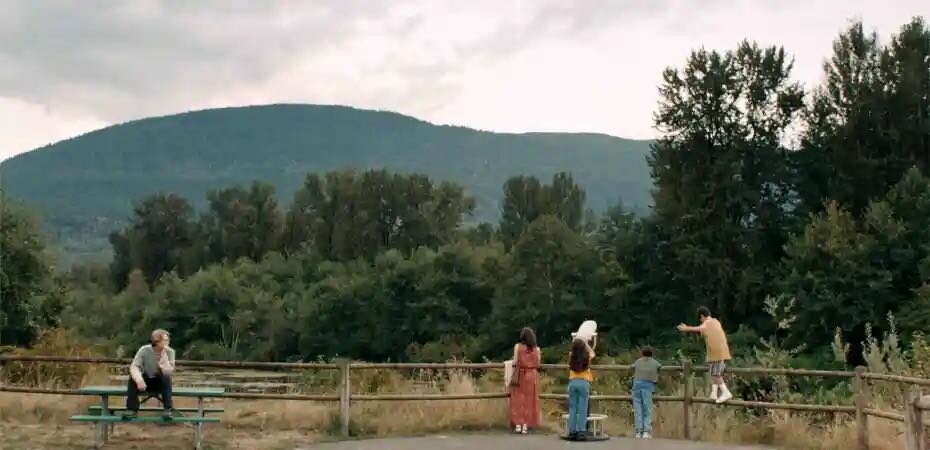
Blue Heron (Sophy Romvari, 2025).
“Why are you speaking English to me?” a woman asks her husband in Hungarian as they discuss their son’s undiagnosed psychological struggles in Sophy Romvari’s Blue Heron (all films 2025 unless otherwise noted). “Because this was our agreement,” he replies in English, then switches to Hungarian while she continues in English. Which words, sentiments, or pieces of information should one reserve for one’s adopted language? For the two Hungarian parents, who have resettled in Canada with their four children, the sound of English signifies a vanished home, echoing like a leitmotif in the story of a family in flight. Multilingual exchanges unsettle and renegotiate the characters’ place in their environment, signaling how differently rooted the first and second generations of the family are after this migration. In contrast to their children, who shout in English with their Canadian friends, the parents speak hesitantly, as if their thoughts no longer knew in which language they should take shape. In a household, the shift from one language to another works like the partition separating the parents’ bedroom from the children’s playground. Struggling as much to find their voice as to assert their parental role, mother and father seem powerless against the wall their son erects, shut away in silence.
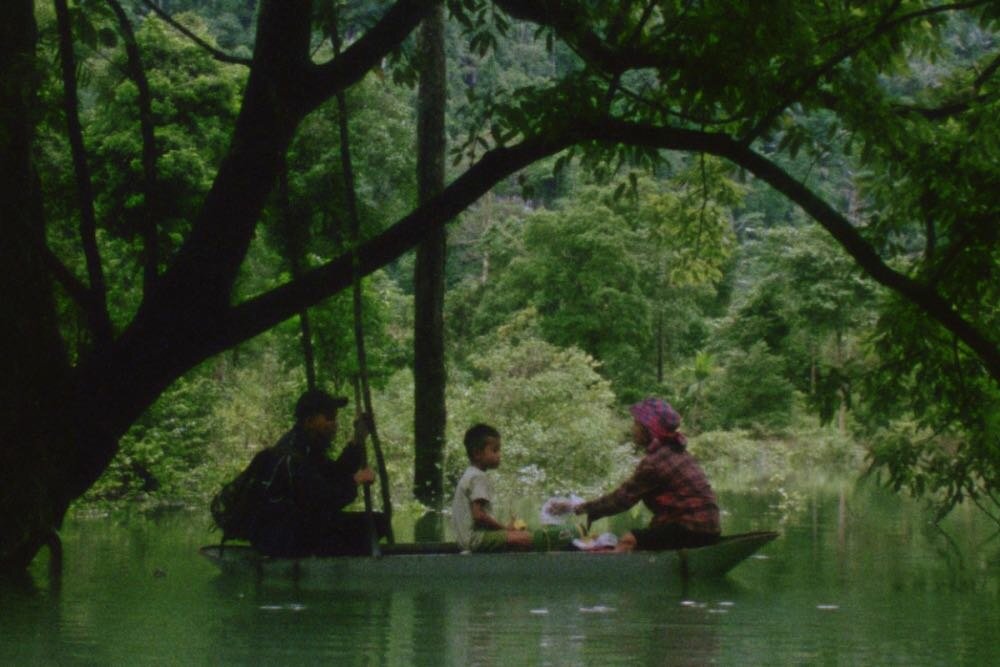
Hair, Paper, Water (Nicolas Graux and Trương Minh Quý, 2025).
The shift from one language to another shows—rather than tells—how the characters relate to their roots, traces of a past which their adopted territory threatens to erase. Nicolas Graux and Trương Minh Quý’s Hair, Paper, Water is about the indigenous Ruc language, at risk of extinction in Vietnam. By juxtaposing voices speaking Ruc with intertitles displaying a Vietnamese translation (subtitled in English, in turn), the directors articulate a dual portrait of the two languages through their divergent modes of cinematic representation. To this end, they deliberately leave the lyrics of a popular song in Ruc untranslated, focusing our attention on sounds and intonation rather than semantic meaning. Side by side, the languages share the territory of the film just as they coexist in Vietnam: in sequences dominated by Vietnamese text, Ruc emerges in its fragility, a language without a written form. These sonic building blocks—phonics, texture—are also how a Ruc-speaking woman’s grandson learns to express himself in the language, poring over workbooks and repeating phrases back to her. The representation of Ruc through sound mirrors the oral tradition that has allowed it to endure, and which the child perpetuates through his words.
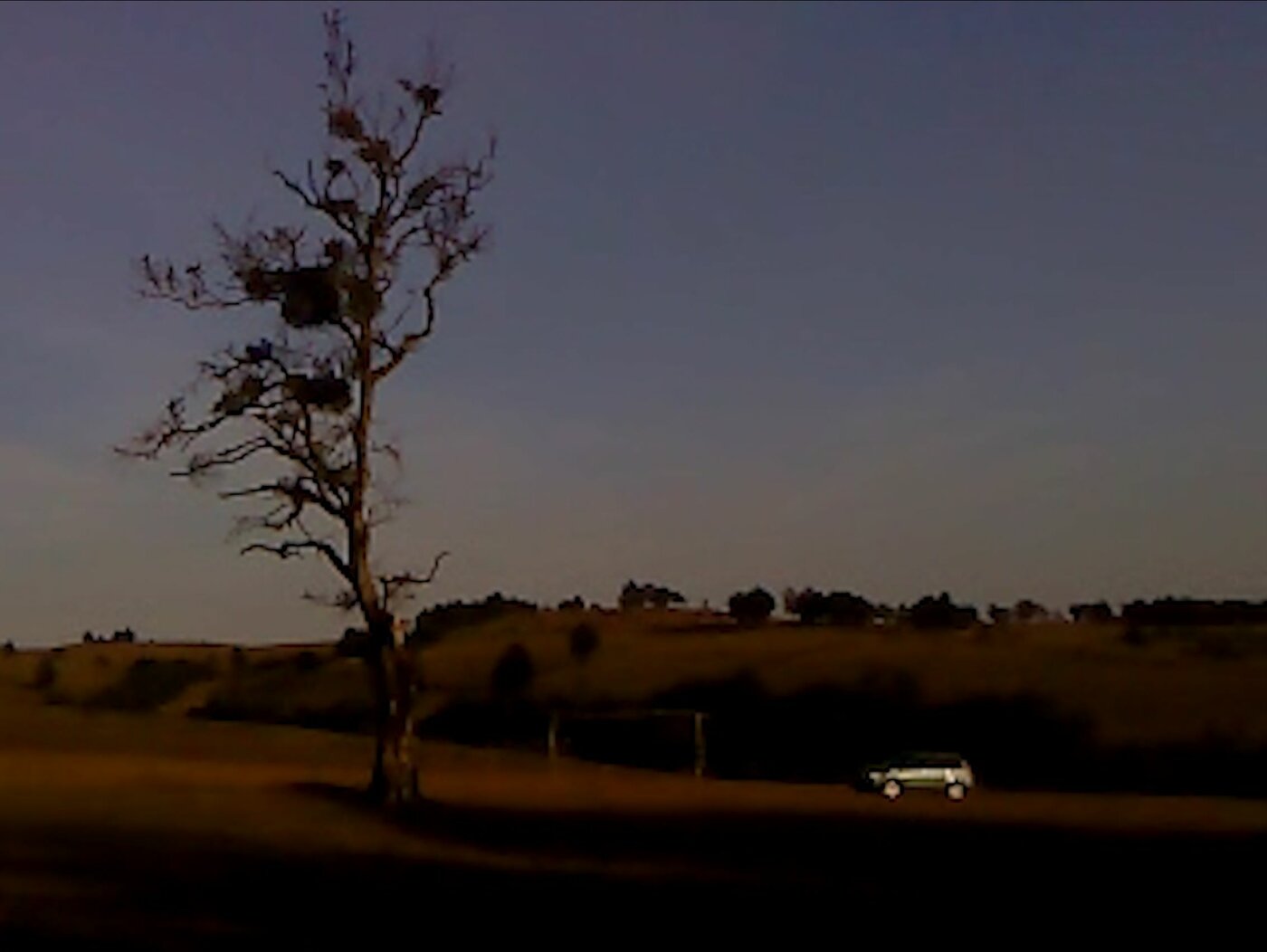
Dry Leaf (Alexandre Koberidze, 2025).
Words can also suggest things we cannot see. At the start of Alexandre Koberidze’s Dry Leaf, an unseen narrator explains that some of the film’s characters are invisible; they will only exist through their voices. If language can evoke worlds offscreen, here it suggests that there are even onscreen elements we cannot entirely perceive. In a poor image, just a handful of pixels evincing the shapes of a few bodies, our usual paths to visual understanding are stymied: In the ghostly wandering of a father retracing his daughter’s footsteps after she’s mysteriously disappeared, meaning is not found in the contours of a clear, high-definition image. As he encounters these voices, untethered from visible bodies, he seems to have cohabitants in his solitude, and his quest becomes secondary to the direction of the film. Dry Leaf emerges in the bends of a pixelated road, shaped by the film’s sly way of giving presence to absence.
At the end of my ten-day journey, I find myself alone in the silence of my room, writing. The voices of my peers echo in my head not as language, but as melodies, accents, and timbres. The inflections of their speech—telling me so much about who they are—are etched into my memory even more deeply than the words we exchanged. At the end of I Know Where I’m Going!, the deadly whirlpool ultimately gives way to a romance that could only be born of a diverted itinerary. We must therefore borrow from Dry Leaf to conclude this journey: “How beautiful it is that there are roads.”

Keep reading our coverage of Locarno 2025.