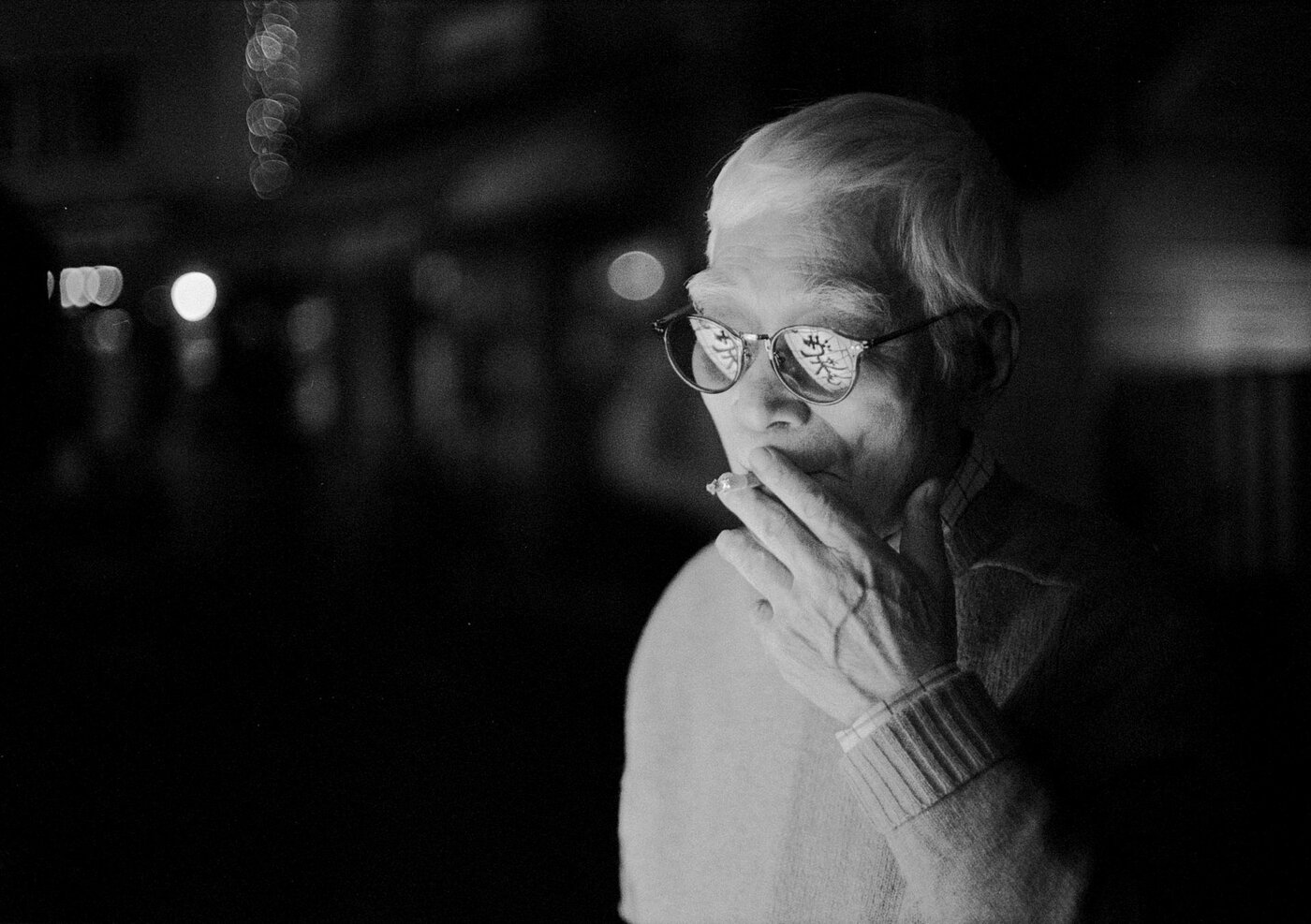
Masao Adachi in 2015. Photograph by David Matthew Davis.
Masao Adachi is a filmmaker whose reputation well and truly proceeds him.
Born in 1939 in Kyushu, Japan, he moved to Tokyo to attend Nihon University, coming of age during the turbulent protests against the renewal of the mutual security treaty between Japan and the United States in 1959–60. He started making films with a student group and soon emerged as one of the leading figures in the burgeoning underground cinema scene.
In the mid-1960s, Adachi became involved with the sexploitation industry, writing and directing several striking examples of the genre for Koji Wakamatsu’s production company. He was also collaborating with major members of the New Wave like Nagisa Oshima. The political dimension to his output became more explicit in the early 1970s, following a visit to Lebanon, where he filmed Palestinian guerrillas. He continued traveling back to the Middle East, eventually becoming a core member of the Japanese Red Army, a radical group that carried out hijackings, embassy attacks, and other operations in the name of Palestinian liberation. He was arrested in Beirut in 1997, imprisoned, and then deported to Japan in 2000, where he served a brief jail sentence. Upon his release in 2001, he returned to filmmaking in the country of his birth.
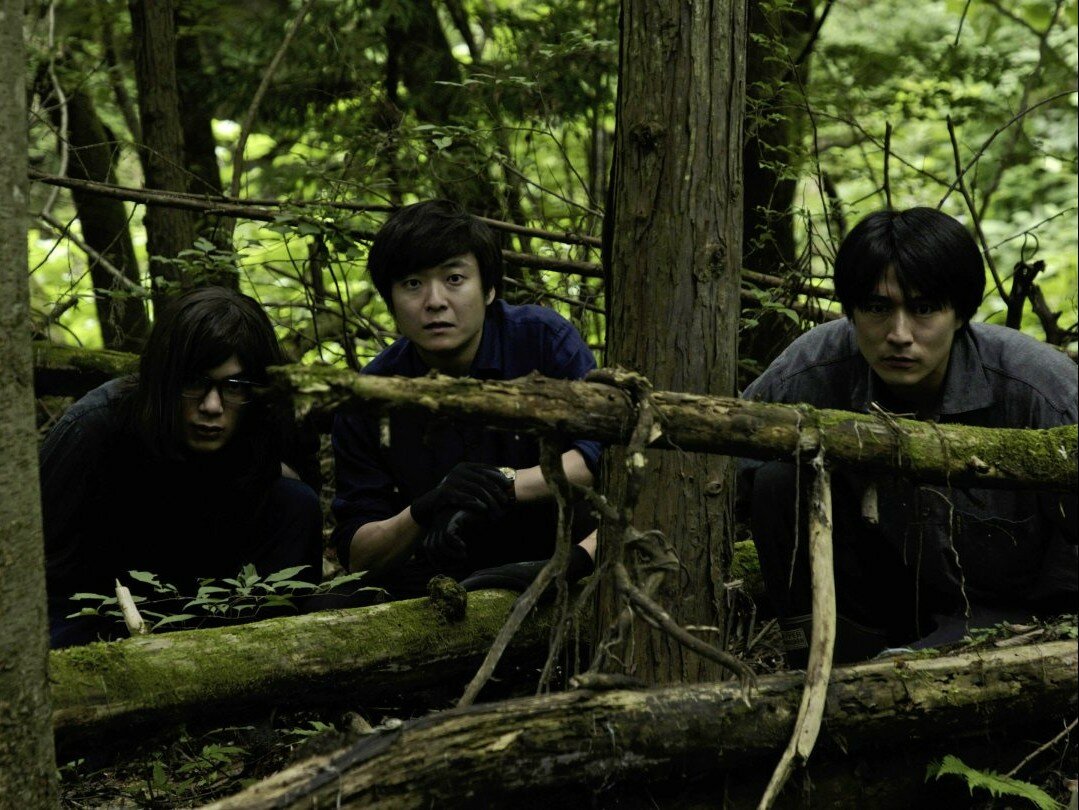
Escape (Masao Adachi, 2025).
The basic facts of his life and career have inevitably garlanded Adachi with a notoriety that overshadows some of the subtleties of his work and the complexities of his political interventions. One of the aims of Pink Auteur, Red Outlaw, my recently published book about Adachi, is to demystify and rectify some of the misconceptions associated with him. Crucially, many of those misconceptions have been perpetuated not just by the news media but also in part by Adachi’s own appropriation of them.
Rather than the romanticized narrative of the filmmaker who spent time as, in his own words, a “guerrilla” in Lebanon, a better way to understand Adachi’s work is through the framework of surrealism. This is a label he has himself claimed in recent years, but to call Adachi a surrealist is not simply a reference to the dreamlike aesthetic that is present in his visually striking early underground films. It situates the spirit of Adachi’s work in the key surrealist approaches of free expression, randomness, and a commitment to artistic revolution.
A high-profile interview published in The Guardian earlier this year, for instance, framed Adachi as the elder statesman of “political cinema, revolution and Japan today.” Such aggrandizing may not be helpful in that Adachi’s position was often oblique to his peers involved with making politically engaged films and in the experimental underground. His biography and choices of subject matter lead the viewer to presume his films reflect his own involvement with militant activism as didactic instruments of a particular ideology, but this is not the case, and this is what makes them particularly valuable as works of cinema.
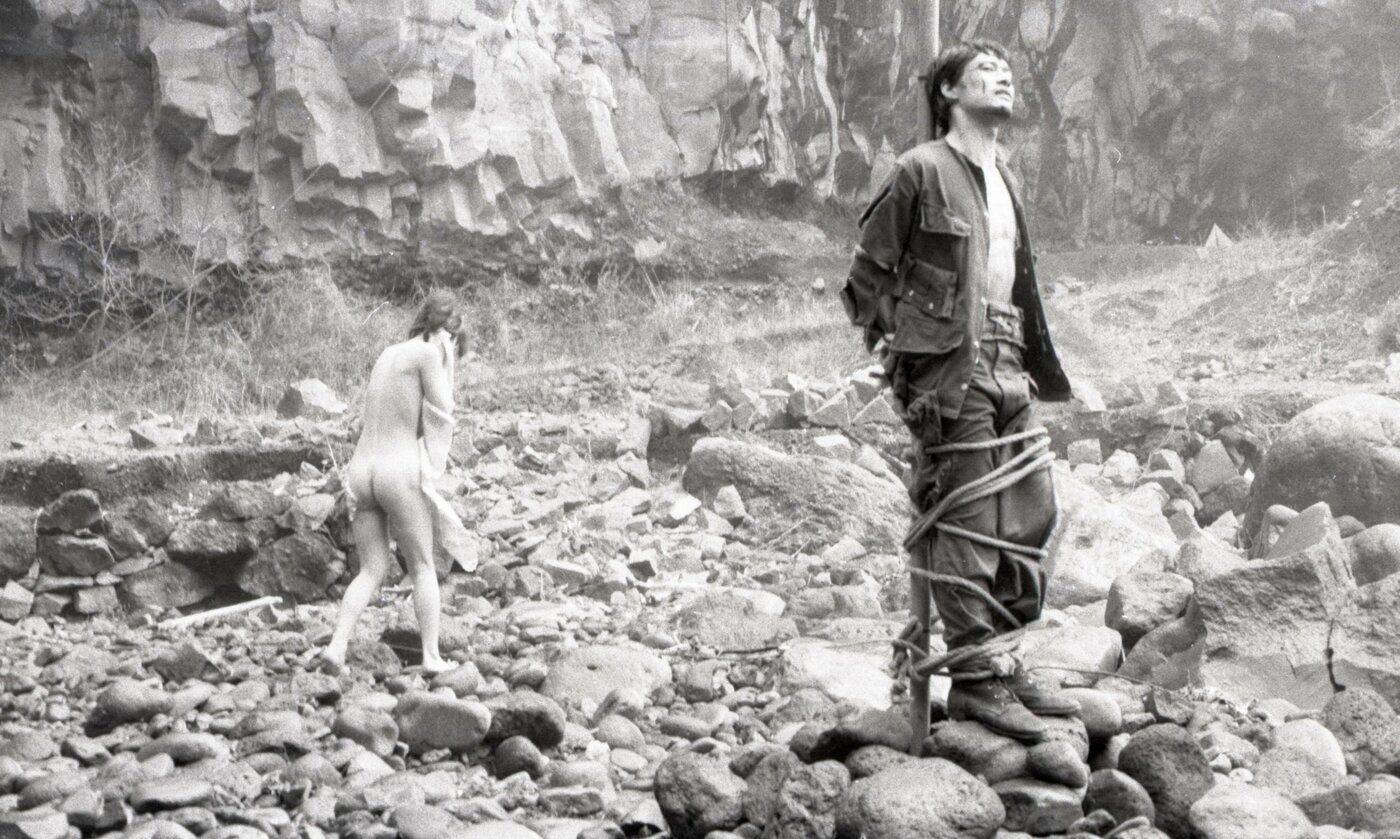
Female Student Guerilla (Masao Adachi, 1969).
In fact, Adachi was both a man unto himself and an uneasy auteur. His filmography is highly diverse in terms of genre and style—encompassing sexploitation, underground cinema, experimental documentary, biopics, and dark comedy—and does not necessarily suggest an artist with a single, singular vision. Rather, such dynamic eclecticism suggests an idiosyncratic director whose trajectory was sometimes haphazard, shifting as he intersected with different artistic and political movements. The very patchy, idiosyncratic nature of his filmography constitutes in itself a kind of core modality, if it may also (like any career) be the arbitrary result of certain circumstances and opportunities.
And while film is an inherently collaborative medium, many of the most interesting examples of Adachi’s output came about due to partnerships with other filmmakers and thinkers, among them Nagisa Oshima, Masao Matsuda, and, most famously, Koji Wakamatsu. Emphasizing the collaborative nature of Adachi’s body of work does not diminish him as an auteur, but rather strengthens his artistic achievements It remains in keeping with an interpretation of Adachi as a surrealist, since collaboration was, for the original surrealists, an extension of their efforts to undermine artistic conventions and bourgeois institutions. And neither does his collaborative nature dilute his aesthetic. The films remain resolutely and recognizably his: tonally and structurally messy, visually unpolished, and abruptly edited. They demonstrate an almost lifelong commitment to nonconformity, a rejection of smooth edges and coherence, and an embrace of the crude mishmash and non sequitur (also in keeping with the surrealists’ approach).
As mentioned above, Adachi is well known for the political sexploitation films he made (either as director or as Koji Wakamatsu’s go-to screenwriter) in the late 1960s and early ’70s. These nominally adopted the format of a so-called “pink” softcore erotic film but featured a cast of characters that seemed drawn from the leftist radicals and countercultural figures then running amok in the streets of Japanese cities, fighting the police, planting bombs, and even (in one instance) hijacking an airliner. But it is important to remember that these films were atypical of pink cinema, and that his partnership with Wakamatsu also produced many less remarkable sexploitation films, including two that are essentially how-to guides for different sex positions, and short works not recorded in official filmographies.
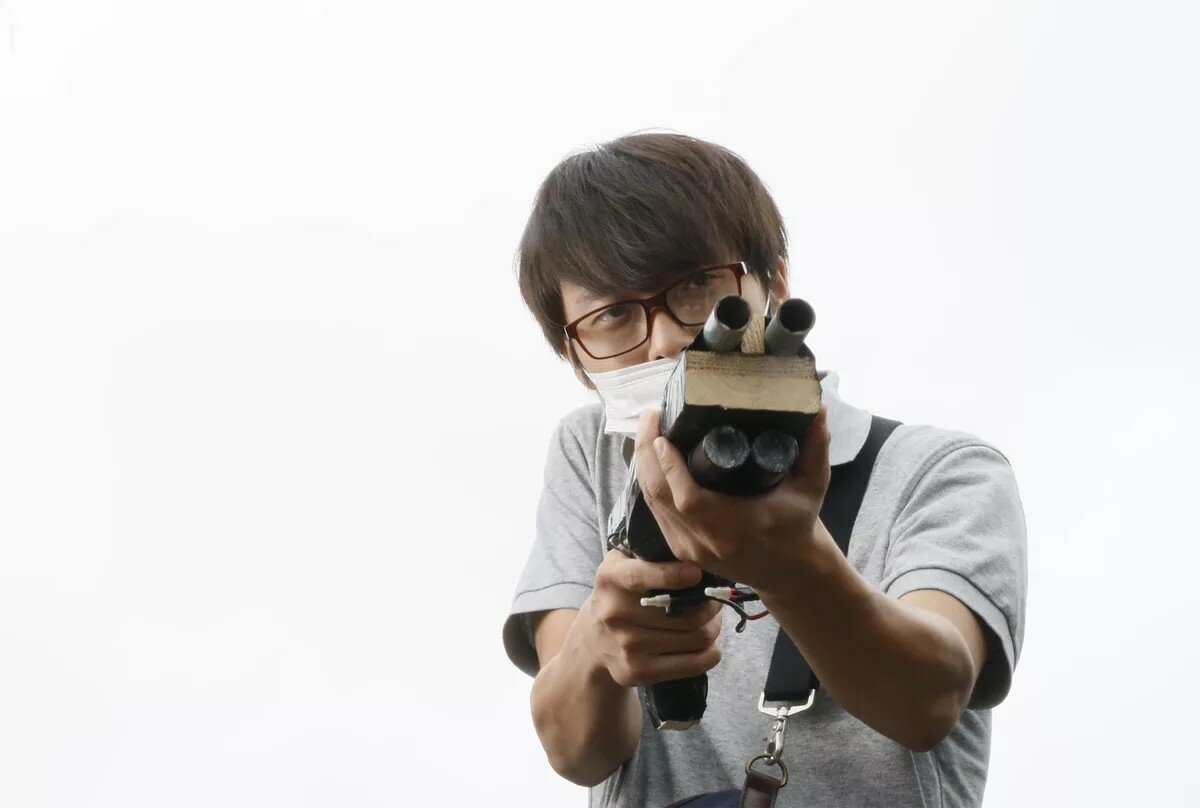
Revolution+1 (Masao Adachi, 2022).
The breadth of his pink films, let alone his overall oeuvre, is often ignored because of the inevitable conflation between Adachi the political activist and Adachi the political filmmaker. Already apparent in the late 1960s, this identification with a certain brand of political filmmaking and anti-authoritarianism is a problem because it is not borne out by the content of much of his work, which is generally more ambivalent toward far-left activism and violence. His earlier films like Sex Game (1969) or Female Student Guerrilla (1969) are satirical black comedies, mocking those in power as much as they mock the misguided radicals, whose antics usually result in self-destructive tragedy. When so much of the mainstream cultural memory of the Long Sixties in Japan (1959–72), especially regarding militant activism, is couched in either outright condemnation or elegiac nostalgia, Adachi’s caustic, take-no-prisoners stance constitutes a significant intervention that prompts a more critical view.
Even films that came significantly later, like Revolution+1 (2022) and Escape (2025), whose subject matters would on the surface seem straight out the “leftist activist and film director” playbook, do not overtly celebrate the trajectory and actions of the protagonists (respectively, an assassin and a bomber), but instead explore them in terms of psychosocial circumstances, personal commitment, and asceticism. Escape, in particular, is a moving portrait of the more literal dimensions of a political struggle (made more in the Japanese title, a homonym for a political struggle and being on the lam), a struggle that continues even after comrades are arrested or dead, in part to repent for the deaths of innocent civilians.
One of Adachi’s most notorious films is The Red Army / PFLP: Declaration of World War (1971), which was interpreted by many at the time as straightforward propaganda for the Palestinian liberation movement and a recruitment film to coax Japanese activists to relocate to the Middle East. But it is better understood as an attempt to remediate revolutionary violence and power through cinema, showing the everyday reality of the Palestinian guerrillas’ lives, and posing questions about the nature of propaganda. In many ways, much more so than the more flamboyant and sensational sexploitation films about young radicals’ antics in Japan, the ambiguously edited Red Army / PFLP marks the zenith in Adachi’s efforts at forging a politics of cinema, pursuing filmmaking as an activist practice through grassroots-organized screenings, talks, publications, and other forms of discourse.
And this brings us to the thorny issue of militant activism, political violence, and terrorism. While Adachi was indeed a core member of the Japanese Red Army, a group generally regarded in the Global North as a terrorist organization, his own role was ambiguous. While it is known that he traveled internationally and met many known figures in groups that engaged in violent tactics, and is alleged to have transported explosives for Palestinian operatives in Eastern Europe, there is no publicly available evidence of direct involvement in violence. According to later trial testimony, Adachi was largely engaged in planning and publicity activities. Even his actual arrests in Lebanon and Japan related to visa and passport violations.
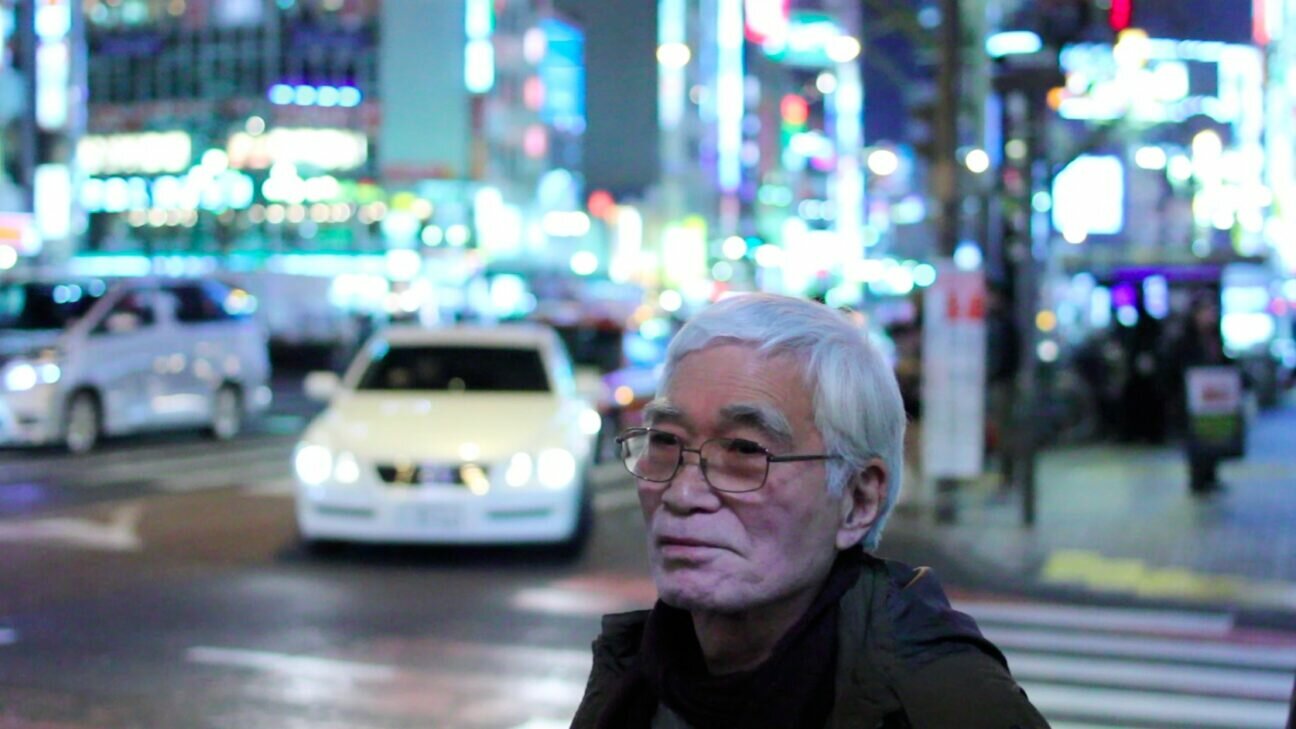
It May Be That Beauty Has Strengthened Our Resolve – Masao Adachi (Philippe Grandrieux, 2011).
Though the evidence for Adachi as a gun-toting guerrilla is slim, his association with the JRA made him a pariah to society at large, and persona non grata to much of the film industry (not that his position in the industry even prior to his departure from Japan was ever mainstream). And while this has made it hard for him to attract investors for his films since his release from prison, it has also turned him into a legendary figure, especially overseas, which has proved useful. In fact, he has arguably embraced aspects of the roguish status that his past alleged criminality has endowed, joking about it in interviews and placing an emphasis on it in publicity for his new films.
The effect is contradictory: It has generated a lot of interest in his work outside Japan, yet Adachi cannot leave Japan to visit festivals because his application for a passport is always denied. He lives in a sort of limbo or exile, unable to benefit from his belated international fame.
That is the filmmaker we find in Philippe Grandrieux’s documentary It May Be That Beauty Has Strengthened Our Resolve – Masao Adachi (2011), which presents him as an isolated figure, a political has-been in a Tokyo awash with consumerism and indifferent voters. How much Adachi is consenting to or participating in this reframing of his image is uncertain, though it may largely be shaped by Grandrieux’s imposed narrative of political failure in late-stage capitalism. The documentary has much to admire, not least visually, yet it does not capture Adachi’s personality, which is playful and jocular, nor does it give a viewer a sense of Adachi’s prolific output following his return to Japan: writing and publishing books and articles, teaching students, acting in various independent films, participating in political movements, and making his own films. Adachi’s age notwithstanding, the directing has picked up pace, resulting in three feature films since Grandrieux shot his documentary.
Kamal Aljafari’s new short film, Masao Adachi Takes a Passport Photo (2026), might reflect Adachi’s character better. With its pastel-colored aesthetic and sedate pace, the film draws a parallel between two elderly figures: the filmmaker and a widowed owner of a photo studio running a business about to become obsolete. The owner seems to know nothing of the filmmaker’s notoriety, and Adachi is shot almost entirely from the side or back, only shown from the front for the titular passport photos that he gets taken, all while resigning himself to the likelihood of another governmental rejection. In this way, the film is about a quiet resilience and visual craft, the meaning imbued in creating an image as everyday as a passport photo.
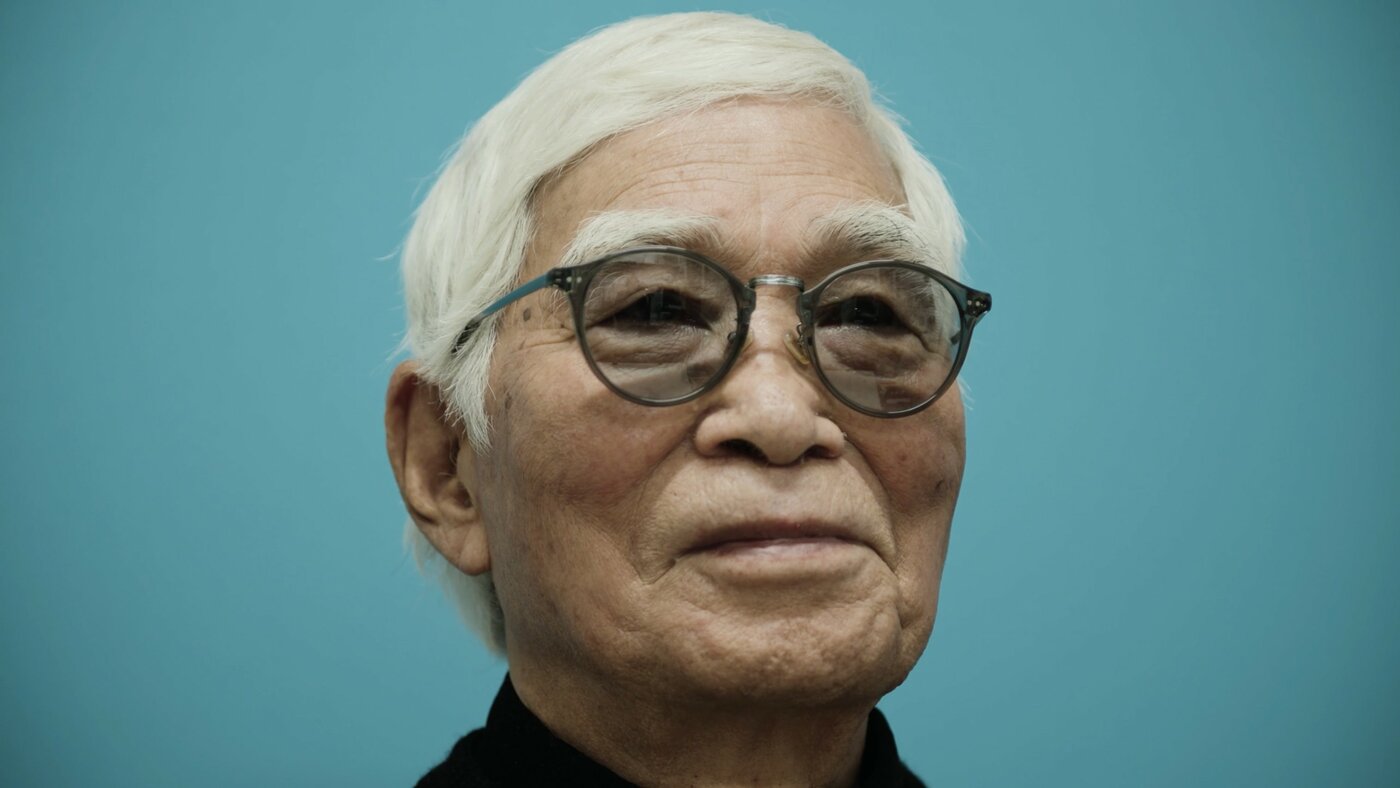
Masao Adachi Takes a Passport Photo (Kamal Aljafari, 2026).
The metaphor is particularly apt in Adachi’s case, since he is almost synonymous with landscape theory, a body of moving-image and photographic practices that inquired into the latent politics of the landscape in Japan at the height of the high-growth period. Adachi and his collaborators made a film called A.K.A. Serial Killer (1969), which traced the trajectory of a spree killer through the landscapes he presumably saw during his peripatetic life up to his crimes, and by doing so the film looks beyond the sensational media coverage to probe what it identifies as the true aggressor: state power, incubated in the landscape that was homogenizing Japan as capitalism rampaged in the postwar years.
Landscape theory has recently become something of an academic buzzword, perhaps especially because the concept has currency and relevance far beyond the contexts of late-’60s Japan, and various other filmmakers were engaged in similar practices around the same time and subsequently. But Adachi’s close association with landscape theory might be somewhat misleading, since the theoretic aspects were primarily developed by his collaborator, the critic Masao Matsuda. Adachi was generally self-deprecatory about his own talents in this regard. “I am not particularly theoretical,” he once confessed in 1968.
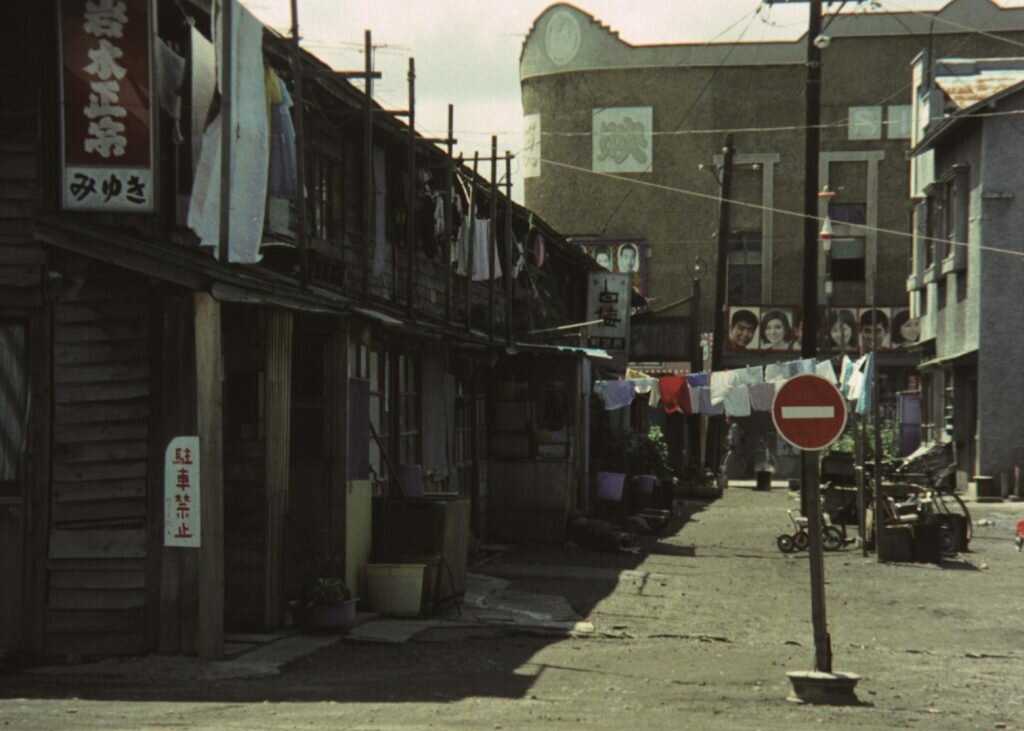
A.K.A. Serial Killer (Masao Adachi, 1969).
This should not discount his output as a writer and critic. Although his work was not as famous as Matsuda’s, Adachi has penned a corpus of essays about the Red Army / PFLP screenings that form a significant contribution to discourse, and he was also closely involved with publishing a major interdisciplinary journal in the late 1960s and early ’70s. His achievements as a screenwriter are also impressive. Some of his best scripts were never produced, and though they are published, they remain almost unknown.
This may all suggest a magpie of an artist, picking up styles, movements, and genres as his career has progressed across fifteen feature-length films, but that is not wholly true. With the exception of some starkly serious works like A.K.A. Serial Killer and Red Army / PFLP, the tone of much of his work is consistently bawdy and parodic. This makes sense to anyone who has met Adachi, who is a jocular character and a force of nature. Confronted by his dynamic personality and the sheer weight of his reputation and past exploits, it is all too easy to slip into the mythologizing trope of the director who is a former guerrilla. But by looking beyond the sensational aspects of his biography, albeit without downplaying the importance of politics and direct action to his work, we arrive at a more nuanced vision of Adachi as a filmmaker.