
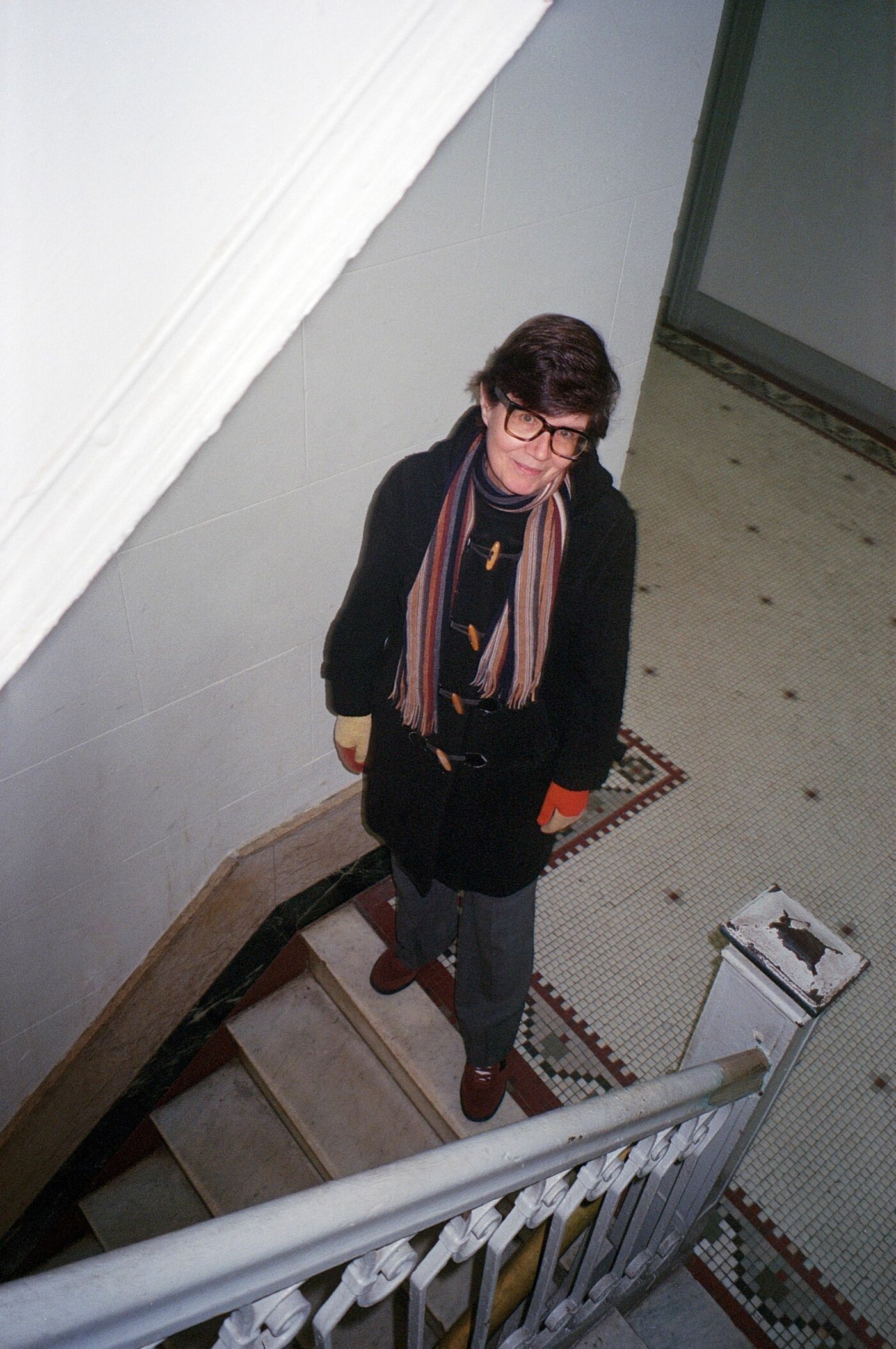
Photographs by Eve Alpert.
In her new book of collected criticism, The Hunger: Film Writing, 2012–2024, Melissa Anderson recounts the conundrum she faced when sitting down to review Wonder Woman (2017): How do you say something of interest about a movie with nothing interesting to say? Anderson was then senior critic for The Village Voice and, despite her profound indifference to the superhero genre, volunteered to cover the film; her Woman problem, you might say, was self-inflicted. To get out of it, she went around. The review, included in The Hunger, begins with a deft account of the 75-year history of Wonder Woman as a “wildly unstable signifier”: birthed into the DC Comics universe in the 1940s with explicitly feminist aspirations before a postwar retreat into feckless domesticity, landing on the cover of the 1972 inaugural issue of Ms. magazine (“WONDER WOMAN FOR PRESIDENT”), then played on television by Lynda Carter and subsequently sampled by video artist Dana Birnbaum (Technology/Transformation: Wonder Woman, 1978–79), and now resurrected as a cog in the implacable franchise machine of contemporary Hollywood.
In the hands of a lesser writer, such extratextual commentary might come off as wonky throat-clearing or, as they say in the biz, burying the lede. Inscribed in the succinct and witty prose of Anderson, this Woman-ly précis exemplifies the distinctive allure of The Hunger: the practice of film criticism not as service journalism, rush to judgment, or thinkpiece doodling, but first and foremost as writing, the considered and calibrated composition of words. Anderson’s appraisal of Wonder Woman may or may not incline you to watch the film itself. We have dozens of other critics on that beat. You read Anderson to relish the characterization of Paradise Island, ancestral motherland of Wonder Woman, as a separatist enclave that “could form an archipelago with the Isle of Lesbos and Cherry Grove.”
Based in the lesbian enclave of Brooklyn, Anderson began her career freelancing for various publications before assuming a series of staff positions as an editor at Time Out New York, staff writer at the Voice, and her current berth as the film editor and lead film critic at 4Columns, which recently announced it will publish its final issue next summer. In addition to her extensive portfolio of contributions to such outlets as Artforum and Film Comment, she is the author of a superbly idiosyncratic book on Inland Empire (2006) that decenters David Lynch to concentrate its analytical force on the performance of Laura Dern.
Bracketed by the author’s thoughtful introduction and a wide-ranging conversation with scholar and critic Erika Balsom, The Hunger’s four sections testify to her distinct sensibility and nimble wordplay: “Looking Back,” “The Homosexual Agenda and Trans Missions,” “Cinema, Industrial-Size and Smaller (with a focus on heterosexual depravity),” and “Star Studies.” On the occasion of the book’s publication—and, to our shared delight, on the day after Zohran Mamdani was elected mayor of New York—I spoke with Melissa about the genesis of her collection, the development of her critical voice, and the moment she considered murdering me.
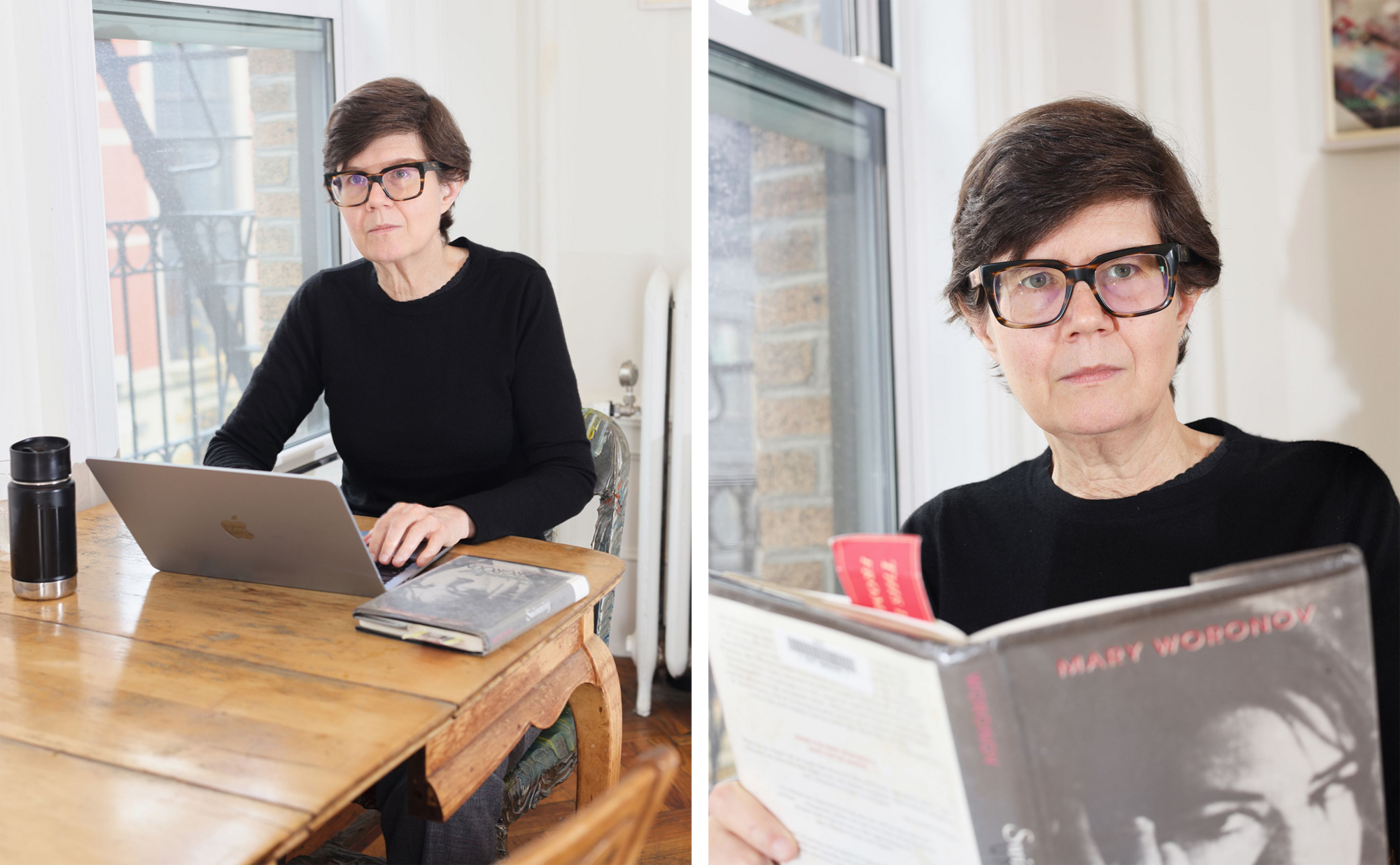
NATHAN LEE: We’re here to discuss and celebrate the publication of your new book of collected criticism, The Hunger. But I feel compelled to start with a note of disclosure. We have been colleagues for over twenty years as well as close friends with a great deal of interpersonal lore, much of which is unpublishable.
MELISSA ANDERSON: [laughs] I thought this was going to be a professional conversation between serious critics of the cinema.
LEE: I actually want to discuss the question of “seriousness” in a moment, but let’s start with the genesis of your book. Publishing a collection of one’s own writing entails a great deal of confidence, but also vulnerability. What led you to decide to undertake this project? What was it like to edit a version of your career for publication?
ANDERSON: I’m going to share with you a quote that I found just the other day. It’s part of this ever growing document I keep that’s my de facto commonplace book. It’s a quote by a critic I admire greatly, Margo Jefferson. The quote is this: “We critics leave factual errors behind for all to see—our errors, our evasions, our simplifications and dismissals: what we didn’t know or didn’t care to know about the art we loved.” And so in selecting what would go in this collection, even the pieces that I’m proudest of or that I think are of the greatest interest, even in those pieces where I feel that I came closest to what I set out to do, there’s always a moment of extreme embarrassment, shame, humiliation. And it could be something as basic, minuscule, or petty as, Oh, I wish I had used a period there instead of a semicolon, The sentence rhythm is off, or just thinking, This might be a kind of banal assessment.
There certainly is an aspect of risk-taking. I am presenting to the world about 60 pieces that I think represent my best work, and some people might think they’re terrible. I’m opening myself up to criticism, so yes, of course, it does take some confidence. And this is precisely one of the reasons why I wanted to start the book with writings from 2012. I did not want to span the entire quarter century of my film criticism because that would have been unbearable to me. I look at the first piece I published in The Village Voice in the summer of 2000, and it is mortifying. As are most of the things that I wrote for the first twelve years that I was doing this. It’s just unreadable. I’m trying too hard. I’m too uptight. I’m too much of a know-it-all. I’m just not relaxed. But when I started at 4Columns in September of 2017, I had more time to work on a piece. And having more time, I felt that I could do more research, I could spend more time trying to have an animating idea in the 1,000 words that I had to spend on a certain film. Having this time to think and write gave me more confidence and also made me realize that I have a certain style or a certain slant, a certain way of approaching cinema.
LEE: You’ve started to answer the second question I have, which you discuss in the introduction of your book: why you only selected work from the last twelve years of your career. There is a sort of “lost decade” before that, during which you wrote some great stuff!
ANDERSON: Let me clarify this “lost decade.” From 2000 until late 2005 I was a third- or fourth-string freelancer at various places, which means that you are often assigned, and are happy to get, things that barely count as movies. You know, movies that were shown for maybe 72 hours or documentaries made on a budget of $12.37. So there are very few moments between 2000 and late 2005 where I’m writing about anything that’s memorable at all. And then from 2005 to early 2009, I’m on staff at Time Out New York and writing about much higher-profile films, but the pieces are so short. They’re 225 words, and I didn’t think that would be of much interest. Then from 2009 until I became a staff critic at the Voice in late 2015, I started freelancing for Artforum both online and in print. And there I began to feel that I had more confidence as a writer. I had a clearer sense of what I wanted to say, how I wanted to approach things. The films I was writing about were more interesting, and the writing itself was starting to cohere more.
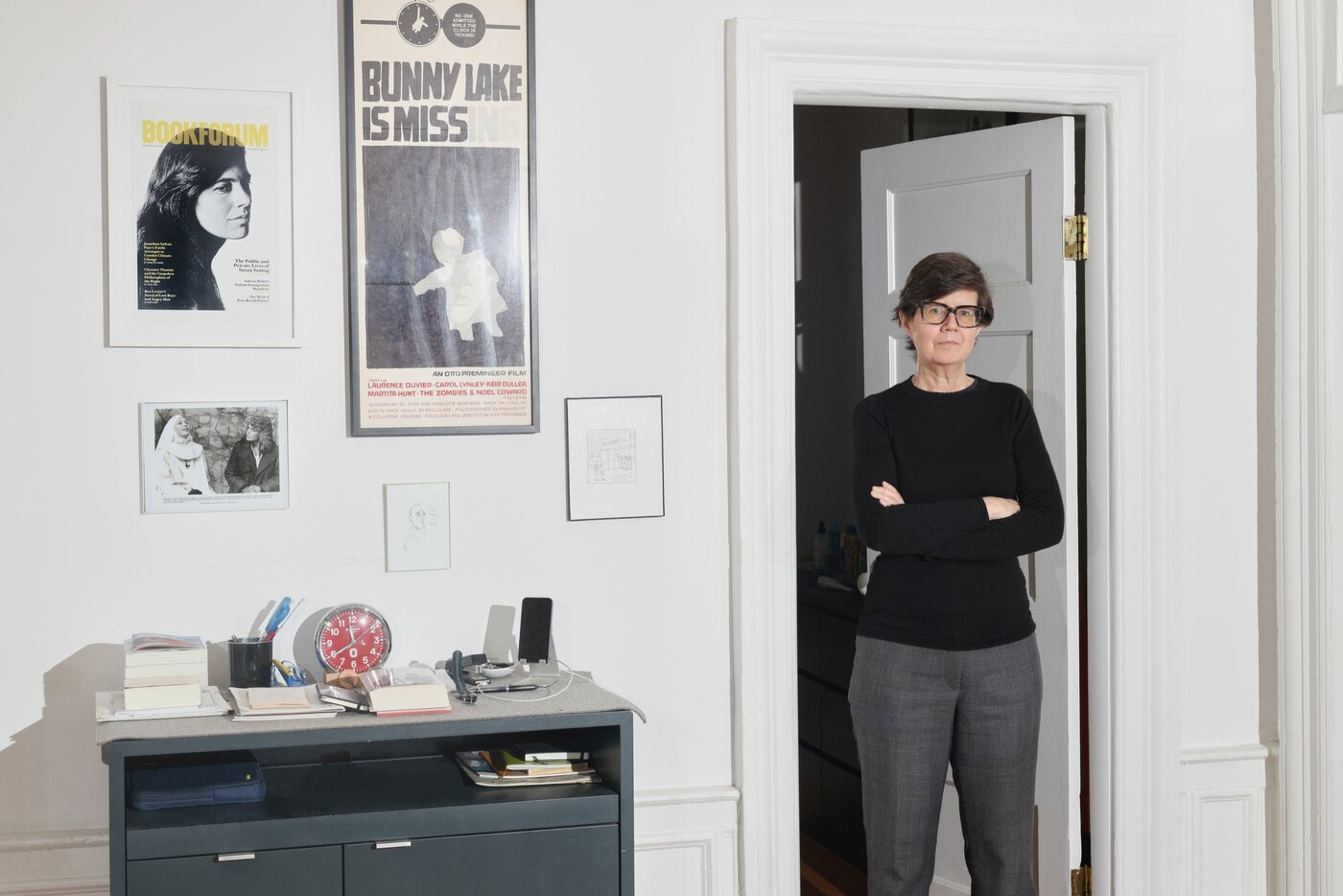
LEE: I’m very struck by this question of time, how when you began working at 4Columns, you simply had more time to write. When I was working full-time as a critic, the pieces where I felt my best voice and thinking came through were the longer texts I wrote for Film Comment, where I had a month, or two months, or even longer to write them. Otherwise you’re really on a daily grind, constantly churning out copy. One of the reasons I left film criticism for academia was that I wanted to think in much longer time spans. You work on a seminar paper for a whole semester. It takes five, six years to write a dissertation. That temporal question is really interesting to me: How much time does a given kind of institutional position allow one to do critical work? It’s a luxury to have that kind of time, and it allows for a richer kind of thinking to emerge in one’s voice.
That said, I read plenty of things you wrote before 2012 that were fantastic. There’s some great work in the lost decade! So, dear readers, please know our guest Melissa Anderson wrote wonderful things before 2012. Can you talk more about how you understand the nature of the voice you developed? How would you characterize it?
ANDERSON: This is where I will have to get personal. And this is something that I allude to in the afterword of the book, which is a wonderful conversation that I had with the queen herself, Erika Balsom. I mention that a really a pivotal moment for me was a conversation you and I had at Cafe Asean, a long-since closed, wonderful pan-Asian restaurant on West 10th Street when—probably knowing that you risked your life in offering criticism to me—you said, “You know, you’re a good critic, you’re a strong critic, but I really feel that you need to allow yourself to be funnier in your pieces.” I will admit my very first instinct was: I’m going to kill this queen. I’m going to cut this queen. Who does he think he is? And then I calmed the hell down, and I realized Nathan is absolutely right. That was perhaps the best piece of advice I’ve ever been given as a writer. It took a long time for me to allow humor or a certain kind of wit into my writing. So that conversation we had was so crucial. Now I sometimes think that I’m writing in the voice of a pre-Stonewall fag hanging out at Julius’, dishing up bon mots.
Also important for me was reading Boyd McDonald’s Cruising the Movies, a phenomenal tome of film criticism that I reviewed for Bookforum when it was reissued in 2015. He writes with such incredibly faggy humor and delivers so effortlessly, so gracefully, these great declarations like “Motion pictures are for people who like to watch women.” I was also reading a lot of Gary Indiana, who in both his fiction and his criticism is another great model for a kind of withering, acidic humor, which at the same time delivers mind-blowing pronouncements. I will often return to Renata Adler’s collection of her film criticism during the thirteen-month period that she was the chief film critic at The New York Times. It’s a great book called A Year in the Dark. She was often filing three to five reviews a week and then having to write these big pieces for the Sunday edition of the paper. In reading those pieces you can tell how wearying she finds it. There’s one moment where she’s reviewing something and is just so desperate to hit her word count that she starts talking about the decor of the cinema in Chinatown where she’s watching the movie. There were moments when I was on staff at the Voice and on deadline several times a week while also very active in the Voice union, and I remember the delirium of finishing one piece and then having to rush off to another screening and then filing that review. We were talking a moment ago about how having more time can be really good for one’s writing. But I’m also beginning to realize sometimes the converse can be true. When you have so little time, it can really concentrate your brain and your synapses to write in a way that’s a little crazy.
LEE: I vividly remember the moment when I worked up the nerve to suggest something you might do in your critical practice. If you thought you wanted to castrate this man for committing anti-woman hate crimes against you, it really came from a place of feeling “I want to say this to Melissa because I love her and I love her criticism. But she is going to kill me.” So please know that was a moment of great bravery on my part.
ANDERSON: I salute your courage.
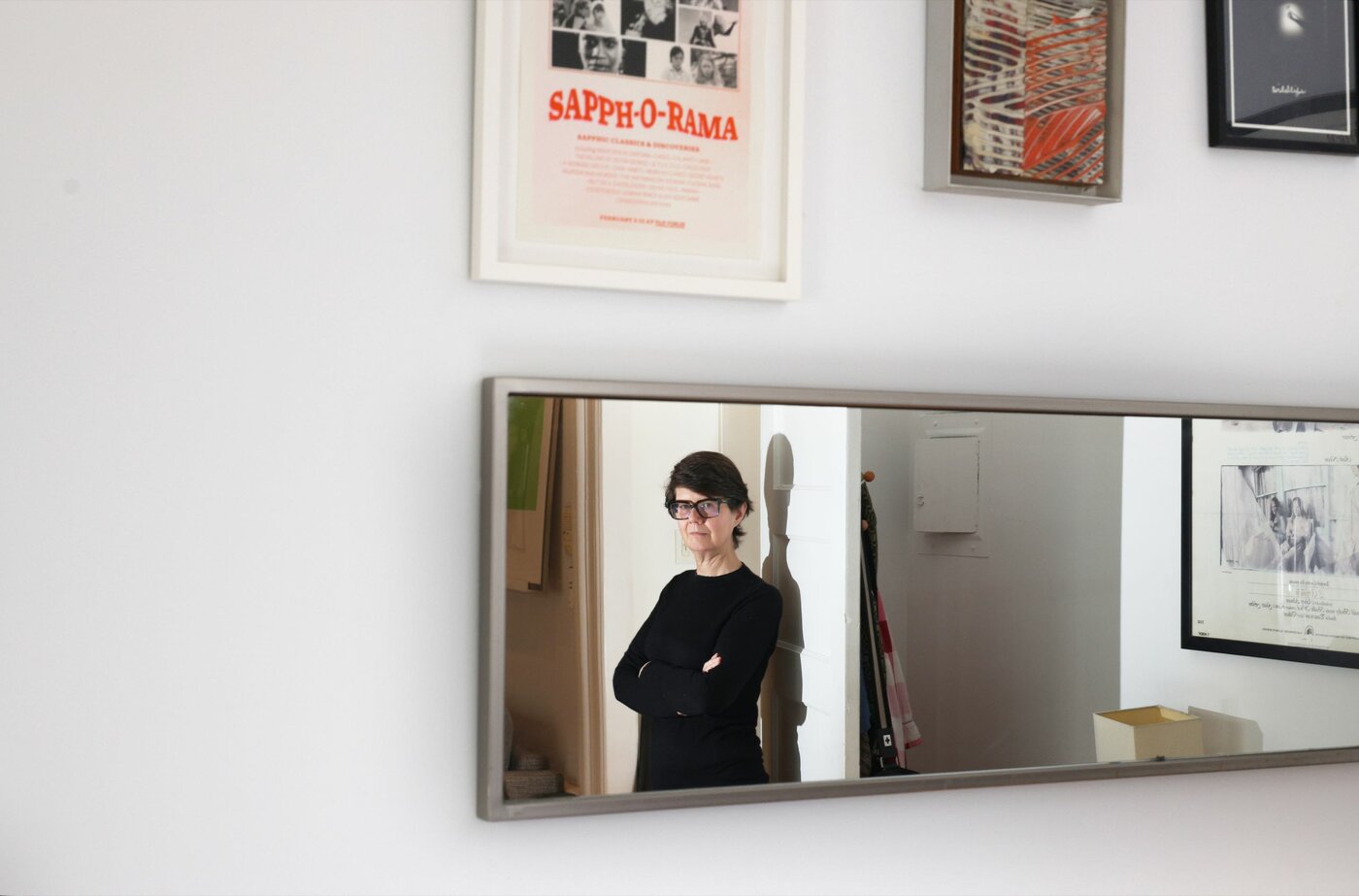
LEE: You described yourself as developing the voice of a pre-Stonewall gay man. Sometimes when I read you I feel like there’s a sort of dandyism, or essayistic, belletrist quality to the writing, while at the same time you can be extremely shrewd and withering in your critique.
ANDERSON: I remember Renata Adler being asked a question once about her time as a film critic, and she said something like, “Opinions, opinions, opinions, who wants all these opinions?” And I thought, Yes, who wants all these opinions? Of course, I also offer my opinions, and I am somewhat alarmed by the amount of what’s being published as criticism in which no opinion is offered whatsoever. I’ve noticed a tendency that many critics seem to be shying away from saying what they actually think. But part of what I strive to cultivate in my voice is not just judging all the time, but also putting whatever I’m considering in greater context, so that it’s not just opinion, adjective, adverb, opinion, adjective, adverb. Sometimes you need the writing to connect to the world at large because the movie is not that interesting on its own terms.
LEE: One of the things that I’ve always found very compelling about your writing is how well you write about actors and acting, performance and persona. Your terrific book on Inland Empire (2006) is the most sustained example of this, where rather than foregrounding the formal strangeness of the film or an auteurist perspective, you center Laura Dern’s performance, her collaborations with Lynch, and her entire career. It’s quite an unexpected way to write about that particular film. I remember reading it and thinking, This is not what I thought Melissa’s book on Inland Empire would be about, but it was quite fascinating. Part of what I find compelling about your knack for writing about actors and performance is that I’m terrible at it. It’s not the place my mind naturally goes to; I’m more drawn to thinking about logics of form and structure and aesthetics. So I admire your ability to do this so well. You discuss in the Inland Empire book and in The Hunger this disposition toward “acteurism” at some length, so I’d like to generalize the question of sensibility. As both a writer and an editor, how do you think about the way every critic has different criteria, biases, competencies, and perspectives, things they’re good or bad at, whether they know it or not?
ANDERSON: One thing I am horrible at and I wish I could do is come up with metaphors. There have been a handful of times in my 25 years of writing about film when I’ve come up with a half-decent metaphor. And in those moments I am just so delighted, so elated. I suppose this is pretty self-evident, but all critics will write to their strengths. I really like to analyze performance or an actor’s charisma or their aura—I have a whole section in the book about performers. I wish I were more competent in discussing certain formal aspects of a film. One critic who I have known for many years and who I admire quite a lot is Nick Pinkerton. Nick is incredible at homing in on how a film is made and explaining that very eloquently. Am I answering the question?
LEE: You are, and maybe it’s too broad or obvious of a question. It really comes from reading your Inland Empire book and being so startled by the approach. In some ways it wasn’t the book I wanted, but it was the book I needed. And for me this connects to when you asked me to write about the 2022 rerelease of Inland Empire for 4Columns. I had read your book at this point, and knew the film very well. The review I wrote played to my strengths, which is my interest in formal logics and how themes are expressed through structure. But as I was writing, my head was full of your approach to the film, and I remember not knowing how to end my piece and realizing I needed to bring it all back to Laura Dern. That was something you directly inspired and an example of someone modeling an alternative sensitivity that helped me recognize my own critical competencies.
ANDERSON: It also demonstrates that there are an infinite number of ways to approach a film. And what often makes for really interesting criticism is when the critic will approach a film from an unexpected way.
LEE: That is a great segue into the next question I wanted to ask you.
ANDERSON: Segue, girl.
LEE: You describe in The Hunger how the movies that tend to mean the most to you, your abiding touchstones, are ones that pose a challenge to the viewer, that have a polymorphic way of addressing the spectator, that complicate our relationship to representation. For me, the enthusiasm you have for nonnormative modes of filmmaking is connected to queerness. To your own queerness as a writer, but also to an ethos of queerness that isn’t interested in “good” or “bad” representation, that isn’t moralistic. You’re not interested in that form of queer representation.
ANDERSON: Not in the least. It’s a total turn-off.
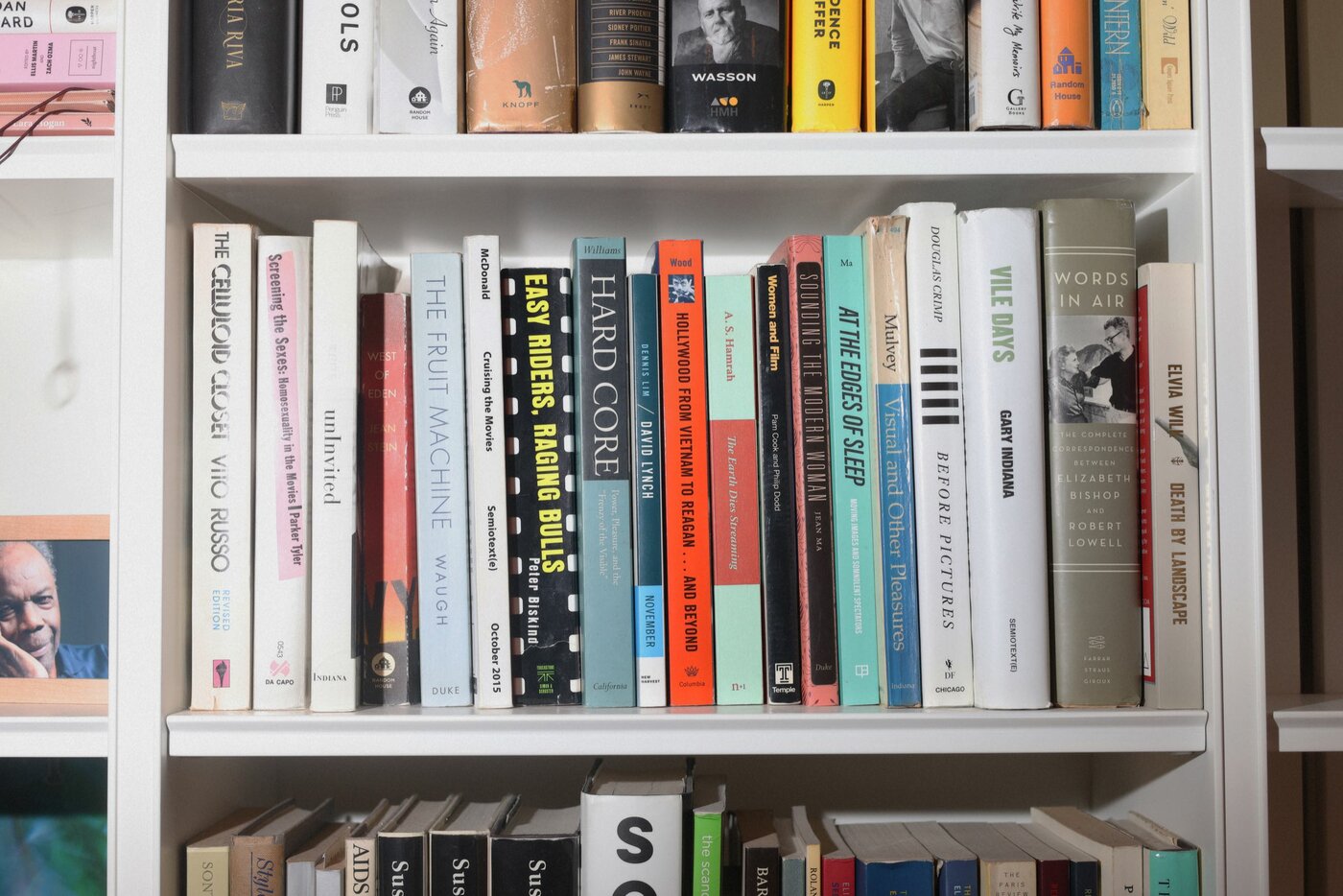
LEE: I’m thinking about your great passion for Mulholland Drive (2001) and more recently Trenque Lauquen (2022), both of which feature queer content. There are “queer things” that happen in them, but their queerness is very much enacted at the level of form. I’m interested in how queerness informs your criticism. You write very directly about being a lesbian spectator, but queerness is also an aspect of your intellectual and aesthetic disposition.
ANDERSON: Some of the most fascinating moments in my life as both a cinephile and a film critic have been when I’m watching something that scrambles my own sense of lesbian supremacy. And I’ll give as a great example of that watching the Clint Eastwood film Play Misty for Me (1971), my review of which is in The Hunger. Up until a decade or so ago, I was very agnostic toward Eastwood, but there was something about seeing Play Misty for Me, in which he has such a vulpine sexuality and is stereotypically macho. At the same time, he exhibits a tremendous vulnerability and is often filmed in ways that suggest a total feminization of his body—he’s often filmed in nothing but his tighty-whities. In 1971 it was pretty rare for men, particularly these stud-type actors that Clint Eastwood was a paragon of, to be almost nude. When I revisited the film to write about it, I thought, What’s working here? Why am I—I have a lot of men friends, but have never been… Let’s just say that I’m not typically sexually attracted to men. But there was something about Clint that’s so remarkable in this movie, and as a dyke film critic, I was trying to articulate why this film had such an effect on me. Let me put it this way: Films that scramble the codes and signals of sexuality, wherever that sexuality may fall on the spectrum, are of immense interest to me because it’s a reminder of how each human being is a welter of infinite contradictions. I’m so much more interested in that kind of cinema as opposed to a very programmatic cinema that is interested only in “positive” images of marginalized people.
LEE: This really touches a nerve for me as someone who still writes criticism but whose day job now is a film professor. I teach many queer students, and one of the things I find difficult is that they have a very hard time breaking out of experiencing a film only at the level of content. They struggle to think about form, or don’t have the language to articulate it. Their spectatorship is dominated by whether they like or dislike the characters, whether the story is relatable or not. I find this such a challenge to try and shake up.
ANDERSON: Depiction does not equal endorsement.
LEE: Exactly. One thing I’ve often speculated on, without having a whole sociological thesis, is that you and I are members of Generation X. We remember an earlier instantiation of identity politics in the ’90s, much of which was driven by the AIDS crisis. It was a moment in which questions of theory and practice were inseparable. And there was the whole discourse around political correctness. It has seemed to me that there is a new form of identity politics that’s distinctly different from the kind that you and I lived through in the ’90s. I remember watching Gregg Araki’s films, which are full of “bad representation,” and finding them so exciting.
ANDERSON: As you’ve been talking I was flashing back on a moment in 1992 when Basic Instinct was released and I…this is so embarrassing to admit. In 1992 I’m in my early twenties, living in Washington, DC. There was some protest organized by a branch of Queer Nation and GLAAD calling for a boycott of Basic Instinct because the film was deemed homophobic, lesbophobic. While I didn’t have an interest in joining a demonstration, I did think, Yes, this movie—of which I had not seen one frame—is not going to get my hard-earned pink dollars. It was many years later, after my high moral dudgeon died down, that I saw Basic Instinct and realized how extraordinary Sharon Stone’s character is.
LEE: First of all, congratulations on belatedly realizing that Basic Instinct serves cunt.
ANDERSON: It’s a great movie.

LEE: I want to end our conversation by mentioning another great movie we both admire. At the very end of The Hunger, in your conversation with Erika, you uphold Trenque Lauquen as an example of how cinema is still offering us wonders, and how this makes you feel optimistic about the state of cinema. Do you share that same optimism for the state of film criticism?
ANDERSON: There will always be great writers with great things to say about cinema or any other art form that interests them. What I remain despondent over is the state of publishing. I’m thinking about all the places that I wrote for to build up my portfolio. Almost all of those publications are gone. When I started writing, even at a publication with the tiniest budget, I would be edited, there would be a copy editor on staff, a piece would be fact-checked. So much of that is gone, and the edifice of publishing is crumbling. One thing that made me a more confident writer is working with some extraordinary editors who I learned so much from, and who also modeled for me the kind of editor I wanted to be when I went on staff at 4Columns as the film editor and lead film critic. People will always have opinions, and some people will be better at expressing them in really interesting ways. So I don’t know if I fear for film criticism, but I fear for the state of publishing.
LEE: Mamdani will fix that. The buses will be free. Film Comment will be a magazine again. The Village Voice will return as a newsprint alt-weekly with a cohort of brilliant critics.
ANDERSON: Boyd McDonald will be revived from the grave. And all New York City citizens will be given a $1,000 voucher to be used toward cinemagoing. I’m very glad that we are speaking on this glorious day, one of the best days in my almost 30 years as a New York City resident. So thank you, Gaia, for blessing us with Zohran Kwame Mamdani.
LEE: Until then, we are blessed by the imminent publication of the collected writings of Melissa Anderson. I cannot wait to dive into the book. Many of the pieces I’ve read, but it’ll be wonderful to have them in one volume. I will treasure it. So…what do you want to do next?
ANDERSON: I sometimes marvel at the fact that Fran Lebowitz, for almost her entire career, has made a living by simply showing up and talking. Maybe that will be my next career.
LEE: You’ll just show up on random street corners and start spilling witticisms.
ANDERSON: No, no, no. There will have to be an honorarium with at least three commas in order for me to do that.
LEE: Fully compensated lesbian discourse.
ANDERSON: Perhaps Mayor Mamdani needs a lesbian film critic in his administration.
LEE: We will be sure to direct this conversation to his press office so that he’s aware that you are available for this position.
ANDERSON: It’s a plan. And even though I just said that my next career move will be a life of talking, I’ve now reached the point where I have nothing else to add.