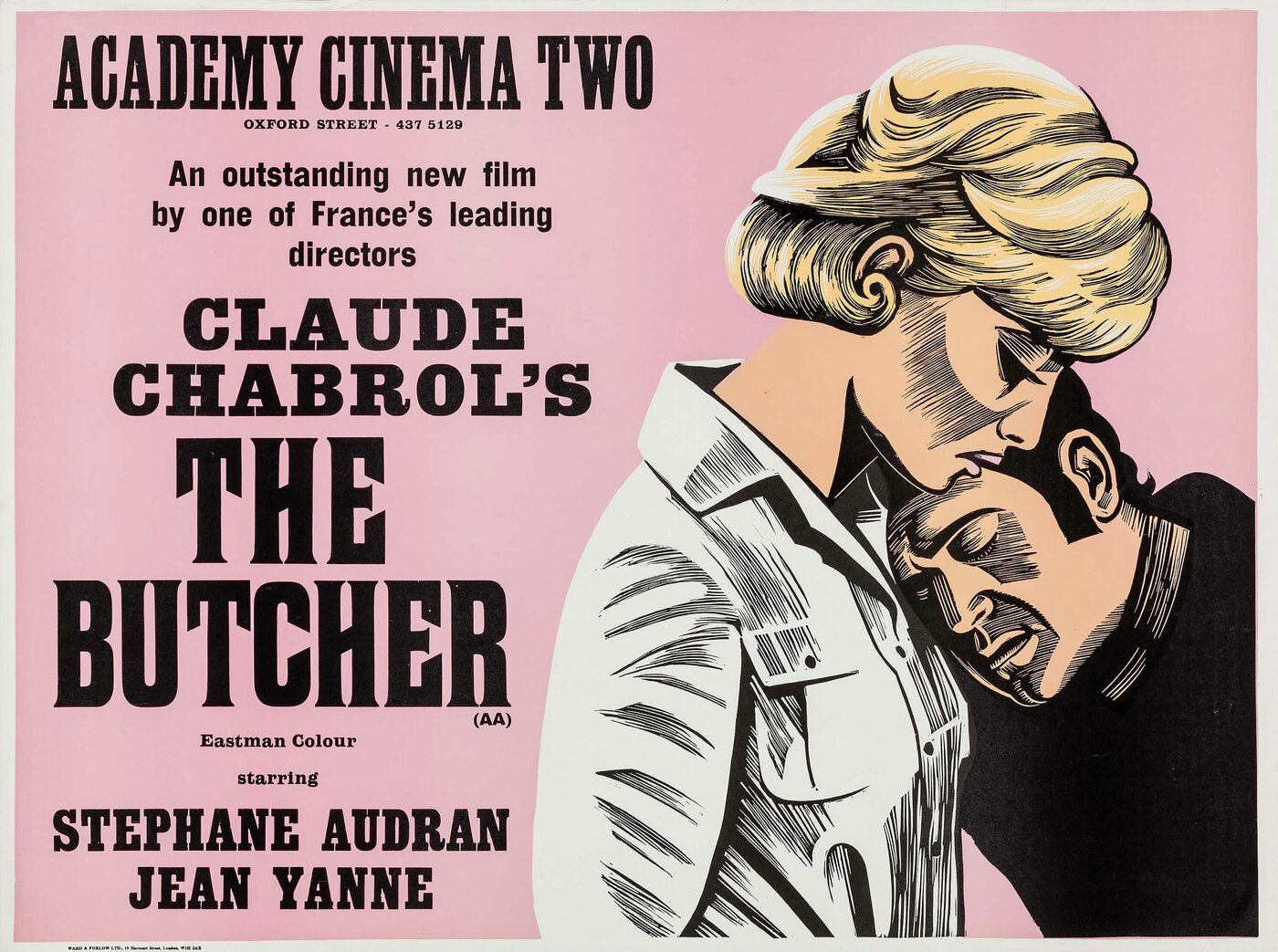
Peter Strausfeld’s poster for The Butcher (Claude Chabrol, France, 1970).
I’ve written about the work of Peter Strausfeld a couple of times over the fifteen years that I’ve been writing this column, but apart from seeing three of his posters (including his design for Mean Streets) in an exhibition of Martin Scorsese’s movie poster collection at MoMA back in 2015, I’ve rarely seen a Strausfeld poster in the flesh. (Had I lived in London in the ’50s, ’60s and ’70s—I moved there in 1983, three years after his death—his posters would have been a common sight on the London Underground.) But that will all change with the exhibition Art for Art House: The Posters of Peter Strausfeld, which opened at New York’s Poster House yesterday. It is the first major North American exhibition of the designer’s work to date.
Strausfeld was a German emigré artist who, from 1944, was the in-house designer for London’s Academy Cinema on Oxford Street. His distinctive linocut posters with their flat planes of color, antique lettering, and bold illustrations of images from the films created a unique brand identity for what was the city’s premier arthouse cinema for decades.
In this rare photo of the Academy below, taken in 1945, a huge billboard can be seen advertising the film Marie-Louise, which people seem to be lining up around the block to see. (Directed by Leopold Lindtberg in 1944, Marie-Louise was a Swiss film that would gain the distinction of being the first-ever foreign language film to win the Academy Award for Best Original Screenplay.) Though I’ve seen no other clearer images of it, the billboard appears to be a very early Strausfeld linocut design.
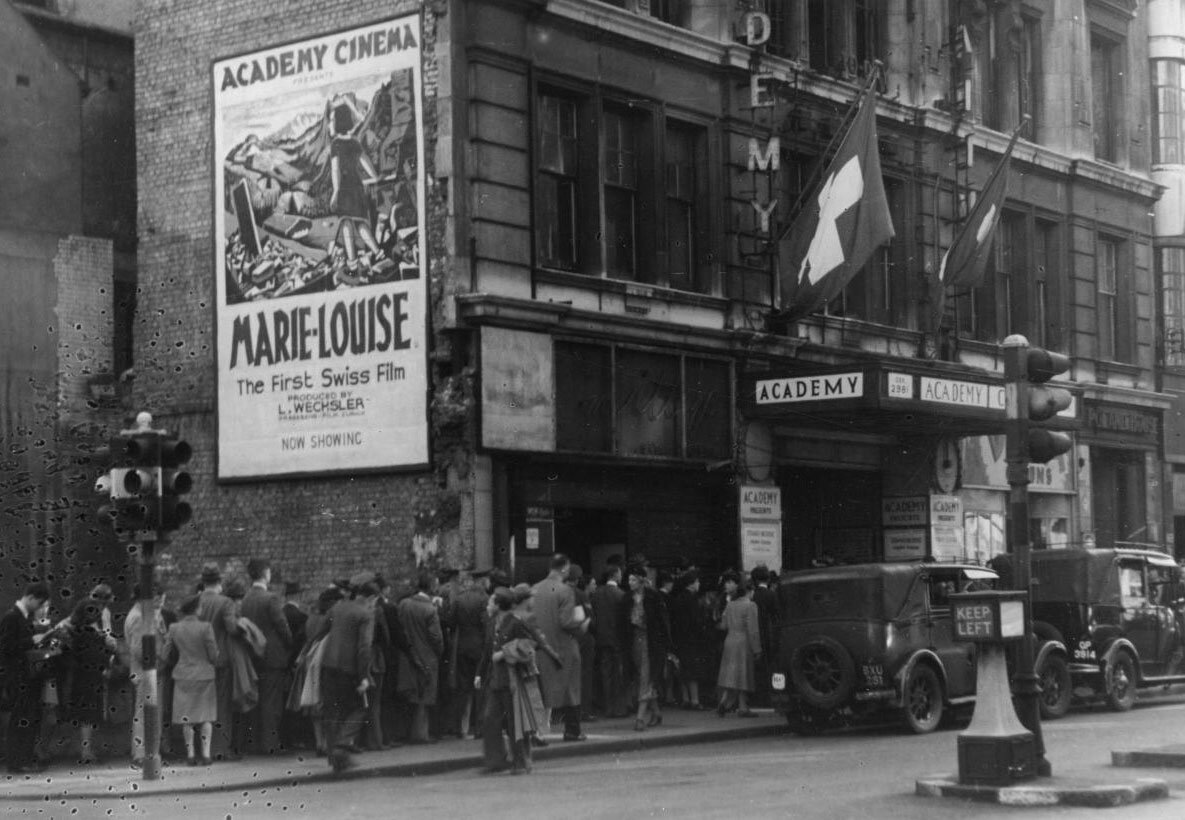
Over the next three and a half decades, Strausfeld would design and illustrate some 300 posters for this cinema, and his collected works, taken as a whole, tell the story of arthouse cinema over those years.
For those of you who can, I urge you see these posters up close at Poster House. But for those of you outside of New York, there is a new book that accompanies the exhibition, to which I have contributed an essay about Strausfeld’s very unique and essential role in the history of arthouse cinema.
The book also has articles by Michael Lellouche, the Strausfeld collector who has loaned his posters to the exhibition; Laurent Durieux, the great Belgian artist whose detailed, richly colorful illustrations of classic Hollywood films (most notably Hitchcock’s) are among the glories of the Mondo universe; and Jes Hughes, Poster House’s resident printer who contributes a fascinating essay on how linocut and woodcut printing works.
I have chosen my twelve favorite Strausfeld posters (I couldn’t narrow it down to ten) out of the 200 which are known, starting with The Butcher (1970) above. Though I love all his work, there is something about the use of color and space and detail in these twelve that sets them apart for me. The typical iconic Strausfeld poster has a face, or faces, on one half and text on the other, and those are all gorgeous thanks to his expressive skills as a linocut illustrator and the vibrant planes of color he matches with each one, but I have chosen twelve posters that expand and play with that format. There’s the atypical frame-filling detail of Alone on the Pacific (1963), in which Strausfeld channels Hokusai with all those linocut waves and spume (and there’s a similar effect with the clouds of The Lacemaker, 1977). There’s the horizontal spread of the feast (unusually multicolored) across the bottom of The Last Supper (1976). There’s De Niro’s gun lurching into the field of text for Mean Streets (1973), and there are the horizontal, bedded figures of My Night with Maud (1969) forcing a whole new typographic layout. (Also notable is the way Strausfeld renders the texture of Maud’s fur blankets in linocut.) There’s the patterned backdrop and sari of The Music Room (1958), and there’s the bold yellow rectangle of text against the purely black and white composition of jazz musicians in The Connection (1961). And while The Butcher hews to the conventional Strausfeld layout, there is something about the medieval pietà-like pose and rendering of the main figures against that pink background that makes it one of the standouts. It’s also probably notable that six of these posters feature some of my favorite international arthouse actresses: Stéphane Audran, Anna Karina, Isabelle Huppert, Bibi Andersson, Monica Vitti, and in one of his earlier designs, presented in an unusually vertical format, Tokyo Story’s Setsuko Hara.
Here are those posters in alphabetical order.
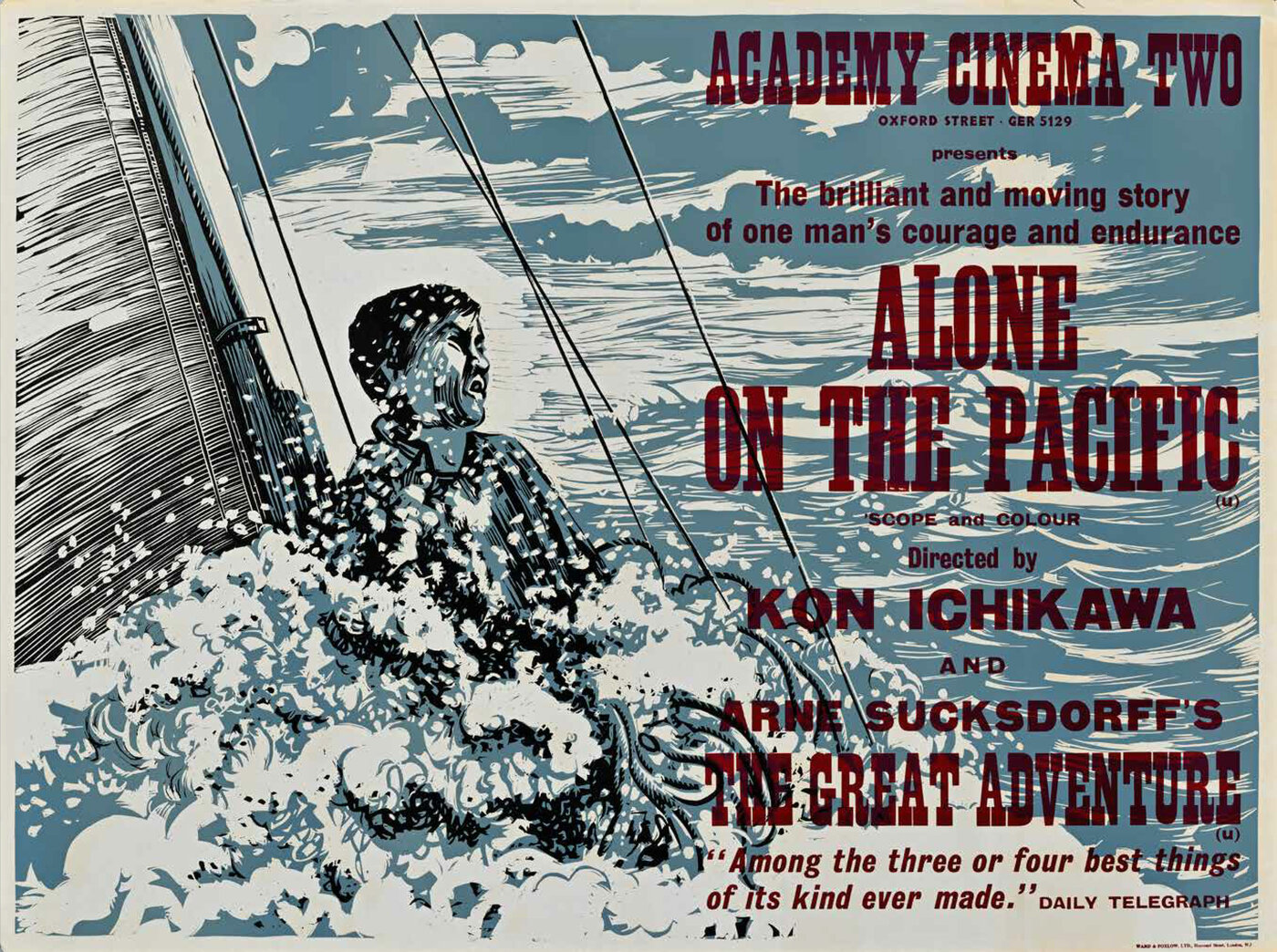
Alone on the Pacific (Kon Ichikawa, Japan, 1963).
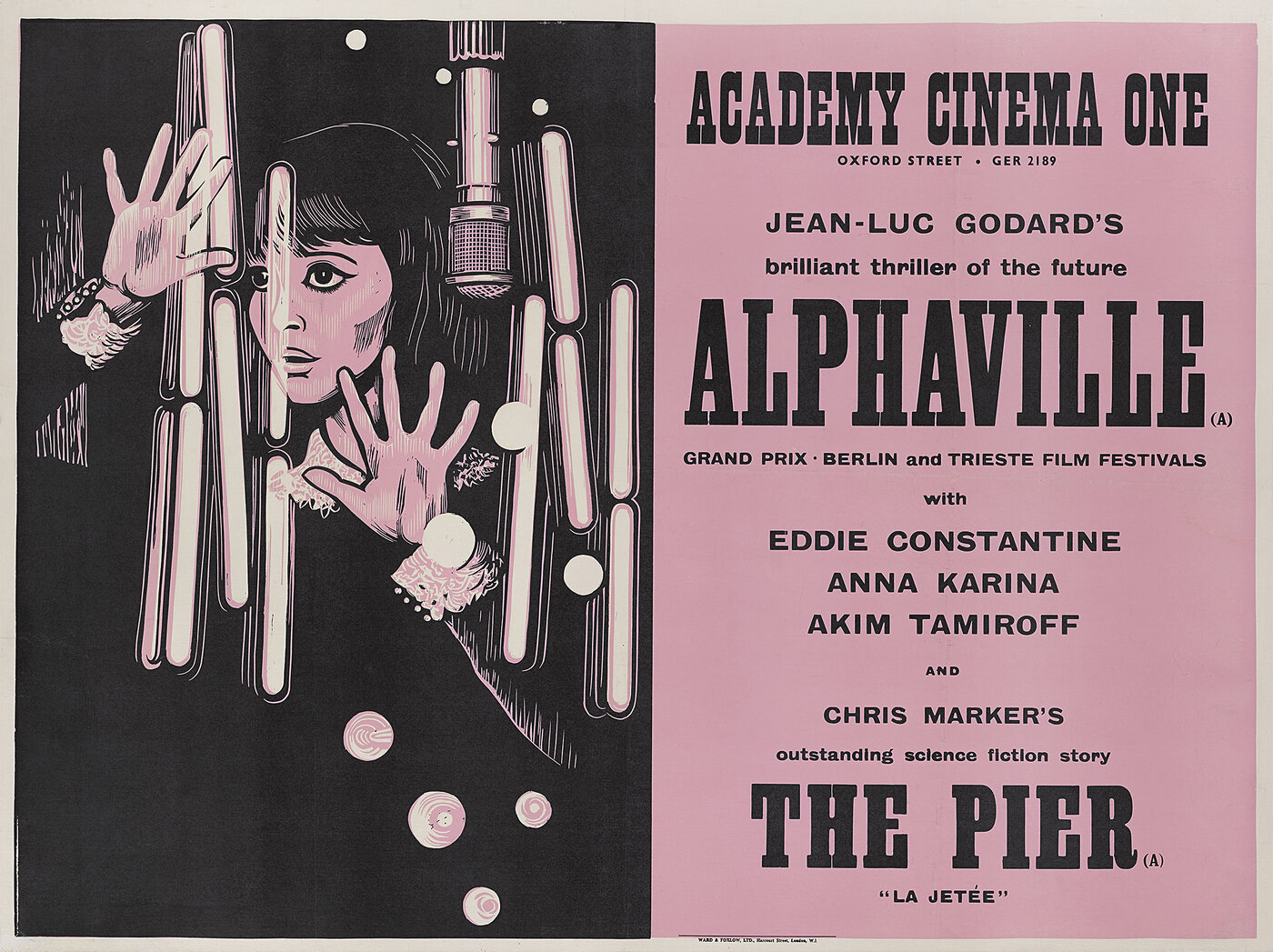
Alphaville (Jean-Luc Godard, France, 1965).
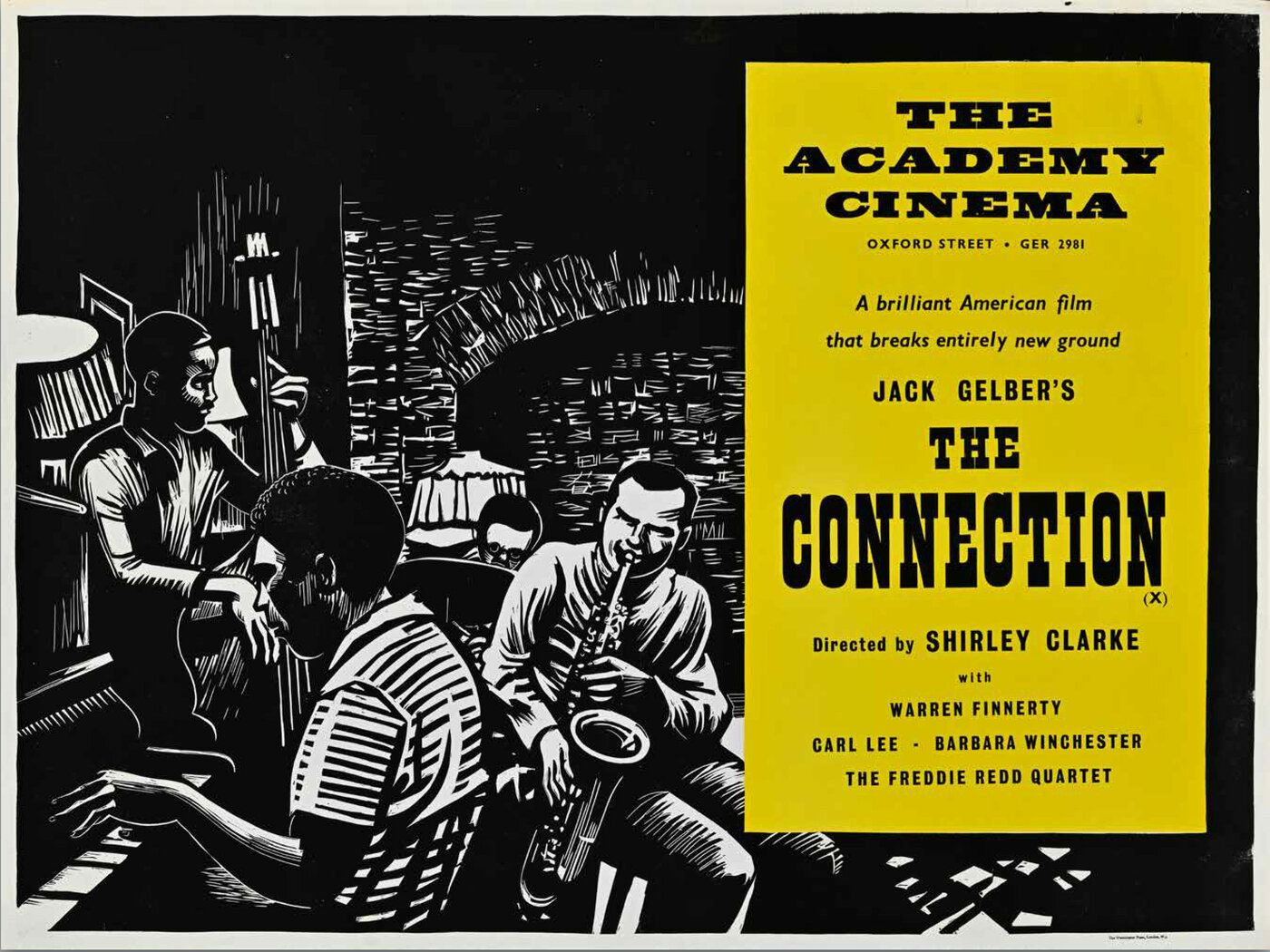
The Connection (Shirley Clarke, USA, 1961).
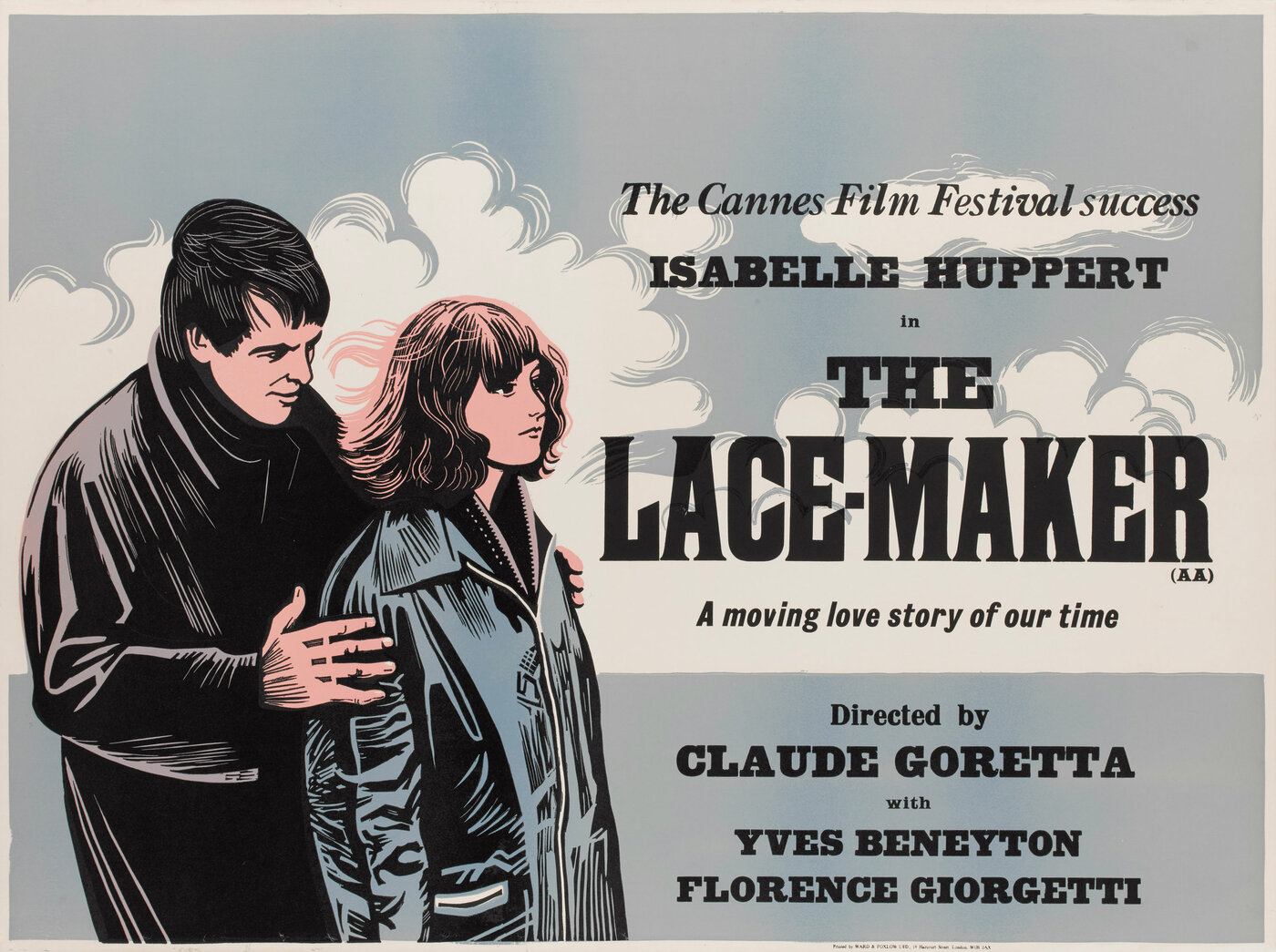
The Lacemaker (Claude Goretta, Switzerland, 1977).
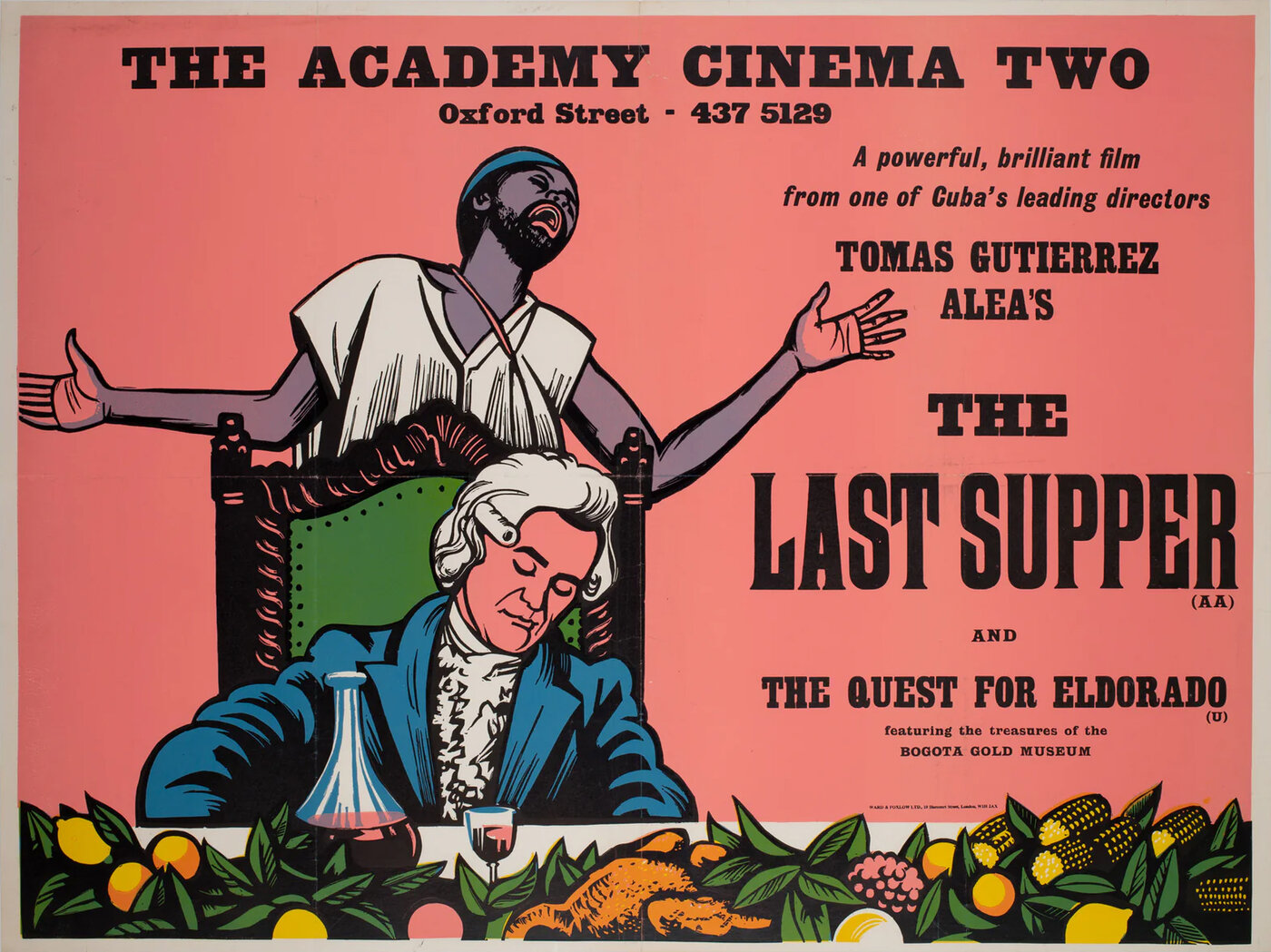
The Last Supper (Tomás Gutiérrez Alea, Cuba, 1976).
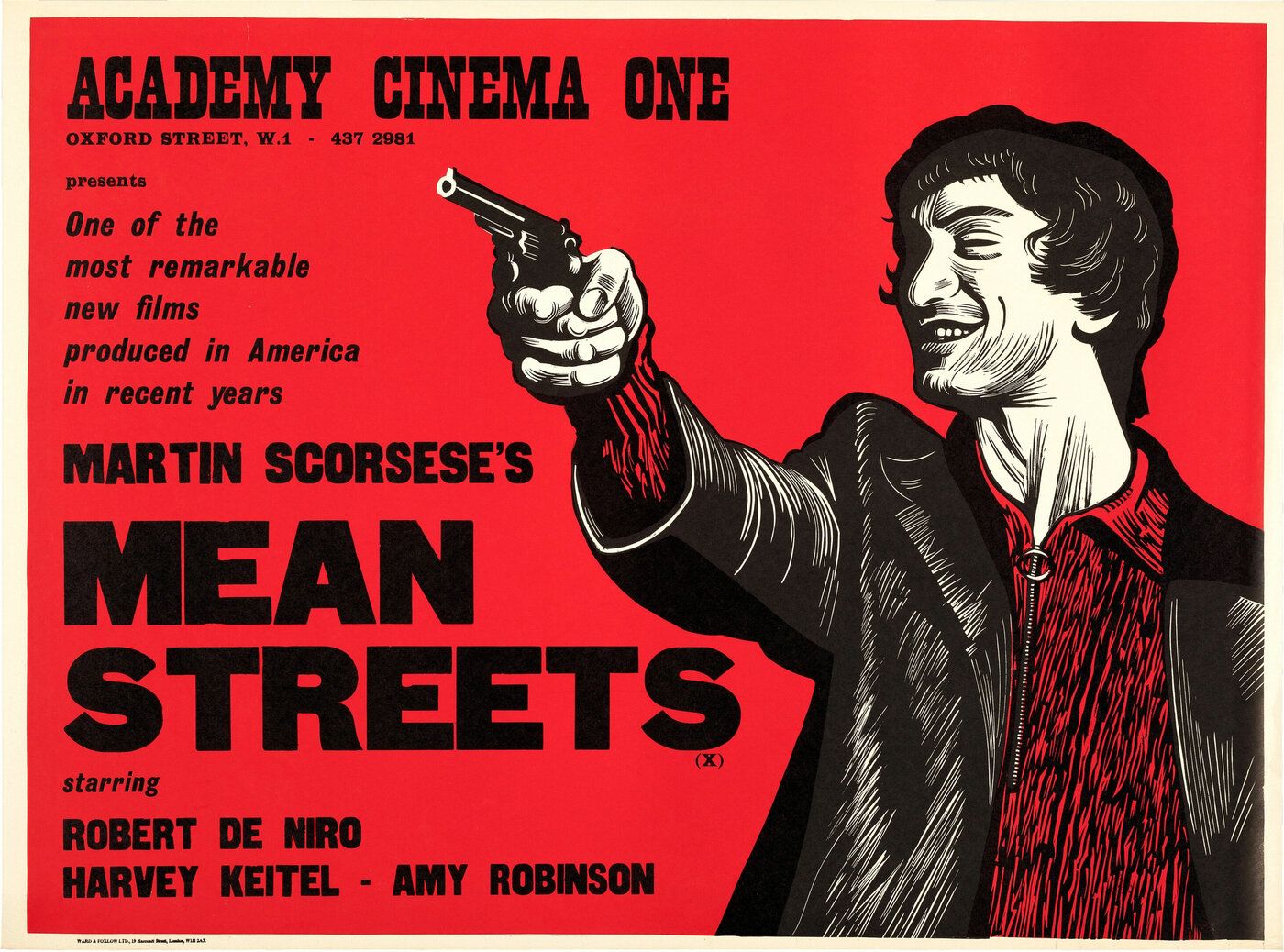
Mean Streets (Martin Scorsese, USA, 1973).
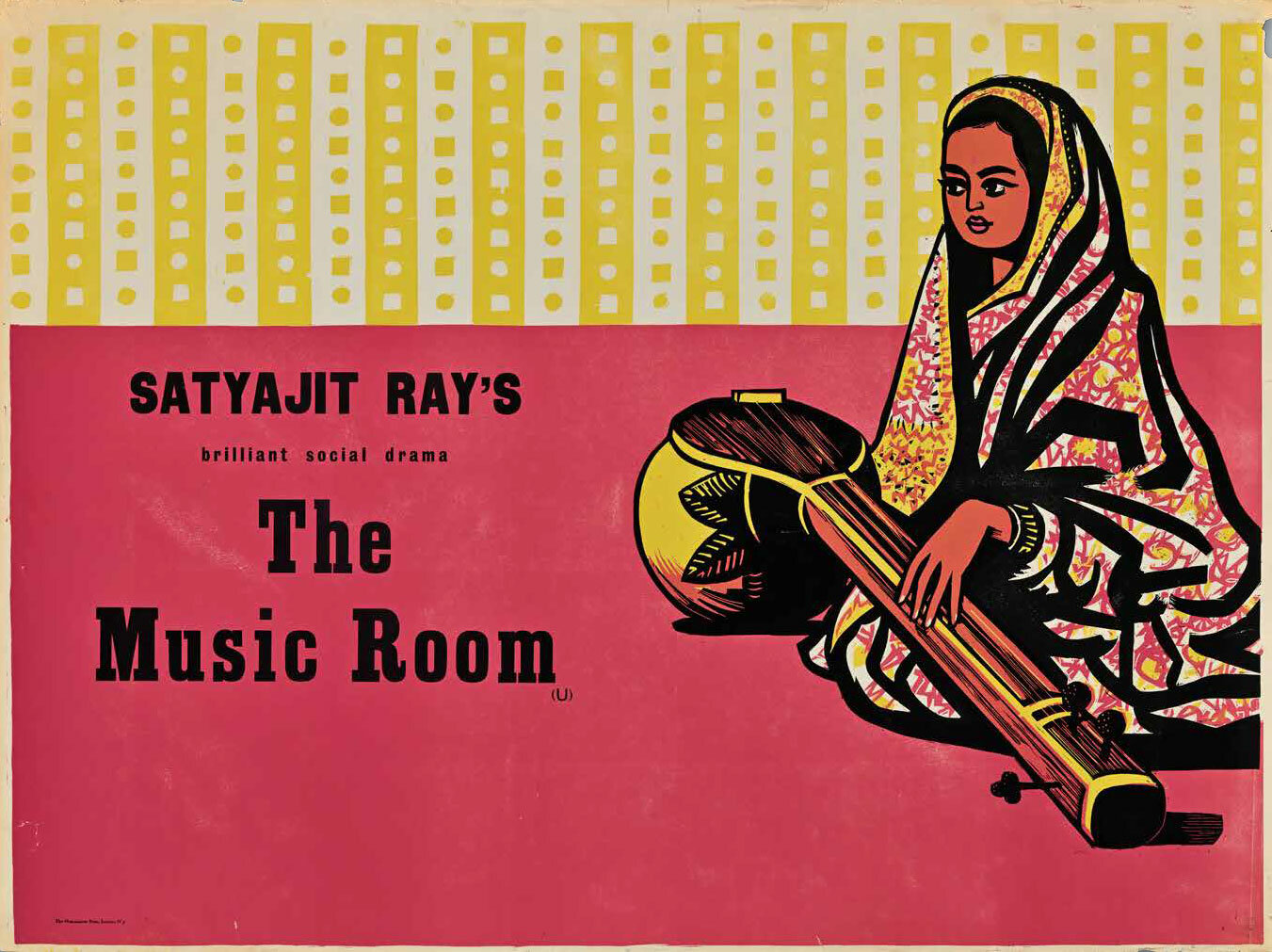
The Music Room (Satyajit Ray, India, 1958).
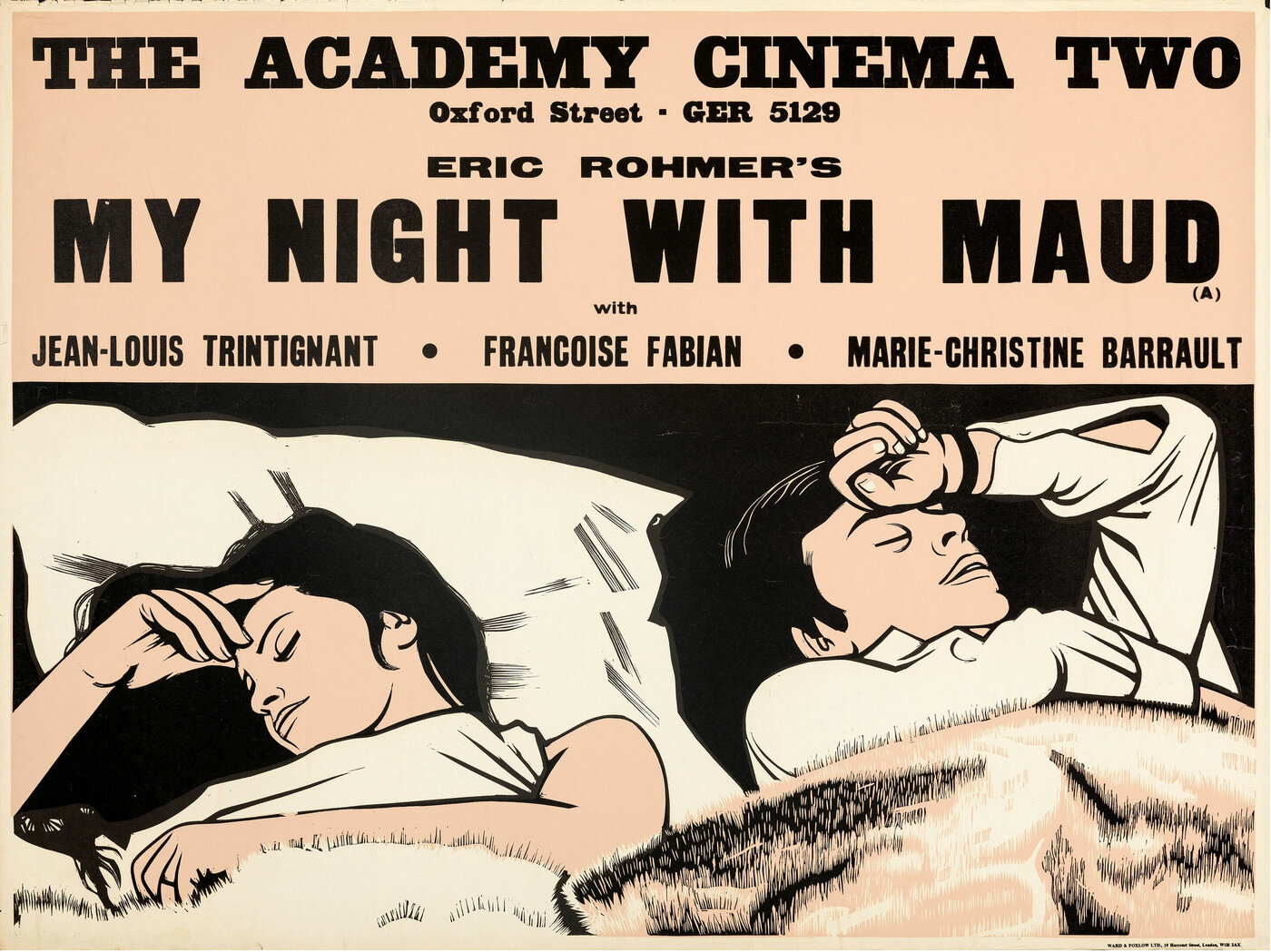
My Night at Maud’s (Éric Rohmer, France, 1969).
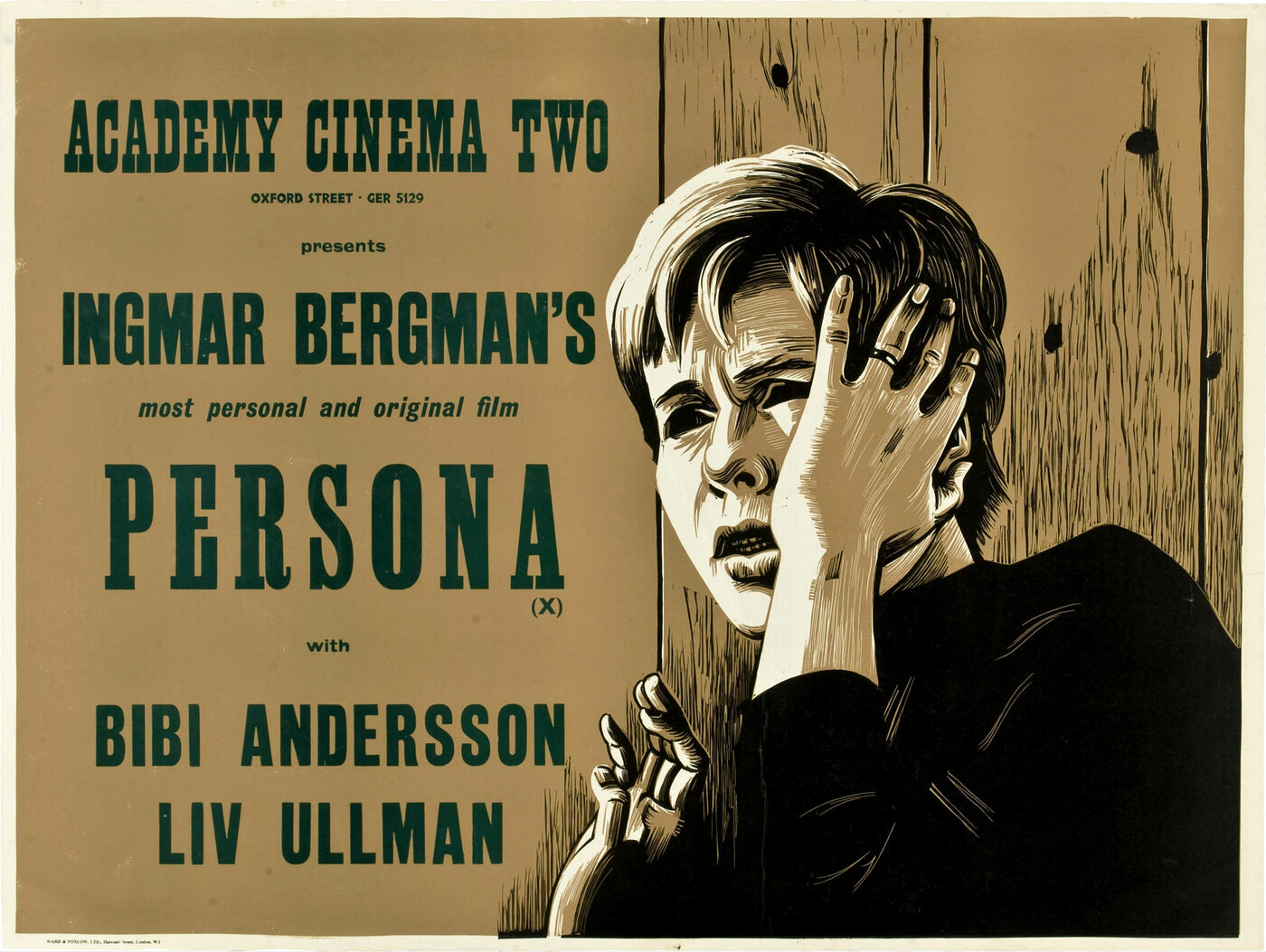
Persona (Ingmar Bergman, Sweden, 1966).
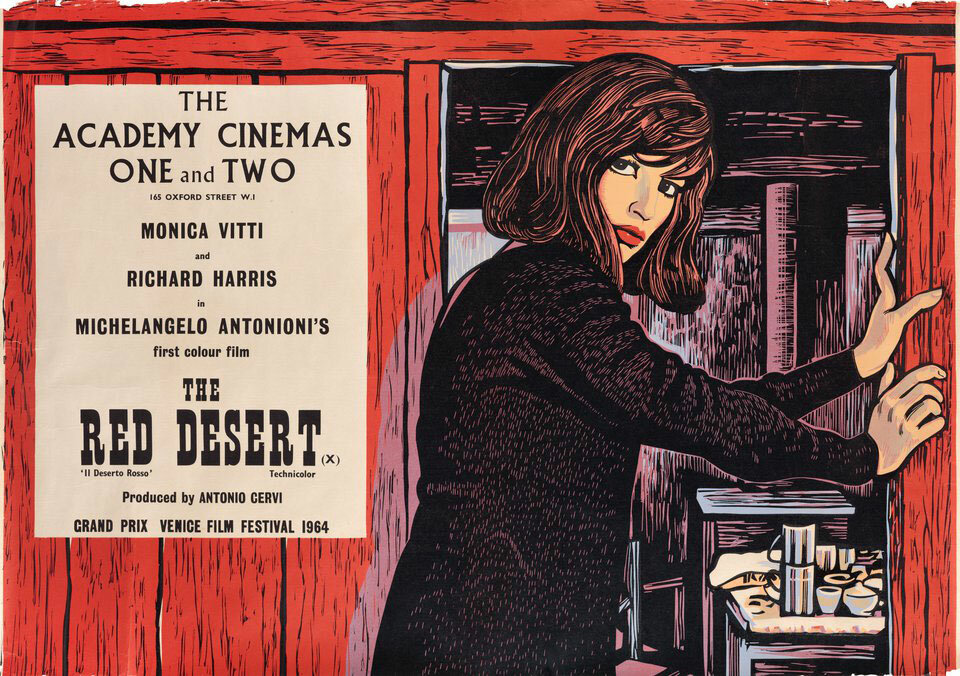
Red Desert (Michelangelo Antonioni, Italy, 1964).
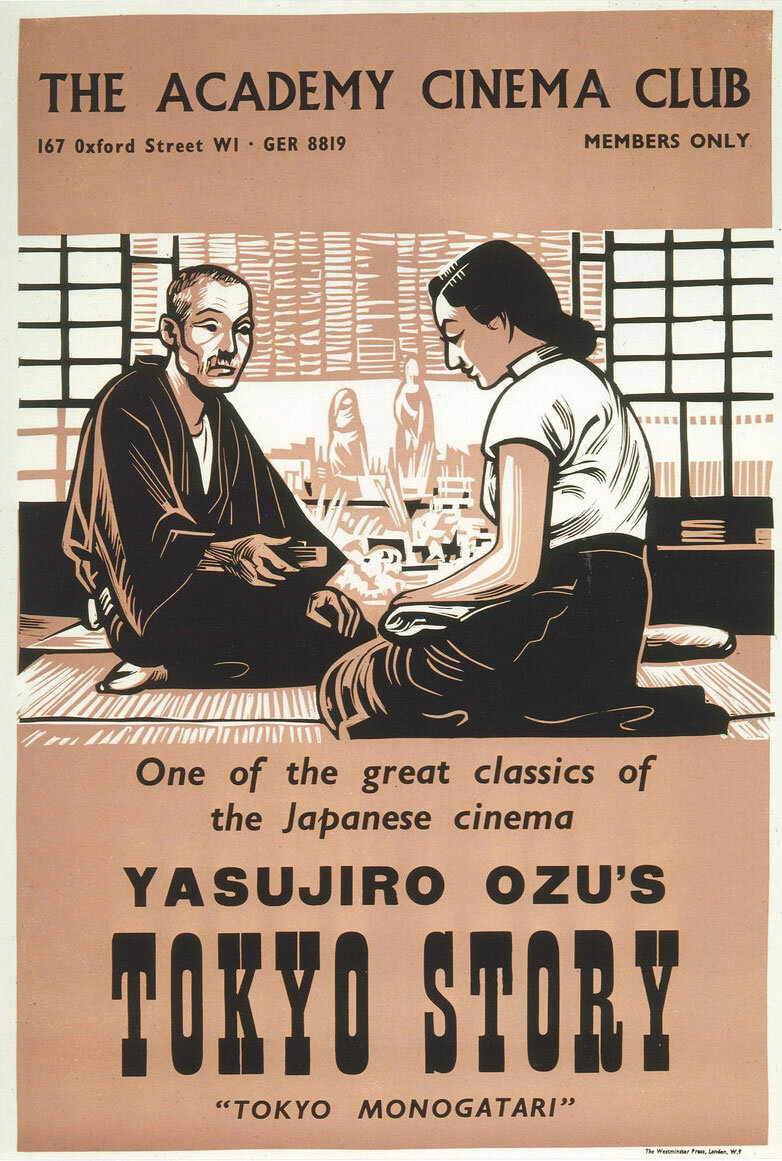
Tokyo Story (Yasujiro Ozu, Japan, 1953).
Art for Art House: The Posters of Peter Strausfeld is on view at Poster House through April 12, 2026. The book accompanying the exhibition may be purchased here, from the Poster House Shop. Notebook readers can receive 10 percent off their order by applying the code MOVIEPOSTER at checkout. In-store order pick-up is available. (This offer expires February 22, 2026; some exclusions apply.)