Defined by a thought-provoking list and unique design collaborations, MUBI Editions publishes across multiple formats and genres to broaden the horizons of cinema-related publishing. Find out more here.
Read Frame Type Film: Or, Written on the Screen, published by MUBI Editions, takes as its primary focus the phenomenon of reading on screens. The texts most often encountered in the film industry—credits, subtitles, or title cards—are typically functional or expository devices, relegated to a marginal role in the structure of a film and, sometimes, an afterthought on the screen itself. But in works that are themselves marginal, such as those presented in Read Frame Type Film, a variety of strategies allow text to more definitively, or subversively, occupy the frame. This overturning of the relationship between the center and its margins is the essence of the book, an illustrated commentary on 24 experimental and artists’ films that stage dialogues between words and images. (Indeed, even as you engage with this event recording, you will have the opportunity to read subtitles and credits onscreen as needed.)
To celebrate the launch of the book last May, MUBI and the Centre Pompidou organized a screening and discussion that took place on site in Paris. In this conversation, the shape and intention of the book comes to life. Read Frame Type Film contains over 300 original photographs of film stills from reels held in the vaults of the Centre Pompidou, and the museum’s collection is inevitably a focal point of the book: not only its inventory, but the idiosyncrasies of the specific reels themselves—their scratches, scuffs, and even additional title cards or scenes—which sometimes differ from those held by other archives.
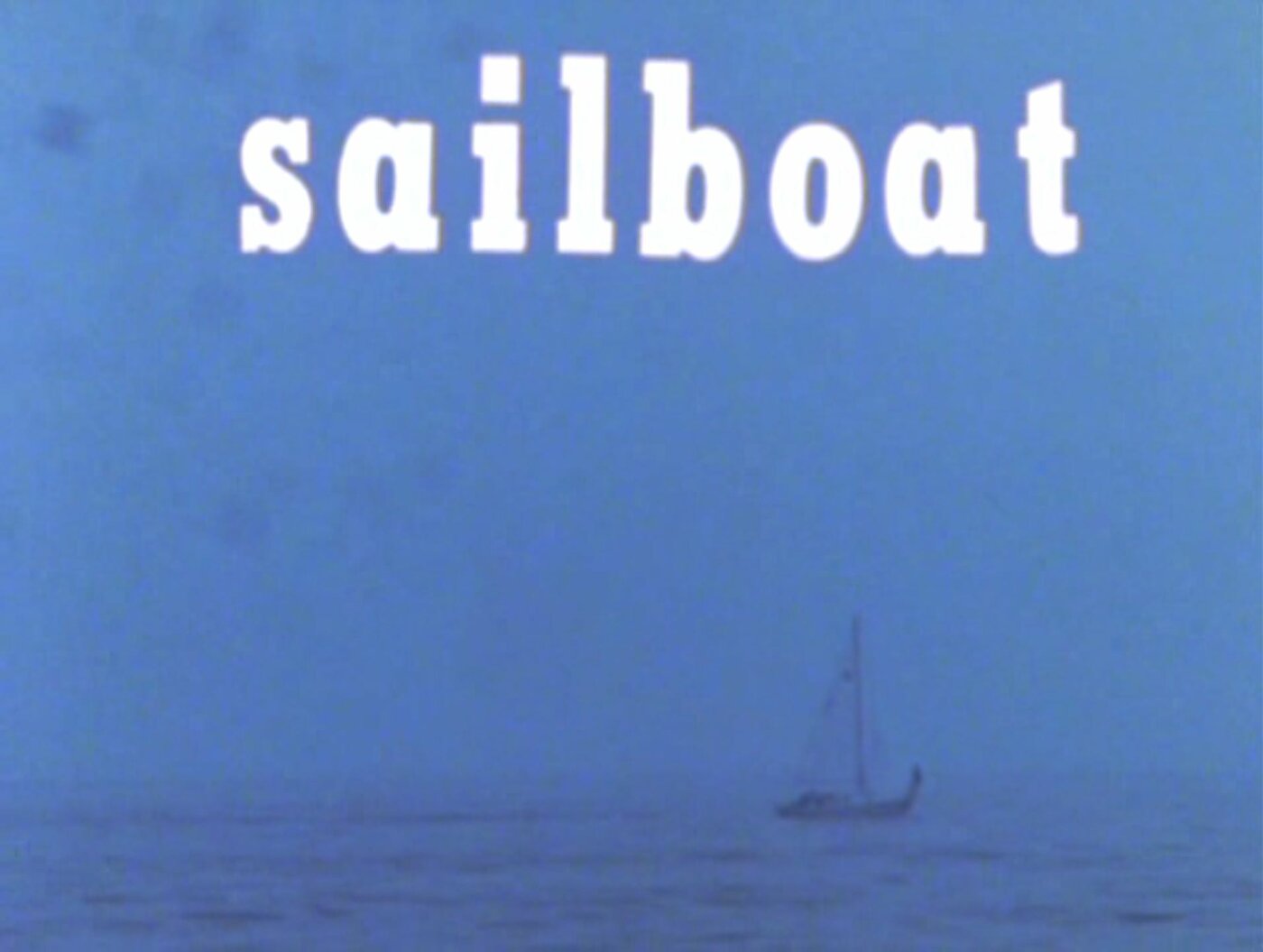
Sailboat (Joyce Wieland, 1967–68).
This talk is in keeping with the writing style of Read Frame Type Film, in which the three co-authors—Enrico Camporesi, who oversees the research activities of the Centre Pompidou film collection; Catherine de Smet, a historian of art and graphic design; and Philippe Millot, a graphic designer and typographer—converse about each film while retaining a distinct sense of their individual voice and expertise. Two films were screened to bookend this discussion: Sailboat (1967–68) by Joyce Wieland and Standard Gauge (1984) by Morgan Fisher. The former, images of sailboats passing in and out of frame underneath the film’s title, which sits at the top of the screen for the film’s duration, offered a way of opening the discussion with a short yet rich typographic work. The latter, meanwhile, is the last film discussed in the book, and embodies a more self-reflexive mode of filmmaking, awash in Fisher’s autobiographical reflections on discarded celluloid gathered during his professional life in the movie industry. Curiously, Standard Gauge also shares a release year with the first Macintosh computer, a device which fundamentally changed the way we write, read, and watch on screen.
Together, these works speak to the depth and range of the book’s subject matter. The authors’ shared reference points, individual curiosities, and intellectual passions coalesce here much as they do in each chapter, where the conversational flow of ideas surrounds every image, and vice versa.
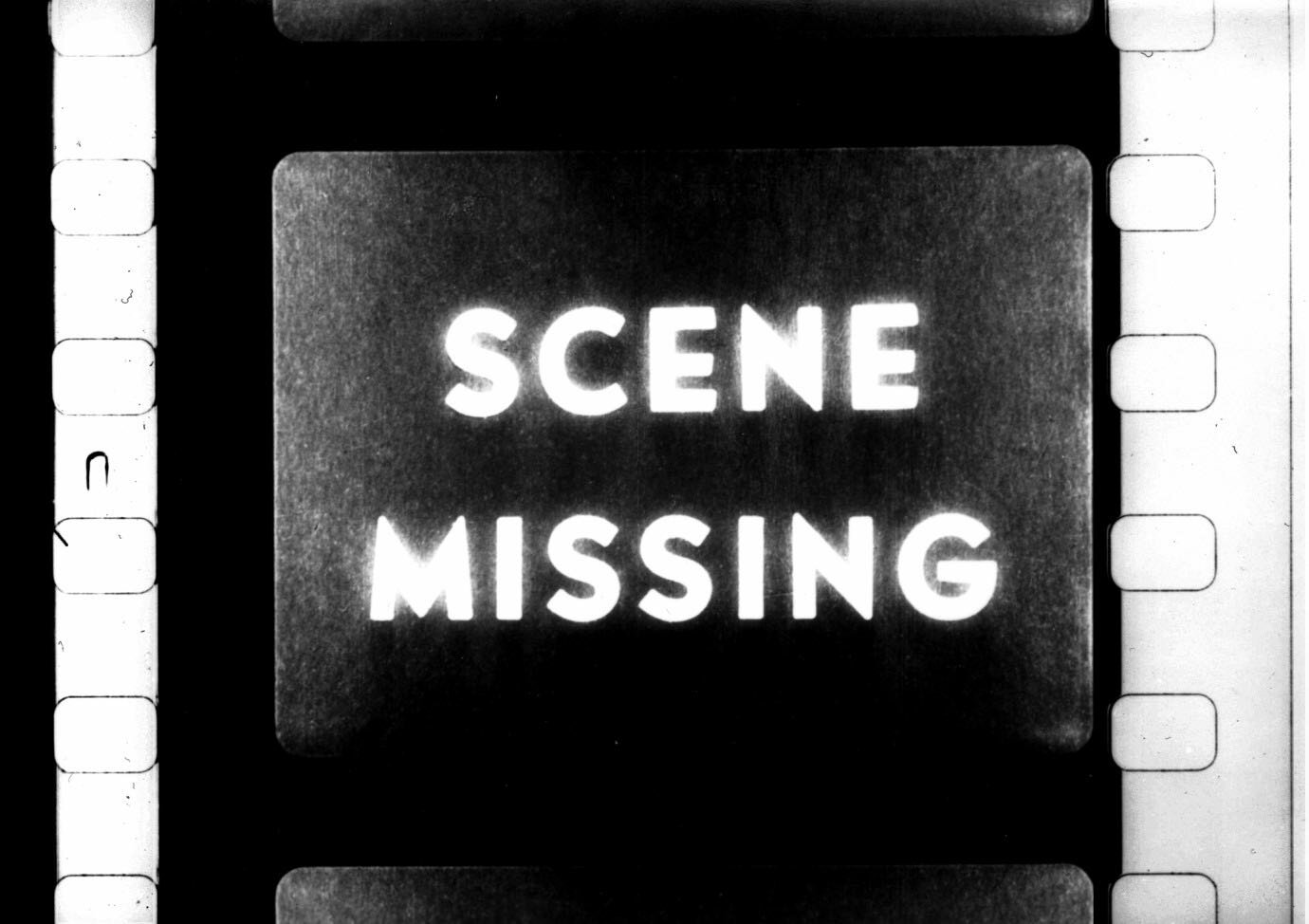
Standard Gauge (Morgan Fisher, 1984).