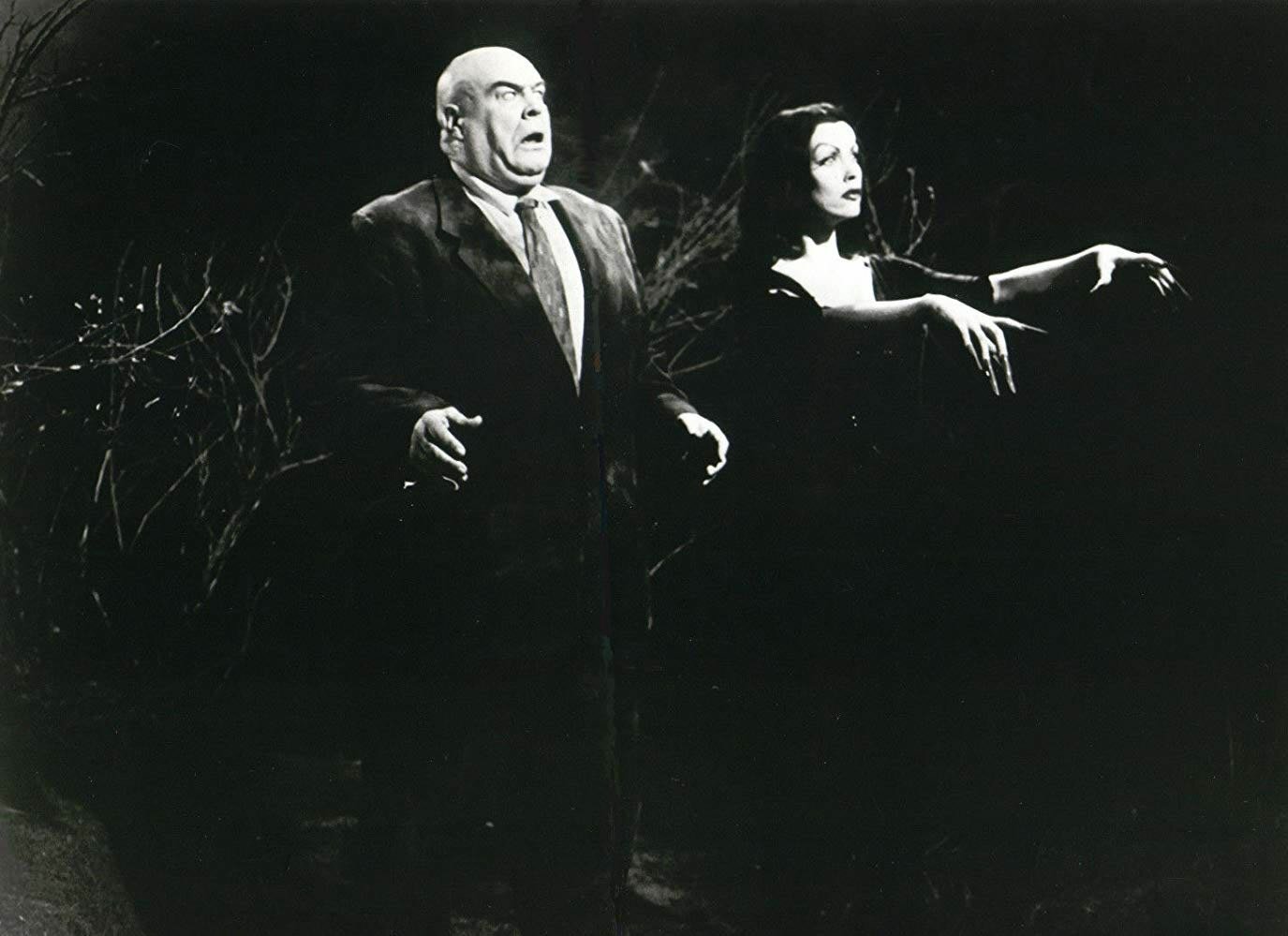
Plan 9 from Outer Space (Ed Wood, 1957).
Cinephilia is an erratic condition. Over time, the pursuit of its highs risks perverse entanglement with its weird and deadening lows. At its most acute, our love of the movies can lure us into viewing experiences our friends and loved ones would deem profoundly questionable. We buy tickets without hesitation to The Movie Orgy (1968), Joe Dante’s seven-hour collage of ’60s television commercials, pass a free evening choking down Corrupt (1983), the tedious New York giallo that pits Harvey Keitel against the Sex Pistols’ Johnny Rotten, or inadvisably spin a date night out of Tough Guys Don’t Dance (1987), the histrionic neo-noir Norman Mailer directed from his summer home. All of these and more have been on offer to New York City moviegoers in the last twelve months, each dutifully attended by a small but growing subculture whose tastes are less for cinema as a form of art, or even entertainment, but instead as a means of warping reality—a controlled dose of dissociative, intensified time. These contemporary cinephiles fixate over projection format, accrue collections of dead home-video formats like VHS and Laserdisc, and bring a dedication to their Letterboxd accounts traditionally reserved for manifestos against industrial society.
This tendency has always existed in some form, especially in a city with as accommodating a theatrical footprint as New York, but it’s achieved a new level of saturation post-pandemic, spreading quickly among audiences scarred by memories of interminable couch-based streaming. Frequently, what draws these viewers to the movies is precisely what breaks down in them for conventional audiences: incompetent storytelling, directorial miscalculation, or cultural values so dated that they resemble transmissions from an alien civilization. All of these qualities were in abundance one night at Film Forum last October, where a celluloid triple feature celebrated the hundredth birthday of Edward D. Wood Jr., the first director to wear the mantle of Worst Ever.
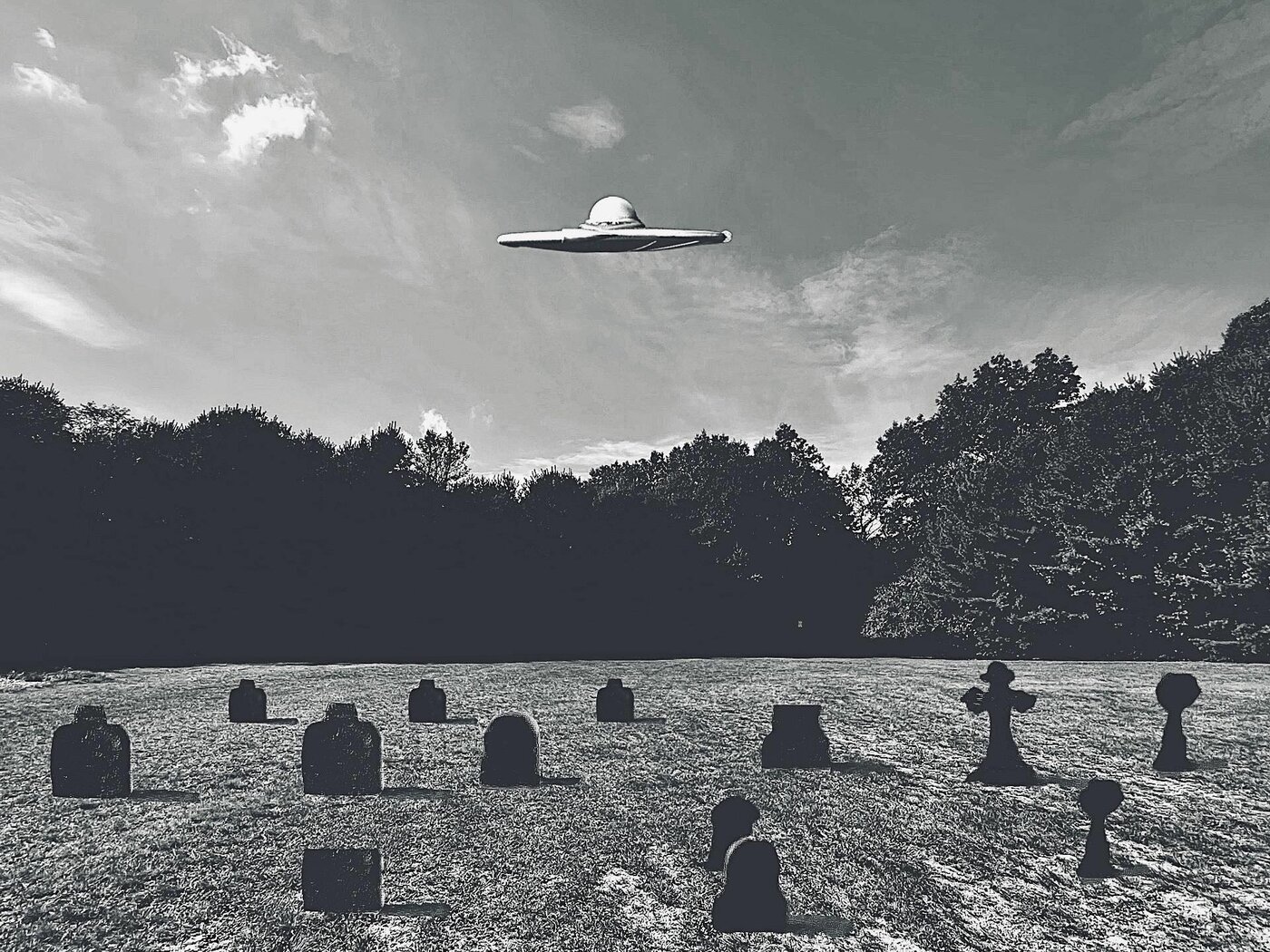
Today, Wood is best known for his fourth feature, Plan 9 From Outer Space (1957), notorious for its contorted tone and a sprawling inventory of production gaffes. All of his films are filled with cut corners, cheap effects, and hopeless playhouse acting, but it’s Plan 9 where Wood’s enthusiasm and inexpertise meld into a kind of magic. From the Amazing Criswell’s hypnotic introduction, to the etherized stare of the undead Vampira, to the iconic toy saucers hanging conspicuously from their visible wires, Plan 9 is as authentic an expression of Cold War psychosis as Allen Ginsberg’s “Howl.” Wood’s career was shaped by the industrial footprint of Hollywood at its monolithic, postwar peak, when quality standards bent at the margins around the all-consuming demand for theatrical product. His movies play like the work of a man consumed by cinema’s illusionistic power and yet pathologically unable to recreate it. As a director, producer, screenwriter, and occasional actor, he never escaped the network of small, independent, low-budget studios, first called Poverty Row, which gradually transformed in character with the rise of grindhouse fare, and finally of pornography. Recurring motifs of Wood’s work include a muddled genre premise (usually horror or science fiction), a narrative conspicuously padded with chatty dialogue and stock footage, and sympathies divided to the point of confusion between protagonist and antagonist. But there’s also a strange, intermittent charisma—an unconscious charm that can approximate the first principles of surrealism—a cinema of automatic processes, guided not by reason but by dreams. As the first new artform of the mass society, cinema was also the first to develop an anti-canon. Unknown in his lifetime, the name Ed Wood is now more widely recognized than virtually all of his contemporaries.
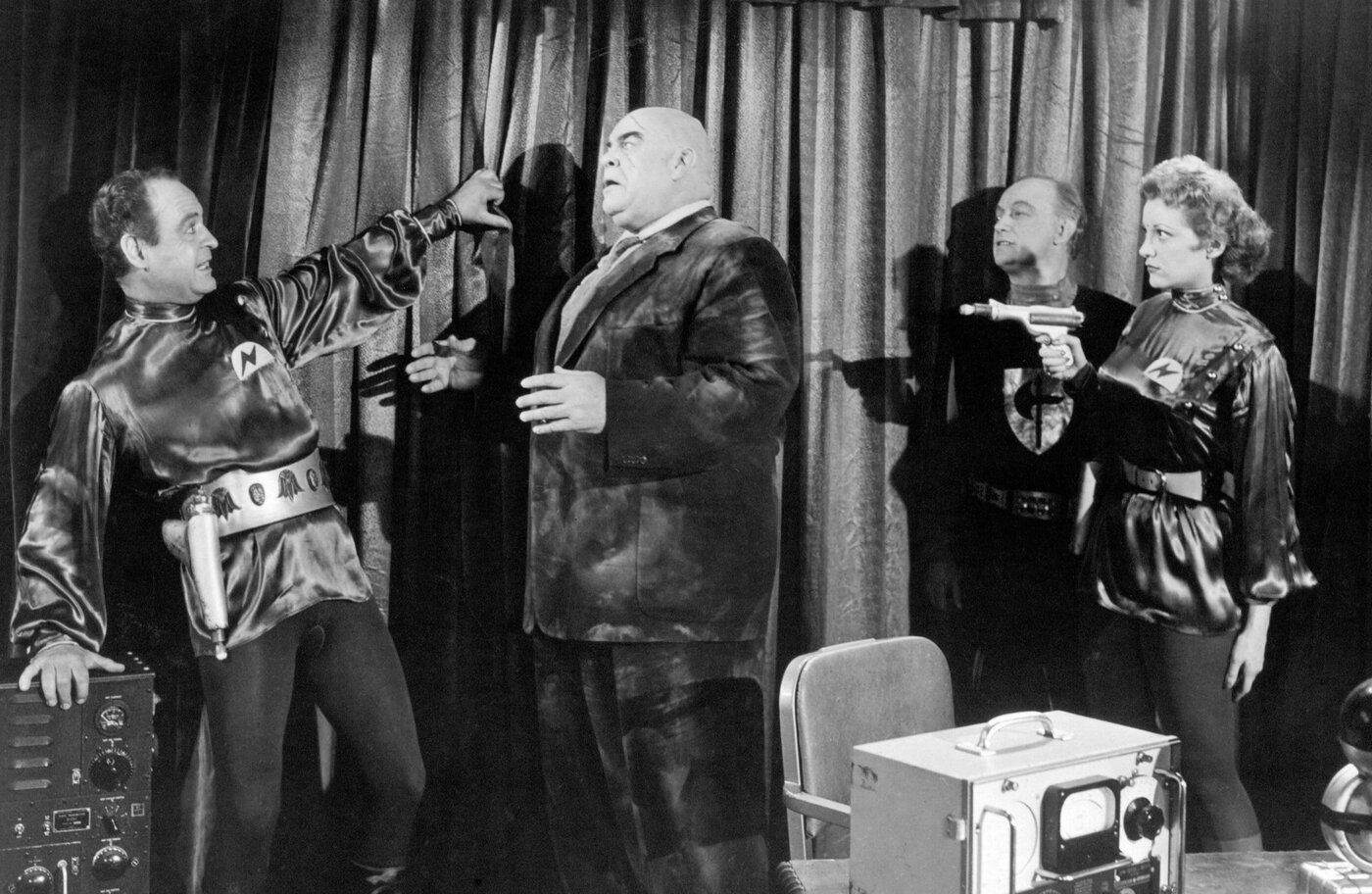
Plan 9 from Outer Space (Ed Wood, 1957).
Since his death in 1978, several passes have been made at the Ed Wood story: Rudolph Grey’s 1992 oral biography, Nightmare of Ecstasy; Brett Thompson’s 1996 documentary, The Haunted World of Edward D. Wood Jr.; and most notably, Tim Burton’s 1994 dramatization, Ed Wood. For better or worse, Johnny Depp’s electrostatic turn in the title role has lodged this version of Wood in the public imagination: an improbably sunny innocent whose professional failure amounts to a kind of long-wave moral triumph. But Burton’s film is less a biopic than a fabulist künstlerroman, only as much about the factual Wood as Burton can make use of in symbol and style. What’s more, the credits roll shortly after the release of Plan 9, though he would live and work as a filmmaker for another twenty years.
Now, in time for the maestro’s 101st birthday, a new book by Toronto critic Will Sloan aspires to a comprehensive treatment. Ed Wood: Made in Hollywood USA is the first effort at a truly critical biography, tonally straightforward and with close accounting of Wood’s entire narrative oeuvre—supplemented by scenic detours into a prolific literary career, as well as the heterogeneous film culture that is his legacy. Collected here are the undisputed facts of his life and his filmography, shored up by original investigation and informed inference. It’s a task well-suited to a figure such as Sloan. If Wood is the patron saint of this cine-maniacal cult, then Sloan is something of a high priest. As a widely published writer, podcaster (with Justin Decloux on The Important Cinema Club, and Luke Savage on Michael & Us), and prolific Letterboxd user, Sloan articulates this newly profligate moviegoing philosophy—of passion marbled with research, irony with sincerity, a sense of adventure with a taste for masochism. Behind this conversational, anti-systemic approach is real conviction: for Sloan, austere arthouse moodpieces, Hollywood blockbusters, and debauched grindhouse sleaze all provide equal opportunity for authentic artistic expression. “I find the least interesting film by Ed Wood more stimulating,” he contends, “than the best film by Ron Howard or Shawn Levy.” In Made in Hollywood, Sloan invites the contest between the seriousness of his form and the unwieldiness of his subject matter, listening for the voice of an auteur beneath the chorus of ridicule.
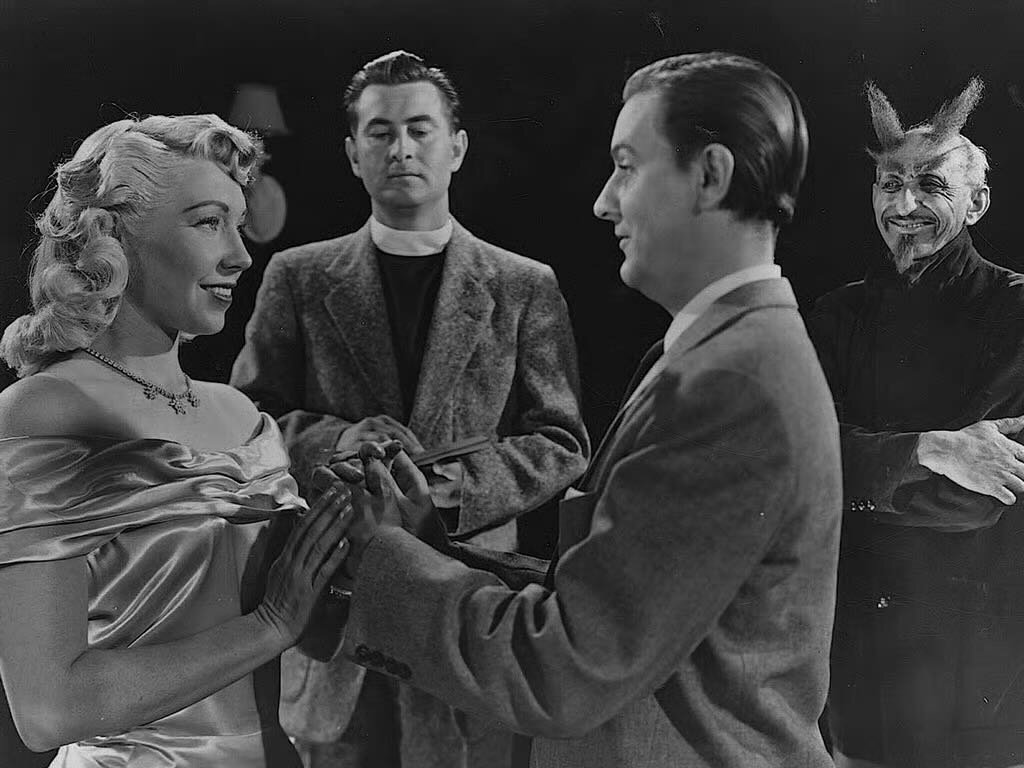
Glen or Glenda (Ed Wood, 1953).
Born in 1924 in Poughkeepsie, New York, the son of a post office janitor, Ed Wood was part of the first generation of Americans raised on the talkies, working a boyhood job as an usher in a movie theater to be close to them. After a mundane record of service in the Second World War, he traveled west with the carnival to Hollywood in 1947, running errands for Universal Studios and starting a small company that made television commercials. After an aborted directorial attempt at a short western feature (posthumously completed in 1995 as Crossroads of Laredo), Wood convinced exploitation producer George Weiss to sign off on his adaptation of the story of Christine Jorgensen—the first American widely known to have received gender-affirming surgery.
The result would establish Wood’s pattern for delivering material wildly at odds with his promises. Glen or Glenda (1953) is in large part a story not of transgenderism, but of cross-dressing—a work of pseudo-confession in which Wood himself stars as the title character(s), frequently in drag. Glen or Glenda seemingly has no purchase on the essence of the exploitation genre, which placated censors with a moral or educational fig leaf on an otherwise lurid depiction of a subversive topic. Instead, the central drama unfolds something like evangelical church theater, in which Glen and his girlfriend (Dolores Fuller, his real and soon-to-be-ex-fiancée) undergo couple’s therapy to repress his Angora-clad alter ego, “Glenda.” Lascivious flashes of burlesque dancers and a brief secondary plotline, this one actually based on the Jorgensen story, were shoehorned into the production more or less over the director’s head. Onscreen, Wood is a spongy, featureless presence with no discernible acting flair. The screenplay’s view on gender dysphoria is a jumble. “It’s interesting,” writes Sloan, “because it’s deeply incoherent.”
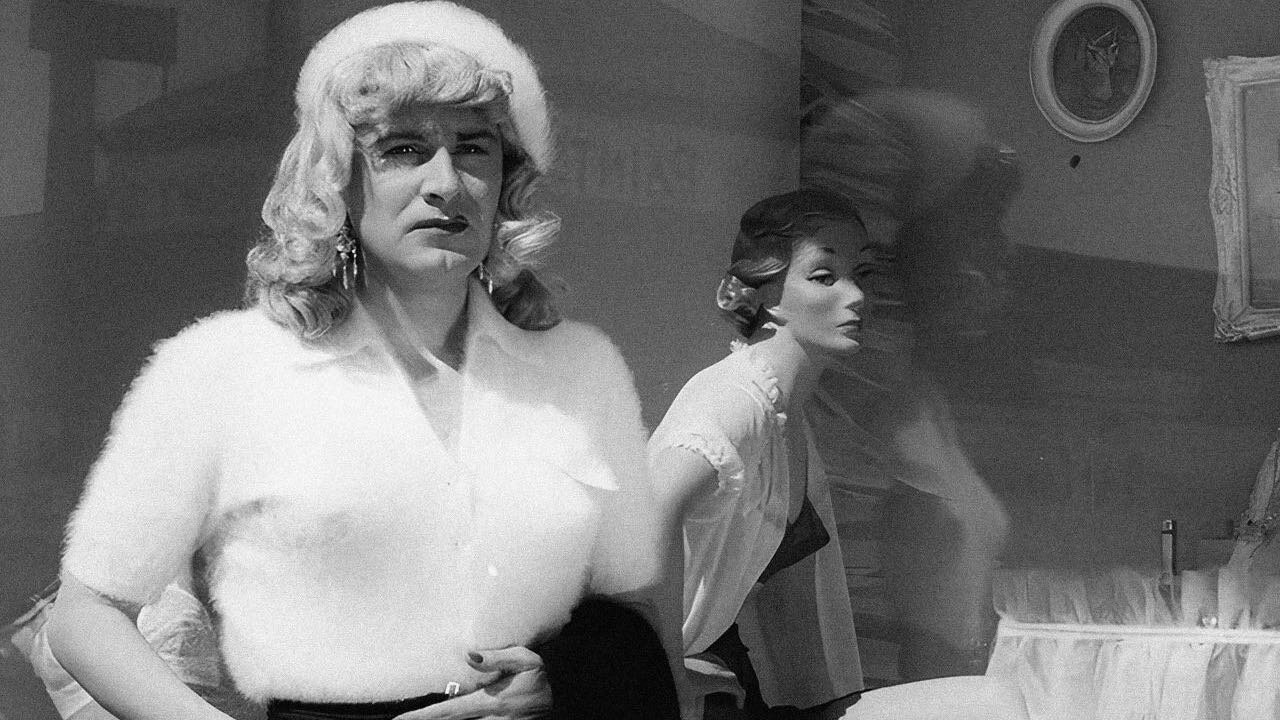
Glen or Glenda (Ed Wood, 1953).
It’s hard to imagine a more coherent statement on Wood’s personal gender politics making it to the screen in the Eisenhower era. Contemporaneous viewers of Glen or Glenda would have had no way of knowing about his real-life crossdressing (specifically his predilection for Angora sweaters); today, it’s all but native context. Sloan gives ample space for a discourse of queerness to accumulate in the film’s gaps, quoting critic Valerie Keaton’s view that the film’s menacing superego, played by Bela Lugosi, might represent the voice that hounds the trans subject from inside the closet. The question of Wood’s own queerness hovers frequently over Made in Hollywood. Though he and his friends all avowed his heterosexuality, the three major romances of his life were not happy ones—two of them (including Fuller) unraveled in part over his crossdressing. If Sloan errs on the charitable side, he never goes so far as to mistake Glen or Glenda (or any of Wood’s films) as a lost masterpiece of queer cinema. But he’s also shy to confront something more primordial in Wood’s particular character—an exhibitionism in defiance of all personal, financial, and artistic logic. Long before the philosopher Lauren Berlant coined the term, Wood seems a pioneering sufferer of “cruel optimism.”
Bridge of the Monster (Ed Wood, 1955).
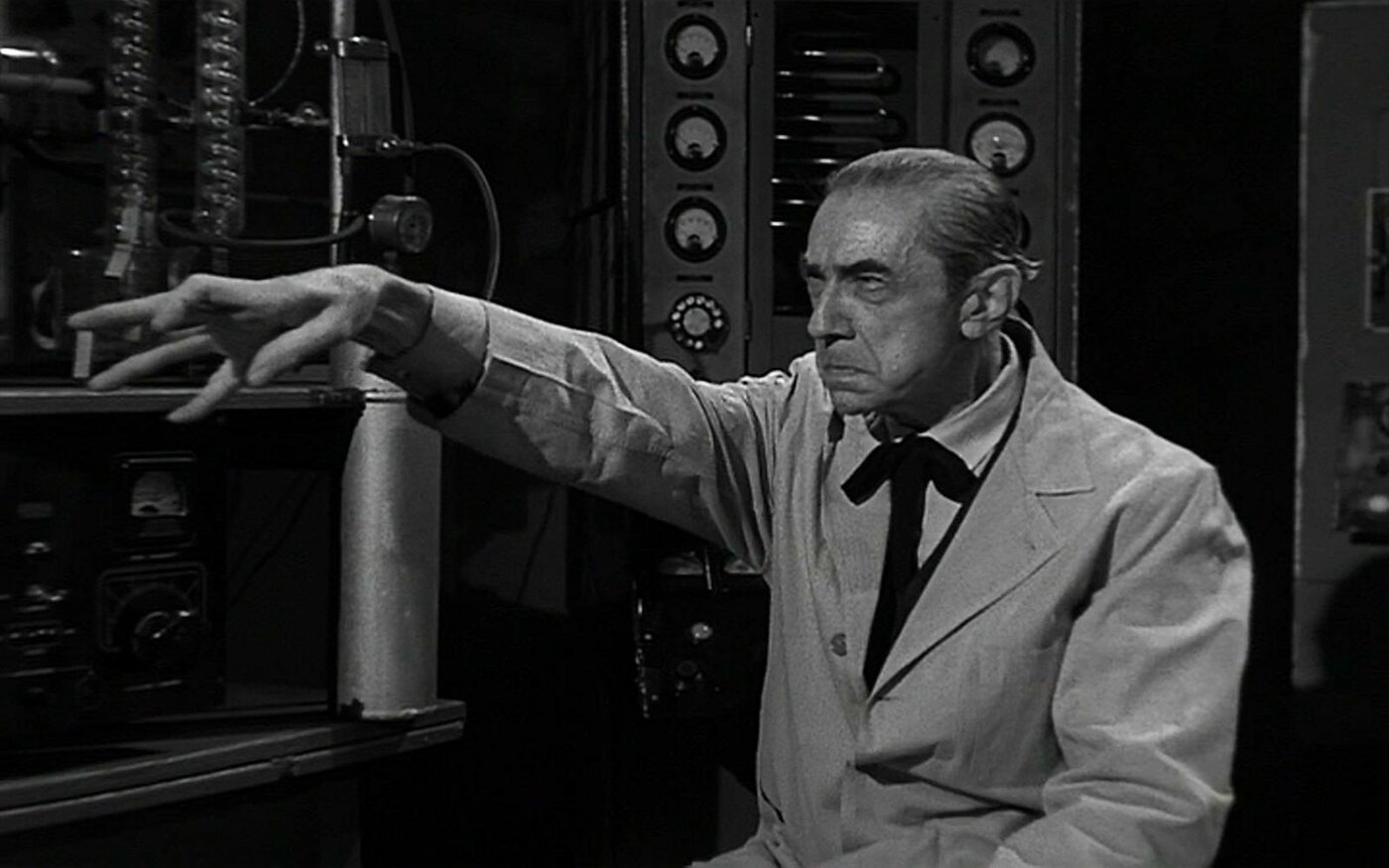
For the rest of the ’50s, Wood pursued commercially smoother genre fare, in no small part due to his collaboration with Lugosi. Fallen on hard times, Universal Studios’ erstwhile Count Dracula was suffering from morphine addiction when he was introduced to Wood through future American International Pictures producer Alex Gordon. From Glen or Glenda, the next logical step was the clunky prop-horror film Bride of the Monster (1955), rightly observed by Sloan as both the most conventional and least remarkable of the period. Made In Hollywood faithfully serves up the lore of the Lugosi trilogy for aficionados who never tire of stories about Wood directing scenes from Glen or Glenda in drag, the limp rubber squid in Bride that had to be acted to life by its victim, or Lugosi’s too-tall Plan 9 stand-in whose cloak conceals the fact that Lugosi himself had died before most of the film was shot. Sloan also corrects the record where appropriate, as in the case of two of Bride’s persistent on-set myths. “In interviews,” he notes, “Wood’s cronies sometimes sound like they’re embellishing their lives for some imaginary biopic.” Contrary to Burton’s film, neither was the squid prop stolen, nor did his crew assist Lugosi in injecting morphine.
As the Lugosi arc concludes, Sloan’s looming tone of rehabilitation ought to be taken with a grain of salt. We may be intrigued to read that Night of the Ghouls—slated for theaters in 1959 but shelved until a VHS release in 1984—is “one of those dreams where walls shift and people change identities.” An even more skeletal production, borrowing major elements from its predecessors (Paul Marco returns for comic relief as Kelton the Cop, as does the inimitable Criswell) holds the fleeting promise of a less diluted version of Wood’s style. The film itself quickly dispels this notion: Without Lugosi’s gravitas, Ghouls leans unsustainably on the puttylike Kenne Duncan as—yes—“Dr. Acula.” A few striking inserts aside, the film is more sleepwalk than dream. Even as Sloan continues his admirable scholar’s spadework—weighing in on the provenance of debated Wood titles like the hardcore Bloomer Girl (1972) and trawling through his graphomaniacal erotic writings—returns for all but the completist will begin to diminish. For the remainder of the book, Made in Hollywood will be sustained by the congeniality and breezy pace that comes with a true love of the game.
Take It Out in Trade (Ed Wood, 1970).
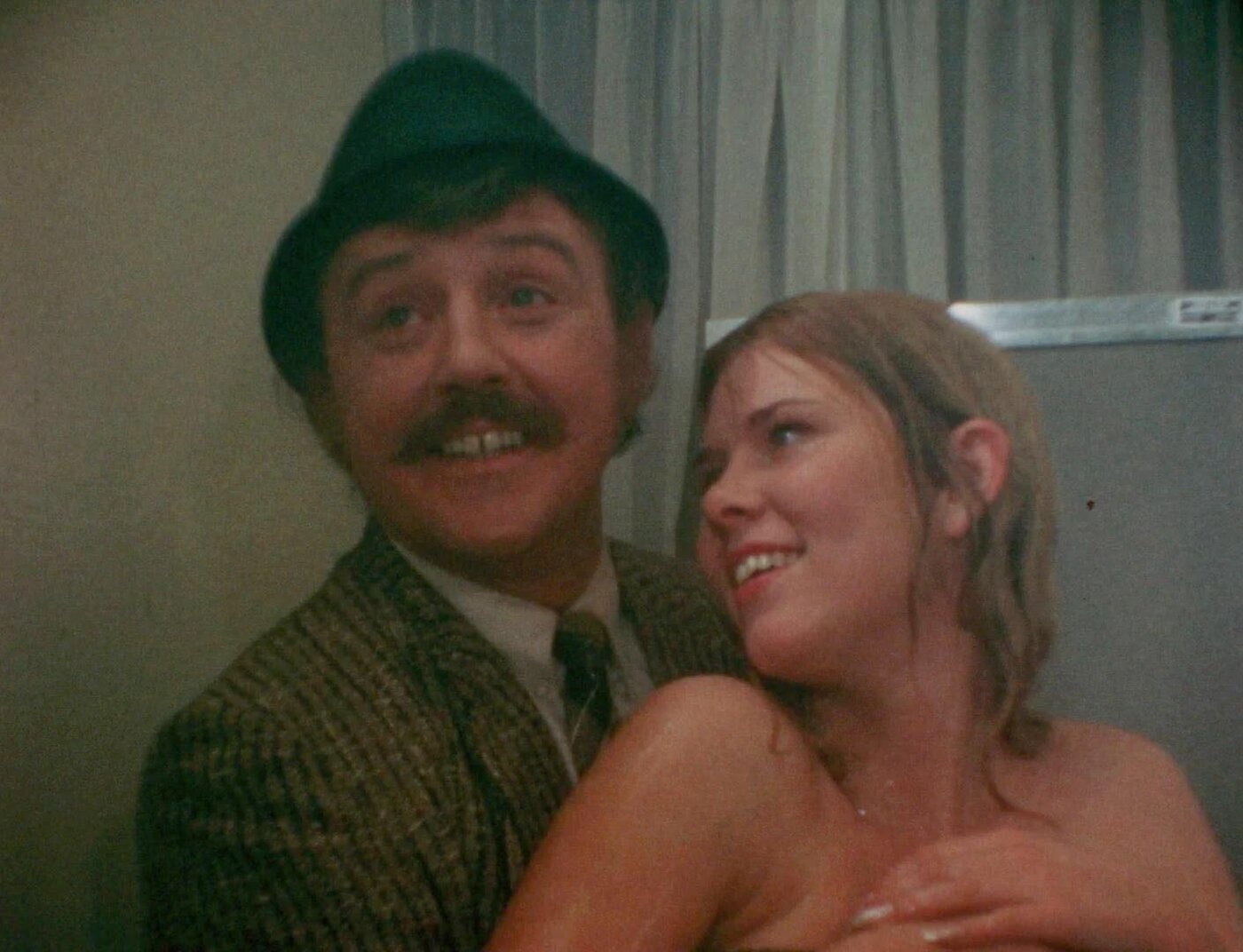
With his genre prospects drying up, Wood slid back into an exploitation landscape now grittier and more desperate, before the inevitable plunge into low-budget pornography. On this material, Sloan mounts the closest his book comes to a critical argument: that with these twilight works come flickering possibilities of creative redemption. “Produced quickly and without much oversight,” he writes, “Wood’s later work is also his least filtered, expressing sides of his personality that he kept tactfully hidden from polite society. Given his many constraints, it is to Wood’s credit that this period reveals the artist is still present.” The core of Sloan’s case rests on Take It Out in Trade (1970), a softcore detective farce featuring a clothed appearance by a transgender couple, and Wood himself as a demimonde informant in a blonde wig and Angora sweater. Those who track down the 2018 Blu-ray release (and survive its leaden, rancid sex scenes) will acknowledge a sense of humor and visual flair buoyed by the period’s sexual irreverence and the close on-set camaraderie for which Wood was known. Artists enjoying their own work is one thing, however; viewers enjoying it is another. In the eyes of this beholder, Trade is little more than a stag film with a flavor of transgression, and all in all a real slog. Strangely, Sloan makes little of Wood’s appearance itself, in which his character—after sharing a drink of what appears to be real whiskey—has his wig violently torn from his head. Much of Trade’s dialogue is shot in static two-shots, but as the nature of this violation dawns, Wood trains an uncomfortably long zoom on the grotesque horror of his own character’s expression.
Sloan collects many bits of Wood’s writing on cross-dressing and sexual transgression more generally—with more than 80 pulp novels to his name, Wood was more of an obsessive thinker than a deep one on the subject—but this bit of booze-soaked choreography seems about as fitting an encapsulation of his contradictory desires as we’re liable to find onscreen. The pasteurizing efforts to ease Glen away from Glenda are overturned by the danger and thrill of pure abjection, the age of atomic understanding stripped bare by the seedy bachelors of Sunset Boulevard. Where this fleeting autofictional catharsis leaves us in the general ectoplasm of Wood’s final act invites speculation rather than critical judgment. One imagines a sequel to Burton’s film, in the style of Paul Schrader’s Autofocus (2002), in which Wood confronts his deterioration with a kind of perverse, onanistic resolve, punctuated by bursts of alcoholic rage against his common-law wife Kathy, and the trickling of rumors from New York City that his Lugosi films are becoming hits on the midnight movie circuit. “They’re not laughing at me, are they?” he was reported to have asked a friend. But they were laughing, and so are we. The book that really needs writing here—that conjures all the anguish and debauched solemnity and pathetic comedy, if not the style, of the life in question—is just outside of Sloan’s brief. But the truth matters, even if, in the case of Ed Wood, imagination pulls us elsewhere.
Plan 9 from Outer Space (Ed Wood, 1957).
Wood died of heart failure in 1978 at 54, impoverished, evicted into the hospitality of friends, with no inkling of his long afterlife to come. Brothers Michael and Harry Medved received over 3,000 reader ballots for 1980’s The Golden Turkey Awards, the follow-up to their 1978 book with Randy Dreyfuss, The Fifty Worst Films of All Time. The runaway winner was Plan 9, by then a fixture of the same TV horror programs that had helped bring interest in Lugosi back from the grave. Wood himself received the Worst Director laurel. In time, the movie became a pop-culture buzzword for ironic and oddball hipness, garnering mentions on The X-Files (1993–2002) and Seinfeld (1989–98). In time, Mystery Science Theater 3000 (1988–99) and Tommy Wiseau’s The Room (2003) would clear space in the fabric of national culture for a moviegoing beyond good or bad. Sloan spends the last pages of Made in Hollywood fleshing out the kitschy, artisanal, and tonally offbeat underground that has grown in Wood’s shadow, and while the likes of Fred Olen Ray and Nick Zedd could hardly have shared his naïveté, what they do share is a productive energy for cinema that is indistinguishable from a biological function, a truly glandular cinema. In his life’s work, Ed Wood dreamed up countless monsters, maniacs, and freaks of nature, but none of them were more original than the strange fate that befell him, of a man possessed, consumed, and resurrected by the movies.