Illustrations by Niklas Wesner.
This is the second in a series of features that look back over notable new releases from 2025.
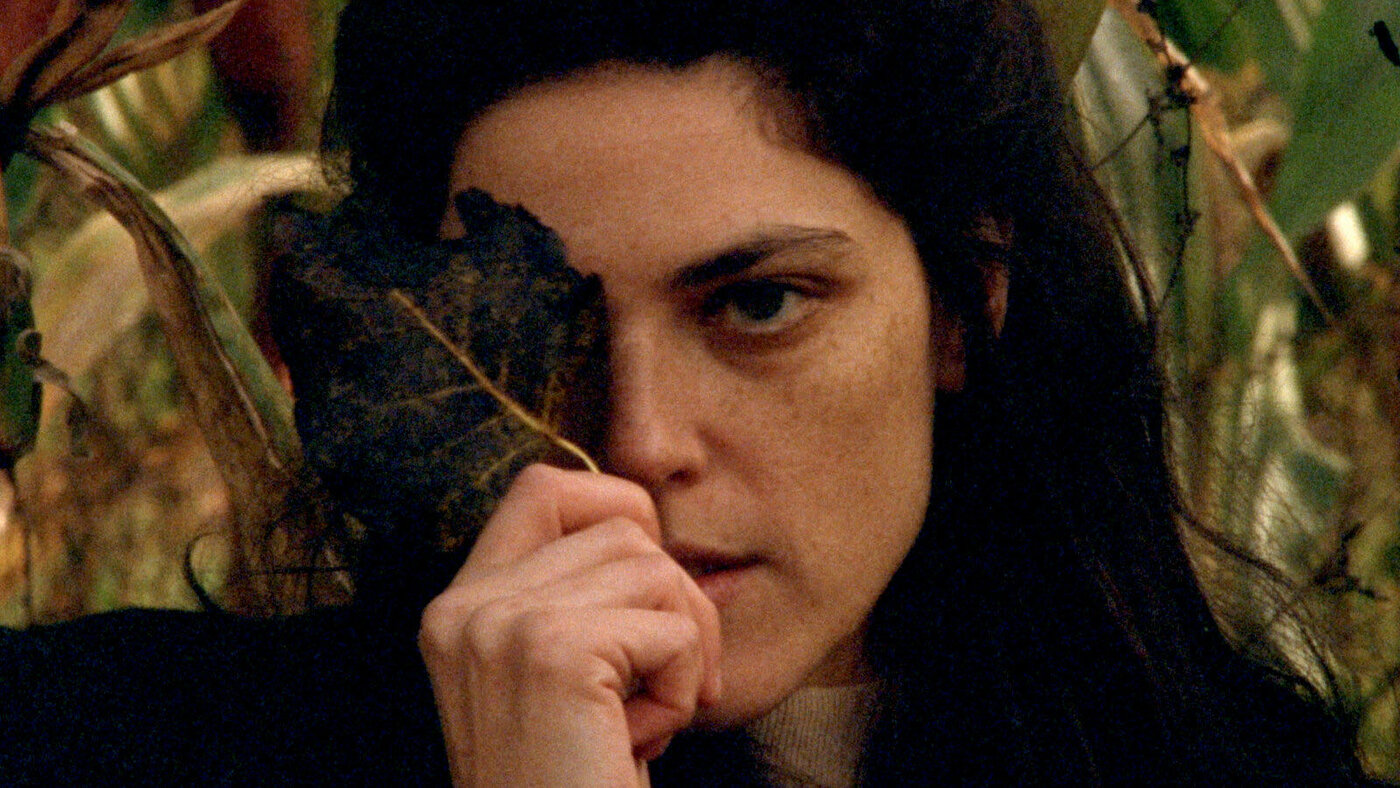
Invention (Courtney Stephens, 2024).
In the opening minutes of Courtney Stephens’s Invention (2024), protagonist Carrie (Callie Hernandez) lugs her father’s ashes home in the black plastic box provided by the crematorium. The camera tracks her as she walks swiftly but impassively, cars whizzing by. Stephens then cuts to a copse of maple trees flecked with golden leaves. “Hi Carrie,” an answering machine message begins. “I just wanted to say again that I was so sorry to hear about your dad. And to let you know that I boxed up his things and stuck them in the attic.”
In the darkened interior of a farmhouse, Carrie flings a set of keys across an oval table, a bucolic New England backyard sprawling out beyond the window. “I hope you’re finding time to just…be in the midst of life,” the woman concludes as Carrie sits on a bed with her back to the camera. While the dim, bare room is devoid of decor that would date the scene, the now anachronistic quality of an answering machine recording aurally locates the audience in a nostalgia for a not-so-distant past.
Invention is all about the passage of time—and how obsolescent technologies are uniquely able to imprint themselves on who and what we’ve lost. The film spans the first few days of Carrie’s bereavement as she sorts out her inventor father’s paperwork, finances, and botched investment deals. In a meeting with the executor of his estate (James N. Kienitz Wilkins), she learns that her father, Dr. J, was conducting business under multiple identities and that she is the sole inheritor of a patent for an electromagnetic healing device once recalled by the FDA. The film becomes a loose investigation into who her father was and what this healing device, however questionable, promises to remedy. Those who have stepped over the threshold of grief know that once you enter, it is a room you never leave. But procedural paperwork is a space where—if we’re lucky—we do not reside for long. Callie Hernandez straddles the schism between the irrevocable (death) and the temporary (legal bureaucracy) with an inscrutable intensity, an understated, captivating performance that garnered her a well-deserved Pardo for Best Performance at the 2024 Locarno Film Festival.
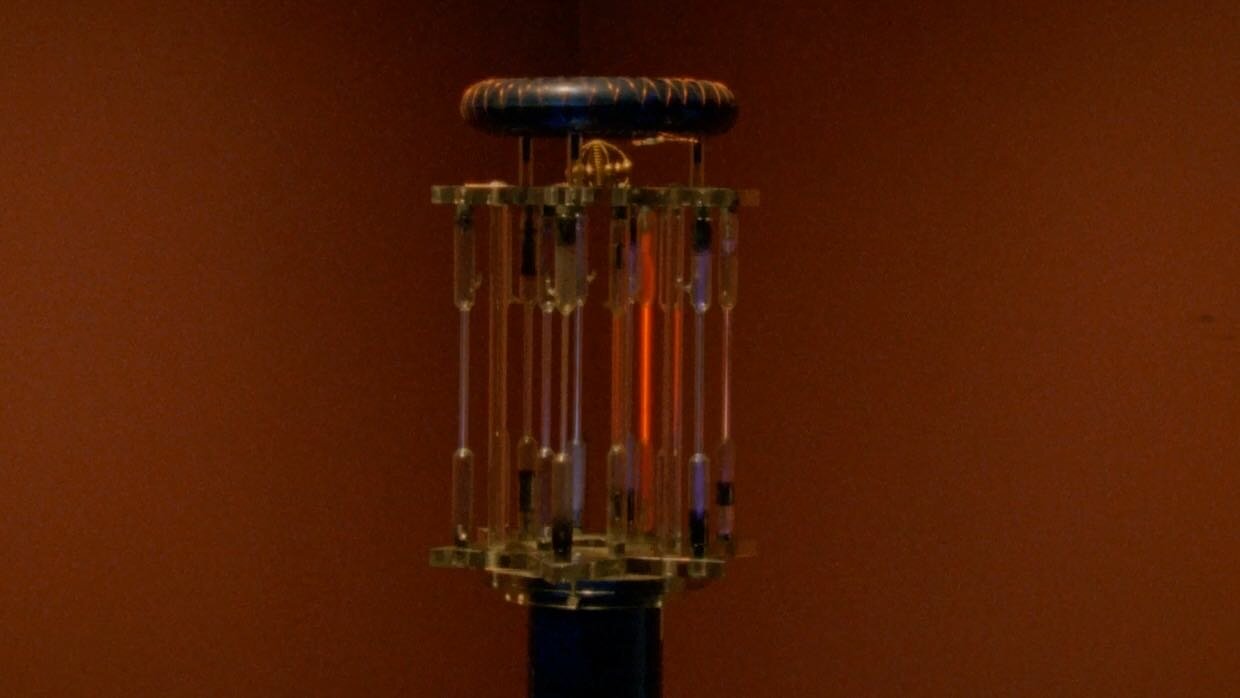
Invention (Courtney Stephens, 2024).
Hernandez, who cowrote the Invention screenplay with Stephens, has appeared in such films as La La Land (2016) and Alien: Covenant (2017). Stephens’s work is of a more experimental ilk, including her lauded film essay and performance piece Terra Femme (2021) about the “‘minor spaces’ of women’s lives,” as she puts it, “which exist outside the flow of historic time.” Invention, in turn, does not strictly adhere to the flow of cinematic time we expect of a narrative feature, incorporating archival footage, autobiography, and metatextual commentaries. Interspersed throughout Carrie’s investigation are clips of her father on television hawking his products and offering tips for a healthier, happier life. This man is Hernandez’s real father, who claimed to be a medical doctor, appearing on infomercials in the 1990s and early aughts pushing alternative healing modalities for “making lifestyle changes for the long term.” At times, while the camera lingers on a red candle in close-up (unlocatable within the mise-en-scène) we hear the voices of offscreen actors, most often Hernandez, discussing the scene’s setup with Stephens or the impetus behind the making of the film, namely, the death of Hernandez’s father. Since the shot is narratively unmotivated, the candle enshrouded in darkness seems to invite the viewer into a metaphysical space, drawing them into these meta-conversations. At one point, someone notes, “We are making an improvised film.” Invention is interested in the happenstance that arises through the process of inquiry, both on camera and off. It is also a film devoted to sorting through the detritus of a life—in doing so, we see the construction of Dr. J’s persona, as well as the construction of Hernandez and Stephens’s film.
Stephens’s decision to shoot on 16mm film, an increasingly obsolete medium, further underscores the passage of time. The film’s distinctive color and grain, as well as that of the archival video passages, contribute to the film’s temporal ambiguity. So, too, do the purported health hacks in the infomercials feel at once dated and, in the era of Robert F. Kennedy’s retrograde campaign to “Make America Healthy Again” (deregulating access to vaccines, falsely linking Tylenol to autism, and criticizing pasteurization), strangely prescient. Hernandez’s father’s infomercials and others like them were the product of the FCC relaxing its regulations in the length of commercial content in the 1980s, allowing for longer-form advertising of not just products and services but carefully crafted narratives about why such things were necessary to the good life. Under the Fairness Doctrine, networks were no longer restricted by government mandates that two sides of every issue be fairly represented in their programming. Broadcasters could now cater to their specific audiences’ tastes and preferences, unlocking viewers’ subliminal urges—as happens when a persuasive guru takes to the airwaves to proffer an ideology toward a better life. In Cruel Optimism, Lauren Berlant writes of how “people’s desires become mediated through attachments to modes of life to which they rarely remember consenting, at least initially.”1 We may no longer remember precisely when our 21st-century desires for the wellness industry originated, but Invention underscores the media ecosystems that made those desires not just possible, but pressing.
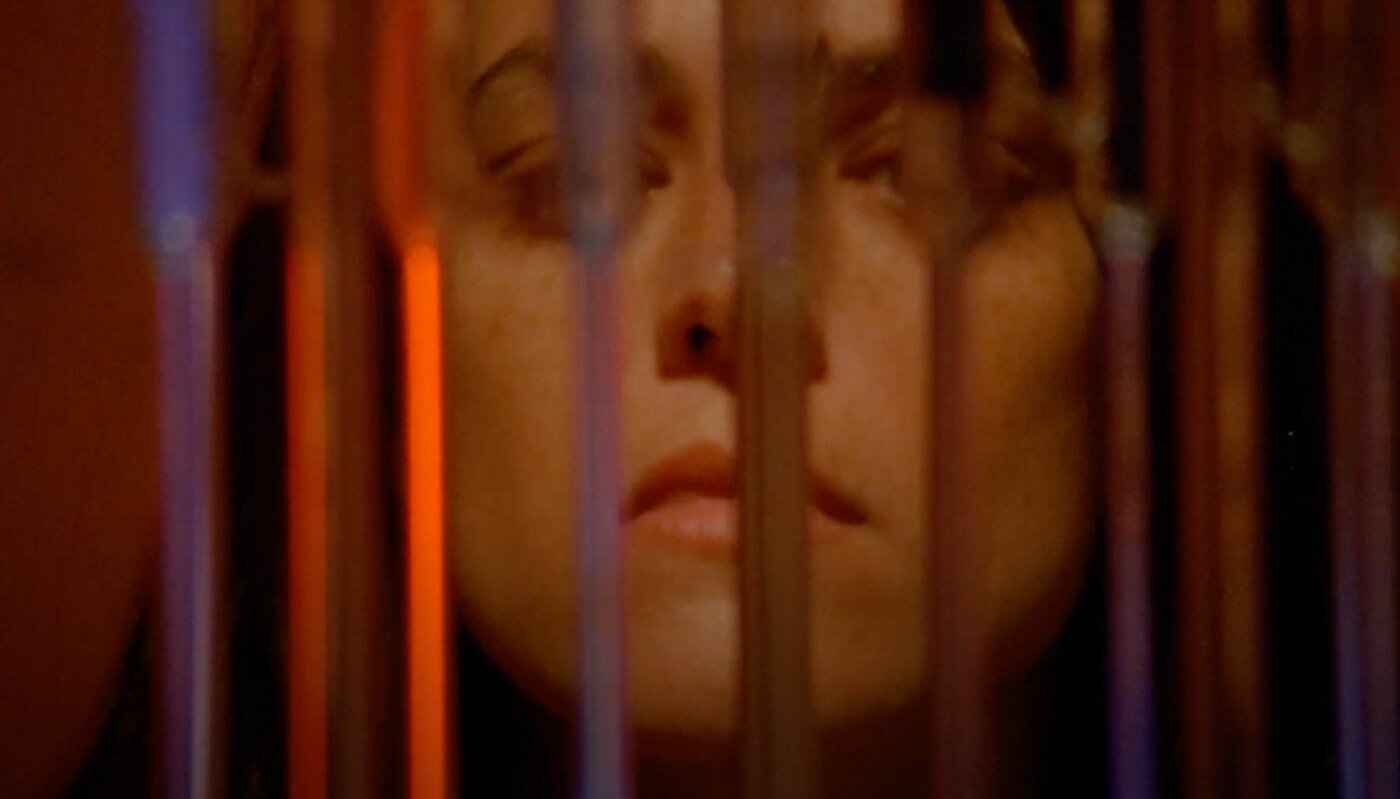
Invention (Courtney Stephens, 2024).
The art of performance makes these preventative-care desires particularly attractive to potential consumers. Slightly bashful, utterly earnest behind-the-scenes footage depicts Hernandez assessing where to position himself so he stares directly into the camera toward the end of the film. We witness his progression from performing in public-speaking classes to archival on-air footage that showcases his prowess as a salesman. As Carrie uncovers information about her father’s final schemes and deals, she delivers the unexpected news of his death to his former business associates and clients. Part of the pleasure of Stephens’s film is the eclectic cast of characters Carrie meets along the way, including an antique-store owner, Tony (Tony Torn), and his nephew, Sahm (Sahm McGlynn). To help frame these performances, Stephens—working with cinematographer Rafael Palacio Illingworth, with additional camerawork from filmmakers Carl Elsaesser, Traci Hercher, and Nellie Kluz—often favors medium or long shots so that the frame can encompass all the actors’ expressions, gestures, and bodies. When Sahm first enters the frame, he gives Carrie a perfunctory hello before hurriedly scooping his headphones over his ears. With his hooded eyes, he almost resembles a young, chiller Stanley Kubrick—unflappable, almost expressionless.
McGlynn gives a particularly nuanced performance as Carrie’s deadpan, but observant (if mismatched) love interest. We find the couple wandering a corn maze. “This place was just a farm when I was a kid,” Sahm reminisces. “Capitalism. Everyone’s just trying to figure out a way to make a buck.” Among the stalks, a scuffed scarecrow stands impaled through one eye by an iron stake. The corn maze, an agritourism enterprise, is also a dying enterprise of a bygone era, like Dr. J’s infomercials. As Sahm and Carrie continue to talk, they sit at a plastic table amid grubby, oversized cups of the Mad Hatter’s tea from Alice in Wonderland. “What was your father into?” Sahm asks. “Barnes & Noble,” Carrie answers. “Sharper Image. Gadgets. Later on, lasers. Conspiracy. And then he went bankrupt and then started working for a pyramid scheme in Utah selling laser healing frequency machines.”
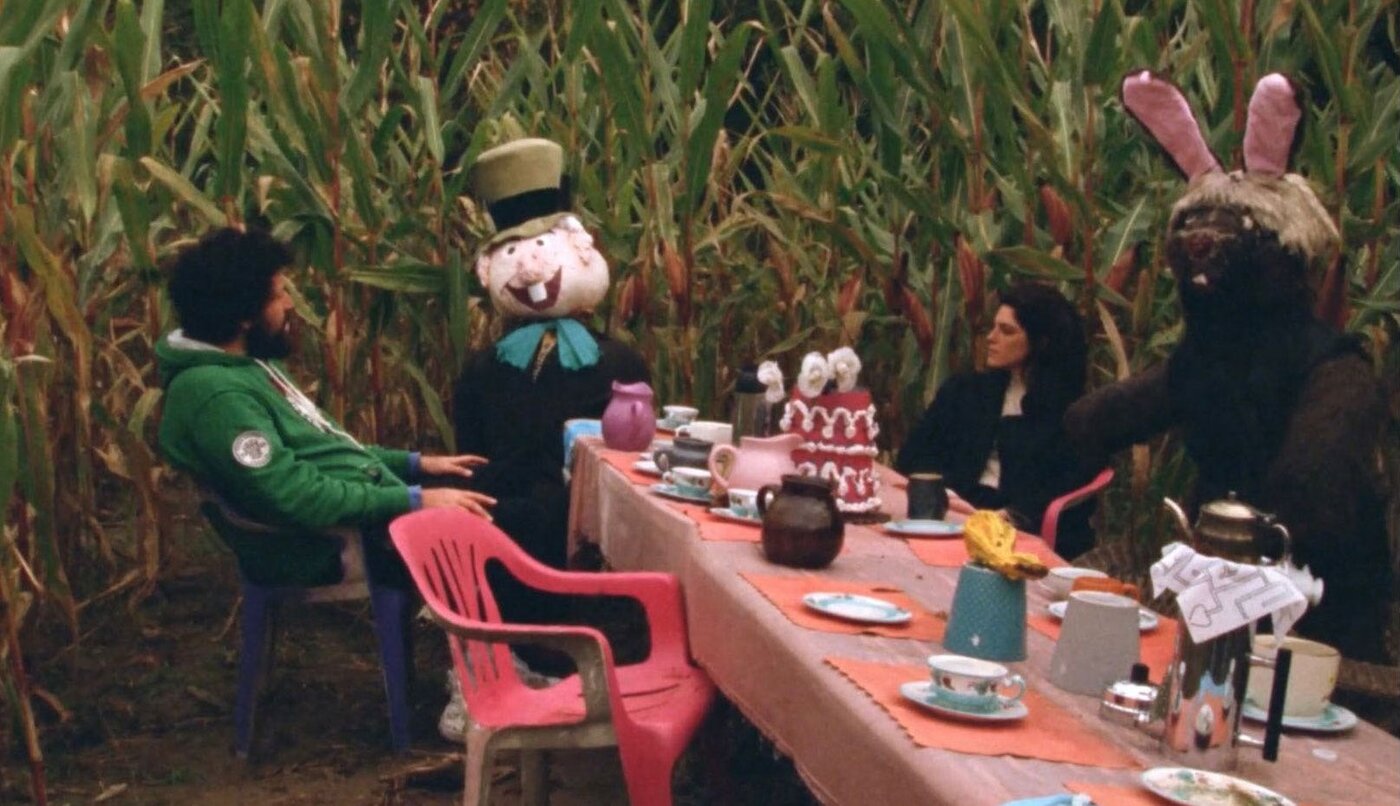
Invention (Courtney Stephens, 2024).
It’s easy to read the surrounding agrarian and kitsch debris in this scene as the dissolution of the fantasy capitalism promises to fulfill. Here is indeed the paradox of cruel optimism, which Berlant writes is “a double bind: a binding to fantasies that block the satisfaction they offer, and a binding to the promise of optimism as such that the fantasies have come to represent.”2 Before the rise of Amazon, businesses like Barnes & Noble and Shaper Image codified and industrialized public spaces, razing undeveloped land—and small businesses like the corn maze—to make way for strip malls and power centers. Though these corporations signify growth and advancement, accelerated capitalism thwarts any genuine satisfaction their wares might provide. By marketing the pursuit of wellness, such businesses promise that there will always be another product to buy. The nostalgia we have for landlines and home videos is similar to our nostalgia for the decaying play sites of our past—these antiquated technologies and spaces remind us of homes or family businesses to which we can rarely return. And yet, we remain inexplicably tied to the very corporations, wellness influencers, or e-commerce sites that contribute to our grief, buying into their illusory fantasies against our better judgement.
In an interview with Filmmaker magazine, Stephens reflected,
Both our [Callie and my] dads were these charismatic men in possession of big visions and ideas. I felt instinctually that we were dealing in similar realms of grief, where you also are grieving their fantasy worlds. We process not just the loss of the person, but the loss of their self-mythologizing.
These parallel tongs of grief—for the person who is gone, as well as their world-building—are what make Invention so dynamic. Carrie does miss her father, despite all the ways in which she cannot ever fully understand and know him. Gone is the person who optimistically adhered to modes of belief and business models that others, such as his executor, deemed “paranoid and reckless.” In the film’s final scene, a weeping Carrie asks Tony if they should try to get the electromagnetic healing device back on the market. This is the only moment in which Carrie fully breaks down, distraught by both her father’s death as well as his business failures. To admit the machine might not work is to admit her father is truly gone—that all the ideas he brought forth into the world, all the objects he constructed, have no significance anymore.
The first shot of Invention finds an undertaker fiddling with the remote control for a digital pipe organ, the first of several machines that will serve as a conduit for grief in the film. As the machine starts and stops over and over, he finally lands on the song of choice. His poker-faced solemnity contrasted with the machine’s bright timbre and wide variety of tunes makes for a comedic moment. The indignity of technology is that it often fails us when we need it most. And the inherent tragedy is that technology can sometimes isolate us even further—where once there would have been a musician present, there is now only an empty room gilded with plastic flowers and imitation velvet. Virginia Woolf wrote in her 1937 novel The Years that we “know nothing, even about ourselves.” In Invention, Carrie fumbles in the dark for an understanding of who her father was and what he meant to others, but he will always remain as allusive as the healing machine in the attic: something shiny that telegraphs nothing more than its weird and wonderful bright flashing light.

Continue reading Notebook’s 2025 Year in Review.