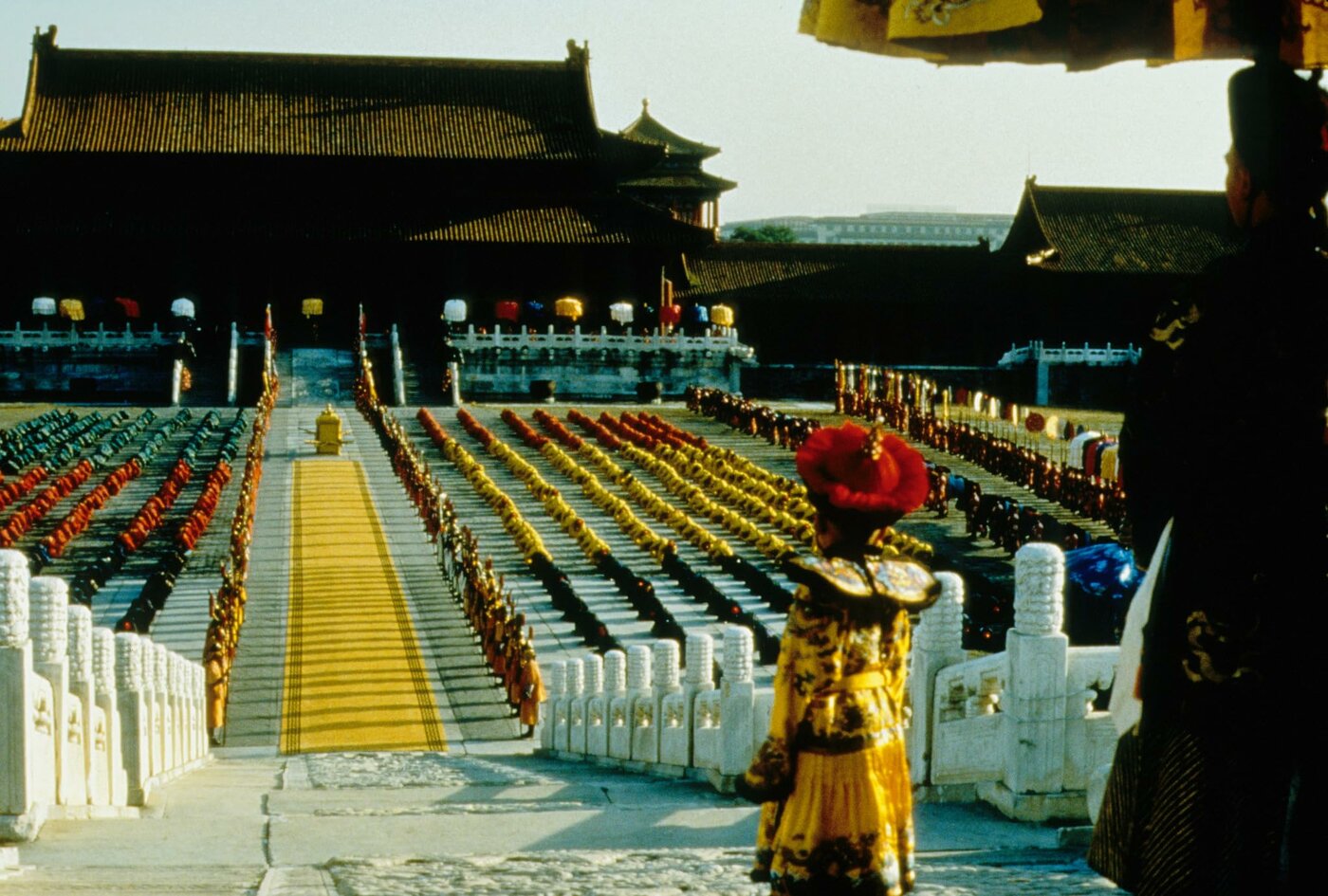
The Last Emperor (Bernardo Bertolucci, 1987).
When Jeremy Thomas died on September 11, 2026, the British film industry lost a titan. A producer who paid no heed to the vagaries of popular culture, Thomas was led by his impeccable palate for cinematic ambition, unswayed by whether audiences or critics came along for the ride. A list of filmmakers whose work makes up Thomas’s production portfolio reads like a who’s who of maverick visionaries, each of them fiercely loyal to the last: Nicolas Roeg and David Cronenberg; Takeshi Kitano and Jonathan Glazer; Nagisa Ōshima and Wim Wenders; Jerzy Skolimowski and Bernardo Bertolucci, whose The Last Emperor (1987) won Thomas the Academy Award for Best Picture.
Cinema ran through Thomas’s veins. Both his father and uncle were filmmakers, respectively behind the uniquely British series of Doctor (1954–70) and Carry On (1958–92) films, and Thomas spent much of his youth on the sound stages at Pinewood Studios. He cut his teeth as an editor, working for the likes of Ken Loach and Philippe Mora, and it was the latter affiliation that took Thomas to Australia with an out-to-lunch Dennis Hopper to produce his first feature, the Ozploitation western Mad Dog Morgan (1976).
When the film picked up a prize at a Cannes sidebar, Thomas didn’t look back. The Shout (1978) with Jerzy Skolimowski followed, as did three tremendous pictures with Nicolas Roeg. Thomas quickly garnered a reputation as a master enabler, facilitating the kind of risky, auteur-driven productions for which the cinematic landscape is all the poorer in his absence. Whether shepherding such supposedly unfilmable novels as Naked Lunch or Crash to the screen for Cronenberg, or marshaling thousands of extras through Beijing’s Forbidden City for Bertolucci, he had absolute trust in his filmmakers. “As a producer you want a David Cronenberg film,” says Thomas below, “that’s the reason you work with him.”
Back in 2014, London’s BFI Southbank hosted a retrospective of Thomas’s formidable catalog. To coincide with the season, I was invited to the producer’s office, then located on Soho’s Hanway Street, for an interview due to be published in a film magazine that would fold after a handful of issues. What was supposed to be a 45-minute chat ballooned into a few hours, as Jeremy led me through his archive with boyish enthusiasm. The piece was cut down to a couple thousand words, before vanishing into an unmarked grave alongside innumerable print publications similarly slain by the cruelty of the market. When the devastating news broke of Jeremy’s death, I hunted around and managed to find the full record of that wonderful afternoon.
Tidying this expansive conversation up for publication, I was struck by how many of the great names Thomas talks about we’ve lost in the intervening twelve years. Nicolas Roeg, Gene Hackman, Ryuichi Sakamoto, Bernardo Bertolucci—trusted collaborators whose extraordinary bodies of work were fortified by their association with this one-of-a-kind producer, the likes of whom it’s hard to imagine we’ll see again.
NOTEBOOK: So you had the run of Pinewood Studios growing up?
JEREMY THOMAS: Well, I was born next to Ealing Studios where my dad was working, then we moved first to Gerrards Cross then to Beaconsfield, both within cycling distance of Pinewood. I was left there with my sister and I loved being there. I was very lucky as my father was very successful at the Rank Organisation; he was part of the furniture at Pinewood Studios so I was given free run. It was an incredible place to grow up in. I’d be left there in the morning and my dad would bring me home.
NOTEBOOK: Cleopatra [1963] was there around that time, right?
THOMAS: Cleopatra, A Night to Remember [1958], these incredible sets built on the huge backlot. It was humming with activity—the prop shop, the camera shop, thousands of plasterers building sets flat-out, people going around in costume. It was very lavish, a different feeling from what it is today because studios have since changed into four-walled spaces—although there are more stages now, it’s much more modern, and still a brilliant place to work.
NOTEBOOK: There were a lot more British productions back then. Now it seems to have been taken over by American super-productions taking advantage of tax breaks.
THOMAS: That’s because it was owned by Rank and they wanted to make British films at Pinewood, which was like a factory for British cinema. Studios have changed; they’re very expensive to run, and most independent British films would choose to go the belt-and-braces route: the warehouse situation rather than the studio, which obviously has brilliant advantages. A certain type of film has to be shot in a studio, those that involve a lot of technical work or green-screen processes, the way films like Gravity [2013] are made today.
The skills in the UK, as can be shown by something like Gravity, are the best in the world. Of course one has an internal argument about British films and which films are made in the UK, but the more the merrier. The more films made here, the more research is done into the future tech of movies in the UK. If you look at the world map, there are parts of the US and there’s London and that’s it. Then you go to all the other places, which are very good—Eastern Europe, Australia, Japan—but the super-tech, that exists principally in Los Angeles and London.
NOTEBOOK: Was there ever any question that you’d work in film?
THOMAS: None at all, for me. I was fascinated by it at school and I had access to projected movies. I went to a liberal school where film was something you could be involved with. That was in the late fifties and early sixties. Plus, my family was surgically embedded in the film business. I was never going to do anything else. When I left school, much earlier than my parents wanted me to, with just my five basic O-Levels, I went straight off to work. I did a little trip around Europe and Morocco with a friend, but then started working in the labs to get my union card before diving into the film business in all its glory.
The work system that existed there was just flat-out. Because it was such a closed shop there was always more work available than there were people to do it. It was vibrant. You could turn up on a Monday morning at a studio and ask the head of any department if they had any work for that week. They’d say they had four days numbering a film and off you’d go. That’s how I got to work with a couple of really great editors. I got a break to work with John Victor-Smith, who was editing a film called The Ballad of Tam Lin [1970], and he took me to work on The Harder They Come [1972]. Then I met Roy Watts, who was working with Ken Loach, and did some bits with him before going off to work on The Golden Voyage of Sinbad [1973] with Ray Harryhausen.
So through these editors who I was working with—graduating between third, second and first assistant editor—I got a break when Ken asked if I’d like to edit a small film for the BBC called The Misfortune [1973]. Then I edited another film for an Australian artist called Philippe Mora called Brother, Can You Spare a Dime? [1975]. I met a lot of people, living for a year in America while I was editing it, before going to Cannes for the first time with the film and seeing how that worked. Sandy Lieberson and David Puttnam were both very generous with me; they saw a keen lad and gave me lots of access and openings.
NOTEBOOK: A compilation film like Brother, Can You Spare a Dime? must have taught you a lot about structure and narrative.
THOMAS: It was brilliant, seeing how others had done it. I was dissecting and re-cutting Citizen Kane [1941] along with a ton of James Cagney movies. Any film with Cagney was cut between speeches by Roosevelt from Movietone newsreels. We edited together a narrative. Jimmy Cagney would be in a certain situation, and then we’d cut to FDR talking about that, leading up to the war. We researched in labs all across America, so I gained a lot of technical knowledge and got to see thousands of films, including ones I didn’t even know about.
1929 to 1942 was a very fertile period in Hollywood. It was amazing to see all the Frank Capra and William Wellman films properly and to be able to select little pieces of them that would go into our film. It’s a difficult film to see nowadays but an incredible one: a journey through America and Americana with music and visuals that you simply couldn’t do today because you couldn’t afford to buy the rights to everything that was included.
NOTEBOOK: And then off to Australia…
THOMAS: I was in my infancy in the film business and it was an infant film business out there—nobody had any experience. I left a place where you had to have experience to do anything, where there were still these apprenticeship work-models within the various departments. For example, if you worked in the editing department for 25 years, you might get a break from a producer to have a go at making a small film. Today that has no relevance; there’s a totally different system in place. Back then, I was in my early twenties and I wanted to move on, as I’d already been working since I was seventeen. So I went to Australia with Philippe to get some money for Mad Dog Morgan [1976].
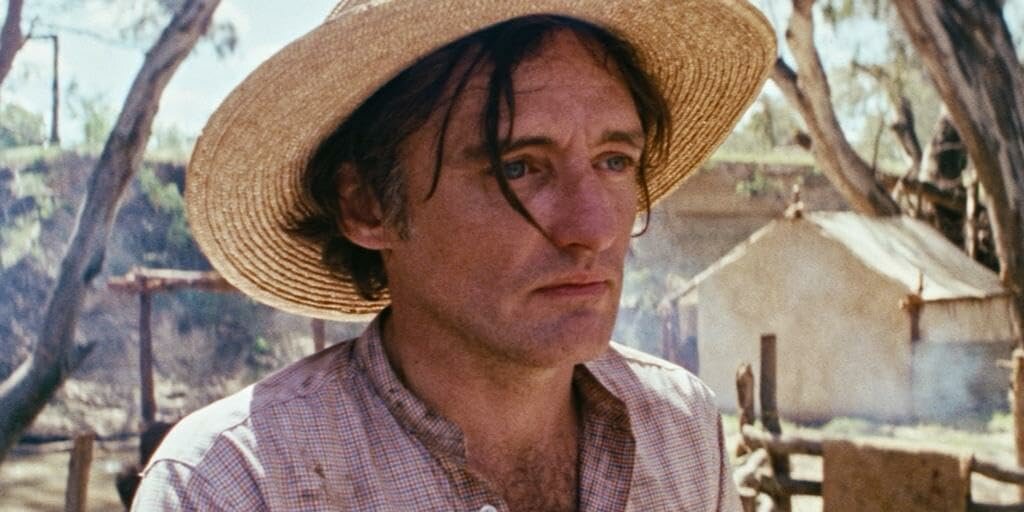
Mad Dog Morgan (Philippe Mora, 1976).
NOTEBOOK: Did you know what you were doing as a producer that first time?
THOMAS: No idea. Well, I’d seen it. I knew what it was, and I’d gotten quite friendly with some of the producers I’d worked on films with. You often get favorites—I’ve had my own favorites on films—and you give them a bit more time than other people, you let them in a bit. I was allowed in, perhaps because of my family background and because I knew a lot about films. I managed to get in with a lot of the right people, especially the Americans. There were a lot of Americans living in London during that period who were either avoiding Vietnam or the McCarthy witch hunts.
NOTEBOOK: So how did you get Dennis Hopper for Mad Dog Morgan?
THOMAS: We went to Hollywood. It was a bushranger film about a character like Ned Kelly, but both Philippe and I were enormous fans of Sam Peckinpah, who was always in the back of our minds. We wanted Dennis Hopper. Easy Rider [1969] was very important, as was his history as James Dean’s best friend. He was this rebel figure who was at the time virtually untouchable in Hollywood because of The Last Movie [1971], which he’d just made.
We somehow managed to arrange to get to Dennis in New Mexico where we stayed with him for a week. He was a fabulous guy, but at the time we met him he was really not in this world. He was somewhere else, enjoying himself too much. We arrived in Australia, with the principal intention of it being an enjoyable experience, but we went through this film literally day by day, bit by bit. It taught me a lot about the film business. The budget, for example, was done on a blank budget form without any knowledge whatsoever. “How many horses do we need? Twenty? At $50 a horse?” It went down as basically as that. We had no idea how long we’d be there, and only had something resembling a schedule. We made the film with no experience.
It was a fantastic film and went to Cannes, and though the film remains a happy experience in my memory, it was a painful business journey for me. We got completely involved in litigation in America. The film had a hard career, but the print playing in the BFI season is from Canberra's National Film and Sound Archive of Australia and it’s magnificent.
NOTEBOOK: Did you think you’d make it to the end of the film with Dennis?
THOMAS: We actually thought Dennis might die. None of us had ever seen anything like it. We had some big Australian actors, all the great actors of the day, who all felt a need to be in this movie with Dennis.
NOTEBOOK: Had you seen The Last Movie at that point?
THOMAS: I saw it in New Mexico with Dennis in a church he’d taken over. He was running the film on a cinema screen all day long for his band of brothers; he had a big posse of like-minded souls who were living there. He’d obviously made a lot of money out of Easy Rider and he essentially had a commune there. We saw the film projected and it was hours and hours long, but I saw it again later and I really liked it. The idea behind the film is brilliant. I can see why it caused so much consternation at the time; today it wouldn’t.
NOTEBOOK: So how was your first Cannes experience with Mad Dog Morgan?
THOMAS: It was a very small film but got some good reviews and won a prize at a sidebar event. We sold it all over the place, but we were babes in the woods. We had no idea. The film disappeared from my hands. It’s one of only two or three of my first films that I don’t control and aren’t in my catalog. It means I can’t look after them. My other films I look after and take care of, getting them restored and keeping the materials up to date. It’s not like keeping a painting or a book—it’s a special thing to have to do.
It wasn’t really until after Bad Timing [1980] that I felt I really knew what I was doing. At the beginning, you just want to make a film—you don’t think about how making that film will help you make another. I was just going from film to film and I didn’t get it. I didn’t have any infrastructure; I was just a producer making movies but without any control of the destiny of the films. It took until Merry Christmas, Mr. Lawrence [1983] for me to understand it all properly, having control of the negative and the destiny of the film forever.
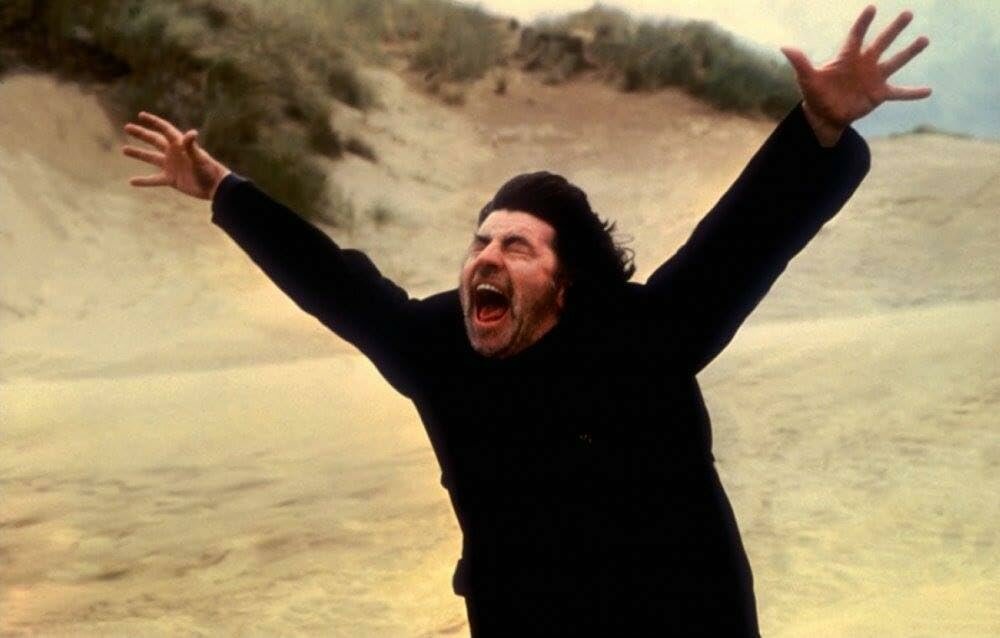
The Shout (Jerzy Skolimowski, 1978).
NOTEBOOK: What led you to Jerzy Skolimowski?
THOMAS: I’d seen Deep End [1970] and I just loved it. I wanted to make this fabulous script by Michael Austin but with an engine attached that would suck the Englishness out of it, rather like the films of Joseph Losey, who made films about the English but was an American. So I had a meeting with Jerzy and we spoke about the cricket match in the film. He said he wasn’t interested in the game itself—he wanted to focus on the bails and the hands, which is what I wanted to see too. He had a different slant on the story and it turned out really well.
NOTEBOOK: Was there a lot of creative input from your end, or was it a question of finding a director you admired and trusting their judgment?
THOMAS: I’m not involved to the point that I irritate a director so much they never want to work with me again, but I like to be involved in every aspect of a film’s creative process. Most of the creativity a producer can provide is done on day one, in assembling the various ingredients for the film—the cast, the crew, the cinematographer, the costume designer, the editor. All that, together with the story, lets you do something in terms of your chef’s brain. What’s this thing going to taste like in the end? That’s been with me from the very beginning, from Mad Dog onwards. How can you inflict your taste? I’m still doing that, both by choice of material and who I choose to work with.
NOTEBOOK: At this point, were you actively seeking out novels and material, or were they coming to you?
THOMAS: Apart from a mantra of pushing forward and wanting to create movies on a daily basis—that’s what I do in the morning, I get up and I start making movies—the job of a producer is to look for people. I’ve said it before, but it’s the river of life—without even thinking, I’m meeting and I’m choosing. I chose to work with Jerzy on The Shout [1978]. I sought him out after seeing Deep End and, coming across this book and this material, I thought, he’s a guy who’s going to give us an interesting film. I also sought out the cast and the cinematographer.
I tried to get Nic Roeg to do The Shout before Jerzy. I’d loved Performance [1970] and even before seeing his first film I knew he was the man, a master technician and a fantastically sophisticated person. I was twenty when Performance was being shot, working as an editor, and we’d go to Powys Square where it was being filmed. It was the coolest thing going on in London, just unbelievable. Later of course, I saw Walkabout [1971] and The Man Who Fell to Earth [1976] and they were an absolute bullseye for me culturally. That’s what satisfies me as a cinemagoer. So when I had this incredible script, I went to Nic. He was nice, but he said he couldn’t do it, he was busy.
After The Shout did well, I got a call from Sandy Lieberson saying, “We’re making a film with a screenplay by Johnny Speight,” who wrote Til Death Do Us Part [1965–1975]. “It’s a film about the Sex Pistols to be directed by Russ Meyer.” I thought, that’s just incredible: The Sex Pistols counter-culture and this right-wing Hollywood softcore merchant. We shot for three days and had to stop. We were shooting in the Forest of Dean, trying to kill Bambi—Who Killed Bambi?, the script was called—when we got a call from 20th Century Fox saying we’d been shut down.
Princess Grace of Monaco had heard we were doing a film with Russ Meyer and The Sex Pistols and said that unless they shut us down she was going to resign from the board of directors. Then it all reverted to Malcolm McLaren and we made it with Julien Temple as The Great Rock 'n' Roll Swindle [1980] instead.
NOTEBOOK: So Grace Kelly shut you down?
THOMAS: She just didn’t want to be on the board of a company working with The Sex Pistols. They were the Crash [1996] of their day, front page news every day as the most disgusting, despicable thing that lived in the world. If you look at what was going on in the papers in middle-class Britain, they were appalled, more appalled than they are about anything today. They were appalled that these freaks, gobbing on the street, were making money.
NOTEBOOK: After Hopper though, you must have been well equipped for wrangling the Sex Pistols?
THOMAS: Well, wrangling Sid Vicious was a challenge. We’d be on Oxford Street shooting, he’d see a skinhead, take his chain off and run across the street in the middle of a take. He didn’t have the name Sid Vicious for nothing. He didn’t like right-wing skinheads, so he’d go and attack them with his chain. It was also difficult keeping them together. When we were doing the Russ Meyer version, the original one, we had to find a way of putting them in caravans at Bray Studios with their road manager—who was called Boogie—to make sure they were there the next morning to film, otherwise they’d just vanish. It was wild, a different time.
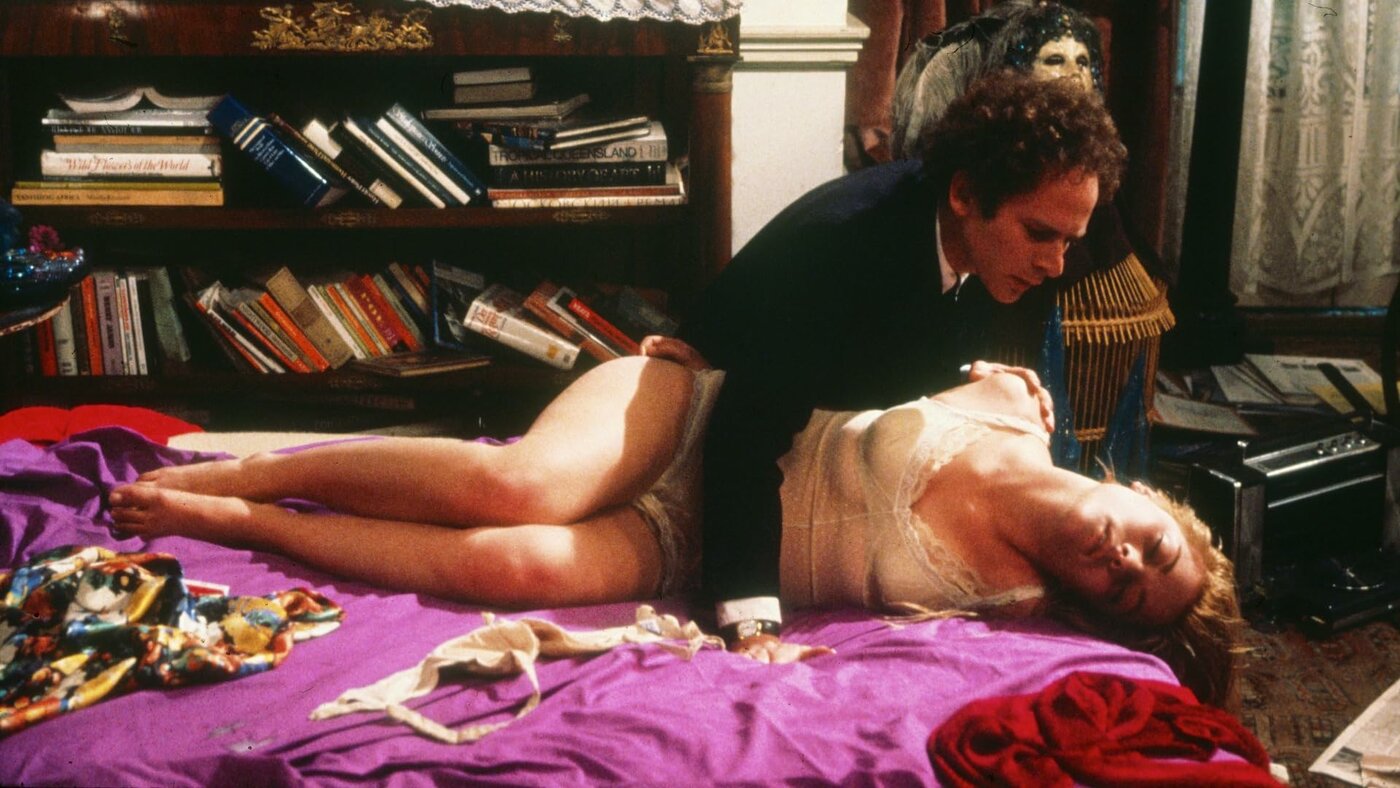
Bad Timing (Nicolas Roeg, 1980).
NOTEBOOK: And after that came Bad Timing.
THOMAS: I went back to see Nic Roeg and said, “I want to work with you so much, there must be something that I can do with you?” He was sitting in his office at Pinewood and was about to direct Flash Gordon [1980] and he said to me, “Here’s a screenplay that’s owned by Carlo Ponti: if you can get the rights, I’ll direct it.” So I went to Carlo and he sold it to me, gave me an option for $25,000. I found the money—Rank came in, Fox came in—and we made the film.
NOTEBOOK: So the financing was that straightforward?
THOMAS: Very straightforward.
NOTEBOOK: But the script…
THOMAS: I don’t know how we got it made. It fits into that Crash, Naked Lunch [1991] area of cinema. It proves in some way that people don’t read scripts, because when we finally delivered the film to Rank, they took the “gong man” ident off the front of it. The powers that be said they couldn’t have their trademark on the film, so it was cut off.
NOTEBOOK: Was it originally as elliptically structured, or did that come in post-production?
THOMAS: No, it was written like that, maybe with a little more mosaic added later. It was traditional Roeg cinema, a great script. We had a great time shooting it in Vienna and Morocco, a little bit in London for the interiors. We had a great house in Blackheath.
NOTEBOOK: What about casting?
THOMAS: Nico had seen Theresa Russell in Straight Time [1978] and wanted her, and Art Garfunkel seemed like a mathematician and Freudian analyst. We managed to get Denholm Elliott and Harvey Keitel. I love the film.
NOTEBOOK: Was it a difficult film to market?
THOMAS: Yeah. These films go through strange lives. Most of the films I’ve made, that have become what in the old days you’d call “Midnight Classics,” get hammered when they open. If you pulled out all the original reviews, talk about the shock of the new. They described Merry Christmas, Mr. Lawrence as “Empire of the Senseless.” But then the audience gets hold of them. Eureka [1983] for instance, which was hammered when it opened but is now considered one of Roeg’s best, was never seen by anybody except on TV. It only played in cinemas for a few weeks. You always find out what the real value of a film is later on.
NOTEBOOK: So you have to trust in your own judgment? You must have pretty thick skin to keep taking those knocks, critically?
THOMAS: I just had a film come out called Dom Hemingway [2013]. It was completely hammered. So discarded here, so insulted and dismissed in a very, very rude way. It’ll come back, after the video release, just like Sexy Beast [2000] did. It was a group hammering, a hysterical response. I’m waiting for it to open in America the week after next to see what happens. Then who knows? Maybe it won’t come back. When I look at the season of films I’ve got at the BFI now, 80 percent of those films were excoriated by the press when they came out. That’s just what happens. It doesn’t really affect me anymore. A group drubbing at Cannes can affect me. If you put a film into competition and you get a terrible reaction from all over the world, that’s difficult, and that’s happened to me before.
NOTEBOOK: With which film?
THOMAS: With Crash.
NOTEBOOK: That film is a masterpiece.
THOMAS: Coppola abstained from voting. It was a film that really hit people’s nerves. In the UK, 80 percent of the press was extremely strained and shocked. Naked Lunch too. If you were to go back and look at the reviews from the broadsheets and tabloids, it was dismissed. Not in Sight and Sound, though. Then slowly, the film catches up or people catch up with the film. Look at something like The Place Beyond the Pines [2012] today, such an incredible film seen by so few, but people will see it eventually.
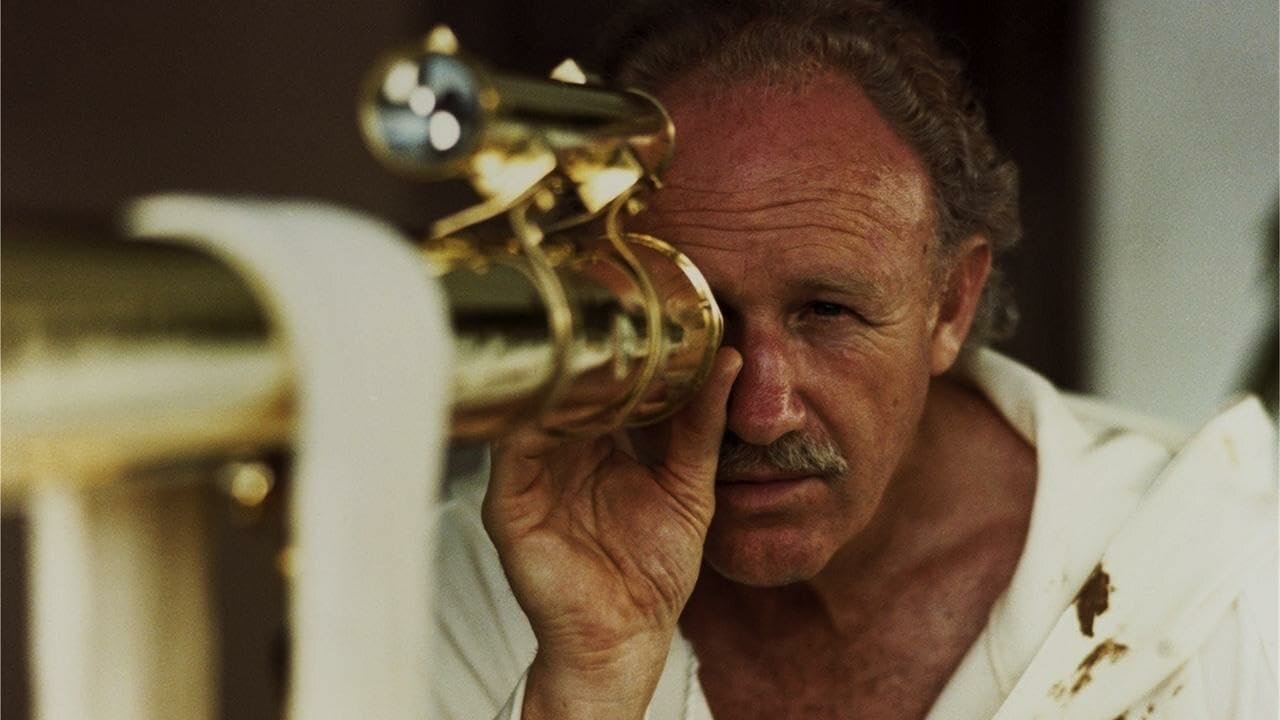
Eureka (Nicolas Roeg, 1983).
NOTEBOOK: So back to Roeg, you made Eureka with him next.
THOMAS: It’s an amazing film, I’m not going to use the m- word for it, but it’s up there.
NOTEBOOK: How was working with Gene Hackman? He has quite a reputation.
THOMAS: Well, I had a rocky time with him, but he’s a brilliant actor.
NOTEBOOK: When you say a rocky time…
THOMAS: It was difficult. He’s a very professional, brilliant actor but he’s not great to hang with. If you’re stuck in Jamaica, in the middle of town for sixteen weeks and then the Arctic Circle … He’s from a different tribe.
NOTEBOOK: A different tribe?
THOMAS: Polite, but not engaged. Also, I was a neophyte, I hadn’t got it down. I had to improve my skills. Maybe when you’re younger you’re more confrontational, and as you get older you get less so, you get more adroit at dealing with those situations. Not fanning the flames is a necessary skill for a producer, and maybe I could have been guilty of doing that at the time.
NOTEBOOK: You did a third film with Roeg later, Insignificance [1985]. Were there ever plans to work with him again?
THOMAS: It was a question of circumstance. After Eureka, I got taken to the South Pacific with Nagisa Ōshima, before I did The Hit [1984] with Stephen Frears. Then I got a call from Bernardo Bertolucci, who I knew socially from all the festivals. He was already beyond a legend when I first met him on the back of The Spider’s Stratagem [1970], Before the Revolution [1964] and The Conformist [1970], films he’d started making when he was just 21. So, all those films took me away for years. I’d been making films for a decade with Nic, then I made films for twenty years with Bernardo, interspersed with other people. It was all-consuming. I regret that I’ve not made another film with Nic.
NOTEBOOK: He’s had a tough time in recent years getting films made.
THOMAS: The film business hasn’t been good to Nic in terms of the actual system. In other countries, Nic would have been supported by the industry, someone who was such an important contributor to our cinematic culture. He would have been taken care of. Look at France or Italy, or Portugal where Manoel de Oliveira is still making films at 100. Nic’s autobiography [The World is Ever-Changing, 2013] is incredible, more modern than anyone else’s. There he is in his mid-80s and his book is more radical than anything else out there. It’s by no means a conventional autobiography; he’d never do anything like that.
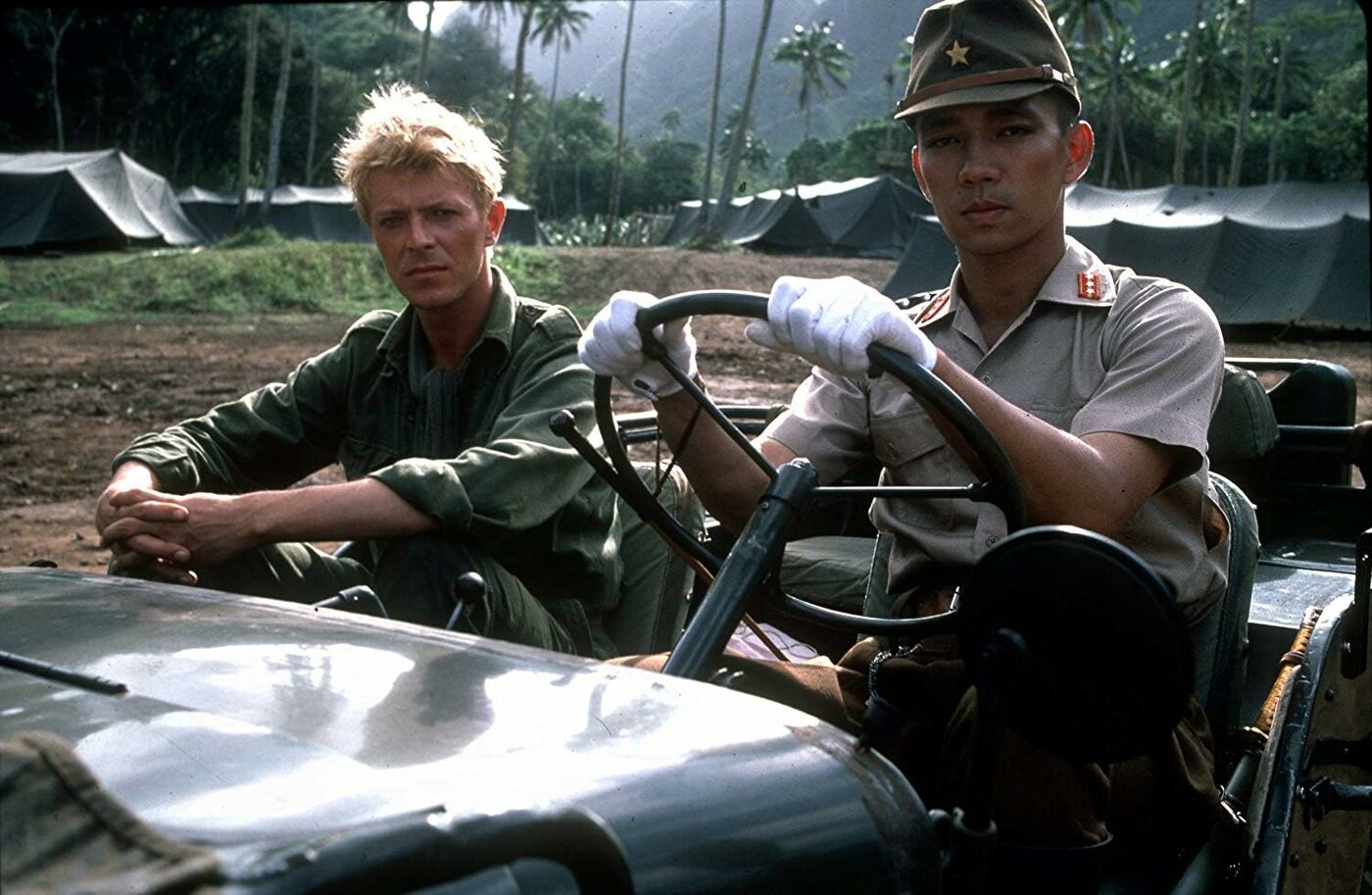
Merry Christmas, Mr. Lawrence (Nagisa Ōshima, 1983).
NOTEBOOK: So from one master to another, how did you first meet Nagisa Ōshima?
THOMAS: I met him at Cannes the year The Shout won the Jury prize. I sat next to him, got drunk with him, exchanged business cards. He was wearing a kimono and couldn’t speak English. Two or three years later, I got a screenplay from my good friend Michiyo Yoshizaki in London. She said, “Ōshima wanted you to have this.” So I went to Tokyo for the opening of Bad Timing and took Paul Mayersberg with me. It was my first time in Japan. We managed to get some finance from Japan, New Zealand, and the UK via a New Zealand tax deal and shot Merry Christmas, Mr. Lawrence in the South Pacific.
NOTEBOOK: It must have been very demanding logistically?
THOMAS: It was, but it was fabulous. I look on it as an incredible adventure into the unknown. I enjoy that. It’s what filmmaking is to me, and I wish it were still like that. I don’t know if I could get there anymore because the film business has changed so much, but going with a group of people to a place that has never been filmed before, where no camera has been, it’s a producer’s dream. It’s very difficult nowadays for a producer like me to maintain that kind of size and originality. I want to make a film that’s artistically sound but has something in it that transcends mere story. It’s difficult to find the resources.
NOTEBOOK: There are so many elements at play in a film like Merry Christmas, Mr. Lawrence that, even with a master filmmaker like Ōshima, were you worried it might go a different way?
THOMAS: He was an amazing man and he trusted me. He told me to cast all the English parts and bring the English crew. David Bowie was his idea, but Tom Conti, Jack Thompson, and the whole crew, we just turned up. I’d send him photos of the actors through the mail and that was that. Tom Conti insisted on learning Japanese phonetically for the film, to the point that any Japanese person that saw it assumed he could speak it fluently.
NOTEBOOK: Bowie was quite the get.
THOMAS: He wanted to work with Ōshima. He’s very cultured and knew all about Ōshima’s films.
NOTEBOOK: Wasn’t it quite a difficult time in France when you premiered the film?
THOMAS: The night they chose to screen our film in Cannes, the entire medical profession was on strike, so 5,000 doctors and nurses came from Marseilles to pelt condoms full of red paint at the front of the Palais. It was very difficult. We had to go in through the back without the red carpet. It was chaos, but a great experience. The film was well received there. It’s one of my favorites. I was very pleased with the producing job on that one—you can see just by looking at it what went into it.
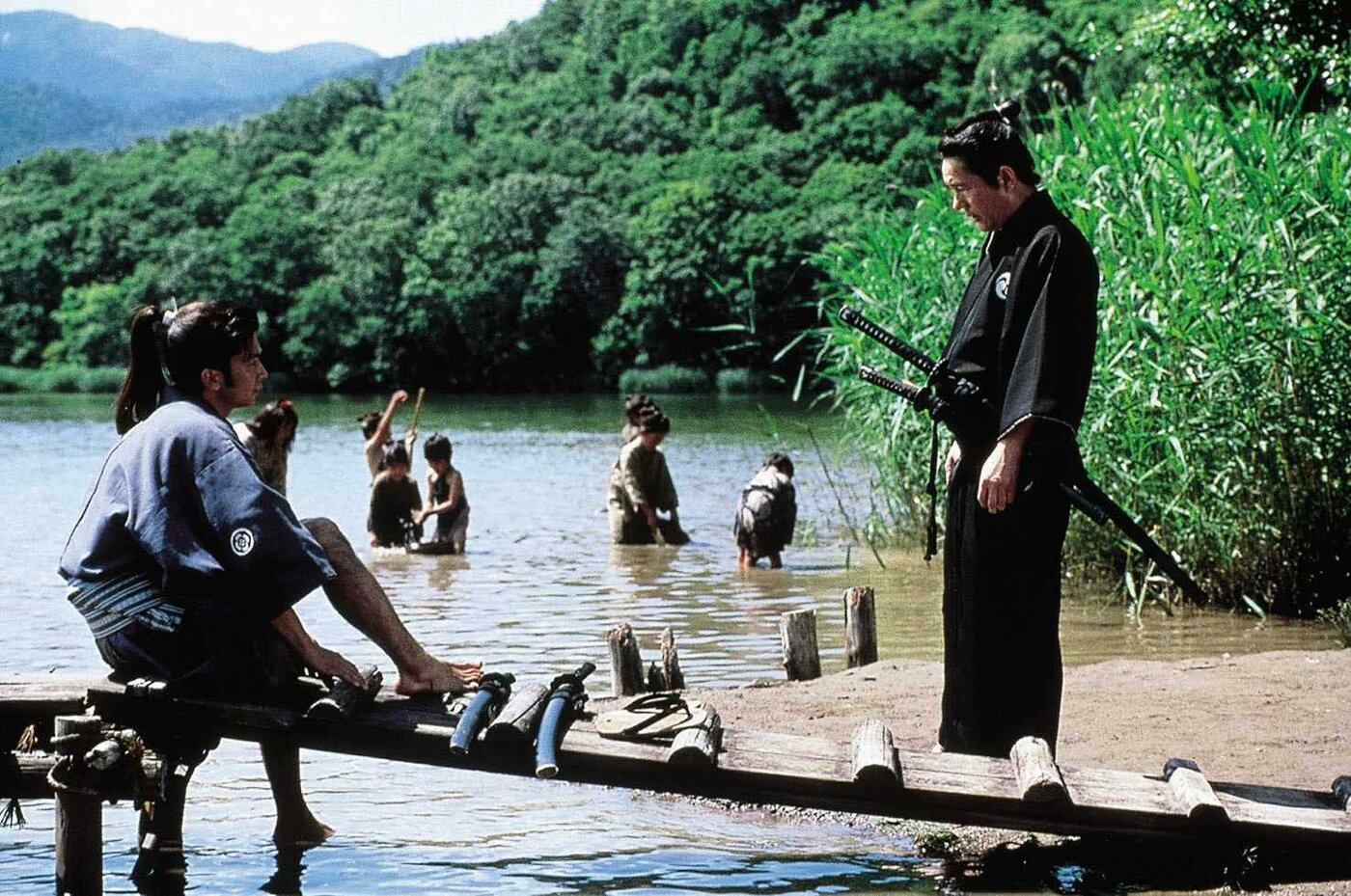
Gohatto (Nagisa Ōshima, 1999).
NOTEBOOK: You made Gohatto [1999] with Ōshima—his last film—years later. It’s even more recognizably an Ōshima film than Mr. Lawrence.
THOMAS: It is. For Mr. Lawrence he embraced English culture and learned the language for it. He was an extraordinary man. So when it came to Gohatto, I helped him get that film together. I got to work with Takeshi Kitano again, following Mr. Lawrence.
NOTEBOOK: Had you maintained that relationship with Takeshi in the intervening years?
THOMAS: I like Japan, I’ve got lots of friends there. Ryuichi Sakamoto for example, I’ve done lots of scores with him. A lot of my life choices are based on coincidence and timing, as well as what I like. I liked Sakamoto’s score for Mr. Lawrence, so we asked him to compose the music for The Last Emperor [1987], for which he won an Oscar, as well as for The Sheltering Sky [1990] and Gohatto. I’m very close to him and many others in Japan; it’s enriched my life. I’m very English, but I love going overseas to make films and build relationships.
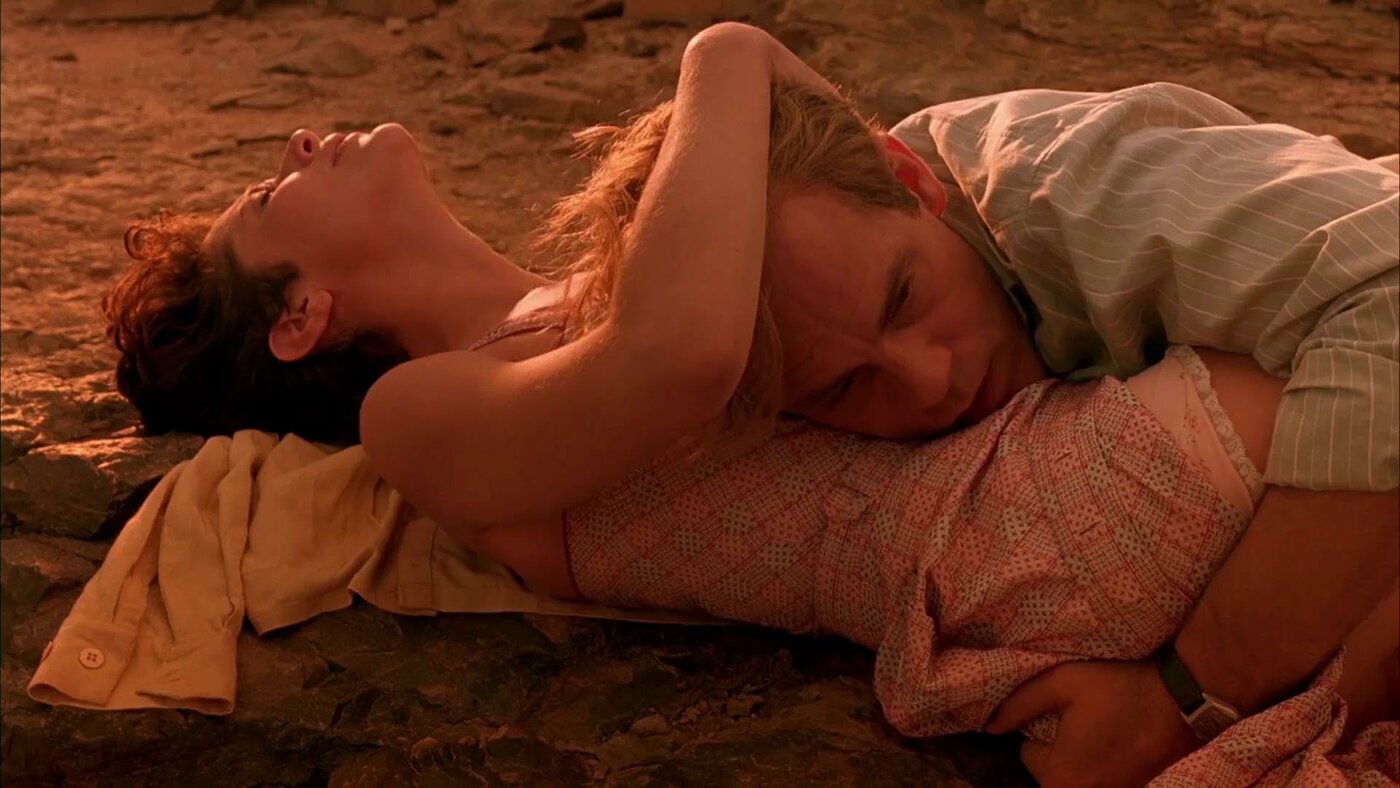
Sheltering Sky (Bernardo Bertolucci, 1990).
NOTEBOOK: What is it specifically about Eastern cultures that appeals?
THOMAS: I’ve no idea, but I’ve been drawn a lot to Asia and the Pacific region. I’ve made films all over; I’m drawn to things that I’m interested in. I want to enter those worlds as an enabler or producer.
NOTEBOOK: Can you see yourself directing out there?
THOMAS: I would like to direct another film. For every script that comes through, I ask myself if I want to do it. The film I directed was pretty good, and I enjoyed it, but I’m a producer and I want to keep doing that forever.
NOTEBOOK: Speaking of Sakamoto, there seems to be a strong musical undercurrent to many of your films, even down to the casting. Is that something you actively pursue?
THOMAS: It either comes from me or I endorse it. Music is an important part of my life. I love Glastonbury and all sorts of live music.
NOTEBOOK: What was the last gig you went to?
THOMAS: I don’t go to many gigs any more in London, but I listen to music a lot. There’s so much great stuff on television. I watched an incredible documentary on Dusty Springfield last night on television—you wouldn’t believe her story, those records. I’ve got a film planned on The Kinks with Julien Temple, who I’ve worked with a lot. Saying that, I still don’t preconceive the future. I don’t plan anything; things just happen. I’ve been lucky that I’ve never been short of an idea of my own to make a film about, or short of other people approaching me with ideas that I can join in on and make my own. I join in on someone’s idea until it becomes a shared idea. I’m not proprietorial about it at all: It’s a director’s film with me as producer to help realize that dream.
NOTEBOOK: So as a producer, how do you feel about the auteur label?
THOMAS: I can live with it. It’s truthful in some cases. Films don’t happen without someone else’s brain. Often you see “a film by” credit and it’s justified: It couldn’t be by anyone else, you instantly recognize the work. Few, but some.
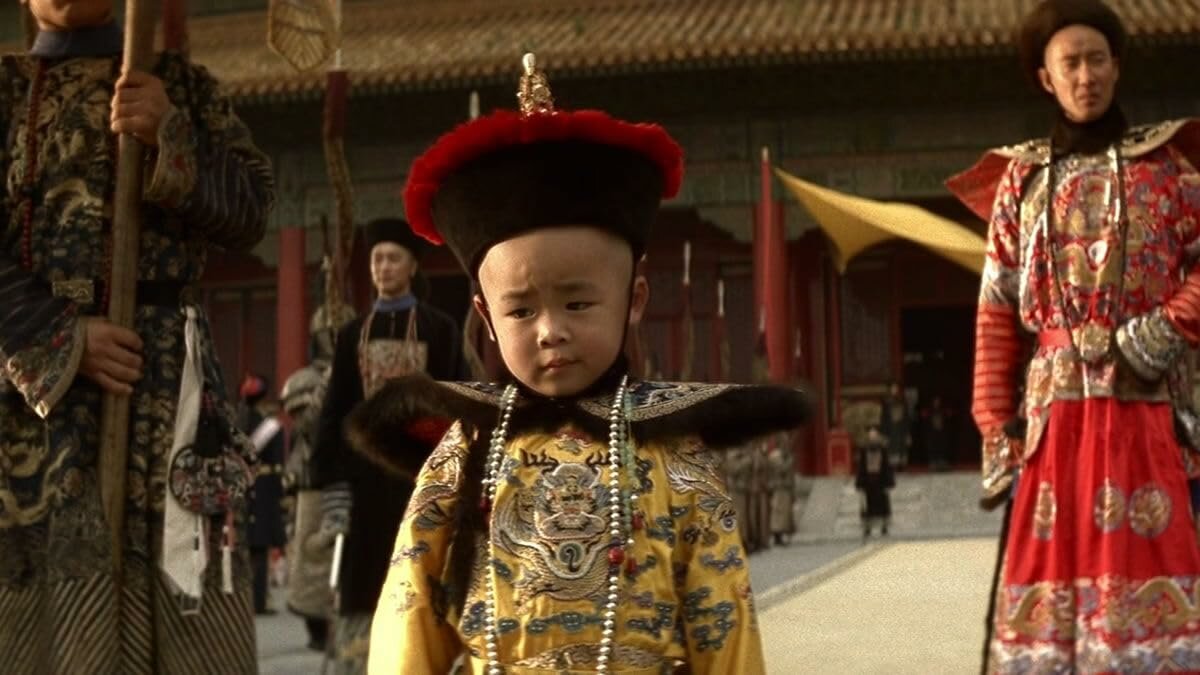
The Last Emperor (Bernardo Bertolucci, 1987).
NOTEBOOK: Let’s talk about The Last Emperor. The scale of that film is just astonishing.
THOMAS: When I look at the film now, I say to Bernardo, “I don’t know how we did it.”
NOTEBOOK: To think it’s an independent film.
THOMAS: Independent and with no digital effects. Nothing is altered, it’s real people on real sets with real light in real costumes.
NOTEBOOK: Could you make something like that today?
THOMAS: Impossible, it’s finished. Nobody can make an independent film like that anymore and the studios wouldn’t let you. A film like that, or Reds [1980]—those megalomaniacal dreams like Lawrence of Arabia [1962], Doctor Zhivago [1965], or The English Patient [1996]—I wouldn’t know how to do it. There just aren’t enough resources in the way films are made today. They have to be much more modestly reasoned. Kon-Tiki [2012] managed to smuggle in a decent-sized film, but it’s very difficult. That’s why I’m forced to make location-based movies, because I can’t afford to recreate things in a studio. In the modest economy that I work in, it’s impossible. I’m an independent. I have to find the money from others and don’t have a parent to do it for me. I’ve never really been able to interact with the studio system to pay for my films until the very end, once it needs to be released.
NOTEBOOK: How accommodating were the Chinese government on the film?
THOMAS: They wanted to do it. They wanted that story to be told, about an Emperor—the Son of Heaven, Lord of 10,000 Years—who died as a gardener. We arrived and they basically said, “Thank you very much, we’ve always wanted someone to tell that story, especially someone like Bertolucci.” The Italian embassy and the Italian government were very helpful to Bernardo, whereas I received no support from the British embassy. In fact, they shunned us. The British ambassador went white when I told him what we wanted to do; he just saw trouble, but the Italians—proud of Marco Polo—were all over it.
NOTEBOOK: So the script was rubber-stamped without any problems?
THOMAS: We worked closely with the guy who ghost-wrote the book before he died, so we kept our noses clean, using the Emperor’s brother as an advisor. Then we had this incredible actor who played the interrogator—he was also in Little Buddha [1993]—who helped us a lot. Everyone working on that film was at the peak of their powers—[cinematographer] Vittorio Storaro, Ferdinando Scarfiotti, who was Visconti’s production designer—everyone.
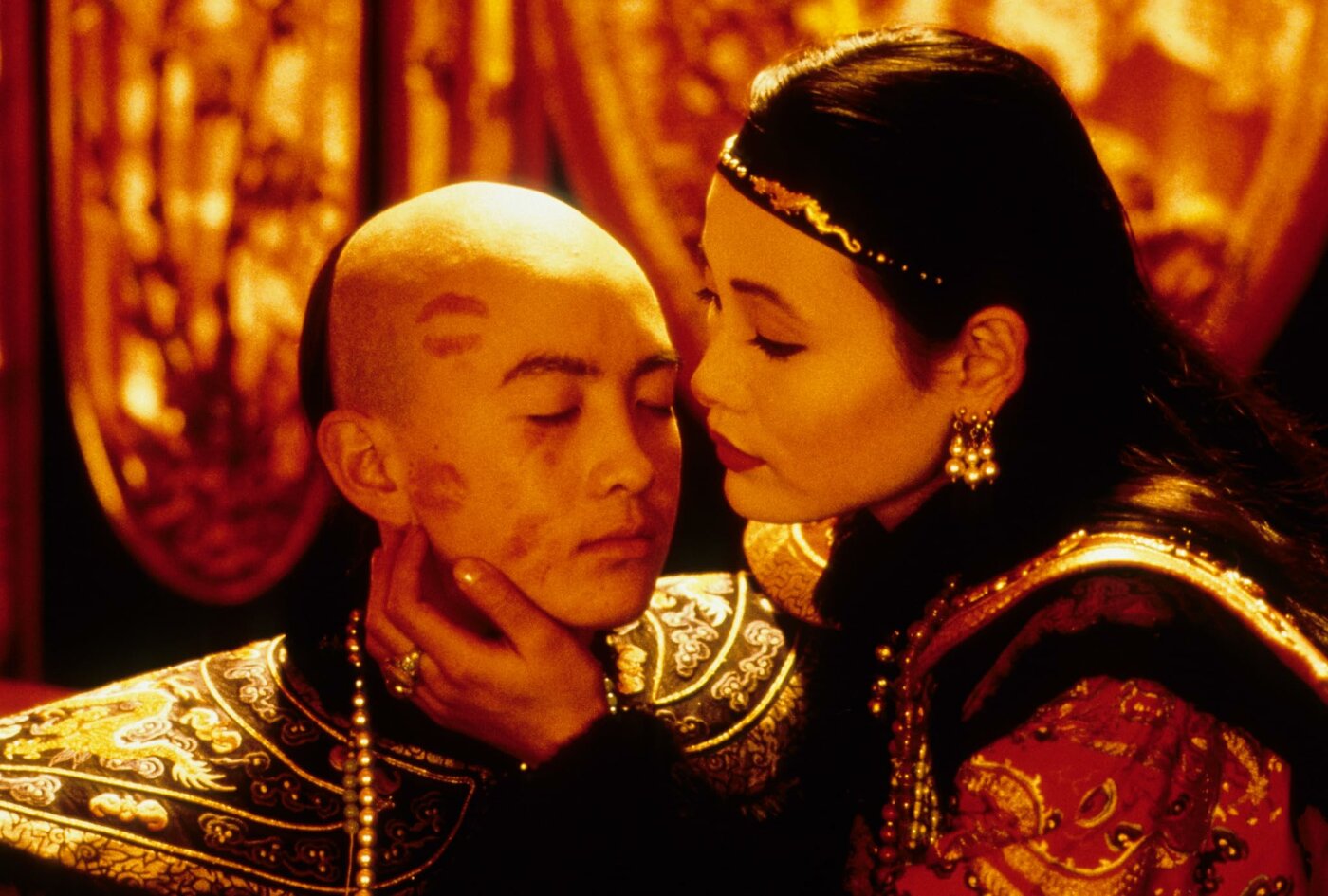
The Last Emperor (Bernardo Bertolucci, 1987).
NOTEBOOK: With a project of that scale, you must have spent much of the time with your heart in your mouth.
THOMAS: It was terrifying. Like an endless tunnel. When you start a movie, especially a six-month shoot like that, you just can’t stop. You’ve got hundreds of people with you, so you have to shoot every day, whatever happens. There were difficult moments but they disappear when you look back at it.
We were all over China, places you’d never ordinarily see or be able to go. We shot in the Emperor’s own palace in Manchuria, which we restored, the very places he lived and was incarcerated in, the studio which was built by the Japanese. Sakamoto recorded music in a studio which had been used by the Japanese in the thirties, where the floors of the stages were made of mud. None of the sets were sets—they were all built for real, out of bricks and mortar. We built a street in the Beijing film studio and a block of office buildings for ourselves on the backlot where we essentially lived for two or three months before moving north to Manchuria. When we came back to Beijing, families had moved into the sets that we’d built; they’d been taken over as homes for those working at the studio.
NOTEBOOK: Did Bertolucci take the whole thing in his stride?
THOMAS: That he’d even attempt a film like that says it all. Those big films are physical experiences, it’s like running a marathon. Every day you need to be at work at six a.m. to wrangle thousands of people. It was a mammoth undertaking.
NOTEBOOK: How was Oscar night?
THOMAS: It was unreal. There was no canvassing and all that stuff. It was a different experience to what it is today. I’ve been back with other films; I was there last year with Kon-Tiki, but this one was different. I was young and innocent, and it was an amazing thing that happened to us.
NOTEBOOK: What, in a practical sense, did the Oscar change for you?
THOMAS: It gave me a few years of it being very easy to set up movies. I managed to find money for films with the click of a finger.
NOTEBOOK: Did that include The Sheltering Sky?
THOMAS: Well, with Everybody Wins [1990] I was approached a week after the Oscars by a very canny, very great agent called Sam Cohn, asking if I knew who Arthur Miller was! He invited me to New York for lunch with Arthur, where I was told Karel Reisz wanted to direct this film. I couldn’t resist it. I found the money for it in a couple of seconds, and we made it. It’s a good movie but it never caught people’s imaginations. Then the same happened with The Sheltering Sky. I’d say the glow of it lasted for a decade, but it’s a blessing and a curse. Of course I’m thrilled, and it probably defined my career, but you can’t ever dream of doing something like that again. I think a lot more modestly now. It was a quarter of a century ago.
NOTEBOOK: Was the 3D restoration of The Last Emperor your idea?
THOMAS: It was a joint decision. It came from someone else, so I told Bernardo and Vittorio about it. Whether it was a good or bad idea, it looks beautiful. The detail in the film is five times as vibrant now. We shot in the Supreme Harmony, the most important building in the city, where the baby was on the throne. We were allowed into this tiny tinderbox with all of Storaro’s lights and cameras. It looks incredible.
NOTEBOOK: You’ve used 3D twice since, with Wim Wenders’s Pina [2011] and Takashi Miike’s Hara-kiri [2011]. What are your feelings on it?
THOMAS: We’re working on a new film with Wenders called Everything Will Be Fine, which will be in 3D. He loves it. I’m happy with it—it’s been around a long time and hasn’t really popped out as much as it should have done. Then, some films use it perfectly, like Avatar [2009]. There’s still controversy surrounding it, but it’s how we see life. Miike used it differently to Wim, but I think Pina utilized it better than anywhere else. I’m pleased with The Last Emperor’s 3D transfer, I just want to show it to more people. It was at Cannes, but it’s not been released properly yet. It’s hard to re-release a film.
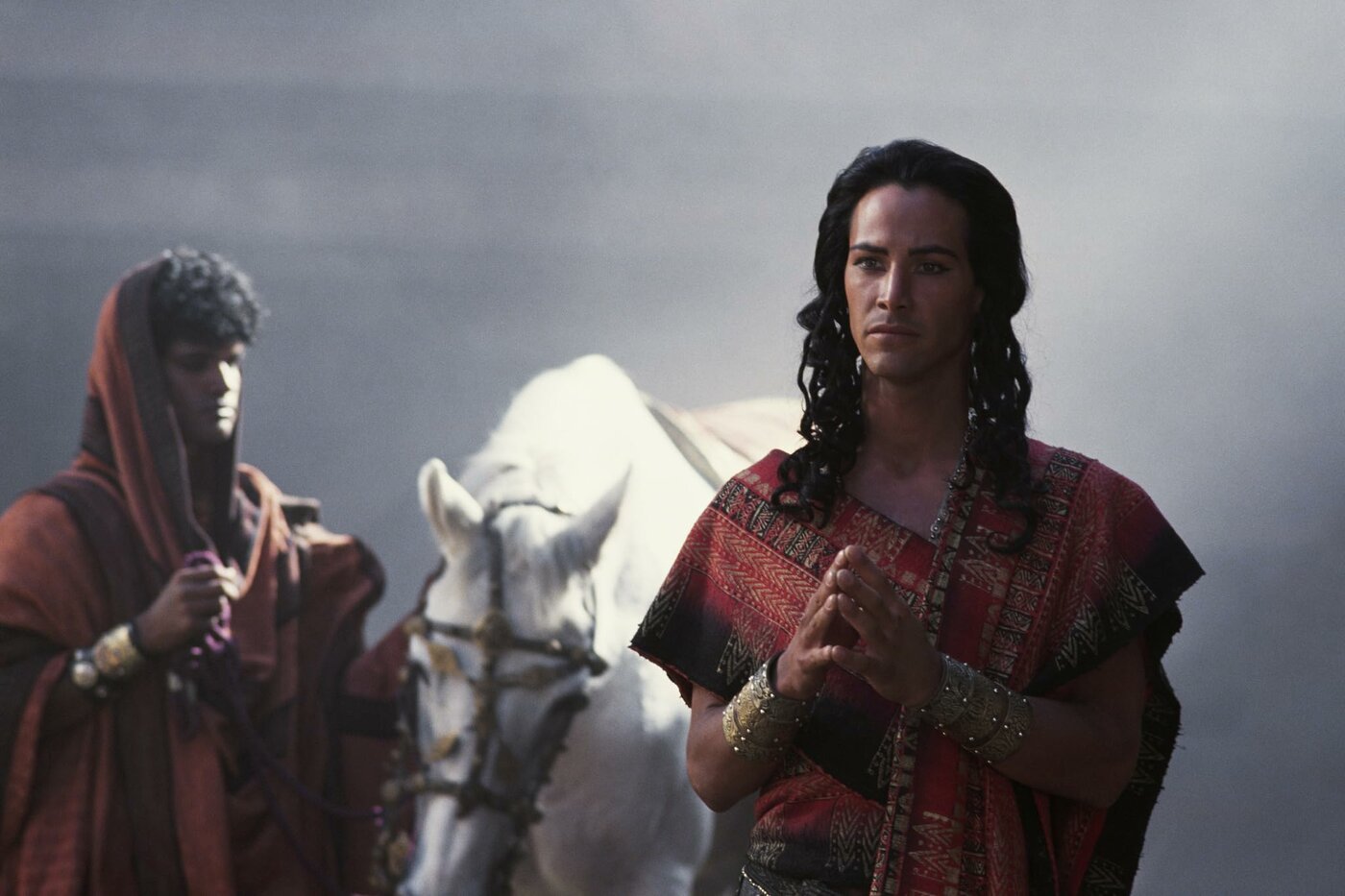
Little Buddha (Bernardo Bertolucci, 1993).
NOTEBOOK: You’ve spoken of negative reception to some of your films earlier; were you surprised at the reaction to Little Buddha?
THOMAS: Yeah, it was a bad reaction.
NOTEBOOK: How do you feel about the film?
THOMAS: I love it because it taught me about lots of things I didn’t know about. It was great making a film in Bhutan and Kathmandu, but it was epically sized. I don’t know whether it was underrated or if they were right—I need to see it again. It’s about fascinating, brilliant things. We tried for so much. Of course, casting Keanu was controversial, but he did very well. It just didn’t happen.
NOTEBOOK: It was around The Last Emperor time that you did your Cannes jury stint. Tell me about fellow juror Norman Mailer.
THOMAS: Stormin’ Norman? There were some incredible people on that jury. Do you know Theo Angelopoulos?
NOTEBOOK: One of the greatest filmmakers. I was lucky enough to interview him a few weeks before he died. It’s such a shame his work isn’t better known.
THOMAS: Angelopoulos didn’t even make it into the Oscars’ departed montage, or BAFTA’s. He didn’t mean anything to them. It’s metaphorical that Angelopoulos, who made all those wonderful films, Greece’s greatest filmmaker, didn’t register enough to be included. I canvassed for his inclusion.
NOTEBOOK: So the Palme d’Or went to Maurice Pialat for Under the Sun of Satan [1987]?
THOMAS: That was controversial. The audience booed it, and the British critics hated it. I remember getting a grilling from the British press on the airplane home. There are reasons for these things happening on the jury. They were a passionate bunch, so getting them to agree was difficult.
NOTEBOOK: And Mailer?
THOMAS: He was a delightful man. I saw him again afterwards in America a few times. He was always very nice; you could have a great conversation with him, but I saw him getting very confrontational with people outside of our group who were getting in his face. He didn’t like that; he’s quite front-loaded, ready to go. People knew that, though, so they’d stick a camera in his face for a reaction.
NOTEBOOK: Did you talk to him about his films?
THOMAS: Yeah, I watched Tough Guys Don’t Dance [1987] with him. It’s such a great line, “Tough guys don’t dance,” so I asked him why he didn’t include it in the movie. He never answered me. They were a great bunch, that jury. I got particularly friendly with Elem Klimov, and he came to London where we showed him The Last Emperor. I was a huge admirer of his films, I mean Come and See [1985]… the purity of Klimov’s work. He was amazed at his lack of success compared to others. His films were so revered but such downers, they’d only play for limited audiences.
When we showed him The Last Emperor, it wasn’t completed, but we ran it for him in one of the screening rooms in London. However, the sound reels and the picture reels got mixed up, and he was watching it with a translator next to him in any case. At the end he came out and said to me, “It’s amazing that Bertolucci can get away with this. It’s incredible, it’s amazing. What a film! But how did he get away with it? I don’t understand.” It was only afterwards that I found out that he’d watched the reels in the wrong order with the wrong sound playing over them.
NOTEBOOK: Who has the best Marlon Brando stories, you or Bernardo?
THOMAS: I don’t have any, well maybe a few from The Brave [1997], but not many. Bernardo and he were very intimate; they had a very special relationship and used to speak on the phone for hours at a time. Marlon loved telephone calls.
NOTEBOOK: I watched The Brave again recently.
THOMAS: Oh yeah? Where did you get a copy?
NOTEBOOK: It’s an old UK VHS.
THOMAS: Right, because it never got released in the US. I met Johnny Depp, who wanted to make the film, lovely guy.
NOTEBOOK: What was he like as a director?
THOMAS: He’s a very gifted person, but the film didn’t go well. It’s a casualty of war.
NOTEBOOK: I think it’s tonally quite difficult to get your head around. There are all the magic realist elements, but it’s quite a downer.
THOMAS: It’s a tough story.
NOTEBOOK: And how was working with Brando?
THOMAS: He was great. It was toward the end of his career. I’ve got anecdotes, but none I really want to tell.
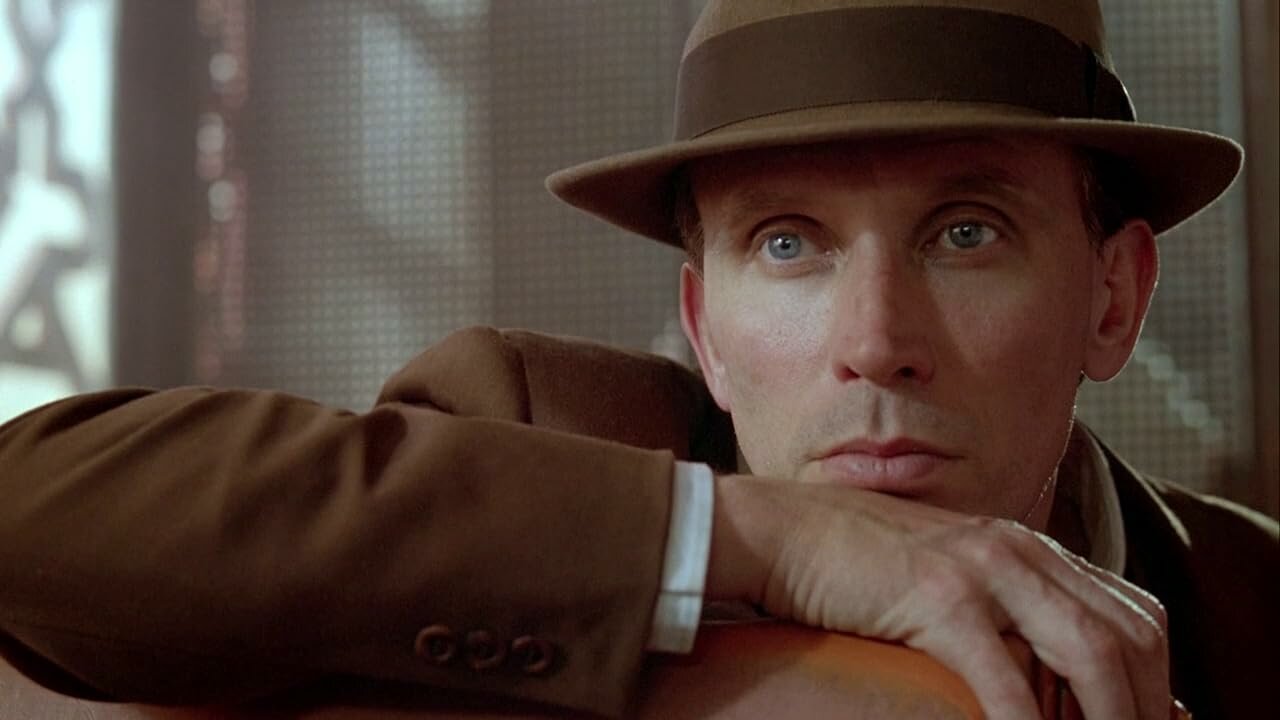
Naked Lunch (David Cronenberg, 1991).
NOTEBOOK: So Cronenberg…
THOMAS: I met him the year of Bad Timing. I was in a bar having a Red Stripe afterwards and he came and sat next to me. I knew all of his films already, loved them. After the second beer, I asked him if there was anything he wanted to do. “Yeah, I want to do a film of Naked Lunch,” he said. I knew the book—I’d read it when I was younger, and it was like a flash of light for me. There was no one else I’d want to attempt it with.
I went to Lawrence, Kansas, to get the rights from Burroughs for $1,000 a year. He wanted Cronenberg to make it too, so he let me have it. I kept the rights until Cronenberg was ready to write the script, then the very difficult journey began. We were about to start filming in Tangier when the Gulf War happened and we had to leave. We just couldn’t get insurance or a bond. The film was completely canceled until Cronenberg called and said we could shoot the whole thing in Toronto, which was good because I managed to save all the money we’d blown on the aborted version. But it worked. Sticking a few camels in Toronto worked: You believed every minute of it. It was a good lesson for me.
NOTEBOOK: Was the screenplay what you expected when he first delivered it?
THOMAS: I had no idea where he was going with it. The book needed a very specific type of adaptation, much like Crash. They were both unfilmable novels, but with themes in them which were very filmic. Other people had attempted Ballard’s and Burroughs’s books.
NOTEBOOK: What was Burroughs himself like?
THOMAS: Fabulous. We had a recce in Tangier with Hercules Bellville, Burroughs, Cronenberg, and myself. We spent ten days there, locked in because the weather wouldn’t let us out. We visited Paul Bowles and stayed at the Minzah Hotel where Burroughs had always wanted to stay when he was younger but could never afford. People still recognized him there 40 years later—he looked the same, with his hat and his cane. He was always immaculate. I never saw him out of place. A true aristocrat, the complete opposite of his reputation, his legend. Obviously very subversive, but you’d never have guessed from his exterior. Of course, you don’t know what goes on in a man’s head.
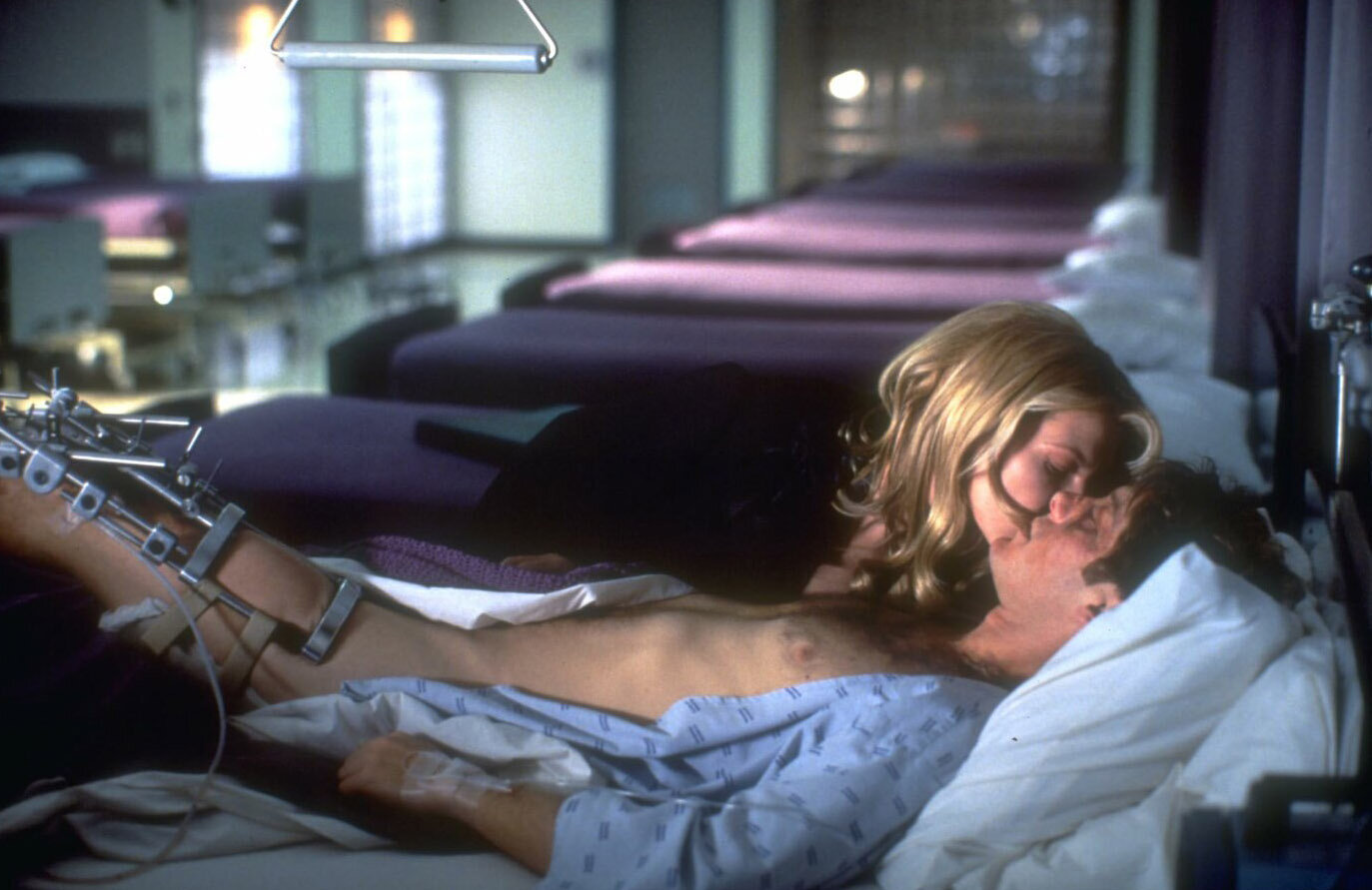
Crash (David Cronenberg, 1996).
NOTEBOOK: What’s Cronenberg like to work with?
THOMAS: A pro, a master. You meet these filmmakers and want to work with them because they know something that you don’t know. There’s very little producing needed on a David Cronenberg film. Some. Collaboration, but we’re very close friends. As a producer, you want a David Cronenberg film, that’s the reason you work with him. There are very few directors whose name is used as an adjective.
NOTEBOOK: So whose suggestion was Crash?
THOMAS: His. We were just thinking what we could do next to outrage the general population [Laughs]. I knew the book; Ballard is probably my favorite writer and it was just an irresistible idea, the sexual opportunities provided by car crashes. I didn’t bargain for what happened, but I knew it was something that was going to be unusual, the elevation of the car crash to an artistic event. How much further can you go with a film? It’s not pornographic but it’s very confrontational.
NOTEBOOK: It must have been a nightmare to finance?
THOMAS: They all are. You’ve just got to try and put a package together that’s irresistible, whether with movie stars or artwork.
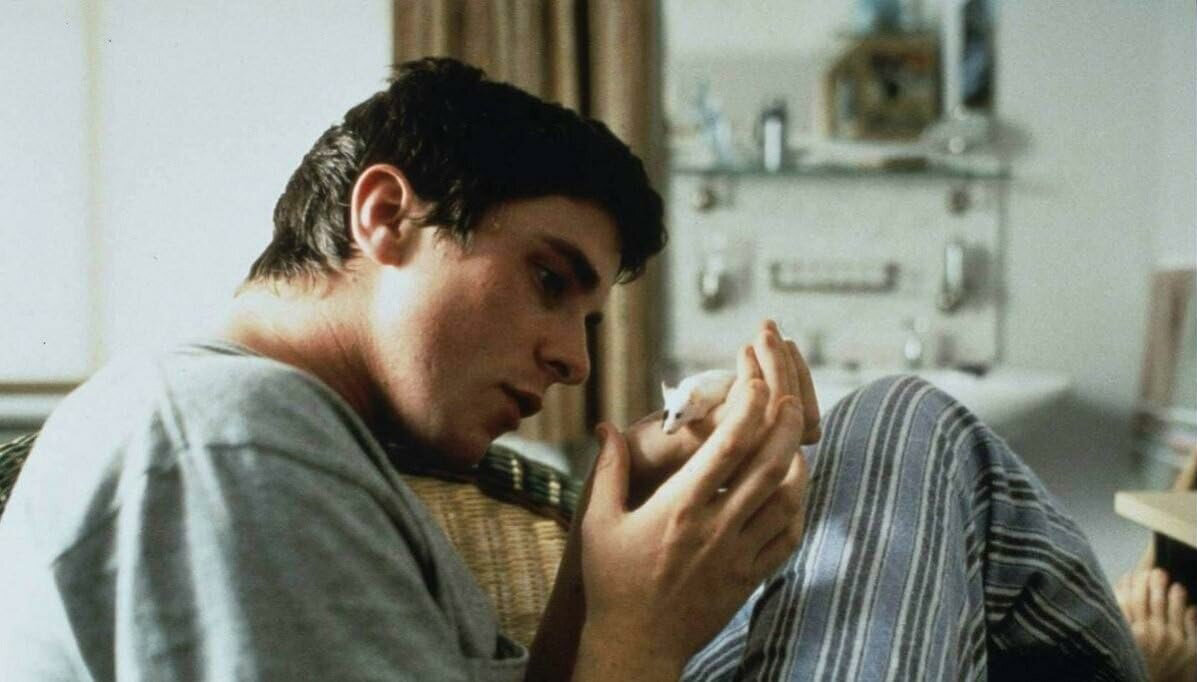
All the Little Animals (Jeremy Thomas, 1998).
NOTEBOOK: What made you decide you wanted to direct a film yourself?
THOMAS: I’ve always wanted to direct, like my dad. The reason I became an editor was because I wanted to direct. It was only because I ended up producing my first film that I carried on earning a living. This book, All the Little Animals, I’d read around the time I was an editor and wanted to make it into a film then. It was impossible though, plus I didn’t own the rights. They were owned first of all by Don Siegel, then by Lord Bernstein at Granada [Group]. He wouldn’t sell them to me. He just refused. Then Lord Bernstein passed and I managed to get hold of them through his son.
The book had something in it that really appealed to me, something really important to me, so my wife wrote a screenplay and I met Christian Bale here as a young lad. Initially, when I first wanted to make it, I wanted John Hurt to play the part that Christian Bale played and I wanted Dirk Bogarde to play the Mr. Summers part. It’s hard when you don’t own the rights to things you really want to make. There are books up on that shelf there that I’d love to make but they’re owned by other people, so I’m just waiting for them to die so I can offer their family or their estates money for the rights. I tried to make The Sheltering Sky with Nic Roeg, but I just couldn’t do it. It was only later, with the pulling power of The Last Emperor, that we managed to get the rights out of Warner Brothers.
Directing All the Little Animals [1998] was heaven. I enjoyed it very much. I love animals, especially hedgerow animals. This was about someone who buried them; it was a story I wanted to tell. It’s a simple film, intentionally made in a naïve way. I couldn’t explain that, though, and I got terrible reviews. I was on a plane flying back from Cannes and I sat next to someone I didn’t know was a critic. It was only later that I found out he’d written a review in one of the broadsheets saying, “Better luck next time, if ever, Jeremy.” I was excoriated for it. It was agony. I wasn’t Bertolucci—it was my first film, but it wasn’t reviewed that way. They were very hurtful, very personal.
NOTEBOOK: Do you think there was a certain resentment toward a producer deciding to direct?
THOMAS: Actors seem to get away with it. No one minds when George Clooney makes a film.
NOTEBOOK: Was it that experience of making your own film that led you to start working with first-time directors? You worked with Jonathan Glazer and David Mackenzie almost straight afterwards.
THOMAS: Not really. I just read the Sexy Beast script and it was irresistible. With Mackenzie and Young Adam [2000], it followed the line of Beat writers, of Burroughs and Bowles. I just liked the book. It was a grown-up story, very shocking when you watch it again, very full-on. Then, all my films are full-on, they’re all Xs. I’m making films for grown-ups.
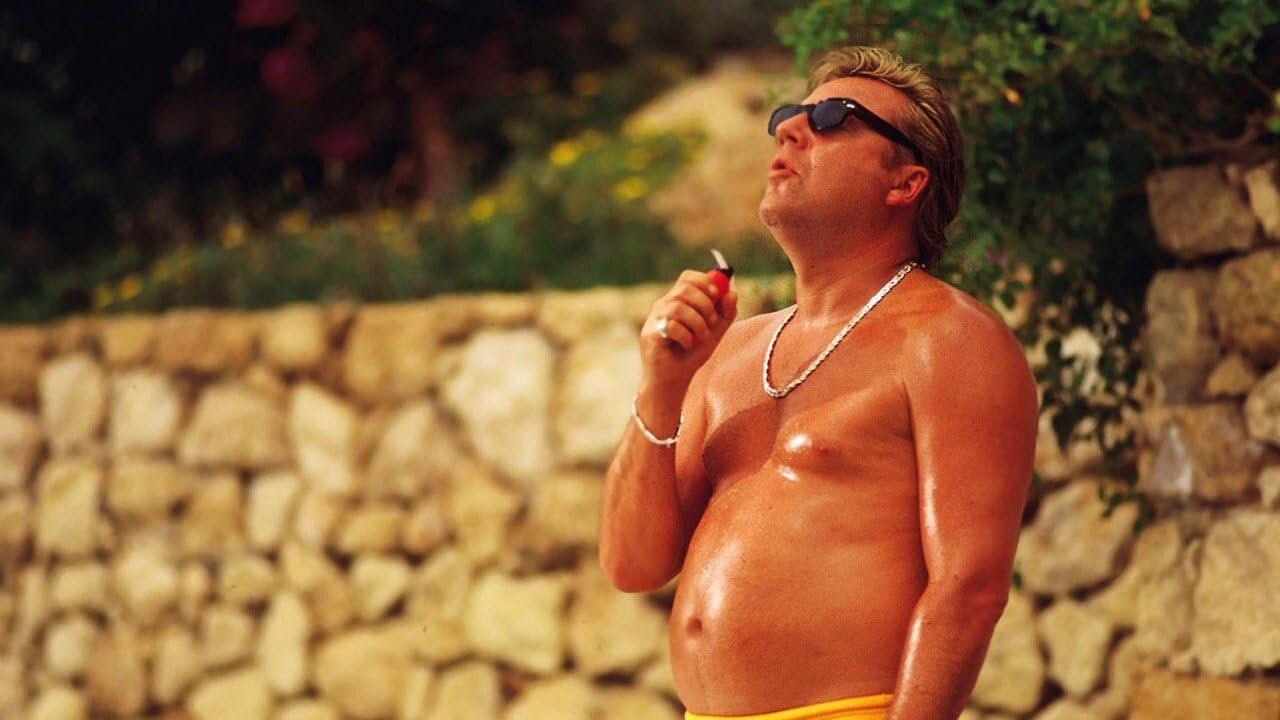
Sexy Beast (Jonathan Glazer, 2000).
NOTEBOOK: You were chairman of the BFI back in the nineties. How was dealing with the political side of the film industry?
THOMAS: I’d be a better chair today than I was then. I was very young. I was an unusual and unlikely selection. Initially, I didn’t want to do it—I didn’t think I was up to it. I didn’t like public speaking. I’ve got better at it but I had to seek medical help to get used to standing up and speaking to thousands of people. Then I came to like it, and by the time I left the BFI, I knew everything about it. I worked very hard there. I’m not sure what I achieved, as it was all dismantled, but now it’s very healthy again.
NOTEBOOK: It must have been frustrating as someone so entrenched in the industry to have to deal with politicians legislating on things they’ve no practical experience of.
THOMAS: It was very bad for me, for my enthusiasm. There are all sorts of film businesses, but the sort that I’m engaged in is very difficult to explain to people—your motives and ideology—least of all to a politician who hasn’t been to the cinema for a year. I’m not talking about people within the BFI; those are people who love film, that’s why they work there. But film is a big business here, it’s a big employer, pumping billions of pounds into the economy. We’re very good at making films here in the UK, everything from Gravity downwards. From Southampton to Bradford, we’re making films in the UK, and we’re bloody good at it.