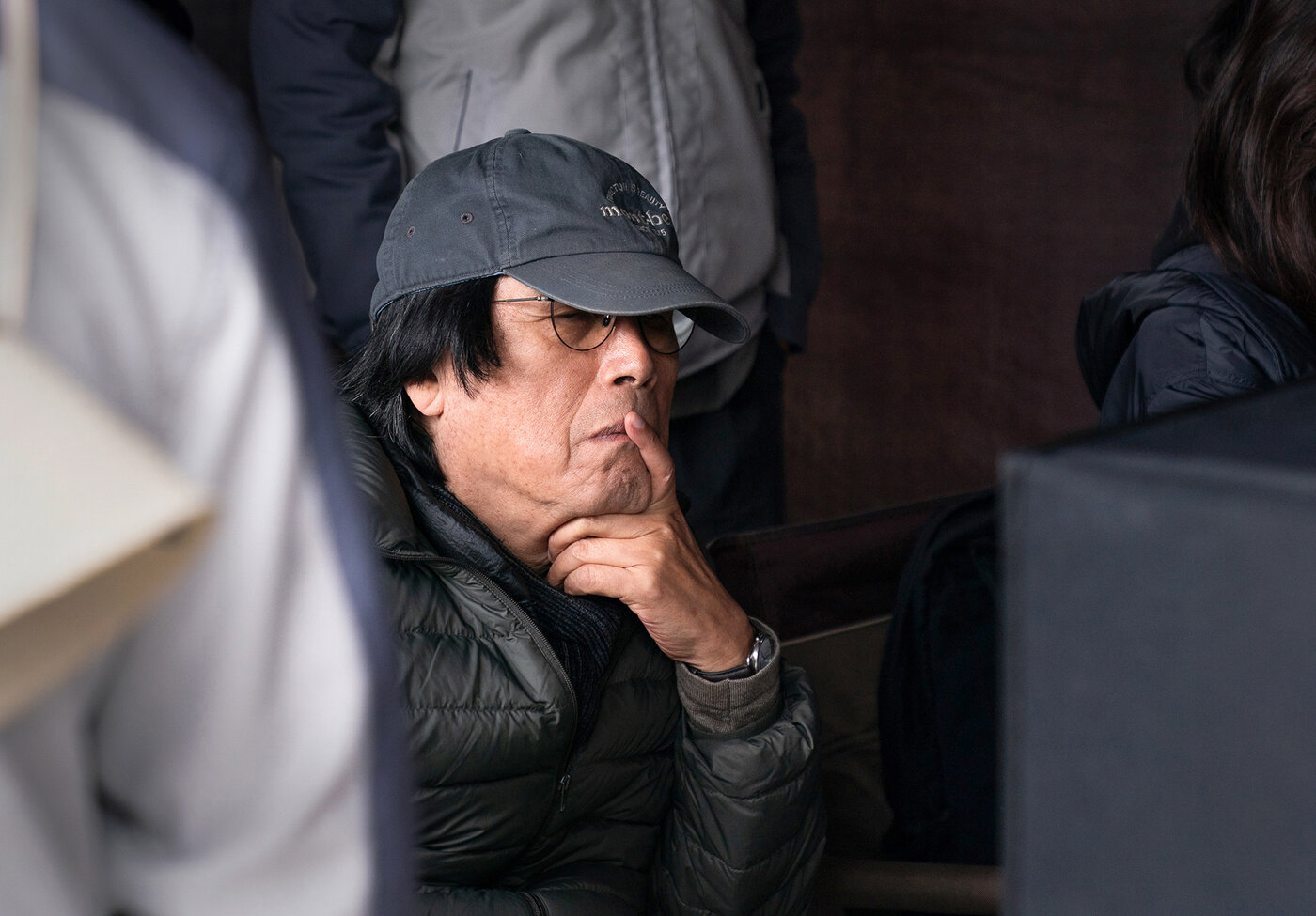
Lee Chang-dong.
When I first met Lee Chang-dong in person, in April 2025, he was already waiting for me at his office in Seoul’s Mapo District. He sat hunched over his notes, reviewing the questions I had sent him in advance. After a moment of small talk, he looked up at me, his expression suddenly serious.
“How long do you want to talk?” he asked.
I thought two hours would be enough. “Not enough,” he replied.
We talked for nearly four hours, with a large Secret Sunshine (2007) poster looming behind us. Our conversation took place in Seoul ahead of a retrospective of Lee’s work at Poland’s New Horizons Film Festival. He couldn’t attend in person, as he was busy finishing Possible Love (2026), his first feature since Burning (2018). When we met again this fall to continue our conversation after the premiere of his long-awaited return to cinema, I understood just how right he had been. One conversation had not been enough.
Talking to Lee feels like reading an essay as it takes shape; his answers have the texture of carefully composed speech. Each question seemed to set off a chain of thought, leading him through a series of observations and unexpected connections. He rarely settled for the obvious answer. Instead, he seemed intent on tracing an idea to its origins, examining its implications, and finding the precise language to articulate it. It was a quality I came to recognize as distinctly his. Before becoming one of South Korea’s most acclaimed filmmakers, Lee was a writer—and he still approaches cinema with the mind of one.
As Lee himself recalled during our conversation, he had never imagined entering the film industry; in those years, around the turn of the 1990s, filmmakers seemed to belong to a different breed of people. A chance encounter with director Park Kwang-su changed that. After Lee offered suggestions for adapting Lim Chul-woo’s novel To the Starry Island, Park asked him to write the screenplay. Lee agreed on the condition that he could also work as an assistant director, eager to observe a film set. When Park’s first assistant was dismissed the day before shooting began, Lee unexpectedly had to take over. With no experience, he turned to the storyboards, questioning every decision: Why this camera angle? Why shoot a scene in one take rather than use reverse shots? What made something work cinematically? As Lee later put it, had he been a proper assistant director, he would probably just have done his job. Instead, he kept asking questions—and in the process, became a filmmaker.
The timing was no coincidence. In the documentary Lee Chang-dong: The Art of Irony, he recalls how, around the turn of the 1990s, writers in South Korea began gathering to talk about films rather than literature. The country was emerging from decades of authoritarian rule, and democratization had dominated public life. As that struggle gave way to new questions, a fascination with visual culture “burst through like water breaking through a dam, flooding everything around it,” Lee recalls. Suddenly, everyone was talking about movies. He was swept up in this wave at a moment when he was also experiencing a creative crisis as a writer. Yet his move into cinema was neither the fulfillment of a lifelong ambition nor a clean break with literature. Lee entered it by trying to understand what made a story work onscreen, and learned to direct by questioning the very choices through which cinema creates meaning.
Perhaps this is why his films have so often resisted the notion that cinema should offer an escape from reality. Across his work, the lives of individuals remain inseparable from the social, economic, and political forces that shape them. Yet his films are never simply illustrations of those forces. Like a writer searching for the right words, Lee seems to approach each image as a question: What can cinema reveal that might otherwise remain unseen?
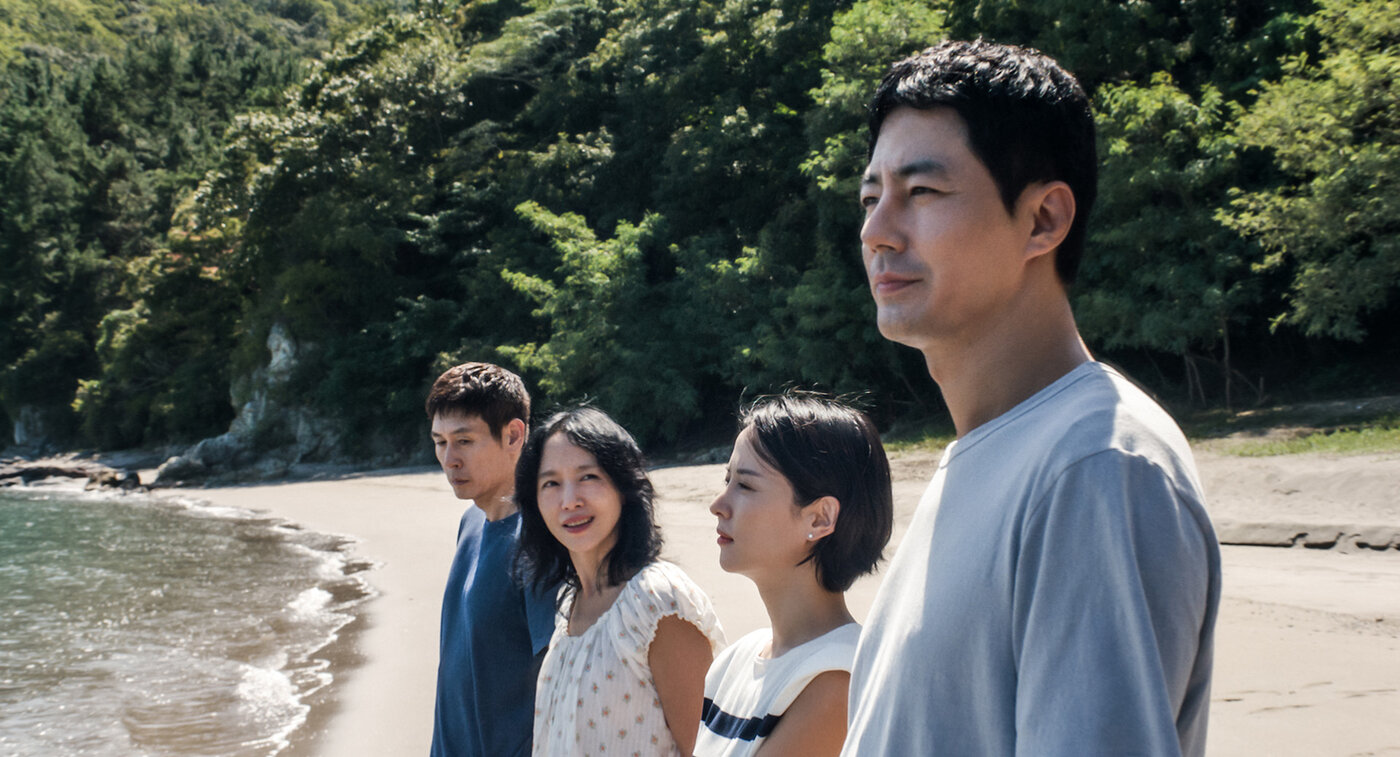
Possible Love (Lee Chang-dong, 2026).
After eight years, Possible Love feels less like a return than a continuation of that inquiry. It follows two married couples from different social worlds: Ho-seok and Mi-ok (played by Lee regulars Sul Kyung-gu and Jeon Do-yeon), a working-class couple, and Ye-ji and Sang-woo (Cho Yeo-jeong and Zo In-sung), who belong to South Korea’s old-money upper class. Their lives intersect through a documentary project that Ye-ji is hoping to finish with Ho-seok and Mi-ok’s participation. The film she is making focuses on a workers’ strike and the subsequent layoffs, which have left Ho-seok among those who lost their jobs. For Ho-seok, the events marked a profound rupture, leaving him trapped in a state of unresolved trauma. Ye-ji’s documentary seeks to understand what happened.
Lee uses this documentary-within-the-film structure to introduce another perspective: The camera both records reality and shapes the relationships unfolding in front of it. Through this interplay between observation and intimacy, Lee explores the fragile boundaries between social inequality and private experience, between what we reveal to others and what remains hidden, often inarticulate, beneath the weight of trauma.
Watching Possible Love felt like reconnecting with a voice I had been waiting to hear again—not simply because Lee had been absent from feature filmmaking for so long, but because his new film opened up fresh questions about the concerns that have always been present in his work. Our conversation about Possible Love became a way of returning to those questions, approaching them from a new angle, and discovering what had changed in the meantime.
This conversation wouldn’t be possible without support of many people, including Małgosia Sadowska—who was curator of Lee’s retrospective at New Horizons and who both contributed with her insight into Lee’s work and initiated the idea of that conversation—as well as translators Howon Lee and Haley Jung.
NOTEBOOK: In nearly all your films, love seems almost impossible. That makes the title of your new film, Possible Love, feel like a question in itself. What makes love possible?
LEE CHANG-DONG: I think love has to be possible. Without that possibility, there is not much left for human beings. No matter how much our lives change or how damaged our relationships become, love is the only thing that can reconcile us. And I don’t mean romantic love alone, but any kind of love we create with others. People may lead lives entirely different from our own, but the effort to love them is the only thing that can save us. Possible Love dares to ask a question of us: How can we make love possible?
NOTEBOOK: On the contrary, I’m curious how you make love impossible—when I think of the impossibility of love, I think of Oasis [2002].
LEE: It all began in May 2000, when I was at the Cannes Film Festival with Peppermint Candy [1999]. I remember walking out of a screening of Lars von Trier’s Dancer in the Dark [2000]. The sun, the sea, the crowds outside the Lumière Theatre—I felt as though I had stepped out of a fantasy. It was then I realized that even films dealing with brutal reality ultimately offer the viewer a fantasy. I began to wonder: What kind of films am I making? What is fantasy in cinema? I wanted to make a film that was not about offering fantasy but about fantasy itself—a film that would question the boundaries between fiction and reality. The feeling that most closely resembles fantasy is love. It is profoundly subjective, experienced by just two people and incomprehensible to everyone else. I wanted to tell a story about a love that others might dismiss as “impossible.”
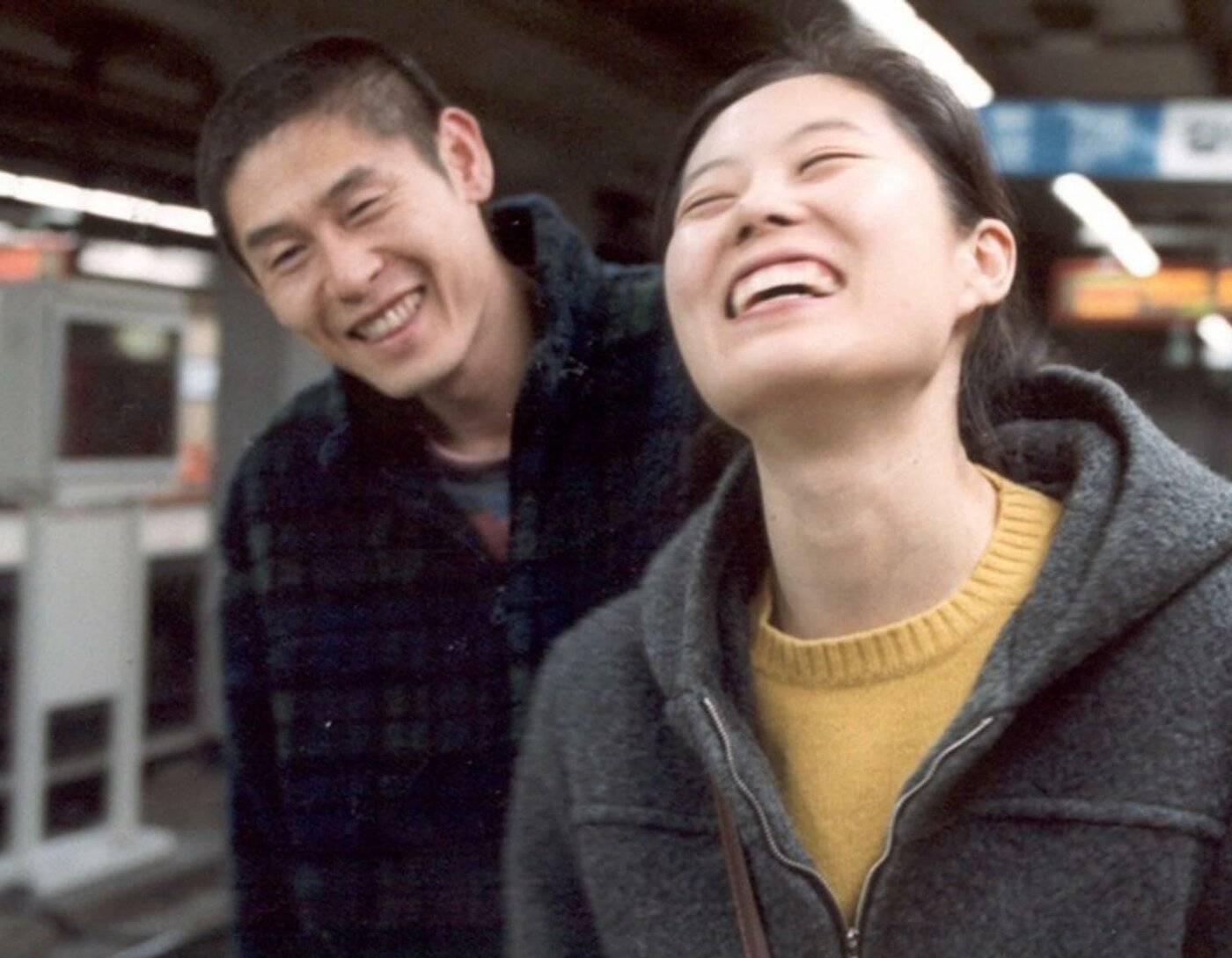
Oasis (Lee Chang-dong, 2002).
NOTEBOOK: The film begins with an act of violence. Why did you choose such a radical approach?
LEE: Oasis is the story of two people whom society does not recognize as capable of love. She is a woman with cerebral palsy whom no one sees as a person capable of loving or desiring. He is a socially maladjusted, impulsive man. Their first encounter is an act of sexual violence. I wanted viewers not to excuse it, but to ask themselves: Can love emerge from this? I deliberately avoided cinematic devices such as evocative music or beautified settings. Rather than making emotional identification easier, I wanted to force viewers into a confrontation with what they were seeing. I wanted them to remain uncertain, on the threshold between film and life, between realism and illusion, and to ask themselves questions about the nature of love, fantasy, and cinema itself.
NOTEBOOK: One of the foundations of cinema is light. Its presence or absence plays a crucial, often symbolic role in your films. What does light mean to you as a filmmaker, and what place does it occupy in your cinematic language?
LEE: Light is central to the way I tell stories. I believe it is the essence of cinema as a medium. We might ask what cinema actually is. The answer, however technical it may sound, lies in how a director uses light. From a physical standpoint, film is nothing more than the recording of light by a camera. Cinema begins at the moment light is perceived and then consciously embraced, framed within the boundaries of the shot. That is the decisive moment. This is not merely a question of aesthetics or technique. How much light can you create? How much of what reality offers can you capture? To what extent do you allow light to take its course, and where do you try to control it? The way we work with light directly affects our proximity to realism. Light can distort an image, make it appear more beautiful than reality itself, and in doing so distance the viewer from the truth we are trying to capture. It is light—not the camera, not dialogue—that shapes the way we see reality. In cinema, it is the first and most fundamental language.
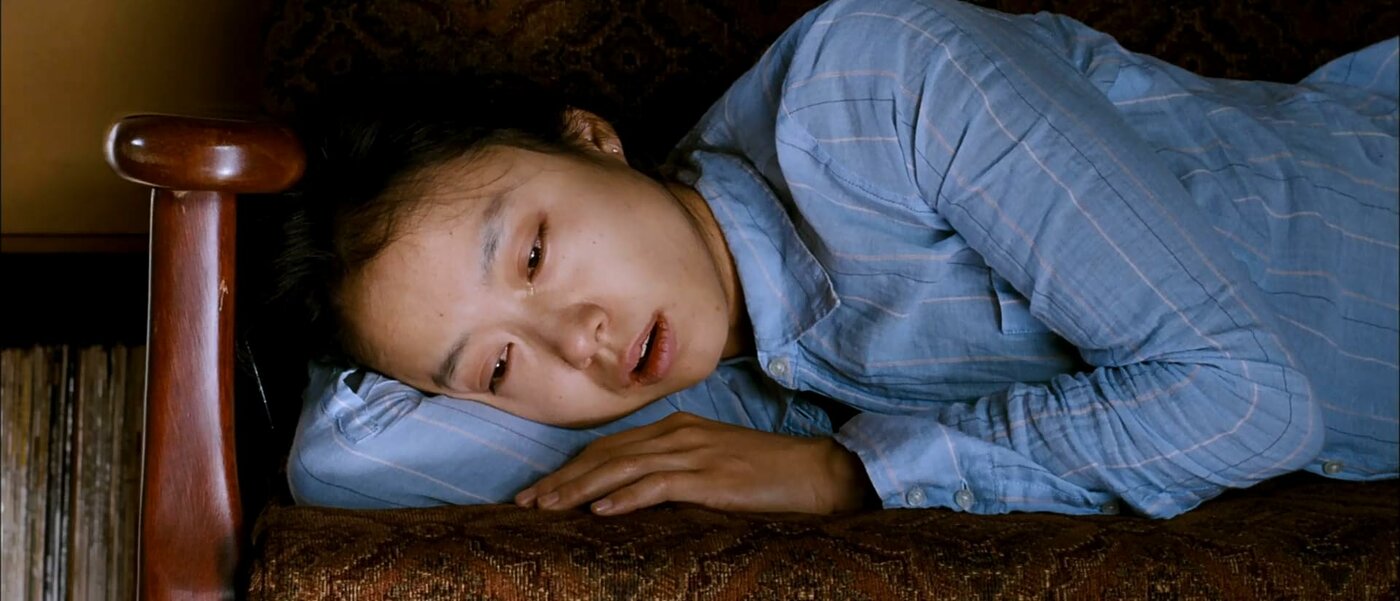
Secret Sunshine (Lee Chang-dong, 2007).
NOTEBOOK: Watching your films, I often wonder whether light might be a way of conveying the magic of the world the characters inhabit.
LEE: In Oasis, we have a character who lives in isolation from the world because of her disability. Light is her only connection to the outside world, and perhaps even her means of salvation. Through fantasy, she escapes reality, almost as if through magic. In many cases, light is part of reality itself. It can reveal an aspect of the world while also raising a question: what meanings lie beneath its surface? In Secret Sunshine, a pharmacist tells the protagonist that “even a single ray of light carries God’s intention within it.” But when the protagonist reaches for that light, all she can say is, “There is nothing there.” To me, this raises a fundamental question about the fate of our existence. Light becomes a means of asking it. From my perspective as a filmmaker, how you shoot a film depends on how you light it. Even here, in the office where we are sitting, we have natural light, fluorescent light, and indirect light. The way I capture light on film determines the work’s ultimate effect, because it also shapes how the audience feels. Lighting is therefore essential not only to the creation of an image, but also to our perception of reality. Even the Bible speaks of the beginning in terms of the word and light. The first step towards understanding the world around us is to understand light.
NOTEBOOK: Beyond what light reveals, you pay considerable attention to what remains invisible: the cat we never see in Burning, the presence of God in Secret Sunshine, the offscreen space that characters in almost all your films seem to be looking toward. What is your relationship with the invisible?
LEE: I think obsessively about how to make the audience see something that is beyond the reach of the eye. Cinema is, after all, about showing things. I believe this is its most fundamental function as a medium. But it also means that viewers may find it difficult to believe in what they cannot see. They may assume that if something is invisible, it simply does not exist. This is both the power and the limitation of cinema. In literature, we rely on our imagination. We can imagine the world of St. Petersburg in Dostoevsky’s Crime and Punishment, even if we have never been there. At Dostoevsky’s invitation, we let our imaginations roam and transport ourselves to that Russian city. We bring the image to life in our own minds. Literature becomes complete through the vision of its readers, and a writer’s greatness lies in the power to stimulate their imagination. Cinema, by contrast, seems to show us everything. At the moment of projection, the work appears complete. Yet sometimes this very completeness prevents us from truly seeing more. The way a film tells its story can determine what we see—and what we are willing to accept without seeing. In this sense, even when a story has reached its end, the audience can still experience it as an open work.
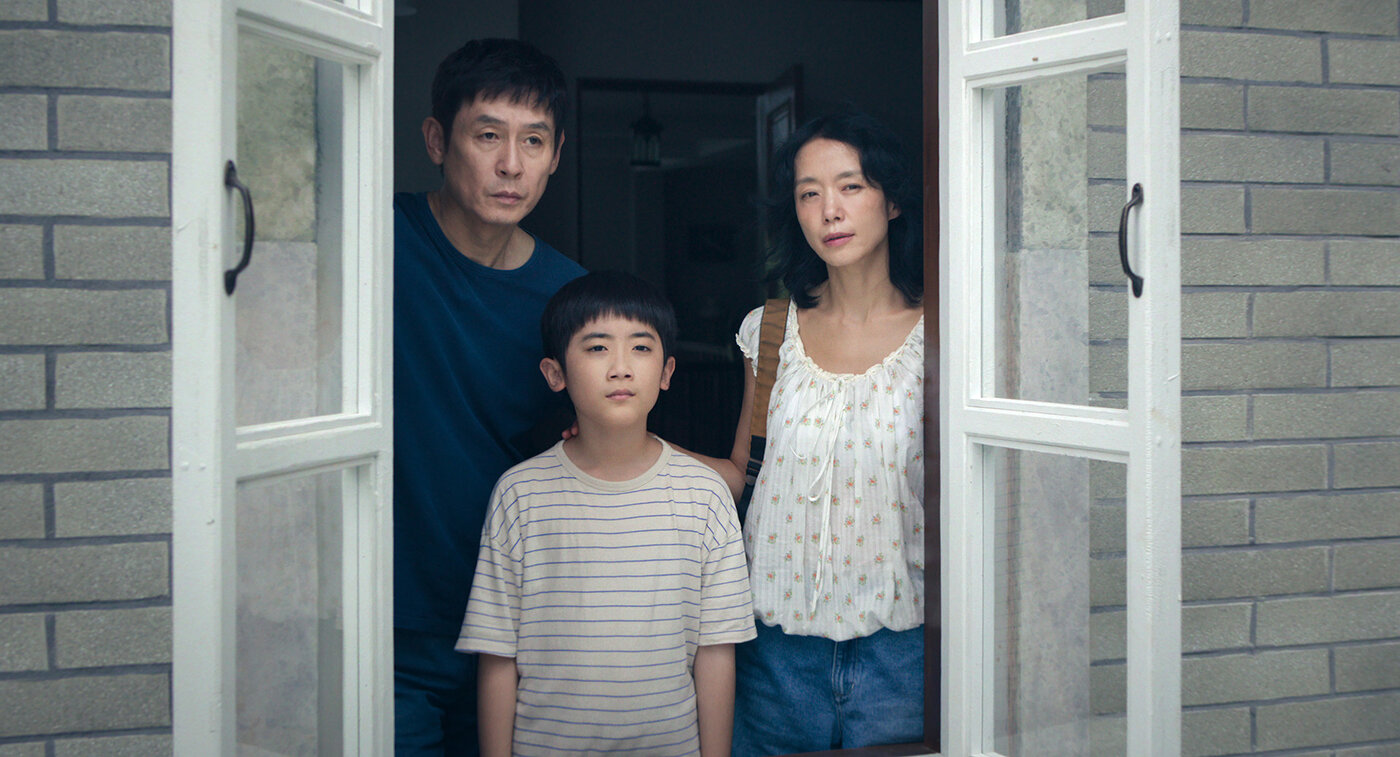
Possible Love (Lee Chang-dong, 2026).
NOTEBOOK: Possible Love was initially conceived in connection with Krzysztof Kieślowski’s Dekalog [1989], and in particular the tenth episode, exploring the commandment “Thou shalt not covet.”
LEE: Yes. I had a video call with Krzysztof Piesiewicz (the scriptwriter of Dekalog series) to discuss the Dekalog project, and he asked me to consider one thing: the recurring figure who seems to transcend the individual stories, someone who is always there to witness what unfolds. He wanted me to include a character like that in my film, and I was happy to agree. That idea eventually became the boy, Cheol, who observes everything that unfolds in the adult world. By introducing his perspective, I wanted the audience to understand from the very beginning that this is a film about looking. People come from different social classes, backgrounds, and ways of life, but what matters is how they face one another and how they look at one another. The power of the gaze is akin to the power held by the person behind the camera, which intervenes in human relationships. I wanted the audience to remain conscious of that gaze, to recognize its presence. That is why the film begins with the young boy’s gaze. The motif continues through Yeji’s camera and the surveillance cameras, and I also wanted the audience to become aware of their own gaze as they watched the film.
NOTEBOOK: And when we watch your films, what we often get is the unresolved note, leaving the stories of your characters suspended.
LEE: This is connected to the question of what is visible and what remains invisible. I want the audience to be able to see and feel what is not shown onscreen, too. A story does not end when the film ends and the audience leaves the cinema. It continues afterwards. What matters to me is that the story lives on beyond the screening, creating a connection between the film and the audience’s own lives, allowing the meanings of what they have seen to take root in their experience. I find it difficult to call this an open ending, because that term suggests several possible ways the story might continue. What I am interested in is something more specific: creating a connection between the film and the life of the person watching it.
NOTEBOOK: Many of your films tell stories of lost youth—and I believe Possible Love is somewhat similar—often shaped by a sense of powerlessness in the face of larger systems. What draws you to young people as protagonists?
LEE: The truth is that youth itself becomes the protagonist of my films. And films, I believe, should be about young people. But the fundamental question is: What does it mean to be young today? Perhaps this is a systemic problem. Or perhaps it simply reflects the condition of the world we live in. When I was young, we were all fighting for something: democratization, economic equality. There was hope embedded in that struggle, a belief that tomorrow would be better than today. We had a goal. Young people protested and resisted. Some spent years in prison as a result. Yet almost everyone held on to the hope that their lives would improve, that at the very least, their economic circumstances would get better.
NOTEBOOK: How about now?
LEE: Today, that belief seems to have disappeared. Young people are gripped by something else, by many things, perhaps, but one of them is fear. And fear can give rise to conservatism, sometimes even to a fascination with authoritarian thinking. This is not a problem unique to Korea; it is a global phenomenon. Young people are becoming more conservative, and that should give us pause. Public opinion polls in Korea, particularly on political issues, show that people in their twenties sometimes express views similar to those of people in their seventies. This is not an isolated case. It is surprising, and deeply troubling. I am not saying this to judge whether those views are right or wrong. But if people in their twenties think in the same way as people in their seventies, something has gone wrong. To a considerable extent, this is a problem affecting men. Young women of the same age are much more progressive. In that sense, it is young Korean men who seem to be experiencing the deepest anxiety today.
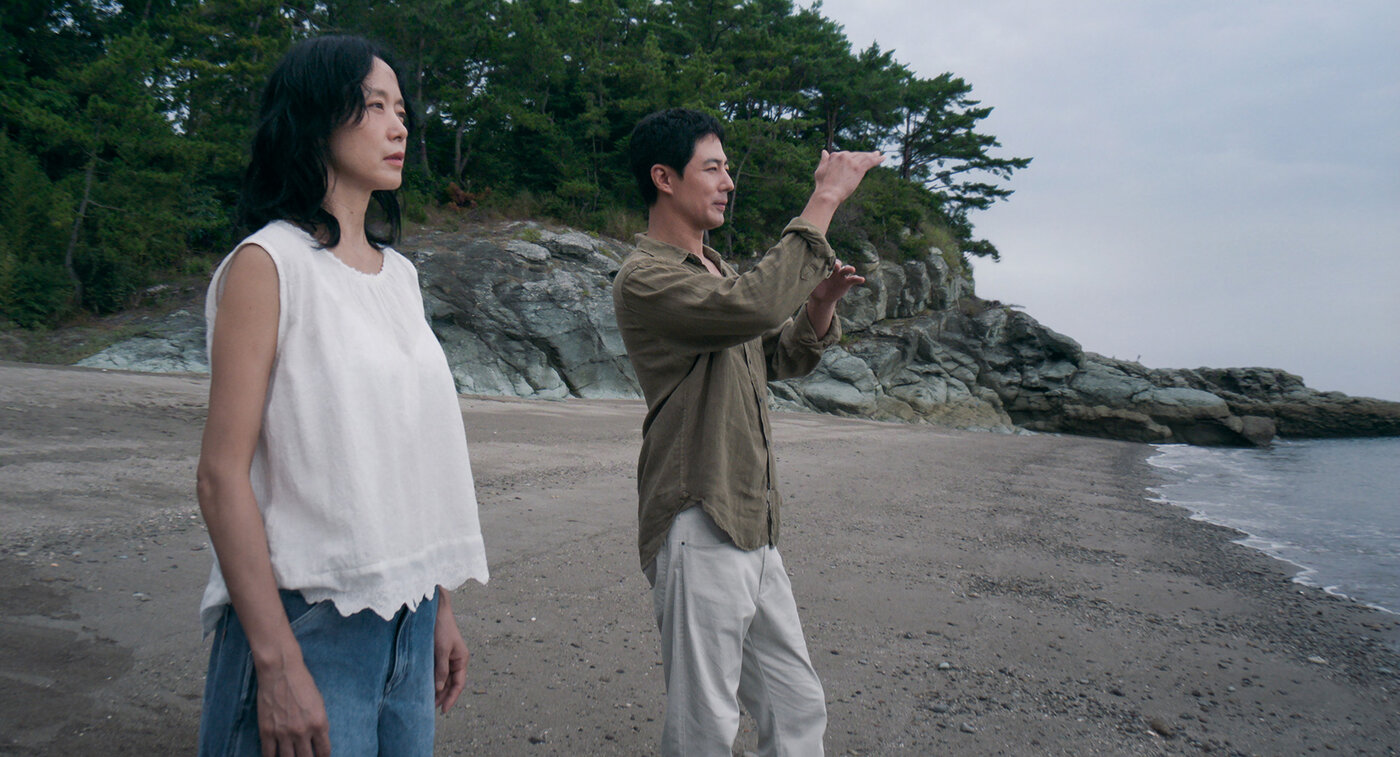
Possible Love (Lee Chang-dong, 2026).
NOTEBOOK: I believe this also manifests in Possible Love, although from a different angle. I was struck by the scene by the sea in Possible Love, in which Ho-seok seems unable to embrace the freedom before him. Instead of walking towards the ocean, he disappears into the woods. He gives vent to his anger, but the tragedy is that freedom remains beyond his reach. Watching this scene, I found myself wondering: What does freedom mean today?
LEE: One thing I want the audience to feel as they follow the lives of the characters is freedom. Our lives change drastically due to various circumstances, and we experience pain, struggle, frustration, and despair. Yet, no matter how those circumstances change, what allows us to overcome them is our pursuit of freedom. No matter how labor, capital, or any other powerful force may shape our lives, I believe we never entirely lose our desire to move toward freedom. I wanted to make a film about that desire—perhaps a form of love—and, further still, about the love we encounter in life and the love we are ultimately bound to give.
NOTEBOOK: What does it mean to be free for Ho-seok and Mi-ok from Possible Love?
LEE: For Ho-seok, however, freedom remains painfully elusive. There is so much going on inside him: pain, sadness, despair, and anger. These emotions are entangled, and he is constrained by their force. What matters most urgently to him is finding a way to express them outwardly. Only then can he hope to move toward the possibility of freedom. As you say, he is facing the ocean, yet he ventures deeper into the woods. He is drawn toward the darkness because he does not want others to see him as his emotions erupt, almost as though he were vomiting them out. Mi-ok witnesses this, but she does not dare approach him. She turns away because she cannot bring herself closer to him or console him. For Mi-ok, freedom means something different. It lies in reclaiming her dignity and reaffirming her sense of self, something she can achieve through her own free will. In this sense, the two characters have very different relationships with freedom. Through their contrasting experiences, I wanted to explore how, even when our lives are shaped by forces beyond our control, the desire for freedom—and perhaps the desire to love—remains.
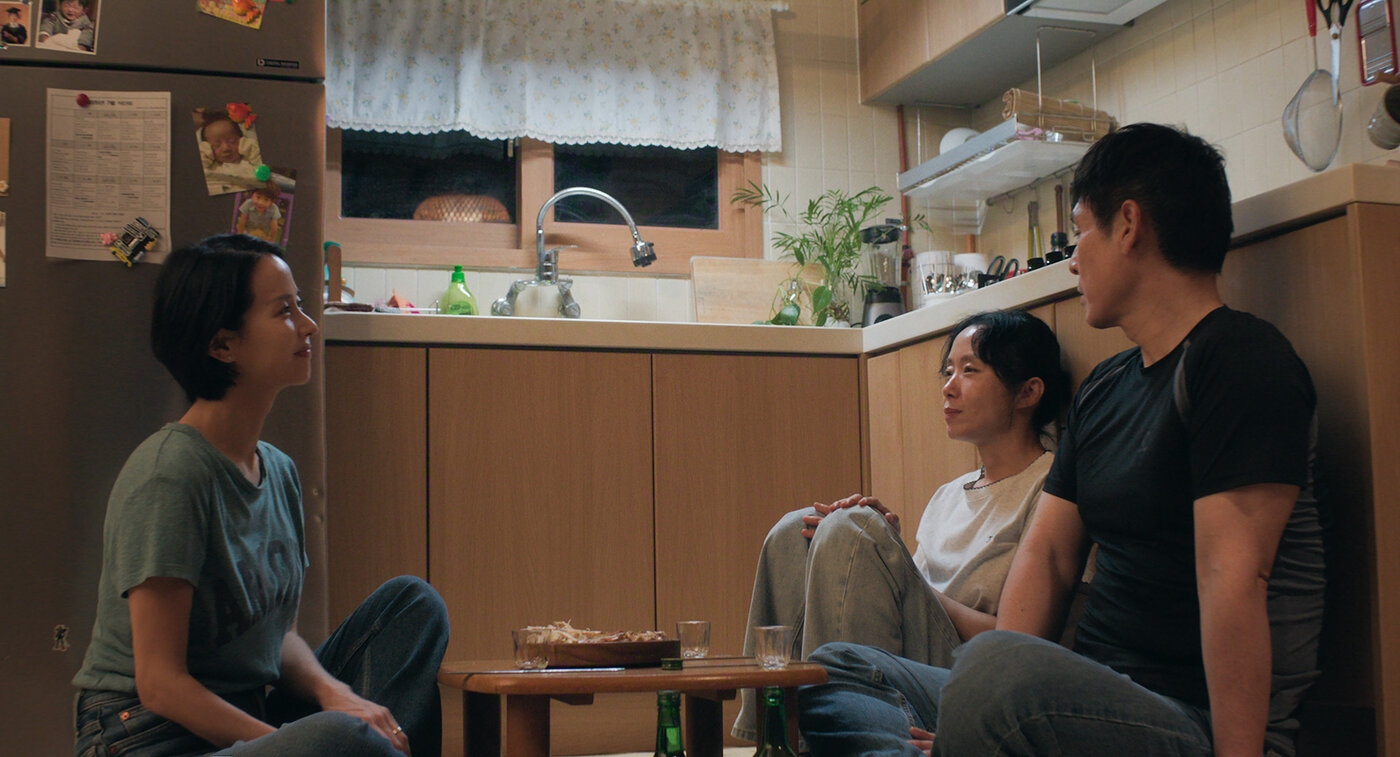
Possible Love (Lee Chang-dong, 2026).
NOTEBOOK: I’m fascinated by the way you write your characters. They seem like puzzles to be solved, pieces of a larger picture that gradually fall into place. They are constantly searching for something, caught in a state of inner conflict, suspended between different possibilities of being. In Possible Love, they seem particularly fragmented, as though carrying wounds that have never healed, or parts of themselves they can no longer fully access. What draws you to creating characters like these?
LEE: I believe the stories I tell are journeys undertaken by my characters. They set out in search of something that might be likened to the Holy Grail. Often, they are trying to save someone, or to save themselves. Sometimes they fail, but more often they arrive at a kind of enlightenment: a renewed understanding of who they are, or the discovery of a new purpose in life. I am drawn to characters who continue searching for meaning, even in the darkest of circumstances. They may be lost, caught between different possibilities, or unable to fully understand themselves, but they keep searching.
NOTEBOOK: Families in your films often seem to reveal something essential about the world your characters inhabit, while also being places where relationships break down and people lose their sense of security. What interests you about the family as a way of understanding an individual?
LEE: I don’t want to convey any particular concept of the family in Korea. Families appear in my films because they play a crucial role in understanding the totality of a character. To truly understand someone, it’s essential to know what kind of family they come from. The families in my films aren’t simply there to deliver a message. They are part of the world the characters inhabit. The reason these families break down, fall apart, and become powerless is probably that this reflects the reality we live in. And this isn’t a reality specific to Korea; it’s something people can experience anywhere in the world today.
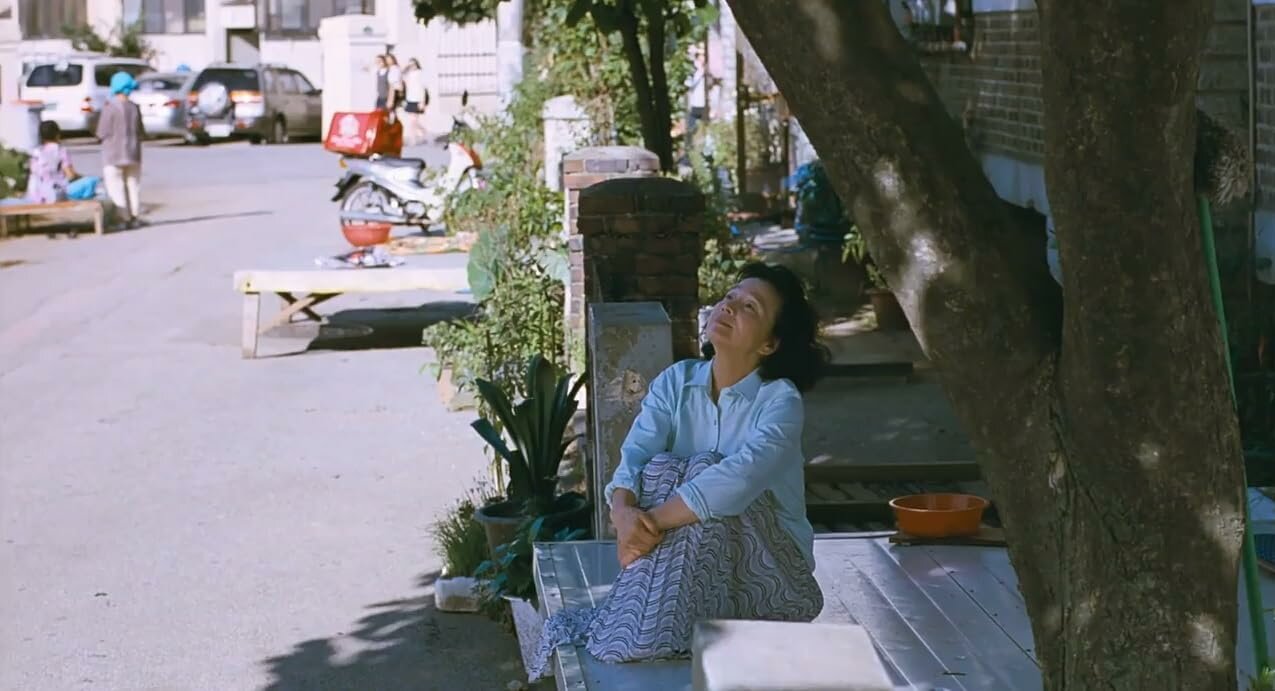
Poetry (Lee Chang-dong, 2010).
NOTEBOOK: Something that is very specific to Korea is space, though. Your stories are often rooted in very specific places beyond Seoul: Miryang in Secret Sunshine, Icheon in Poetry [2010], or Paju, near the North Korean border, in Burning. Even when you set a story in Seoul, as in Oasis or Green Fish [1997], you gravitate toward particular spaces that seem to exist on the margins of the city. How do you choose the places where your stories unfold, and what draws you to these spaces?
LEE: The spaces in my films are part of a reality that reflects the transformations taking place within Korean society. Whatever I choose to depict, I always begin with the place where the story unfolds. I am drawn to spaces on the threshold: between the urban and the non-urban, between affluence and poverty. I am not interested in reaching either extreme, but in exploring what lies in between. That is why I tend not to show Seoul’s wealthiest districts, such as Gangnam, or its poorest neighborhoods. I am drawn instead to places marked by ambiguity, where a sense of being on the boundary becomes palpable. Paju, near the North Korean border, in Burning, is one such place. It is a site of profound social transformation, but also of deep conflict.
NOTEBOOK: Your choice of locations and the social realities you explore in your films have led critics and scholars to describe you as a realist filmmaker. Is that a label you identify with?
LEE: When someone asks me what realism actually is, I find it difficult to answer. Defining it in cinematic terms is a challenge, because film both records reality and continually filters and reshapes it. Every shot, every aesthetic decision, involves selecting a fragment of the world. Cinema never shows us the whole, unless it operates in the realm of pure fantasy, as science fiction often does. But does that mean a realist film is one that shows us the truth? I think that would be too simple. For me, realism is not merely a depiction of everyday life. It also means attending to the history of an individual and the ways that person is entangled in politics, economics, and social relations. It is a way of looking that does not stop at what is immediately visible, but tries to grasp the broader conditions of our existence. If realism can be understood in these terms, then perhaps I really am a realist filmmaker.
NOTEBOOK: Your films have featured poets and writers, but Possible Love is the first to include a filmmaker as a character. Why did you decide to introduce one now? And did doing so make you reconsider your own position as a filmmaker?
LEE: When I was a novelist, still very young, I would interview people and research their lives before writing about them. I always asked myself where I should position myself in relation to the people I was depicting. From whose perspective should I tell the story? Should I be an observer or the protagonist? What distance should I maintain from my subjects? These were the questions I asked myself first. After I became a filmmaker, those questions grew even more pressing. As a novelist, I did not feel as strongly that I was using other people’s lives as material for my work. With film, however, I often feel that I am using—or consuming—the lives of others to construct a story, almost as if I were exploiting them. I think this is not simply a question about my own filmmaking; it has to do with the nature of the medium itself. The act of making a film invites this kind of scrutiny. Possible Love is about laid-off workers, but it does not focus on one particular individual. Its concerns extend to many different people. Even so, I felt that my own self-awareness as a filmmaker, and the questions it raised about my attitude toward the people I portray, were inseparable from the story. At this stage in my life, I could no longer put those questions aside.
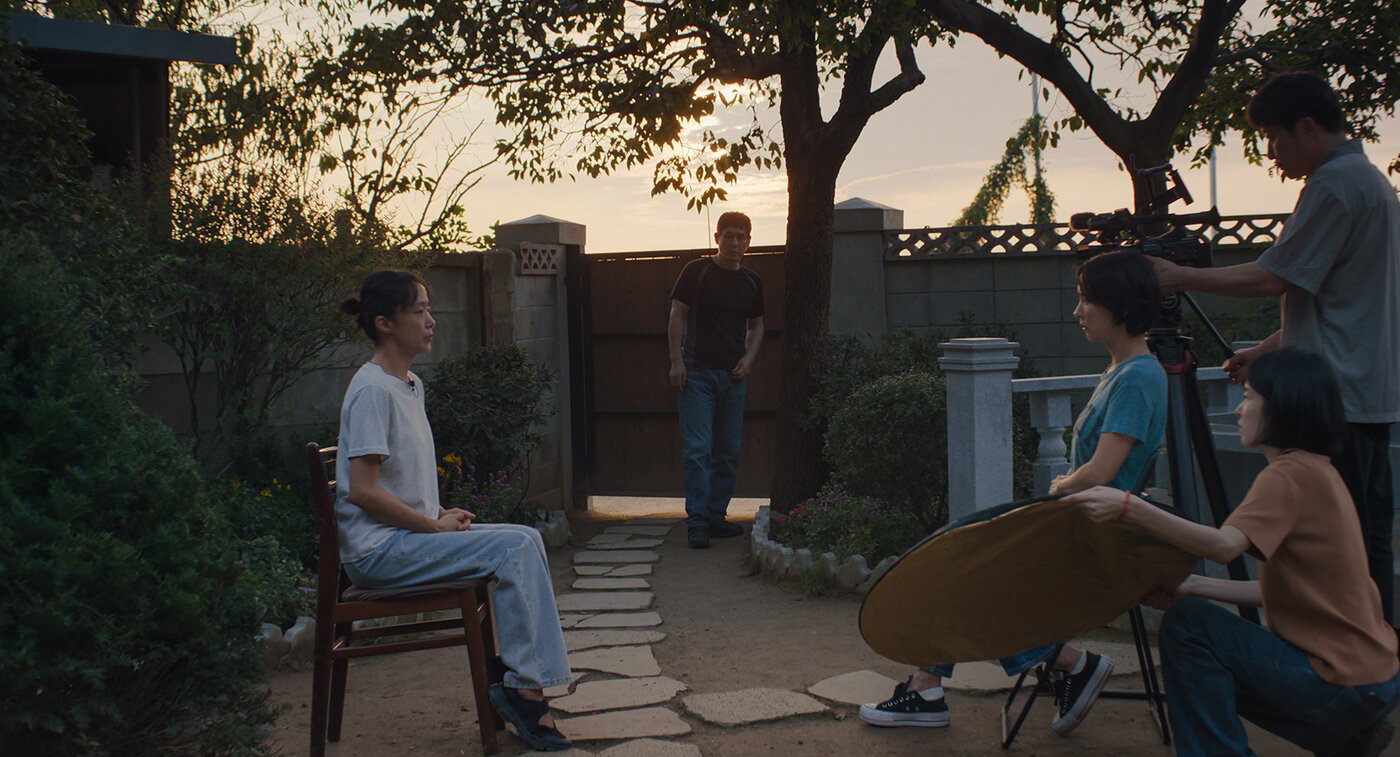
Possible Love (Lee Chang-dong, 2026).
NOTEBOOK: The documentary thread introduces a compelling tension between an act of solidarity and a form of appropriation. Where do you see the boundary between the two—not only in your own work, but also when you incorporate documentary into a fiction film?
LEE: I think it is very difficult to draw a clear line between the two. Rather than drawing a boundary and staying on one side of it, we constantly find ourselves crossing it in both directions. If we are not aware that the boundary exists, we may end up behaving as though there were no boundary at all. Even now, as I speak to you while promoting Possible Love, I cannot escape the questions I ask myself: How close have I come to truthfully representing the lives of the people I portray? Am I really revealing their truth? Or am I merely using them to make a film that will succeed by the standards of the world? These are difficult questions to answer with any certainty. Yet they are inseparable from the nature of filmmaking itself. We use a camera to portray other people’s lives, and there is something inherently violent about the camera: it is always drawn toward drama, almost by instinct. Then, once an image has been captured, other forces come into play as it reaches the audience. Filmmaking is a long and complex process, one that demands constant reflection. But it is also a process in which this sense of duality will always remain.
NOTEBOOK: As a Polish person, I have always been fascinated by the parallels between Polish and Korean history. Did you find yourself thinking about these historical similarities while preparing Possible Love?
LEE: I would not say that these similarities directly influenced my working process, although I am well aware of them. Perhaps Polish and Korean people share a certain sentimentality. The film was once part of a project connected to the revival of Kieślowski’s Dekalog, but it eventually developed into an independent work. When we look at Kieślowski’s other films, especially those set in Poland, what strikes me is that their universality does not depend on the similarities between countries. The stories in Dekalog take place in Poland, within the same apartment complex, and yet they speak to people everywhere. In that sense, they can speak to Korea, too.