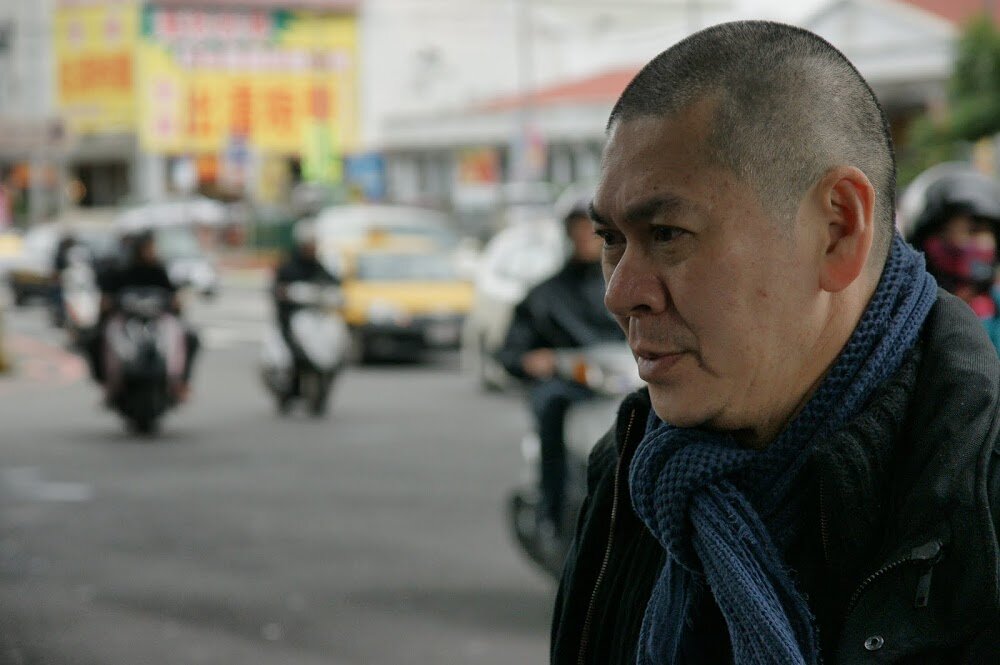
Tsai Ming-liang. Courtesy of Big World Pictures.
A uniquely prescient film, Tsai Ming-liang’s 1998 feature The Hole opens with a radio report about a mysterious virus with strange side effects that’s spreading across Taiwan. Ignoring an evacuation order, a man and a woman (played by Tsai regulars Lee Kang-sheng and Yang Kuei-mei) who live one atop the other in a rundown apartment complex in Taipei decide to stay put, despite the building’s leaky pipes and a hole left by a plumber between their apartments. As in many of Tsai’s films, the characters are flooded by both constant rain and a sense of urban angst and alienation. Only here, in a rare instance of optimism in the director’s oeuvre, they’re able to temporarily transcend their post-apocalyptic surroundings by mentally projecting themselves into full-on musical numbers inspired by the Hong Kong musicals of the 1950s starring Grace Chang (who passed away earlier this week at age 93), whose songs the actors lip-synch to in vibrantly choreographed dance routines. Equally unexpected is the quasi-romance that blossoms between the characters, who remain nameless and spend much of the movie communicating wordlessly through the floorboards—that is, until a fantastical late-film flourish that ranks among Tsai’s most tender and intimate gestures.
The Hole was originally commissioned by the Paris-based production and distribution company Haut et Court for the “2000, Seen By…” project, in which ten directors from different countries were asked to make a movie for French television that in some way depicted the turn of the millennium. So while a 69-minute version of Tsai’s contribution to the series called Last Dance exists, it’s the 95-minute cut, which premiered in competition at Cannes, that most accurately reflects the director’s dystopian vision. In either form, and despite its sometimes bleak subject matter, the film offers a surprisingly digestible variation on Tsai’s thematic preoccupations. Aside from his first feature, 1992’s Rebels of the Neon God, The Hole is the director’s most compact and legible work; incongruous music notwithstanding, it tells a fairly straightforward story, with few of the narrative elisions or abstractions that mark such early career masterpieces as Vive l’amour (1994) and The River (1997). There’s also a good deal of camera movement and continuity editing, techniques that Tsai would largely abandon going forward in favor of a more durational approach to structure and storytelling based on master shots. In that sense, the film is both an example of Tsai’s versatility and an illustration of his evolving sensibility as an artist, which today finds him working primarily in the gallery space. As much as any illness or epidemic, The Hole presaged Tsai’s fitfully expansive career arc.
As The Hole tours the U.S. in a new 35mm print, Tsai spoke to me about developing the film’s concept, his childhood love of musicals, the similarities between his father and Lee Kang-sheng, and the formal and stylistic advancements he made during this era.
NOTEBOOK: Did you have the idea for The Hole before you were approached for the “2000, Seen By…” project, or was it only developed once you were invited to contribute to the series?
TSAI MING-LIANG: Two producers [Caroline Benjo and Carole Scotta] approached me in 1995 with the idea for the TV series, and I liked this particular [turn of the millennium] theme very much, so I immediately agreed to get on board. In fact, within three days, while I was in Paris, I had already proposed how I was going to approach the production conceptually. One way was through the element of nonstop rain, and the other was the idea of a male protagonist and female protagonist who live in different apartments and have a hole between them. Later, when I had the chance to really think about how I was going to develop the rest of the narrative, I started to think about integrating musical elements, since the premise of the film was very cold and full of extreme despair, solitude, and loneliness. I wanted to find a way out, so to speak—to find an exit or an opening to somehow counter that extreme sense of coldness and despair. And then after that I incorporated the mysterious illness into the film. These became important elements once I was able to conceive of the film more comprehensively after the initial proposal.
NOTEBOOK: What’s the difference between Last Dance, the 69-minute version of the film, and the theatrical version?
TSAI: I don't remember specifically which scenes were cut out to make the TV version. I probably only saw it once and never revisited it. Maybe the character [played by] Miao Tien, who goes to the market to buy the canned goods, and then probably some of the scenes involving Lee Kang-Sheng and Yang Kuei-mei in their apartments were cut. I tend to use very long takes for my films; therefore, if you have one scene being subtracted, it might be five minutes of the film. But since this was a version of the film for TV, I didn’t care as long as what was in there was of good quality. For the theatrical version, it was more important for me to incorporate the scenes in their entirety because it was going to be seen in the cinema, on the big screen.
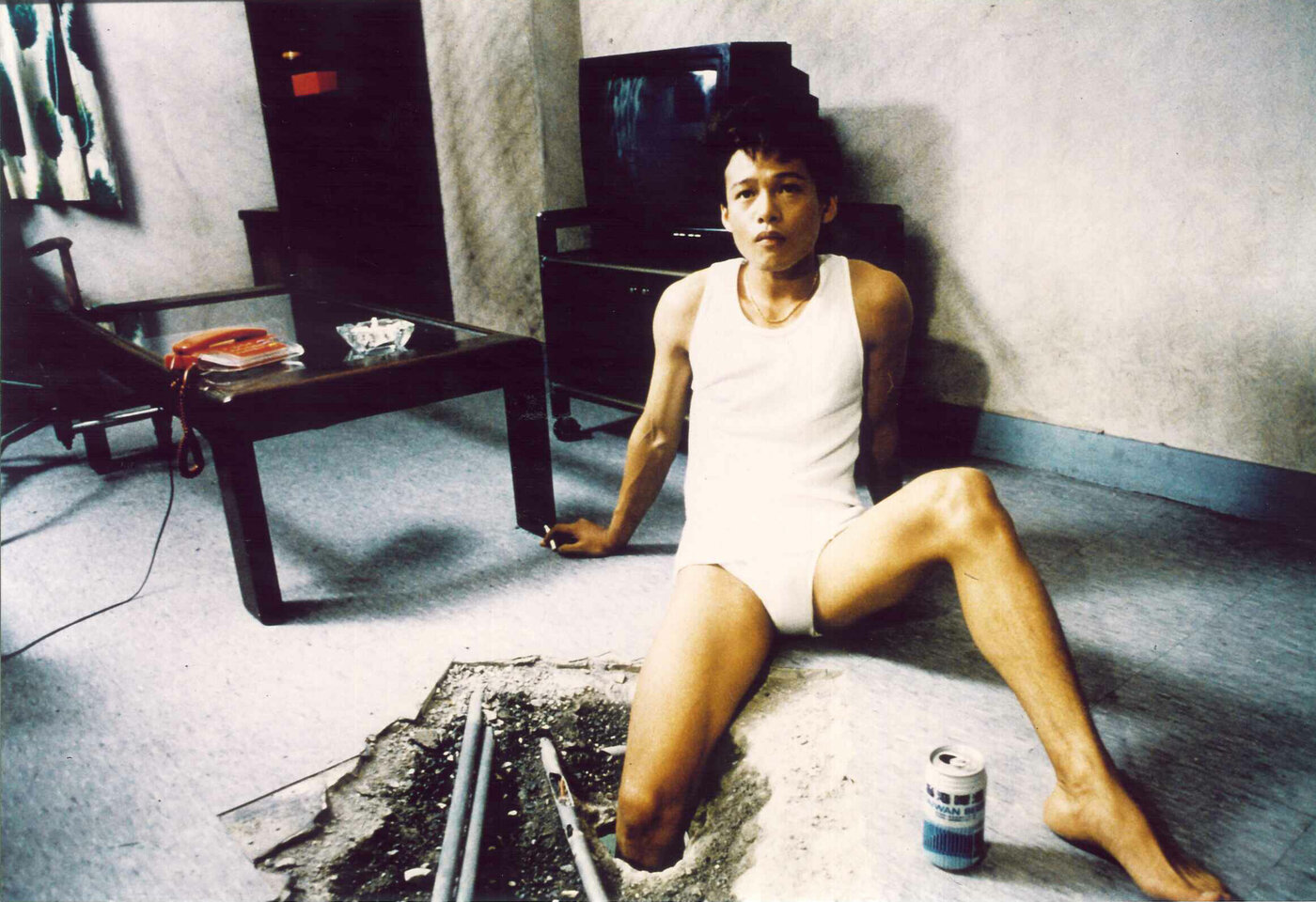
The Hole (Tsai Ming-liang, 1998). Courtesy of Big World Pictures.
NOTEBOOK: The Hole was the third of four films you wrote with Yang Pi-ying. Can you talk about your collaboration with Yang during this era?
TSAI: In this era I tended to credit co-writers on my scripts even though I only really used them as sounding boards to bounce ideas off, or to discuss the film. The actual writing I did myself. Having said that, a script to me is just the starting point for the films, and then there will be a lot of other elements introduced. So there are a lot of evolutions and changes from the original scripts to the final films. In fact, the final product will probably be very different from the original script that I had co-written with my collaborator. Usually, when I show my producers a script, they think that I'm going to make a very humorous comedy. But in the end they realize that these are actually quite serious films, with maybe some comedic or humorous elements in there as well
NOTEBOOK: When did you discover Grace Chang? Do you have any specific memories of seeing her musicals as a child?
TSAI: Musicals were my favorite film genre growing up. I remember watching and loving them as a kid. They were so glamorous, so happy, so colorful. It’s something that I cherish the most.
At the time I had access to a lot of Hong Kong musicals, as well as some, but not as many, from Taiwan. It was later on in life, when I went to Taiwan for college, that I finally had the chance to watch Hollywood musicals—Gene Kelly and all the major studio players of the time. I guess in some ways musicals have always been my favorite genre.
It's interesting that in Chinese language films you have songs that people can immediately recognize. Even for non-musical films such as melodramas, you will still have very popular songs from these soundtracks being played on the radio. That sort of informed me, this sense of old songs being played again and again, whether in musicals or non-musicals. Because they were so crucial to these soundtracks, they became an important element of my daily life growing up. Even now, I love to listen to these old songs on a regular basis.
As far as Grace Chang, it’s important to note that in the Chinese language films from this era, the actors didn’t usually sing the songs. They just lip synced to whatever song was selected for the film. Grace Chang was the exception; she would sing her own songs; she's not lip syncing to another singer’s songs.
NOTEBOOK: You’ve spoken in the past of being introduced to movies by your grandparents. Were they also fans of musicals?
TSAI: They actually watched all genres of film, especially my maternal grandfather; he would watch everything from 007 films to cowboy movies. But I think they mostly focused on the Mandarin and Cantonese language films that were popular at the time. And because musicals were one of the most popular genres in Mandarin and Cantonese language cinema, it was inevitable that I’d be introduced to and informed by these films through my maternal grandparents.
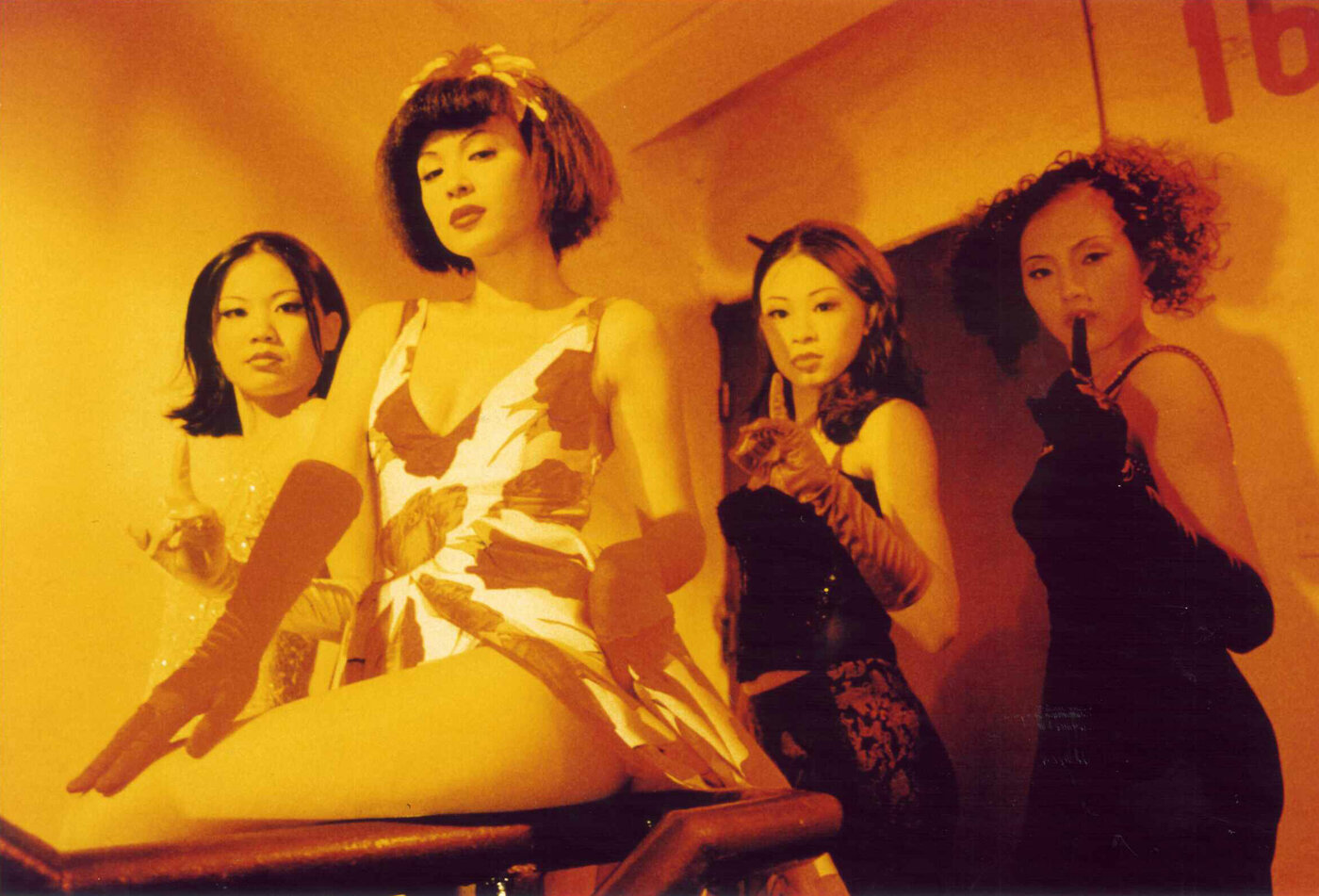
The Hole (Tsai Ming-liang, 1998). Courtesy of Big World Pictures.
NOTEBOOK: Can you talk about shooting the musical sequences for The Hole? Were these scenes shot on a stage?
TSAI: The entire film, including the musical sequences, were shot on location: the market space, the elevators and corridors, the interiors of the apartments. I really wanted to showcase the poor, slum-like, dilapidated environment that the characters are in, almost as if I was producing a new genre of musical that is shot in a slum, with elements of poverty. The only thing I actually spent much money on was the costumes and the choreography. I hired a very famous choreographer [Joy Lo] for the musical sequences, but not so that they would look rehearsed or professional. I actually wanted them to have a kind of amateur-ish feeling, with very simple direction from the choreographer. I wanted to let the actors express themselves physically, through their body movements. One of the reasons I really enjoy the performances of Lee Kang-sheng and Yang Kuei-mei is because of the fact that they aren’t professional dancers. But at the same time they were able to use their body movement and their physicality to capture and present the exact essence and feelings I wanted them to.
NOTEBOOK: Besides musicals, were you pulling from anything else in your personal history to help realize these characters’ unique world?
TSAI: For me, making films is a way to connect what I present on screen with my daily life, my lived experience. So that inevitably means I will incorporate a lot of “oldies,” meaning old songs or old films. For example, I love King Hu's Dragon Inn (1967), so therefore in my film Goodbye, Dragon Inn (2003), I used elements of King Hu’s film.
For The Hole and many of the films after, I used old songs as an element of the stories. But I try to use these elements in a measured way that will create a certain kind of dramatic impact. In Face (2009), I integrated elements of the films Truffaut made with Jean-Pierre Leaud, because those films are a reflection of my lived experience. For me it’s a very realistic, very naturalistic way to approach cinema.
NOTEBOOK: I was surprised when I rewatched the film how much the camera moves compared to a lot of your other movies. How did you and your cinematographer, Liao Pen-jung, approach the film visually?
TSAI: For me it's important to bring something more interesting to the table with every single film I make—to make things more unique. A huge part of that is through the process of subtraction—meaning taking elements away with each film.
In the beginning, I did sometimes use zooms and tracking shots—in a measured way, but still, they’re there. I remember starting on the film What Time Is It There? (2001) and telling my French cinematographer [Benoît Delhomme] that I wanted the images to be still and stagnant—fixed camera shots without any movement. And because this was a cinematographer who is well versed in camera movements, it became a very big challenge for him. With the fixed camera, you need to pay a lot more attention to lighting design, to creating the kind of atmosphere that you want to express in the film, because you can no longer rely on camera movements to accomplish those things. In those early films I worked with Liao Pen-jung, who is very good at composition. And composition is something that I also focus a lot on. It’s an easy and enjoyable process to work with cinematographers like Liao because we both pay a lot of attention to light, shadow, and composition.
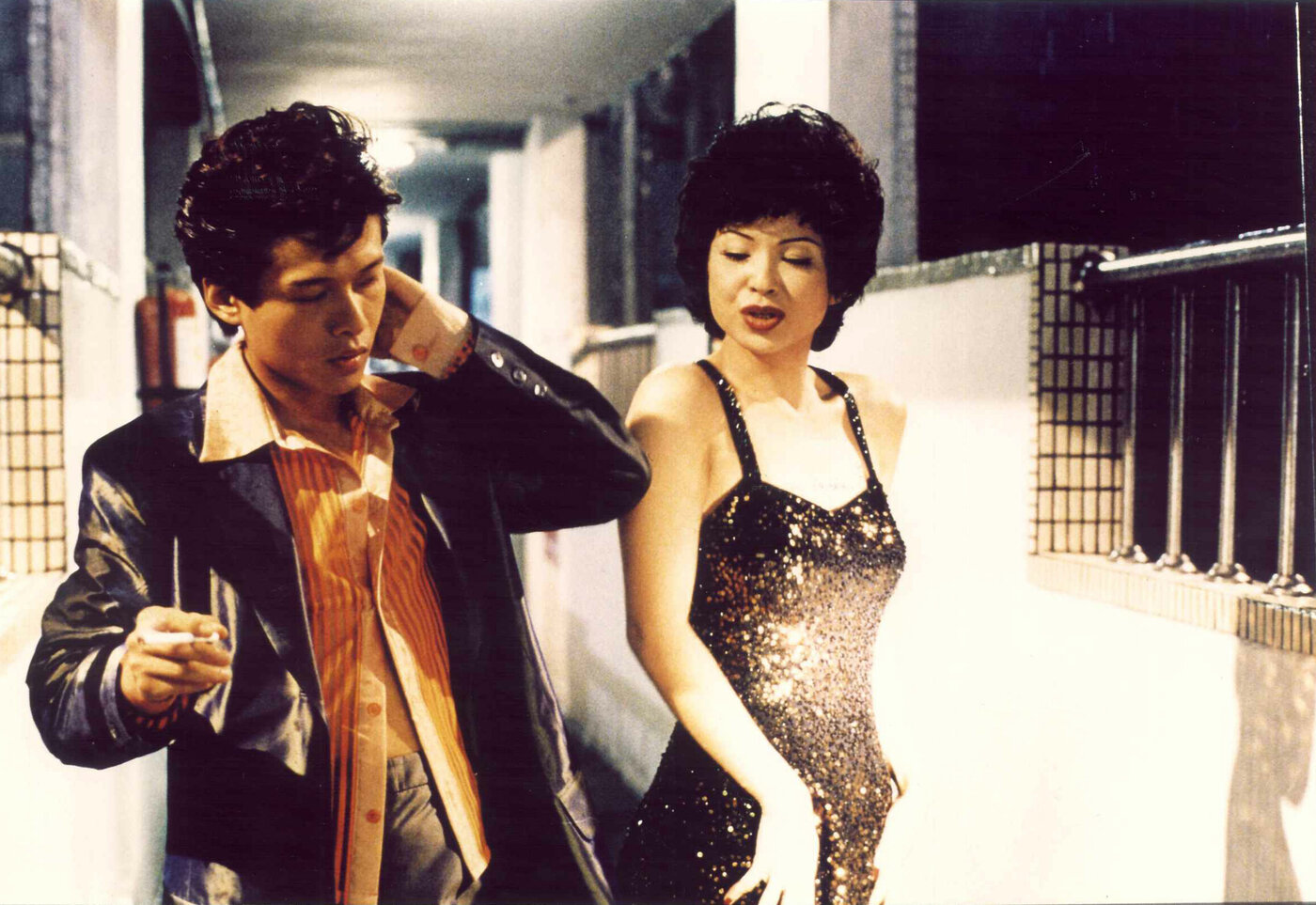
The Hole (Tsai Ming-liang, 1998). Courtesy of Big World Pictures.
NOTEBOOK: I recently read an article citing an interview you did where you mentioned that the relationship between Yang Kuei-mei and Lee Kang-sheng was a little contentious during the making of The Hole, which I don’t recall ever hearing about before. Do you remember it being difficult for them to work together?
TSAI: I don't remember commenting on any conflicts or chemistry issues between Yang Kuei-mei and Lee Kang-sheng on this particular film. As actors, they don't have a lot of overlap in terms of working together in the same scenes; there wasn’t a lot of face-to-face type collaboration between the two of them.
One thing I do remember mentioning about Yang Kuei-mei is that she was especially anxious when we first worked together on Vive l’amour. It wasn't a pleasant experience for her. She’s a very seasoned actress in Taiwan, both in films and TV. And my film happened to have very little dialogue; there wasn’t much of a script, only an outline for the film. And at the time I also chose not to communicate a lot or give much direction to my actors. It was my strategy to give them only simple directions. I wanted them to express themselves in the most naturalistic and realistic way possible. So, because of this—the lack of communication and the lack of dialogue and direction—she became very anxious about my approach. She felt during the filming that she didn’t know how to “act.” But, in fact, I didn't want her to act. She was quite shocked and taken aback when I called cut on the long crying scene at the end and decided to wrap production on the whole film; she thought there were so many more sequences for us to still film. It wasn’t until the film’s premiere at the Venice Film Festival that she realized what I was trying to accomplish. Then she sort of got it and was able to enjoy the film and appreciate the process. The Hole was the third time we worked together, and by that time she was much more relaxed, since she now understood how I function and how I operate as a director. I didn’t and still don't want my actors to do much preparation or homework. I want them to be almost like a blank slate. I want them to come carrying only their own lived experience and then to express themselves naturally with very little direction or instruction from me.
NOTEBOOK: What was your conception of the Lee Kang-sheng character, or persona, at the time of making The Hole? Was it already clear to you at that point that this character would be something you wanted to return to going forward?
TSAI: The Hole was the fourth time Lee Kang-sheng and I worked together. For Rebels of the Neon God and The River, the characters developed out of the lived experience of Lee Kang-sheng himself. The script of The River actually mirrors the challenges that he faced with a neck injury, which then became the focal point of the entire narrative. Rebels, meanwhile, centers on someone who, like Lee, didn’t test well for his college entrance exams and doesn’t know how to move forward. So that became the theme of the film.
For me, in these two films, Lee actually became something else. He’s not only playing himself, but also a proxy of me—a projection of my inner self in terms of how I deal with my own life. And we continued that way of collaborating with The Hole. The idea was to not only bring in my own personal experience of living in an apartment when this same thing happened and a plumber drilled a hole in between my apartment and the one below it and then disappeared for a month, but also to capture the emotional complexity of how I see a future that is full of anxiety, full of uncertainty. So, for me, Lee Kang-sheng as an actor is at once the object of my observation, but also a proxy to project whatever my emotional state is at the time. This is the uniqueness of Lee Kang-sheng’s method. It's almost as if he is good at not acting. There's no trace of acting when he's in front of the camera; he simply lives his life naturally in front of the camera. If he needs very little direction or instruction from me, it’s because he already possesses unique qualities through his appearance and his “acting,” or non-acting. He has a very strong sense of just being able to exist in a film in a realistic way. Because of this he’s someone I simply enjoy following and observing. It’s almost as if that in all the films I am just following the footsteps and the pace and the rhythms of how Lee Kang-sheng as a person and as an actor evolves.
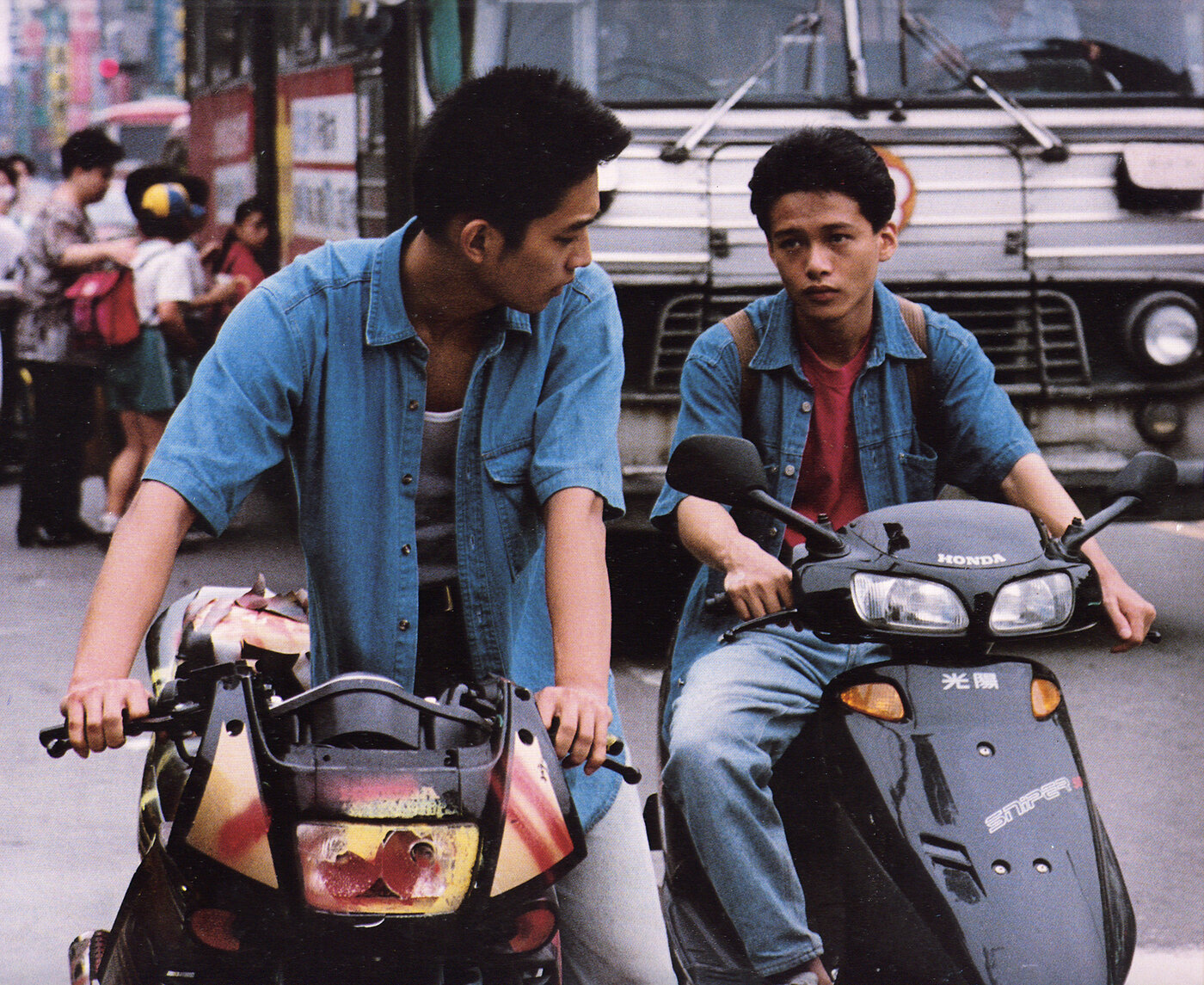
Rebels of the Neon God (Tsai Ming-liang, 1992). Courtesy of Big World Pictures.
NOTEBOOK: You’ve said in the past that Lee reminds you of your father. I’m wondering if you can expand on that? Was this something you realized early on?
TSAI: I think Lee Kang-sheng reminds me of my father because he's a man of very few words, the silent type. He has a mysterious quality to him. And also his mannerisms and the way he carries himself; the way he smokes really reminds me of my father when he was younger. My father passed away when I was making Rebels of the Neon God; he never got to see any of my films. So through making films with Lee Kang-sheng, it's almost as if I have the opportunity to get to understand my father. It's a therapeutic and enjoyable process to get to know and try to understand a person through films they’re not able to see.
In 2007, I brought a short film to the Venice Biennale called It’s a Dream. And in that film Lee Kang-sheng played my father; I put him in the clothing of my father, in the style of my father. And in order to create a dream-like sense for the film, I juxtaposed him with the character of my mother, who was in in her seventies at the time. So that’s an example of where Lee Kang-sheng actually played my father.
NOTEBOOK: A lot of people comment on the prevalence of water in your films. I’m wondering if you can specifically discuss the use of water in The Hole, The River, and The Wayward Cloud (2005), each of which use water as a dystopian symbol?
TSAI: In every film I make, including those three, I try to use water differently. It doesn’t really represent or symbolize the same thing each time. The reason why water became a recurring element, or motif, in my work is because it’s something that is a part of my daily life, and something accessible for the audience to relate to. Similarly, I like to use things like rice cookers in my films; even the gesture of drinking water—it’s something universal. Human beings are like plants: if you don't water them, they’ll wither. I like to film characters watering things. In The Hole, Yang Kuei-mei’s character waters the plants in her apartment. These are all instances of me using water for its symbolic meaning, as a metaphor.
In The Wayward Cloud, I use the lack of water not as a symbol but because droughts are common in Taiwan. The government will even encourage people to drink watermelon juice instead of water because of the lack of water. So these details are rooted in actual happenings and the current events of the time in Taiwan. One of the more symbolic scenes in the film that I especially enjoy is when Lee Kang-sheng’s character, after filming the porno scene, wants to take a shower, but because of the lack of water he climbs up to the water tower, where he sings an oldies song and uses the little water that’s left to bathe himself. So while in this instance, as in many of my films, water is used to represent the thirst people have for love and for human connection, I do try to have it symbolize different things in different films.
NOTEBOOK: It’s hard today not to think about COVID-19 when watching The Hole. Did you ever think the film would become so timely?
TSAI: For me there are four things that are universal and inevitable for all human beings: birth, aging, illness, and death. And among those four phases, or stages, of life, I think illness is something that I can relate to the most. Or at least I find it the most interesting. Think about the way that you deal with stomachaches and toothaches—there’s a sense that you cannot control it, right? It just happens and then it’s outside of your control. This is something that we all face. So I think that in a lot of my films I’m trying to capture this kind of uncertainty, or sense of being unable to control an illness—specifically Lee Kang-sheng’s illnesses as both a person and a character.
So, for The Hole, when I thought about the turn of the century, this dystopian future, I immediately thought about a mysterious disease that might feel like a common cold but at the same time is more serious than that. About five years after I made the film is when SARS happened, and a lot of people at that time began to discuss whether or not The Hole had predicted that something like this was going to happen. And, of course, later we had the COVID epidemic, which has now reignited the discussion about whether, and for whatever reason, The Hole may have envisioned what was going to happen.
What’s more interesting to me is that this acknowledgement and newfound interest in the film is not only limited to it being re-released in theaters. There’s also an American playwright named Gary Perlman who approached me about purchasing the rights to the film so that he can make it into a musical to be performed on stage. I think I’m going to be able to see it performed soon in Tokyo or Taipei. So I do hope that the film can be newly appreciated and understood as a result of these different productions and releases.