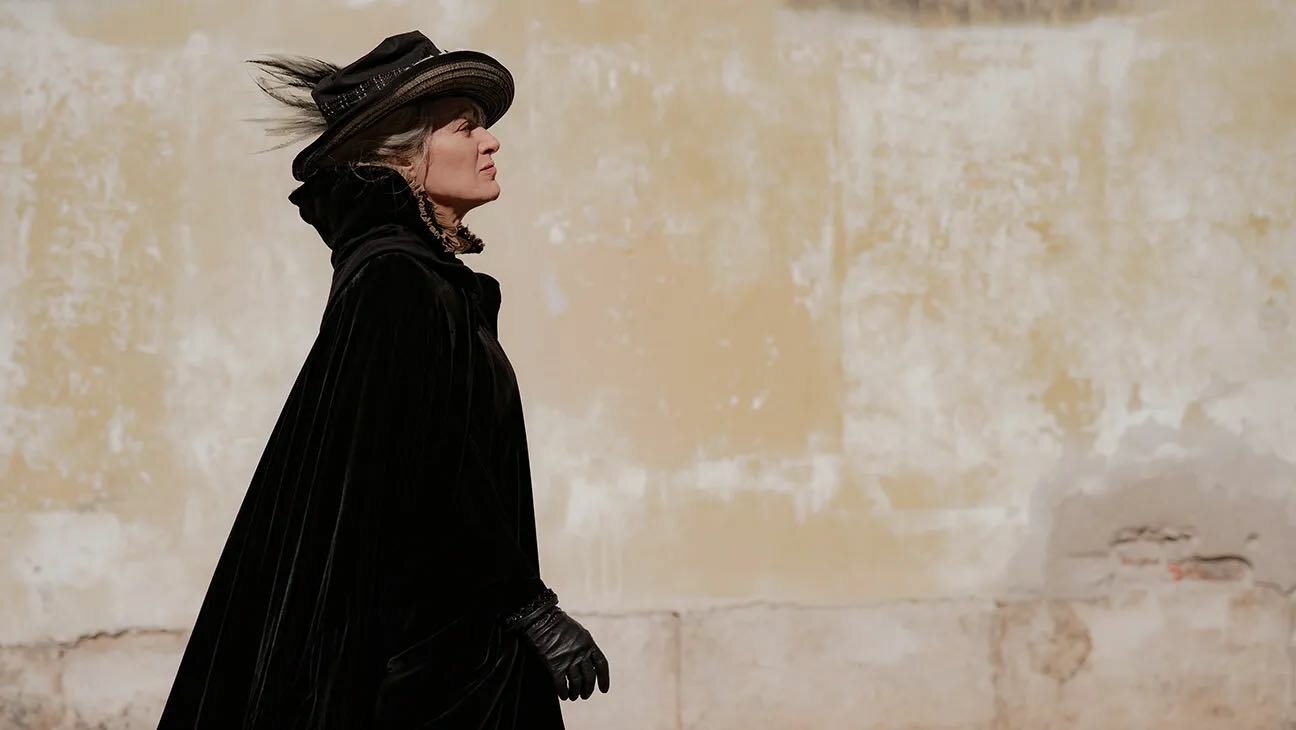
Duse (Pietro Marcello, 2025).
Ostensibly a portrait of Eleonora Duse, the Italian theater actress who rose to international fame in the early twentieth century, Pietro Marcello’s Duse (2025) is just as concerned with exploring the sociopolitical milieu she traversed. We begin in 1921, three years after the end of the First World War and one before before Mussolini’s March on Rome; as “La Duse” (Valeria Bruni Tedeschi) prepares for her return to the stage after a twelve-year absence, Il Duce (Vincenzo Pirrotta) prepares to take over the country.
Mussolini appears a few times in the film, first as a devout admirer watching Duse in Ibsen’s The Lady from the Sea, and then as a benign protector canceling her debts in some art-washing ploy. None of this is unfamiliar in Marcello’s work—not the poisonous allure of power on the artist, already dissected in his majestic Martin Eden (2019), nor the tendency to redirect your attention away from characters and toward the historical backdrop. Duse invokes the wounds of the Great War via excerpts from Gloria: Apotheosis of the Unknown Soldier (1921), a documentary that follows the train ride escorting the casket of an unidentified casualty to its final resting place in Rome. Marcello started out as an archivist, and weaving preexisting footage into his films has long been his signature move.
Perched between fiction and documentary, between original and archival material, Marcello’s work blurs your sense of time as well as the boundary between story and history. Such was the case with Martin Eden. In adapting Jack London’s 1909 novel of the same name, Marcello and cowriter Maurizio Braucci swapped the original setting—turn-of-the-century Oakland—for the city of Naples, and littered Martin’s journey with all kinds of anachronisms. Television sets, pop-music needle drops, and archival clips scramble your bearings, a bold gambit that helps the film avoid the mummified flair of many other period dramas. Written by Marcello, Letizia Russo, and Guido Silei, Duse engages less in such temporal mind games. Late in the film, Eleonora’s creative and sentimental partner, Gabriele D’Annunzio (Fausto Russo Alesi), addresses hordes of Fascist militias from his balcony in Milan, and Marcello overlaps his actor’s voice with a recording of the poet’s actual speech, triggering the kind of disorientation that makes the director’s cinema so entrancing.
Shot by Marco Graziaplena, Duse traffics largely in handheld close-ups of Bruni Tedeschi, who incarnates her character as a cross between a venomous prima donna and an awestruck ingénue. Marcello isn’t at all concerned with showing his protagonist at work or giving tangible evidence of her mastery. It’s a choice that can leave Eleonora shrouded in mystery, yet it helps Duse steer clear of some of the well-trod formulas of other artist biopics.
I met Marcello the day after Duse premiered in competition at the Venice Film Festival. Even as we sat alone in the spacious hall of a hotel on the Lido, he spoke in whispers, as though the things we discussed—the film’s use of archival material, his decision to avoid recreating Duse’s performances, and his relationship with the culture industry—were ominous secrets.
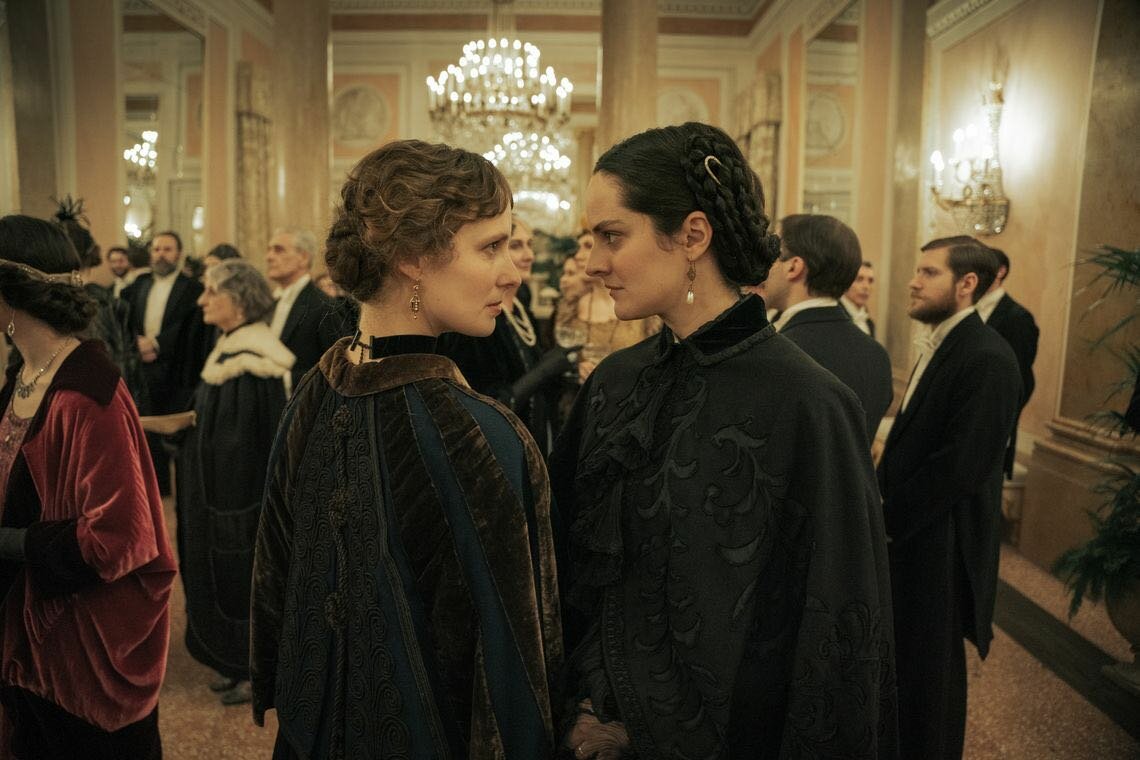
Duse (Pietro Marcello, 2025).
NOTEBOOK: In your film, Eleonora’s story becomes a much larger portrait of post-World War I Italy. What fascinates you about this micro-macro approach?
PIETRO MARCELLO: Well, I didn’t want to tell the story of Eleonora’s rise to fame; if anything, I tried to shed light on the most decadent aspects of her life. In a way, that’s nothing new for me. I’ve always preferred to side with and focus on the outcasts, the defeated. I’ve never been interested in the winners, but to tell you the truth, those who scare me the most are the indifferent. Because the indifferent—those who can’t and won’t take a stance—aren’t accepted anywhere. Not even in hell. If I think back to my previous works, I’ve long been fascinated by characters who were rebelling, one way or another: Crossing the Line [2007], The Mouth of the Wolf [2009], Lost and Beautiful [2015]…even Scarlet [2022], a film about a father and a daughter, which is probably my most intimate yet.
NOTEBOOK: There’s also a thematic continuity in the way power corrodes the artist. Eleonora and D’Annunzio are both hypnotized by fascism and its promises—not unlike how Martin Eden in the end becomes part of the intelligentsia he used to despise.
MARCELLO: I think that’s because ours isn’t the time for big hopes. On the one hand, we’re on the brink of a new era, and I think Duse reflects our present circumstances quite accurately. The tumultuous years that followed the Great War, with fascism emerging from its wounds and institutions crumbling everywhere around Europe, are really not that different from what we’re going through now. I think today’s crises were already announced a long time ago by people like Christopher Lasch in The Culture of Narcissism, or Guy Debord in The Society of the Spectacle. All we have left now is civil disobedience; everything else is just prosthetics. On the other hand, there’s also something to be said about the vulnerability of a creative person. All artists are human, and therefore fragile, myself included. We all contain a bit of God, but at the same time, we’re flawed. It’s beauty that cures the soul in the end—not material beauty, but beauty of a more spiritual kind. The only way you can exist without hurting other people is to take care of yourself or make some art. But you need to be able to muster the courage to be critical of yourself. It’s this self-critical stance that allows us to improve.
NOTEBOOK: How does that self-critique work for you personally? Are there any aspects of your craft that you feel particularly critical toward?
MARCELLO: Well, I began my career from the bottom. I learned how to do everything and wore many hats: producer, director, editor… I began to make films with 5,000 lire. And then, as I improved, the projects got bigger. Duse is my first film that’s directly about the culture industry we were discussing earlier. And it made me wrestle with some worries I have about my so-called mandate. I mean, sure, I love cinema, making films, and holding a camera in my hands. But, at the same time, I’m torn. Because as much as I despise our culture industry, I’m obviously part of it. And I don’t think I’m fit for that kind of world. Deep down, I’m an artisan; the end of a film for me is like the end of a love story, because I can’t touch it anymore.
NOTEBOOK: How do you square this idea of being an artisan—and staying true to your DIY approach to cinema—with the pressures that come from working with a much bigger budget? Could you still shoot and work on Duse the way you did in your smaller productions?
MARCELLO: Look, at the end of the day Duse is my film, and I stand by it completely. It’s still my approach to cinema. And I feel very privileged to have worked with an actress and director like Valeria [Bruni Tedeschi]. The movie brought us very close; we became very good friends during the shoot. That’s probably the most beautiful thing about making films—when you get to make them, as Renoir used to say, with the people you love. Of course, you can only romanticize things up to a point. Once the film is wrapped, it becomes like any other object out in the world. You can stand by it all you like, but eventually you have to move on. I love making films, don’t get me wrong, and I can see myself doing this for the rest of my life. But, if I’m honest, filmmaking just doesn’t fulfill me anymore. I’d rather devote myself to the youth and teach. Training young people, that’s what really drives me. Of course I’m fueled by cinema, and it takes nothing for me to… [snaps fingers] get started again. But as far as I’m concerned, I see this as a moment for reflection and self-critique. Lots of people around me seem to think about this very differently and would rather avoid making a stand; I try to steer clear of them. There’s something terrifying about the emotional aridity that comes from not wanting to take a stance and leave something to those who’ll come after us. I believe in training young people, that our role as filmmakers is also about passing something to the next generation—and festivals are certainly not the means to do that. I guess this all speaks to the civil disobedience we were talking about earlier. As [Italian antifascist politician] Gaetano Salvemini used to say, “Do what you must, whatever happens”. There might only be a few of us willing to change things right now, but we still have to try!
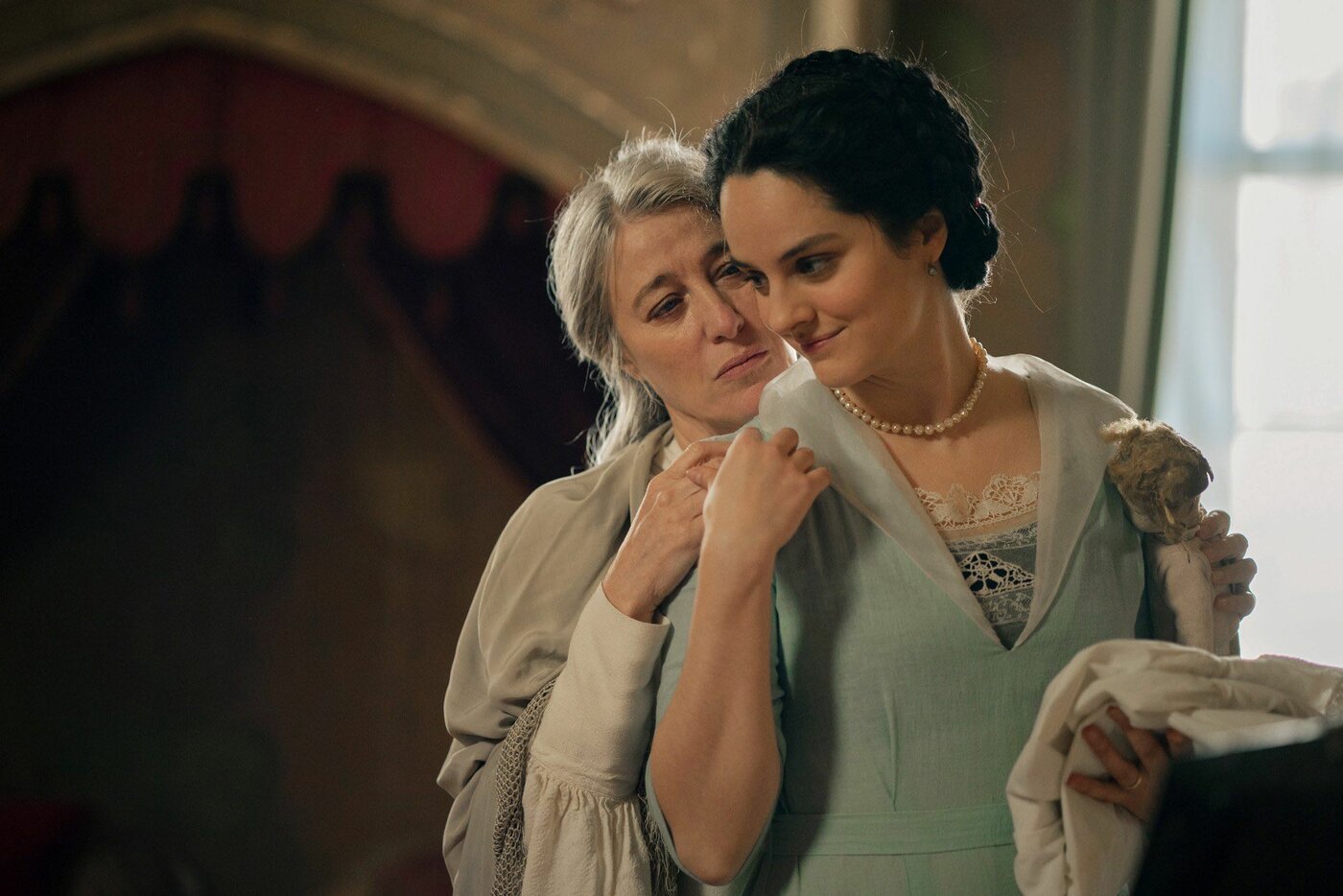
Duse (Pietro Marcello, 2025).
NOTEBOOK: Could you speak about your choice to include footage from Gloria: Apotheosis of the Unknown Soldier? When did you decide you’d be incorporating clips from that documentary?
MARCELLO: I started out as an archivist, and I think archives are more powerful than any fiction; fiction to me becomes interesting when it turns into history. I wanted to follow that train ride because the Unknown Soldier was initially thought of as a symbol of peace. It provided a kind of solace to all those poor, working-class women who didn’t have graves to mourn the sons they’d lost in the war. And it also worked as a powerful symbol against the country’s military and its top brass, like General Cadorna—men who’d been personally responsible for the slaughterhouse that was the Great War. Of all the archival footage I’ve ever come across in my life, Gloria is among those I find most moving. All these people bowing as the train glides past them: the orphans, wives, and widows, a whole society born out of the war and still trying to process it. Sure, fascism then appropriated the Soldier and used it to justify the regime’s colonial designs in Africa. But, at first, it was a beacon of peace. It’s only been 80 years since the end of the Second World War, which is a grain of sand when compared to the history of humanity. So was Duse’s life. Imagine what it must have been like for a woman to live in a world as patriarchal as hers. To be able to move around it as effortlessly as she did required some astonishing and preternatural talent—and she had that in spades. She revolutionized theater; at the same time, like so many other artists, she was also very fragile and vulnerable. Just think of Dmitri Shostakovich, who was forced to play for Stalin… [Pauses.] Look, at the end of the day, I’m still an archivist. As a matter of fact, I’m currently busy with an archival project that I’ve been working on for years and I’m about to complete. It’ll be a chance for me to return to my creative roots, to a world where I belong.
NOTEBOOK: Gloria aside, your archival material this time also includes recordings of some crucial speeches: one given by D’Annunzio in Milan to throngs of Fascist militia, and Mussolini’s own declaration of war from 1940.
MARCELLO: But if you look carefully, Mussolini’s speech echoes over archival footage of the March on Rome, which predates his words by eighteen years. It’s a counterpoint. Some of the things the fascists promised in their 1919 manifesto—universal suffrage, expropriation of wealth from the rich—might have seemed reasonable, but things played out very differently, and the revolution the regime had promised quickly went out of the window. I’m not an ideologue. I’m a socialist, but I don’t think of socialism as a political doctrine; to me it’s a way of being around others. It’s what we do together, the tasks we share. Socialism has always been part of us, for as long as we’ve lived together with others. Did you know that anarchists in late-nineteenth-century Europe used to study ancient Jewish communities? Because those people, in a way, were the first “citizens” of the world; they believed in mutual aid and encouraged support among each other, and anarchists were fascinated by their communal lifestyles. This is all connected to the archives; I love archives because they’re always beyond fiction. As T. S. Eliot wrote, “Time present and time past / Are both perhaps present in time future.” Inevitably, if you want to look at the future, you need to look back to the past. That’s the only way a society can emancipate itself.
NOTEBOOK: I was also quite intrigued by some of the film’s anachronisms. I’m thinking of the electronic track we hear a few times, which makes for quite a clash with the film’s classical score. Why that choice?
MARCELLO: That was another counterpoint. I like that it adds this strange, almost science-fiction-like dimension to the film. These incongruities are nothing novel in my cinema; you’ve seen them in my earlier projects, too. I guess one always returns to the same point.
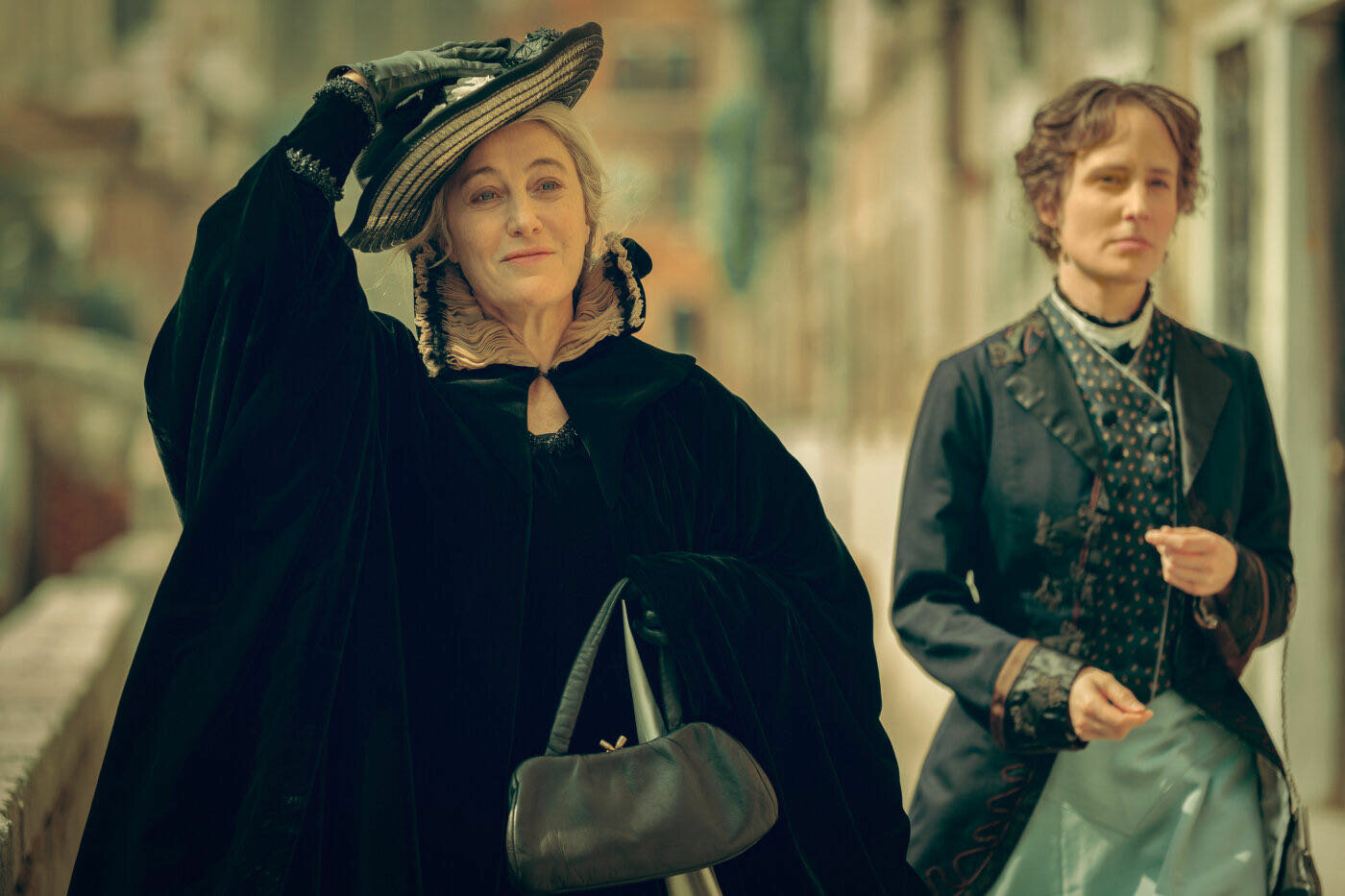
Duse (Pietro Marcello, 2025).
NOTEBOOK: I’d love to hear more about your collaboration with cinematographer Marco Graziaplena—more specifically, your decision to favor handheld camerawork.
MARCELLO: I love working with Marco because he’s different from other cinematographers I teamed up with; we don’t just talk cinema but discuss literature, too. Having served as my own camera operator has helped me lots in my career, and with time everything became a lot simpler—personally, the camera for me is the easiest component of my filmmaking process. After all, it’s sort of the ABCs of our profession. This is why it drives me crazy when people tell me that “the movie was well shot”—isn’t that the least we should expect from a film? Sure, you can mess up other things, but those are the basics, and if you don’t know where to place or how to handle your camera, well, no one is forcing you to become a filmmaker; you can spend your life doing other things… At the same time, I think it’s very important, in this particular moment in history, to observe a certain austerity and keep a low profile. I do not think of myself as better or in any way more important than a primary school teacher or a doctor looking after others—to be frank, I feel like an asshole when I compare myself to people like those! [Chuckles.] This is not imposter syndrome. I see it more as a chance to question myself until the very end. And allow myself to fall, too. That’s why, I guess, I like to focus more on the defeated than the winners.
NOTEBOOK:Duse keeps reminding us of its heroine’s genius, but you deliberately avoid recreating Eleonora’s performances; Bruni Tedeschi is seldom seen on a stage, at work.
MARCELLO: But how on earth could I ever pretend to know who La Duse really was, or what her acting looked like? Leaving aside the fact that there aren’t audiovisual recordings of her performances, who was I to try to recreate them? What I looked for in the film was her spirit. I must confess that when I wrote the treatment I already had Valeria in mind for the role. There was no casting.
NOTEBOOK: Why did you pick her?
MARCELLO: She was the one I thought about all along. On the one hand, I admired her craft and really just wanted to work with her. On the other, I was quite moved by the idea of working with someone I thought was as rebellious as me. I see Valeria as an artist who’s against her times. And I needed her. I didn’t want someone static but a genuinely dynamic figure, someone who was haunted by her own dilemmas and confusions about the place she occupies in the industry. It is also why I wasn’t interested in charting Duse’s ascent but in capturing all the desolation around her.
NOTEBOOK: I’m curious: In what way does Bruni Tedeschi strike you as an artist “against her times”?
MARCELLO: I think that manifests itself in her approach to acting as well as her way of being. Duse allowed me to grow a very strong bond with her, as well as a sense of trust. Not least because Valeria and I both really like the unexpected, and that mutual openness to the unknown is one of the things we bonded over. To be able to bring the script to life in a way that would challenge formulas or tropes. And thanks to Valeria I was able to work on Duse in a state of grace. I know I’ll carry with me so many special memories from that shoot; there was a complete alchemy between us.
NOTEBOOK: Speaking of counterpoints: Early in the film, British actress Sarah Bernhardt challenges Eleonora to make a new kind of theater, the rationale there being that one cannot stage the same old things after something as traumatic as the Great War. But the only play we see in Duse that seems to break against tradition—a work that marries Ancient Greek myths with the memories of World War I—is a huge fiasco, and angry spectators demand La Duse return to the classics she was famous for. I was thinking of this conflict in the context of your filmography and wondering how you navigate similar tensions—between your audience’s expectations and your urge to stray away from the beaten track.
MARCELLO: I think this speaks to the kind of false myths artists invariably create. We’re all susceptible to fallacious narratives; what’s important is to be aware of that and learn how to debunk them. People only want to see the winners, but artists wind up failing more often than they succeed, and one way of failing is to create or embrace false myths. I myself have fallen for many of those, as have Valeria, Eleonora, and anyone else I know. No one wants to tell the story of a debacle, but that’s what our lives are made of—mistakes and misconceptions. It takes a lot of courage to own up to them, but that’s the only way we can move forward.
Keep reading our fall festival coverage.