Disclosure Day (Steven Spielberg, 2026).
During the 2016 Academy Awards, which took place in the middle of the #OscarsSoWhite debate, host Chris Rock taped a segment in which he went to Los Angeles’s Compton neighborhood to talk with locals about how much they knew that year’s Best Picture nominees. The segment singled out Bridge of Spies, Steven Spielberg's mildly successful, well-received nominee, as a movie the Compton audience didn't know existed. Rock was mixing criticism about the Academy's whiteness with the idea that it has turned away from popular cinema, but the joke inside the joke was that among the nominees, some much less popular, it singled out Hollywood’s favorite son. By 2016, the biggest symbol of the past four decades of American cinema populism could also be a shorthand for how out of touch the industry was.
Spielberg remains everyone’s idea of popular Hollywood and yet is also rarely relevant on those same terms. Talking about box office is a bore better left for the trades, but in Spielberg, his four quadrant audience accessibility has always been part of the story. No one denies his gifts towards pushing the buttons of audiences; his skills at that were obvious since Duel (1971). What has always been under question was what goes into those emotional effects. Spielberg’s movies are unthinking, the argument against him goes, not because he is a stupid man, but because he would rather not take into account what goes on behind his images as long as they get the emotional effect he is after from his audiences. Schindler’s List (1993) has especially come under attack for this from people as different as Jonathan Rosenbaum and Michael Haneke, thanks to some of Spielberg’s representation of the camps and some of the more manipulative touches. “A feel-good entertainment about the ultimate feel-bad experience of the twentieth century,” dismissed another famous Spielberg naysayer, J. Hoberman. There is a reason around the time of Histoire(s) du cinéma (1988) that Jean-Luc Godard picked him as the image of Hollywood’s failure and irresponsibility, an ideal sparring partner from what he sees as wrong with cinema in the second half of the last century.
Spielberg’s movies in the 80s and 90s existed under an anguish of respectability, the popular artist seeking approval, often shifting between audience movies (the Indiana Jones and Jurassic Park ones) and claims for legitimacy (most everything else). For a time, Spielberg was suspect in highbrow circles, until he wasn't: Spielberg won by enduring; time is always the greatest ally of the populist auteur. By the time Godard’s old critical ground, Cahiers du cinéma, got on board with War of the Worlds (2005) and Munich (2005), the voices ready to find him and his success questionable, if not downright pernicious to film culture, become marginalized. Even some of the director’s worst tics, like the dullness of his suburban imagery or the overly studied buildup of some of his thrill rides, become quirks of the celebrated artist. The claim from his bigger enthusiasts that he is a darker and more complicated filmmaker than he seems started gaining precedence over those that point out that his crowd-pleasing instincts are usually there to smooth over those troubled impulses and make sure everything has a more reassuring interpretation, so as not to alienate anyone.
The last decade has been Spielberg’s biggest victory lap: He has never been as celebrated. Yet Spielberg’s twilight is a visible invisibility, with his movies existing on social media as highly celebrated think piece machines, while languishing on the multiplex. It is the subtext of most of his recent work, particularly Ready Player One (2018), his biggest ploy for mainstream acceptance, which doubles as an act of self-loathing, the filmmaker recognizing the ugliness of his own cultural victory, a post-Marvel blockbuster willing to play by the rules while hating the cultural landscape they come from; and the wax museum of West Side Story (2021), a pop academicist stab at reviving the musical and old-school Hollywood dazzle while correcting its past sins that mostly reveals neither is possible.
Back in 2020, Armond White, Spielberg’s most passionate defender during the 90s and 00s, published a collection of his writings on him called Make Spielberg Great Again. It is a fascinating book, a chronicle of how White fell in and out of love with the filmmaker. Early on, White is guarded, even including his mixed college paper review of Jaws (1975) that compared it negatively with Bob Clark’s Black Christmas (1974); by the time of The Color Purple (1985), White is fully onboard, proselytizing Spielberg’s scripture and ready to dismiss any naysayer. Then everything comes crashing around the time of Lincoln (2012), as America’s official chronicler fell under the spell of big bad wolf Barack Obama. One can suspect a lot of White’s conservative readings and wince at the many dog whistles that start plaguing his writing, but he does know his former love. Late Spielberg does start around the time of Lincoln, the last time the director had audiences and critics together on his side. It’s one of Spielberg’s better late movies thanks to his gift for making backroom, ethically questionable dealings exciting, and it also doubles as a piece of Obama-era kitsch whose large attempts at equating the president’s well-intentioned compromising efforts with those of Lincoln have aged rather badly.
What White most gets right is that Spielberg's fascination and popular appeal do come from his skill at conjuring a big “we” with whom he could congregate (it is a very American “we,” one shall add; the rest of the world is just a passenger). That skill has dispelled as that “we” has become diffuse. Spielberg's late movies are divided between attempts to prove his popular bona fides (2016’s The BFG, Ready Player One) and civic lectures (Lincoln, Bridge of Spies, 2017’s The Post), or both (West Side Story). And then there’s The Fabelmans (2022), in which Spielberg goes to the analyst couch of his favorite late screenwriter, Tony Kushner, to share and explain his youth and how he fell under the sickness of cinephilia and can only relate to the world through a camera. It is an act of pure narcissism, the artist who assumes he is so important for culture that what happened to him is relevant to all of us; and it is also another lecture, but the subject isn’t what matters for American society as much as what matters to Spielberg’s own art.
Disclosure Day (Steven Spielberg, 2026).
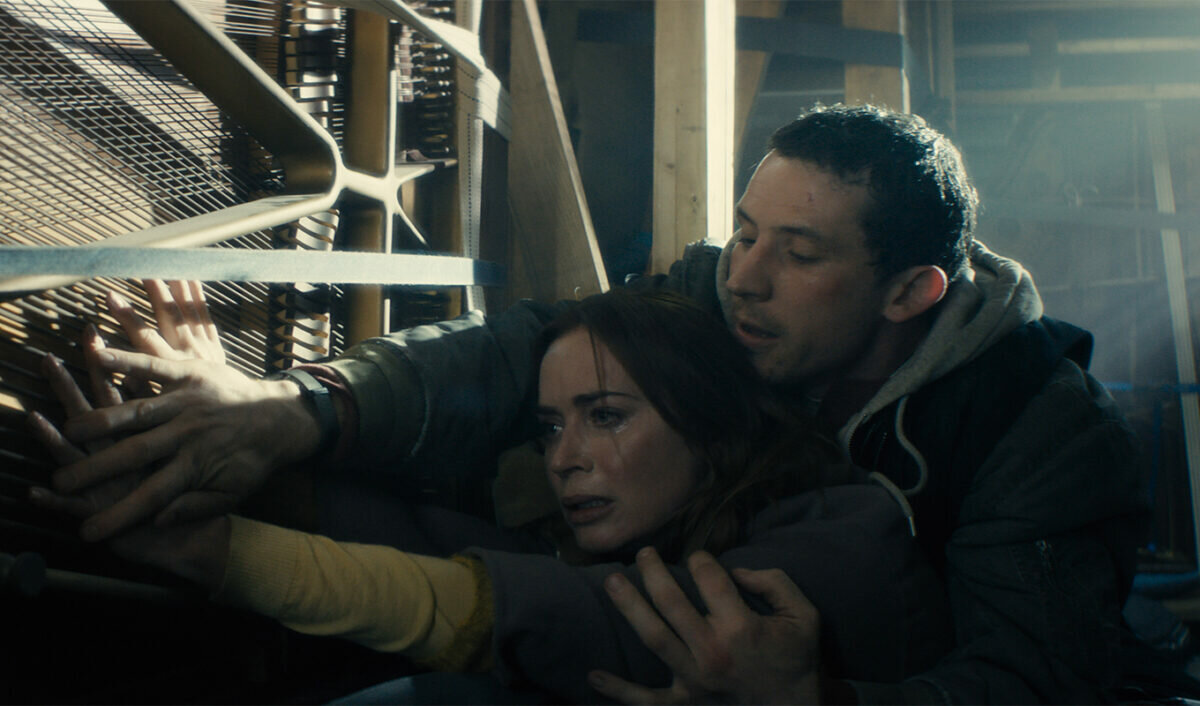
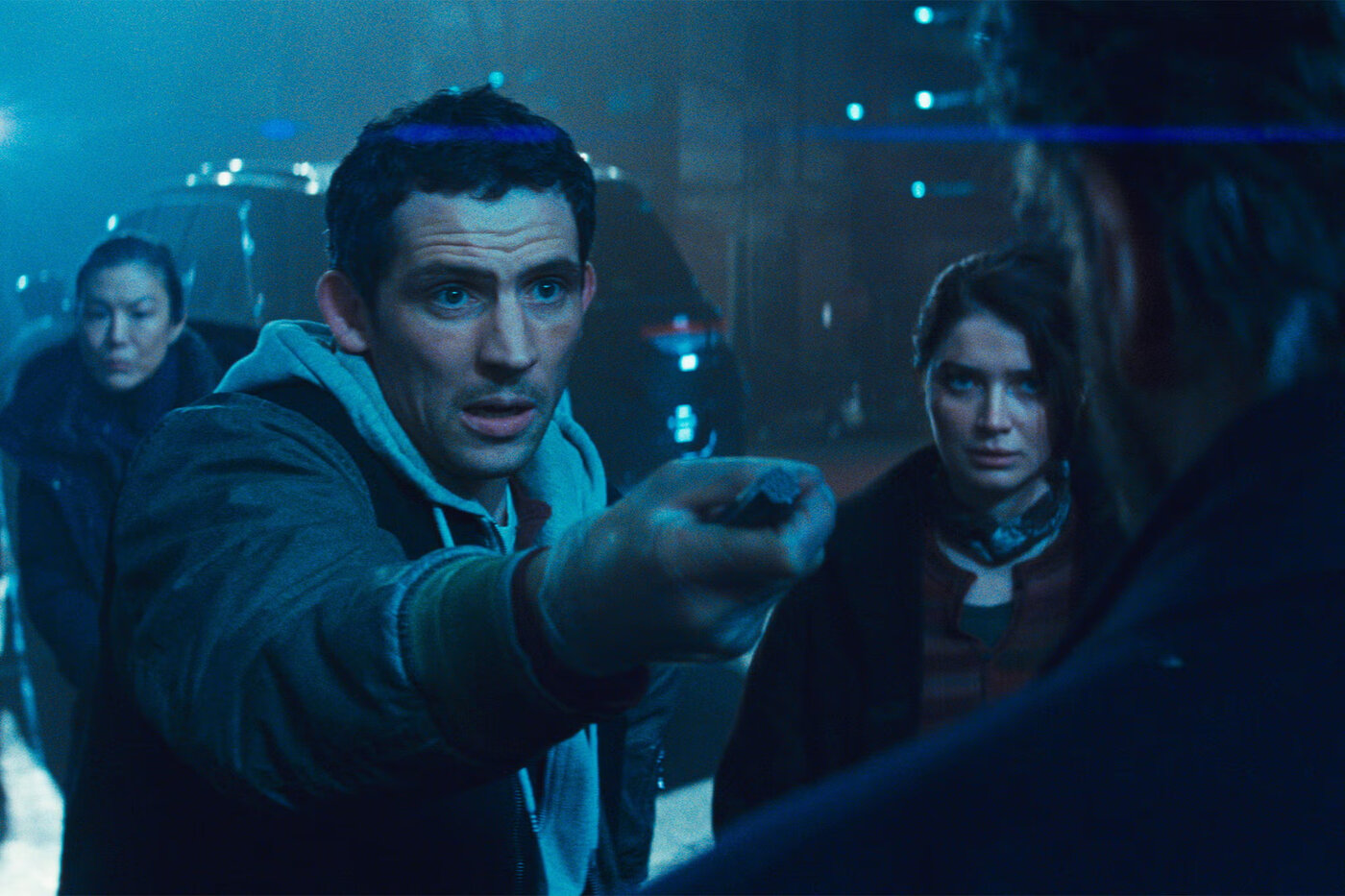
The Fabelmans feels like a closure, which makes the arrival of Disclosure Day (2026) four years later all the more intriguing. It is late-late Spielberg: the filmmaker after he closed the door on himself. It is a big spectacle, another summer blockbuster about aliens among us. Like The Fabelmans, Spielberg has a writing credit, but Kushner, who is used for civic-themed films, is gone, replaced by the devil on the director’s shoulder, David Koepp, who is often enlisted to pen the director's pop blockbusters, like their last partnership, Indiana Jones and the Kingdom of Crystal Skull (2008). It is a surprisingly relaxed film; gone are the anxiety that dominated West Side Story or Ready Player One's contempt for its own pop blockbuster instincts. The tone feels closer to his civic lectures than his thrillers, only with science fiction clothing. Spielberg seems very willing to trust what is recognizable—the aliens, the sinister agency as bad guys, the Hitchcockian chase film structure—as a popular surface that can handle his more personal concerns. Save for a couple of scenes with Emily Blunt early on, in which her character struggles with her new powers, there is little effort by Spielberg to establish what he has often done in the past: that his characters are average people to whom extraordinary things are happening. Josh O’Connor’s hero starts the movie on the run, already having stolen the alien secrets. The opening shots of an professional wrestling fight seem like a gag, a recognition that Spielberg couldn’t be further from current culture, and also an acknowledgment that Disclosure Day is the rare Spielberg movie that takes place in a semi-recognizable present world. This recognizable world is also evoked by noises in the background throughout the film that suggest that we are fast approaching a new world war—an anxiety that is probably deepened more than was originally planned due to the outbreak of the war in Iran.
Disclosure Day takes its time. Koepp’s script is structured towards slowly teasing its secrets to the point audiences will have guessed half of them by the time of the next info dump. There is a lot of running around, but only one major action set piece, the train one that the ads have singled out. Most of the time, Spielberg is using all of his talents to wring excitement out of scenes in which Koepp has cornered his characters and then magically gets them out of tight spots. At times, the scenario feel very thin, and one suspects Spielberg is daring us to “trust the plan,” to suspend disbelief and go along with his filmmaking prowess, to trust that the Hollywood machinery, and the director’s total control of it, creates its own truth. Indeed, this idea is central to the movie. As far as narratives go, Disclosure Day isn’t far from Ready Player One, with characters in a quest guided by the wills of a shadowy figure that doubles as a Spielberg stand-in. This time it is Colman Domingo as a former operative of the secret agency who, having the truth revealed to him, has gone rogue, following a plan the alien set for him, gently nodding O’Connor and Blunt towards a foregone conclusion while guaranteeing them that the right things will happen. He is the hand of God, an auteur with a mission in a film that seems very indebted to religious images.
Spielberg’s trust in storytelling and the power of images is undeniable, the source of plenty of what is good and bad about his work. His concerns might always be about the more immediate emotional effects of his images, but there is always this trust in “the movies” that is supposed to energize them. This has rarely been as true as on Disclosure Day, which makes the power of images its subject. It is less a first contact movie than one about sharing the evidence of that contact. What matters is that those images, when presented effectively, have the power to shake us. Disclosure Day presents this in terms that are openly theological. The title day is filmed as an act of revelation. The relationship between the audience and moving images is otherworldly. In this, the movie comes very close to the work of M. Night Shyamalan, arguably Spielberg’s successor in making Hollywood movies about the power of stories. At its very best, Disclosure Day has a lot of earnest shots of the cast that are packed with emotion that set it apart from most current American movies, moments of privilege outside the mechanics of Koepp’s script. When it works, the film can balance the fascination and horror of its fantastical images. It is also full of awe-filled reaction shots of minor characters that feel far less successful. Shyamalan movies fully embody this belief in images, and at times Spielberg seems satisfied with only illustrating his. There is an initial set of ideas and emotions that needs to come through above anything that happens on set. Images for Spielberg matter in how they communicate, which isn’t wrong but can feel narrow—they don’t break from this more strict and functional need with the abandon that, for instance, Shyamalan does.
The movie’s big gambit is how it presents the disclosure day itself as a large TV newscast. The power and importance of a press that show us the truth is central to the movie in ways very close to The Post, Spielberg’s rashly assembled public intervention on the early Trump presidency about the same idea. Disclosure Day does leave narrative fully behind by the end; the spectacle on TV puts the world in a spell, those images and their truth supposedly impossible to shake. In an early scene, O’Connor’s girlfriend, a former novitiate, discusses the alien presence in theological terms with the nun she used to be under and gets admonished that she didn’t lose her faith in God, but in people. There are no cynics allowed in Spielberg’s temple.
How one feels about Disclosure Day will depend on how one feels about its final scenes. It’s likely many will consider them deeply moving while others will regard them as silly. Spielberg doesn’t exactly go for big Hollywood spectacle at the end; the images disclosed have a plainness to them and draw heavily on popular imagination about aliens. The bet is that the material power of those images as a presented reality should overpower those characters and us along with them. For any of this to work, one needs to replace the world as we know it, the same one that can’t even agree on the value of vaccines, and replace it with the make-believe one Spielberg came up with. It is a big lie, and a very old man one at that, a nostalgic appeal to a consensual past, and one, if you are with the wave of emotion the movie tries to sustain, easy to fall under. It is also a very revealing one: Disclosure Day's biggest act of Hollywood imagination is coming up with a world that still believes in Steven Spielberg’s images.