The Round Table (Juliette Menthonnex & Benjamin Bucher, 2026).
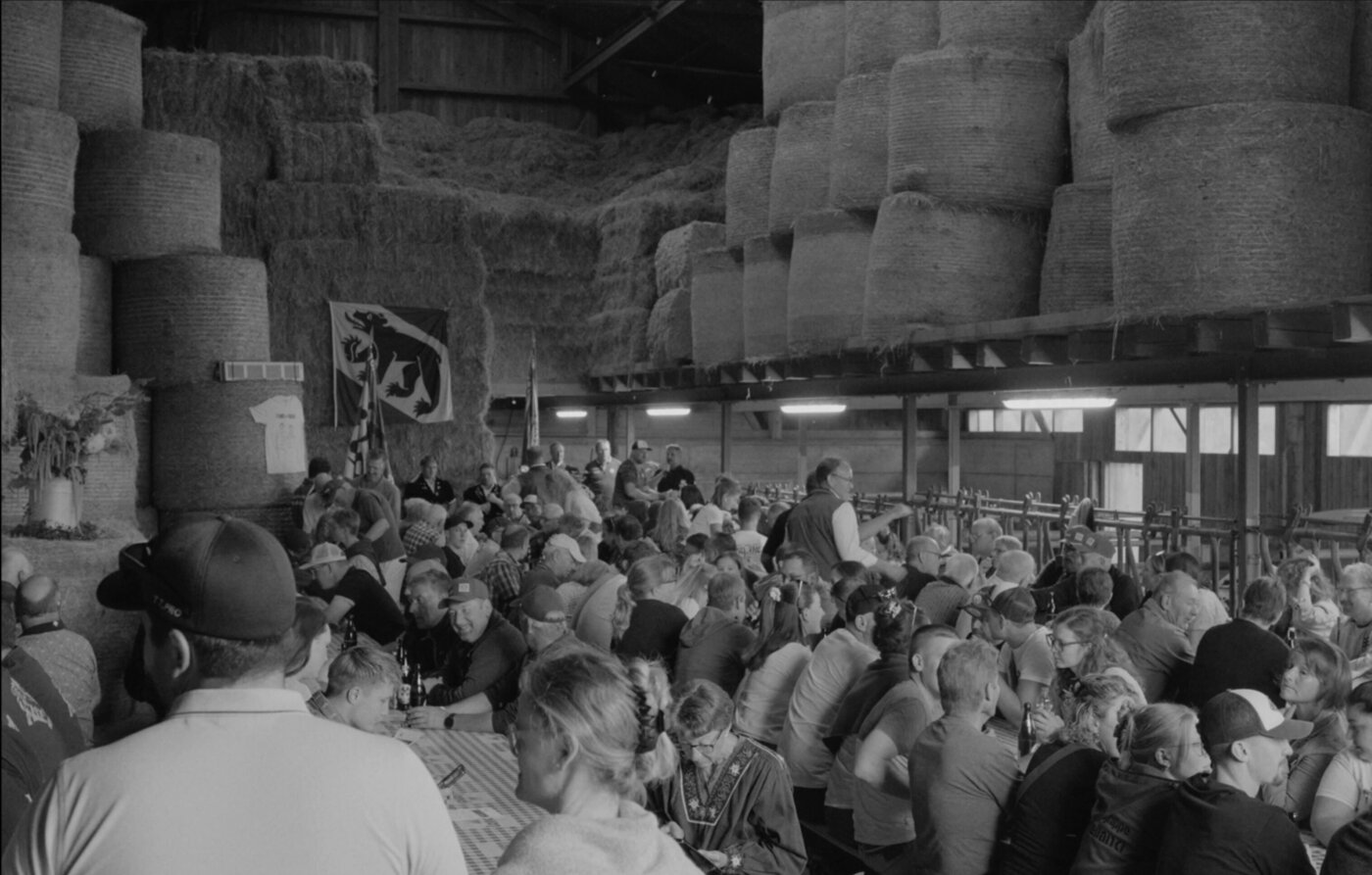
“Tonight, we talk about people.” At the beginning of Juliette Menthonnex and Benjamin Bucher’s The Round Table (all films 2026 unless otherwise noted), the citizens of Wolfisberg are attending a meeting regarding a soon-to-be-opened house for migrants. The northern Swiss town’s population, as of the 2020 census, is 187, nearly every one of whom appears to be in attendance, and the windows are open for spillover attendees who remain even after it starts raining. The invitation to remember that migrants are fellow humans is offered as an opening thought and is the kind of eminently noncontroversial bromide that—as with “humans are complicated” or “the truth is more complex than good or evil”—can be accepted by anyone besides the unmitigatedly fascist, racist, or infantile; it’s basically a way to announce you possess the baseline capacities of a human being.
So it is startling when the audience immediately responds with laughter, disgruntled murmuring and borderline booing. At smaller closed-room meetings, the more ferocious residents complain that migrant children are producing excessive “noise emissions” and talk with alarm about an unprecedented single confrontation between teenagers—a lucky yet paradoxically paranoid people! Bridged by stark, black-and-white shots of the wind in the grass as well as the nationally-requisite sparse group of grazing cows atop the Jura mountains, Menthonnex and Bucher’s carefully uninflected portrait of a series of barely-disguised racisms brought to mind a long-abandoned ’90s staple: “I’m not being racist, I’m just being honest.” It all begs the question: Don’t they care that they’re being recorded for an eventual appearance in an empathy machine?
Good Valley Stories (José Luis Guerín, 2025).
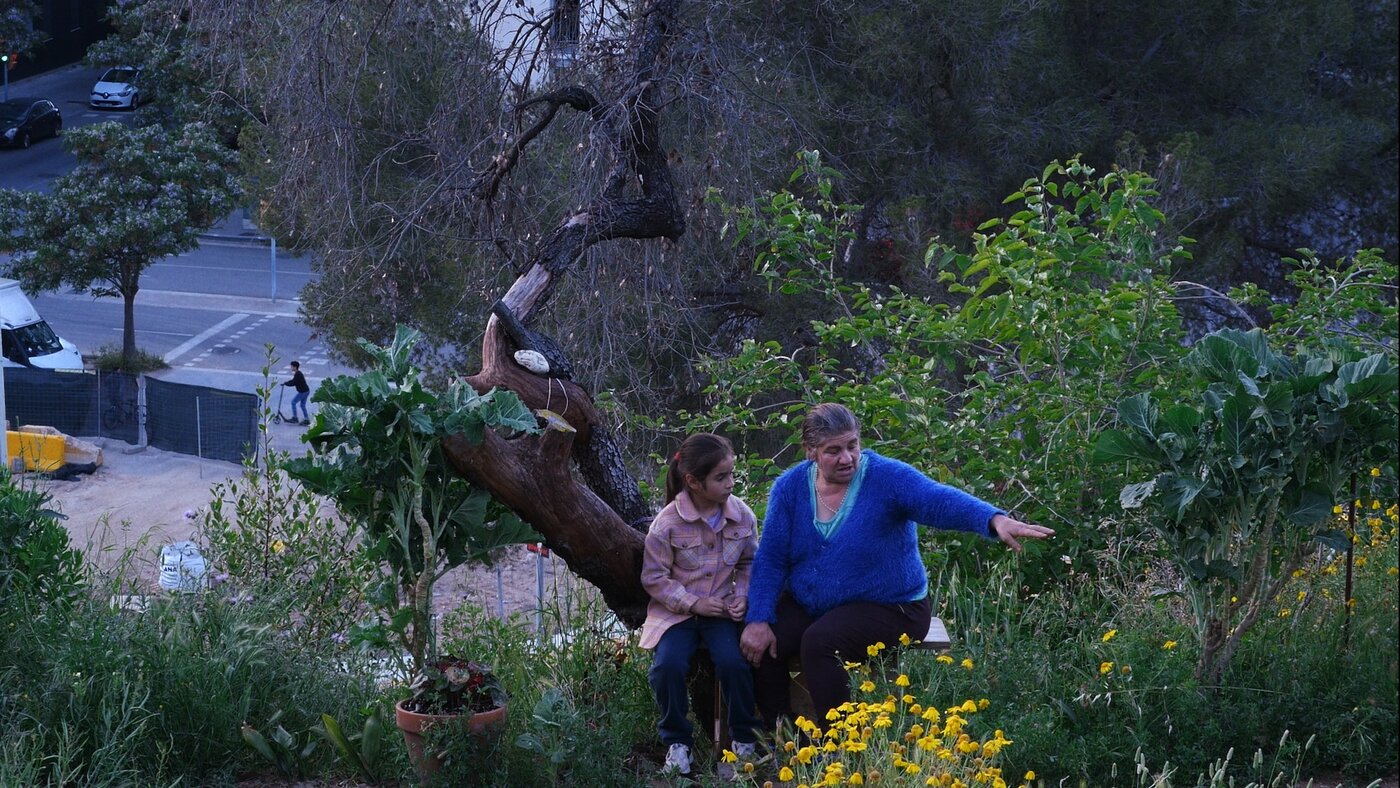
In its 57th edition, the Swiss festival Visions du Réel (VdR) and its program of art-leaning nonfiction doesn’t proscribe empathy as a goal; among the festival’s more curious prizes is the Perception Change Award, “awarded to a film that sheds light on the current issues that will define the world of tomorrow” as decided upon by two members of the United Nations Office at Geneva. This year, it went to José Luis Guerín’s Good Valley Stories (2025), six months after premiering at San Sebastián last fall; rather unacceptably for the first feature in a decade from a major filmmaker, it has yet to have a North American premiere. In his new documentary, Guerín examines Vallbona, a Barcelona commuter suburb perpetually starved of resources. The tone is pleasantly melancholy, with many reminiscences of what took place within now-gone structures, building a polyphony of voices confronting the brute realities of personal and collective obsolescence with a formal approach unexpectedly close to Guerín’s narrative peak, 2007’s In the City of Sylvia. The Perception Change Award it received is a simultaneously valid and simplistic way to think about a very good movie; certainly it meets the “UN” remit of the prize, containing as it does seven languages. But VdR’s overall agenda carves out space for work not primarily designed to be easily reducible to such comforting sentiments, including Guerín’s own film—though he surely won’t mind a little reductiveness given the accompanying 5,000 Swiss franc prize.
The Building Site (Tiziano Locci & Tito Puglileli, 2026).
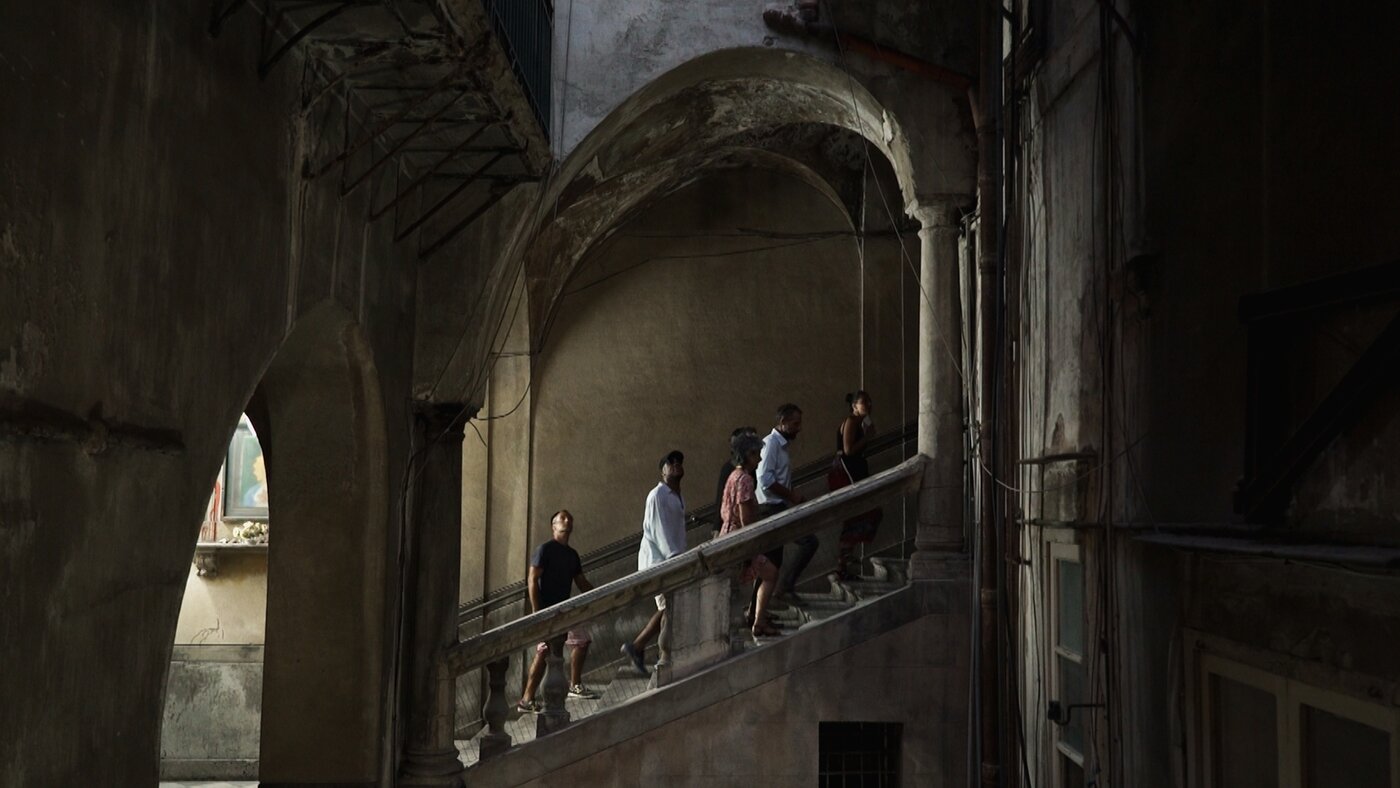
This year marked the ninth and final year of departing artistic director Emilie Bujès’s tenure; I have seen seven of those editions, starting with tapping in online during the COVID spring of 2020, and they’ve all expanded my understanding of current global cinema, leading me to consistently good work that, regrettably, rarely seems to make the leap to American festivals and is thus worth flying to Switzerland for. That optimistic context established, it fits the current state of things (i.e., bad) that many films this year grimly circled around very literal displacements. Tiziano Locci and Tito Puglileli’s The Building Site is a sort of more cheerful version of Chantal Akerman’s Hotel Monterey (1972), less severe because it has sound and the lodgers don’t all seem terminally dispossessed. But the end of days is still the subject: the filmmakers explain in sporadic voiceover that they were the last to move into the Palermo apartment building being documented, whose occupants depart one by one as its sale is rumored to be imminent. Clearing out is not an especially careful and attentive process: The Building Site begins with a couch crashing down center-frame from above, a spectacular dream image captured on the cheap. The building swirls with dust, birds congregate near the roof, and a lone crab scuttles across a rusty tub; in times of endemic homogenization, dirt and filth can seem like a form of resistance manifested by a centuries-old building out-of-step with the architectural future.
Matching its location, the image simulates the digital noise of a camera roughly 15 years older than the one actually being used, noticeable enough on a big screen to join last year’s Dry Leaf (2025) as an ostentatious study in deliberately archaic digital imagery. By the end, we’ve received a mostly visual précis of each departing resident, omitting both direct interview and onscreen name identification for all but one, making for a quiet study with plenty of original texture. The 63-minute film (winner of a Special Youth Jury Award for a Medium Length Winner, this one worth 4,000 Swiss francs) was smartly paired with Shadi Habib Allah’s Muddy Currents, an equally visually funky work documenting the history of Israeli interference with, or outright destruction of, Palestinian water sources. The sharpest thrust is in the subtitles, which always lowercase “israel” or “israeli” to delegitimize the state—strong tactic!
Club Heaven (Jona Honer, 2026).
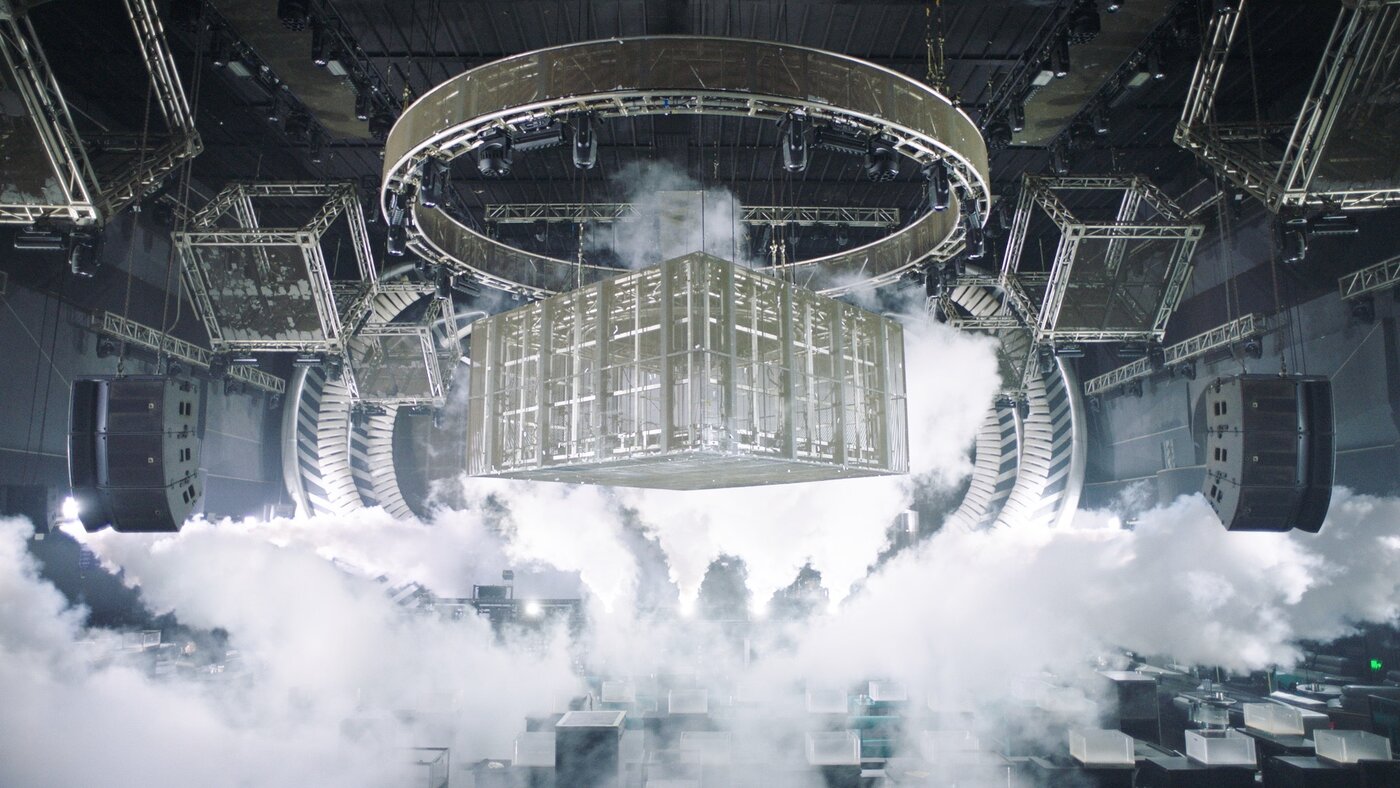
Initially, Jona Honer's Club Heaven seems to follow the school of documentary composition practiced by Austrian formalists Ulrich Seidl and Nikolaus Geyrhalter. In the opening shot of a light rig lowered onto the empty dance floor of a Chinese mega-club, the camera is in precisely the right place to observe the heavy equipment’s descent, moving from a diagonal to straight-on horizontal view that’s very satisfying to watch. Honer served as his own cinematographer and also edited this exceptionally well-cut film and, rather than repeatedly defaulting to similar symmetry in consecutive shots, alternates compositional proportions between them, shifting diagonals left-to-right or adjusting how deep the furthest-back part of the frame goes; the shots are static but their alternation kinetic. But that first image, spectacularized as it is, promises an eventual build that never comes; once the club is in operation for the night, Honer shoots rich kids on the dance floor without sound, in infrared, and using a 1.33 aspect ratio, denying the proceedings any juice. The real action is when he uses a 1.85 frame to film the conference rooms and hallways where employees kill time, eat noodles, talk about their gambling debts, and struggle to earn their monthly minimum commission. The monotony is the point, and it’s a surprisingly lonely and literally quiet film about, mostly, sitting and waiting.
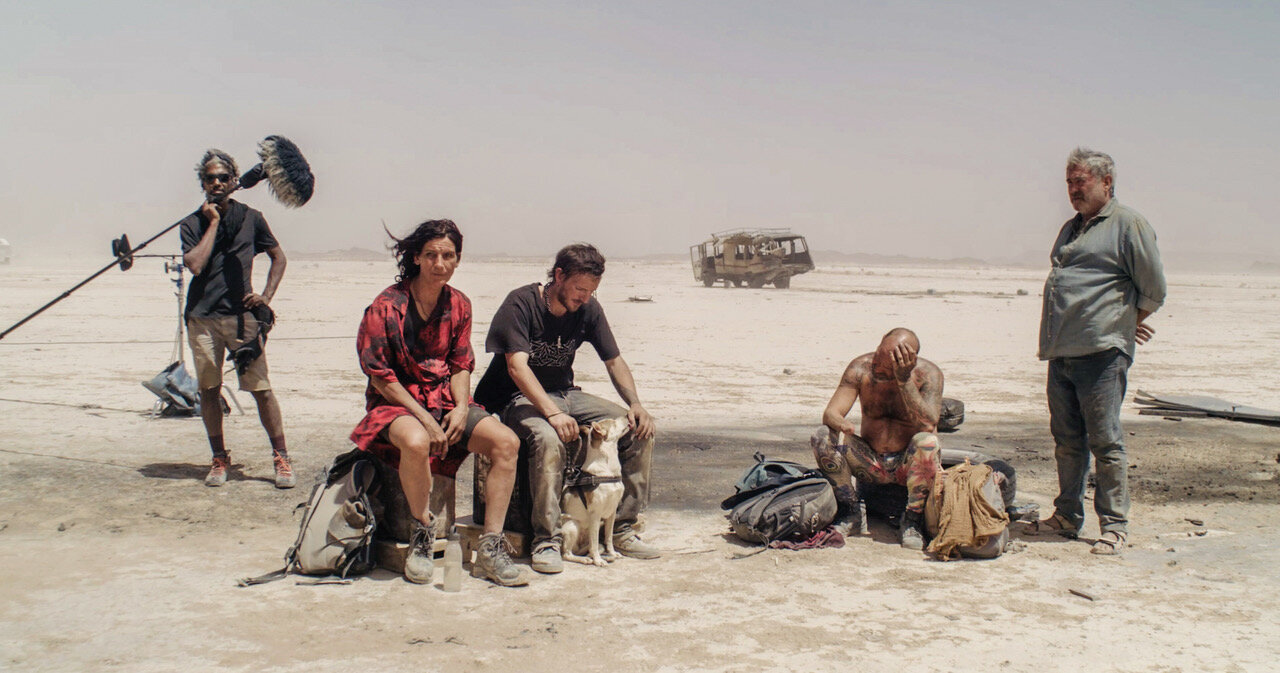
Vacío Luminoso (Uberto Rapisardi, 2026).
Speaking of loneliness, a few unkind words need to be said about Vacío Luminoso, a feature-length making-of-Sirât (2025), which opens more or less in media res with co-writer/director Oliver Laxe sitting in a hotel room and complaining. His exhaustion is understandable: the production, which was shot in chronological order, has just kicked off with a three-day desert rave and it was rough going. “I’m tired,” Laxe tells his longtime friend and interlocutor, director Uberto Rapisardi. “I’m not curious, I’m sad.” He goes on to describe moments of self-doubt during the shoot, including some involving a crane’s presence.. The movie assumes, I think fairly, that you have seen Sirât and so can connect the behind the scenes observations to the finished film, but we need a little more; I don’t know where that crane was or what purpose it served, and this lack of detail is endemic. Vacío Luminoso is the second feature-length making-of dedicated to a Laxe film; the first was Ben Rivers’s The Sky Trembles and the Earth is Afraid and the Two Eyes Are Not Brothers (2015), which confusingly premiered before the film it documented, Mimosas (2016). I am told that at a festival panel last year between Rivers and Laxe, there was some tension as the Laxe complained that while working, Rivers was always in sight, getting good shots that made him question his own judgment. No such worries with this unilluminating film, from which I learned a few things but not nearly enough.
Having seen it twice, I’m increasingly convinced Sirât is not just one of last year’s key films but also will serve as an excellent time capsule of the bad-vibes mid-2020s. Nonetheless, Laxe’s endless press tour for the film has not done the director any favors, as he has repeatedly been called upon to vaguely opine on god, ego death, and a bunch of other simultaneously weighty and vaporous matters. It’s hard to do a year-long talking tour about any movie, let alone one that took a decade to make, especially when keeping press spoiler-free is a priority, but this particular rhetorical stretch is best forgotten and memorializing it in feature-length form is almost ungracious. What I did manage to learn: that Laxe felt that Mimosas was a not-quite-successful first iteration of some key themes revisited in Sirât, a connection I was glad to have vindicated; that in early rehearsals with his cast, Laxe threw out the old Facebook chestnut “dance like nobody’s watching” as a guiding thought, which is not really helping the case for him; that his previous film, Fire will Come (2019), must have done quite well in Spain, because Laxe has a very nice house; and that Laxe is adept at working with actors, sculpting their body movements without making them bristle. Finally, I learned how those explosions in the film were done (it’s simpler than you probably think), which is basically what I came for, so fair enough—but the bulk of this is an interminable hotel conversation and/or equally unproductive, contextless B-roll.
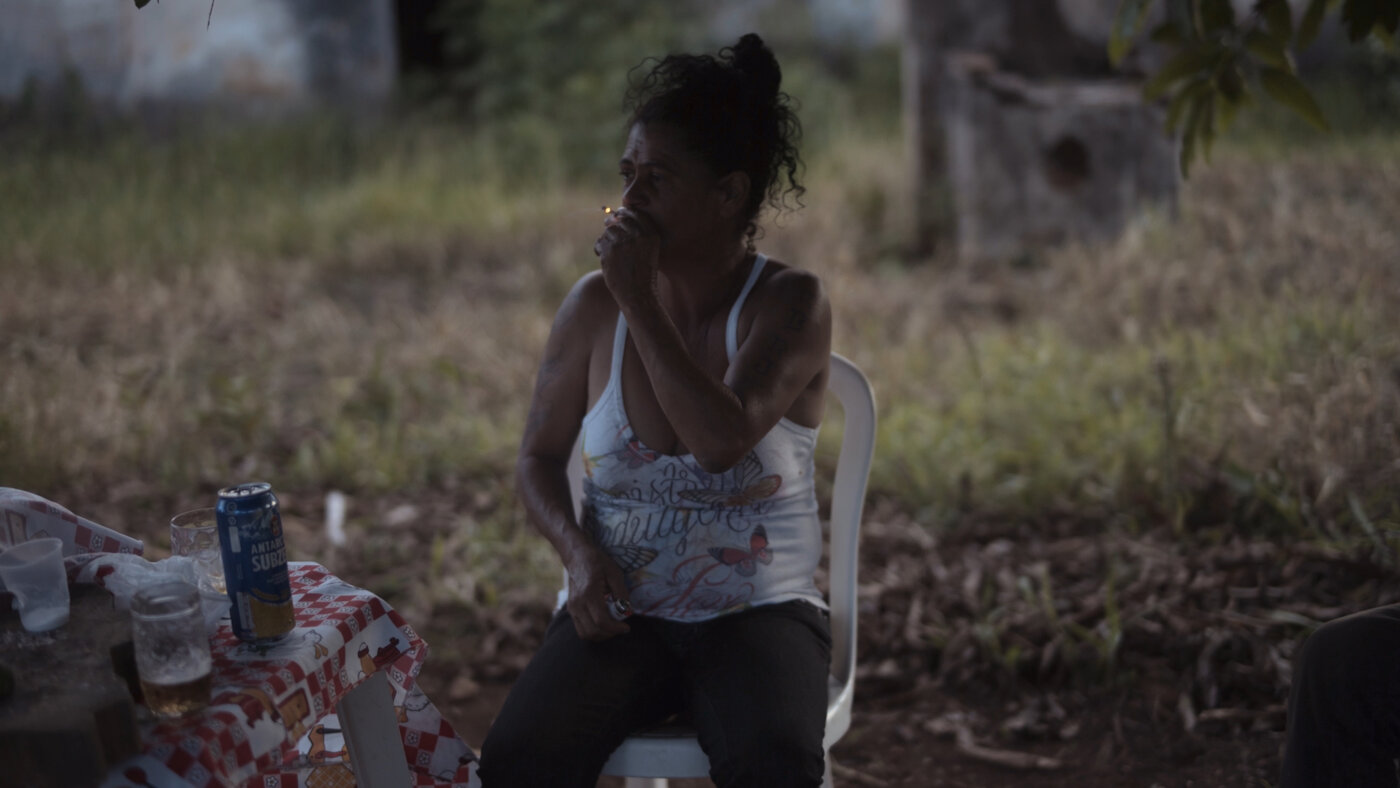
The Night and the Days of Miguel Burnier (João Dumans, 2026).
Back to praise: Shot between 2019 and 2022, João Dumans’s The Night and the Days of Miguel Burnier is classically-tuned cinema vérité, documenting the ambient effects of a Brazilian town’s takeover by a iron ore mine. Opening titles explain that the population of the Miguel Burnier mining district shrunk from 600 in 2005 to a mere 80 last year; those that remain are drinking themselves to death with alarming dedication. It’s clear that help for the mining community is not on the way, and the tone is set early at a community meeting where a leader observes, “We only have one life,” and he’s not sure that he wants to spend what remains of his here. Invoking the 2019 collapse of a mining dam in Brumadinho, which killed 270 people, he fears an existence that ultimately would amount to nothing more than $20,000 in compensation to the decedent’s family; later, sitting by the riverside, someone more succinctly says, “What an ugly place.” There are amateur gold-panners and people fishing for their dinner, but industriousness beyond bare-minimum survival is not on the agenda. This is the kind of movie that can make people uncomfortable by depicting misery without mediation, raising questions about the intentions and point of view of a filmmaker who gets to leave after capturing people in deep abjection. But I’m willing to accept the film as a gesture of solidarity that’s compellingly upsetting, training a sympathetic eye on a marginalized population. It’s also refreshingly old-school: personally, I never need to see another documentary that foregrounds its own construction for meta-reflexive laughs. By contrast, Miguel Burnier is attentive, observant, and that’s all, which is a nice change of pace.
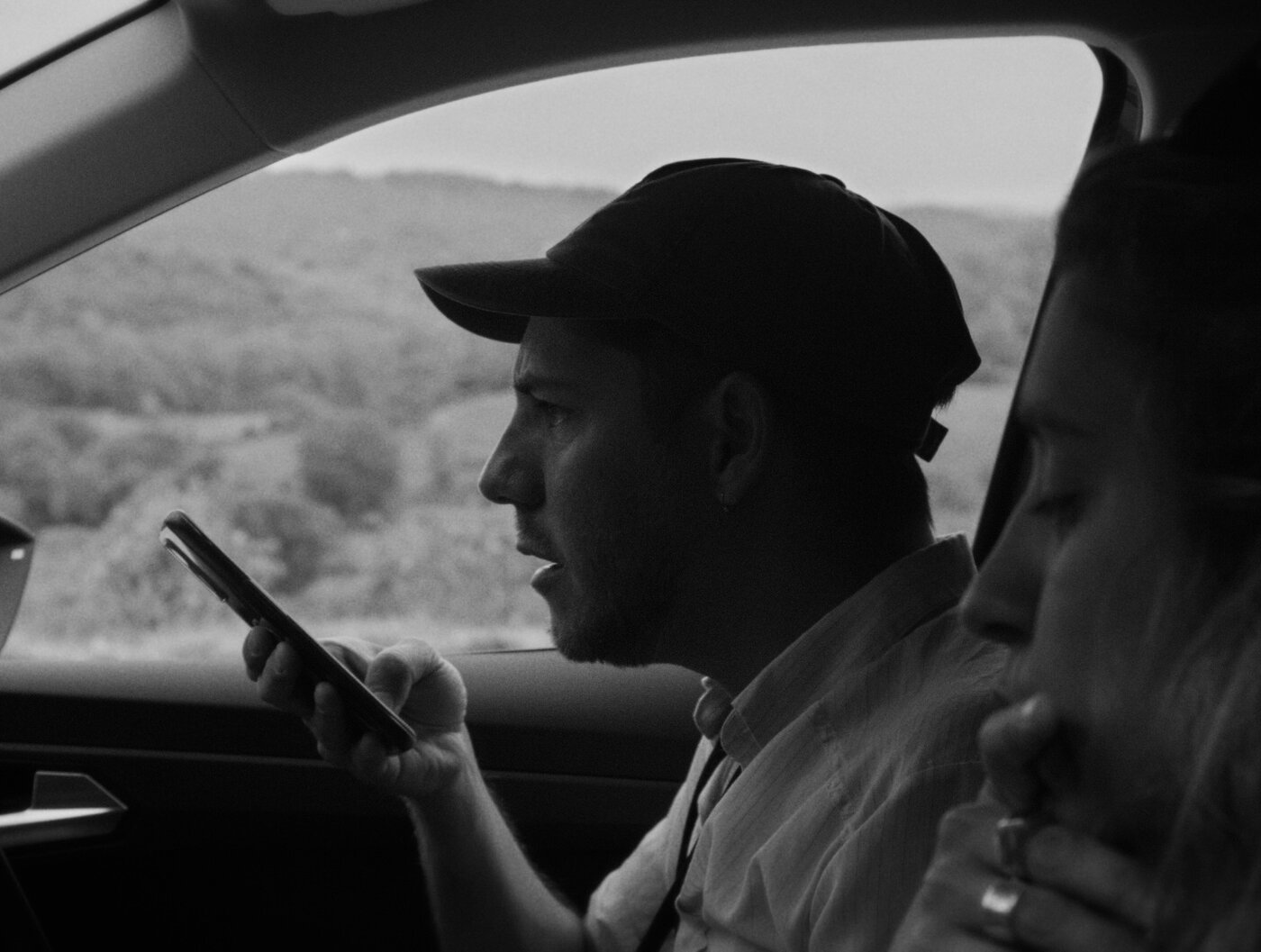
Don’t Tidy or Clean My Room, I Like It as Is (Ignacio Ceroi, 2026).
That said, if we are going to play some games with nonfiction porousness, Ignacio Ceroi’s Don’t Tidy or Clean My Room, I Like It as Is is a pretty good way to go about it. This is the second film generated by Ceroi’s purchase of a camera from eBay and finding that it contained lots of footage shot by its previous owner. The home movies were first repurposed it for 2021’s What Will Summer Bring, imposing an elaborate narrative on top of anonymous home movies; in Don’t Clean, Ceroi is finally troubled enough by the man’s still-undiscovered identity (not to mention the potential legal nightmare of not clearing the previous film with him) to try (harder than previously) to locate him. This is done in a fashion that will be very familiar to anyone who’s spent time with Borges, Cortázar, and other playful masters of Argentinian literature: assistance is provided by an amateur detective with the suggestive name “Michel Marx” as the first film’s creative fabulation leads Ceroi and his team on a real-life potential wild-goose chase across the French countryside. This actually yields results, which is a pleasant surprise. The film is funny, playful, and quite lovely in its demonstration of new friendships arising as the unexpected final consequence of a non-professional’s lifelong amateur cinema diary. To corrupt a cliche: maybe the real movies were the friends we made along the way.