
The Notebook Primer introduces vital figures, films, genres, and movements in film history.
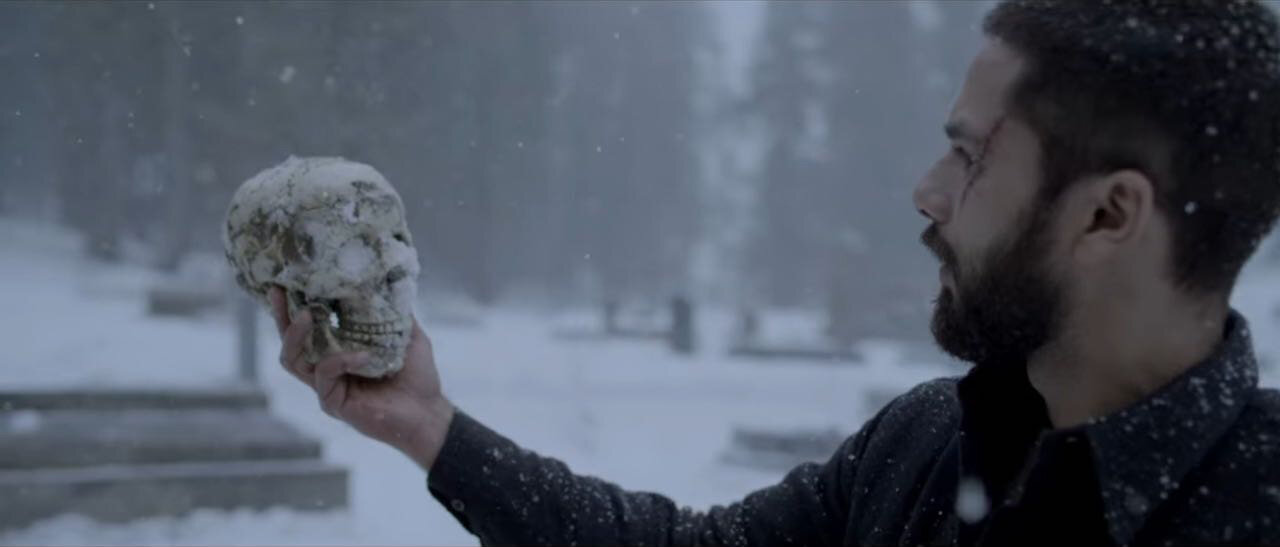
Haider (Vishal Bhardwaj, 2014).
First brought to South Asia in the hands of British imperial agents, William Shakespeare’s plays have since found a home in Bollywood, the Bombay (now Mumbai) film industry, where they have been adapted again and again for nearly a century. Each of these multifarious productions has absorbed the Shakespearean corpus and calibrated it to a distinctly Indian sociocultural context, indigenizing the most prestigious cultural export of the empire. Is the presence of the Bard in Bollywood a postcolonial protest, a commercialization of cultural interplay, or mere cosmopolitan hybridity? While a simple answer is futile, the narrative of Eurocentric primacy, in which the works of Shakespeare are considered universal and sacrosanct, is distinctly refuted by the below-mentioned films. Wittingly initiating alterations and recreations, transformations and transmutations of the original text, they do much more than using the colonizer’s tongue to curse back in Calibanesque fashion.
Bollywood, often inaccurately used as a shorthand for the entirety of Indian cinema, is an industry with elaborate codes, values, and traditions. While renowned and relished for its sentimental romance, unpragmatic action, elongated fantasy, seemingly random but perfectly choreographed dance numbers, and dreamy happy endings, it cannot be reduced to a handful of such conventions given its mammoth diversity. Not a physiological place but a phenomenon, Bollywood has roots in Indian epics and various theatrical forms—classical, regional, and Parsi—while many of its stylizations borrow from Hollywood. With such a foundation, Bollywood’s exploration of Shakespeare seems inevitable. The plays, imported to civilize the colonized native following Thomas Babington Macaulay’s educational curriculum, gained popularity through regional stage adaptations beginning in the latter half of the nineteenth century.
As the medium of film started picking up pace in India, Parsi productions of Shakespeare were among the first to be cinematized. Sohrab Modi’s Khoon Ka Khoon (1935) is India’s earliest Shakespearean talkie and the world’s first full-length sound film adaptation of Hamlet. Subsequently, in 1936, Modi made Said-E-Havas, which borrowed from a theatrical adaptation of the same name based on Richard III and King John. His brother, Rustom Modi, who also had roots in the Parsi theater tradition, directed Pak Daman (1940), based on a stage adaptation of Measure for Measure. Though these early films are essentially recordings of stage plays, productions of Shakespeare in Bombay cinema eventually pulsed with a life of their own.
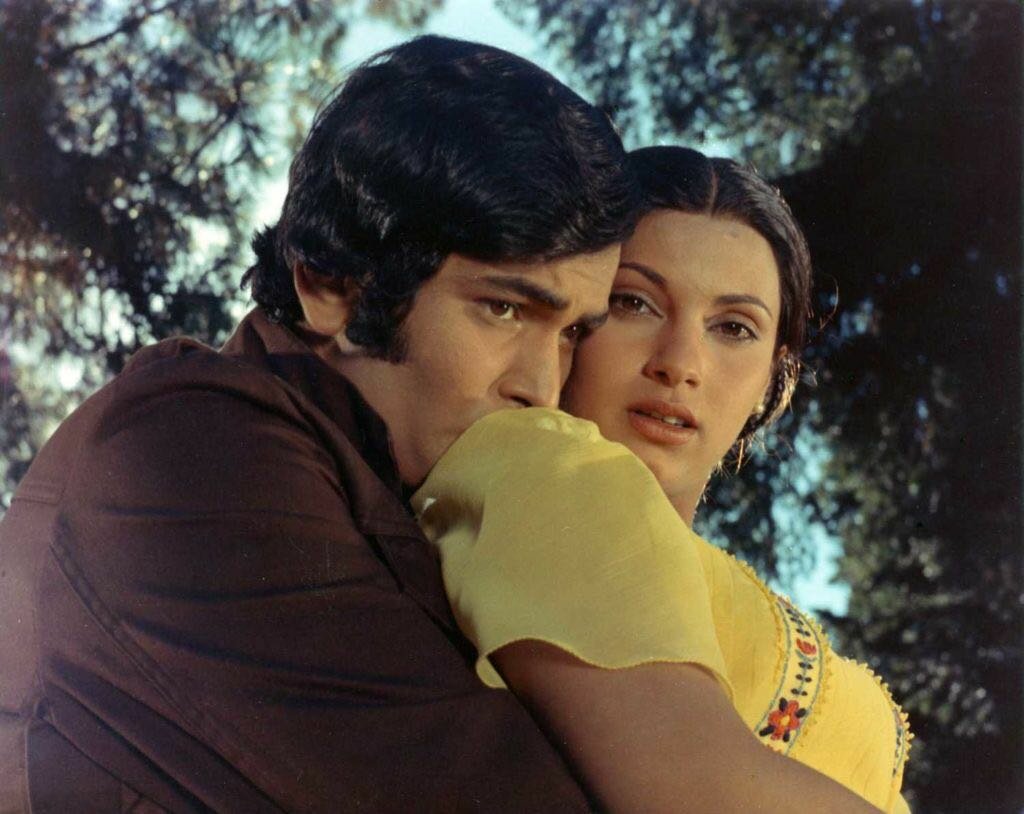
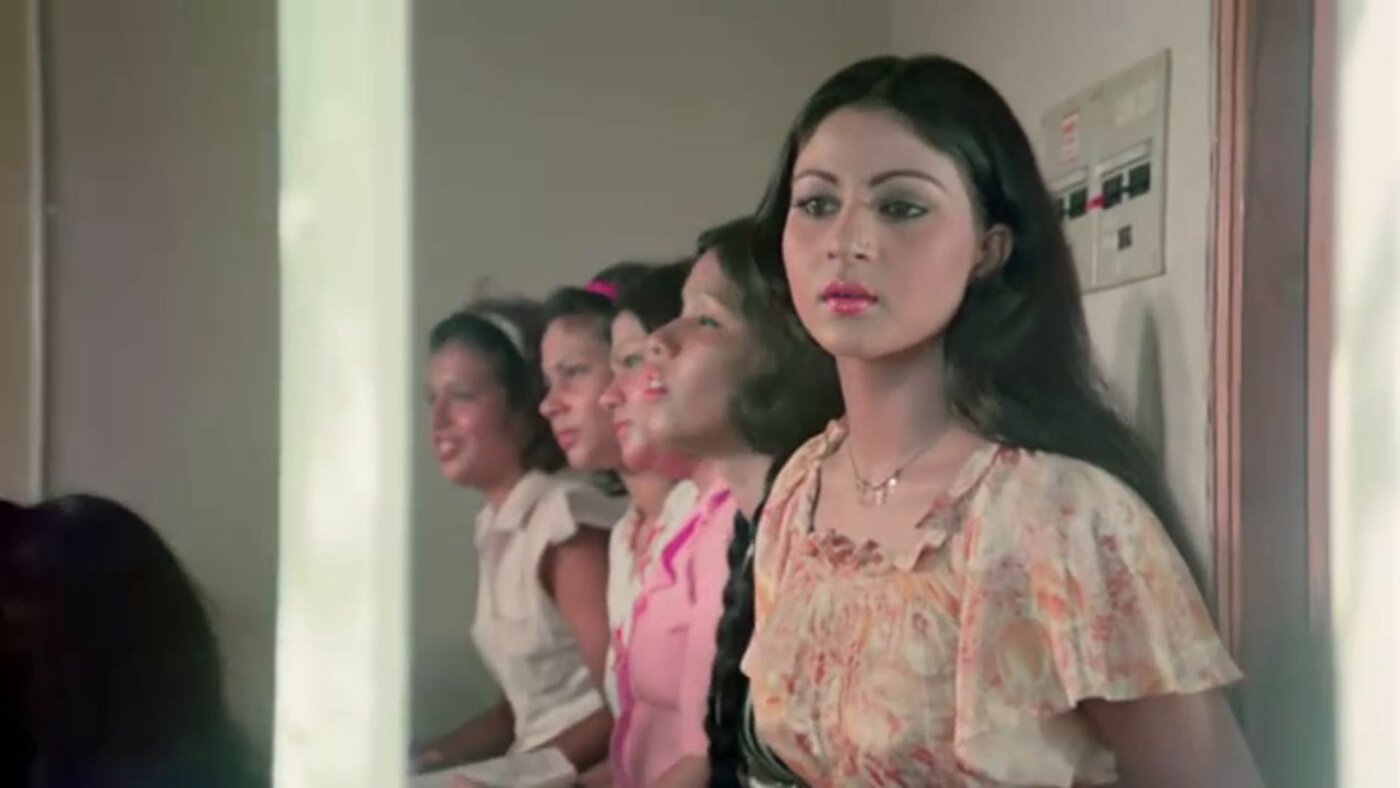
Top: Bobby (Raj Kapoor, 1973). Bottom: Ek Duuje Ke Liye (K. Balachander, 1981).
The Indian institution of arranged marriage is rooted in elaborate codes of caste, class, patriarchal ideals of honor, and religious disparities. Couplings that breached such sectarian, hierarchal boundaries brought ill-repute to the respective families in society. Staunchly providing a venue to protest against such orthodoxies, Romeo and Juliet—an illustration of how romance can trigger brutality between bonds of blood—became the most sought-after desi storyline for filmmakers and audiences. Many powerful adaptations of it sprinkled across decades critique the harsh sociocultural realities of familial conflicts and honor crimes, sincerely impacting love in Bollywood and lives beyond the screen.
Among India’s biggest box-office hits in the 1970s, Raj Kapoor’s dreamy, escapist Bobby (1973) introduced teenage romance to the industry, where it has since become a recurring theme. The movie borrows its star-crossed premise from Shakespeare, with different religious and class backgrounds standing in for the feuding families, but dramatically alters the play’s conclusion. Recognizing their folly, the couple’s fathers orchestrate a successful rescue after the lovers’ attempt suicide by jumping off a cliff together.
In the 1980s, two celebrated and commercially successful adaptations of Romeo and Juliet broke with the mainstream Bollywood convention of happy endings by maintaining the tragedy of their source material. K. Balachander’s Ek Duuje Ke Liye (1981) initiated a rebellious wave against paternal tyranny. Tweaking the Shakespearean pair’s misapprehensive suicides to an agency-oriented one, the film inspired many desperate young couples to follow in their footsteps. To curb the trend, government agencies asked Balachander to release another version of the film with a rosier conclusion. In the case of Mansoor Khan’s Qayamat Se Qayamat Tak (1988), for which a peaceful resolution was scripted and filmed, the dissatisfied director undertook reshoots to restore the young lovers’ deaths.
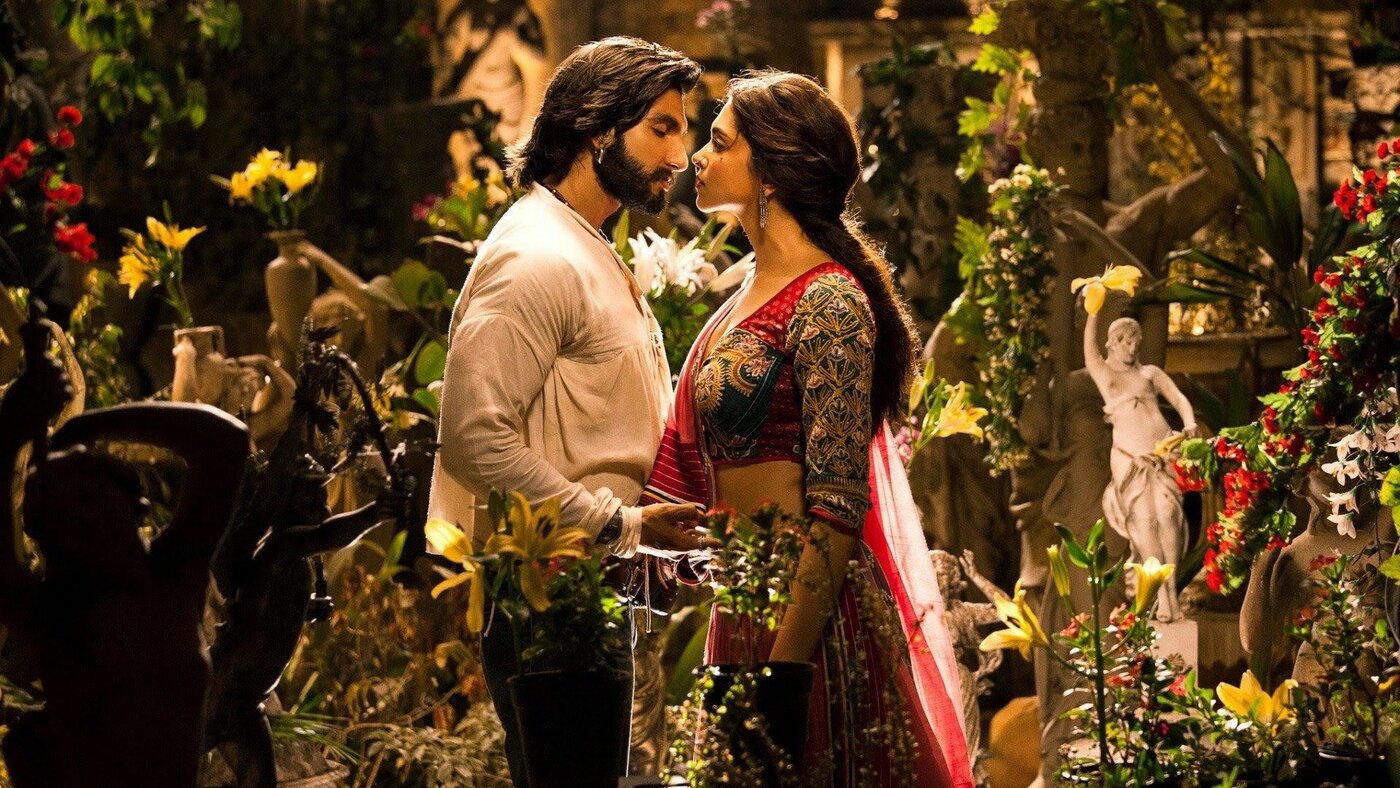
Goliyon Ki Raasleela Ram-Leela (Sanjay Leela Bhansali, 2013).
More recent versions of Romeo and Juliet include Habib Faisal’s Ishaqzaade (2012), Manish Tiwary’s Issaq (2013), and Sanjay Leela Bhansali’s Goliyon Ki Raasleela Ram-Leela (also 2013). The last is one of the most grandiose and opulent adaptations, with its palatial set designs: sparkling fountains, giant balconies, majestic costumes, and exquisite decor. The Montagues and Capulets are transformed into two rival Gujarati clans—the Rajadis and Sanedas—and the action is oriented around the Hindu cultural festivities of Navaratri and Holi. Large-scale Bollywood musical sequences feature the folk-dance form of garba, with characters dressed in embroidered lehengas (long skirts), kediyas (frilled upper-body garments), dhotis (long loincloths), and pagdis (turbans). Though Bollywood musical numbers do not always advance the storyline, here the flirtatious banter, desire, and ache of separation from the original are woven into nuanced lyrics and choreography, rendering the film’s ten songs central to the unfolding of the plot.
Shashank Khaitan’s Dhadak (2018) alters the end of Romeo and Juliet in a manner different than other adaptations, borrowing also from Nagraj Manjule’s Marathi movie, Sairat (2016). Dhadak has its caste-crossed lovers, Parthavi and Madhukar, elope. After the turbulent ups and downs of their relationship, just when their happily-ever-after seems assured by the arrival of a child, things go morbidly awry. In the guise of mending ties, Parthavi’s brother makes a visit bearing gifts. The movie culminates with a dark rewriting of the much-adored balcony scene. Just before credits roll, Madhukar and the baby are fatally hurled from the balcony by Parthavi’s brother right in front of her eyes.
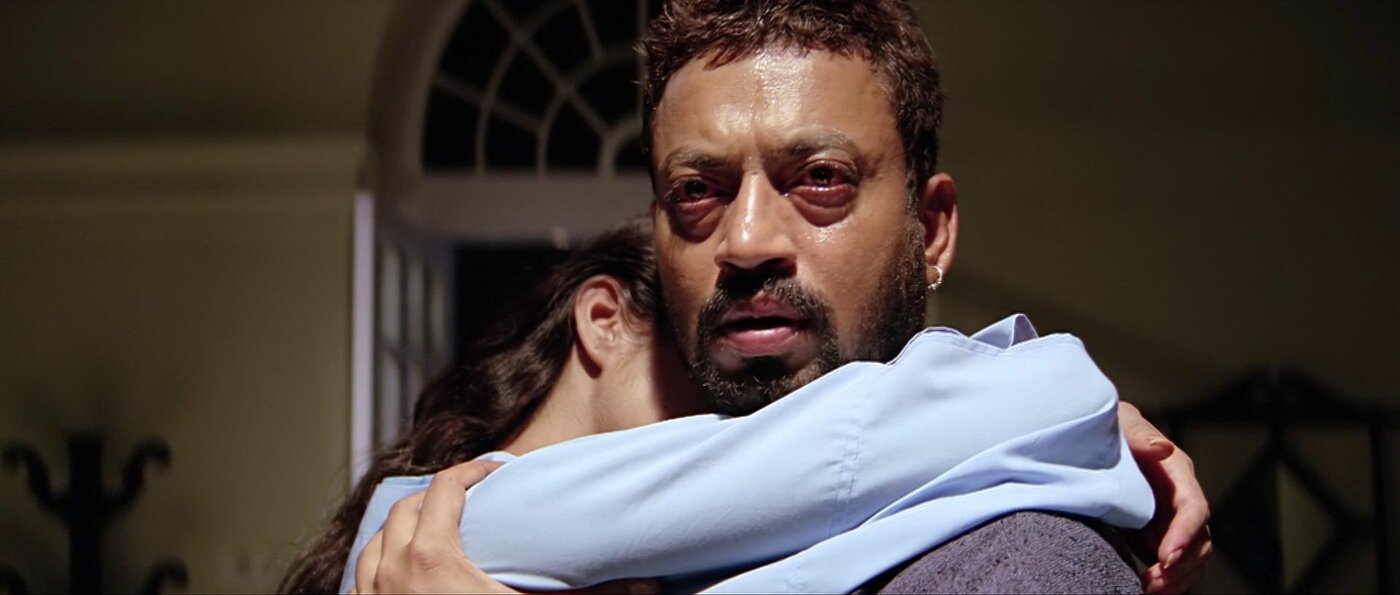
Maqbool (Vishal Bhardwaj, 2003).
The biggest name in Bollywood adaptations of Shakespearean tragedy is Vishal Bhardwaj. In each of his three adaptations of the Bard, Bhardwaj transposes the setting to a different contentious sphere of contemporary India, initiating sincere interrogations of organized and systematic crime. Macbeth’s Scotland becomes the criminal underbelly of Mumbai in Maqbool (2003), Othello’s Venice and Cyprus become the rural gangsterism of Uttar Pradesh in Omkara (2006), and Hamlet’s Denmark becomes the tense political turmoil of Kashmir in Haider (2014).
Bhardwaj’s adaptations rely on his ability to insert central motifs and key refrains of the plays into the sociopolitical dynamic of the country. Maqbool refashions the witches that govern fate into duplicitous policemen. In the opening scene, one draws a kundali (a Vedic astrological chart) that predicts the blood and brutality which will flow as the film progresses. Macbeth’s spectral elements are replaced by hallucinations and disorientations. The psychological horror as characters come to terms with the ramifications of their actions is underscored cinematically through the interplay of light and darkness, jarring close-ups, and disturbing sound. In the end, unlike Macbeth, Maqbool is troubled beyond redemption and does not resist death. Abandoning his revolver and abjuring his heroic masculinity, he walks away, refusing to face the Macduff figure, who shoots him in the back.
The final scenes of Haider, too, depart significantly from the source material. Instead of Gertrude’s accidental death from poisoned wine, we have Ghazala deliberately detonating a bomb vest, killing herself and many others. Amidst the chilling shots of stark white snow punctured with blood, dismembered bodies, soot, smoke, and fire that follow, Haider hobbles away as the screen fades to black. Abandoning his revenge, he leaves behind a badly injured and guilt-stricken Claudius who begs the former to finish him off.
While adhering broadly to the original plots, Bhardwaj’s cinema alters some of the intricacies, delivering complex female protagonists who hold much more agency than did their Shakespearean counterparts. They partake in violent acts, wield weapons, display unabashed desire, and become crucial to the resolution of the film by active intervention. In Omkara, Emilia’s character metamorphoses into a violent and subversive Indu. Instead of being killed by the Iago figure, she kills him in a determined rage to avenge Desdemona’s death. A neat echo of the Hindu goddess Kali is very deliberately embedded in a close-up shot in which she attacks Iago with the goddess’s characteristic sickle.
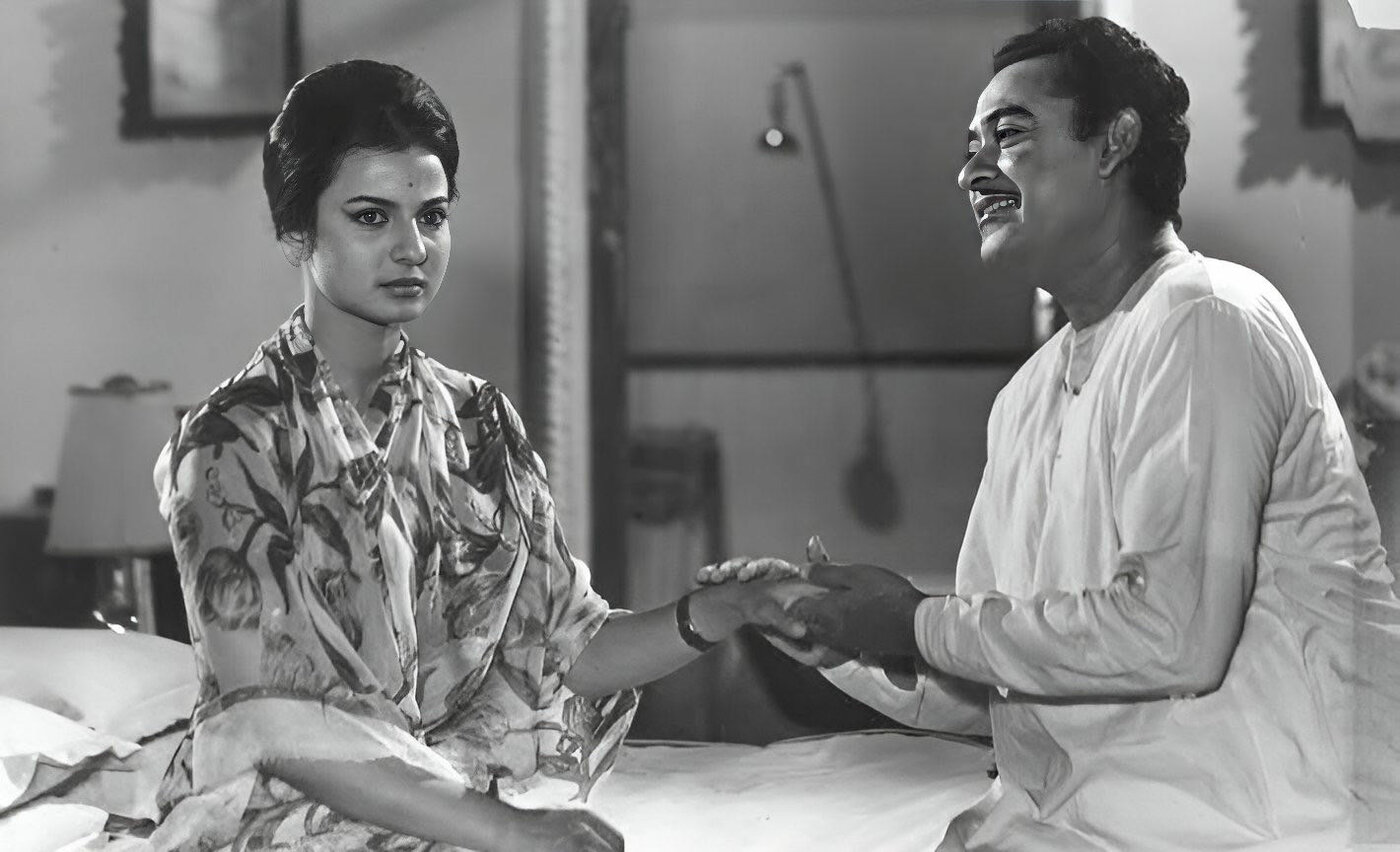
Do Dooni Chaar (Debu Sen, 1968).
The most adapted Shakespearean comedy in Bollywood is The Comedy of Errors. Two celebrated cinematic versions in the twentieth century, Debu Sen’s Do Dooni Chaar (1968) and Gulzar’s Angoor (1982), shift the setting to a domestic one, depicting the hierarchy of a household and perils of sexual dalliance in a small town. Both films dispense with the play’s political feud between two cities, occasioning the twins’ visit by means of business endeavors. Shakespeare’s master-slave dynamic transposes neatly to the servitude common in Indian social stratifications. Following such adaptations of the play, the trope of confusion through doubles has become a staple recurrence in Bollywood romances, dramas, and comedies.
Cirkus, Rohit Shetty’s 2022 adaptation of The Comedy of Errors takes the play to a fantastical realm of idyllic serenity and slapstick humor. Doing away completely with the master-slave/servant relation, the film establishes both the Antipholus and Dromio pairs as brothers. It introduces new characters and alters the storyline quite significantly to address how sincere affection supersedes blood ties, wading into the nature versus nurture debate.
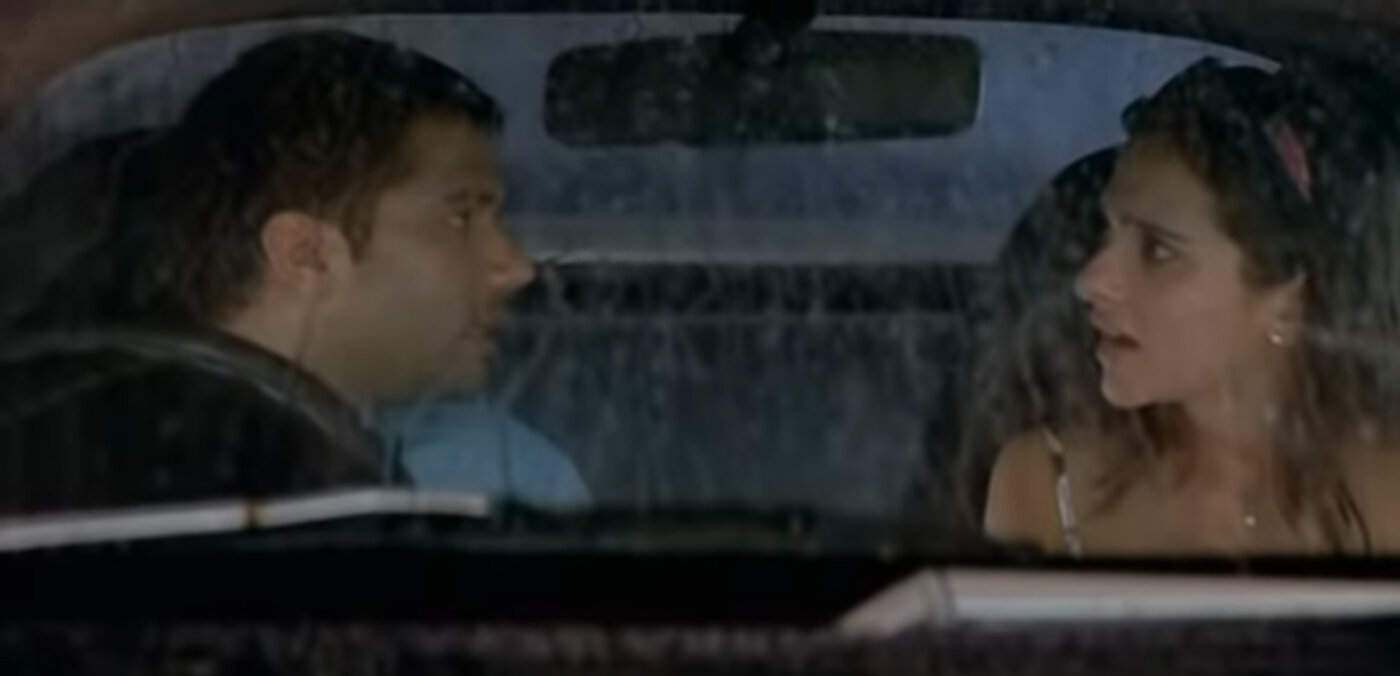
10ml LOVE (Sharat Katariya, 2012).
In Sharat Katariya’s 10ml LOVE (2012), the magical pastoral world of A Midsummer Night’s Dream is brought to the twenty first century urban space of Mumbai. In the modern setting, with its realist characters, is introduced a magical love potion—derived from the love-in-idleness flower in the original, and here called josh-e-jawaani (the passion of youth)—that recalls India’s diverse traditions of Ayurvedic medicine.
There are no mechanicals rehearsing a play in this adaptation but servants who prepare for the upcoming Ramleela, a dramatic enactment of the Ramayana epic, in between their work for the Hermia and Demetrius characters’ wedding preparations. Moreover, Lysander, Hermia’s illicit romantic interest, is turned into a middle-class car mechanic. The material concerns of arranged marriage are far more central in Katariya’s film than in Shakespeare’s play, in which Egeus’s choice of Demetrius for his daughter is not explained in such blunt financial terms.
Working with a low budget, Katariya had to be witty and resourceful with his cinematographic choices. When the potion activates, bathing the characters in its trance, scenes in the forest are drenched in dreamy blue light. This was achieved by shooting day for night, controlling sunlight via filters, and enhancing face lighting. At times, the film lays bare its material constraints to poke fun at Bollywood tropes. In one scene, Shweta (Hermia) and Peter (Lysander) have a serious conversation in a car while it seems to be pouring outside. This is typical of Bollywood, where rain comes whenever emotions are heightened. Having established this convention, Katariya reveals they are at a carwash.
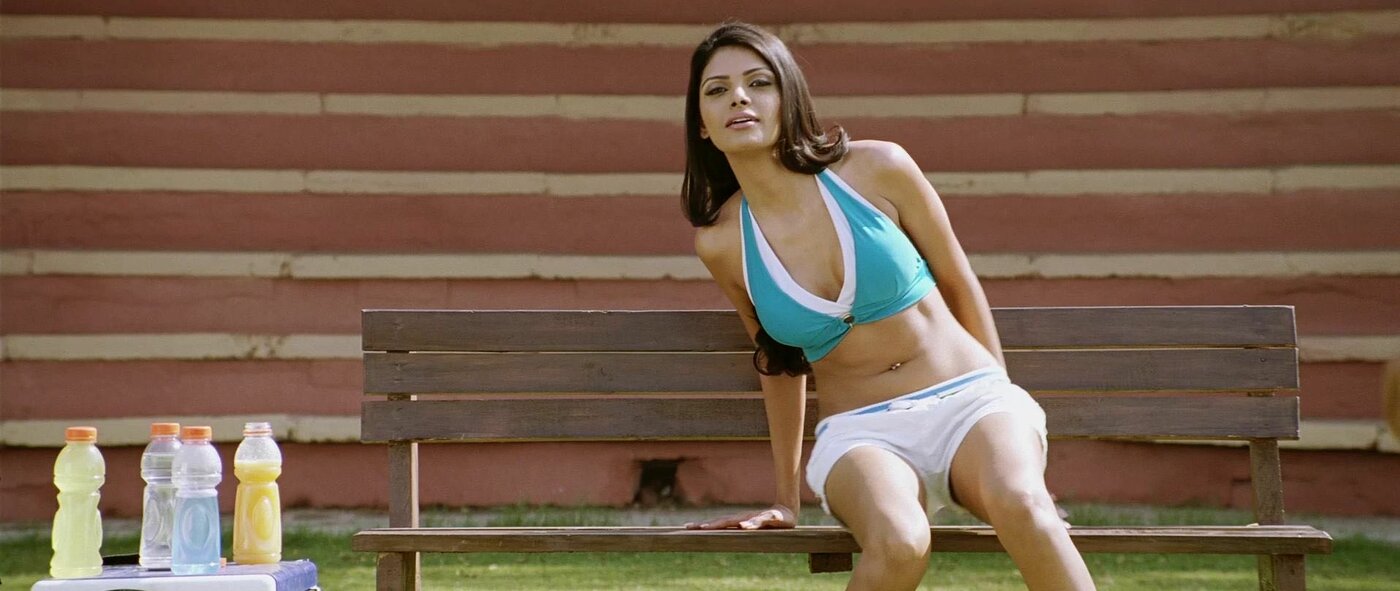
Dil Bole Hadippa! (Anurag Singh, 2009).
Bornila Chatterjee’s The Hungry (2017) brings contemporary Indian business politics to the tragedy of Titus Andronicus. Compressing the play’s vast dimensions into a film with a much slimmer cast, Chatterjee positions the Indian institution of marriage at the forefront of her retelling. A corporate merger rather than a romantic pledge, it is marriage instead of war machinations that propels the internecine vengeance with gory consequences. In place of ancient Roman empires, the film delves into industrialist ones and substitutes the play’s racial dynamics for a blood-coated critique of power and class. Unraveling their gluttony and greed, The Hungry intricately maneuvers through the shenanigans of the ultra-rich in the dense smog of present-day New Delhi.
Anurag Singh’s Dil Bole Hadippa! (2009) is an adaptation of Twelfth Night that trades the soccer-field setting of Andy Fickman’s American version, She’s the Man (2006), for a cricket oval. It delivers a similar message on the lack of opportunity and access for female athletes, while also venturing into substantial sociopolitical themes. In the climactic match between India and Pakistan, there are echoes of British colonialism and its brutal aftermath, the Partition—a catastrophic separation of the Indian subcontinent in 1947 that continues to foster animosity between the two nations till date. Deliberately set in Punjab (one of the regions brutally split by the British-ordained Radcliffe Line), Dil Bole Hadippa! features characters that unapologetically mangle the English language and idolize famous Indian cricketers. These nuances enable the film to indigenize both the sport as well as the Shakespearean text.
Dil Bole Hadippa! highlights the constructed nature of gender in a much more direct manner than any of its Western counterparts. The Viola character, Veera, does not have a brother, but invents one named Veer to assume the identity of a man so she can be allowed to play cricket. This is an idea she gets only after dressing as one for her performance in a Nautanki, a form of theater that amalgamates tales from legends, epics, and folklore. Her sports career does not preclude Veera from performing in the Nautanki; the cricketer’s attire becomes just one more of her many disguises.
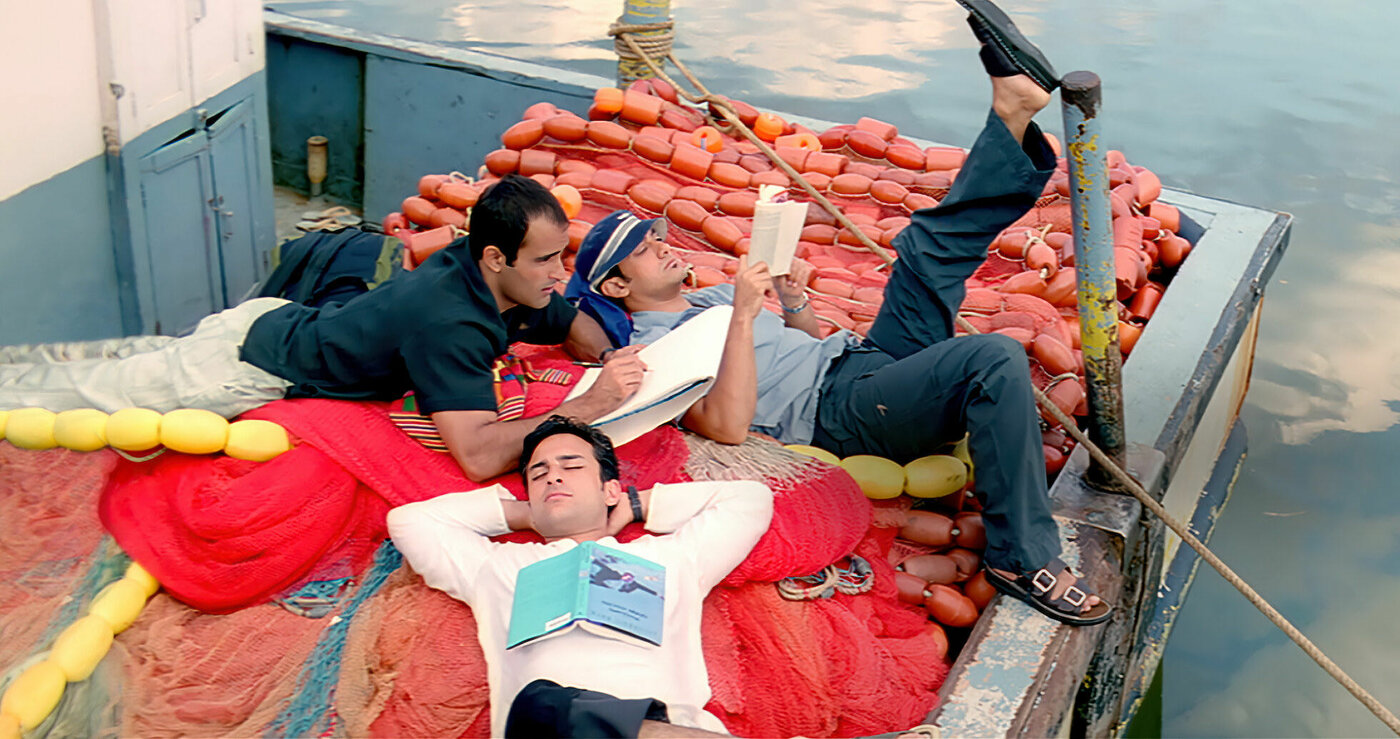
Dil Chahta Hai (Farhan Akhtar, 2001).
Farhan Akhtar’s Dil Chahta Hai (2001) remains a cult classic in Bollywood for how it infused a new sensibility into the industry, but it is rarely remembered as an adaptation of Shakespeare. Subtly transposing elements from Much Ado About Nothing to modern Mumbai and Goa, and to Sydney, Australia, each of Akhtar’s three male leads borrows from Shakespearean counterparts. Benedick’s wit can be detected in the clever and brash Akash; Claudio’s naïveté colors Sameer, who is struck by love at every corner; Siddharth’s introspective leanings derive from Don Pedro. The influence is not credited on screen, though a boat named “Much Ado” appears in a sequence at the Sydney harbor. At another crucial juncture, the characters attend an operatic performance of Troilus and Cressida. Akash, who had been ridiculing the show, experiences a transformative romantic epiphany, overwhelmed by the emotional immensity of the theatrical experience.
From Macaulay’s mouthpiece to masala movies, the Bard’s role in India has come a long way over the past hundred years. The absorption of his plays in Bollywood, the world’s largest film industry, has dismantled their designation as the colonizer’s literary apparatus. Functioning as both entertainment and trenchant commentary on India’s sociopolitical structures, the above-mentioned films are a few of the many adaptations that have made crucial contributions to building the Bombay film industry. That, however, is not all. Through their layers of eclecticisms, these Bollywood productions have also broadened perceptions of what the Shakespearean canon can include, flicking away any claims of sole Western authority over it.