“Ad Infinitum” is the fall 2025 edition of the Notebook Insert, our seasonal supplement on moving-image culture.
Illustration by Michelle Urra.

In 1933, when the recently married Irena Dodalová and Karel Dodal launched IRE-Film, the first animation studio in Czechoslovakia, their emergent medium—more often referred to as trickfilm—was generally understood as an instrument for advertising purposes: Its ability to illustrate the function of an object (the cleaning power of detergent, or the steps of a recipe while using the advertised kitchen product) was often a cute shortcut to a dry promotional message. Dodal had experience as an art director, having worked previously for a large production company, Elekta Journal, and collaborated on a successful avant-garde visual documentary, Prague in Shining Lights (1928). Dodalová was a shrewd businesswoman who had pursued film production during her years in Paris, then worked as a shop manager at a leading cosmetics firm in Prague. A third member of the team, Hermína Týrlová, was Dodal’s first wife, who continued to work with her ex-husband after a less than amicable divorce.
Thanks to Dodal’s and Týrlová’s experiences in animation and Dodalová’s ambitions of closing the gap between animation and fine art, the studio’s films involved a variety of animation techniques, from hand-drawn animation to puppet stop-motion and paper cut-outs, often mixed with live-action footage. The origins of animation are inextricable from advertising, especially in Central Europe, where there was no popular tradition of comic books or comic strips. People became accustomed to watching animated commercials before feature presentations at the cinema. While this meant that animated work was widely seen, it also meant that these aesthetics were broadly associated with marketing in the eyes of the public.
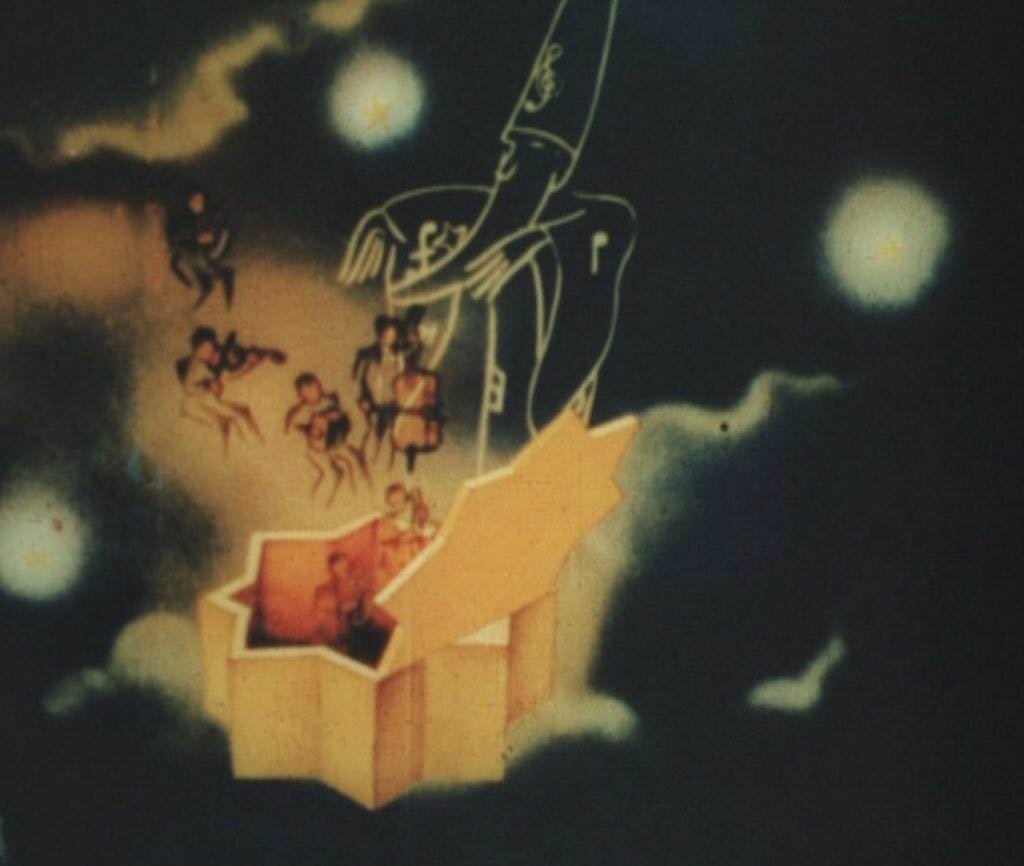
The Wizard of Tones (Karel Dodal, Irena Dodalová, and Hermína Týrlová, 1936), an advertisement for radios. Courtesy of the Czech National Film Archive.
As Dodalová fought to secure clients, she had to contend with the fact that animation often required double the budget of a live-action commercial. Her persistence yielded contracts with some of the largest companies in the country, and IRE-Film was soon producing advertisements for such products as margarine, kitchenware, soaps, musical instruments, clothing, and radios. The director Elmar Klos remembered doing business with Dodalová:
All the negotiations as to possible future collaboration were…led in an immensely horse-trading manner by his second wife, Irena Dodalová, who had come to tightly control both Dodal and the company bearing her name, IRE-film. This pushy lady, capable of ruling everyone out of discussion for long minutes, would miraculously find out about the time and place of my business meetings in Prague just upon my arrival to the city, and she pursued her acquisition pressure with a verve that made me at least twice abscond from her running down a rearward staircase.”1
Czech film historian Eva Strusková, in her 2013 book dedicated to the work of Hermína Týrlová, Karel Dodal, and Irena Dodalová, recognizes three general types of commercials made by IRE-Films in the 1930s. First, there were those that were mostly informational, oriented toward demonstrating the qualities and intended use of the advertised product. The second type includes fairy tale characters and motifs, with happy endings always brought about by the promoted product. Finally, there were those commercials that communicated with viewers via artistic, often abstract imagery, although these too often contained a product demonstration or some sense of a story. This last type was Dodalová’s favorite, where she saw the most potential for the art of animation.
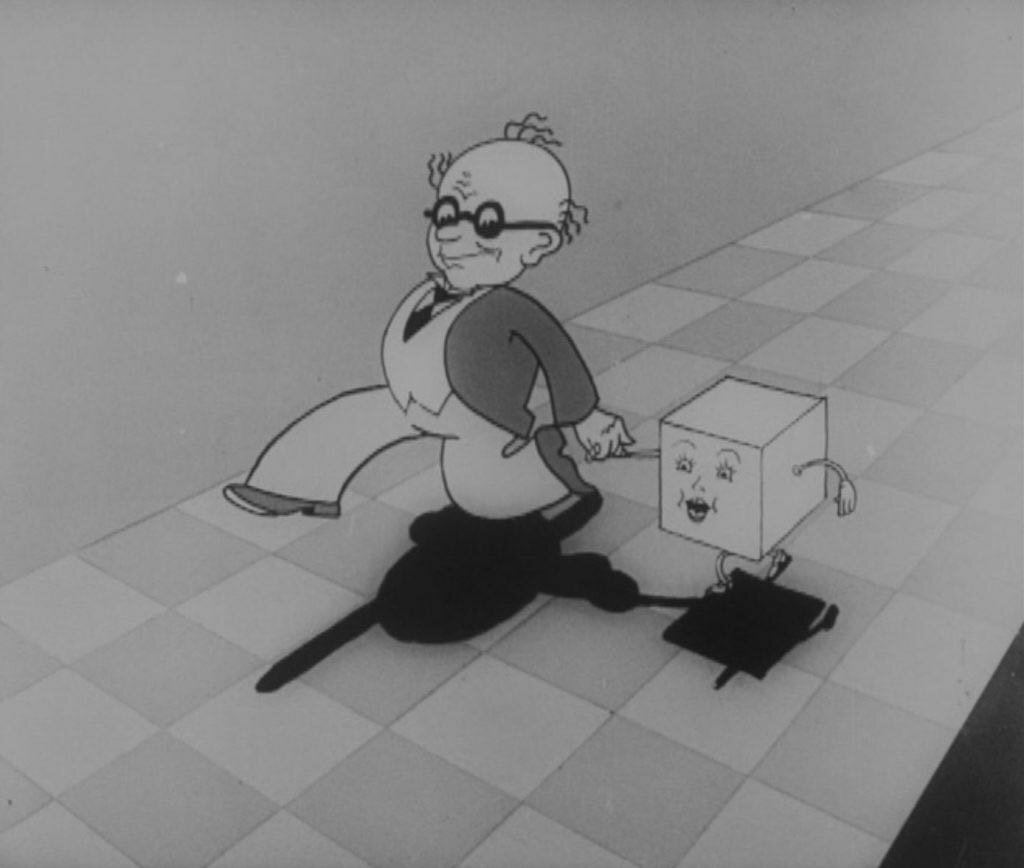
Everything for a Scrambled Pancake! (Karel Dodal, Irena Dodalová, and Hermína Týrlová, 1937), an advertisement for Vitello milk margarine. Courtesy of the Czech National Film Archive.
Everything for a Scrambled Pancake! (1937) is a perfect example of the first category. A group of anthropomorphized kitchen staples—flour, sugar, eggs, salt, a knife—study the recipe from a likewise anthropomorphized cookbook and march into the kitchen. The drama starts when they run out of cooking fat. Right on cue, the knowledgeable Uncle Bobby walks in hand-in-hand with the miracle ingredient, Vitello milk margarine. The pancake is happily whipped up with Vitello by the kitchen staples and then proudly exhibited to the audience in the final shot.
In this straightforwardly educational and informative spot, the Dodals worked within the limits of the preexisting commercial universe of Schicht, the company that manufactured Vitello. The character of Uncle Bobby, an older gentleman in an elegant suit and glasses, was widely known to the audience from other Schicht commercials, having played a large part in the development of the company’s image. Uncle Bobby was a typical representation (by his name and his looks) of the influence of American Disney and Fleischer cartoons, but also of the Eastern European idea of Western success and sophistication. In the eyes of the contemporary Czechoslovak audience, Uncle Bobby was giving the Shicht brand some cosmopolitan chic.
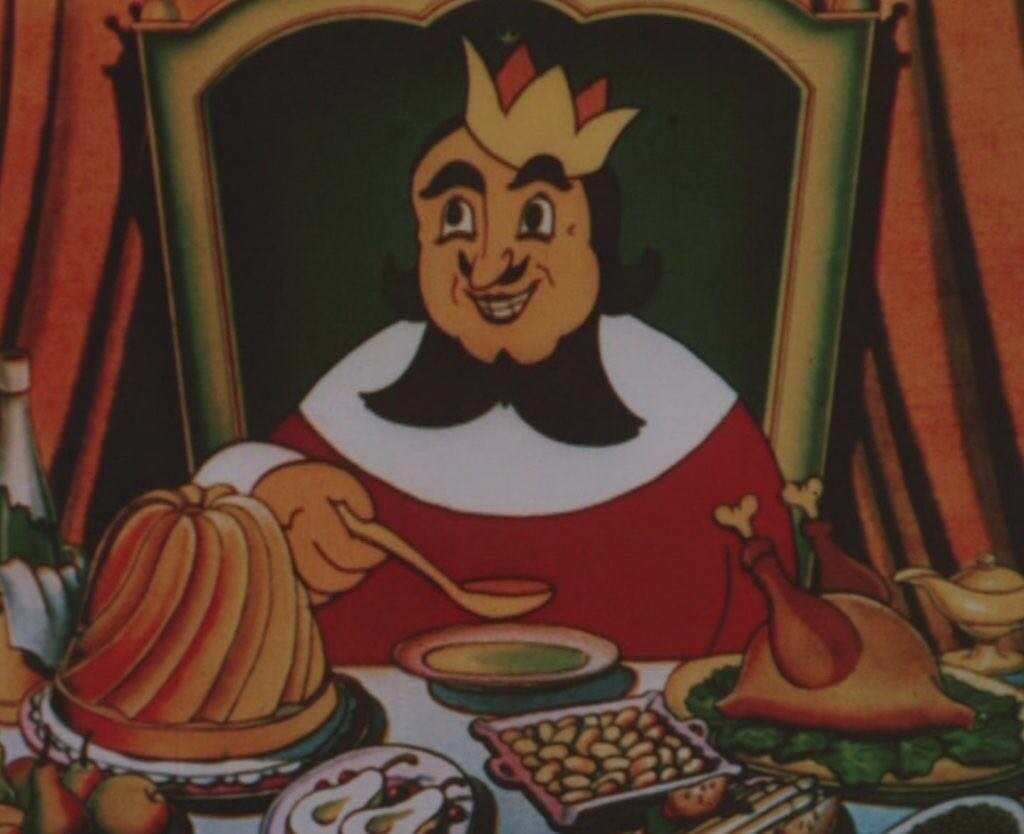
The Unforgettable Poster (Karel Dodal, Irena Dodalová, and Hermína Týrlová, 1937), an advertisement for Sana margarine. Courtesy of the Czech National Film Archive.
The Unforgettable Poster (1937), an example of the second “fairy tale” category of ads, was shot completely in Gasparcolor, the early color system. It is clearly inspired by George Pal’s promotional film A Fairy Tale about a Melancholic King (1934), which likewise advertises Sana margarine. In the Dodals’ short, a king is unhappy with his meals until a sentient cube of Sana appears, saves the day, and is given a crown. The ad culminates with the company slogan: “The royal margarine.”
As usual, the Dodals incorporate some signature artistry into the classical commercial narrative. In the middle of the three-minute film, there are suddenly forty seconds of nonnarrative intermezzo. The Gasparcolor works wonders to bring the Sana factory’s machinery to vivid life, moving with futuristic rhythms while the upbeat jazz music grows ever faster and wilder.
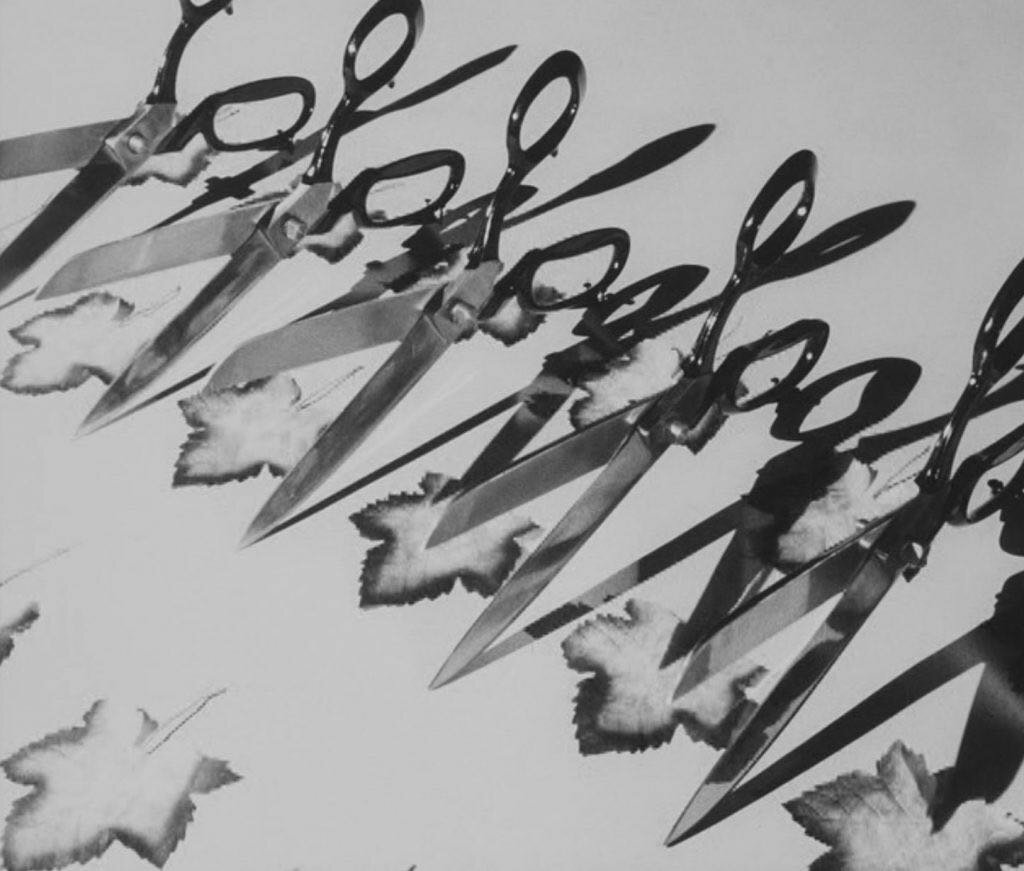
An Autumn Song (Karel Dodal, Irena Dodalová, and Hermína Týrlová, 1937), an advertisement for Prokop a Čáp’s fall fabric line. Courtesy of the Czech National Film Archive.
At the time, the Dodals were collaborating exclusively with the Czech musician and composer Bedřich Kerten, then in his twenties. His music plays a key part in An Autumn Song (1937), which is emblematic of Strusková’s third category: commercials that introduce products or services through artistic, metaphorical imagery. This one, for the fabric and menswear company Prokop and Čáp, begins with uplifting jazz music as we watch old pages from a tear-off calendar fall to the floor and turn into leaves, which take on patterns of cold-weather fabrics. The fabric leaves form parallel lines, and soon a happy procession of haberdashery items march between them. These spools of threads, pincushions, buttons, and tailor’s scissors rearrange themselves into geometrical patterns, which are interrupted by a comic scene involving two puppet characters: St. Procopius and a stork with scissors for a head, punning on the name of the company, Prokop a Čáp (“Prokop and Stork”).
An Autumn Song is pure animated joy, a love letter to stop-motion and the intrinsic musicality of the medium. Its ordinary objects somehow become magical in the hands of the Dodals, always working with unmatched precision. They are evidently attentive to and appreciative of the tactility of their materials—some of which are samples of the advertised product. One gets a sense of the weight and texture of the versatile fabrics as they dance through the Dodals’ fabulist autumnal world. The two-minute commercial is filled with visual ideas, almost a primer on the potential of animation.
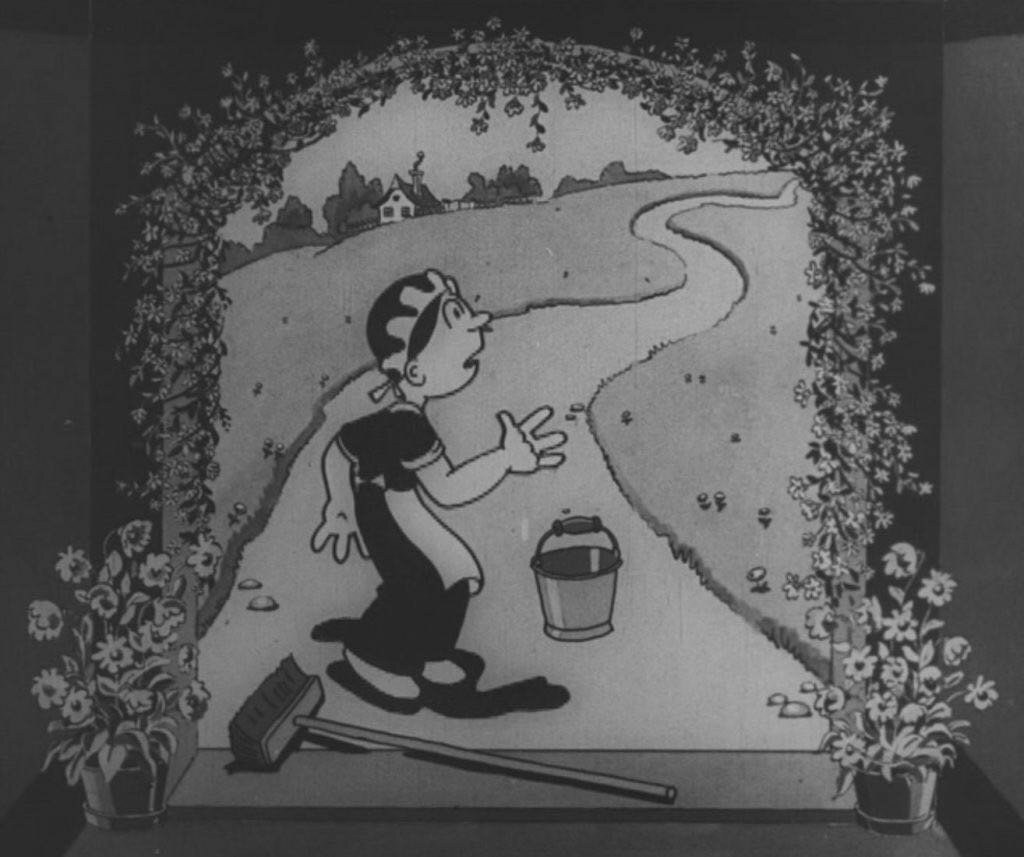
Slattern and Glossie (Karel Dodal, Irena Dodalová, and Hermína Týrlová, 1937), an advertisement for cleaning products. Courtesy of the Czech National Film Archive.
Dodalová was a staunch advocate for the fledgling medium, not only within the context of IRE-Films’ commercial work, but also by being one of the first to publicly think about animation in a wider theoretical context. Her essay “Trick Film and Its European Possibilities,” published in Kinorevue in 1937, describes trickfilm as
a beautiful, mysterious, exciting field of new tendencies. Trickfilm can be avant-garde, expressionist, surrealistic; in short purely artistic. Such film does not only work with the possibilities given by the methods of a painter, but seeks and finds other and yet unknown possibilities, a new imaginary world.
Dodalová was very well aware of the cultural context under which European art and animation was then being made. She followed the work of George Pal and Oskar Fischinger, both of whom were likewise pursuing pure artistic expression while navigating difficult political times and eyeing the threat of a surging Nazi Party in Germany.
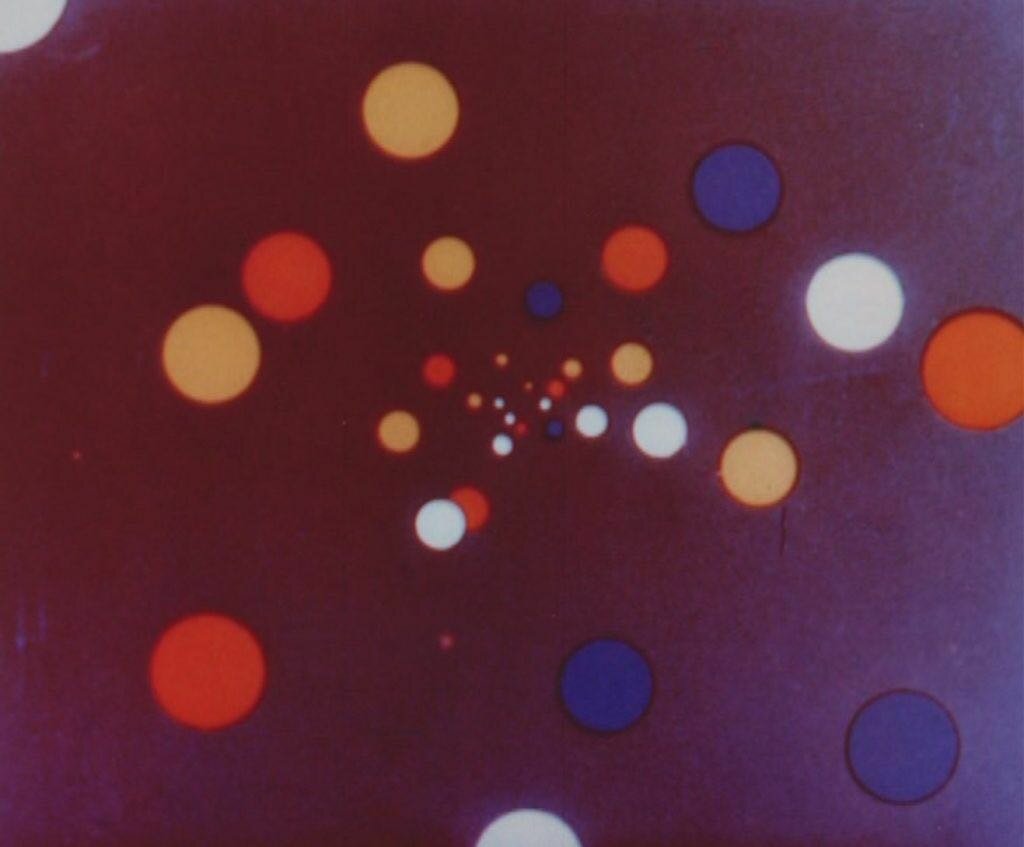
Fantaisie érotique (Karel Dodal, Irena Dodalová, and Hermína Týrlová, 1937). Courtesy of the Czech National Film Archive.
The Play of Bubbles and Fantaisie érotique (both 1937) exemplify the influence of European art and cinema on the Dodals’ approach to filmmaking. The former is a commercial, the latter is an art film, selected by the Film Advisory Board for screenings at the Paris World Exhibition and the Venice Film Festival. Both make fine use of Gasparcolor, the color process developed by the Hungarian chemist Béla Gáspár in Berlin in 1933, which used a single, three-layer film strip for printing, requiring repeated exposures. Although the procedure was complicated and time-intensive, it produced stunning results, and the Dodals, like Pal and Fischinger, always chose to use Gasparcolor when it was financially feasible, meaning when the commissioning company could afford it—sometimes only for the final shot of a commercial, displaying the brand insignia.
One such case was another commission from the Schicht company, this time to advertise their soap. The Play of Bubbles represents the marriage between artistic expression and commercial commitments typical of many such films in the 1930s. After 75 seconds of colorful abstraction, full of rhythmic movement of dots and mesmerizing twirling lines, The Play of Bubbles suddenly turns into a narrative, figurative commercial for Saponia turpentine soap; storks from the packaging take flight to spread the good word of Saponia over a symbolic map of Czechoslovakia.
The Dodals were making The Play of Bubbles for Schicht while simultaneously working independently on Fantasie érotique, which is identical to the commercial for much of its running time, though with a different opening sequence and credits (with Schicht likely none the wiser). The films also differ in their closing passages, as Fantasie érotique has no obligation to resolve its circular abstractions into soap bubbles.
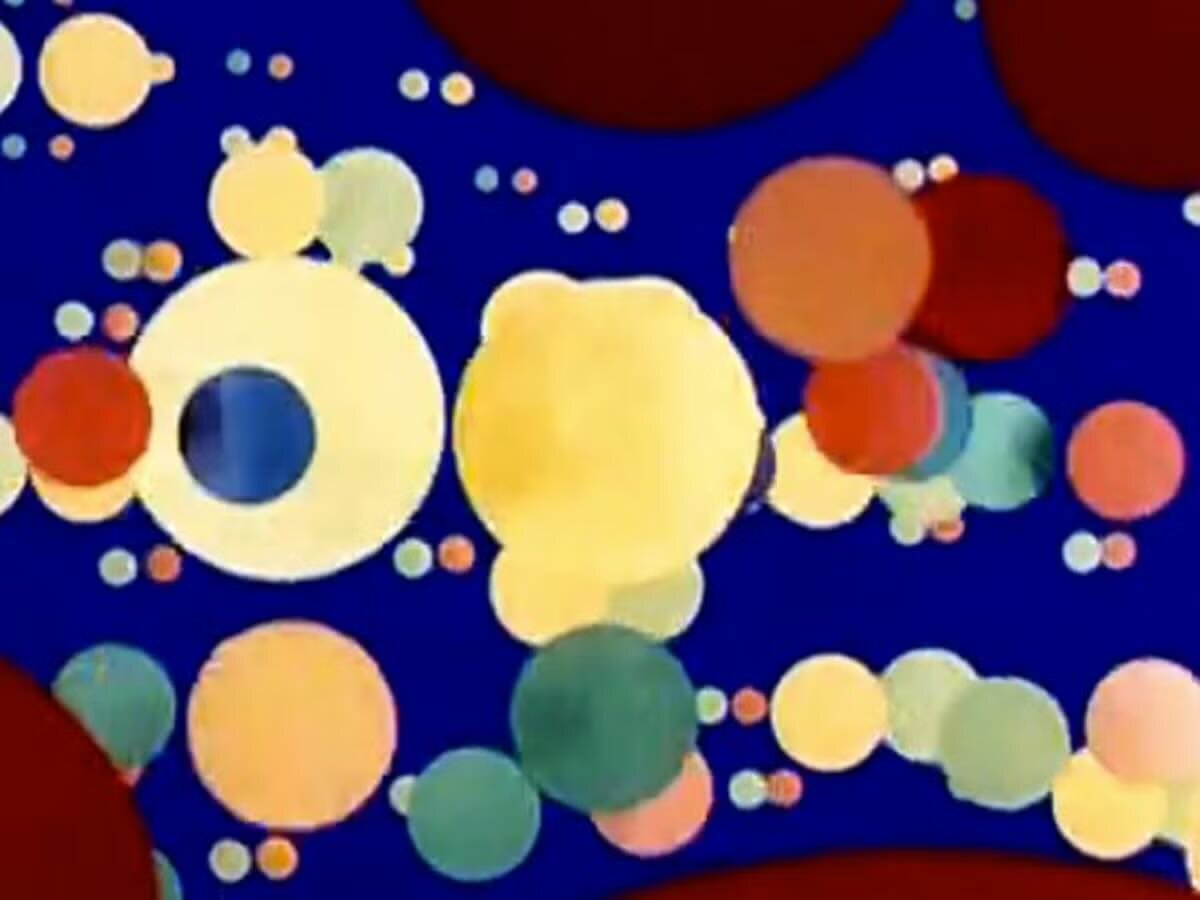
Circles (Oskar Fischinger, 1933–34).
Fischinger had done something similar just a few years earlier, though in his case, Circles (1933–34) was made for a client, the Tolirag advertising agency, in order to bypass the Nazi censorship of abstract art, which was deemed “degenerate.” A single line at the end—“Tolirag reaches all circles of society”—rendered the abstract picture commercial. Fischinger acquired the copyright in 1934, and later removed the final slogan and reintroduced it as an art film, which screened internationally.
When finished, Fantasie érotique was promoted by Dodalová as a visual love song between the two authors. She described it in Světozor magazine in September 1937, echoing her earlier essay’s efforts to establish animation as an art:
The film begins with kettledrum strokes copying the human heartbeat and escalates the tone and motion of the multicolored forms as far as to the bacchanalia for eyes and ears, and proceeds to the liberating conclusion when the counterpoint motions amicably die away. The initial idea was that of eroticism, a matter of sensibility, not sense.
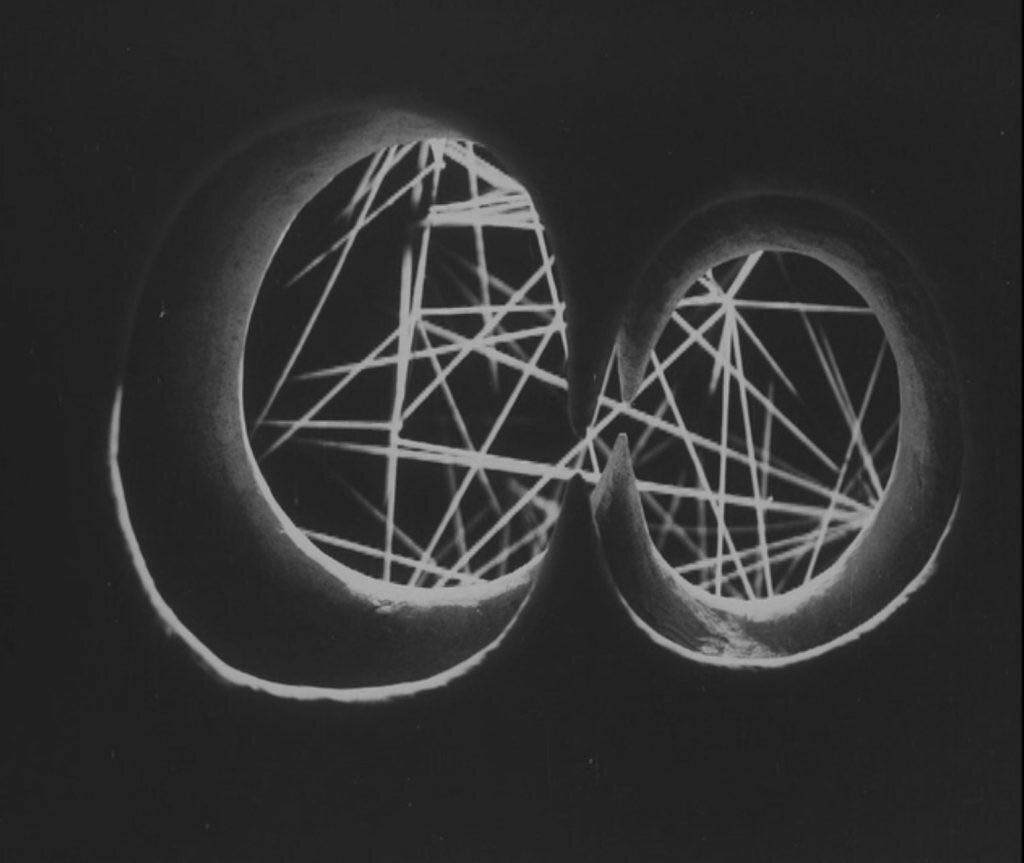
Ideas in Search of Light (Karel Dodal, Irena Dodalová, and Hermína Týrlová, 1938). Courtesy of the Czech National Film Archive.
The Play of Bubbles and Fantasie érotique represent the pinnacle of the Dodals’ artistic ambitions and is among their strongest pieces of work, alongside their final abstract art film, Ideas in Search of Light (1938). The Dodals’ sensitive work with a soft Gasparcolor palette and accompanying orchestral music, incorporated with a mathematical yet fully emotional precision, make the films landmarks in the history of abstract animation.
Shortly after this artistic peak, political events intervened to derail the Dodals’ plans. Everyday civic life became unpredictable and risky after September of 1938, when it was decided by Germany, France, Britain, and Italy in the Munich Agreement that Czechoslovakia would cede part of its territory to Germany—a delusional effort to avoid war. The Dodals had recently left the country for Paris, where they had established a small studio. At the end of the year, Karel traveled to the United States, and Irena was supposed to follow him after taking care of some personal and professional matters in Prague, including the delicate matter of shipping their films and studio equipment overseas.
As a Jew, Dodalová was prohibited from leaving the annexed Protectorate. After several years working in the photographic studio of Arno Parik, she was arrested for the offense of riding a bus and was transported to the Theresienstadt Ghetto in 1942. The remaining elements of the IRE-Film archive were fed to the fireplace by her apartment’s new German occupants. While in Theresienstadt, she actively pursued theatrical productions. In 1942, she and others were ordered to make a film about the ghetto for Nazi propaganda purposes; they also conspired to shoot the actual conditions of their captivity and successfully smuggled out some footage, which eventually found its way into Prague’s National Film Archive. Miraculously, Dodalová survived her years at Theresienstadt while tens of thousands perished there or were sent to their deaths at Treblinka or Auschwitz. In 1945, she was transported to Switzerland with 1,200 other prisoners, then on to Portugal, and finally to New York, where she was reunited with Dodal, whom she had not seen for seven years.
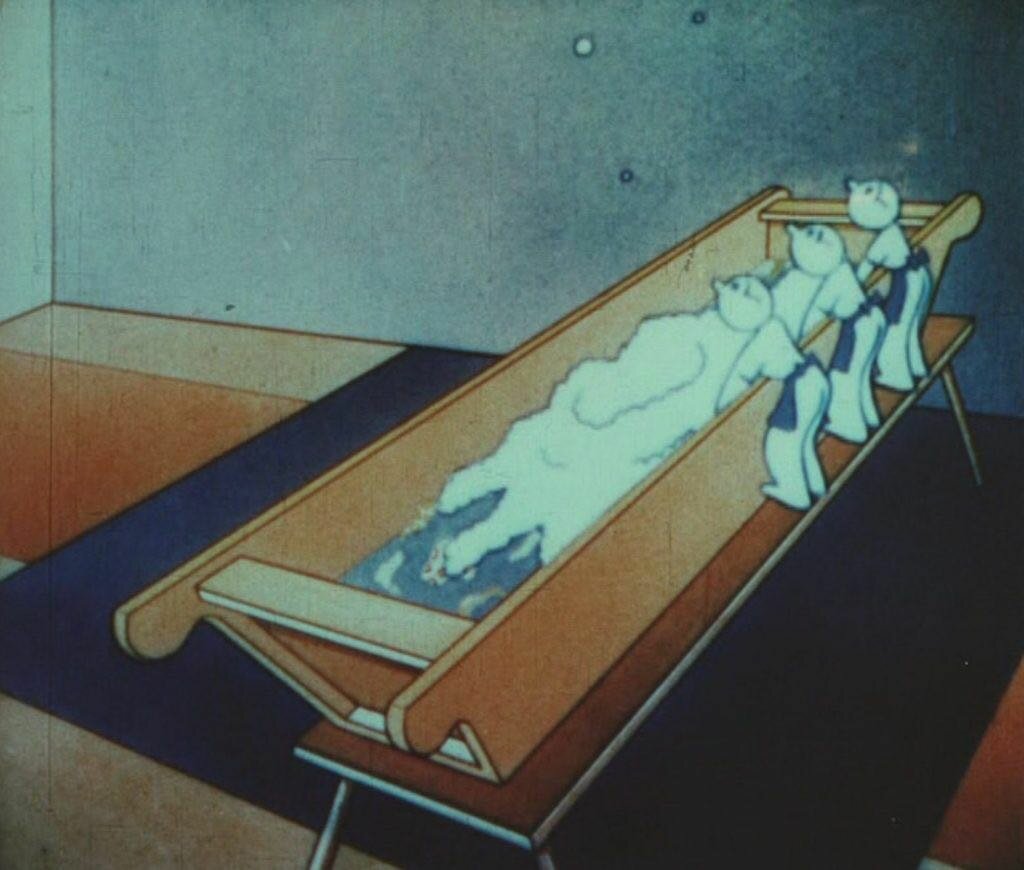
There Were Three Men (Karel Dodal, Irena Dodalová, and Hermína Týrlová, 1936). Courtesy of the Czech National Film Archive.
A week after Irena’s arrival, Dodal was laid off from his job in the Department of Educational Films at the American Film Center, and the couple founded a new company, Irena Film Studio. They completed several films, including One People (1946), which Dodal had begun under the aegis of the American Film Center, a cartoon extolling the melting pot of the United States and particularly its provisions for political asylum, which was distributed by the Anti-Defamation League. Another title, There Were Three Men, was a highly stylized agitprop film illustrating the benefits of cooperative farming, commissioned by the Cooperative League of the United States of America. The emerging era of McCarthyism, however, promised further difficulties for the Central European filmmakers. Their plans to return to Czechoslovakia were thwarted by the February 1948 coup, and the Dodals soon decided to take a two-year contract with the Argentine Ministry of Education and moved to Buenos Aires, founding the Argencolor studio. After myriad personal and professional disappointments, including an affair with a colleague’s wife that augured the end of their marriage, Dodal returned to New York in 1960.
Dodalová remained in Buenos Aires, where she made films about ballet and classical dance, founded an experimental theater company, painted, and worked as a teacher. She remained in touch with Dodal until his death in 1986, though the pair would never again work together. She also maintained contact with Hermína Týrlová, who had stayed in Czechoslovakia and become a successful animator in her own right, collecting numerous festival awards for such films as Revolution in Toyland (1947). In Dodalová’s final years, she strove to have her archive returned to Prague, and it finally arrived there in 1989. The letter confirming its receipt sat unopened, as Dodalová died that July in Buenos Aires, 88 years old.
Thanks to Dodalová’s efforts, the National Film Archive in Prague was able not only to digitally restore a great number of the Dodals’ films but also to trace the circumstances of their making within complicated historical circumstances. The result of those efforts is Strusková’s book, The Dodals: Pioneers of Czech Animated Film, which provided many of the historical facts for this essay, and which also includes a DVD collecting almost thirty of their short films. Irena Dodalová’s and IRE-Films’ most important legacy is the continuing appreciation of the artistry of the animation medium, even in its commercial form.

Continue reading “Ad Infinitum.”
- Elmar Klos, “Běda ženám, které mužům vládnou” (Woe to Women Who Rule over Men), quoted in Marie Benešová, “Hermína Týrlová” (Praha: The Czechoslovak FIlm Institute), 1982, p. 17. ↩