“Ad Infinitum” is the fall 2025 edition of the Notebook Insert, our seasonal supplement on moving-image culture.
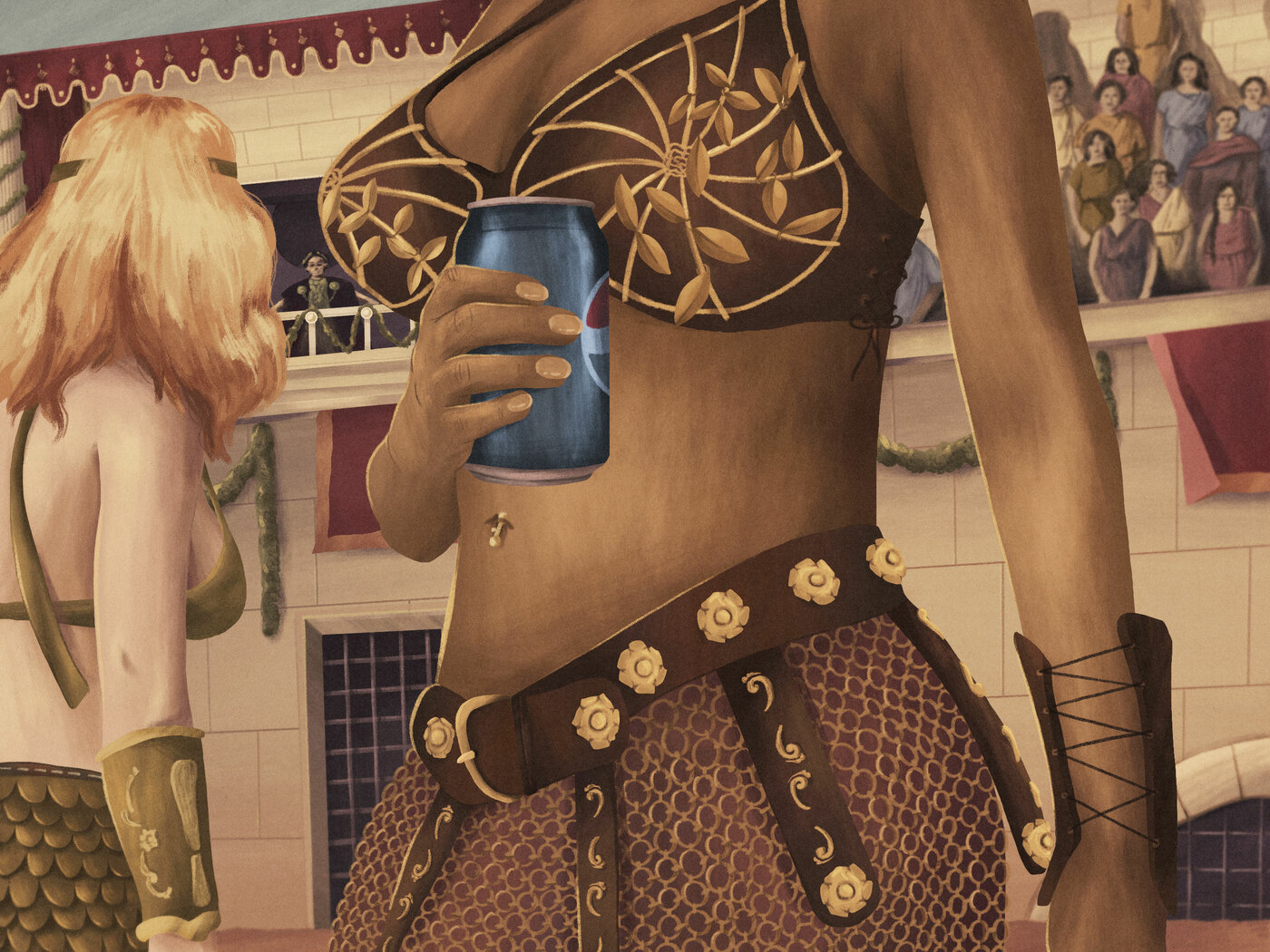
Illustration by Michelle Urra.

I always say, the best ad that you’ve ever seen is the Sistine Chapel. The guy, maybe he’s not selling something material—he’s selling you ideas on that one, which is probably even worse. When I was making a lot of commercials, the agency and the client were the church. They had unlimited funds. And you got to sharpen your teeth on all the best creative stuff coming out of Europe, to play with the best toys.
I love commercials, and they just happen to pay very well. They were a great playground to learn the tools I used to make my films. I would just gear the ad to what I wanted to learn. Specifically, there’s a Reebok ad I did that is basically the opening sequence of The Fall (2006). I wanted to see what it would look like if I used really high-speed motion, cut to Beethoven. The idea was that people were dodging raindrops, wearing Reeboks. The client wanted some hip, hard techno music, but I said, “Go the absolute opposite route. Because if you try to show people quickly avoiding raindrops, it’s going to look like an epileptic seizure. We have to do it very slow.” And they were hesitant, but I said, “Well, I don’t want to do it then.” So they gave it to me, and once I made it, I knew I had the opening sequence of The Fall, because I wanted to use Beethoven in a really slowed-down accident scene.
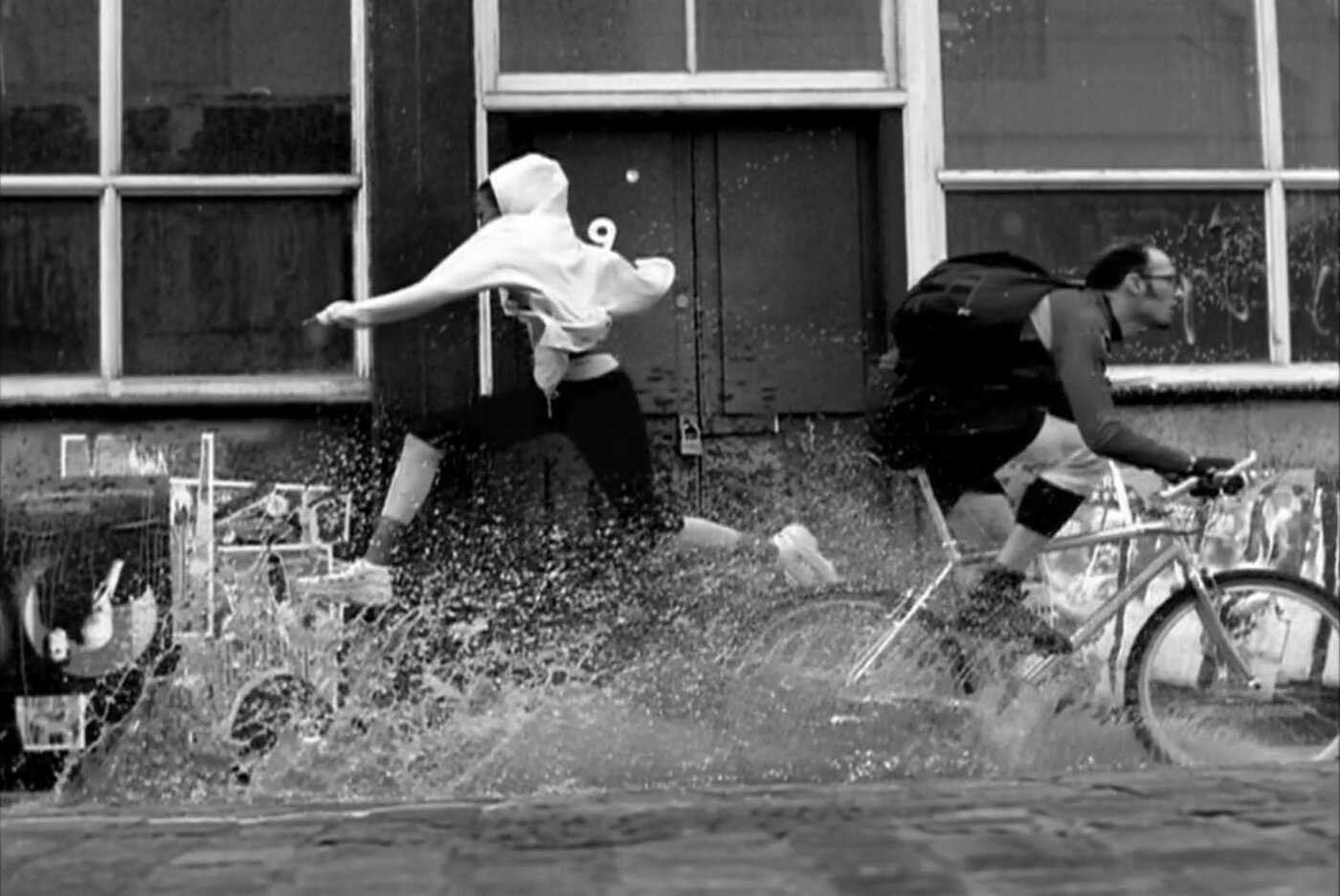
“Storm,” for Reebok (Tarsem, 1998).
I only cared about the creative, and back then, you could do what you wanted. It was quite a dark art. Not everyone knew how to shoot film, how to make this come out of that. So anybody who knew that had a leg up. Clients never wanted to go to some conservative guy and tell them to think outside the box. They wanted to go to someone who could kidnap the whole process, and then rein them in. Look at the church, going back to Michelangelo: He’s gay, he’s everything that they don’t particularly stand for, but he’s the best guy for the job. So he paints the ceiling, and they go, “Really, you have to have those dicks out?” The same thing happens with the client: They want you to cross that line, and then they want to pull you back. Never knock advertising. It’s a great learning curve. Some of the smartest people I’ve ever met work in it—and some of the dumbest.
The client had to hire somebody to come with their DNA to put on top of it, so the director had a lot more control. The generation before mine—Ridley Scott, Barry Myers, Alan Parker, Adrian Lyne, and all those guys—they didn’t even have playback. So the client didn’t know anything. You just went out there, you shot it, gave it to them. When I started, the monitors were always black and white, and I preferred really bad monitors: just enough to show them what the composition was. And not too many people understood the editing of it or anything. I would just cut it and show it to them, and they’d be okay. But now, the power has gone a lot more to the clients, who say, “This is what we want, and AI can show it to me.” Everyone has pre-seen it before they go to shoot—and they wonder why everything looks the same.
I didn’t see a lot of ads growing up in Iran and India. We had TV that came on for four or five hours, so we watched whatever was there. The ads were as fun to us as a program. It was kitschy shit. Like, Hey, my name is this and this. Eat me, you kids. You like it because I’m full of sugar. I saw more ads when I was in college, but I really never thought I would be interested in them. Until the first time I saw Alien (1979), I must say. I was in India. When they told me this is the guy’s second film, I was like, Where does a person like this come from? Then I read that he came from advertising. It made no sense, considering the ads we were seeing in India.
My mom and dad, they never particularly figured out what I did for a living. I have about fifteen commercials on what I call my “mother reel,” which I made for my mother. She wanted to show people what her son was doing. She came to the premiere of The Cell (2000), and she sat next to me. I heard click click click click, and I couldn’t figure out what it was. I told her to stop, but then I realized she had her prayer beads. She knew it was a scary movie, so she put her chunni shawl in front of her eyes and didn’t see the movie at all, just kept praying. In the end she gave me one piece of advice: Don’t make a scary movie again. My dad was an engineer for 35 years in Iran, and I knew none of this would ever make sense to him. One day, I was supposed to do a commercial, but it got canceled. The fee I got for not working that day was more money than my dad ever made. He called me his fake penny: “Oh, my fake penny got accepted by the bank?”
Of all the ads I’ve done, I’ve never even put the Pepsi gladiator spot on my show reel. I had previously done an ad for Nike called “Good vs. Evil,” which was also a gladiator treatment, but before the Ridley Scott movie. It’s probably the quintessential soccer ad that started Nike breaking big in Europe. We actually made a Colosseum in CGI and then shot it down in Tunisia with Canton, Maldini, and Ronaldo. Ridley Scott used the same visual effects house, The Mill, to make Gladiator (2000), and then they won the Oscar for it.
For the Pepsi ad, we needed it to feel a lot more live, and we didn’t have much time for post. I thought initially we could do what we had done with the coliseum in Tunisia, but I knew it was going to be difficult to get these girls to go to some remote location. I thought they’d show up if we said Rome. It’ll be a good holiday for them. The Roman Colosseum was in pretty tattered condition, but we cleaned it up, filled about a quarter of it with people, and the rest was CGI. Then the girls showed up and it was as easy as they come. When there’s so much money involved, it’s always easy. When it’s an independent movie, people can see the cost of that as being the cost of a car or a kitchen. It becomes a real problem. When you’re dealing with millions, the producers look at it statistically. It’s kind of like casino money. That’s why they give you chips: to make you forget to equate the money to real things. When there’s a lot of money, your problems are sorted. You might have a lot of egos to deal with, but that comes with the territory.
I don’t see that many ads anymore. I haven’t seen the new Pepsi gladiator one. I’ve completely lost the plot. I told my niece and nephews to never give me a video game, because I have a very addictive personality. But about six years ago, my nephew introduced me to Chess.com, and now I’m spending literally seven or eight hours a day on chess. I don’t really watch TV, but I’m sure there’s great stuff out there.

As told to Maxwell Paparella.
Continue reading “Ad Infinitum.”