Related Images invites readers behind the scenes and into the sketchbooks of working filmmakers to learn more about their creative processes.
Valeria Hofmann’s AliEN0089 (2023) is now streaming exclusively on MUBI.

AliEN0089 (Valeria Hofmann, 2023).
At one point during the development and preproduction of this film, I honestly thought that directing meant becoming a PDF maker. Because of the COVID lockdown, we worked remotely. The team was spread across Santiago, London, La Plata in Argentina, and a small coastal town in Chile. Through those files we built the first sketches of the virtual world, the storyboard, and the visual references for the 2D desktop elements that belong to Sabina (Mariana Di Girólamo), the protagonist of AliEN0089 (2023). This hybrid analog-digital process shaped the film. Mixing materials long before shooting became a clue for what the film itself was becoming.
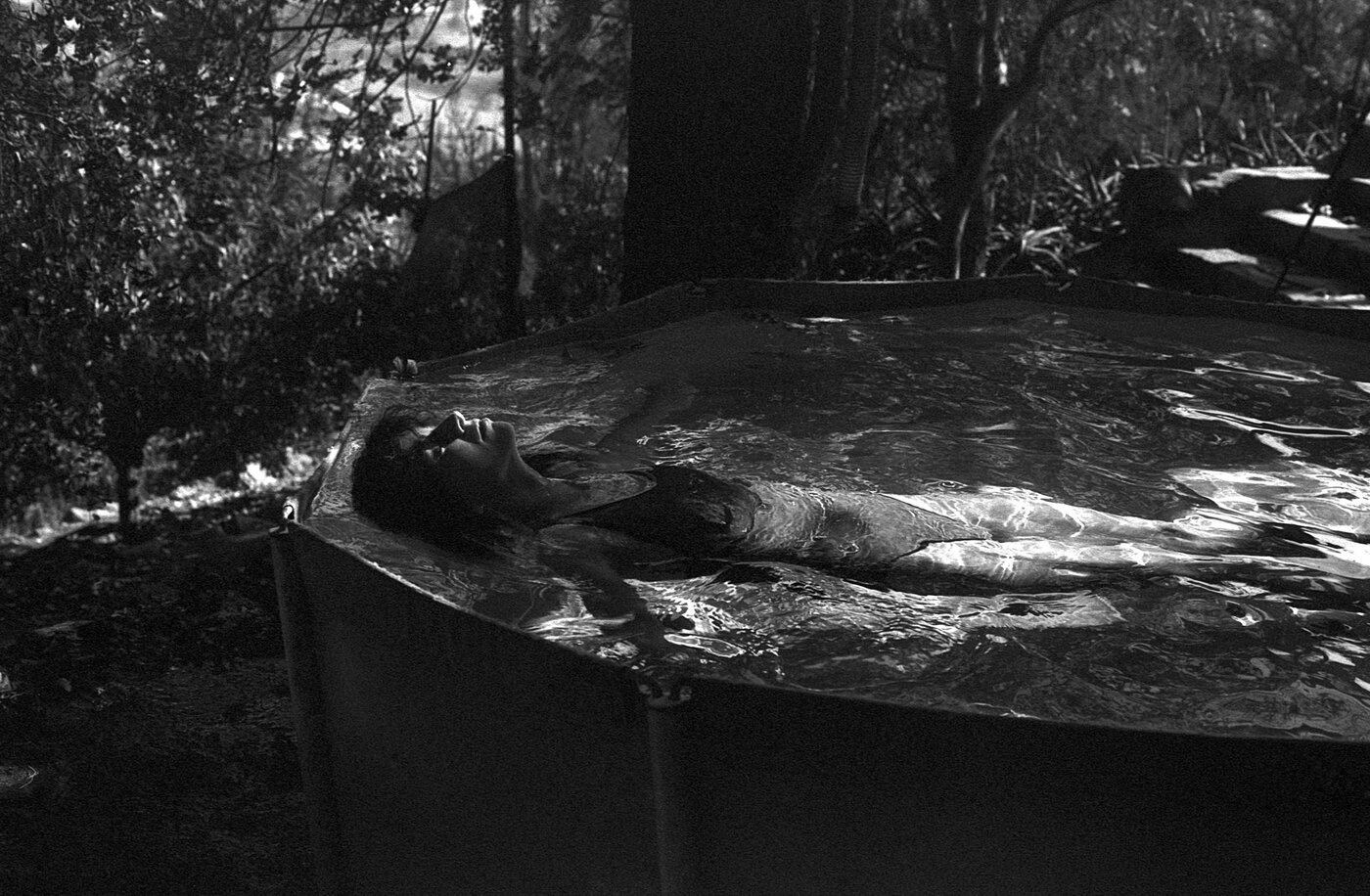
Marianna Di Girólamo as Sabina.
Throughout development and later in postproduction, I constantly exchanged texts and books with Augusto Matte, sharing anything that resonated with the project. Some readings became key references: A Hacker Manifesto by McKenzie Wark, The Machinima Reader edited by Henry Lowood and Michael Nitsche, Glitch Feminism by Legacy Russell, several writings by Mark Fisher, and especially Gilles Deleuze’s “Postscript on the Societies of Control.”
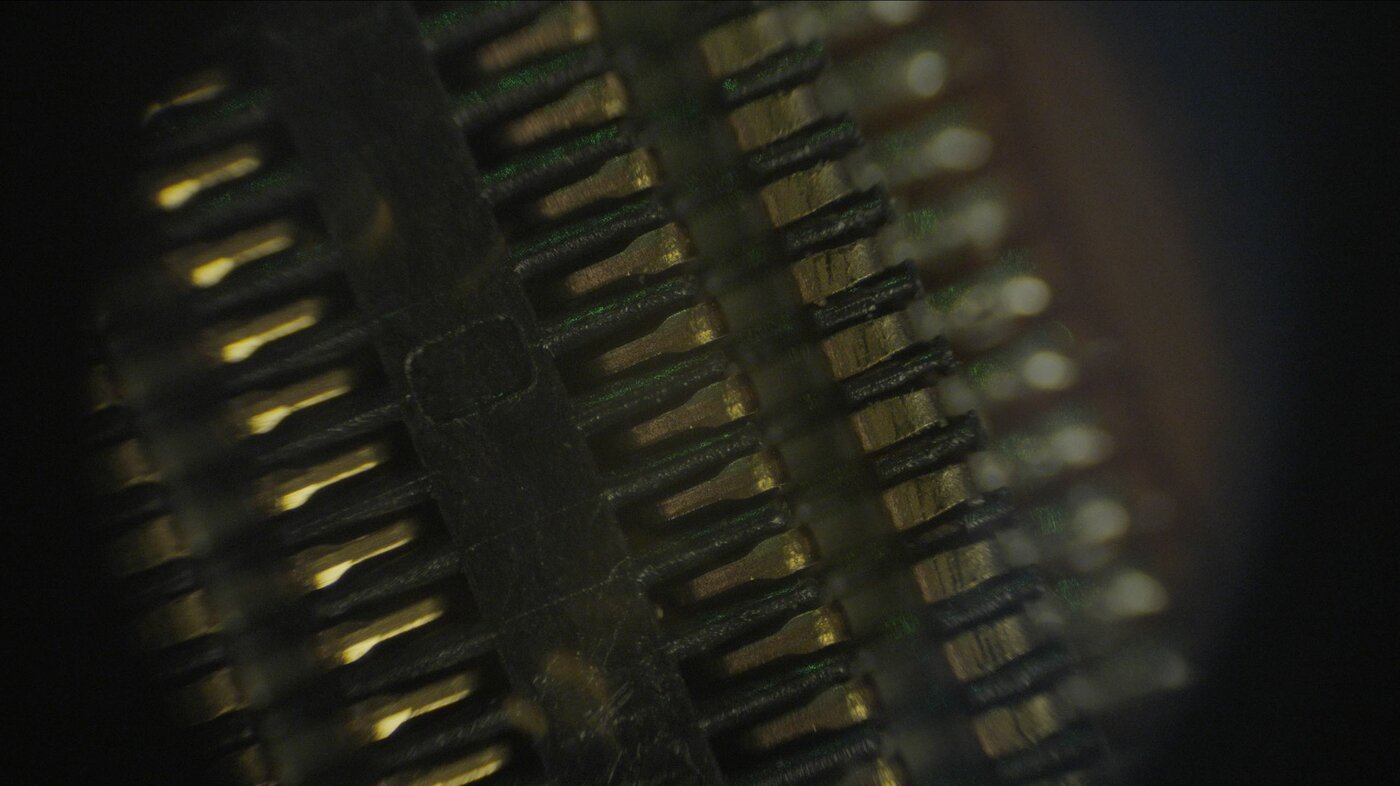
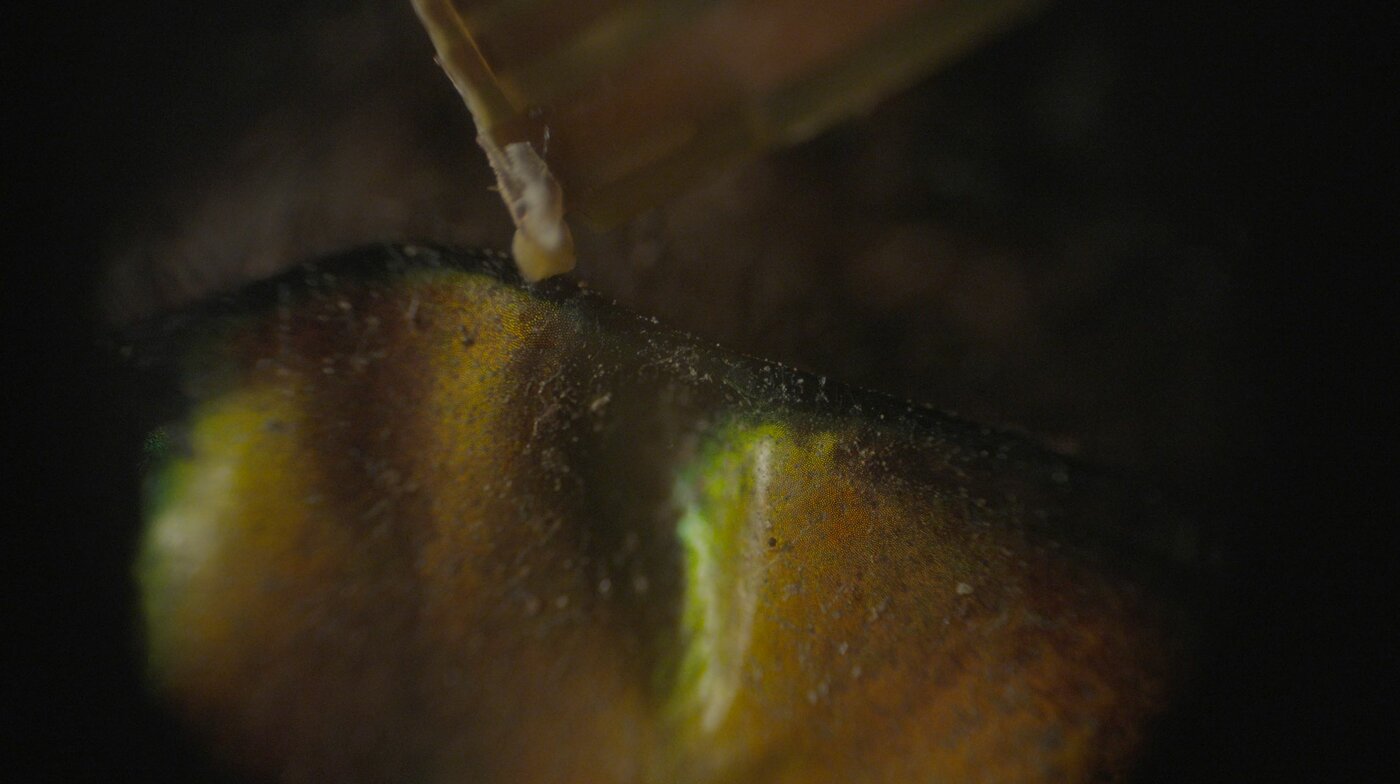
Microscope images of real insects, computer chips, electronic waste, and a green laser.
Deleuze describes how we moved from schools, prisons, and factories to what he calls “societies of control,” structured around networks and platforms. He uses animals as metaphors: the disciplinary world is like a mole, digging segmented tunnels, enclosed and separated into individual spaces. But in the societies of control, power behaves like a snake. Instead of walls and enclosures, everything is continuous, modulating, sliding. There is no “inside” and “outside,” only access or denial. In control systems, you never leave. You flow.
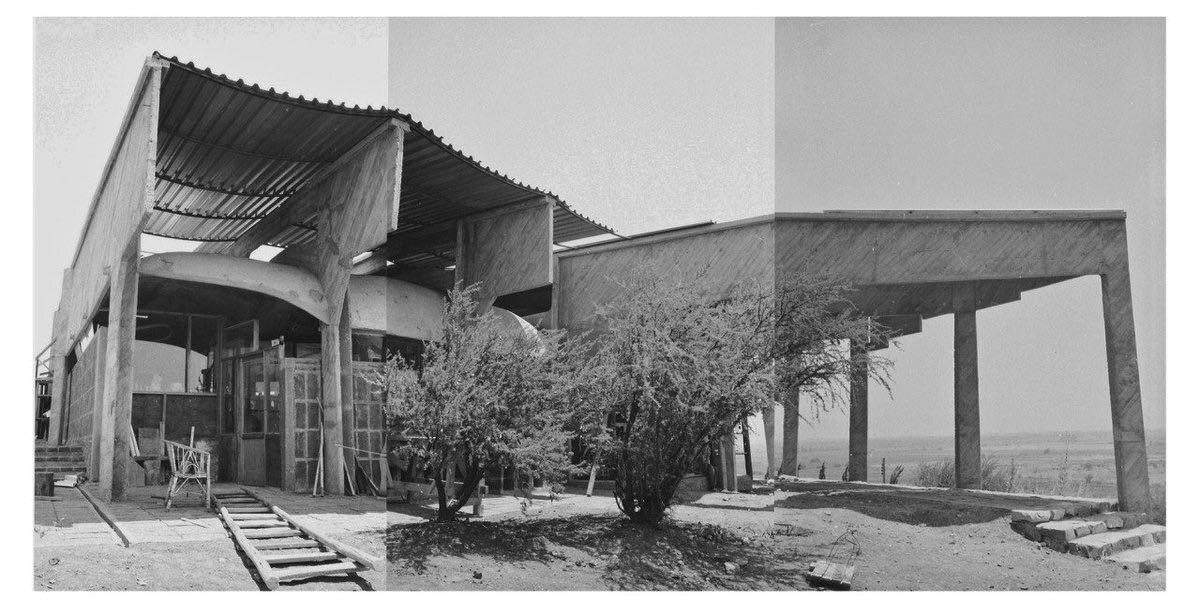
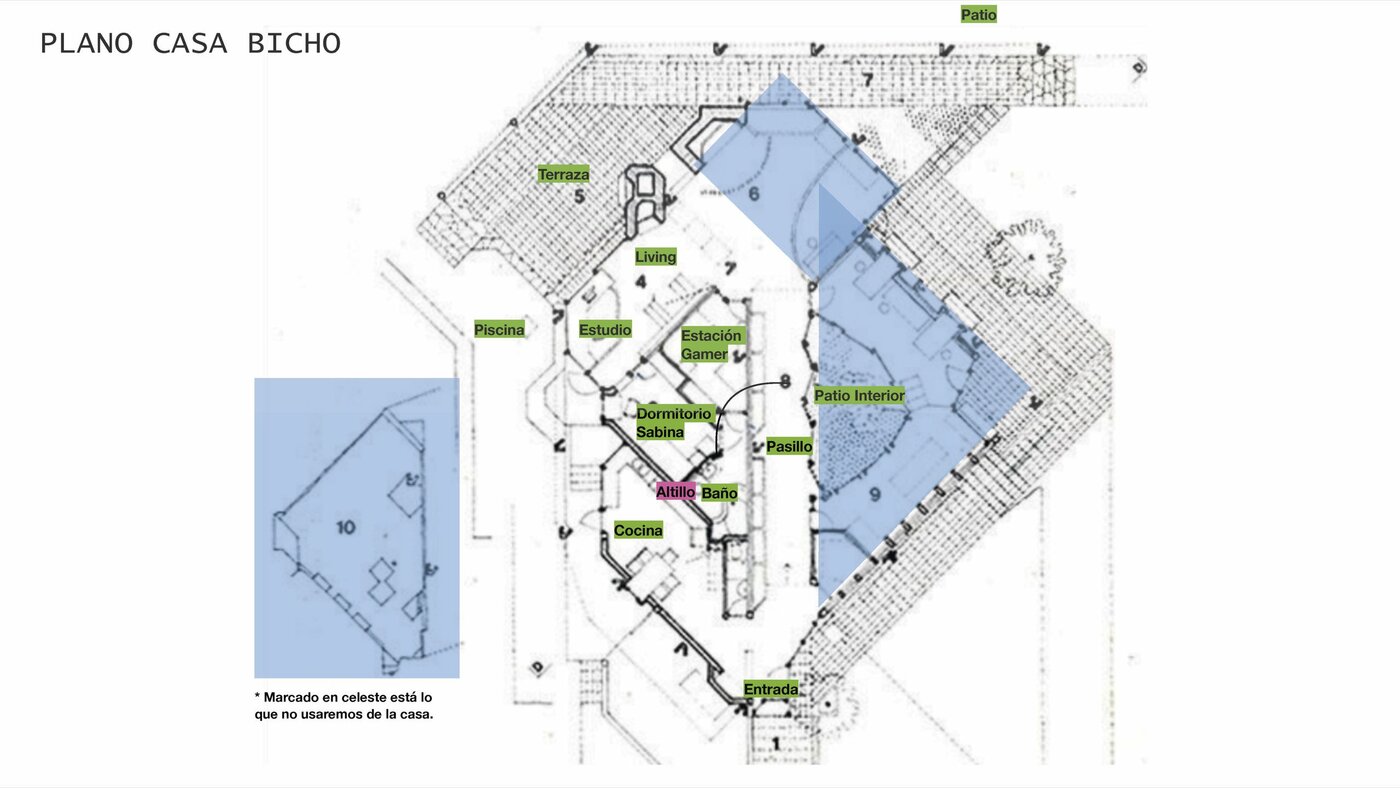
Luis E. Peña Guzman's Casa Bicho (Bug House).
Another key aspect of the development was finding the location. Pascual Mena, producer and art director of AliEN0089, discovered the Bug House, a dwelling-workplace designed by Chilean architect Miguel Eyquem for the entomologist Luis E. Peña Guzman. The house is built in a spiral. Finding it changed the way the script was written. Understanding the house’s logic also meant understanding Eyquem’s philosophy of inhabiting space. He believed that the bedroom should always be placed in the darkest part of a house, so that waking up and going out into the world becomes unavoidable. In a way, every morning is like being born. That idea mirrors what happens in a video game: You have multiple lives, you restart, you respawn. In our case, we placed the gaming setup in the deepest part of the house: a hidden corner, but also a portal to the outside world through the computer.
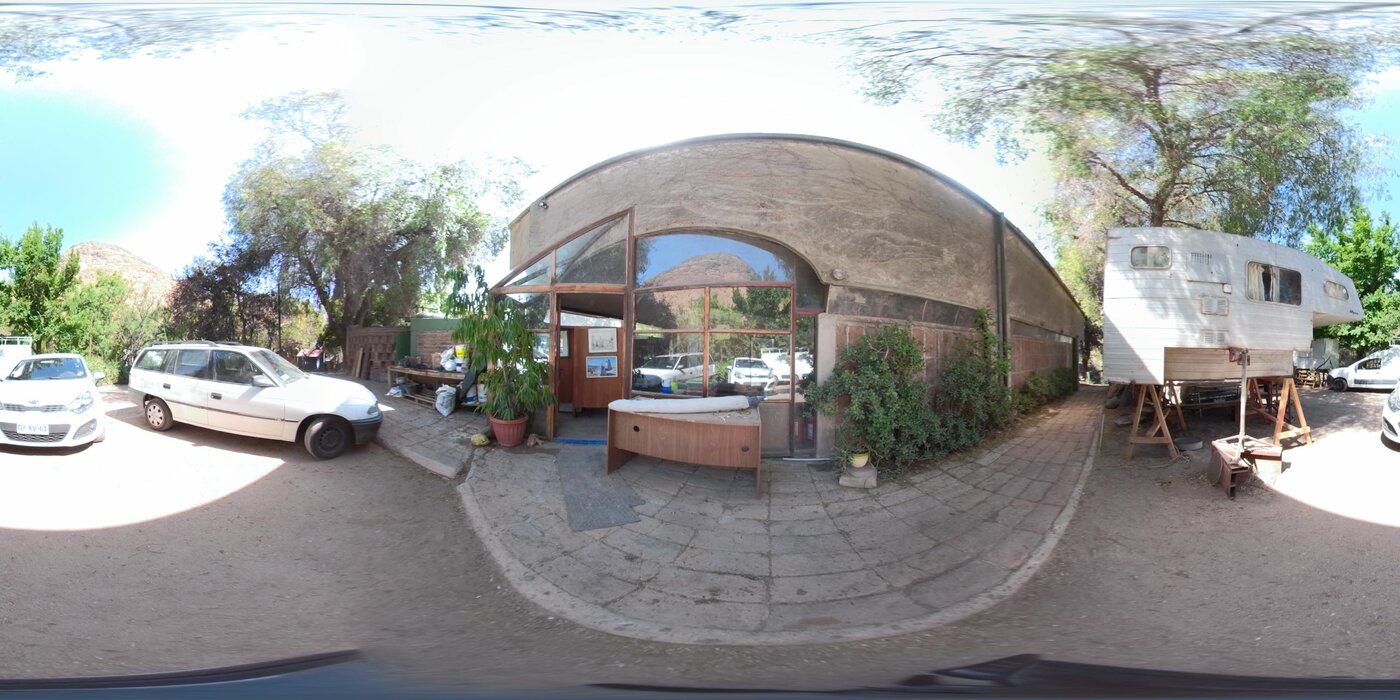
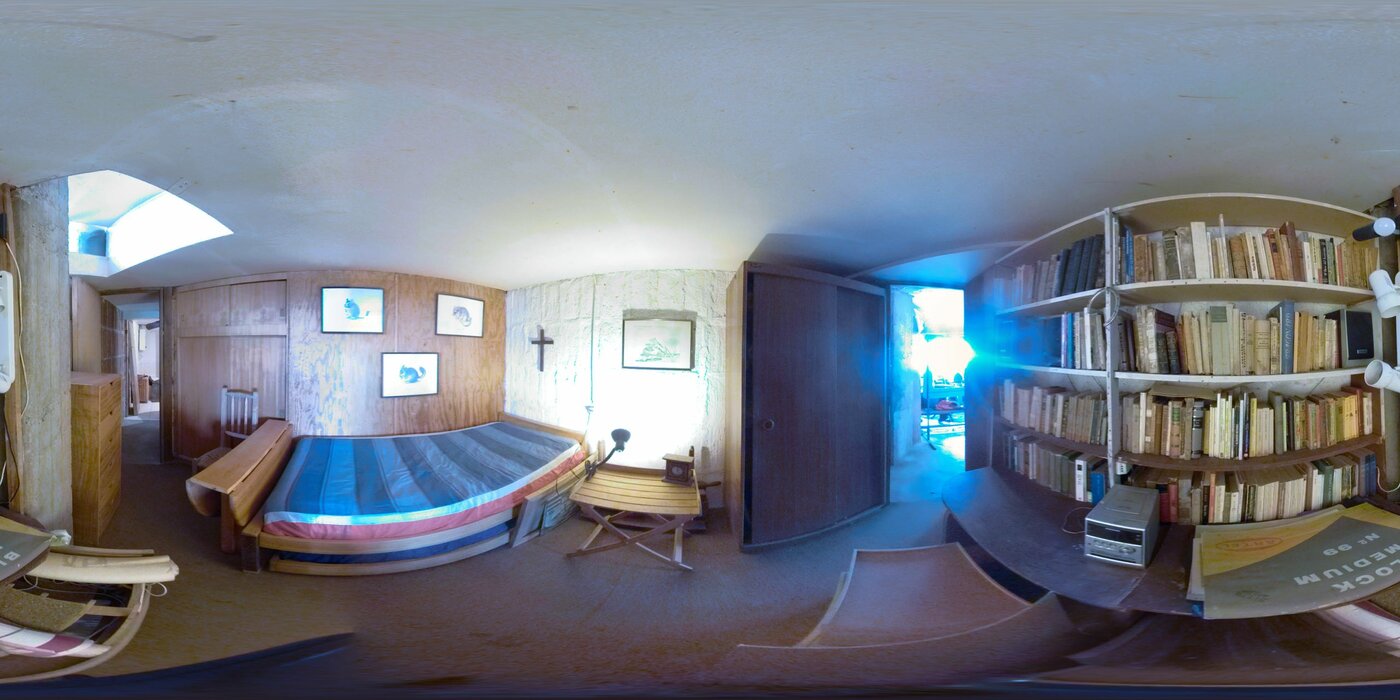
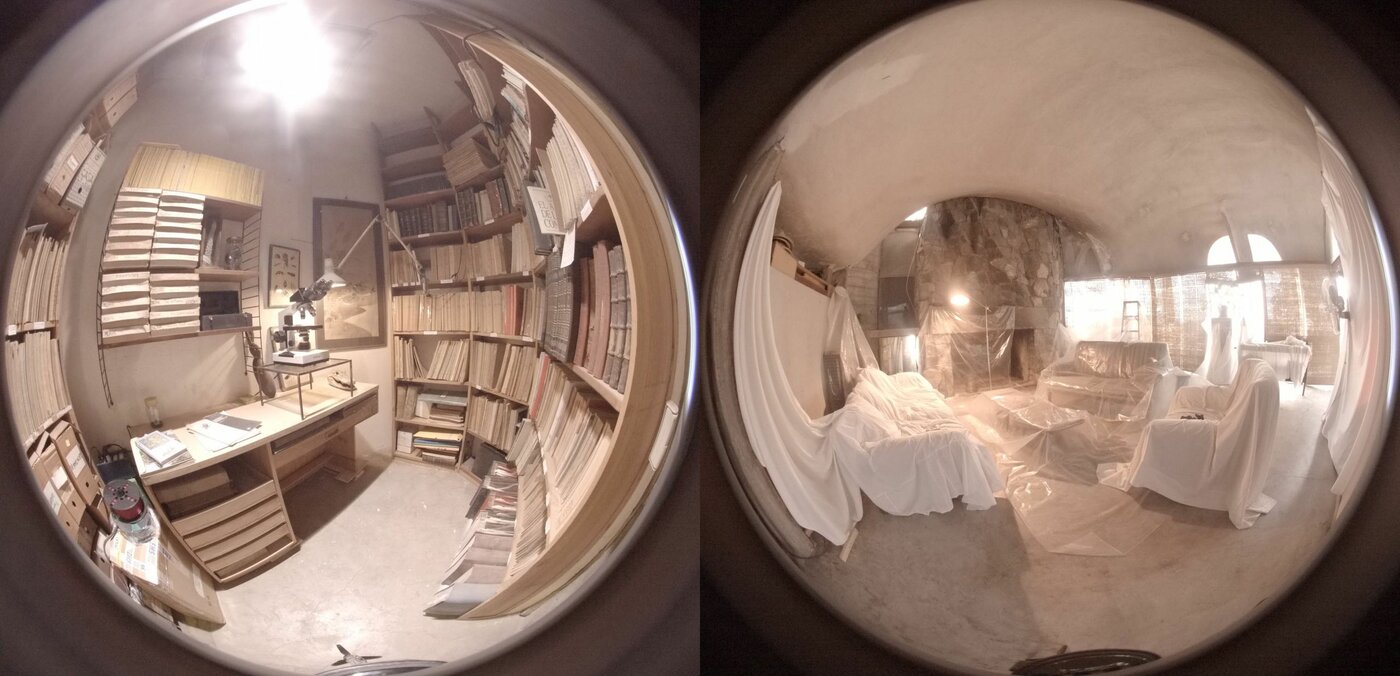
360-degree and GoPro test photography, used to create a virtual representation of the Bug House.
From the beginning, the idea was to create a closed circuit, a loop, like in Julio Cortázar’s “The Continuity of Parks.” But a loop is a circle, and I believe AliEN0089 has a more complex shape: a spiral, or even a Möbius strip, where one side flips into the other, collapsing beginning and end into a single surface.
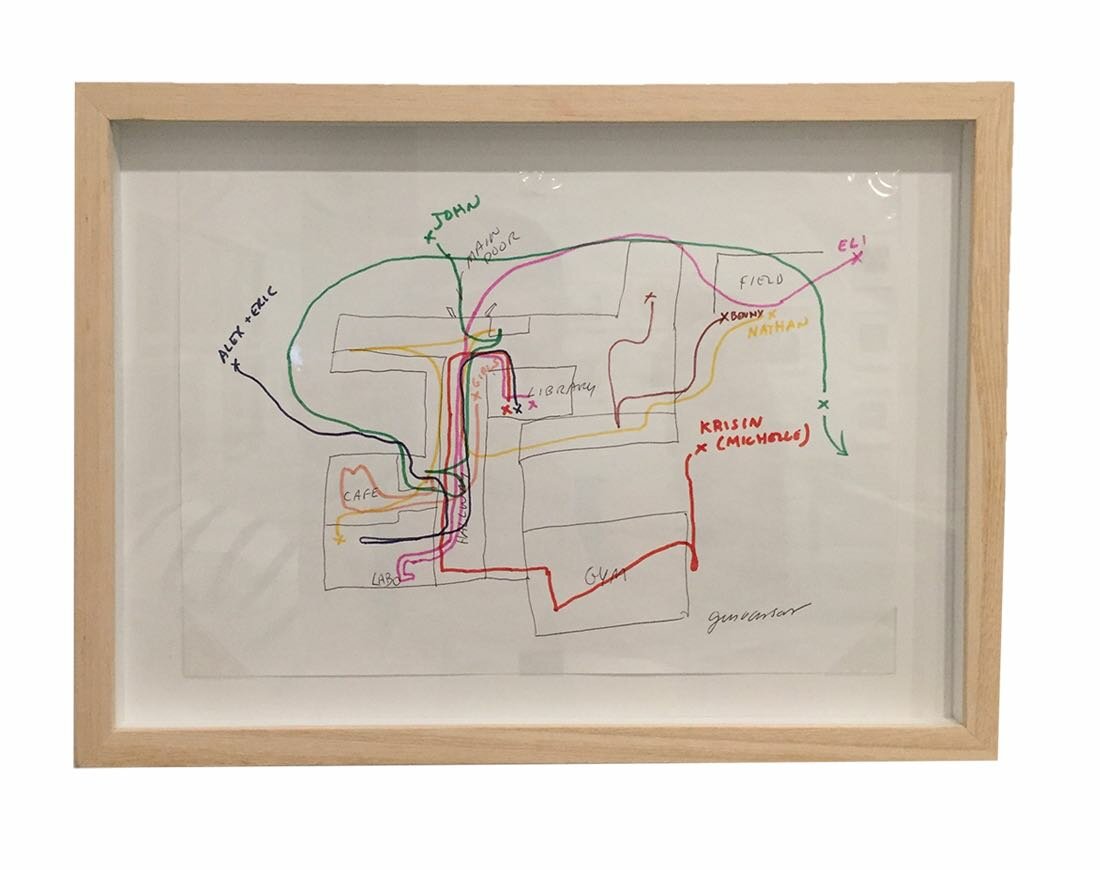
Preparatory drawing for Elephant (Gus Van Sant, 2003). Photograph by the author.
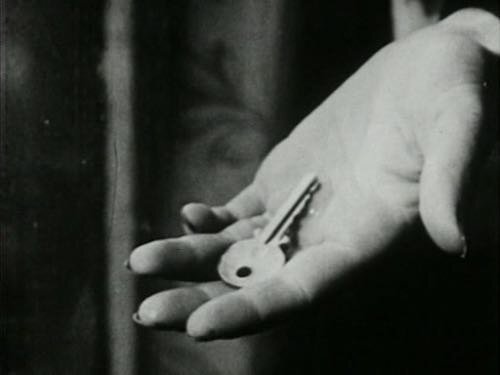
Meshes of the Afternoon (Maya Deren, 1943).
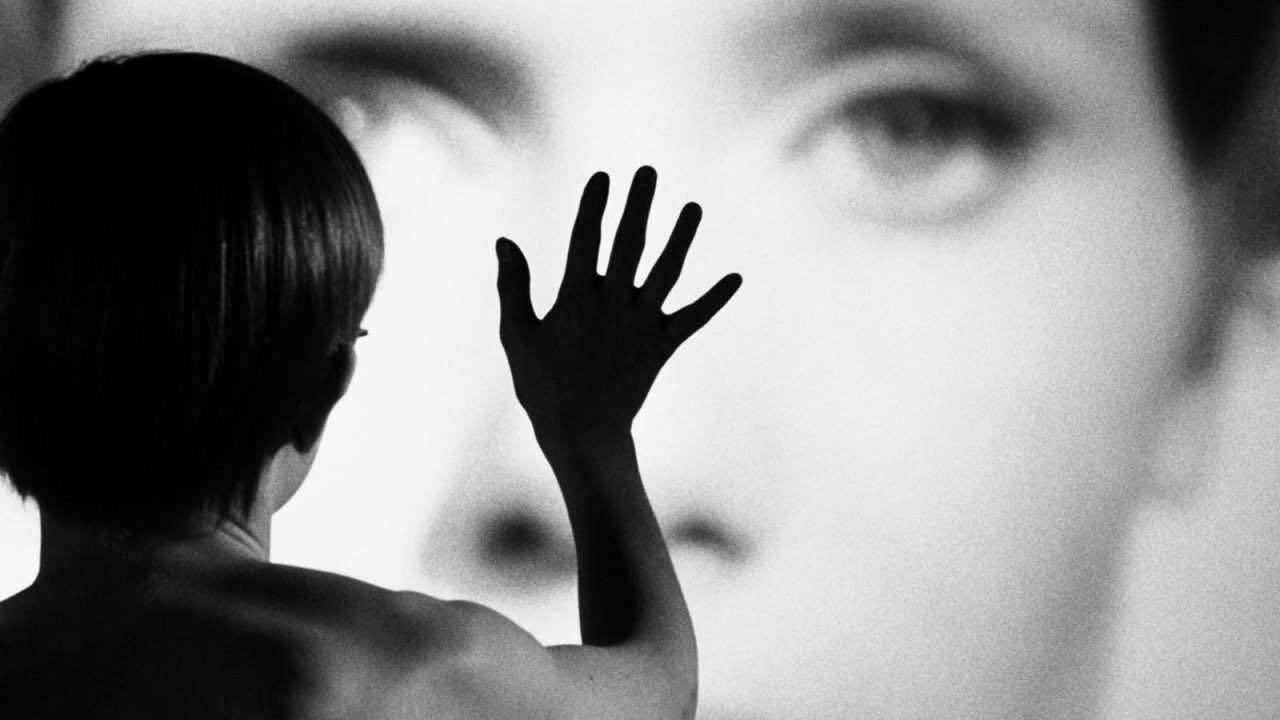
Persona (Ingmar Bergman, 1966). A reference for the idea of touching someone’s face as if it were a screen.
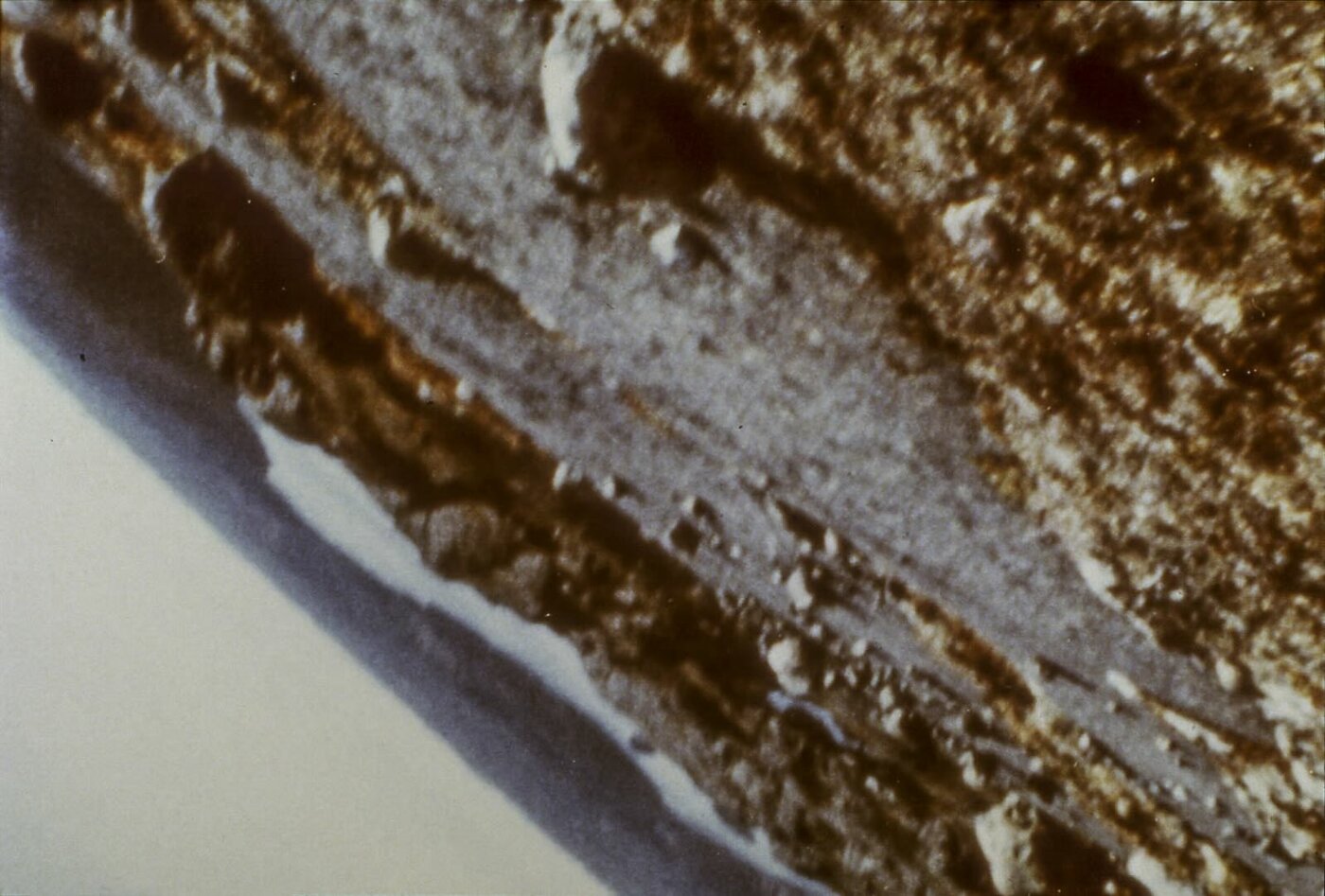
La Région Centrale (Michael Snow, 1971). This still was part of the storyboard and the opening of the film.
The idea that a film could have a shape was an important discovery. When we think of structure, we usually imagine an arrow where events move forward, one after another. Years earlier, during an exhibition at La Casa Encendida in Madrid about Gus Van Sant, I saw his diagram for Elephant (2003): a drawing of the characters’ movements throughout the film. Van Sant mapped the characters as if they formed the outline of an elephant seen from above. He wanted to reference Alan Clarke’s film of the same name. The elephant became the map of that mass-shooting story.
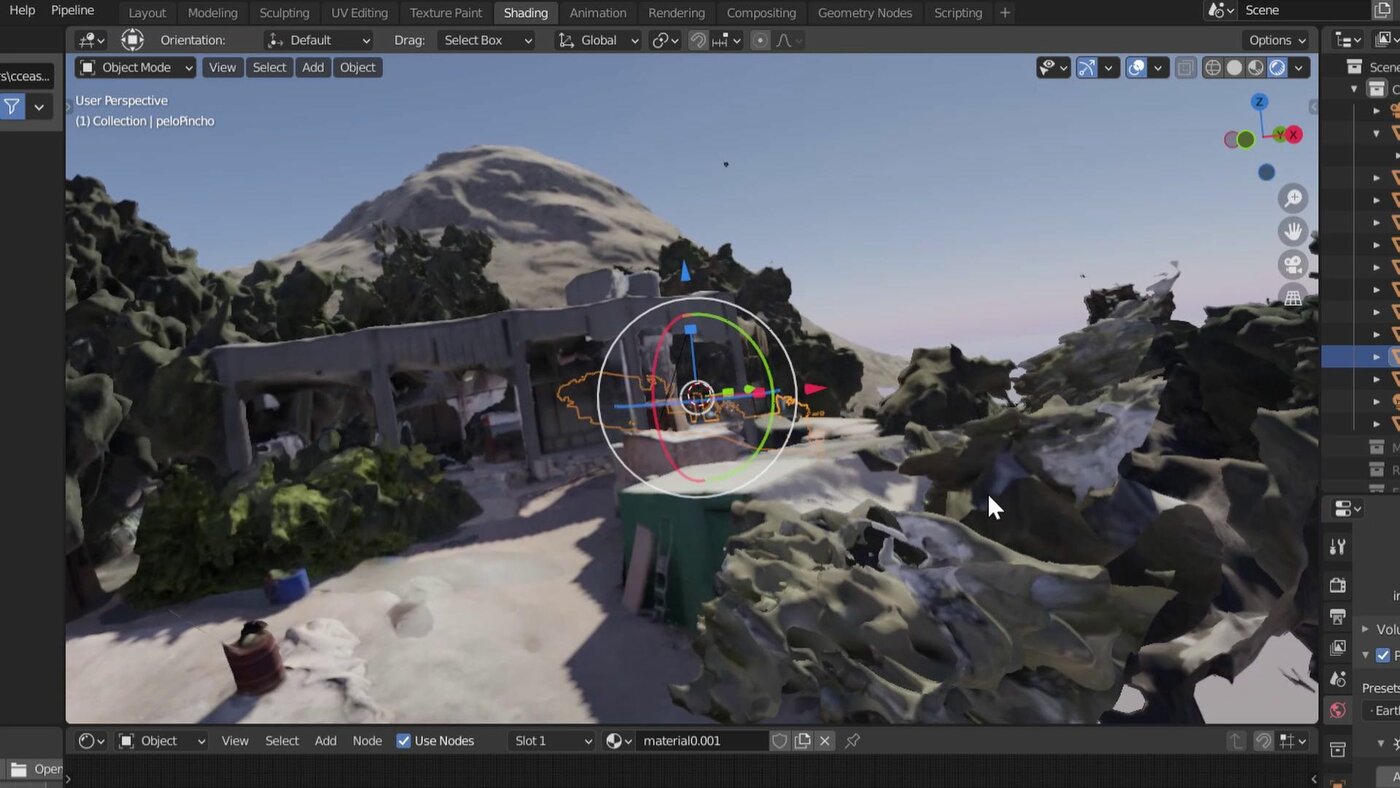
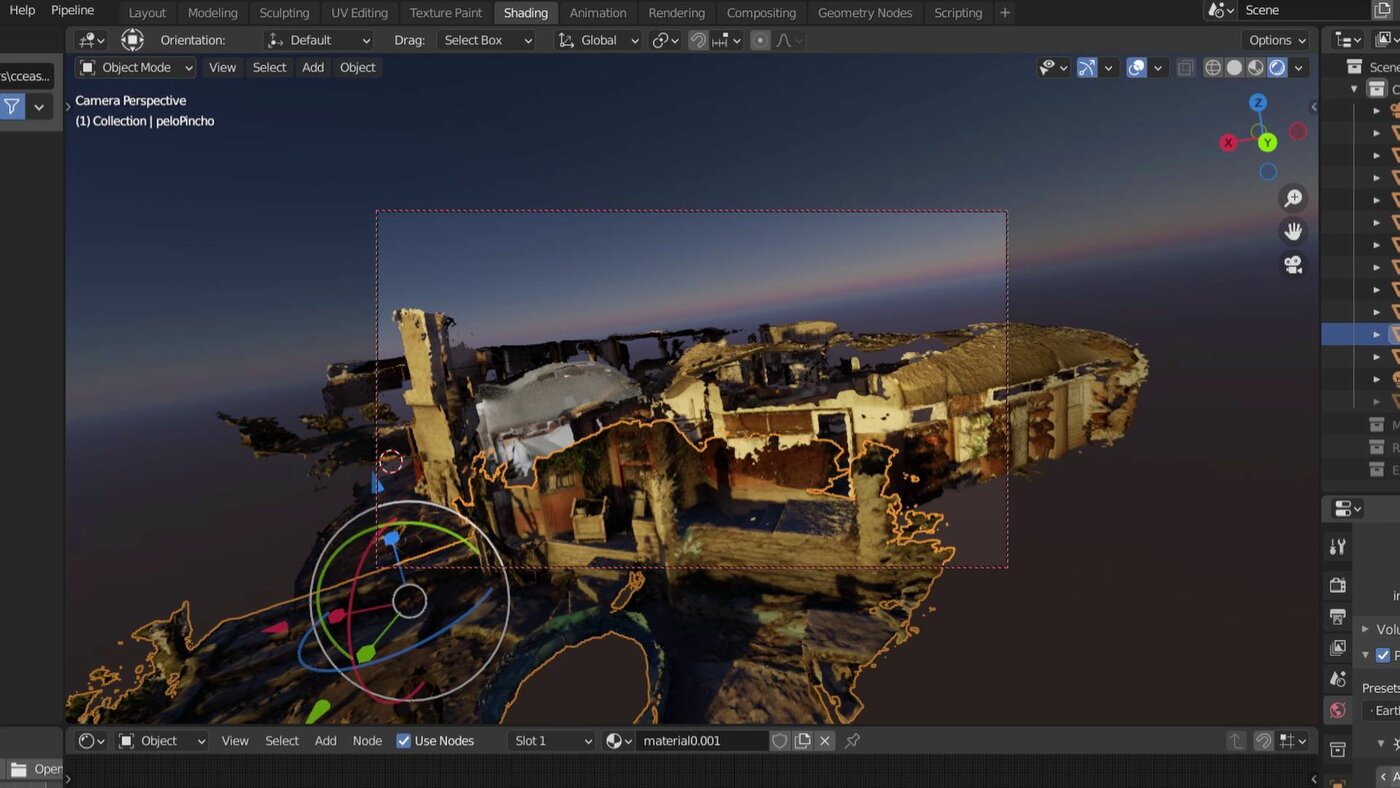
Photogrammetry designs created by Cristóbal Cea, later used by Team23.
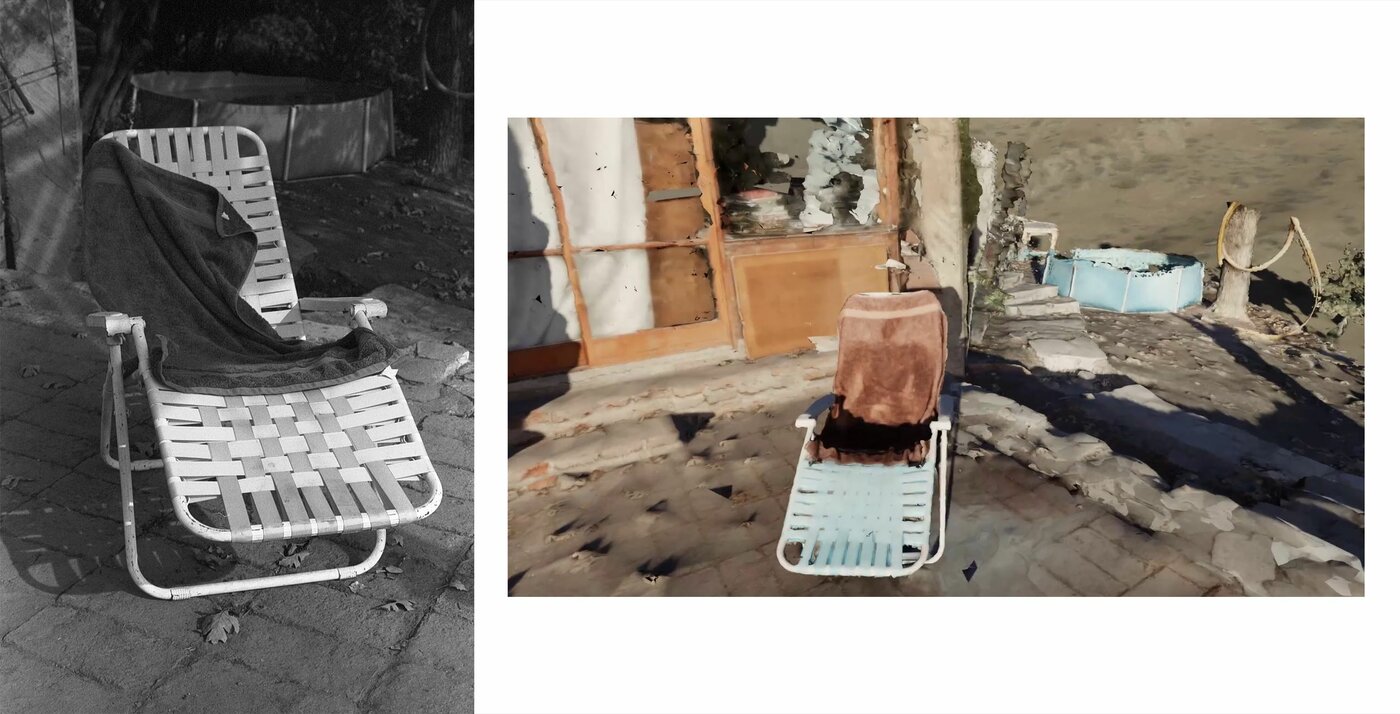
Photograph by Javier Pino and photogrammetry by Cristóbal Cea.
In our case, the map of the game revealed itself as a snake closing the loop on itself. Later, when we visited the location, we met the snake in the flesh, and it became an important symbol throughout the movie. Eventually, we were able to leave the country and travel to Argentina with Daniela Camino, postproduction supervisor and producer of the film, to finish the animation with Team23, a studio in La Plata. There, we found a new final image for the film. It felt like a revelation. In that moment we realized the film had a life of its own.
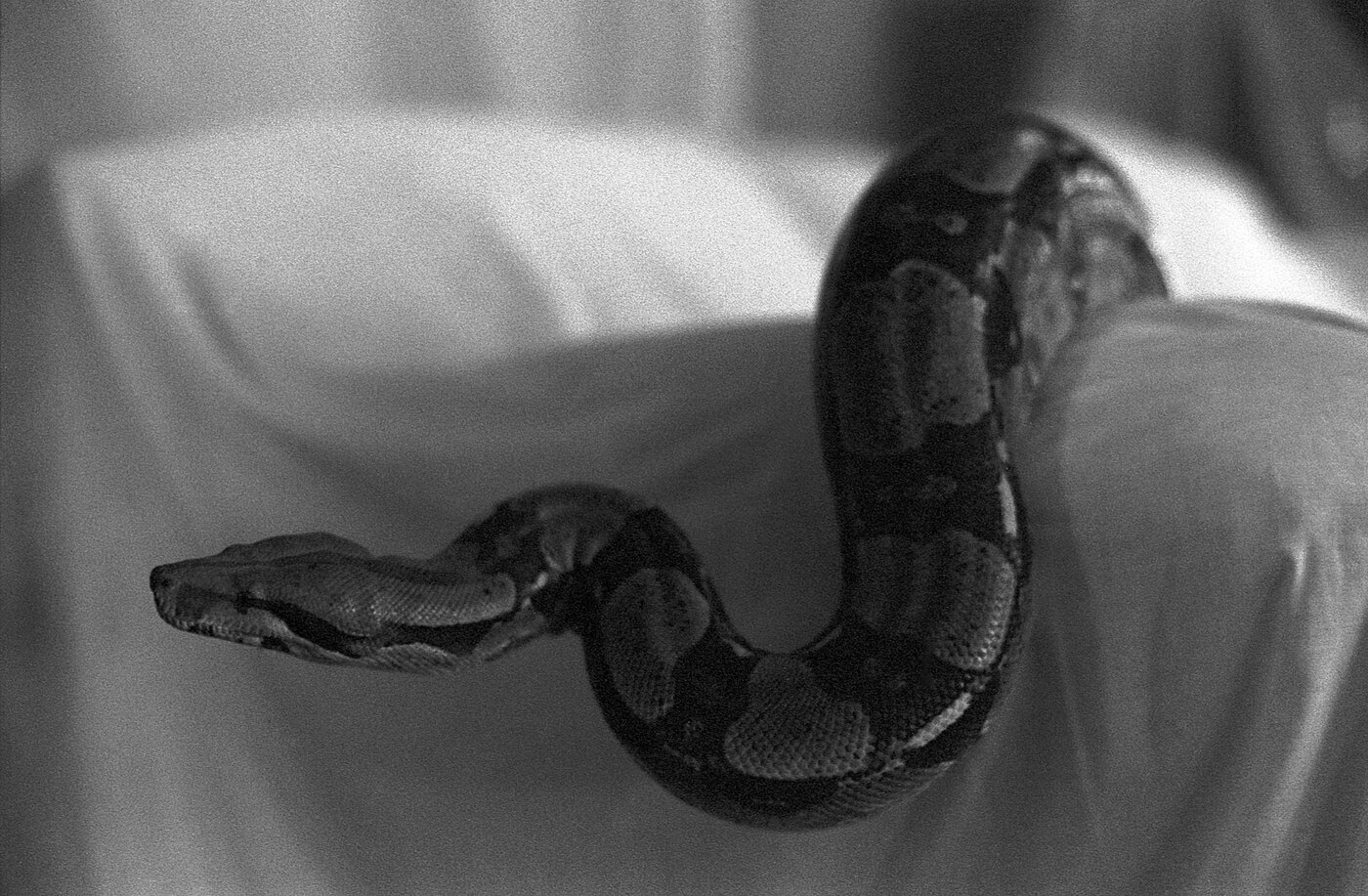
Manguera the snake on location.
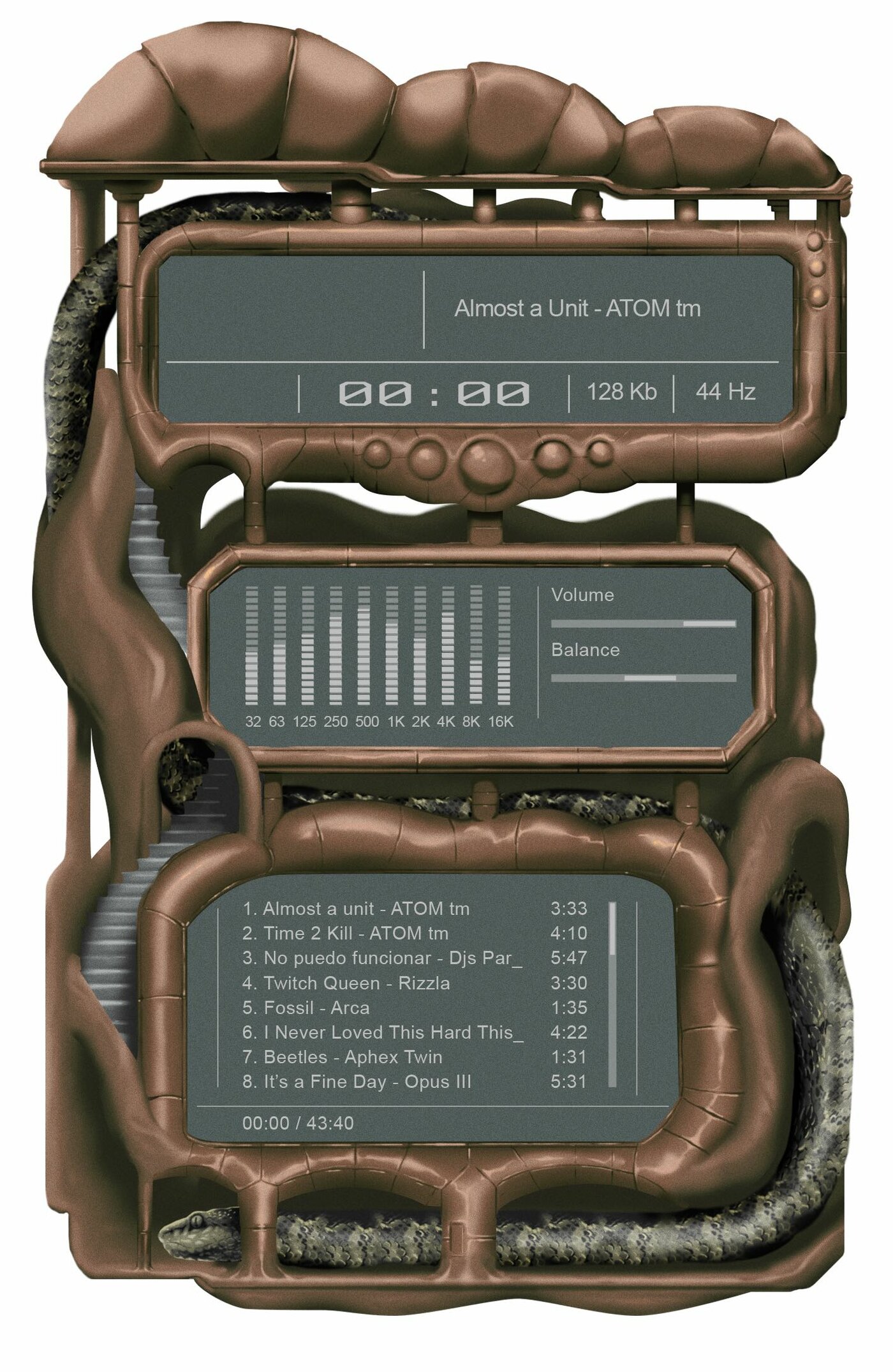
Winamp snake interface by Simon Jarpa.
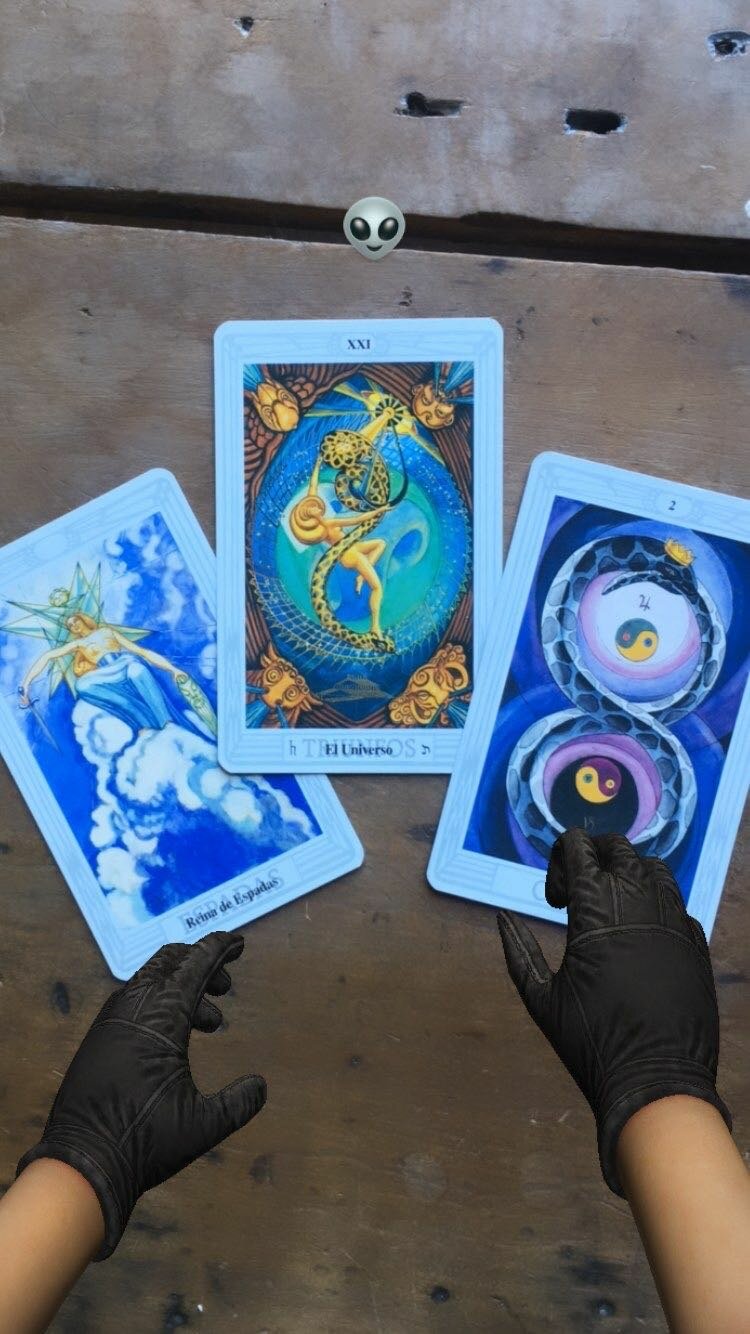
Tarot cards used as references.