
The Action Scene explores the form, history, and visceral power of action cinema through its set pieces.
A translated version of this essay was published in HKinema, the quarterly magazine of the Hong Kong Film Critics Society.
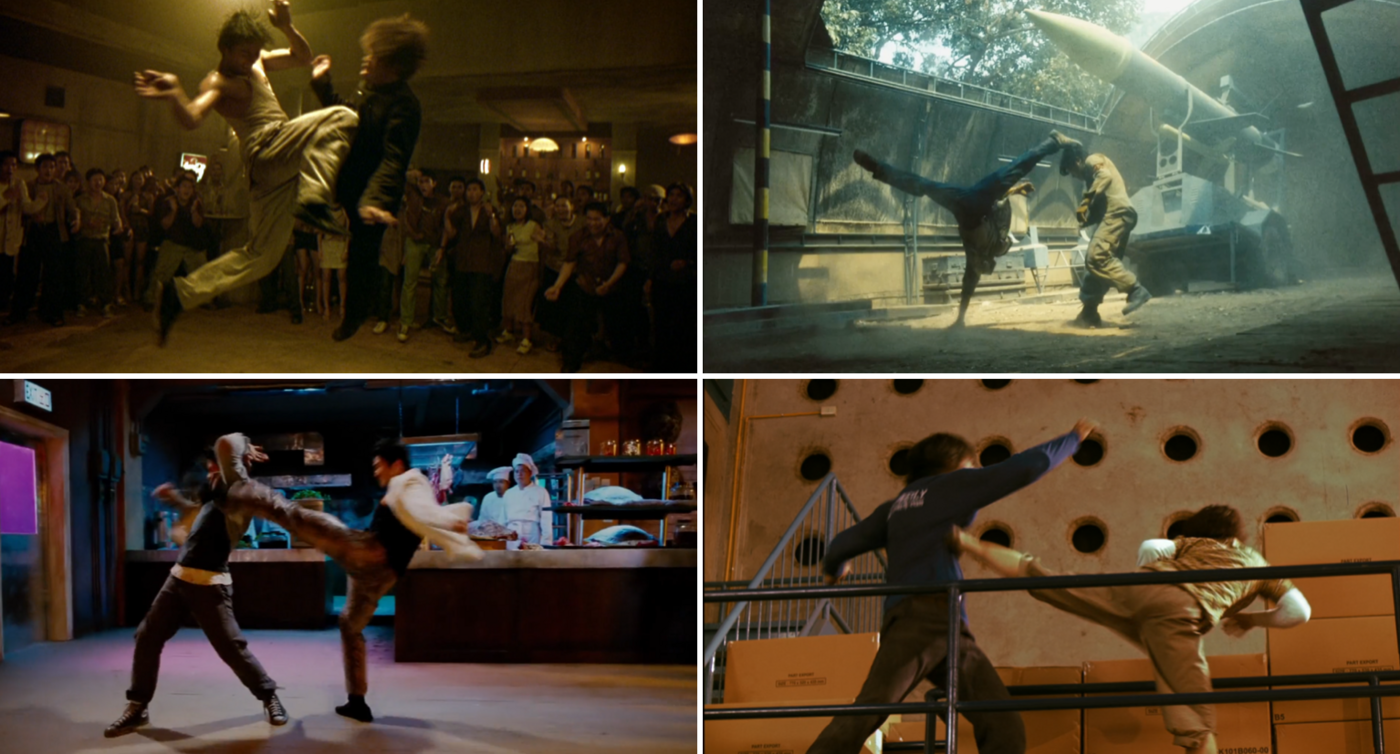
Clockwise from top-left: Ong-Bak (Prachya Pinkaew, 2003), Born to Fight (Panna Rittikrai, 2004), The Protector (Prachya Pinkaew, 2005), Chocolate (Prachya Pinkaew, 2008).
“I like both Thai and kung fu shapes. Please show us!”
“Are you mad? You could’ve been killed! If you want to die, I can arrange it.”
—Born to Fight (Panna Rittikrai, 1984)
For many martial arts movie fans in the mid-2000s, Tony Jaa was king. Sundry moments established his reign. In one scene from Ong-Bak (2003), the film that catapulted Jaa to global stardom, the actor executes a flying knee and then a spinning aerial kick—all while his legs are on fire. The first fight scene from The Protector (2005) contains a shot where Jaa’s hero soars in from offscreen left, clearing over half the length of a room to topple a cluster of adversaries like bowling pins. Filmed using a wide-angle lens to accentuate (and exaggerate) the distance he travels, the stunt testifies to Jaa’s “propensity for flight,”1 his ability to leap higher and stay airborne longer than his predecessors in the action genre.
“No stuntmen, no wire action, no computer graphics,” read Ong-Bak’s promotional materials, a claim that Jaa seemed to authenticate through live stunt reenactments at screenings. Marketed and received as a retort to Hollywood CGI and Hong Kong wire-work—two trends that peaked and converged in the international crossover success of The Matrix (1999)—Ong-Bak and The Protector are exercises in realism: real martial arts and real impacts, documented on camera.
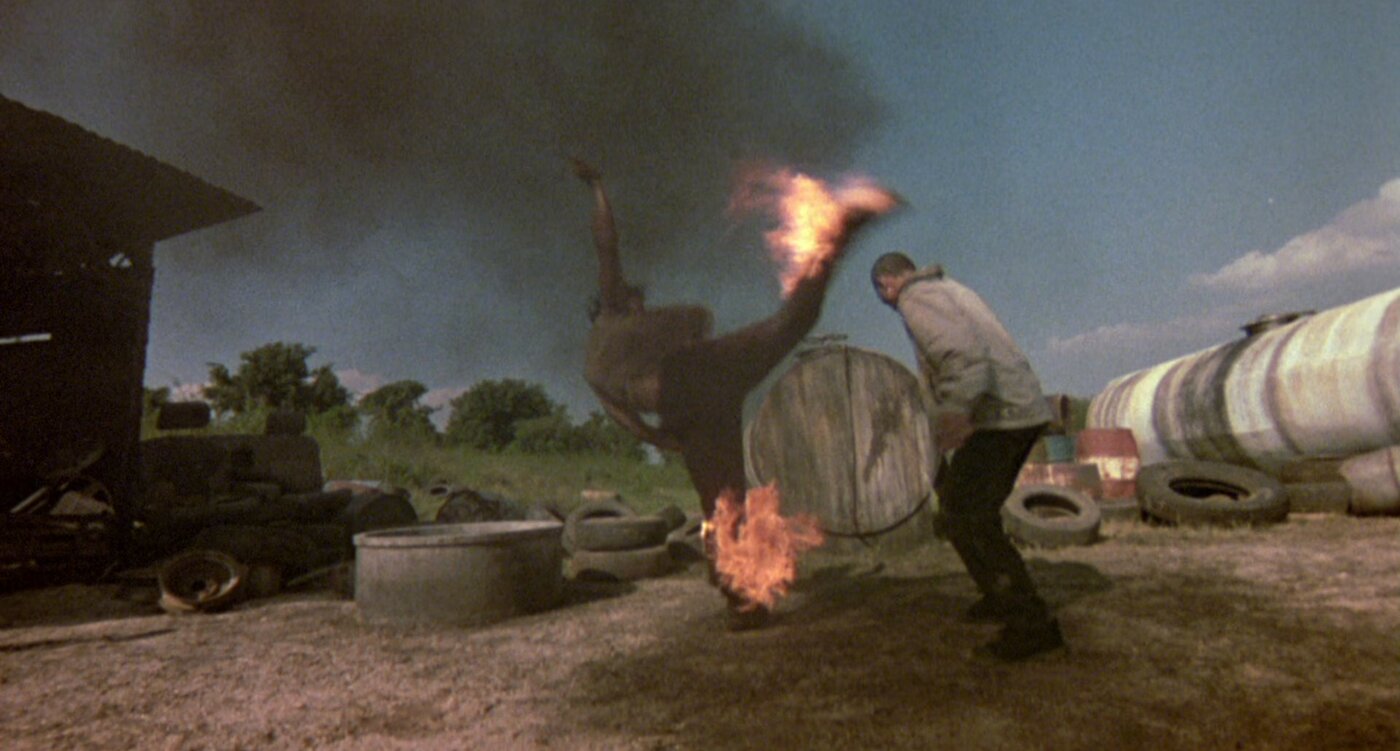
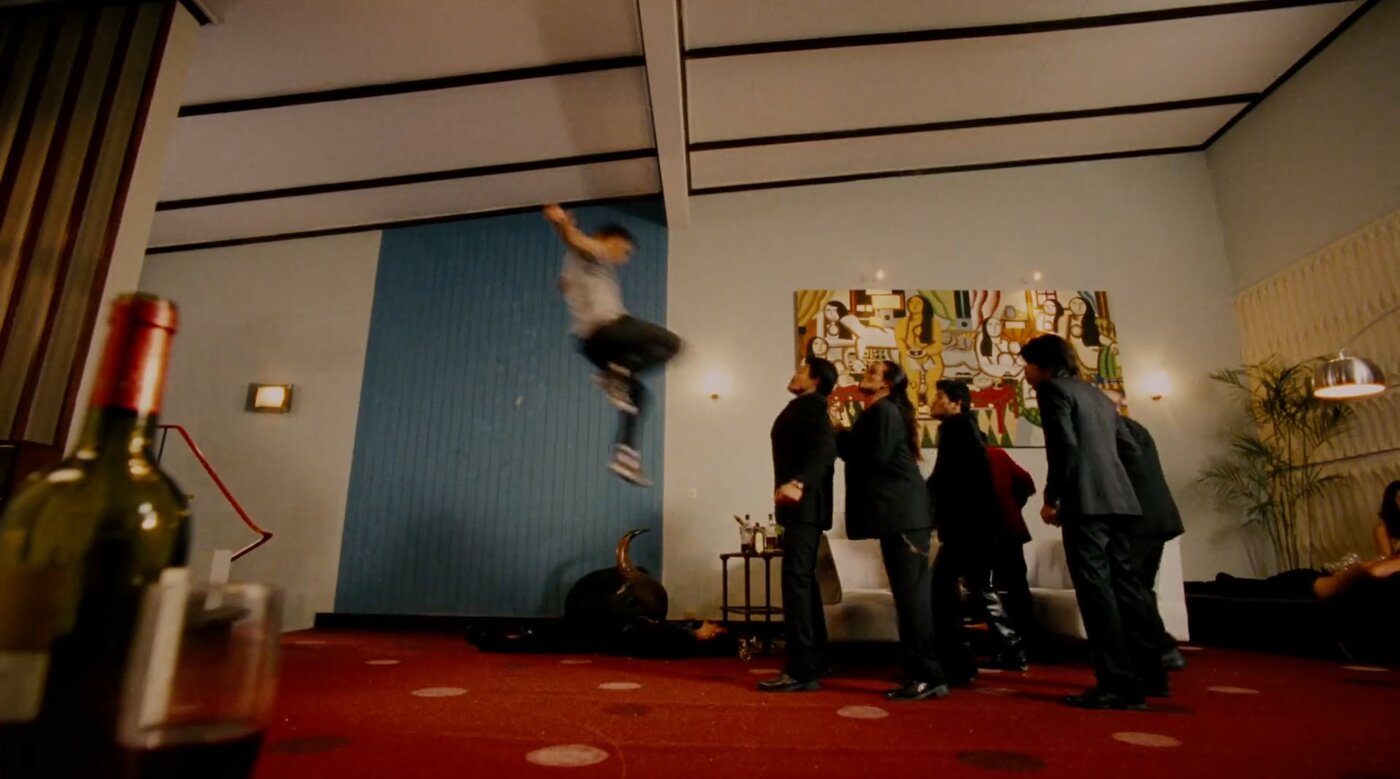
Top: Ong-Bak (Prachya Pinkaew, 2003). Above: The Protector (Prachya Pinkaew, 2005).
These films exhibit what martial arts scholar Leon Hunt describes as archival, corporeal, and cinematic authenticity, all of which are routinely invoked in fan discourse around martial arts movies. Jaa’s films display the technical and tactical specifics of Muay Thai (a Thai martial art and combat sport distinguished by its reliance on knees, elbows, and “hard” strikes) and Muay Boran (a more lethal, historical variant), referencing an existing archive of martial arts maneuvers. Additionally, his movies exhibit full-contact choreography: Actors strike each other with full or near full force, and crashes, flips, and falls were largely done “for real,” more or less how they appear in the finished film. The result is a sense of shattering power that, to this day, CGI cannot fully replicate. The inimitable jerk of a torso actually being kicked or a head actually being elbowed—impacts embellished with puffs of Hong Kong-style “power powder”—triggers the viewer’s visceral intuition of the stunt’s corporeal, body-on-body reality. Finally, such stunt sequences appeal to cinematic authenticity, featuring shots that are wide enough to limn full-body movements and long enough to frame stunts in their entirety, from wind-up to impact to follow-through. Slow motion appears frequently to ensure we don’t miss anything, and it’s often paired with overlapping editing that replays part of the stunt from a different angle.
All of this may sound familiar: It’s precisely Hong Kong action cinema’s claim to fame. The lucid, generous display of “real” martial arts (director Lau Kar-leung conceived of cinema as a pedagogical tool for teaching and sharing the southern Chinese martial art of Hung Gar) and “real” stunts (high falls, somersaults, car flips, defenestrations) has become synonymous with Hong Kong-style action. What Ong-Bak, The Protector, and the entire paradigm of Thai action cinema modeled after Jaa’s international success—encompassing the work of martial artist stars Dan Chupong and JeeJa Yanin—attempt is to beat Hong Kong at its own game, all while adding a distinctly “Thai” flavor that invokes the country’s national and cultural heritage.
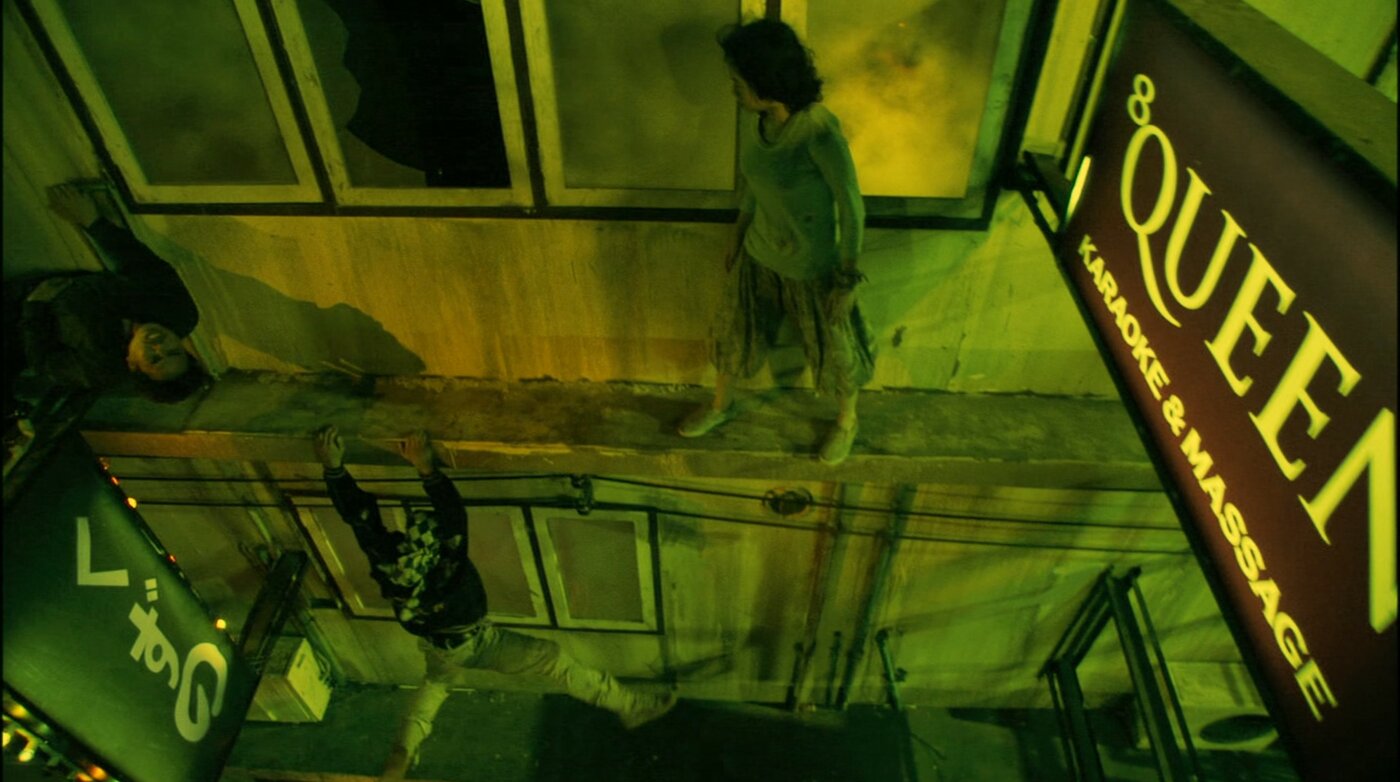
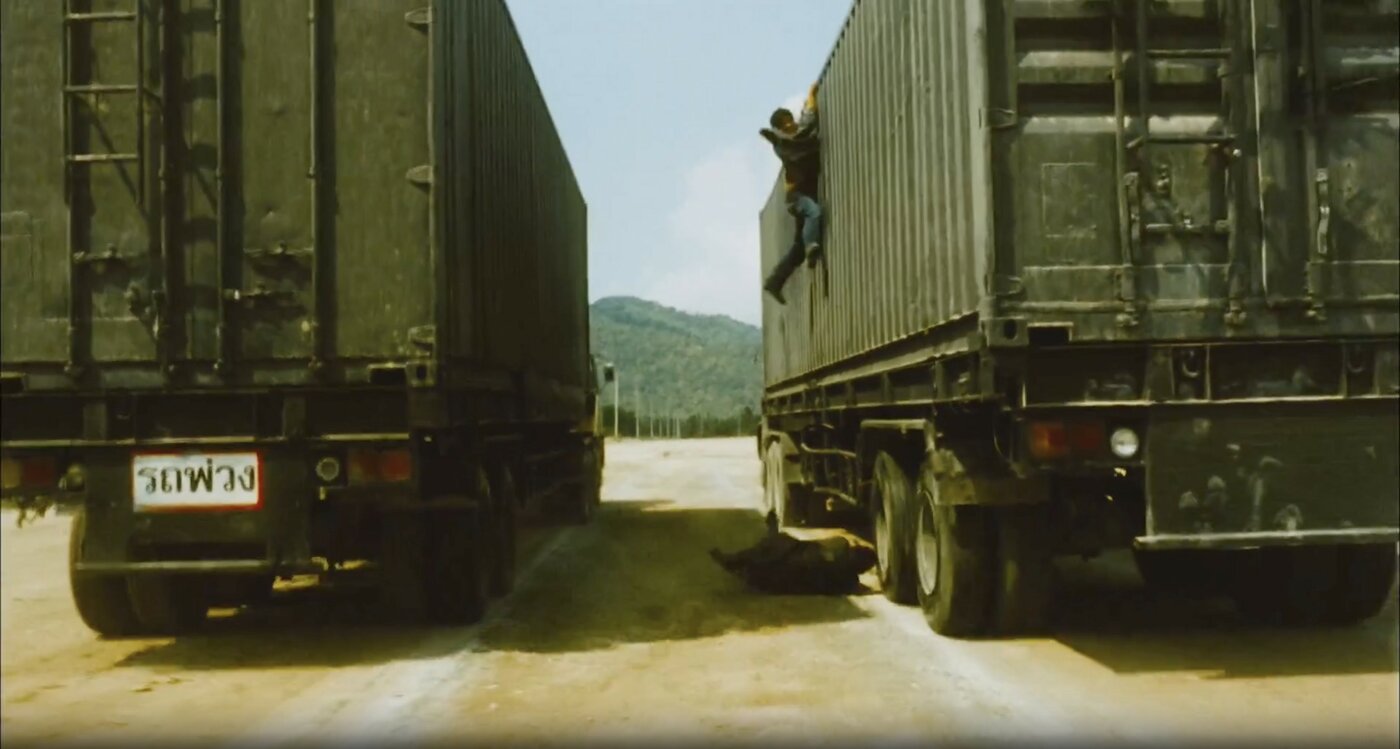
Top: Chocolate (Prachya Pinkaew, 2008). Above: Born to Fight (Panna Rittikrai, 2004).
Many Thai action sequences feel like a series of escalating self-dares: how can we take a Hong Kong-style stunt and make it more extreme, more challenging, more dangerous, more hard-hitting? One moment from Ong-Bak’s climax sees Jaa leaping some three meters in the air, tucking in his legs, then dive-bombing a supine opponent knees-first, driving him through a wooden platform, spinal safety be damned. The Yanin star vehicle Chocolate (2008) culminates with a melee along the outside of a building, complete with sustained shots of stunt performers hitting the pavement multiple stories below. Perhaps the most hair-raising stunt can be found in Born to Fight (2004)—the in-name-only remake of the 1984 original—in which a stuntman, thrown off of a moving truck and bouncing off of a parallel one, almost has his head crushed beneath the first vehicle’s wheels.
This dialogue and competition with Hong Kong action cinema is not without precedent. In the 1970s, the output of the Golden Harvest and the Shaw Brothers studios spilled over into Thailand; the influx of Hong Kong films onto Thai screens whetted the appetite of Thai audiences for more spectacular action sequences. To allow local Thai films to compete, stuntwork developed as a specialized discipline (previously, stars had simply done their own stunts). One of the first stuntmen to emerge during this era was Panna Rittikrai. Director and star of scores of low-budget actioners filmed and released in the country’s rural provinces (historically, action movies played mainly at mobile, open-air screenings in these areas), Rittikrai was a mentor and inspiration for Jaa (the young actor cut his teeth on Rittikrai’s movies, first as production assistant then as budding star) and would continue to direct, produce, and star in films into the early 2010s.
Rittikrai’s directorial debut, the original Born to Fight, blends Chinese and Thai martial arts, often in long, wide takes reminiscent of 1970s kung fu films. In one scene, the character he plays gives an extended demonstration of Muay Thai to an audience of pupils—the viewer’s narrative proxy—who, at one point, voice a desire to see “kung fu moves” instead. Despite chastising them for not being “patriotic” enough, Rittikrai’s character concedes, launching into an elegant display of Chinese martial forms.
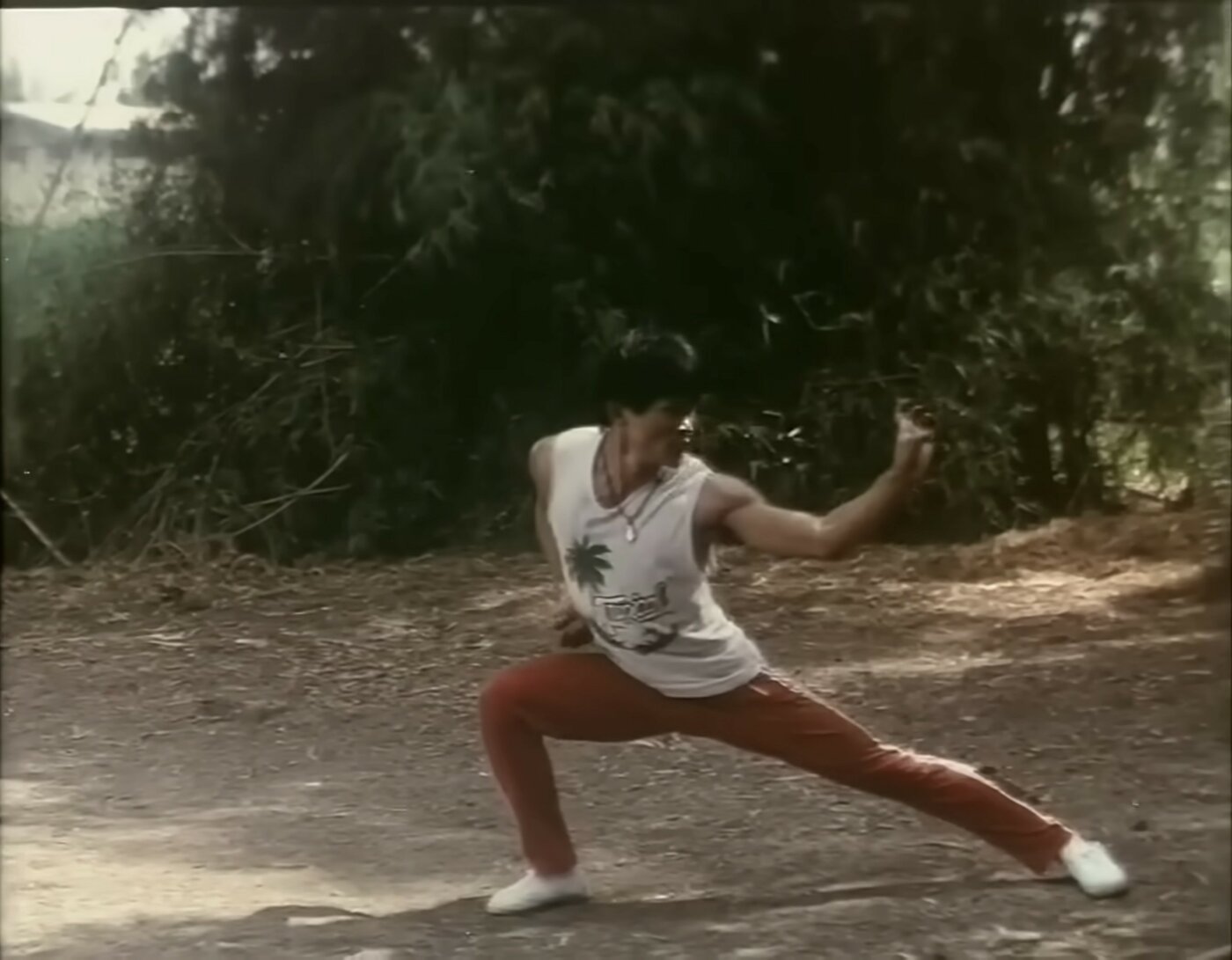
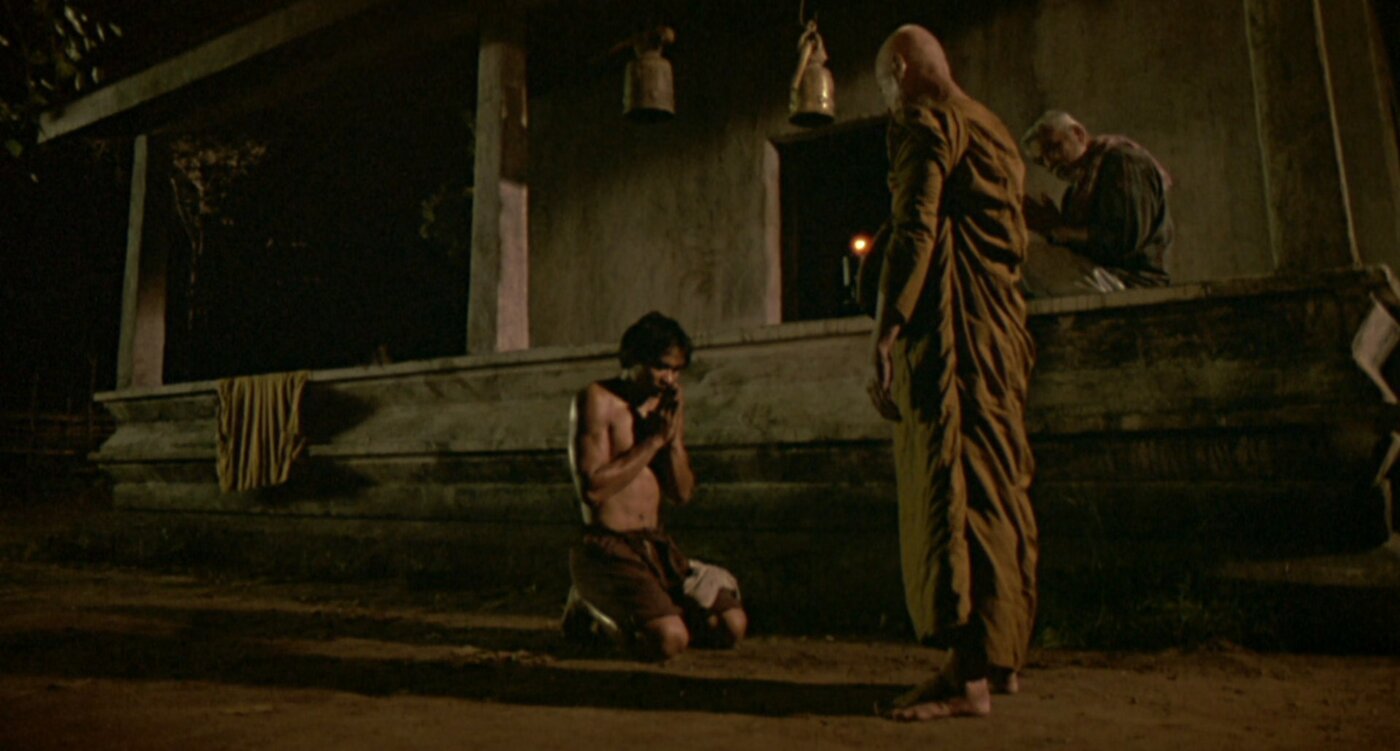
Top: Born to Fight (Panna Rittikrai, 1984). Above: Ong-Bak (Prachya Pinkaew, 2003).
This mixing and mastery of both Thai and Chinese martial arts (along with other martial traditions) became central to contemporary Thai action cinema. So did the question of “patriotism” and nationalism: the crafting and promotion of a distinctly Thai action tradition within the context of transnationalism. In Ong-Bak and The Protector, Muay Thai is reverently linked to the country’s religious and cultural heritage and the homegrown “innocence” of village life; in contrast to this, the film presents the whirlwind hedonism and mercantilism of urban Bangkok and, by extension, the globalized world to which it is linked. These films assert Thailand’s cultural exceptionalism on the world stage through fish-out-of-water narratives in which Jaa’s rural protagonist is thrust into perilous modernity only to emerge triumphant thanks to his principled traditionalism and Muay Thai prowess (which, naturally, defeats other fighting styles from around the world). Nationalism becomes even more overt in the Born to Fight remake, which stars several Thai national athletes representing their sports and vilifies the Burmese, a longstanding enemy “other” in Thai nationalist media (similar to how the Japanese are depicted in many kung fu films). When Burmese militants hold a Thai village hostage, it is a radio broadcast of the Thai national anthem that incites the villagers to fight back.
At the same time, these movies express and embody a desire for international participation and approval—to pass muster vis-à-vis international/Western standards of quality. As film scholar Daniel Martin notes, the scene in Ong-Bak where Jaa’s hero defeats a parade of opponents at an underground fight club sees him being cheered on by an “all-foreign” audience, who are losing their minds over this scrawny outsider from the sticks wiping the floor with the usual contenders.2 Not so subtly, the scene suggests that Muay Thai’s (and Thailand’s) “underdog” international success is worth betting on. Observant viewers of Ong-Bak have noted graffiti messages addressed to Steven Spielberg and Luc Besson—Easter eggs denoting the international aspirations of director Prachya Pinkaew and his production company Baa-Ram-Ewe. Besson’s EuropaCorp subsequently picked up the film for international distribution in several territories as part of a larger, 2000s-era “transnationalization of Asian martial arts,”3 seen also with titles like Kiss of the Dragon (2001), The Transporter (2002), District B13 (2004), and Unleashed (2005). Extending a broader trend toward nationalist rhetoric in New Thai Cinema—often viewed as a compensatory response to the cultural trauma of the 1997 Asian financial crisis, which sunk much of Southeast Asia and parts of East Asia into a deep recession—various contemporary Thai martial arts films are emblems of both Thai-ness and transnationalism, simultaneously absorbing and contributing to the currents of cross-cultural exchange.
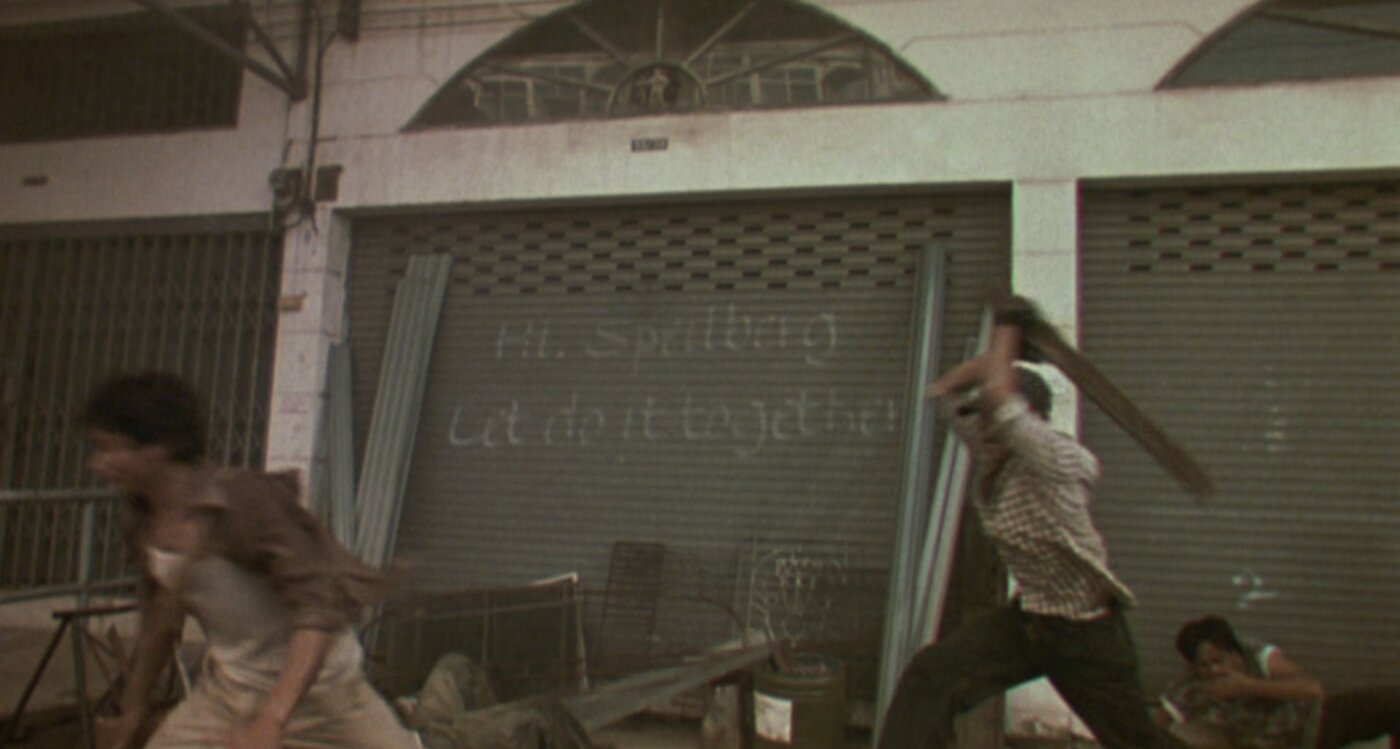
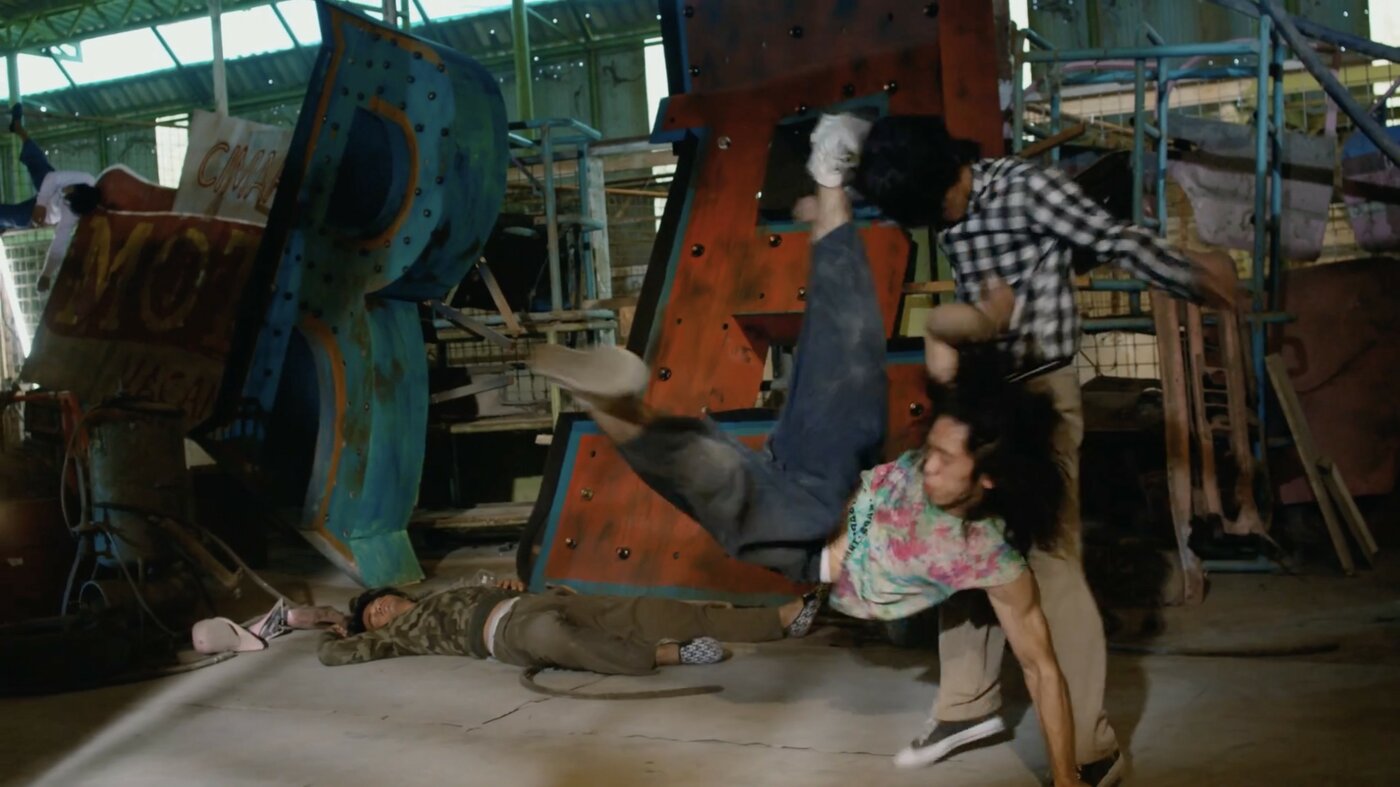
Top: Messages to Steven Spielberg in Ong-Bak (Prachya Pinkaew, 2003). Above: Raging Phoenix (Rashane Limtrakul, 2009).
A similar duality is expressed in the adaptability of Thai martial arts cinema. Although Muay Thai and Muay Boram tend to remain key choreographic throughlines—elbow and knee strikes return as regular refrains in the work of Jaa, Yanin, and Chupong—the action design varies dramatically across films. In The Protector, Jaa developed a combat style that emulates the stiff, lumbering movements of elephants, prioritizing straight-limbed maneuvers and vicious trapping combos. Dynamite Warrior (2006) sees Chupong playing a cowboy-style hero who mixes Muay Thai with a proclivity for riding missiles like a surfboard, and Raging Phoenix (2009) features Yanin as the newest member of a youth gang whose fighting style interweaves Muay Thai, breakdancing, and capoeira. In Ong Bak 2 (2008) and Ong Bak 3 (2010), co-directors Jaa and Rittikrai experiment with color grading and high shutter speed to give fight scenes a hypersaturated, hopped-up look.
Like with Hong Kong action cinema itself—which, by fusing with regional traditions from around the world, has survived long after the local industry declined in the late 1990s—this adaptability has ensured Thai martial arts cinema’s continued vitality. Inspired by Hong Kong actioners since his youth, Jaa has returned the favor by working on various Hong Kong and Chinese projects—SPL II: A Time for Consequences (2015), SPL III: Paradox (2017), Master Z: Ip Man Legacy (2018), and Striking Rescue (2024)—his Muay Thai shapes dovetailing with the glossy, energetic style of contemporary Chinese action. He has worked in American action cinema as well, starring in ensemble works such as Furious 7 (2015), xXx: The Return of Xander Cage (2017), Triple Threat (2019), and The Expend4bles (2023).
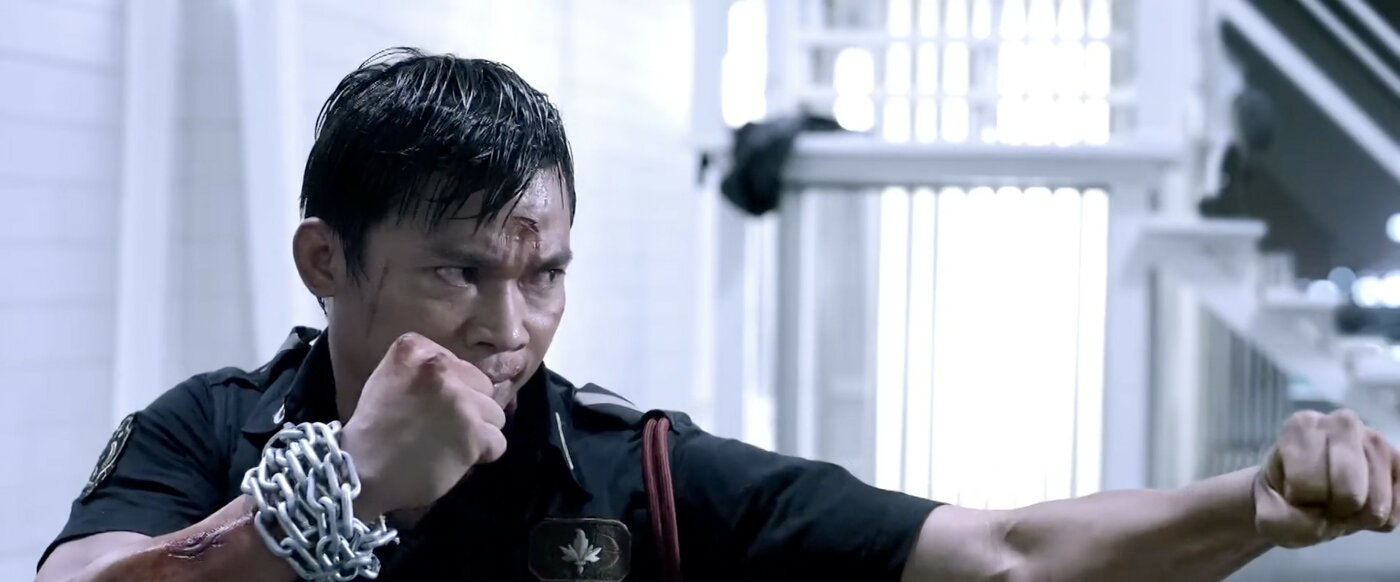
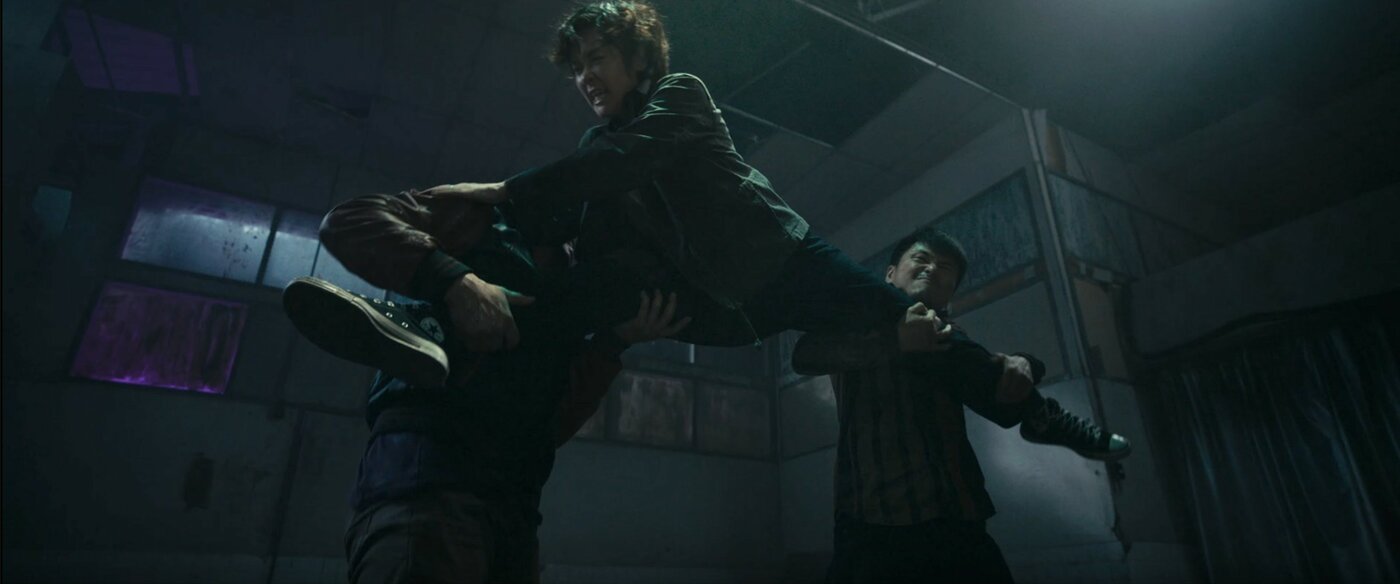
Top: SPL II: A Time for Consequences (Soi Cheang, 2015). Above: The Furious (Kenji Tanigaki, 2026).
Although less active than Jaa, Yanin also appears in Triple Threat and, most notably, headlines the opening set piece in The Furious (2026), this year’s blockbuster action event. A pan-Asian fight movie featuring an international lineup of martial artist stars, The Furious was conceived and marketed as a reinvigoration of Hong Kong action filmmaking, a simultaneous return to the industry’s golden-age virtuosity and a fervent march into the current transnational action landscape. Like Jaa’s work in Hong Kong and China, Yanin’s inclusion in this project comprises a full-circle moment. In the 1970s, Hong Kong action inspired key shifts in Thai action filmmaking, which is now in turn inspiring Hong Kong action, helping shape the future of martial arts cinema.
1. Lauren Steimer, “Hong Kong Action Cinema as a Mode in Thai Action Stardom: Tony Jaa and the New Stunting Star Model,” in Experts in Action: Transnational Hong Kong-Style Stunt Work and Performance (Duke University Press, 2021), 56.
2. Daniel Martin, “Ong Bak: The Thai Warrior,” in Thai Cinema: The Complete Guide, eds. Mary J. Ainslie and Katarzyna Ancuta (I.B. Tauris, 2022), 152.
3. Leon Hunt, “Ong Bak: New Thai Cinema, Hong Kong, and the cult of the ‘real,’” New Cinemas: Journal of Contemporary Film, vol. 3, no. 2 (2005): 69.