Jim Jarmusch’s Father Mother Sister Brother, a MUBI Release, is now in theaters.
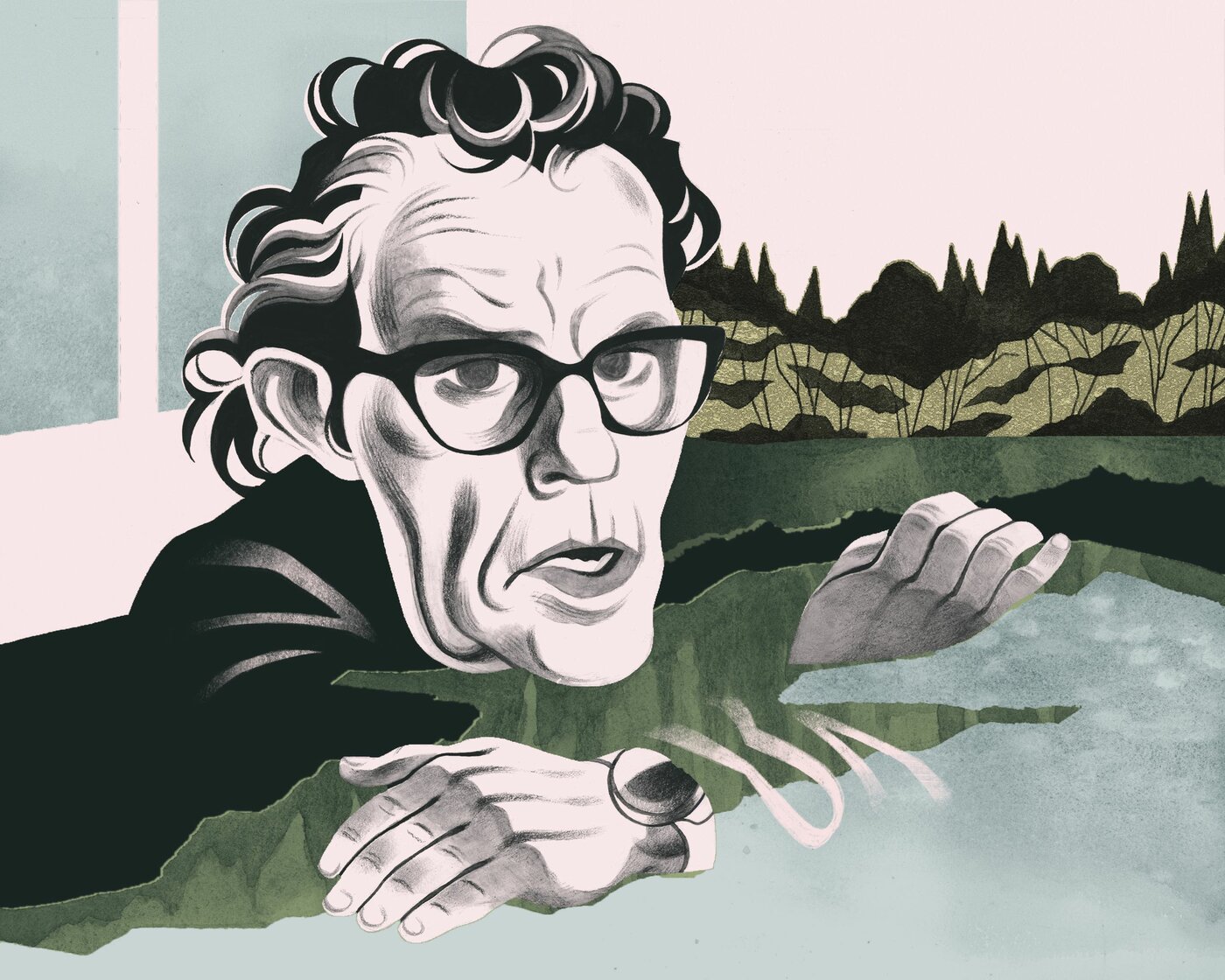
Illustrations by Michelle Perez.
To call Tom Waits a maverick is as much a truism as calling water wet. Drawing from Bob Dylan, Howlin’ Wolf’s psychedelic blues, beatnik lyricism, and the experimental instrumentation of Harry Partch, his discography has showcased a dizzying range of genres and influences, always adventurous and never predictable. However, two constants in Waits’s eclectic oeuvre are his inimitable, sandpaper voice and his acid-tongued musical persona: an offbeat raconteur on the fringes whose self-destructive appetites spit in the face of a world that has shunned him.
It feels inevitable that his propensity for theatrics caught the attention of filmmakers who share Waits’s independent spirit. After his debut screen role, a bit part in Sylvester Stallone’s Paradise Alley (1978), he went on to work with several certified luminaries of American cinema: Francis Ford Coppola, Robert Frank, Robert Altman, and more recently, the Coen brothers and Paul Thomas Anderson. But Waits’s time playing nightclubs in downtown New York in the 1980s led to an introduction to a filmmaker who was perhaps the best match for his screen persona: Jim Jarmusch.
Both Waits and Jarmusch are drawn to uncompromising characters who will go to any lengths to sustain their frequently ridiculous lifestyles and habits. Radio jockey Zack from Down by Law (1986), one of Waits’s defining roles, stays stoic as his incensed girlfriend destroys his belongings and trashes their apartment—up until she lays her hands on his favorite shiny pointy-toe boots to throw them out the window. When he retrieves the shoes from the street, littered with broken vinyl and furniture, Zack plops on the sidewalk and lets out a sigh, as if to say, “Now, she’s taken it too far.” In Coffee and Cigarettes (2003), Waits, playing a version of himself, tells Iggy Pop (also playing himself) that he can smoke because he has quit. When Pop recommends a young drummer for his future project, Waits fires off a series of uncharitable rhetorical questions about what that suggestion is really insinuating. He takes Pop’s friendly gesture as an insult to his independence—not just as an artist, but as a person in the world. This reveals a fascinating vulnerability; even a hardened “bard of the streets,” in the words of biographer Barney Hoskyns, can take the most innocuous comment as a threat to his sense of self.
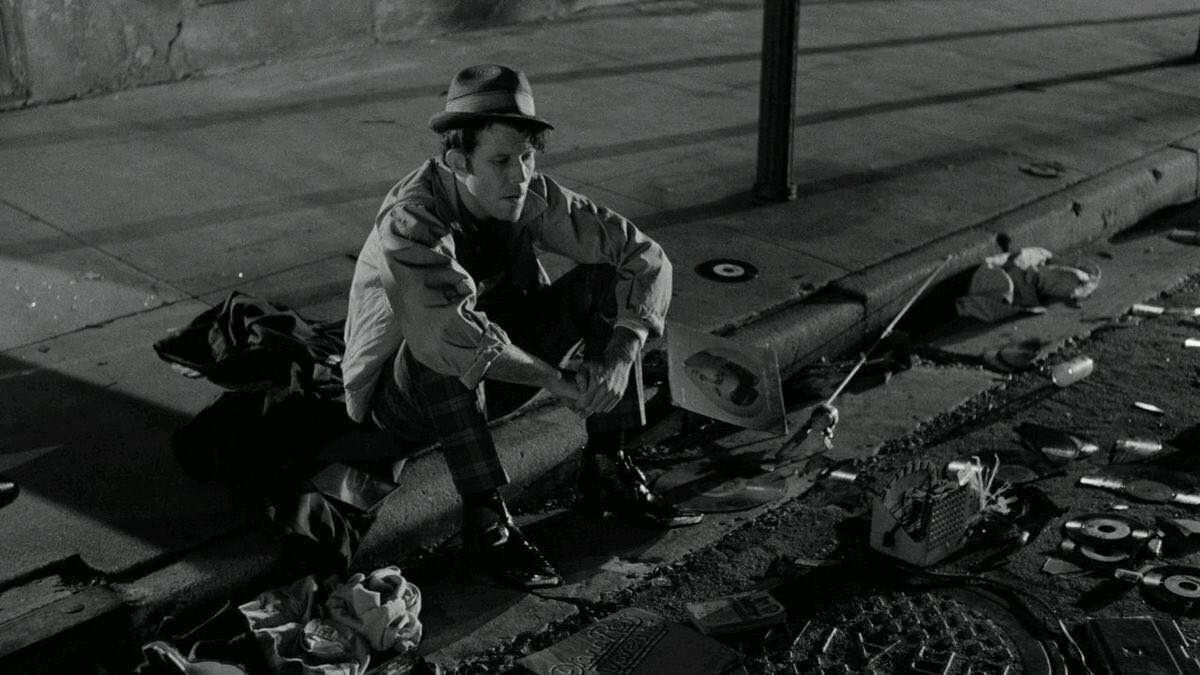
Down by Law (Jim Jarmusch, 1986).
Jarmusch’s latest film, Father Mother Sister Brother (2025), is his fifth screen collaboration with Waits (or sixth, counting the score he composed for Night on Earth, 1991). He leads the first episode of this triptych film as “Father,” a brazen hustler and absent parent. At the start, Father is tidying up before a visit from his adult children, Jeff (Adam Driver) and Emily (Mayim Bialik); he disturbs the tastefully arranged decor of his living room and kitchen, a confounding ritual soon revealed to be his usual “show” of financial precarity and pitifulness, a way of pressuring Jeff into giving him money. When Emily, the more suspicious of the two siblings, notices a Rolex on his wrist, he insists that it is a “fugazi” and delicately pulls down his sleeve to hide it. Waits’s nervous hand and clenched teeth are disarming, building a comedic sense of suspense—but it does not take long before he regains his composure, his classic Waits cool, and starts scheming again. At one point, Emily asks if he is on any medications, and, instead of a simple no, he drawls a gravelly, wry litany of all sorts of recreational drugs that he has definitely not taken. Once she clarifies that the question actually pertains to prescriptions, he replies, “You think I should?” His aloof line delivery inspires both chuckles and pathos in equal measure. By the segment’s finale, we see Waits now dressed in a suave YSL suit—Saint Laurent Productions backed the film—about to go court a lady friend in his vintage car.
One of Waits’s international admirers is South Korean auteur Park Chan-wook, who wrote an essay on his favorite song by the musician, “Christmas Card from a Hooker in Minneapolis,” for a bimonthly audiophile magazine Hi-Fi Journal in the early aughts. The piece details Park’s wish to adapt the song into a film, revealing Waits to be more than a musical icon to him, but a cinematic inspiration as well. It makes sense: Park’s filmography is populated by stubborn mavericks who stick to their distinct codes of ethics and honor, regardless of practicality. Geum-ja from Lady Vengeance (2005) embellishes a bulky, close-range handgun with Medusa-like ornaments made of silver simply because it looks beautiful; in Thirst (2009), a priest-turned-vampire only preys on people contemplating suicide because those do not count as real murders in his heart. Waits would not feel out of place in Park’s cinematic world, in which illicit activities are motivated by unshakable personal convictions, giving them an undeniable sense of romance.
—Jawni Han
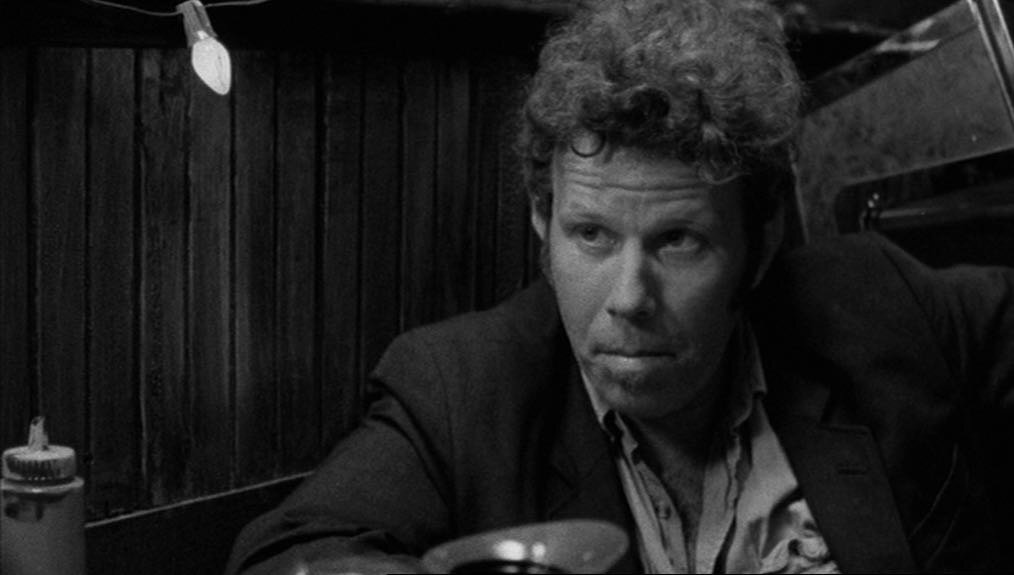
Coffee and Cigarettes (Jim Jarmusch, 2003).
Tom in Waiting
Tom Waits. Is Tom waiting? Absolutely not. To me, Tom seems to live without even the faintest idea of hope. His melodies and the timbre of his voice exude so much despair. But he’s not always so serious. He has an incredible sense of humor, and that’s what I love about Tom. He began his career making little folk songs reminiscent of Dylan, but his discography now ranges from folk, jazz, and rock to avant-garde and world music. In short, he makes grotesque, uncategorizable music. He’s also acted on stage and in film, and scored theatrical productions and movies. He associates himself with Jim Jarmusch, Francis Ford Coppola, Terry Gilliam, Robert Wilson, and Robert Altman. The word on the street is that the man can really hold his liquor. Perhaps that explains all the praise he garnered for playing a beggar character in Fisher King and an alcoholic in Short Cuts.
Speaking of booze, my friends and I all love to drink, and we are all big fans of Tom. About six years ago, Lee Mu-young and I checked into a hotel to work on the screenplay for Trio. Lee has since become a director himself, but back then, he was a music journalist and radio DJ. He suggested that we listen to some tunes while writing, and brought a few Tom Waits records. Lee was often asked to interpret for foreign musicians touring in Korea. He would ask them if they knew Tom and what they thought of his music. Apparently, each one of them just sighed and said: “He’s a genius.”
Tom’s husky voice often sounds like he has just chain-smoked an entire pack of cigarettes. It might be more accurate to say he “growls” his songs than to say he “sings” them. I ended up including “Russian Dance” on the soundtrack for Trio—I would like to take this opportunity to announce that I plan on using his “Black Wings” in a future project, and I would greatly appreciate it if other directors could refrain from using this song in their movies—and started collecting not only all of his “official” albums but also European tour bootlegs and tribute albums. I have thirty or so records in total. It’s a serious business spending that much money on one artist’s back catalog when you are a working artist. If you know, you know.
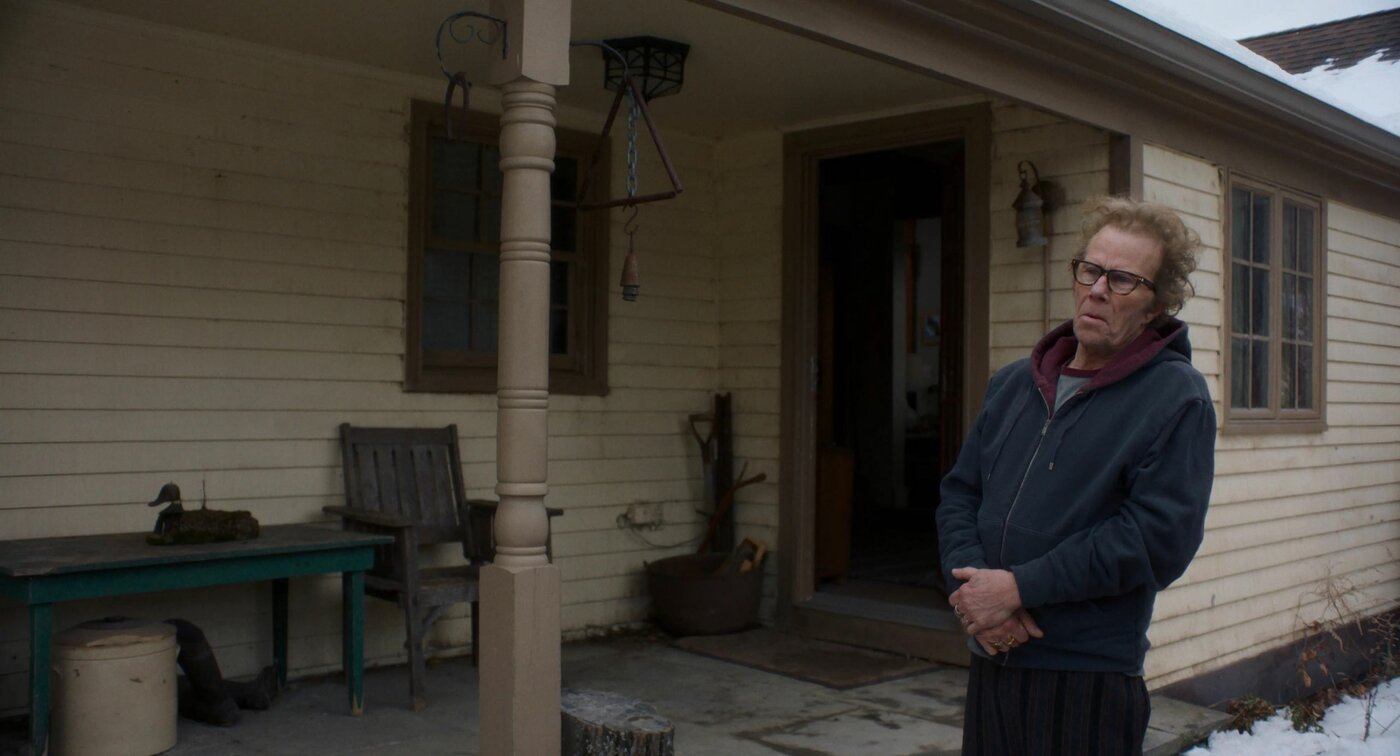
Father Mother Sister Brother (Jim Jarmusch, 2025).
If I had to pick one record from the collection, it would of course be the Grammy-winning Bone Machine. But if I had to pick one song, it would have to be “Christmas Card from a Hooker in Minneapolis” from what is possibly his jazziest record to date, Blue Valentine. (Now I get the urge to say, “Tom waits for a Christmas card from a hooker in Minneapolis.”) Yes, the song’s inert, umami-flavored piano is incredible. But what really steals the show is the lyrics. The words that Tom sings, I mean, “harps on,” are set to a pretty monotonous melody, but this simplicity moves me greatly. The lyrics describe the desperate lives of pathetic losers, and the song is more beautiful than any melodrama I know.
What even needs to be said? If I were an American director, I would make an eponymous movie based on the song’s lyrics in a heartbeat. Casting done. The back cover of Blue Valentine features Tom sharing a passionate moment with a woman in a red dress. The woman is his then-girlfriend Rickie Lee Jones. You could say she is a “female Tom Waits,” and she’ll play the titular “hooker.” The role of Charlie will, of course, go to the “male Rickie Lee Jones,” Tom Waits.
Imagine what must be going through the woman’s head as she sits in her cell and writes to an ex-boyfriend, begging for money. Unbearable misery hits her, so she makes up a fairy tale in her letter, only to snap back to reality toward the end. And she asks for help. She’s too embarrassed to even properly end the letter, so she just stops. This final twist takes the song from funny to sad. And what frivolous dreams this childish hooker has! Her working-class ex-boyfriend is probably gullible enough to be taken advantage of many times. He probably left her almost in spite of himself. He’ll probably send her the money she asks for. Then on Valentine’s Day, he’ll be waiting for her in front of the Minneapolis prison.
Every time I hear this song, I nearly tear up at that part about the gas station and greasy hair. Only Tom could write something like that. Only someone who “was born in the back seat of a yellow cab in a hospital loading zone and with the meter still running” could.
P.S. The “future project” that I want to score with “Black Wings” is Thirst, which is set to go into production in 2007. My thoughts haven’t changed.