Get in touch to send in cinephile news and discoveries. To keep up with our latest features, sign up for the Weekly Edit newsletter and follow us @mubinotebook on X and Instagram.
NEWS

Poster for the now canceled IndieChina Film Festival.
- Two days before it was to begin, the inaugural IndieChina Film Festival, intended as a showcase for independent Chinese cinema in New York City, was canceled due to pressure from the Chinese government, whose agents had undertaken a campaign of intimidation against many of those involved. “I am not making this decision out of fear or submission,” organizer Zhu Rikun—who had previously cofounded the now defunct Beijing Independent Film Festival—wrote in a statement on the festival’s website. “But I hope this announcement of the cancellation of IndieChina Film Festival will make certain unknown forces stop harassing all the directors, guests, former staff, volunteers and my friends and family.”
- Commercial productions in Los Angeles have plummeted in recent months, 40 percent lower last quarter than the five-year average, as more productions follow tax incentives out of the state and sometimes overseas. California lawmakers recently passed a bill giving millions in tax breaks to local productions, but commercials were not included.
- The Wonder Project, a film and television studio specializing in “faith-based” entertainment, has netted over 500,000 subscription sign-ups via Amazon Prime in the first three weeks since its channel’s launch, coinciding with the premiere of the second season of its popular biblical drama House of David (2025–). CEO Kelly Merryman Hoogstraten emphasized that “the vast majority [of viewers] are watching in the living room.… Families are gathering again.”
- The Australian government will soon mandate their most popular streaming services to invest in local content. It’s believed that all services with more than one million subscriptions, like Netflix and Paramount+, will be required to invest either “a minimum of 10% of the total they spend on programming for Australia or 7.5% of their Australian revenues.”
DEVELOPING
- Mark Ruffalo is set to star in Bertrand Bonello’s Santo Subito!, as Father Joseph Murolo, a priest summoned by the Vatican to act as “devil’s advocate” in the investigation of Pope John Paul II’s life and potential path to sainthood following his death in 2005.
- Jennifer Lawrence and Emma Stone are developing a film featuring Miss Piggy for Disney, with Tony winner Cole Escola set to write the screenplay.
- Chris Columbus is set to write and direct Gremlins 3, 37 years after Gremlins 2: The New Batch (1990). Steven Spielberg will return as executive producer through Amblin Entertainment.
- Margaret Qualley, Michael Shannon, and Drew Starkey are set to star in Jeff Nichols’s Southern gothic horror film King Snake, about a couple who inherit a farm and must quell the demons that haunt the land.
REMEMBERING
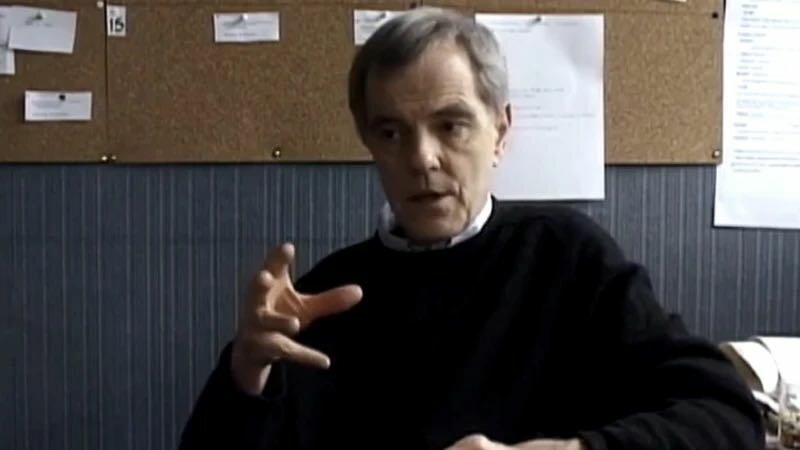
The Universal Clock: The Resistance of Peter Watkins (Geoff Bowie, 2001).
- Peter Watkins has died at 90. The English filmmaker was a pioneer of creative nonfiction cinema, utilizing the visual language of documentary and news magazines to make politically provocative films. He first rose to prominence with The War Game (1965), a BBC-produced pseudo-documentary about the aftermath of a nuclear attack that was initially withdrawn from broadcast due to content concerns, but went on to win the Academy Award for Best Documentary Feature in 1967. Watkins soon resolved to make all of his films abroad, including the countercultural alternative history Punishment Park (1971) in the United States, the biographical feature Edvard Munch (1974) in Norway, and the docudrama La Commune (2000) in France. Watkins spent his life preaching about the insidious influence of mass media, even inspiring John Lennon and Yoko Ono’s anti-war Bed-In protest, having beseeched them to use their celebrity to promote world peace. “That letter just sort of sparked it all off,” Lennon recalled. “It was like getting your induction papers for peace!"
- Diane Ladd has died at 89. The American actress began acting in the theater, making her off-Broadway debut in a 1959 revival production of Orpheus Descending where she met her future husband Bruce Dern. In a film career spanning 70 years, she received three Oscar nominations for her work in Martin Scorsese’s Alice Doesn’t Live Here Anymore (1974), David Lynch’s Wild at Heart (1990), and Martha Coolidge’s Rambling Rose (1991), starring opposite her daughter Laura Dern in the latter two films. She frequently played Dern’s mother on screen, including in Alexander Payne’s Citizen Ruth (1996) and Mike White’s HBO series Enlightened (2011–13). Ladd also made key supporting turns in White Lightning (1973), Chinatown (1974), and Inland Empire (2006). “She was the greatest daughter, mother, grandmother, actress, artist and empathetic spirit that only dreams could have seemingly created,” said her daughter. “We were blessed to have her.”
- Lee Tamohori has died at 75. The New Zealand director spent the 1970s and ’80s working on various Australian and New Zealand productions, working as a first assistant director on Geoff Murphy’s Utu and Nagisa Oshima’s Merry Christmas, Mr. Lawrence (both 1983). His first feature as director, Once Were Warriors (1994), about the tribulations of an urban Māori family, became the highest-grossing film in New Zealand history. He also found commercial success in Hollywood with the David Mamet-penned survival thriller The Edge (1997) and Die Another Day (2002), Pierce Brosnan’s last turn as James Bond. His final feature, The Convert (2023), starred Guy Pearce as a nineteenth-century British missionary who becomes involved with local Māori tribes, marking the director’s return to his Indigenous narrative roots.
- Tatsuya Nakadai has died at 92. The actor, who would become one of the all-time greats in Japanese cinema, was working as a Tokyo shop clerk when he was discovered by director Masaki Kobayashi. He went on to collaborate with Kobayashi on eleven features, including The Human Condition trilogy (1959–61), Harakiri (1962), and Kwaidan (1964). Though he made an uncredited cameo in Akira Kurosawa’s Seven Samurai (1954), Nakadai began working with the filmmaker in earnest starting with Yojimbo (1961), where he costarred opposite Toshiro Mifune as the younger brother of a rebellious gang leader. He continued to act opposite Mifune in Kurosawa’s Sanjuro (1962) and High and Low (1963) as well as Kobayashi’s Samurai Rebellion (1967). Kurosawa brought Nakadai back into the fold with lead performances in two of the director’s most acclaimed late works, Kagemusha (1980) and Ran (1985), the latter of which garnered him global acclaim and recognition. In later years, Nakadai spent much of his time at Mumeijuku, his theater company and acting school, which he founded in 1975.
RECOMMENDED READING
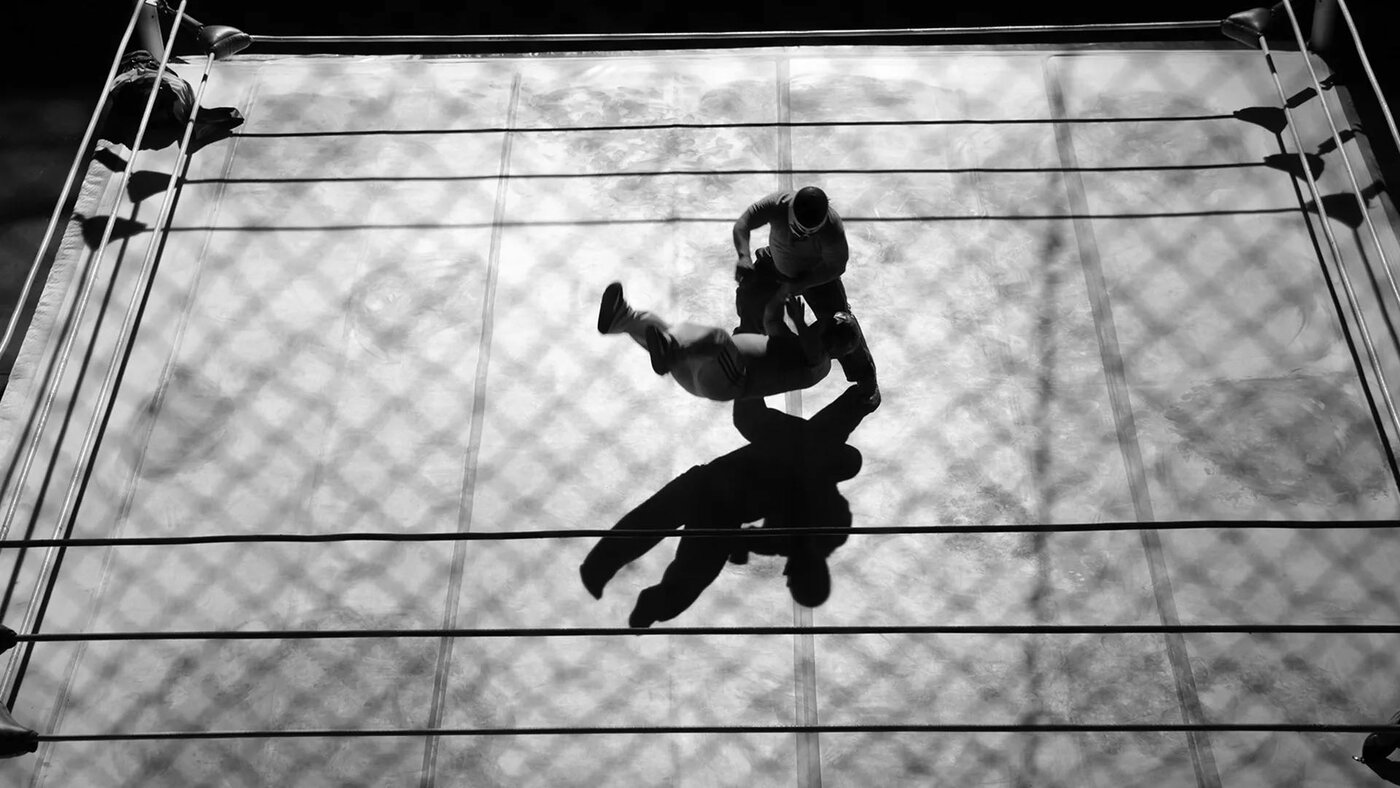
Bleak Street (Arturo Ripstein, 2015).
- “I went to Buñuel’s house and rang the doorbell. He opened the door and asked me who I was. Back then, being the son of a producer meant you were certifiably stupid. All of my peers, sons of producers, were slackers and idiots who only wanted to make money. I told Buñuel I wanted to be a film director and he shut the door in my face.” For Film Comment, Nicolas Pedrero-Setzer interviews Mexican filmmaker Arturo Ripstein on the occasion of a retrospective at the Brooklyn Academy of Music.
- “We’ve been understandably inundated in recent years with images of the destruction in Gaza, but for all the urgency of such images, it is also bracing to be reminded that there have always been people here—everyday people living their lives, often amid the most unimaginable chaos.” For Vulture, Bilge Ebiri reports on a screening of Palestine: A Revised Narrative, a 30-minute film featuring clips shot on 35mm between 1914 and 1918 by British Forces in Palestine, at the Pordenone Silent Film Festival in Northern Italy.
- “In the work of the Hong Kong directors John Woo and Ringo Lam or in Jerry Bruckheimer productions ... we were experiencing a variant of the aesthetic excitement that Sontag claimed was no longer possible.” For the London Review of Books, Leo Robson recounts his adolescent cinephilia through the work of critics including Pauline Kael and Susan Sontag. Robson also recently paid tribute to Laura Mulvey for The New Statesman on the occasion of a BFI retrospective dedicated to the feminist theorist.
- “In an age ruled by constant broadcasting, live-streaming and artificial intelligence, The Clock feels less like a nostalgic homage to the past than a rigorous depiction of how our obsession with images defines both collective memory and the present.” For Frieze, the publication’s collaborators count down the 25 defining pieces of contemporary art across the last quarter century, including such moving-image works as Harun Farocki’s Serious Games I–IV (2009–10), Ryan Trecartin’s I-Be Area (2007), and Bouchra Khalili’s The Mapping Journey Project (2008–11).
RECOMMENDED EVENTS
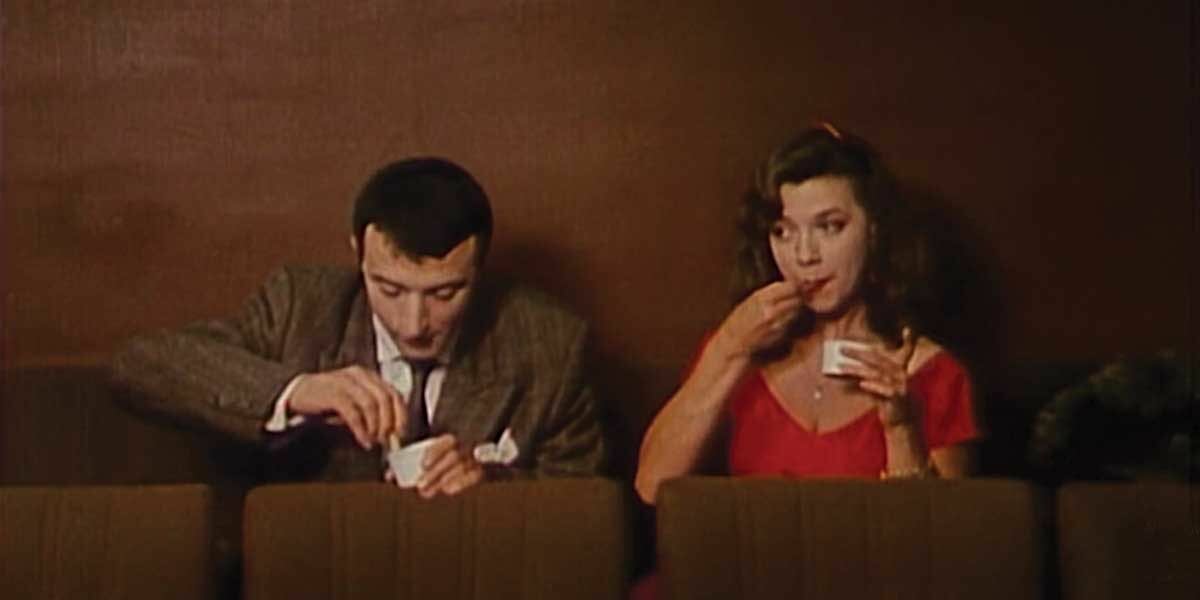
The Seats of the Alcazar (Luc Moullet, 1989).
- Toronto, through November 23: TIFF Cinematheque presents Luc Moullet: High Altitude, a retrospective dedicated to one of the last living filmmakers of the Nouvelle Vague. Upcoming screenings in the series include his sophomore feature, The Smugglers (1967), and his bicycling comedy, Up and Down (1993), introduced by writer David Davidson.
- Berlin, through May 3, 2026: Julia Stoschek Foundation presents Mark Leckey: Enter Thru Medieval Wounds, an extensive solo exhibition featuring over 50 works by the British artist, including Fiorucci Made Me Hardcore (1999) and Cinema-in-the-Round (2006–08), for which he received the prestigious Turner Prize.
- London, through February 8: The Serpentine South Gallery presents Peter Doig: House of Music, which pairs the British painter’s recent works with a soundscape inspired by Trinidadian sound-system culture, using salvaged cinema speakers.
RECOMMENDED VIEWING
- Another Screen and Cinelimite present Six Times Woman: In the Shadow of a Dictatorship, a program featuring recently digitized works of Brazilian feminist cinema, including a new 2K scan of Helena Solberg’s debut film, A Entrevista (1966). The program features a lengthy introduction written by Hanna Esperança and interviews and essays accompanying each work.
- To kick off a monthlong series of self-portraits, Le Cinéma Club presents Being John Smith (2024), an autobiographical short film in which the British experimental filmmaker wrestles with the generic nature of his name.
- Film at Lincoln Center presents the 2025 Amos Vogel Lecture, an annual talk given at the New York Film Festival by a filmmaker “who embodies the subversive spirit of Vogel’s cinephilia.” This year, Lucretia Martel discussed her filmmaking philosophy.
- Janus Films presents a trailer for Bi Gan’s Resurrection (2025), a sci-fi drama set in a future where humanity can no longer dream, save for one oneiric outcast (Jackson Yee). The film will enter limited release on December 12.
RECENTLY ON NOTEBOOK
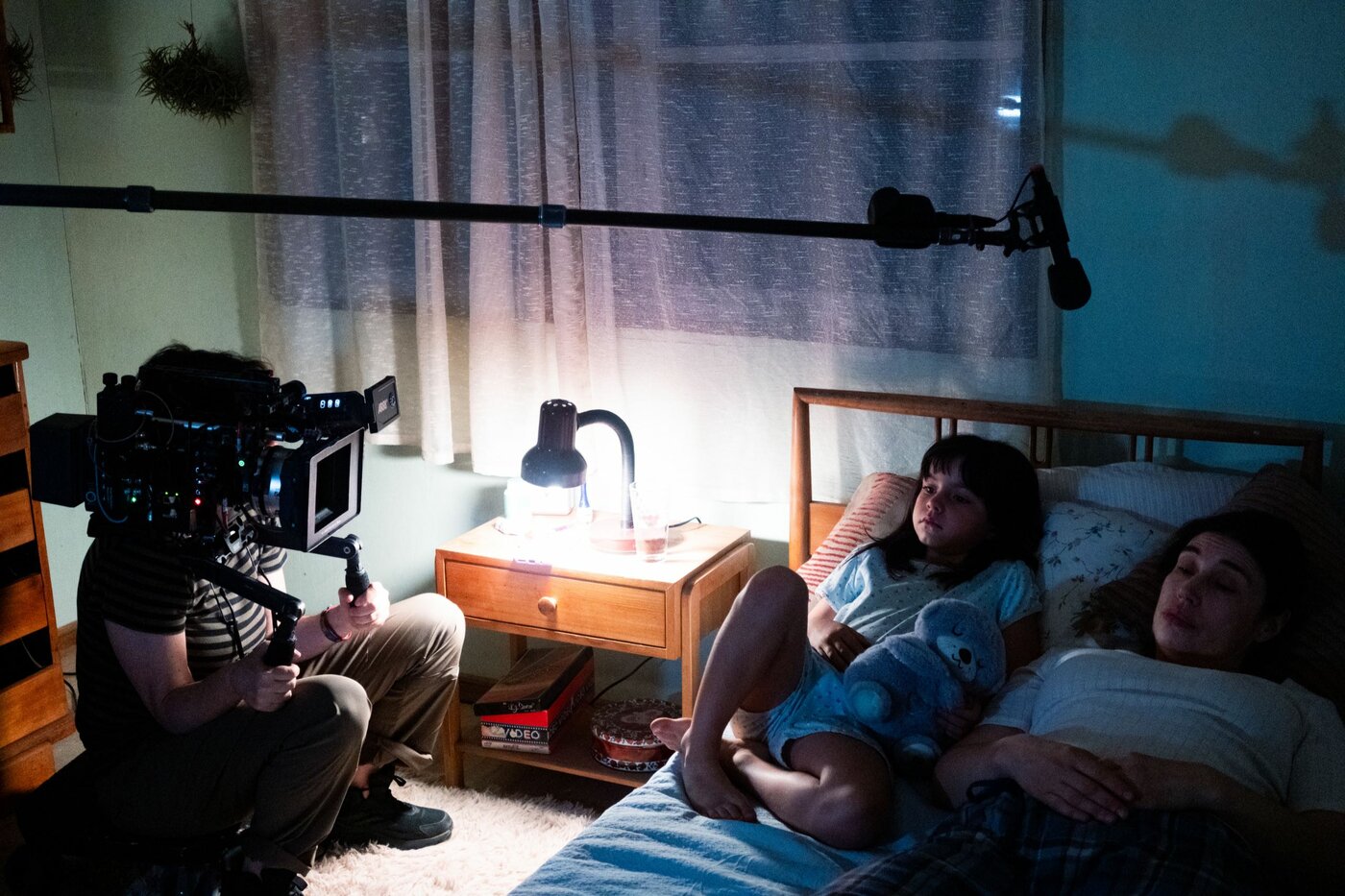
Behind the scenes of Swim to Me (Dominga Sotomayor, 2025). Photograph by Sofia Bohdanowicz.
- “Sotomayor shot with minimal equipment and abundant natural light, creating a space where actors can inhabit and immerse themselves in the environment without interruption.” Sofia Bohdanowicz shares photos and reflections from the set of Dominga Sotomayor’s Swim to Me (2025).
- “That fluidity, with time and myth and mystery repeating itself, is overpowering.” Our roundtable of critics respond to Dracula (2025), Radu Jude’s three-hour riot of horror, comedy, history, politics, sex, and death.
- “At its most acute, our love of the movies can lure us into viewing experiences our friends and loved ones would deem profoundly questionable.” Ryan Meehan reviews Ed Wood: Made in Hollywood USA, Will Sloan’s new critical biography of the midcentury Z-movie director.
- Our global festival coverage continues with Laura Staab on this year’s Viennale, Phil Coldiron on the New York Film Festival’s Currents slate, and Christopher Small on Busan.
WISH LIST
- Olivia Laing’s latest novel, The Silver Book, is a fictionalized account of the life of celebrated 1970s Italian costume designer Danilo Donati.
- Two of Me: Notes of Living and Leaving, Eleanor Coppola’s posthumous memoir about her struggle to balance her professional and familial roles, is available to preorder from Mack.
EXTRAS
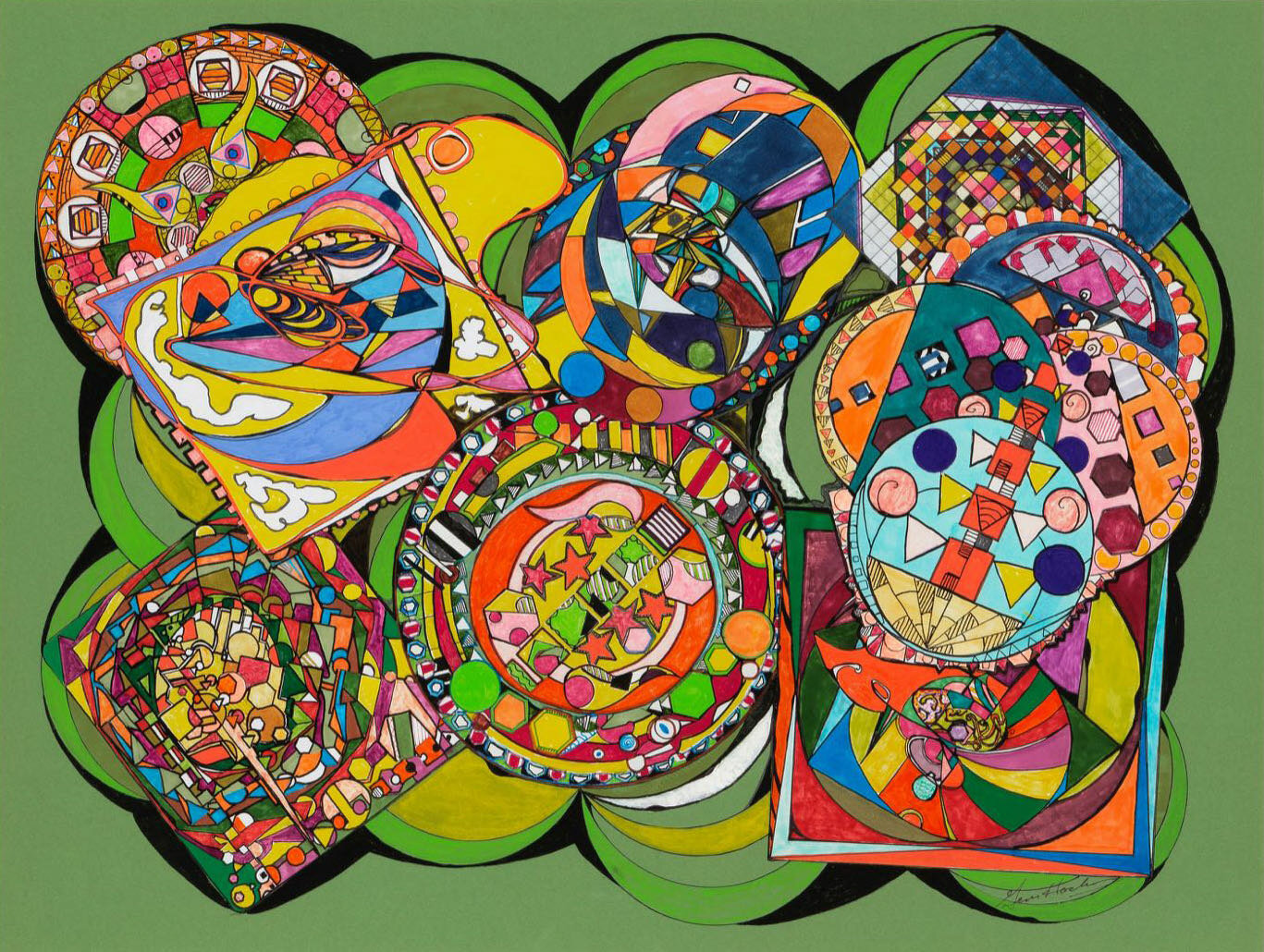
Abstract (Gene Hackman, c. 2022).
- Gene Hackman’s art collection, including some original paintings, are currently available at auction from Bonhams.
- The Library of Congress has made their extensive collection of classic film magazines and periodicals available online, searchable by publication name, film title, or person’s name. (With thanks to Film Buff Online for the tip.)