Koya Kamura’s Winter in Sokcho is now streaming on MUBI.
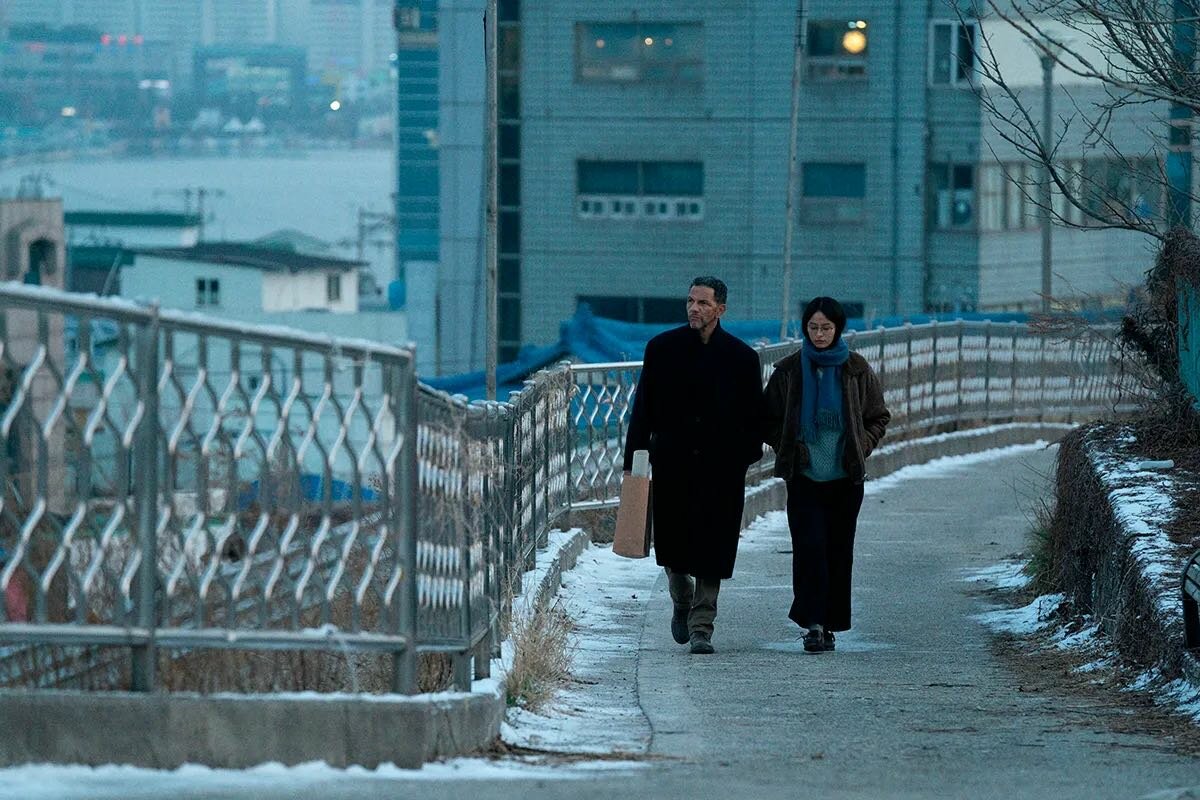
Winter in Sokcho (Koya Kamura, 2024).
I discovered Elisa Shua Dusapin’s Winter in Sokcho while I was stuck writing another screenplay, Evaporés. That story followed a man who disappears, a father who abandons his daughter overnight for various reasons. In Winter in Sokcho, I found the perfect counterpoint: a daughter who has grown up without her father. The two stories seemed to face each other, like mirrors. One about escape, the other about absence.
So, I decided to adapt the novel. As the film’s central themes are identity, mixed heritage, and belonging, I immediately wanted to write it with Stéphane Ly-Cuong. We share the same questions, the same unease: Where do we belong when we come from more than one place?
Elisa Shua Dusapin is French Korean, I’m French Japanese, and Stéphane is a second-generation Vietnamese living in France. Three different journeys, but the same feeling of in-between. That became the pulse of the writing, and the film’s quiet obsession.
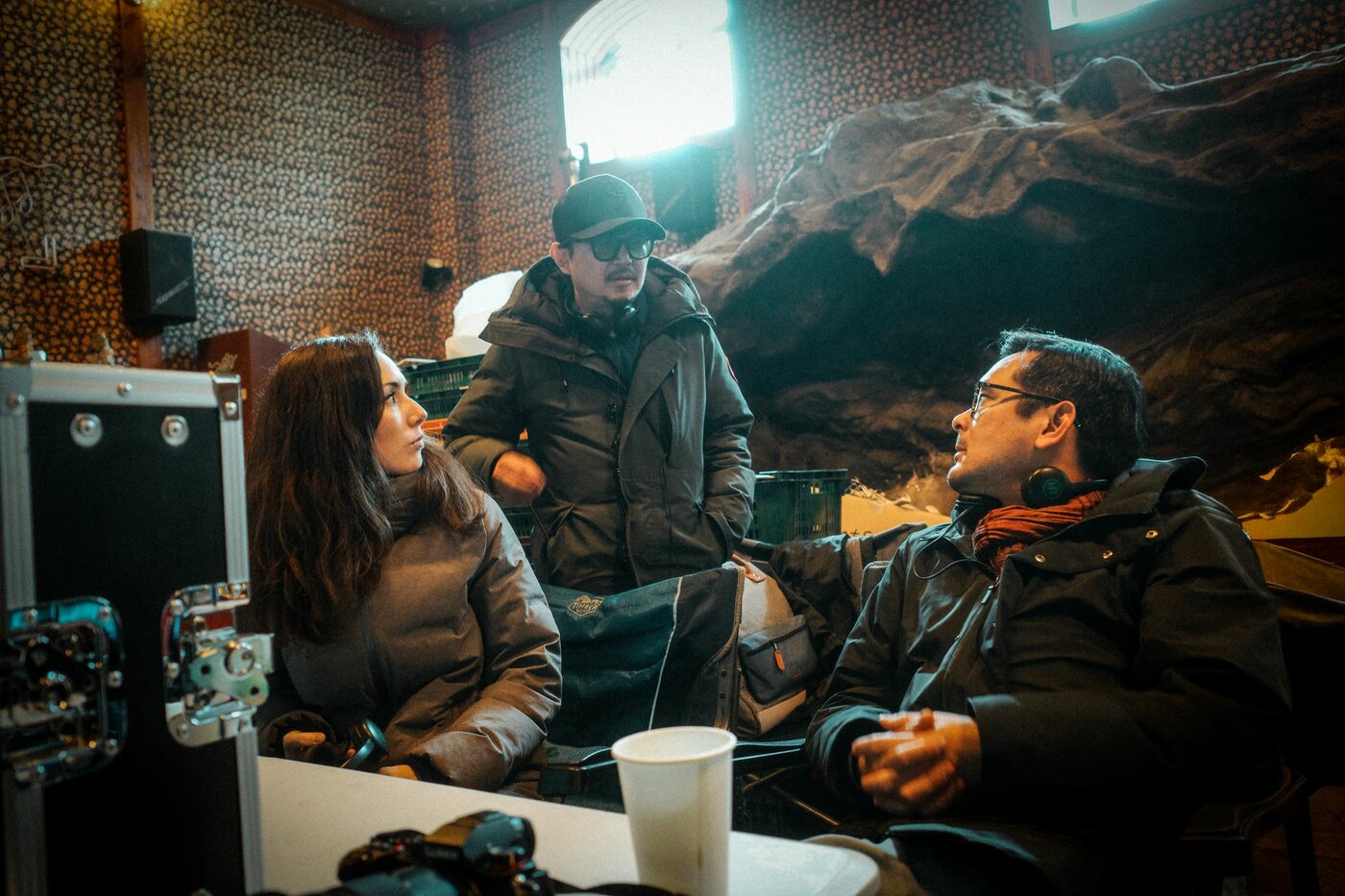
The book’s author, Elisa Shua Dusapin, coproducer Yoonseok Nam, and cowriter Stephane Ly-Cuong on set.
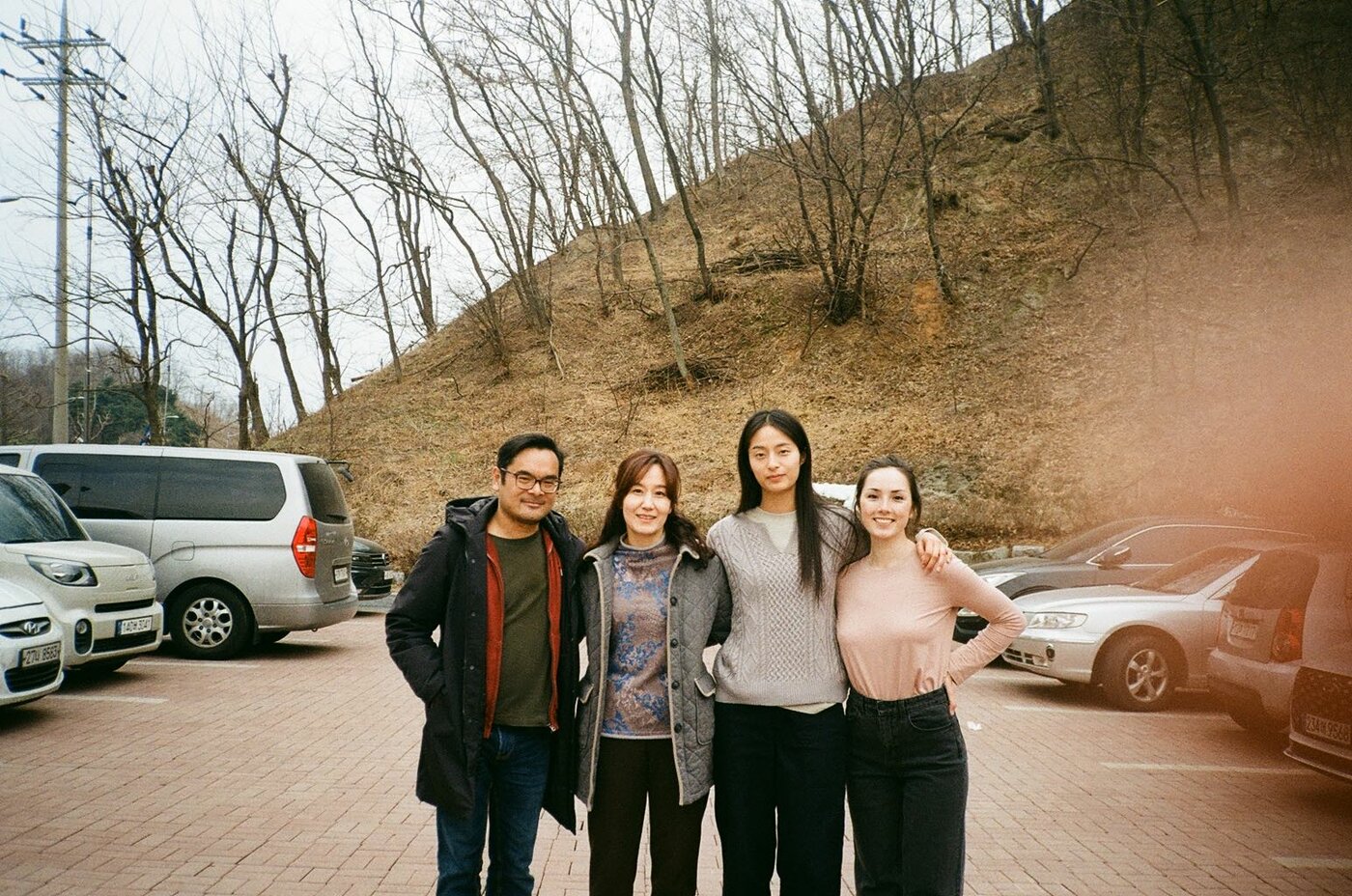
Stephane Ly-Cuong, Mihyen Park (the mother), Bella Kim (Soo-ha), and Elisa Shua on set.
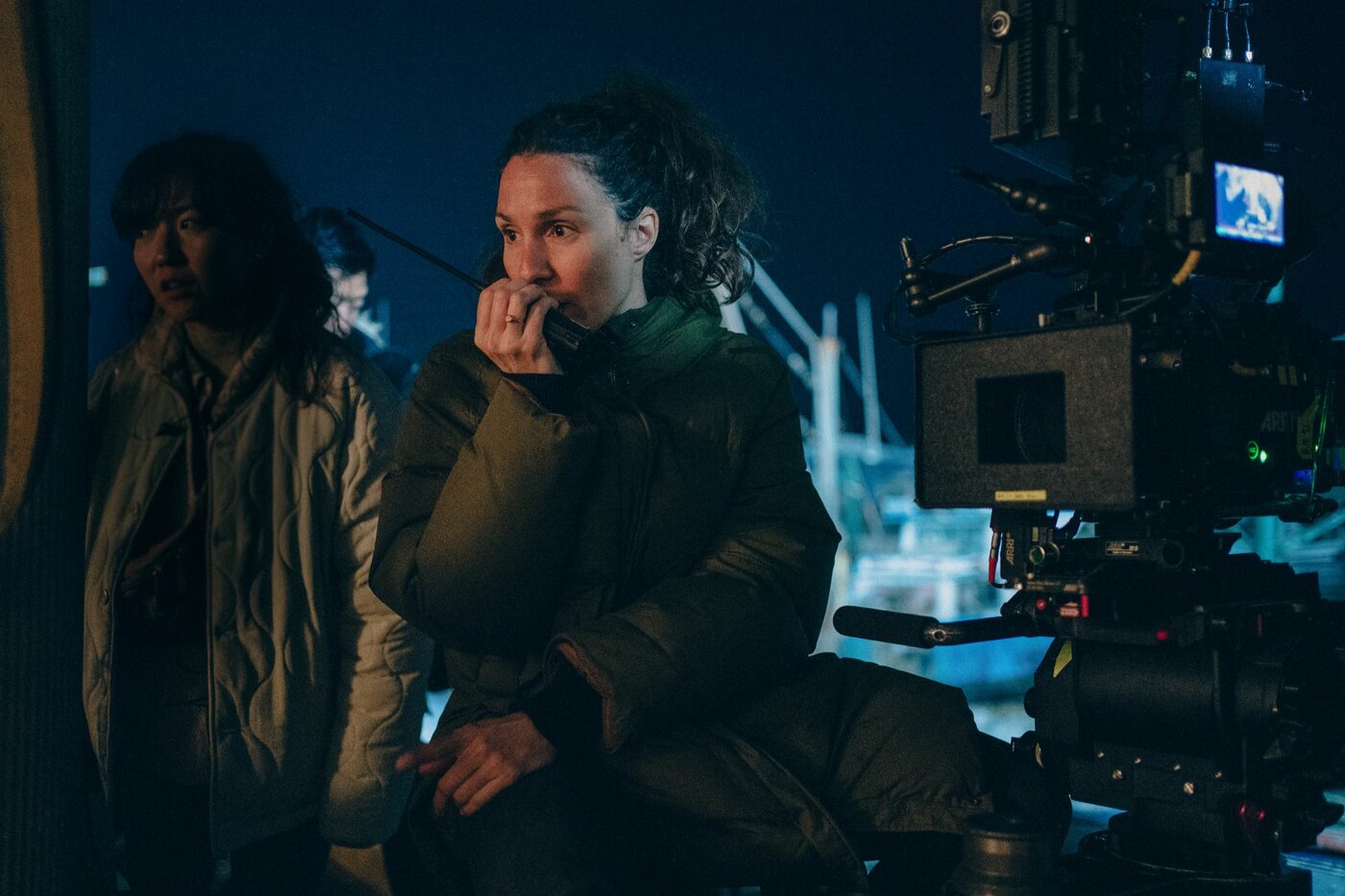
Director of photography Élodie Tahtane on set.
I worked with the cinematographer Élodie Tahtane. Our artistic connection was immediate, almost instinctive. We shared the same sensibility, the same taste for restraint and silence within the image. It was a true joy.
Our first exchanges were built around references. I came in with Maborosi (1995) by Hirokazu Kore-eda, for its fragile, suspended light and the way it captures solitude without ever underlining it. Élodie responded instantly and added another major reference that shaped the film: the paintings of Vilhelm Hammershøi. Women seen from behind, motionless, bathed in a pale winter light. It was exactly what I had imagined for the film.
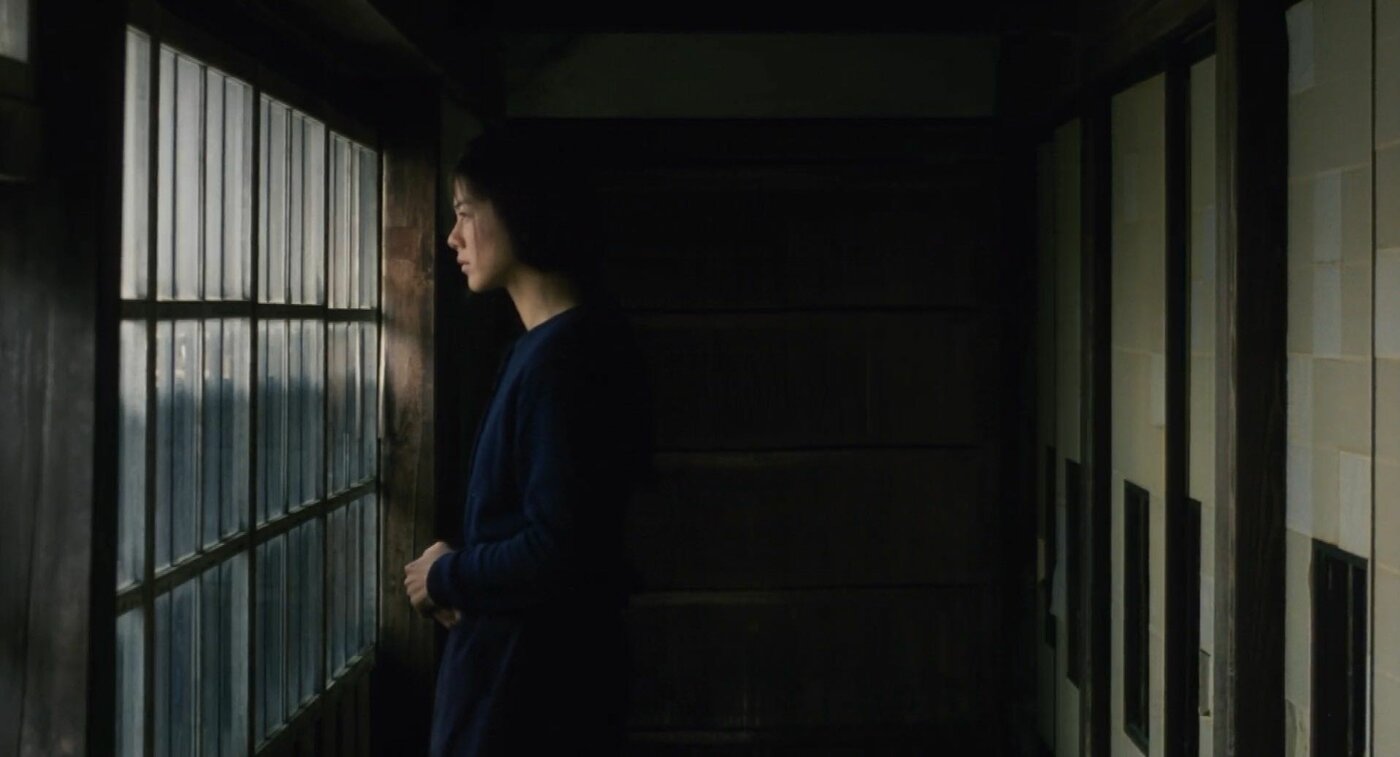
Maboroshi (Hirokazu Kore-eda, 1995).
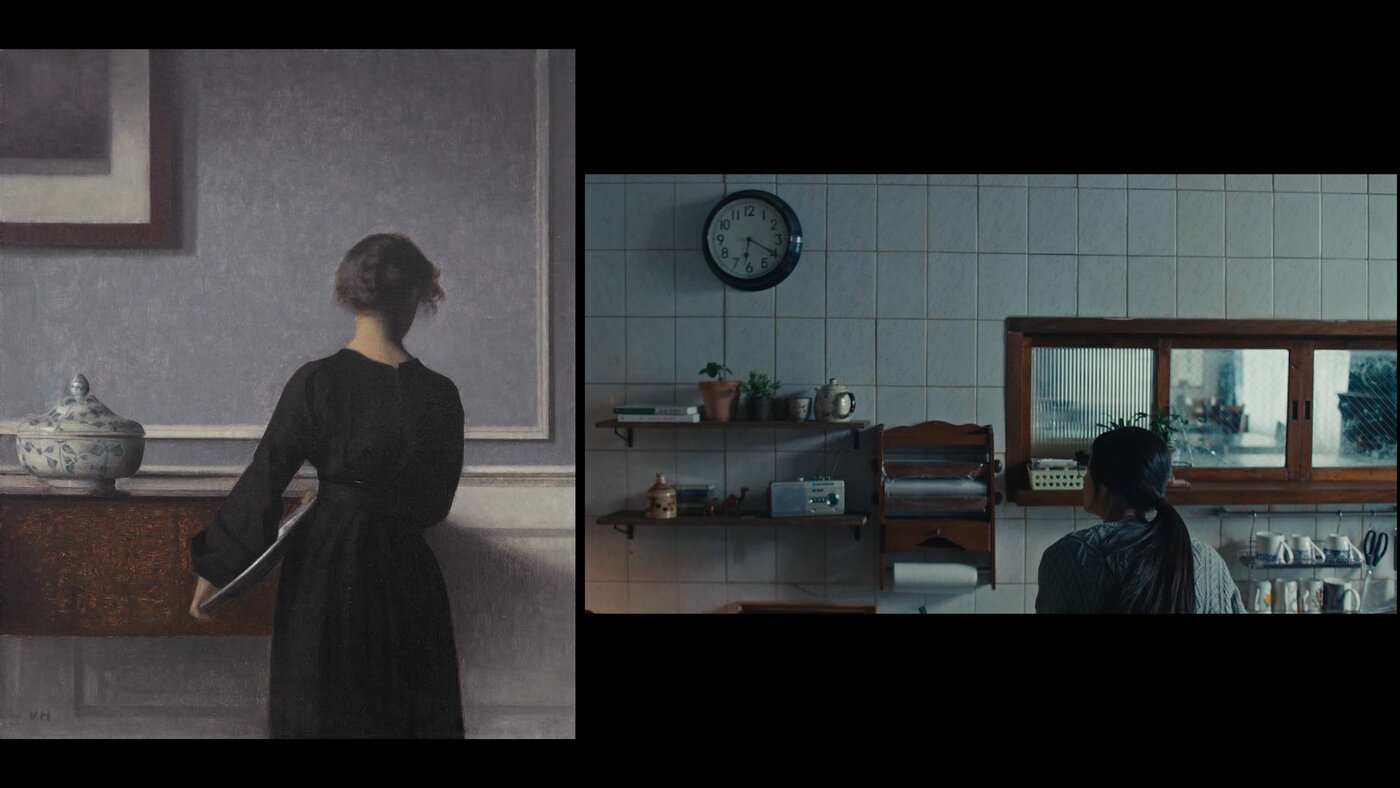
Left: Detail of Interior Strandgade, Sunlight on the Floor (Vilhelm Hammershøi, 1906). Right: Winter in Sokcho (Koya Kamura, 2024).
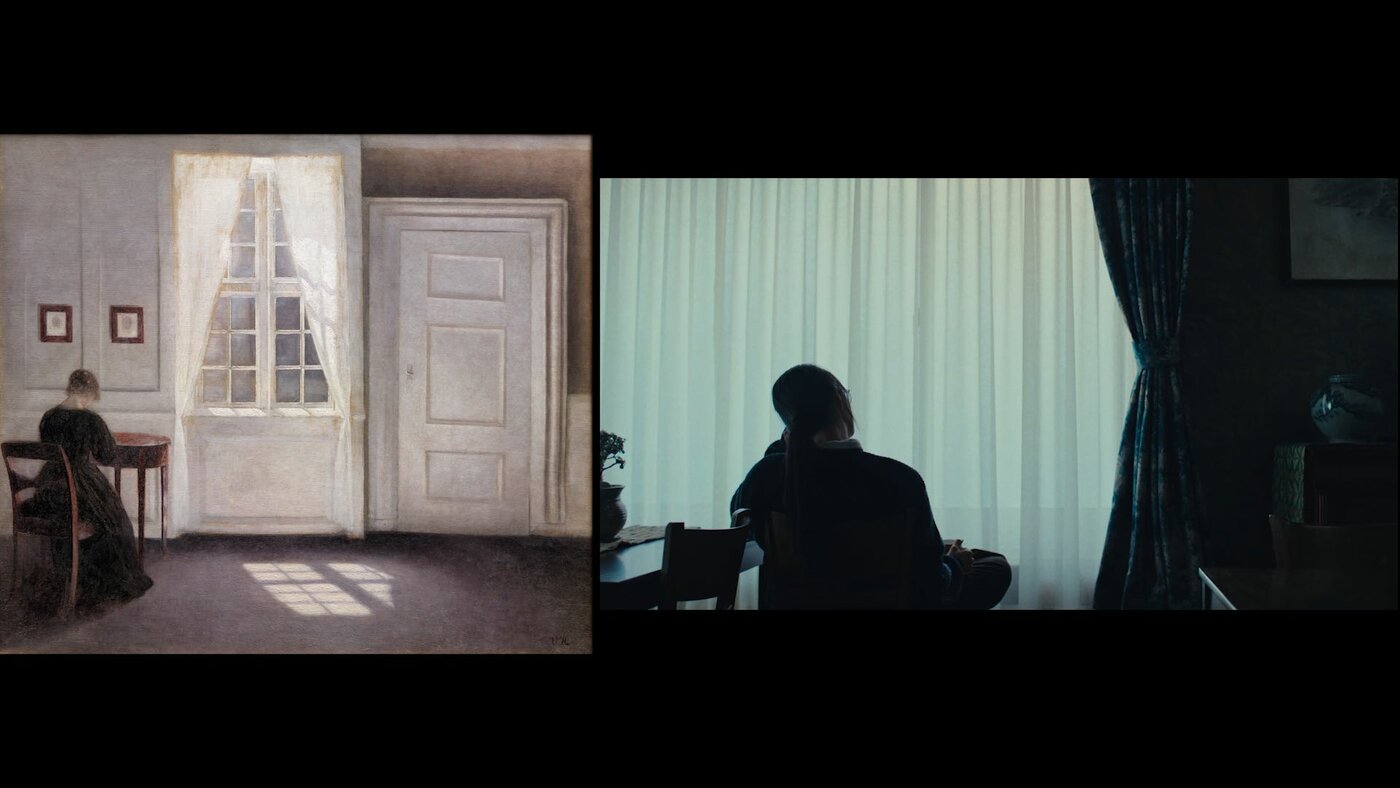
Left: Detail of Interior with Young Woman Seen from the Back (Vilhelm Hammershøi, 1903). Right: Winter in Sokcho (Koya Kamura, 2024).
I then worked alone on a first draft of the shot list, a kind of visual sketch of the film. When I shared it with Élodie, she enriched it immediately, through her sensitivity, her sense of framing, her way of letting light breathe. She brought poetry, elegance, and softness within discipline.
The visual work was done hand in hand with the production designer, Hyein Ki. She brought her own sensitivity and craft to make this world feel both believable and expressive. Through her sets, the story unfolds before the audience’s eyes, quietly, naturally, as if it had always been there.
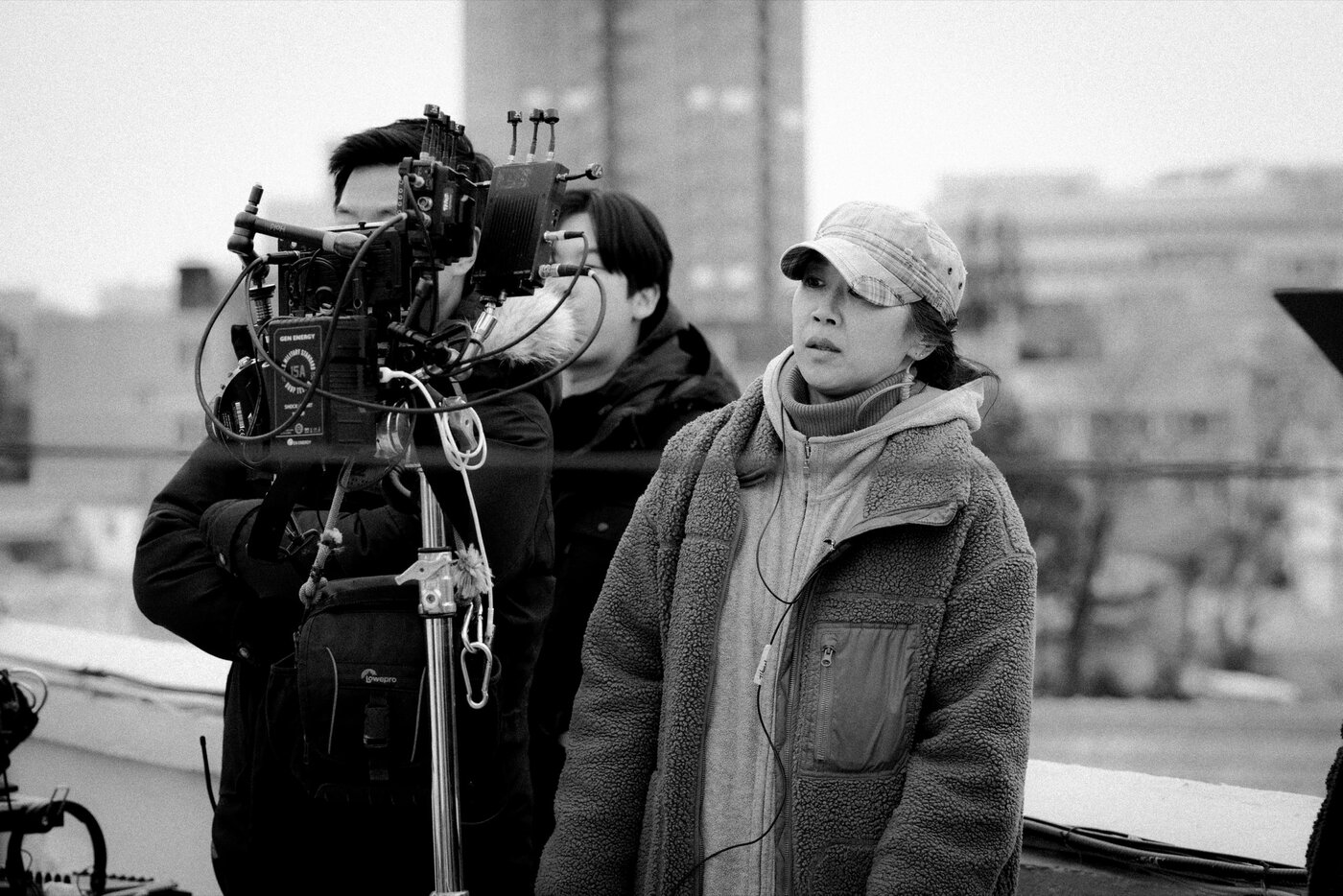
Production designer Hyein Ki on set.
Then came the storyboard. Well, “storyboard” might be generous; they were more like messy little drawings. Ugly, but enough. Those sketches quickly became our daily reference, both for Élodie and the rest of the crew. Each morning we revisited them, then allowed ourselves to go further on set whenever we could.
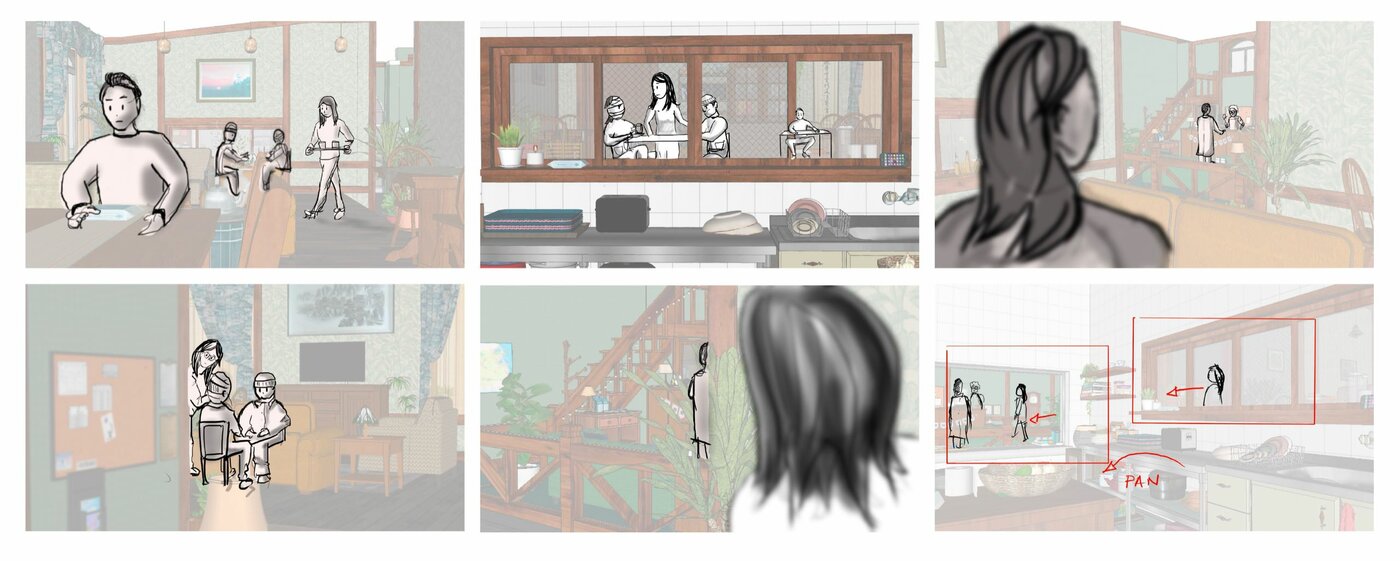
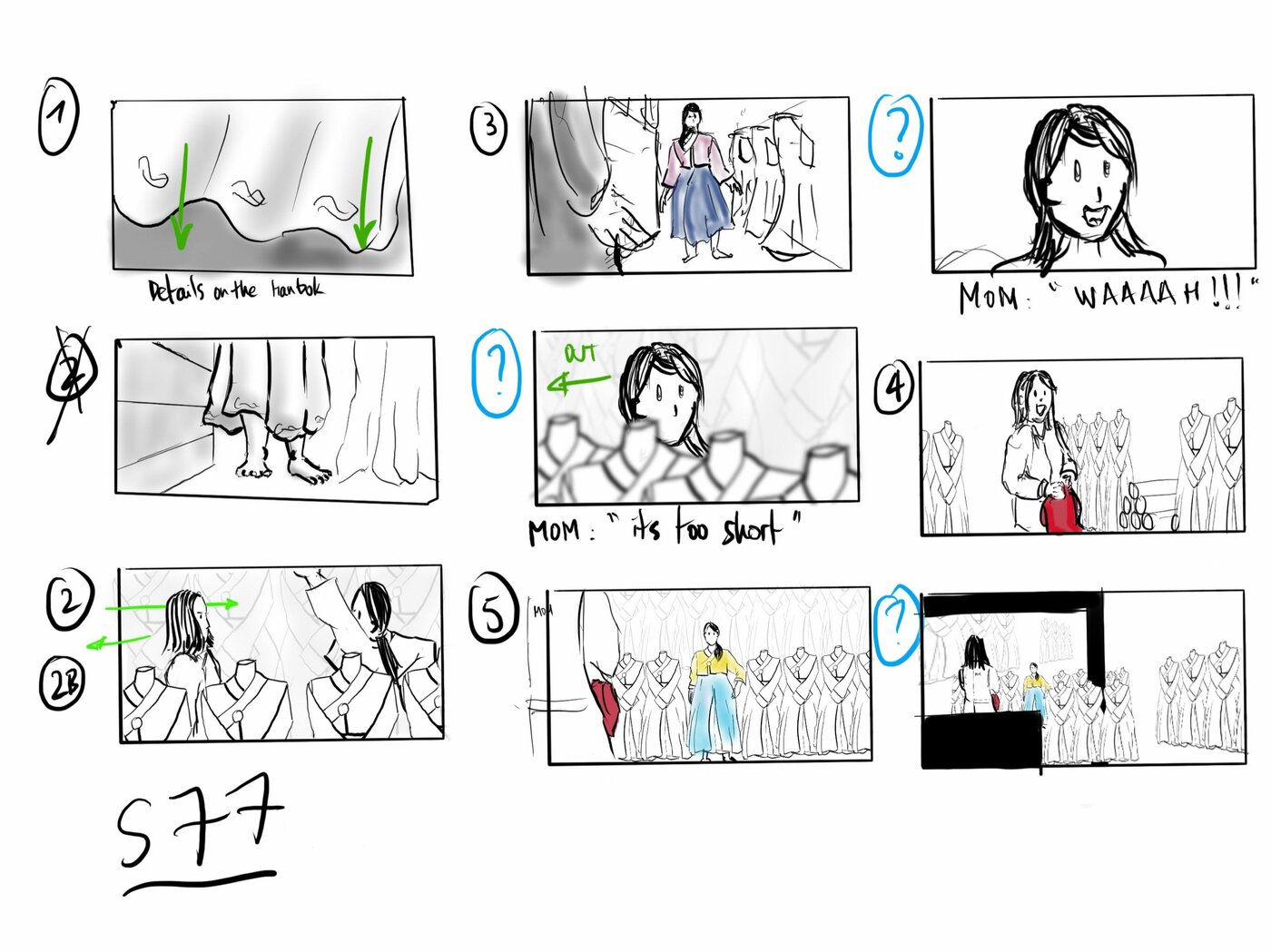
Storyboards for Winter in Sokcho (Koya Kamura, 2024).
The setting of Sokcho held enormous importance for me. It’s a seaside town, overflowing with tourists in summer and almost deserted in winter. I loved that contrast, the feeling of an abandoned place, suspended between seasons.
In a way, it reminded me of the no-go zones of Fukushima, where I had filmed Homesick (2019) after the tsunami: the same stillness, the same fragile beauty. I’m drawn to places like that, where nature feels both present and distant. The sea under the snow, the mountains in the background, the invisible line of the DMZ, the demilitarized zone between North and South Korea. Each carries a quiet tension, something hauntingly out of the ordinary.
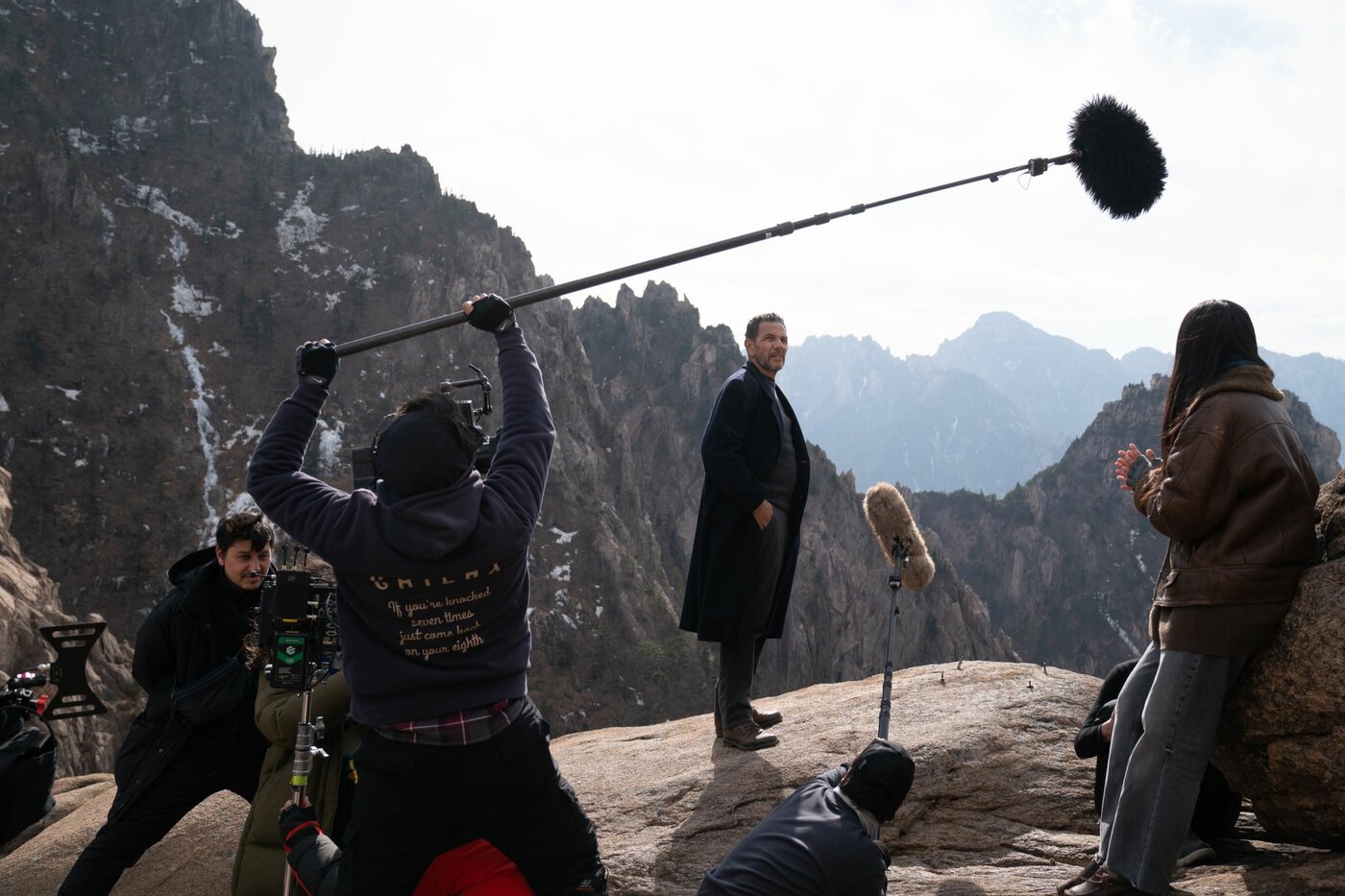
Roschdy Zem (Yan Kerrand) on set.
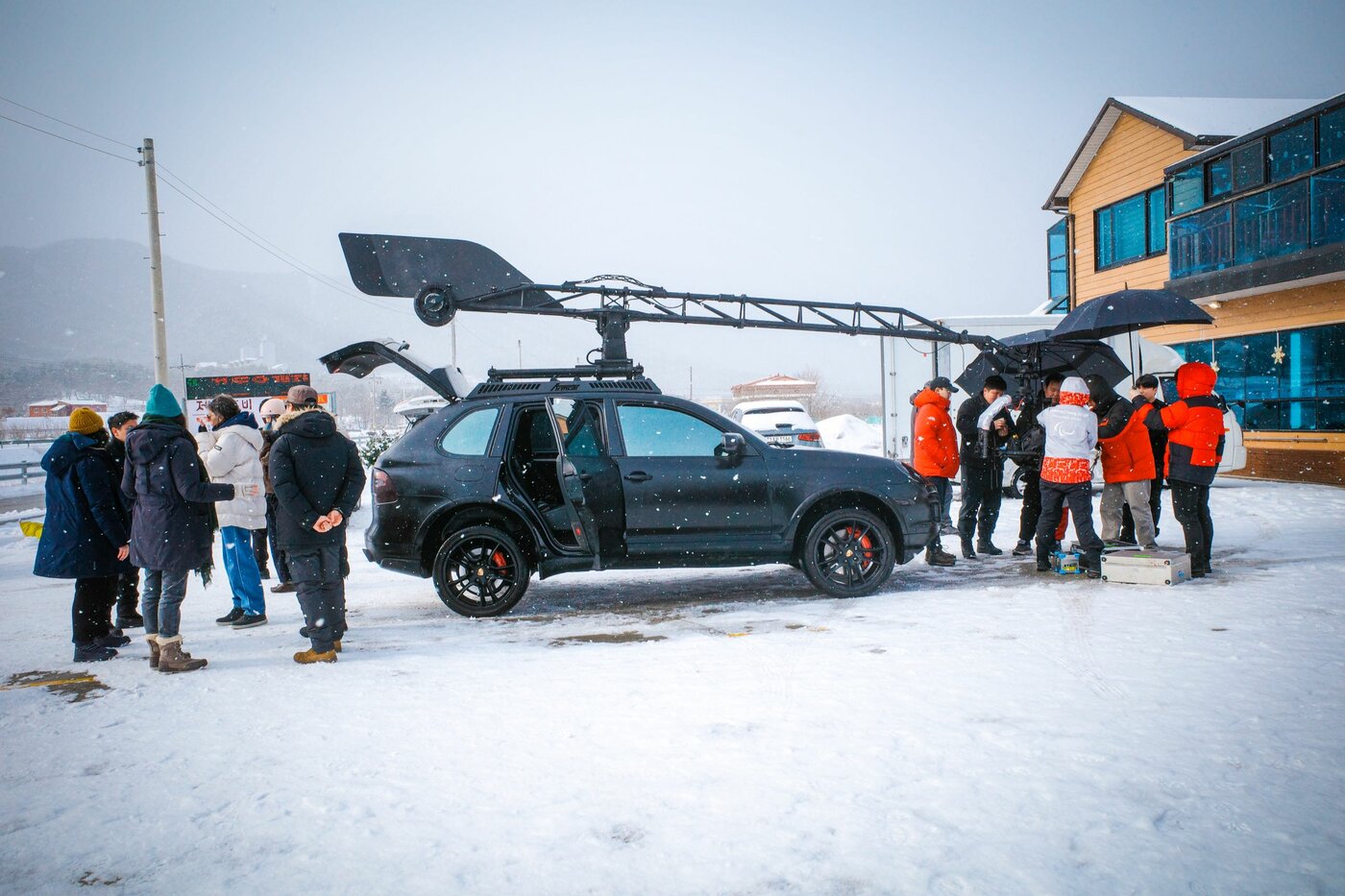
The crew on location.
Part of the film was shot near the DMZ. This place, heavy with history yet almost invisible, brought a quiet tension to the mise-en-scène.
The main character lives on a border, both geographical and interior. That choice of setting made this duality tangible: the calm beauty of the landscape against the lingering scar of a divided country. Filming in those extreme conditions strengthened the realism of the film, but also its poetry.
We filmed part of the story inside the real DMZ Museum, but the checkpoint was recreated. The real ones look like toll gates, efficient and ordinary. I wanted something that felt the opposite: a checkpoint that wasn’t solid, but fragile; not a wall, but a passage. It leads to a road whose end you can’t see, fading into mist. Something more dreamlike than military, more metaphysical than realistic. A border that exists only because someone believes it does.
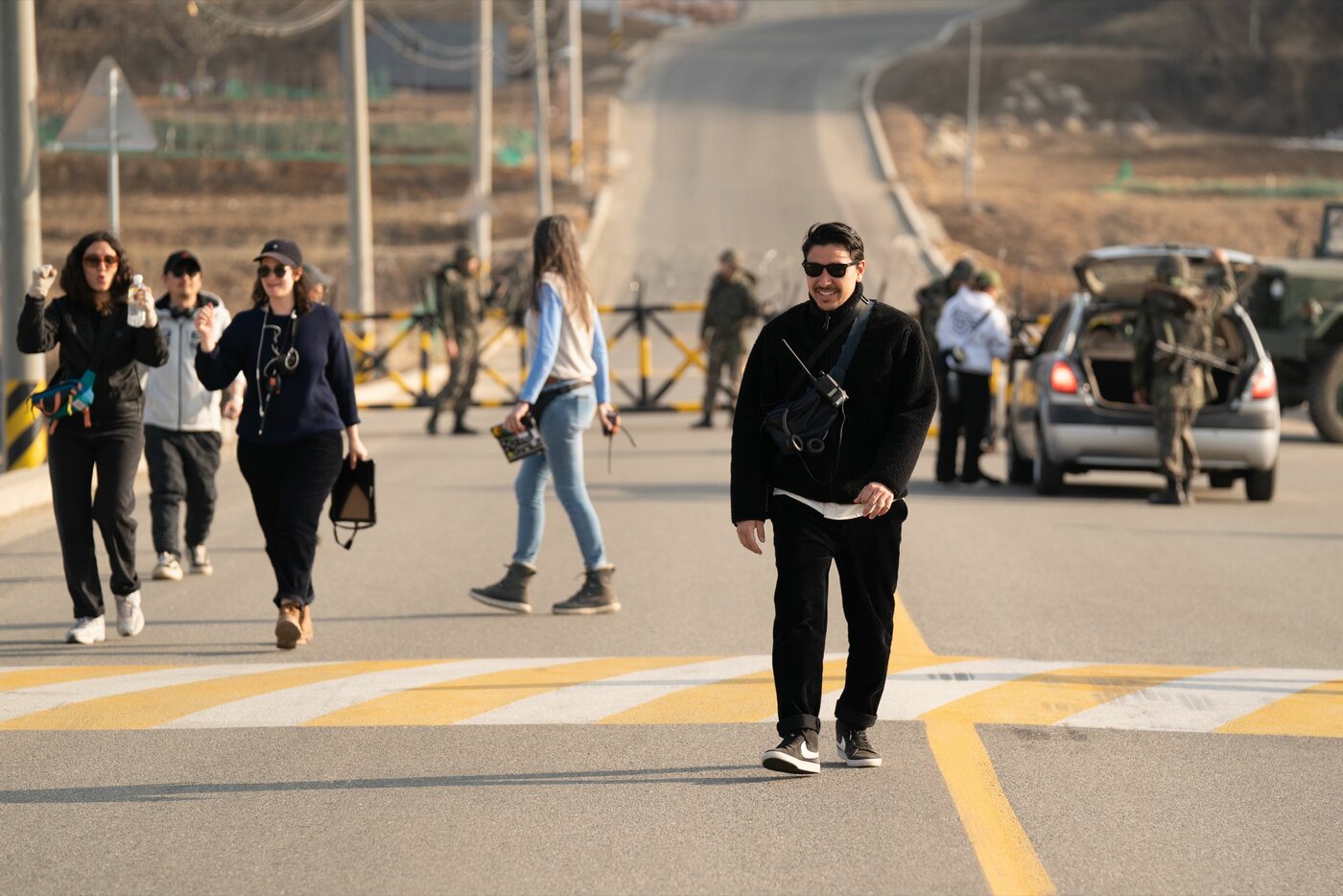
Director Koya Kamura on set.
Élisa Shua Dusapin’s novel is written in the first person. That quiet inner voice brings us close to Sooha’s thoughts, her hesitation. I wanted to preserve that intimacy in the film, but it had to find another language. I didn’t want a voiceover. A voiceover already understands itself; it explains, it organizes. I wanted the opposite. I wanted the audience to feel before they could name what they felt. The heart of the film lies in that uncertain space where emotions haven’t yet taken shape.
Animation became the way to explore that interior world. It speaks through sensation rather than reason, something organic and instinctive. Early in the film, the drawings are abstract, almost unreadable. As Sooha begins to open up, to see more clearly, the drawings become more figurative, as if her inner landscape were slowly coming into focus.
I knew right away I wanted to work with Agnès Patron, whose film L’heure de l’ours (2019) I deeply admire. Stéphane Ly-Cuong and I had written the animated sequences into the script, but Agnès transformed them completely. She gave them texture, breath, and rhythm. Her drawings extend the film like a waking dream.
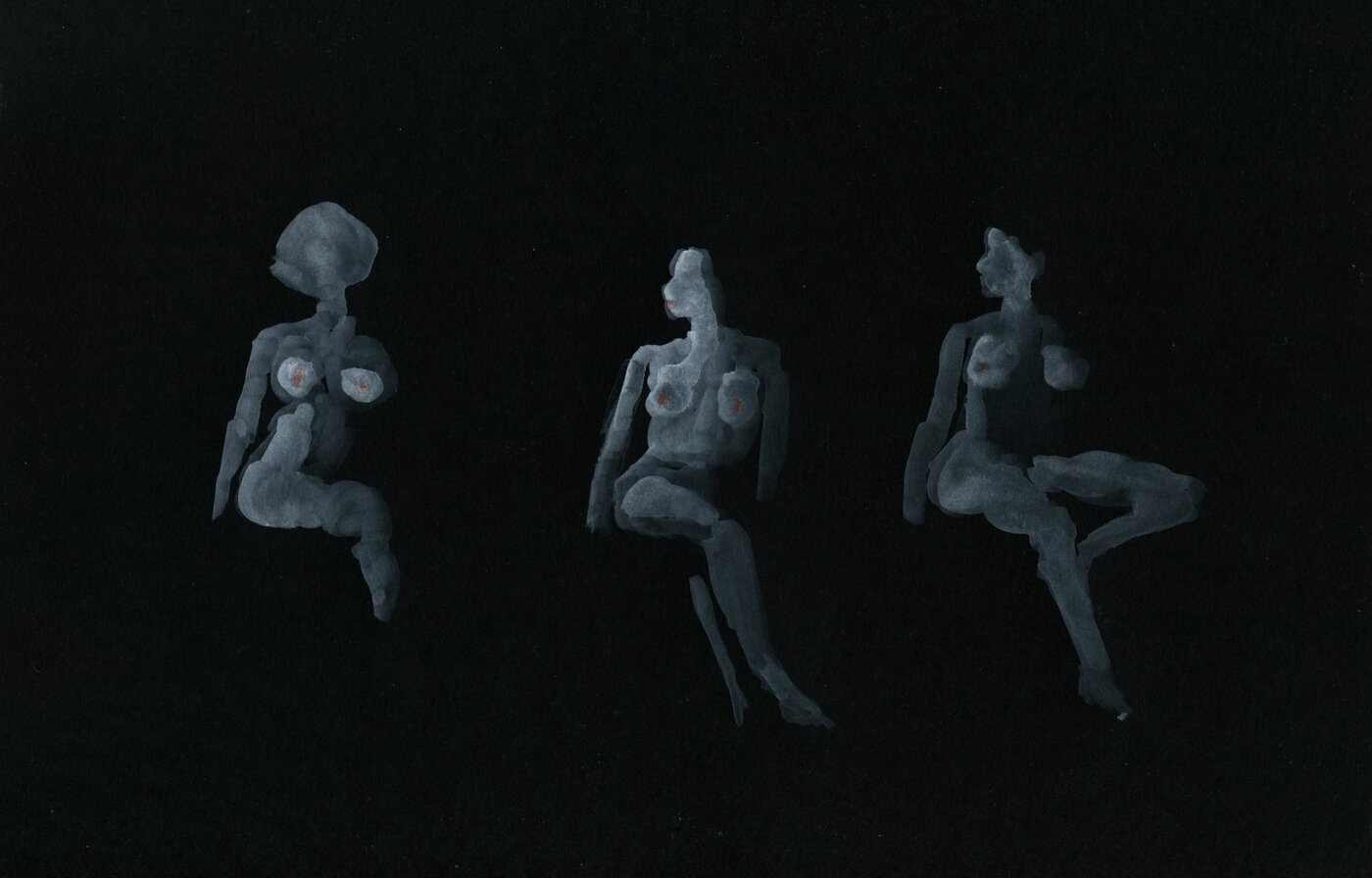
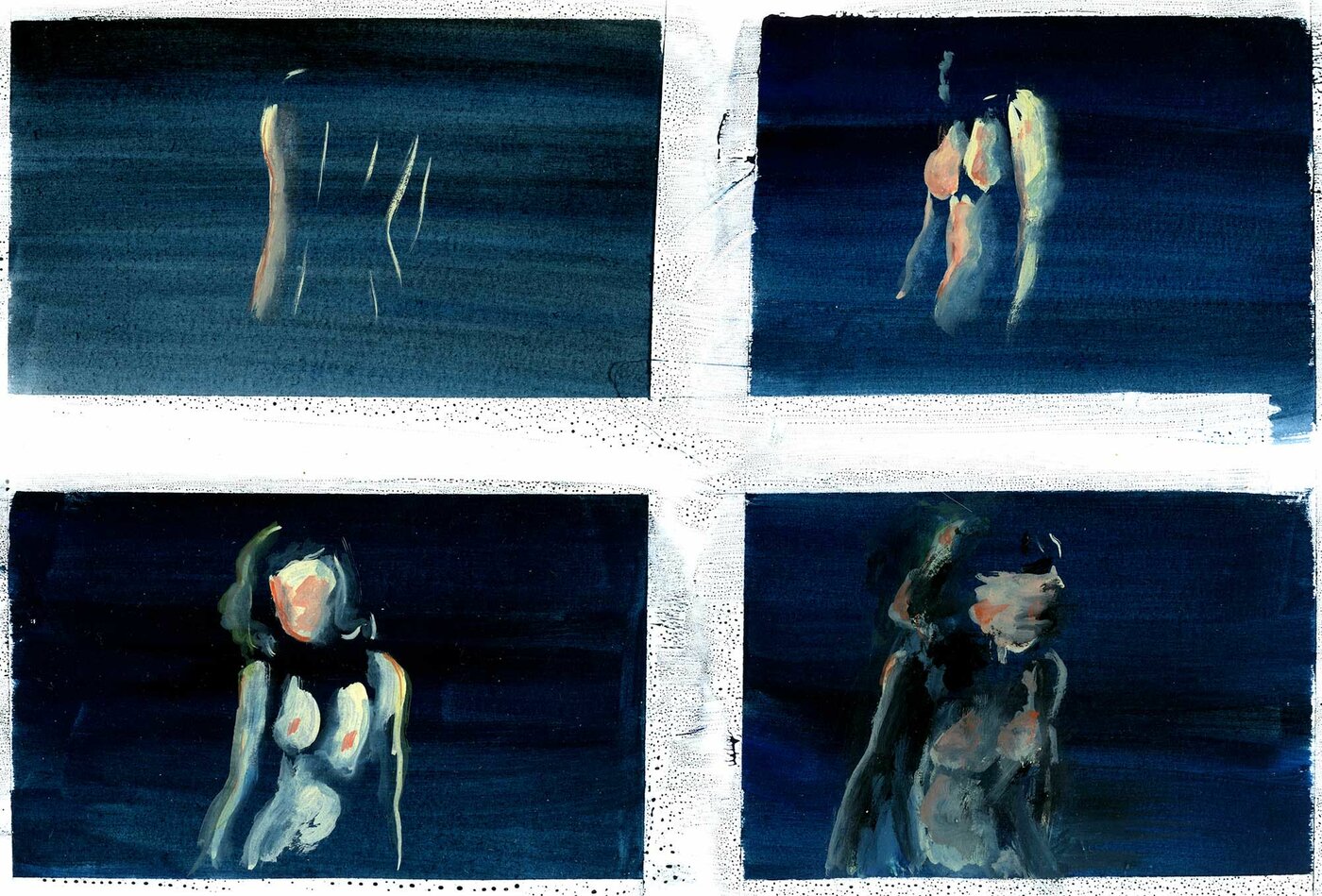
Preparatory sketches by Agnès Patron.
Then Agnès and her team began the actual animation: twelve drawings for every second of film. Drawing, painting, cutting, coloring: a colossal, almost meditative task. Every frame was created by hand, one image after another, giving these sequences a living vibration. You can feel the matter, the trace, the human presence behind every movement.
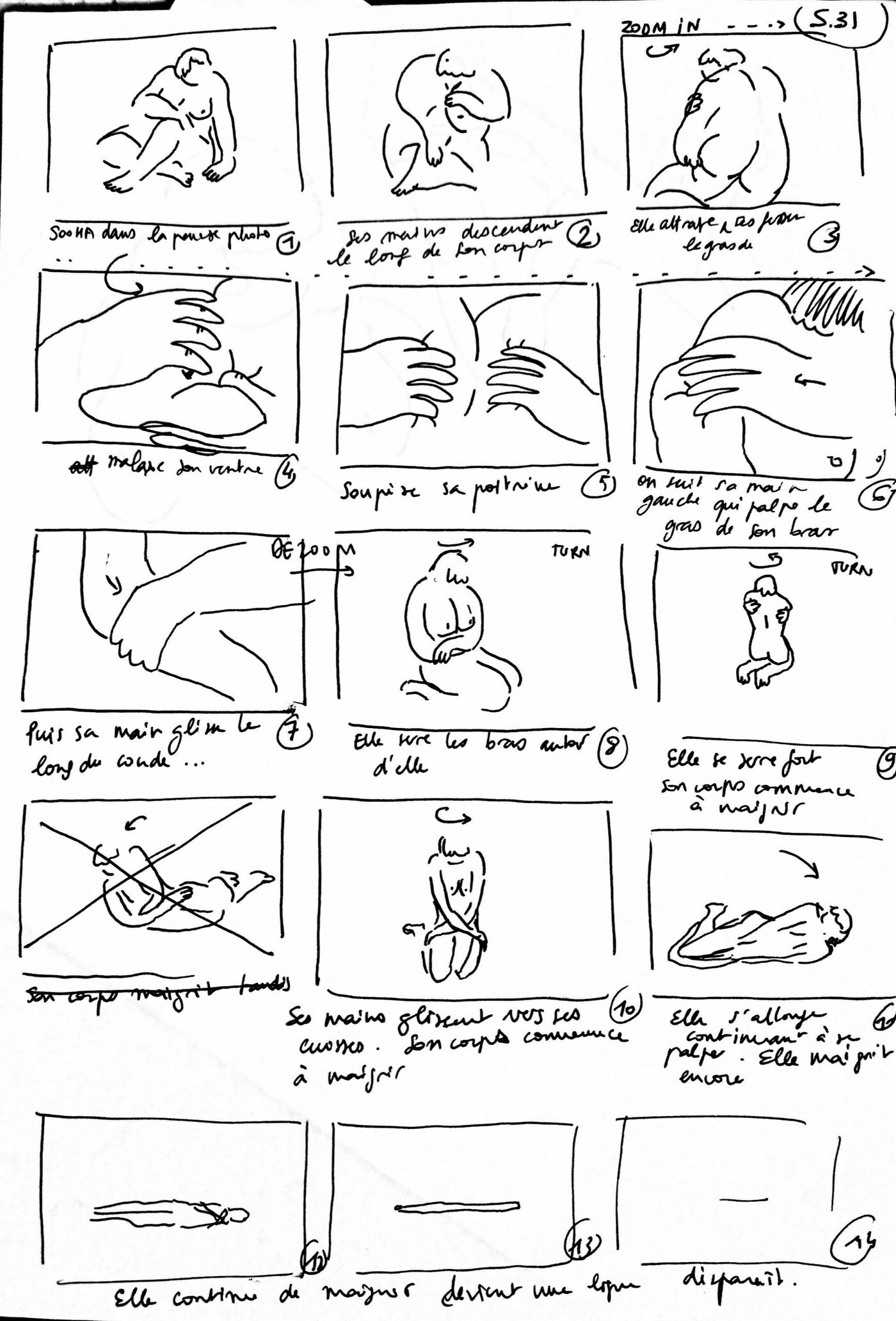
Animation storyboard by Agnès Patron.
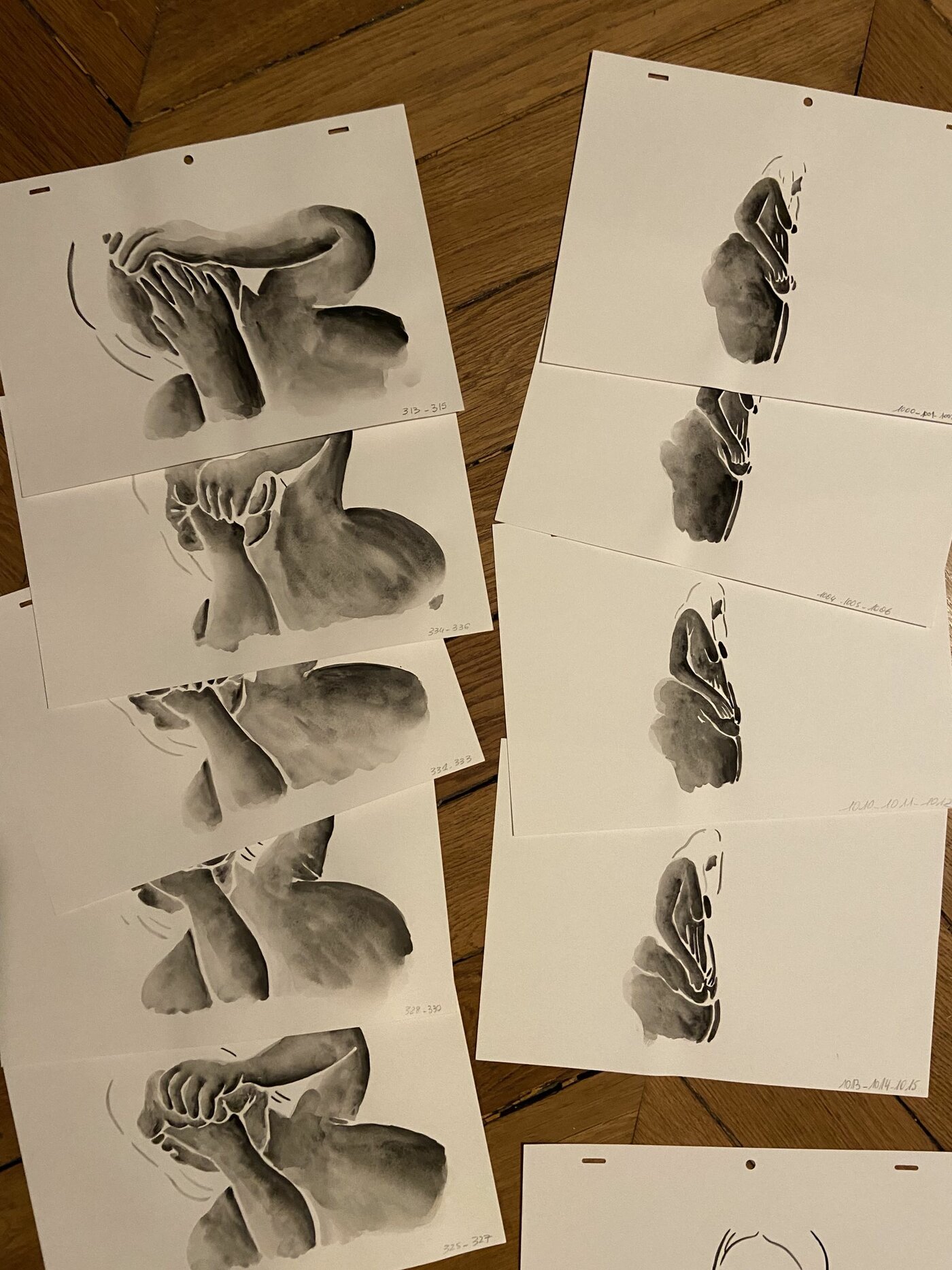
A handful of the 6,000-some drawings featured in the film.
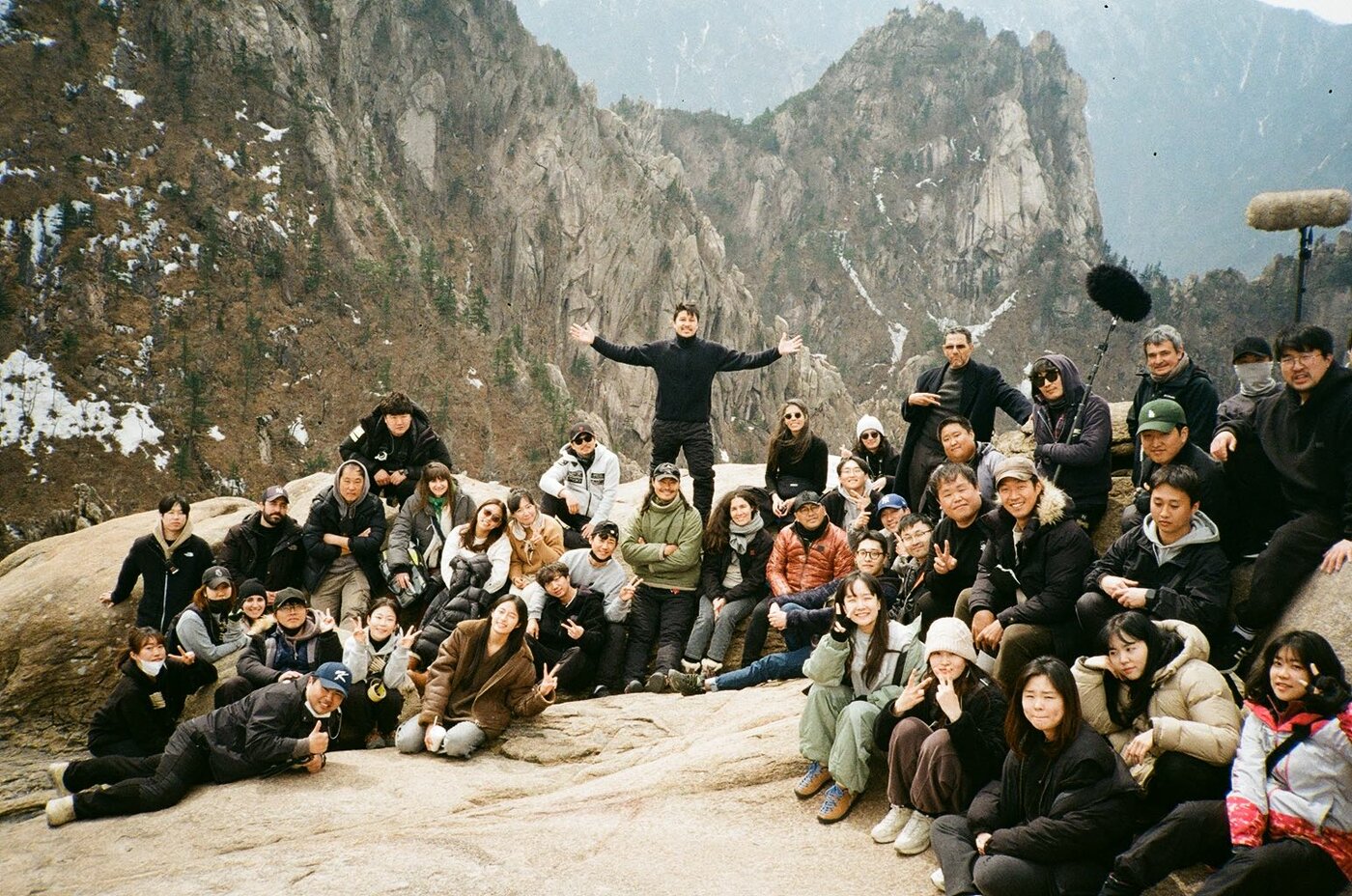
Cast and crew on set.
I’m deeply grateful to my producers, Fabrice Préel-Cléach and Yoon-seok Nam, for their trust and constant support throughout this journey.
The film was made through a close collaboration between the Korean and French teams, who worked together with generosity and care. It was a gentle shoot, sensitive and human, like a kind of chosen family. One that came together, for a time, to build this quiet world.
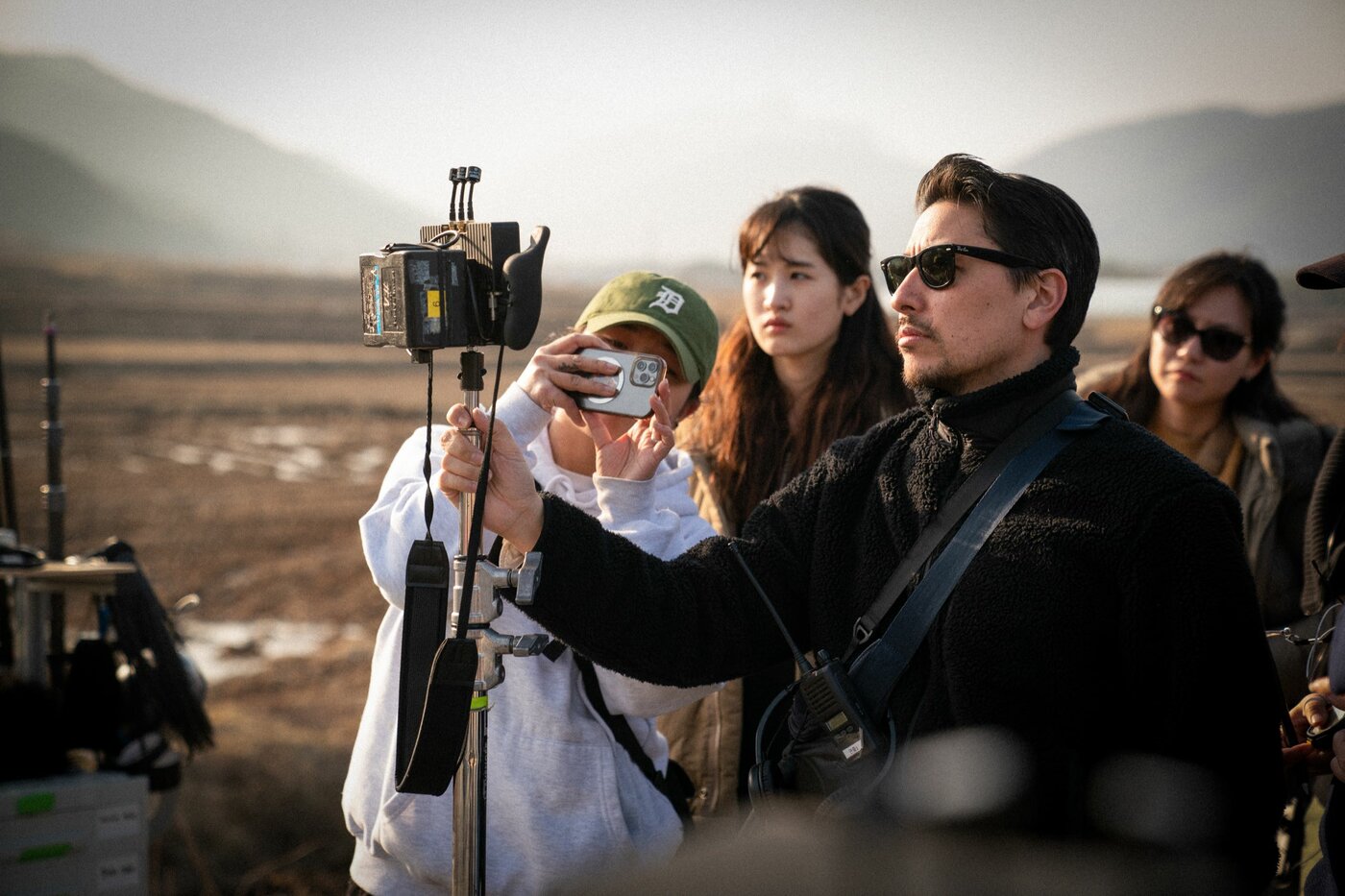
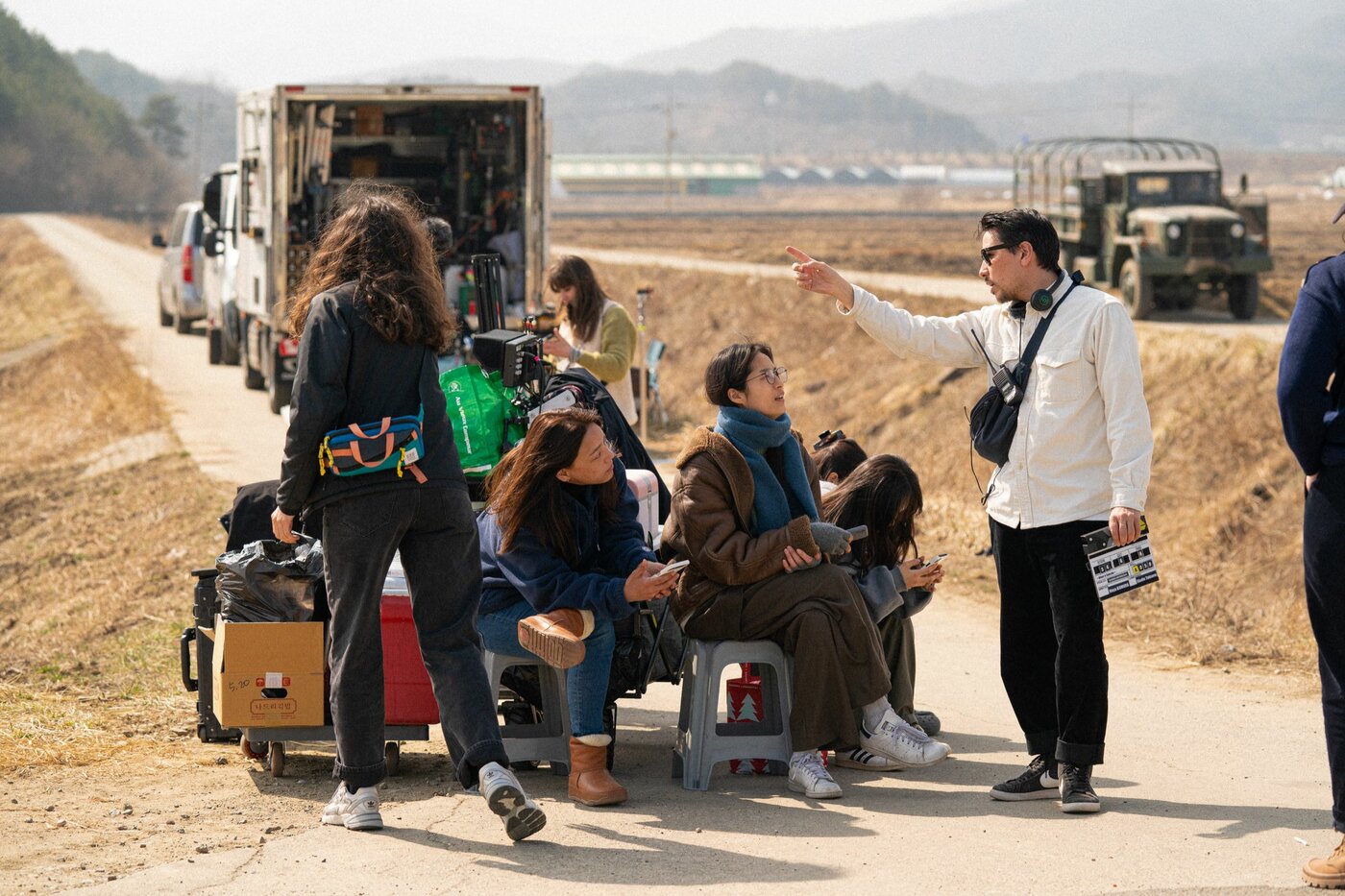
Cast and crew on set.