Get in touch to send in cinephile news and discoveries. To keep up with our latest features, sign up for the Weekly Edit newsletter and follow us @mubinotebook on X and Instagram.
NEWS
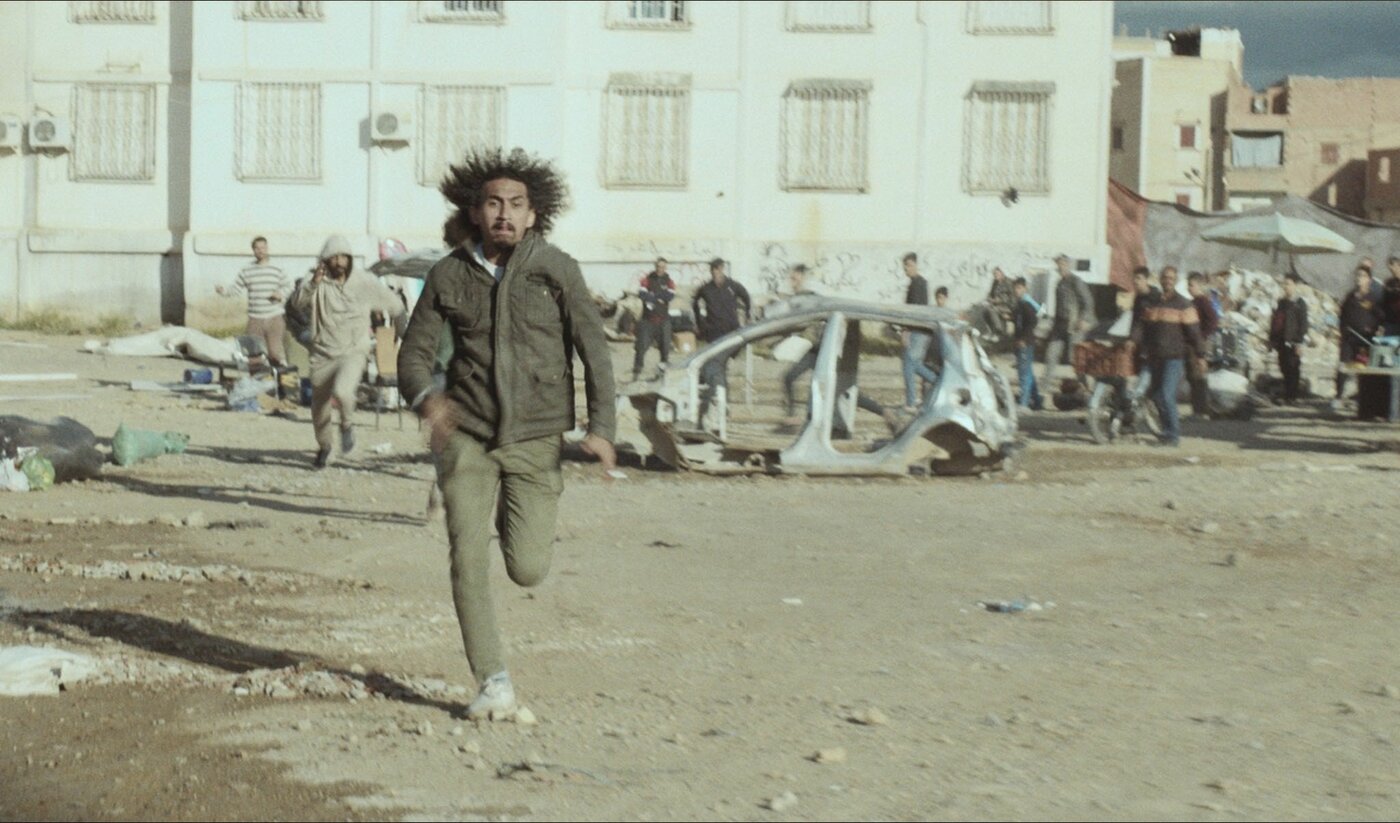
Chronicles from the Siege (Abdallah Alkhatib, 2026).
- The Berlinale has come under fire for its silence on Gaza. Jury head Wim Wenders argued that artists “should stay out of politics,” and festival director Tricia Tuttle issued a statement claiming that filmmakers should not “be expected to speak on every political issue raised to them unless they want to.” These comments prompted an open letter—whose signatories include Mark Ruffalo, Javier Bardem, Tilda Swinton, and Adam McKay—that demands the festival “fulfil its moral duty and clearly state its opposition to Israel’s genocide,” as well as the withdrawal of Indian author Arundhati Roy, who was set to present In Which Annie Give It Those Ones (1989) in the Classics section. During the closing ceremonies, Syrian-Palestinian filmmaker Abdallah Alkhatib, who won the Best First Feature Award for Chronicles from the Siege (2026), condemned the German government, saying they were “partners in the genocide in Gaza by Israel,” which prompted a German cabinet minister to walk out of the ceremony.
- No Other Land (2024) codirector Hamdan Ballal reports that his family was attacked by the same Israeli man who assaulted him a year prior, just after he won the Oscar for Best Documentary. Despite the Israeli court’s ruling that the area around his home would be closed to non-residents, Ballal says that “settlers break that order and still come with their flocks almost every day.”
- Meanwhile, It Was Just an Accident (2025) cowriter Mehdi Mahmoudian was released from Iranian prison seventeen days after his arrest for signing a statement condemning the regime’s violent attacks against demonstrators.
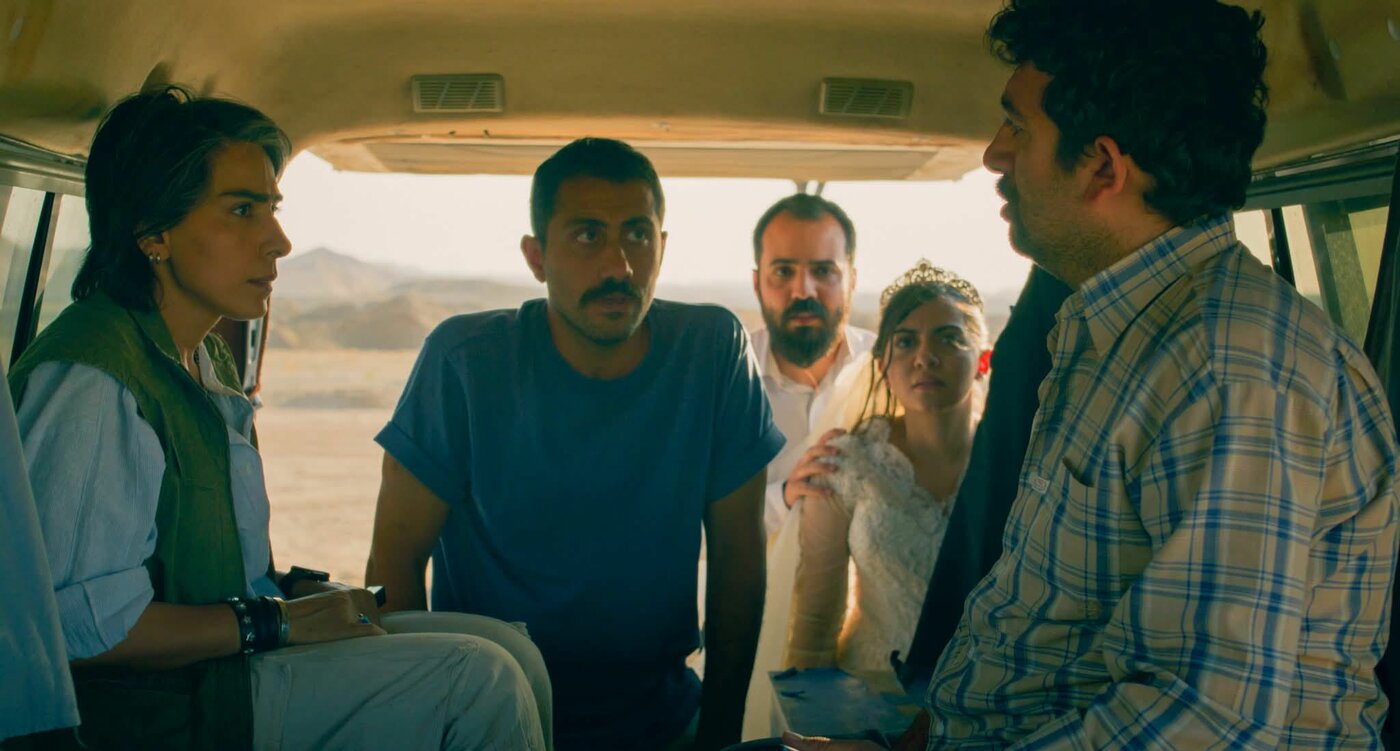
It Was Just an Accident (Jafar Panahi, 2025).
- Warner Bros. Discovery has reopened talks with Paramount Skydance after rejecting their previous offer to buy the entire company in favor of a streamers-and-studios business deal with Netflix. While WBD is still recommending that shareholders vote in favor of Netflix, Paramount has created a wedge to provide a better offer. While President Trump has previously said that he would stay out of the merger talks despite his friendship with Paramount CEO David Ellison, he has publicly called for Netflix to oust its board member Susan Rice after she said that companies that acquiesced to Trump’s demands would face accountability from Democrats when they regain power.
- A casting notice for Doug Liman’s new film Killing Satoshi, about the pseudonymous Bitcoin creator, states that the film will use generative AI to “change, add to, take from, translate, reformat or reprocess” actors’ performances. Additionally, there will be no location shooting and AI will be used to create background and scenery.
DEVELOPING
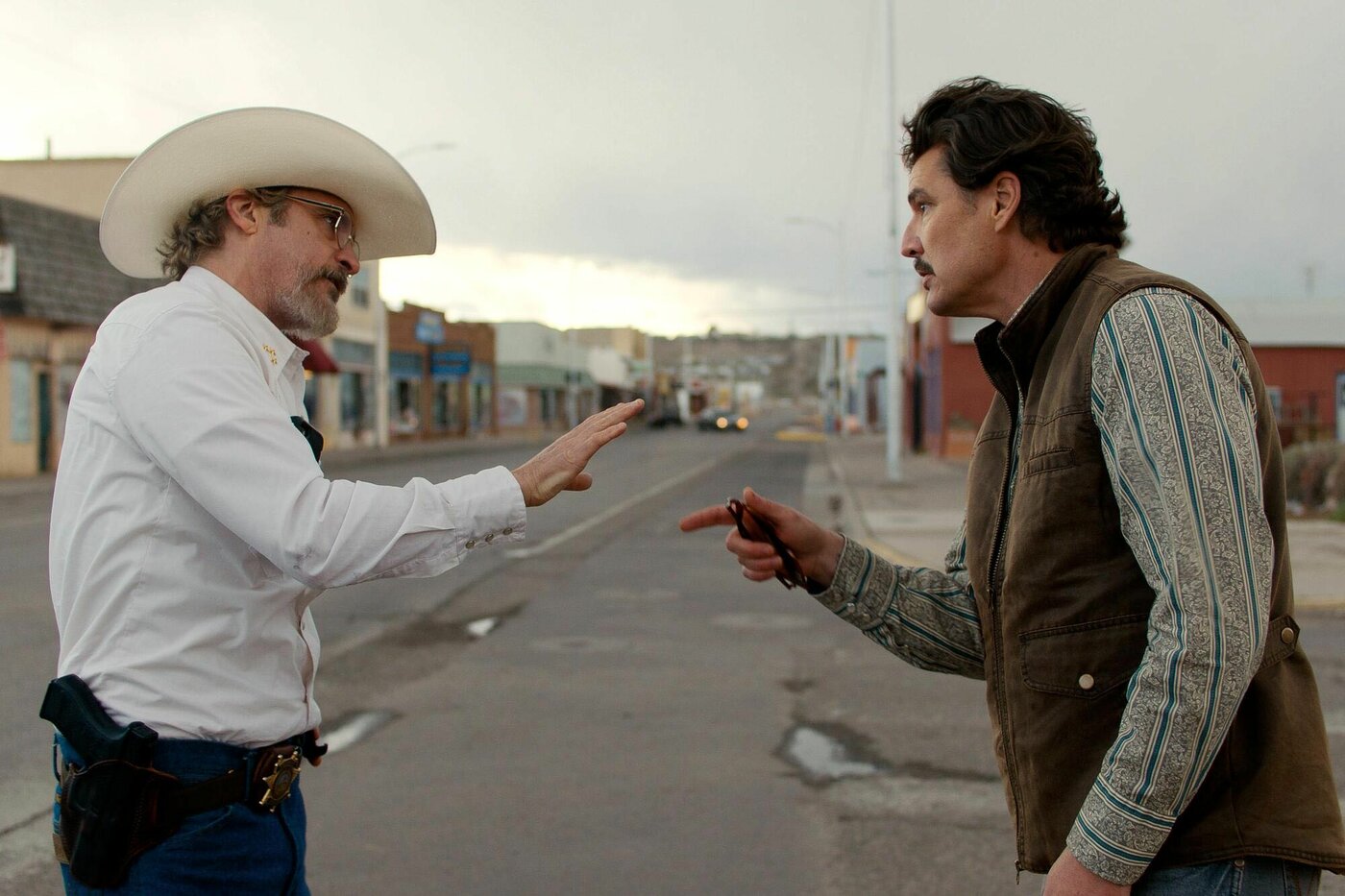
Pedro Pascal in Eddington (Ari Aster, 2025).
- Todd Haynes’s film De Noche has been resurrected with Pedro Pascal in the lead after Joaquin Phoenix’s unexpected exit from the project last year. The film follows a passionate love affair between a cop (Pascal) and a boarding school teacher (Danny Ramirez) in 1930s Los Angeles.
- The newly launched Prada Foundation has selected fourteen features in various stages of development to fund, including new works by Apichatpong Weerasethakul, Hlynur Pálmason, Corneliu Porumboiu, Eduardo Williams, and Laura Citarella.
REMEMBERING
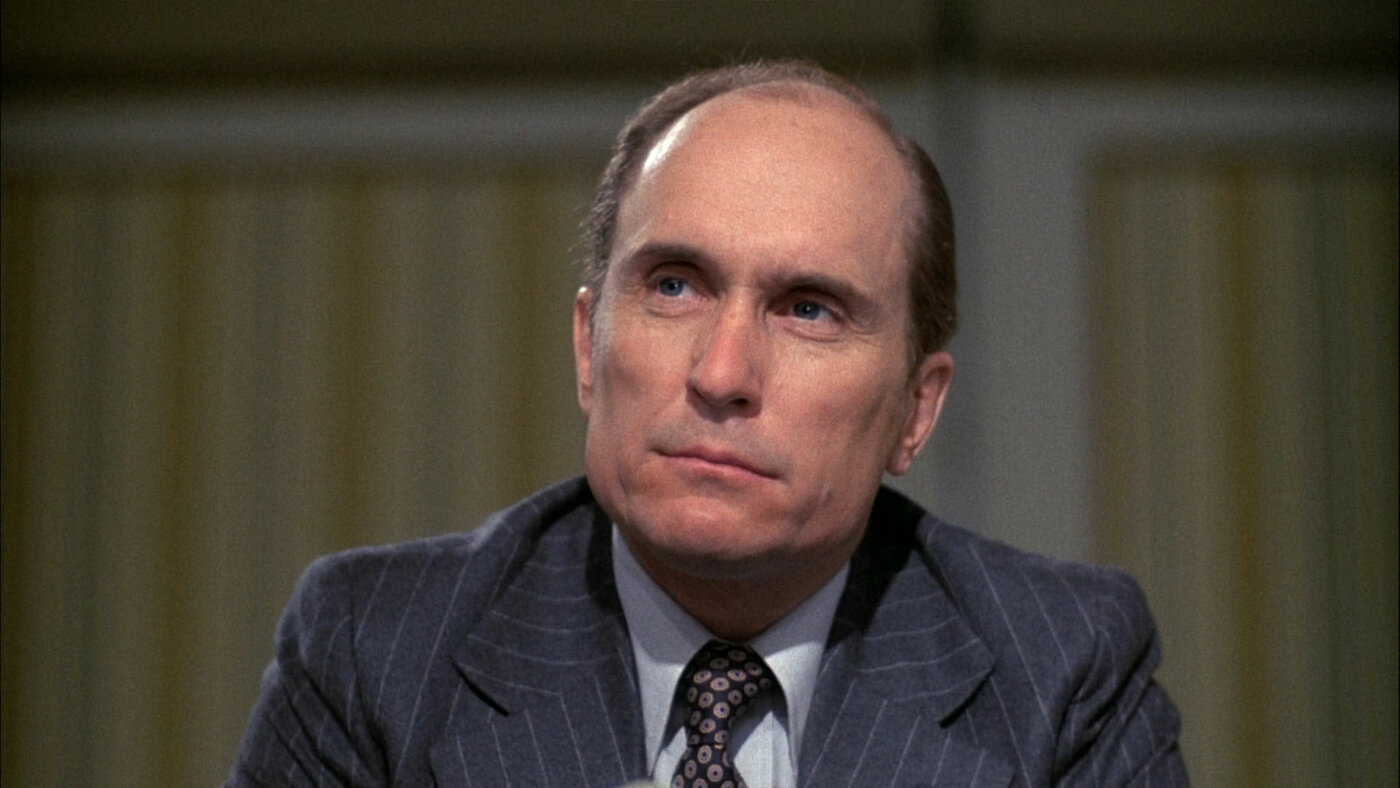
Network (Sidney Lumet, 1976).
- Robert Duvall has died at 95. The American actor began his career on stage and in television before his feature-film debut as Boo Radley in To Kill a Mockingbird (1962). His early screen career was marked by key supporting turns in films like True Grit (1969) and M*A*S*H (1970), but he came to prominence through his collaboration with Francis Ford Coppola, playing Tom Hagen in The Godfather (1972) and The Godfather Part II (1974), and the sadistic Colonel Kilgore in Apocalypse Now (1979). His diverse filmography also includes George Lucas’s sci-fi film THX 1138 (1971), John Flynn’s neo-noir The Outfit (1973), and Sidney Lumet’s media satire Network (1976). Duvall also directed five films, including The Apostle (1997), a passion project about a Pentecostal preacher he funded himself. Nominated for seven Academy Awards, Duvall won once for his role in Tender Mercies (1983) as an alcoholic former country singer trying to put his life back together. “He was a born actor, as they say,” said costar Al Pacino. “His connection with it, his understanding and his phenomenal gift, will always be remembered.”
- Frederick Wiseman has died at 96. The American documentarian was best known as a chronicler of institutions, from Bridgewater State Hospital in his first film, Titicut Follies (1967), to the Troisgros family’s restaurant in his final feature Menus-Plaisirs – Les Troisgros (2023). He released roughly a film a year for over fifty years, with early works like High School (1968) and Welfare (1975) spotlighting how an overwhelmed system impacts officials and civilians alike. Other works broaden focus to include cities and towns—Aspen (1991), Belfast, Maine (1999), and Monrovia, Indiana (2018)—or New York–based establishments like Central Park (1990) and Ex Libris: The New York Public Library (2017). Apart from his filmmaking career, Wiseman was also an occasional actor, providing performances in films like The Summer House (2018), Eephus (2024), and his final onscreen cameo in A Private Life (2025).
- Tom Noonan has died at 74. The American character actor and director is likely best known for his performance as the serial killer Francis Dolarhyde in Michael Mann’s Manhunter (1986). His staunch commitment to the role—he stayed in character during production and concealed his presence from actors who played his pursuers—contributed to a fearful atmosphere on set. He built a reputation for playing menacing villains in projects like RoboCop 2 (1990), Last Action Hero (1993), and The X-Files (1993–2002; 2016–18) in an episode written exclusively for him. At the same time, he also exhibited a sensitive, melancholic side, especially in two films directed by Charlie Kaufman: as a canny stage performer in Synecdoche, New York (2008) and in the stop-motion animated Anomalisa (2015), where he voices all but two characters in the film. Noonan also founded his own theater company, the Paradise Factory, where he wrote, performed in, and directed four plays, all of which he adapted into films. The first of these, What Happened Was… (1994), won the Grand Jury Prize and the Waldo Salt Screenwriting Award at the 1994 Sundance Film Festival.
- Bud Cort has died at 77. Best known for his starring turn as the death-obsessed Harold Chasen in the black comedy Harold and Maude (1971), the American actor was initially discovered by Robert Altman while performing in a revue. Altman cast him in a supporting role in M*A*S*H (1970) and as the title character in Brewster McCloud (1971), about a recluse who builds fake wings to fulfill his dream of flight. Following a near-fatal car crash that required multiple plastic surgeries, Cort went on to give memorable supporting performances in films like The Chocolate War (1988), Heat (1995), and The Life Aquatic with Steve Zissou (2004). He also wrote, starred in, and directed the eccentric dark comedy Ted & Venus (1991) about a Venice Beach poet who becomes an oblivious stalker. “I don’t know if I believe in past lives or not,” he once told The Los Angeles Times. “But whatever my past was, I was an actor.”
- James Van Der Beek has died at 48. The American actor was best known for playing the sensitive wannabe filmmaker Dawson Leery on the teen soap Dawson’s Creek (1998–2003). The role catapulted him to fame and afforded him starring roles in films like the coming-of-age drama Varsity Blues (1999) and the college-set black comedy The Rules of Attraction (2002). Van Der Beek was also self-deprecating about his teen image, particularly in Kevin Smith’s Jay and Silent Bob Strike Back (2001) and the cult ABC sitcom Don't Trust the B---- in Apartment 23 (2012–13), where he plays a fictionalized version of himself desperate to revitalize his acting career.
RECOMMENDED READING
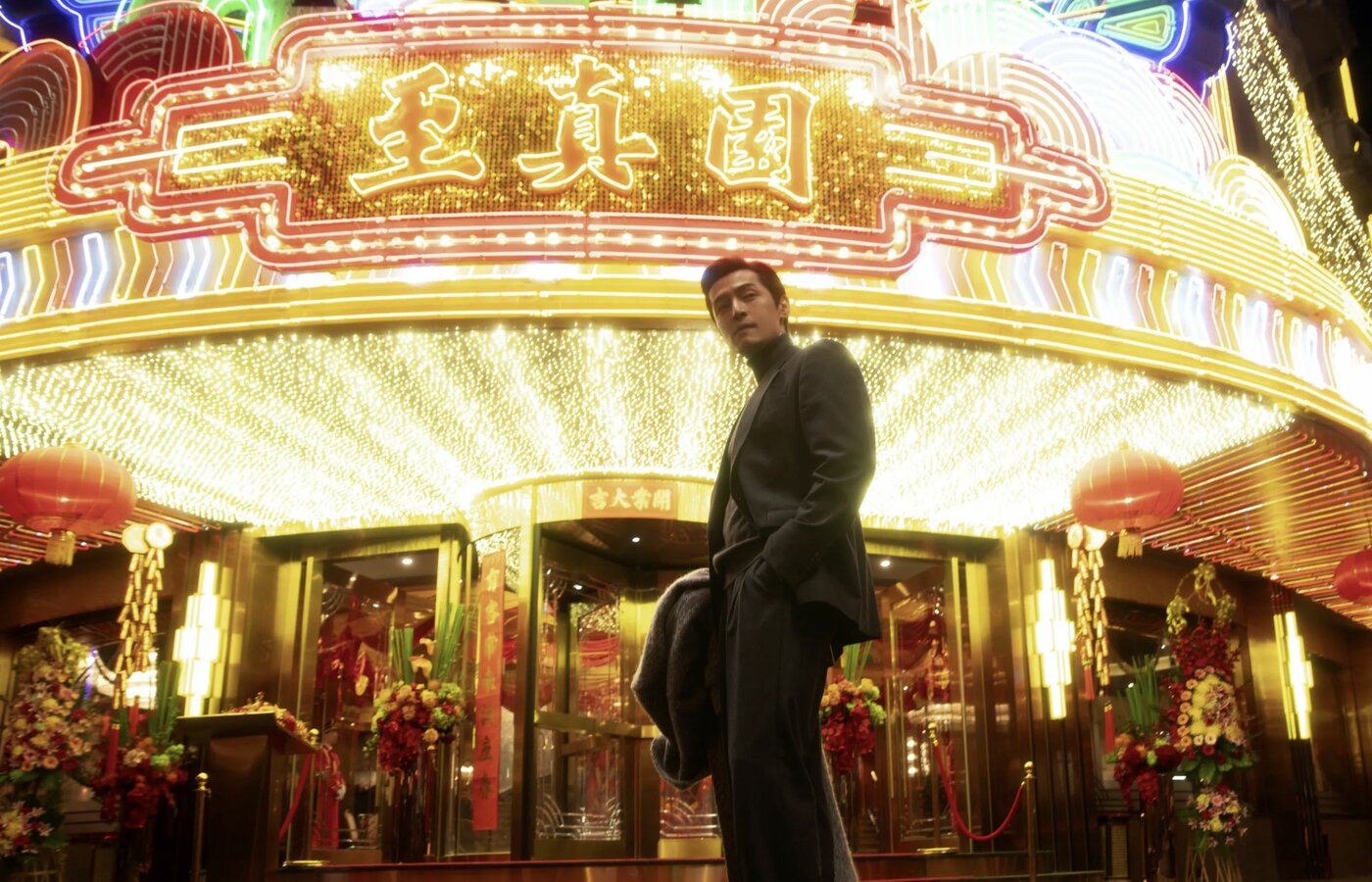
Blossoms Shanghai (Wong Kar Wai, 2023).
- “This is not one man’s story, but the odyssey of a generation.” Phuong Le speaks to the one and only Wong Kar Wai for Program Notes about his sweeping epic of a first television series, Blossoms Shanghai (2023), which begins streaming on MUBI tomorrow.
- “The Secret Agent, as with all of Mendonça’s films, is full of marvelous faces: a portly gas station attendant, a security guard who hooks up with sex workers on the clock, an industrial laborer hired by the hitmen to do their dirty work. The film’s eagerness to register these faces—to hang out, if only for a moment, with the characters floating through the central drama—comes to seem like a response to the era’s obscurity, its missing people and lost stories.” For The New York Review of Books, Beatrice Loayza dives deep into Kleber Mendonça Filho’s conspiracy thriller The Secret Agent (2025), exploring the director’s attempts to mythologize his country’s history to protect it from the ravages of time.
- “In Jafar Panahi’s most recent film, It Was Just an Accident, a city’s seemingly banal locales are similarly reframed as sites of some terribly important yet elusive meaning. But here, what invests the quotidian with portending significance is sound. On the outskirts of Tehran, a car mechanic opens up his garage late at night for a stranded traveler whose car has broken down. As the traveler walks around, the squeak of his prosthetic leg becomes audible.” For The Nation, Alex Kong examines It Was Just An Accident (2025) in the context of Jafar Panahi’s oeuvre of “dissident” films made in his home country of Iran.
- “And it is telling that [Agnieszka] Holland chose to animate the undying Odradek rather than the moribund bug Gregor Samsa, hero of The Metamorphosis. For Holland, Odradek is the animating Jewish remnant inhering in a patchwork of ambiguous identities and identifications that lives, if uneasily, within Kafka, and is his legacy for literature.” For The Baffler, Daniel Kipnis analyzes Agnieszka Holland biopic Franz (2025) as a catalyst to explore the “ambivalent passions” lurking behind Franz Kafka’s history.
- “The problem with a ‘reimagining’ of this sort is not too little source material, but too much of it. The excisions and substitutions throw the work off-balance. Scrubbed elements leave a residue, while remaining ones totter in the absence of their previous supports.” For Film Comment, Genevieve Yue reviews Emerald Fennell’s “limp” adaptation of Wuthering Heights (2026), filled with “toy versions” of Brontë’s characters that the director never offers “the chance to live.”
RECOMMENDED EVENTS
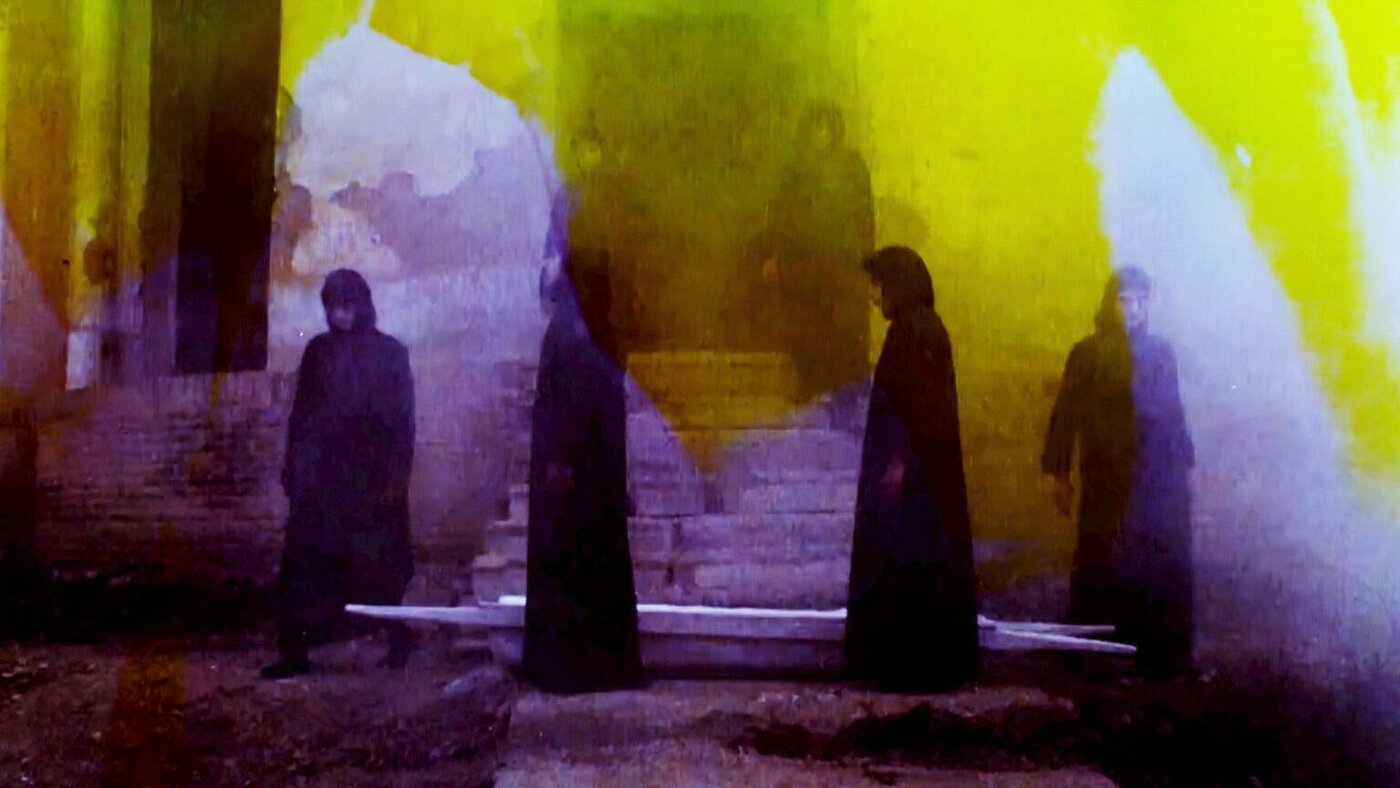
Daria's Night Flowers (Maryam Tafakory, 2025).
- London, February 19 through April 12: The Institute of Contemporary Arts presents Anguish & Ecstasy: The Cinema of Werner Schroeter, the first-ever comprehensive retrospective of the transgressive German filmmaker in the UK. Beginning with his first feature Eika Katappa (1969) screened on 35mm, the program sets out to introduce the director’s theatrical works to a new audience, from his early 8mm films in the late 1960s and early 1970s through his more ambitious work into the 1980s.
- New York, February 26 through March 12: The Museum of Modern Art presents Doc Fortnight 2026, the 25th edition ofits annual festival that celebrates new discoveries in nonfiction film. This year’s program includes new films by Ross McElwee and Sky Hopinka as well as a spotlight program on Mark Jenkin’s avant-garde work.
- Berlin, through March 29: Pace Gallery presents David Lynch, an exhibition highlighting his visual artwork—paintings, sculptures, watercolors, early short films—including a series of photographs he took in Berlin, exploring the late filmmaker’s relationship with the German city.
- Dublin, through April 18: Projects Arts Centre presents Maryam Tafakory’s Daria’s Night Flowers (2025), a fragmented experimental film about a female writer stifled by her husband’s rage and jealousy, juxtaposing scenes of domestic anxiety, patriarchal violence, and medical manipulation.
RECOMMENDED VIEWING
- Kino Lorber presents a trailer for Nadav Lapid’s Yes! (2026), a satire about an Israeli musician who agrees to write a new national anthem in the wake of October 7. The film enters limited release March 27.
- As part of its monthly movie club, ArtReview presents Mary Helena Clark’s Recital (2024), which presents a monitor displaying an ultrasound of the New York artist’s mouth as she reads text from her solo exhibition Neighboring Animals (2024). The film will be available through March 9.
RECENTLY ON NOTEBOOK
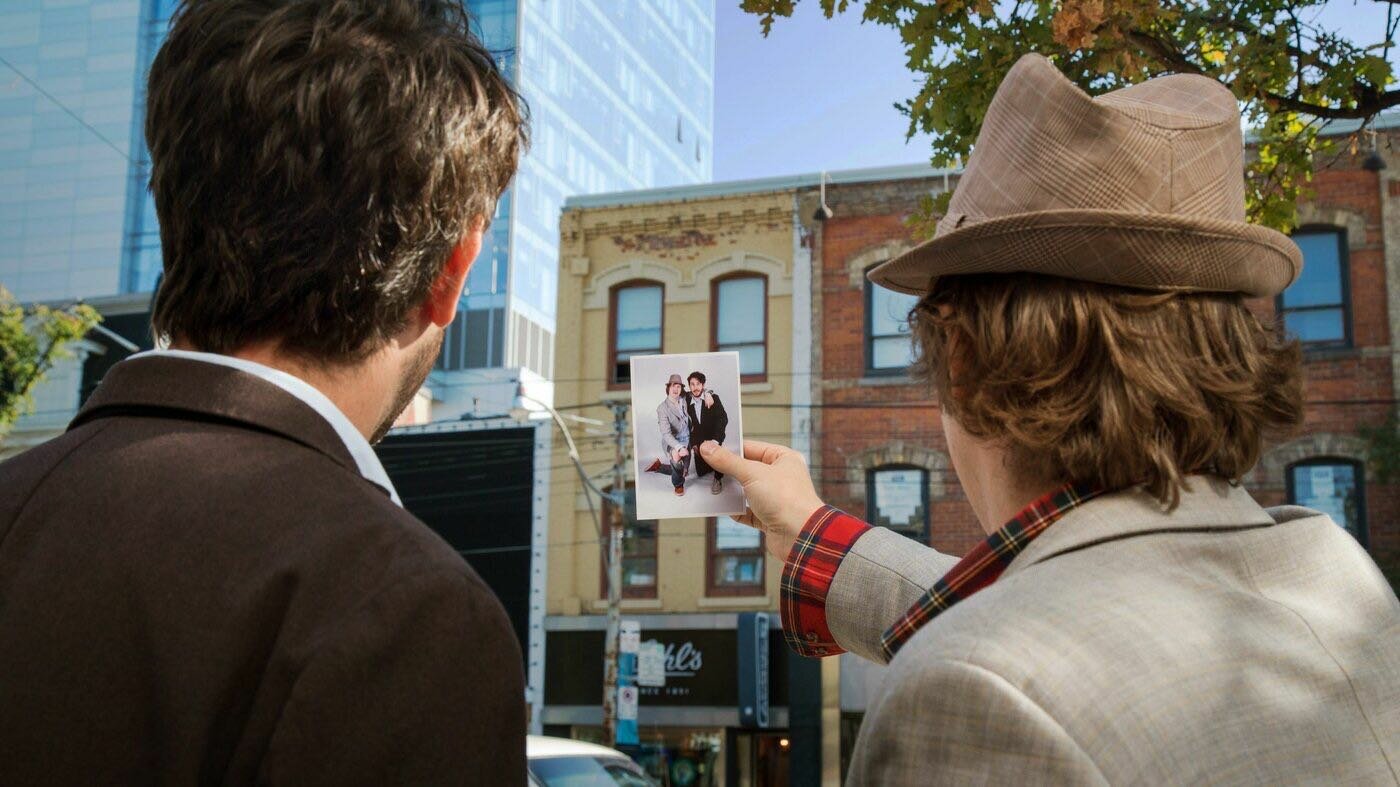
Nirvanna the Band the Show the Movie (Matt Johnson, 2025).
- “When a camera watches women eat, it opens the possibility of performance before they even speak, turning their appetite into a subtle assertion of oneself—a rejection of expectations or a claim to private desires. How or what she eats marks her difference: It can measure her position in the world or the distance she keeps from it.” Elissa Suh explores the history of women eating on film, and the ways that actresses deepen or shape characters through their relationship with food, from Issue 8 of Notebook magazine.
- “He’s a constant pitcher, and he’s only able to pitch because of the camera. And then the question of why there’s a camera, and whether that means people should care about or listen to what he’s pitching, is what’s interesting. If a tree falls in the forest, and so on. Like, if you pitch your ideas to the world and there’s no camera, you’re talking to yourself.” Adam Nayman interviews Matt Johnson about his time-traveling buddy comedy Nirvanna the Band the Show the Movie (2026) and what he’s trying to say as his cult (web and TV) series moves to the big screen.
- “If plunder neoliberalism stages ‘a strategic war against social reproduction,’ Lezama’s short films supply an archive of these practices by economically precarious gig workers, Airbnb owners, and artists “from below” in contemporary Argentina.” Katherine Franco examines the work of Francisco Lezama, Martín Rejtman, and the experimental film collective El Pampero Cine and how it gives visual shape to the economic policies of Argentine president Javier Milei, a self-proclaimed anarcho-capitalist.
WISH LIST
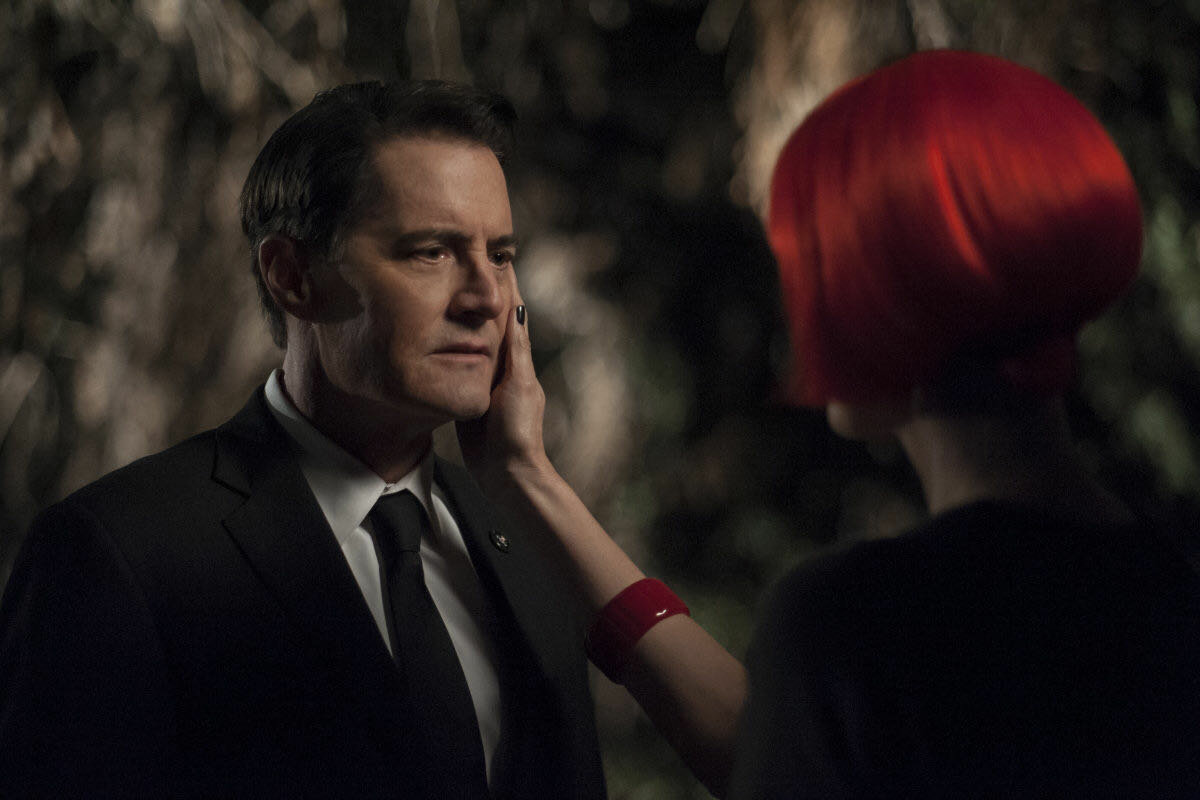
Twin Peaks: The Return (David Lynch, 2017).
- Scott Meslow’s reported history of Twin Peaks (1990–91; 2017), A Place Both Wonderful and Strange: The Extraordinary Untold History of Twin Peaks, which includes new interviews from principal writers and performers, is available to purchase.