Get in touch to send in cinephile news and discoveries. To keep up with our latest features, sign up for the Weekly Edit newsletter and follow us @mubinotebook on X and Instagram.
NEWS
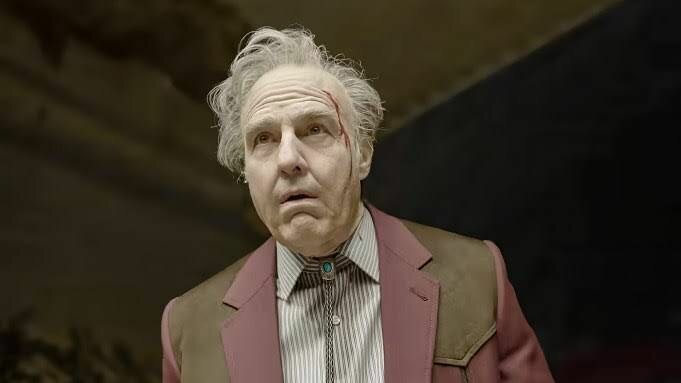
Digger (Alejandro González Iñárritu, 2026).
- Paramount has officially acquired Warner Bros. Discovery, making David Ellison the head of a vast media empire that will officially be called Skydance.
- Ahead of the merger, Michael De Luca and Pamela Abdy were ousted from their roles as Warner Bros.’ film chiefs. During their four-year tenure, the director-friendly executives have faced accusations of overspending on auteur-driven projects with limited box-office appeal while also being paradoxically heralded for greenlighting original films that proved critically and commercially successful.
- Warner Bros. released an advertisement for Alejandro González Iñárritu’s Digger (2026) featuring positive and negative reactions and requesting viewers “decide for themselves.” The studio posted the ad an hour before the official reviews embargo was lifted, signaling that they anticipated the film’s mixed-to-negative critical reaction, with reviews that describe it as “a thought experiment in which the destruction of the permafrost is really a pretense for navel-gazing.”
- Major social media platforms have declined to accept paid advertising for Musk (2026), Alex Gibney’s upcoming documentary about the eponymous businessman. YouTube, TikTok, and Meta have all supplied reasons for their rejections as related to “political content” despite the film’s trailer falling outside the bounds of campaign advertising.
- Letterboxd is reportedly seeking new corporate ownership, with The New York Times, Sony Pictures Entertainment, and A24 all vying for a majority stake in the social platform at a price of over $300 million.
DEVELOPING

Personal Shopper (Olivier Assayas, 2016).
- Olivier Assayas is set to reunite with Kristen Stewart on a new feature Spiritual World, about “a haunted young woman with clairvoyant powers who is visited by mysterious premonitions,” which will also star Riley Keough, Vicky Krieps, and Wagner Moura.
- Jia Zhangke is set to direct a road movie, Mamma Dunhuang, starring Zhao Tao as a woman who makes a continental journey from Dunhuang in western China to the sea on the eastern coastline. Though Tao plays a homebound woman who relies on AI, Zhangke insists that he will not use AI in the making of the film.
RECOMMENDED READING
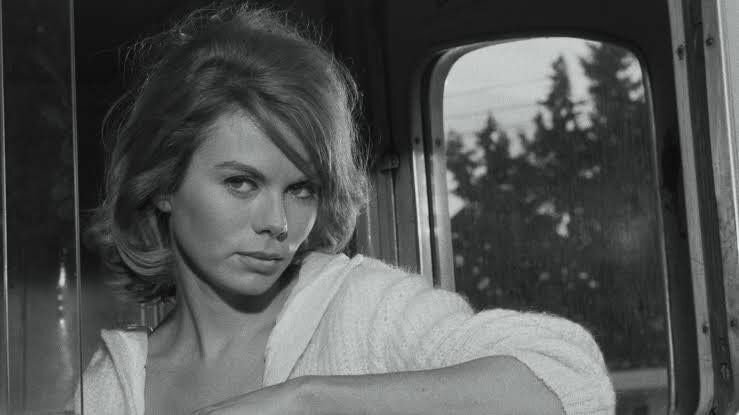
La Dérive (Paula Delsol, 1964).
- “Part of what our soul requires is a person who has an authentic interior struggle—a debate, a dilemma. I’ve said this before, but there’s a reason why the most famous line in all of dramaturgy is ‘To be or not to be.’ The person is at war with himself. That struggle is real. It’s who we are. So the attempt to act in a positive way is set against this idea that we are always at war with ourselves and not always acting out of self-interest. Sometimes we do things that are really bad for the right reason, and it really hurts. This is a moral universe of layers. If you are able to portray that in cinema, it’s a very high calling, I think.” For Vulture, Bilge Ebiri interviews James Gray about Paper Tiger (2026), its autobiographical elements, and the concept of late style.
- “Part of the issue here is how one chooses to write about Fleischer fils. If his oeuvre doesn’t add up to anything more than production anecdotes, pursuing a recurrent theme, style, or genre to give his work more identity becomes hard to resist, even when it seems far-fetched. Howard Hawks made movies in several genres, but his style, themes, and character types gave them a certain consistency. That he contributed to the writing of his scripts, usually without credit, certainly helped to make him and his pictures legible. This is less true of Fleischer, even when he spent time on his research, most often regarding historical accuracy and backgrounds.” For The Baffler, Jonathan Rosenbaum reviews Jason Ney’s biography of director Richard Fleischer and whether or not the filmmaker should be “regarded as an artist or a functionary.”
- “Bringing underseen works into greater visibility can be not only politically important but flat-out thrilling—as the soaring attendance at recent editions of Cinema Ritrovato attests. And yet the restoration and circulation of historical films is part of an economy of money and attention, in which the assertion that a film is ‘forgotten’ can feel less like the recognition of an injustice and more like a marketing tag… The ratio between hype and quality is sometimes askew. But then there are rediscoveries like La Dérive (1964), which fully justify the fanfare. Now what baffles is not the film itself, but how something so accomplished and so proximate to the French New Wave could remain so little known for so long.” For The New York Review of Books, Erika Balsom considers the new restoration of Paula Delsol’s La Dérive, the post-COVID “repertory boom,” and the legacy and perception of “women’s filmmaking.”
- “Everson’s belief that ‘everything has complexity’ is effectively translated into the formal qualities of his work. Favoring 16mm, Super 8, and, at times, 35mm, he also makes efficient use of digital cameras, in addition to drawing on a pluralistic training in street photography, sculpture, painting, and printmaking. While Everson maintains an insistent fidelity to his subjects’ craft, intelligence, and labor, he has none for the pretense of documentary transparency and noninterference. His films are mediations meant to be known that way, as they recreate and restage at the frayed seam between the real and the fictive. Nimble, alert, and carefully constructed, Everson’s imagemaking has kept the same focus he identified in 2014: ‘to make handsome images of working-class Midwestern black folk.’” In the latest issue of Three Fold Press, Yasmina Price offers a dossier on artist Kevin Jerome Everson that includes essays, a cultural and political cartography inspired by Everson’s influences, and a production history of It Seems to Hang On (2015).
RECOMMENDED EVENTS
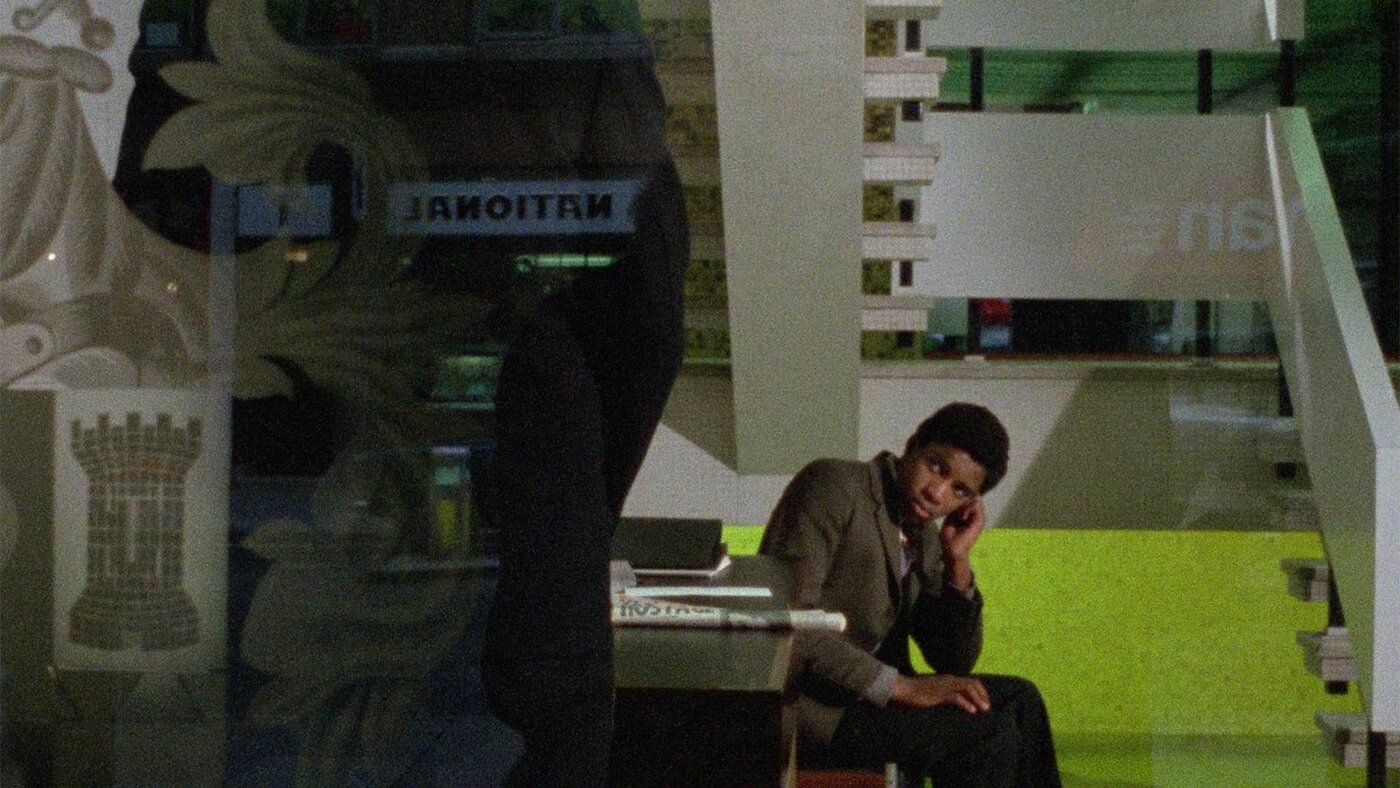
Pressure (Horace Ové, 1976).
- New York, October 8 through November 11: New York City presents the third edition of The Immigrant Artist Biennial, a nomadic platform that presents the work of immigrant artists with an emphasis on a diverse, interdisciplinary approach. The event’s theme is “Identity Card” and will explore how systems of identification “shape who is visible, who belongs, and who is allowed to move.”
- Toronto, October 16 through 28: The TIFF Cinemateque presents Pressure: Growing Up After Windrush, a series dedicated to British filmmakers from the postwar Afro-Caribbean diaspora.
- Berlin, October 17 through January 10: The KW Institute for Contemporary Art presents Rafik Greiss: The City and the City, the first solo exhibition from Egyptian artist Rafik Greiss, featuring his latest eponymous essay film about “enigmatic figures inhabiting vast desert landscapes, watching and waiting for something that seems yet to happen.”
- Arles, through March 31: LUMA Arles presents Delta, the latest film by Verena Paravel, developed as part of her ongoing project Cosmofonia, which opens a “new sensory field” featuring Earth’s subtle vibrations and resonances and presented as an eight-meter-long projection with surround sound.
RECOMMENDED VIEWING
- mk2 Films presents a trailer for Yuval Abraham and Rachel Szor’s NAZA (2026), an investigation of the Israeli Defense Forces’ use of AI and automated surveillance to identify targets in Gaza.
- A24 presents a trailer for You Can See Everything (2026), a documentary following former Theranos founder Elizabeth Holmes, who invites a film crew led by Nathan Fielder into her home weeks before she will serve a federal prison sentence.
- Neon presents a trailer for Paper Tiger (2026), James Gray’s latest crime drama about two brothers who find themselves embroiled with the Russian mob in 1980s Queens.
- Sylvester Stallone gives a lengthy, unvarnished interview on The New York Times’ Interview podcast where he discusses his troubled childhood, his relationship with Arnold Schwarzenegger, and facing down “the light at the end of the tunnel.”
RECENTLY ON NOTEBOOK
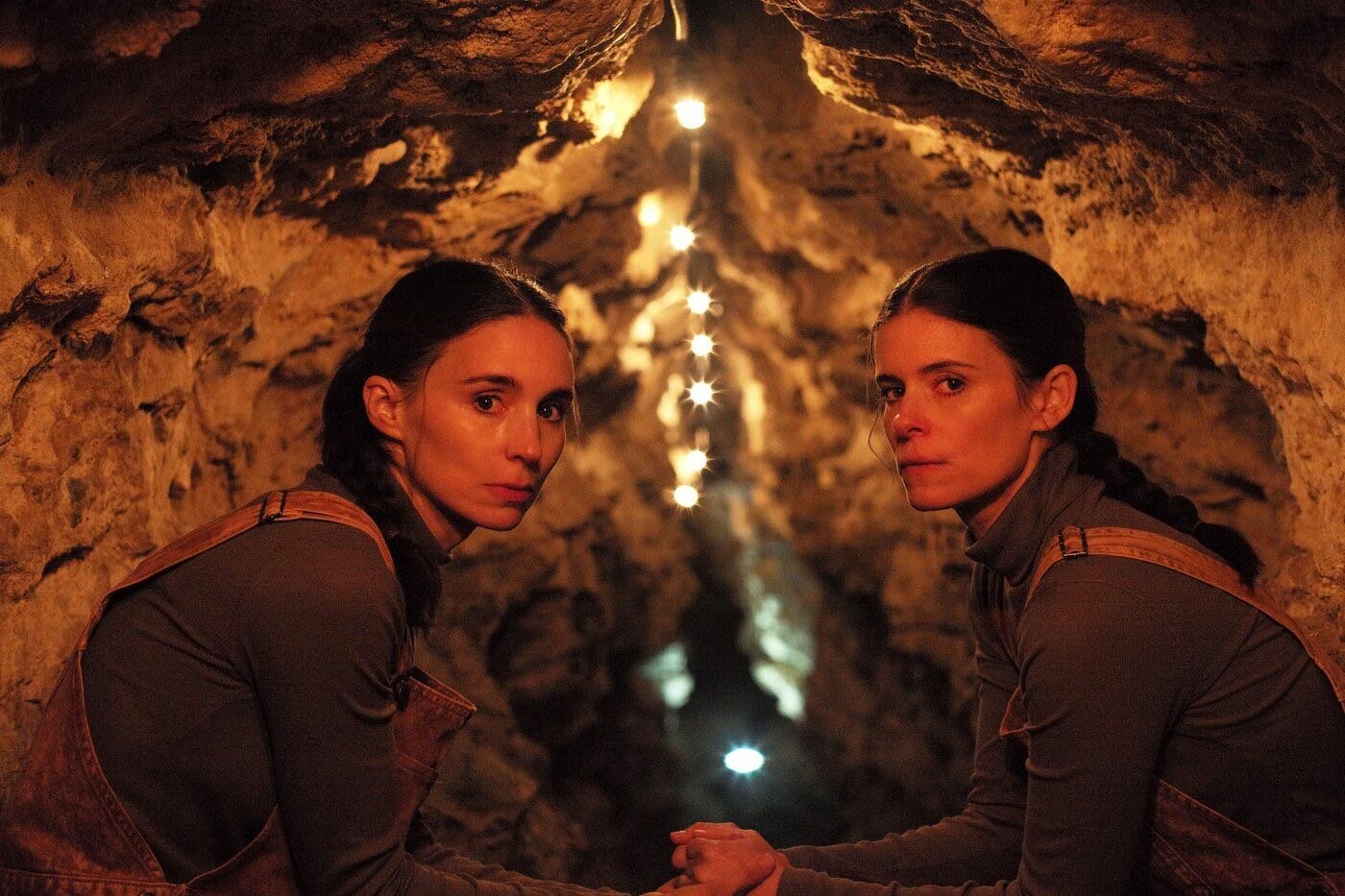
Bucking Fastard (Werner Herzog, 2026).
- “Though TIFF shows everything from large blockbusters to experimental short films, its overall balance leans commercial, and watching these ads in different spaces highlights the impossibility of creating a unified experience. At public screenings of big titles, audiences tend to be eager to be pleased; they laugh easily and broadly at these spots, which include ads for sponsors Visa, TikTok, and Rolex. But at the Wavelengths section, a chillier, largely silent or outright hostile response is heard; I think fondly of the year a person yelled, after one particularly egregious spot, ‘Stop trying to make us buy stuff we don’t need.’” Vadim Rizov examines the state of commercial bumpers at this year’s Toronto International Film Festival and how they reflect the state of “the people’s festival.”
- “You see, many people advised me, ‘Why don’t you take a great actress and create her sister digitally?’ But the film would have been dead on arrival. And we’ve seen that before. We have seen it done in other films: It’s completely uninteresting. It was the same thing with Fitzcarraldo (1982). Hauling a real ship over a mountain brings a lot of richness into the texture of the film. Six-year-old children today can recognize a digital effect. They even know the basics, how those effects are done. But watching a film like this, you instantly know it is for real. And you can trust your eyes again.” Leonardo Goi interviews Werner Herzog about his latest film Bucking Fastard (2026), the search for new images, and the idea of late style.
- “In the Dark (2000) is one of one, but it also laid a foundation—modest but solid—for a distinctly millennial subgenre predicated on the same contradictions between social collapse and elite control explored in Salo (1975) and Eyes Wide Shut (1999). In these films, the more things fall apart below a certain level, the tighter the grip grows at the top. Call it cabal-core, where evil lurks behind closed doors, embedded into the language, structure and aesthetics of bureaucracy itself.” Soraya Sebghati writes about the history of “cabal-core,” i.e., conspiracy-based horror films about elites pulling the strings of society while it collapses.
- “When an informal network of amateurs questions the work of industry standard-bearers, it is rarely a matter of raw technical superiority but rather a fundamental difference in constraints. While restoration entities often operate on strict budgets and tight deadlines, preservationists can spend years cross-referencing decades of older releases. This is not to say fan efforts are infallible… but for objective elements like editorial cuts, missing frames, or unaltered audio, historical reference materials generally leave little room for debate.” Devan Scott writes about the value of piracy-based film preservation and the need for civilian intervention “in the era of revisionist studio reworkings.”
WISH LIST
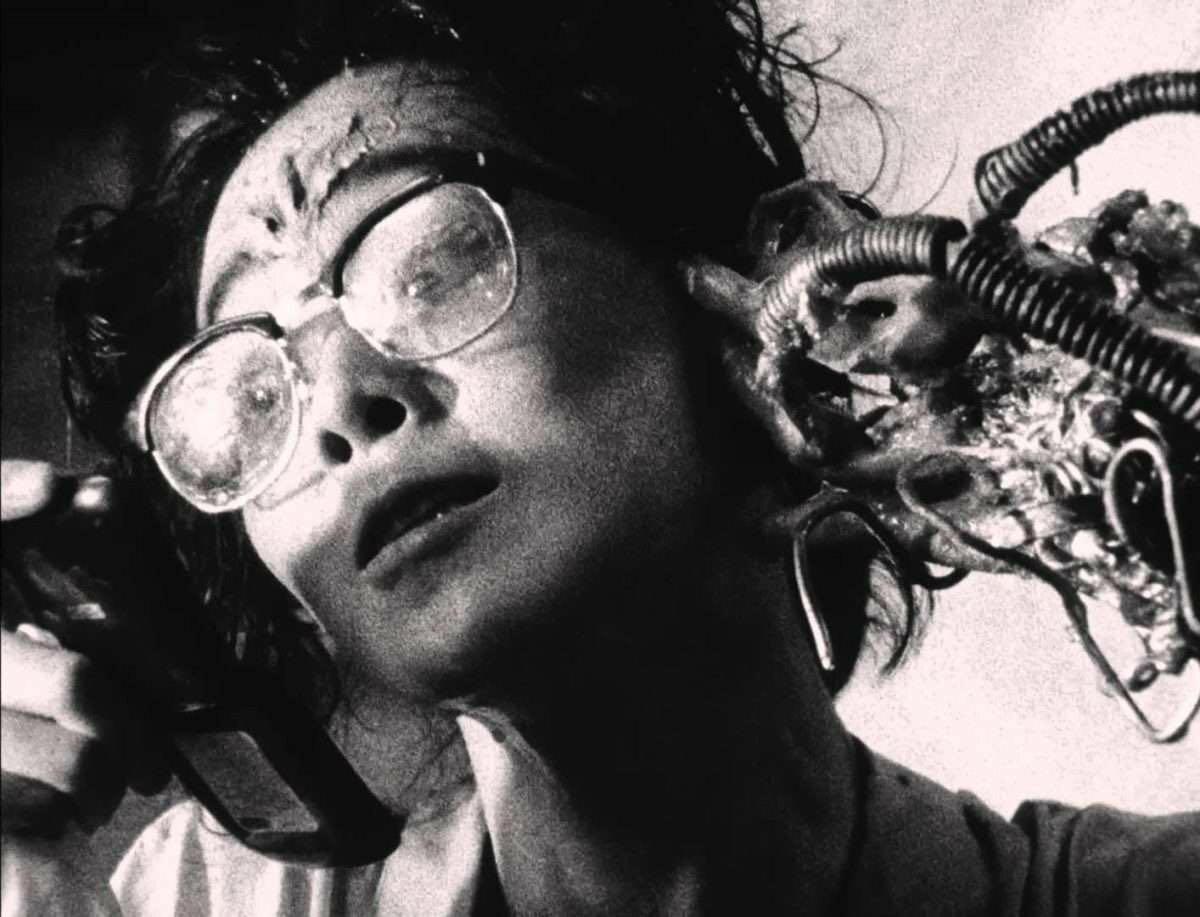
Tetsuo: The Iron Man (Shinya Tsukamoto, 1989).
- Archive: Shinya Tsukamoto, a comprehensive view of the Japanese filmmaker written by Alicia Haddick and featuring a forward by Gaspar Noé, is available to preorder from Lost in Cult.
EXTRAS
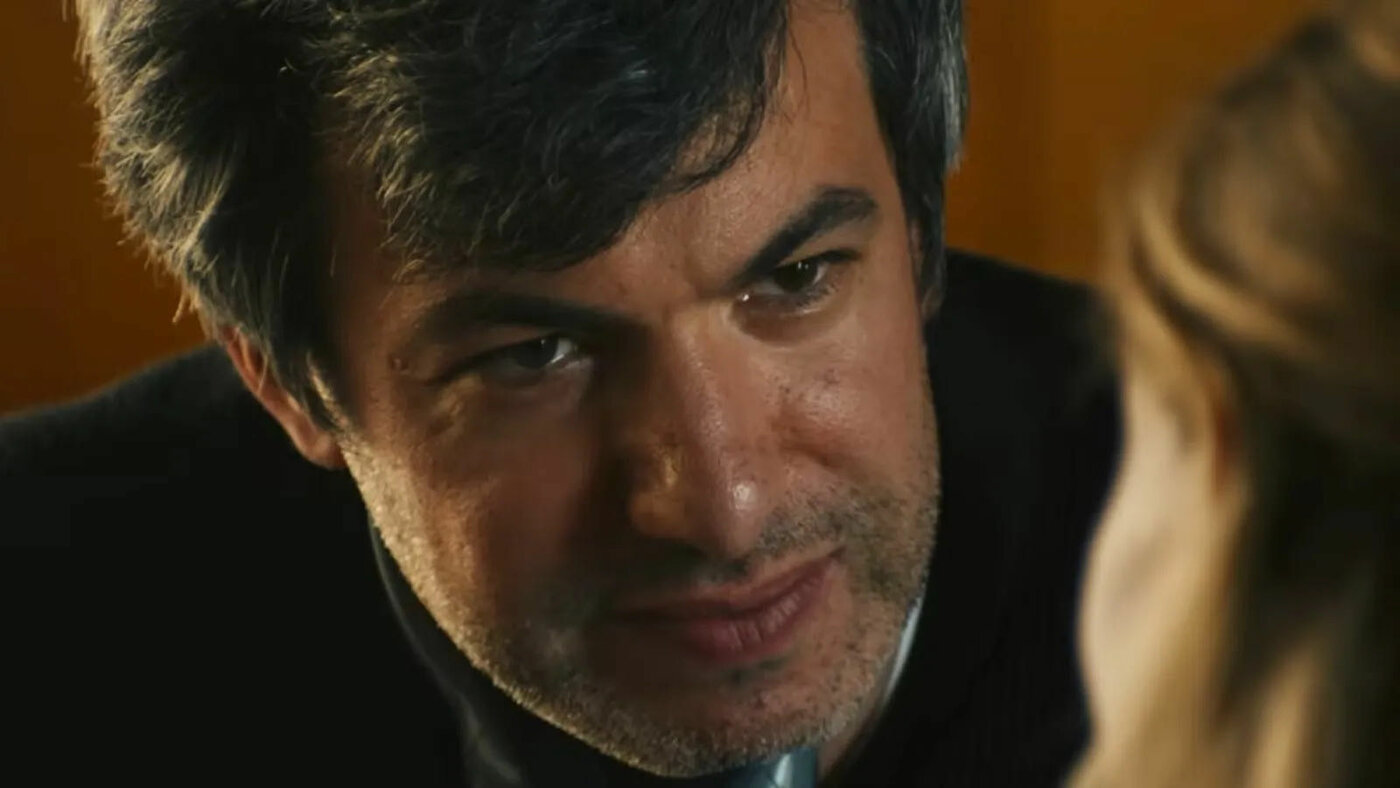
You Can See Everything (Nathan Fielder & Lance Oppenheim, 2026).
- Reportedly inspired by the second season of Nathan Fielder’s HBO series The Rehearsal (2022–), which focused on the mental health of commercial airline pilots, the US Senate recently passed the John A. Hauser Mental Health in Aviation Act and the Aviation Medication Transparency Act. Both bills aim to address stigmas around the psychological wellbeing of aviators, specifically with regards to training and pharmaceutical intervention.