Illustrations by Niklas Wesner.
Notebook readers are well known for their intelligence and charm, but above all for their generosity. As you make up your lists for the upcoming holiday saga, we’re here once again to aid in your quest for the perfect gift. (You might start with a MUBI subscription and a Notebook print subscription, of course.)
This year, spoil someone special with a punk Maya Deren tee, or maybe a Fantômas box set, or…books. They want books.
Jump to a category:
Looking for even more? There is plenty of good stuff still in stock from our previous guides in 2024, 2023, 2022, and 2021.
BOOKS
The most robust section of our guide belongs again to that Platonic ideal of a gift, whose marvelously unmysterious rectangular form is always a welcome sight beneath the tree, or wherever else. The groupings below should be considered serving suggestions.
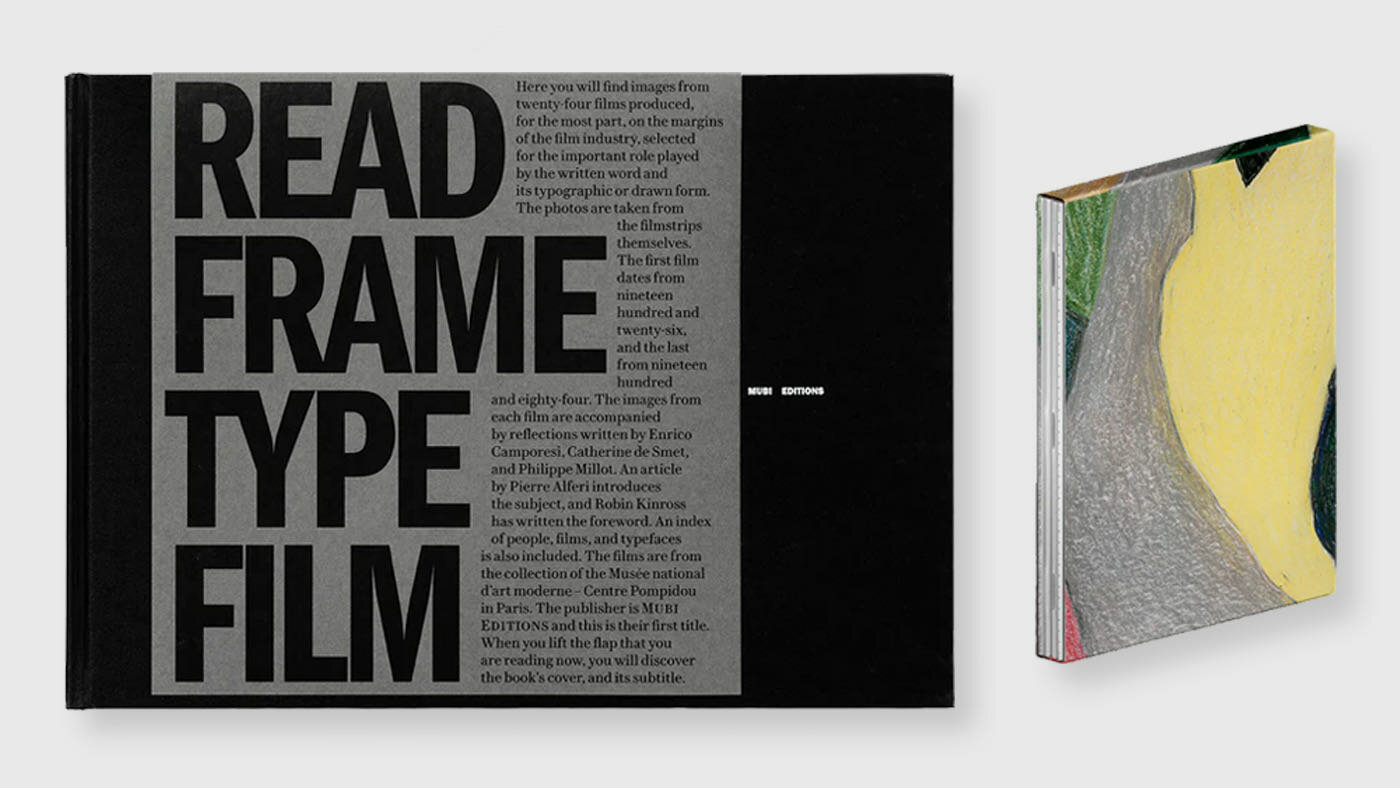
- Read Frame Type Film (MUBI Editions)
- The Mastermind (MUBI Editions)
Our colleagues over at MUBI Editions have been doing amazing work, publishing their first two titles this year: Read Frame Type Film is a sumptuously illustrated consideration of the use of text as a graphic element in artists’ cinema, including case studies of twenty-four films by the likes of Marcel Duchamp, László Moholy-Nagy, Michael Snow, and Yvonne Rainer.
The Mastermind, released in conjunction with Kelly Reichardt’s film of the same title, is a box set of four booklets, including behind-the-scenes photography, an essay by Lucy Sante and an exploration of artist Arthur Dove by Alec MacKaye of the Phillips Collection. (This one ships in early 2026, but promises to be well worth the wait.)
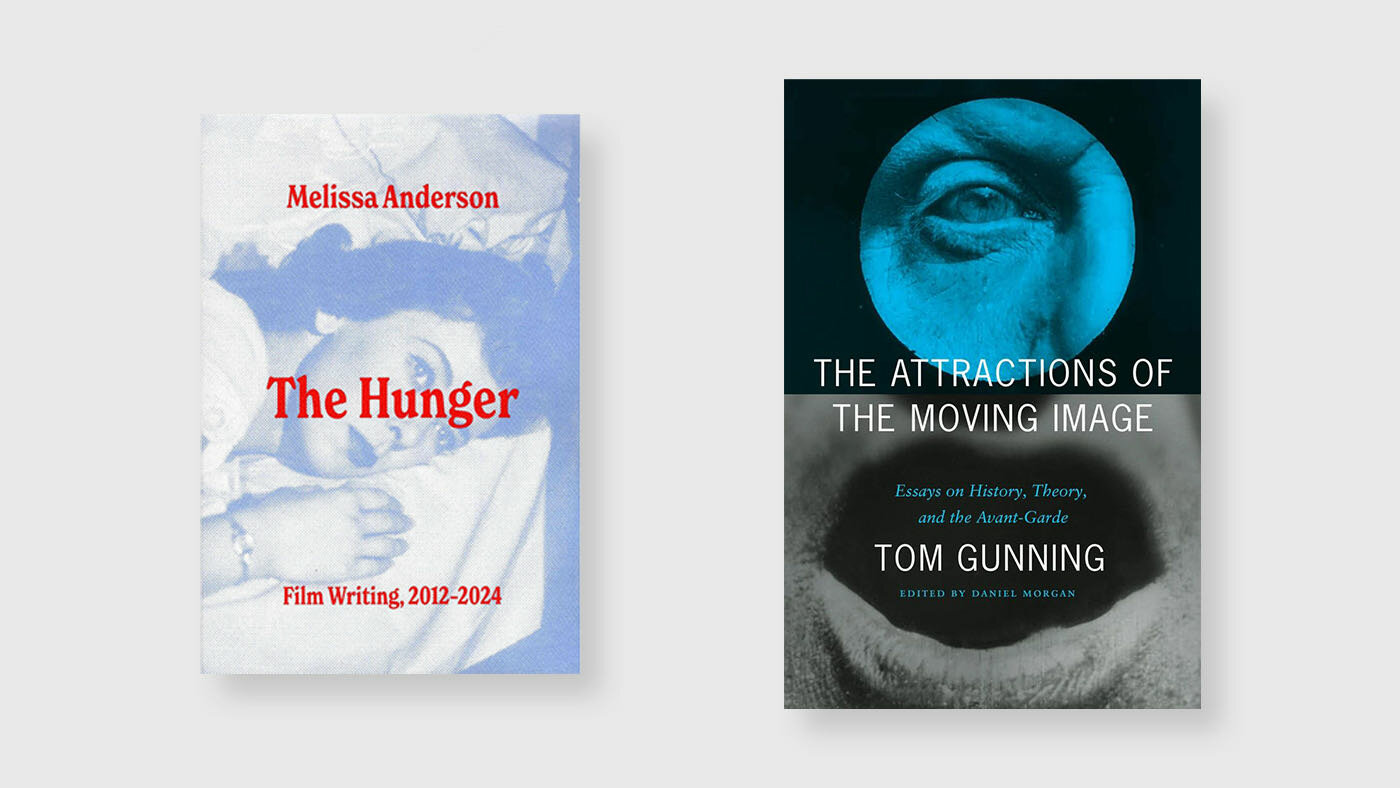
- The Hunger: Film Writing, 2012–2024 by Melissa Anderson (Film Desk Books)
- The Attractions of the Moving Image: Essays on History, Theory, and the Avant-Garde by Tom Gunning (University of Chicago)
Two of our favorite film writers released essay collections this year. In his interview with Melissa Anderson, Nathan Lee identifies the “distinctive allure” of her The Hunger as follows: “the practice of film criticism not as service journalism, rush to judgment, or thinkpiece doodling, but first and foremost as writing, the considered and calibrated composition of words.”
Paul Attard calls Tom Gunning’s latest collection “a blueprint for the kind of fearless, restless scholarship we desperately need more of.” (We were pleased to publish an original essay by Gunning in this spring’s Notebook Insert.)
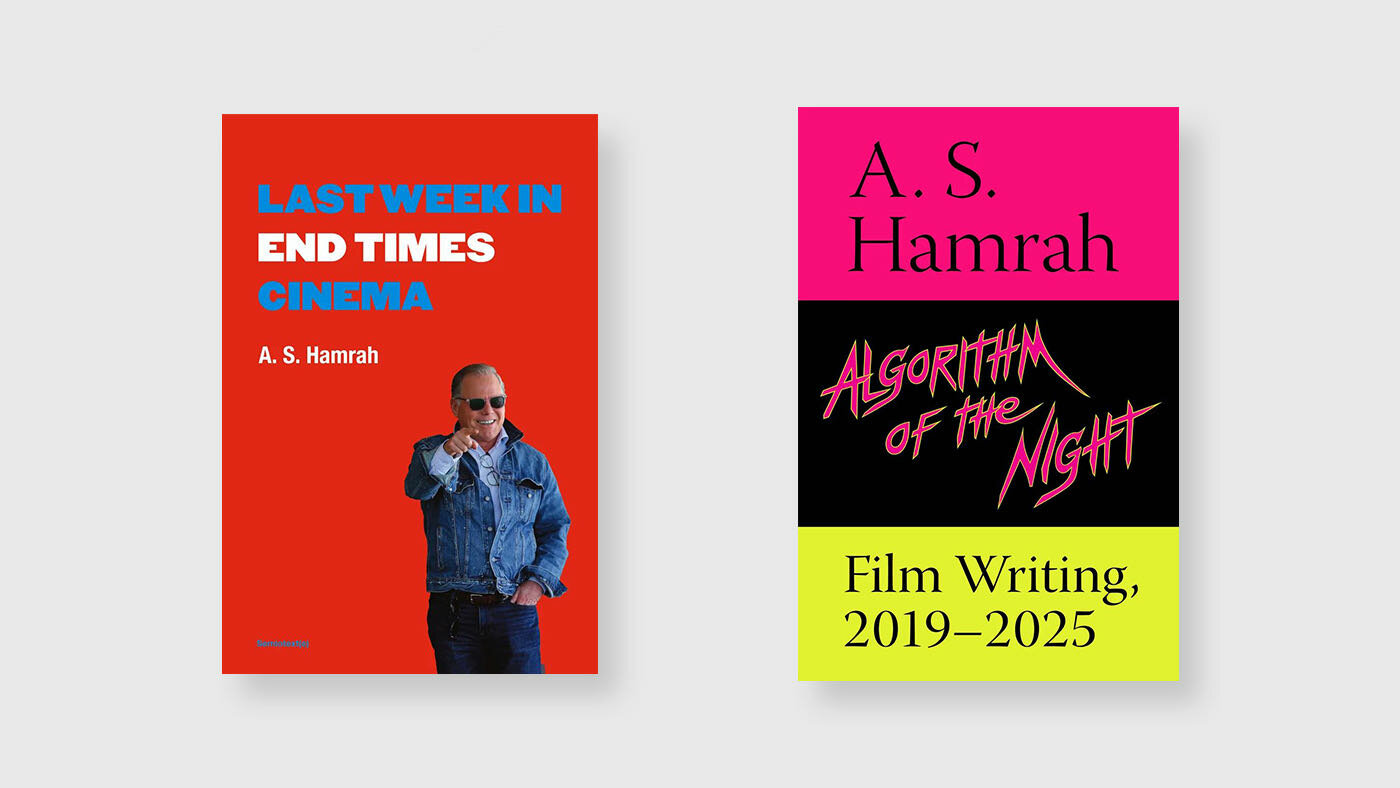
- Last Week in End Times Cinema by A. S. Hamrah (Semiotext[e])
- Algorithm of the Night by A. S. Hamrah (n+1)
A. S. Hamrah, another of our favorite writers, has two new books out: Last Week in End Times Cinema is a collection of his yearlong dispatches on the film industry in crisis, constructed from news bulletins in the style of Félix Fénéon's Novels in Three Lines. A new collection, The Algorithm of the Night represents the past six years of Hamrah’s criticism.
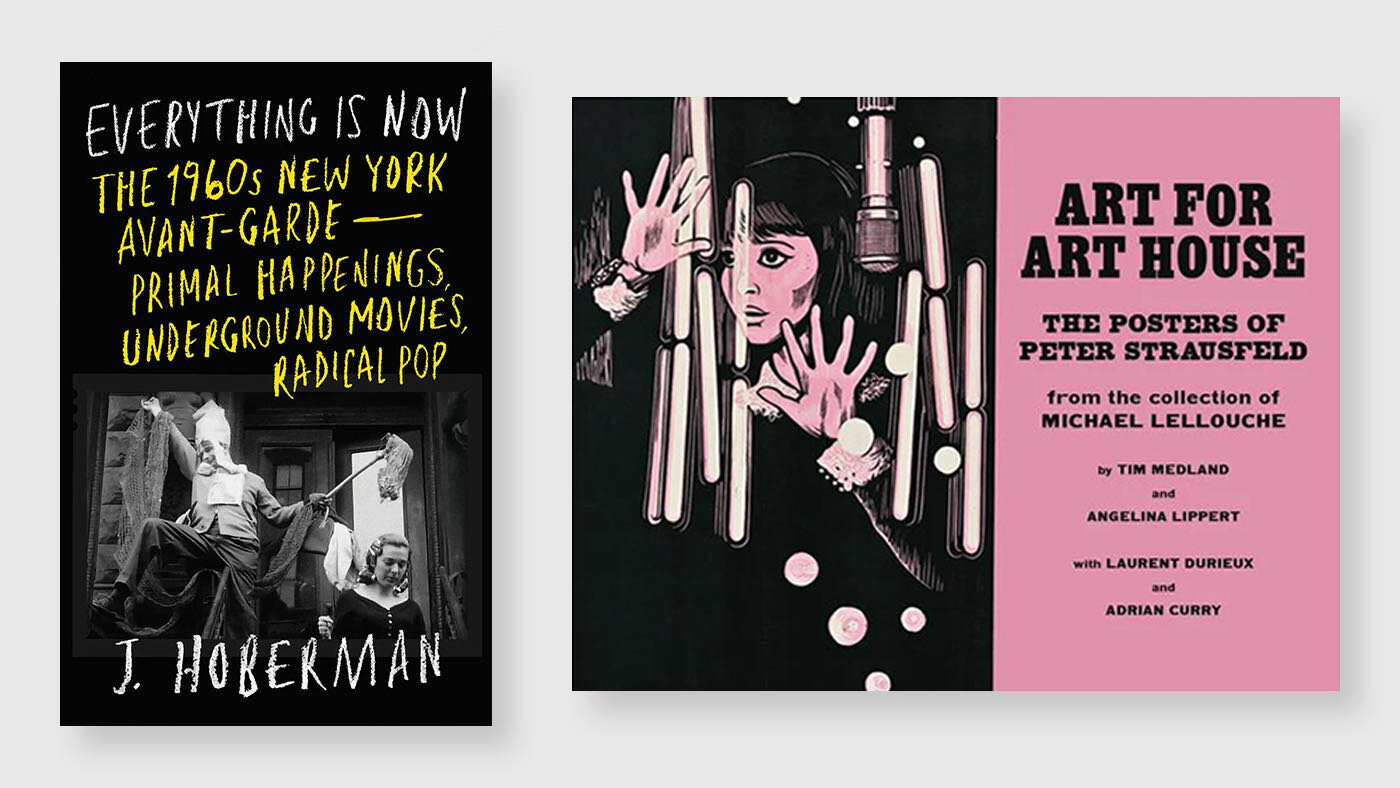
- Everything Is Now: The 1960s New York Avant-Garde—Primal Happenings, Underground Movies, Radical Pop by J. Hoberman (Verso)
- Art for Art House: The Posters of Peter Strausfeld by Tim Medland and Angelina Lippert (Poster House)
J. Hoberman’s latest book focuses on an especially fertile (and febrile) decade of cultural production in New York City, including such artists as Nam June Paik, Carolee Schneemann, Jack Smith, and Andy Warhol.
Across the pond at around the same time, Peter Streusfeld’s movie posters were a fixture of the London underground. To accompany the first major North American exhibition of his work, Poster House has published a catalogue, including an essay by our own Adrian Curry. Notebook readers can take ten percent off at checkout with the code MOVIEPOSTER.
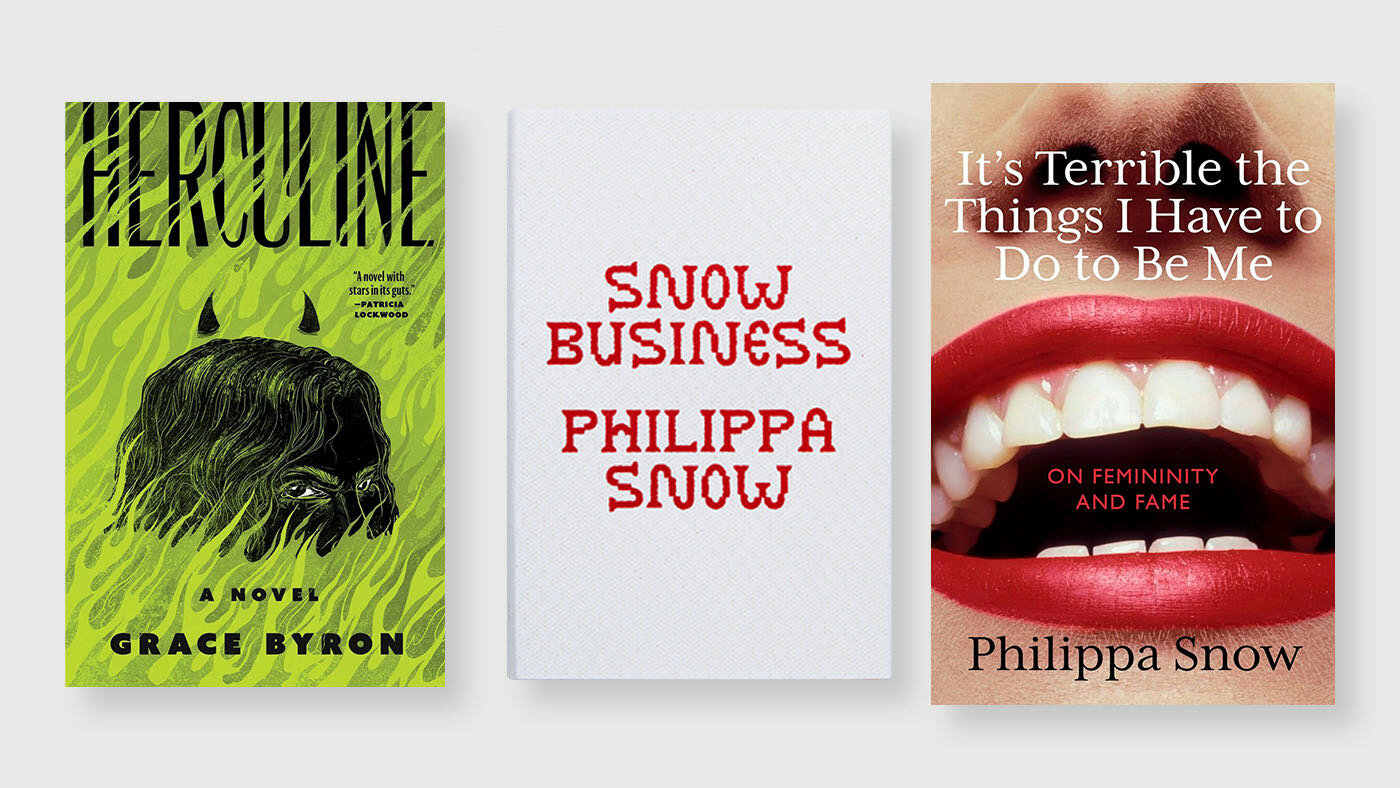
- Herculine by Grace Byron (Simon & Schuster)
- Snow Business by Philippa Snow (Isolarii)
- It’s Terrible the Things I Have to Do to Be Me by Philippa Snow (Virago)
Several Notebook contributors have new books out, and we couldn’t be more thrilled. In Grace Byron’s widely acclaimed debut novel, a trans-girl commune is haunted by demons.
Snow Business is a collection of Philippa Snow’s whip-smart, heterodox essays on such subjects as Kim Kardashian and Harmony Korine. It’s Terrible the Things I Have to Do to Be Me is Snow’s first full-length nonfiction book, taking as its subject the construction of female fame.
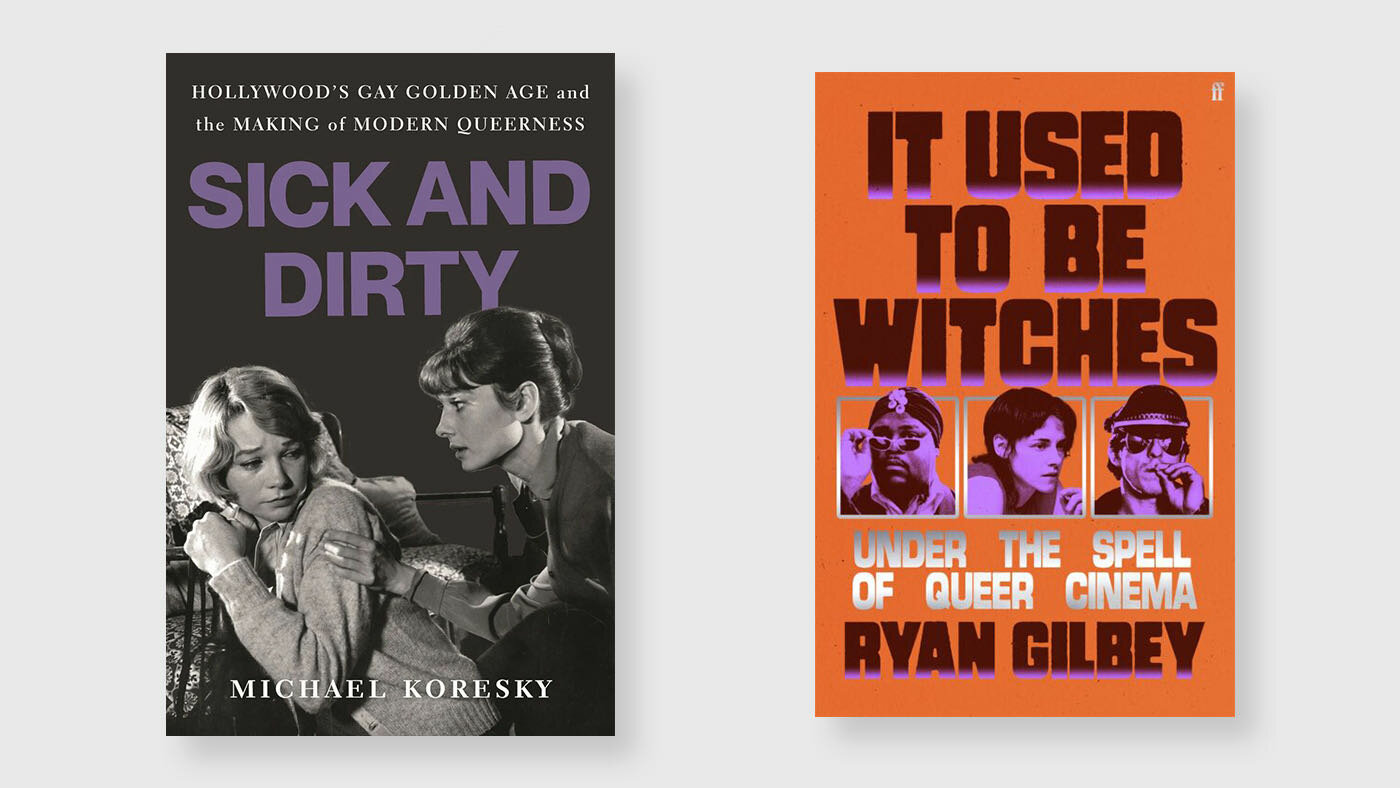
- Sick and Dirty: Hollywood’s Gay Golden Age and the Making of Modern Queerness by Michael Koresky (Bloomsbury)
- It Used to Be Witches: Under the Spell of Queer Cinema by Ryan Gilbey (Faber & Faber)
Another contributor, Michael Koresky, has likewise had a busy year. When he conducted a career-spanning interview with Todd Haynes for the Notebook Special, he had recently been named the Senior Curator of Film at the Museum of the Moving Image. This after putting the finishing touches on his indispensable latest book, Sick and Dirty, which deals with queer-coded Code-era classics.
It pairs well with Ryan Gilbey’s It Used to Be Witches, a more personal, nonchronological look at queer filmmaking, including interviews with Andrew Haigh, Cheryl Dunye, Isabel Sandoval, Bruce La Bruce, and more.
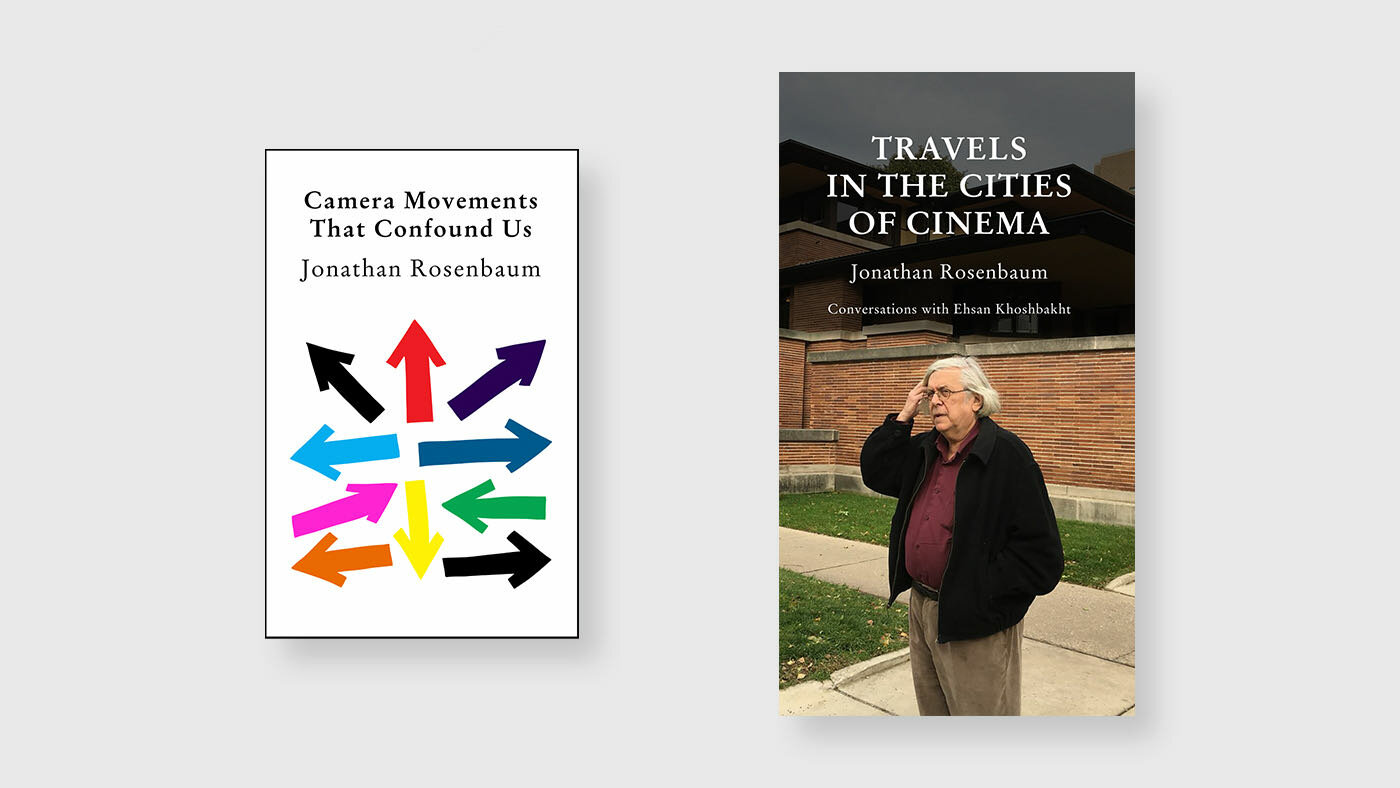
- Travels in the Cities of Cinema: Conversations with Ehsan Khoshbakht by Jonathan Rosenbaum (Sticking Place Books)
- Camera Movements That Confound Us by Jonathan Rosenbaum (Sticking Place Books)
Two new books by critic (and Notebook contributor) Jonathan Rosenbaum are available from Sticking Place Books: an “experimental investigation into a neglected yet essential part of moviegoing” and a wide-ranging series of interviews with Ehsan Khoshbakht, the chief curator of Il Cinema Ritrovato.
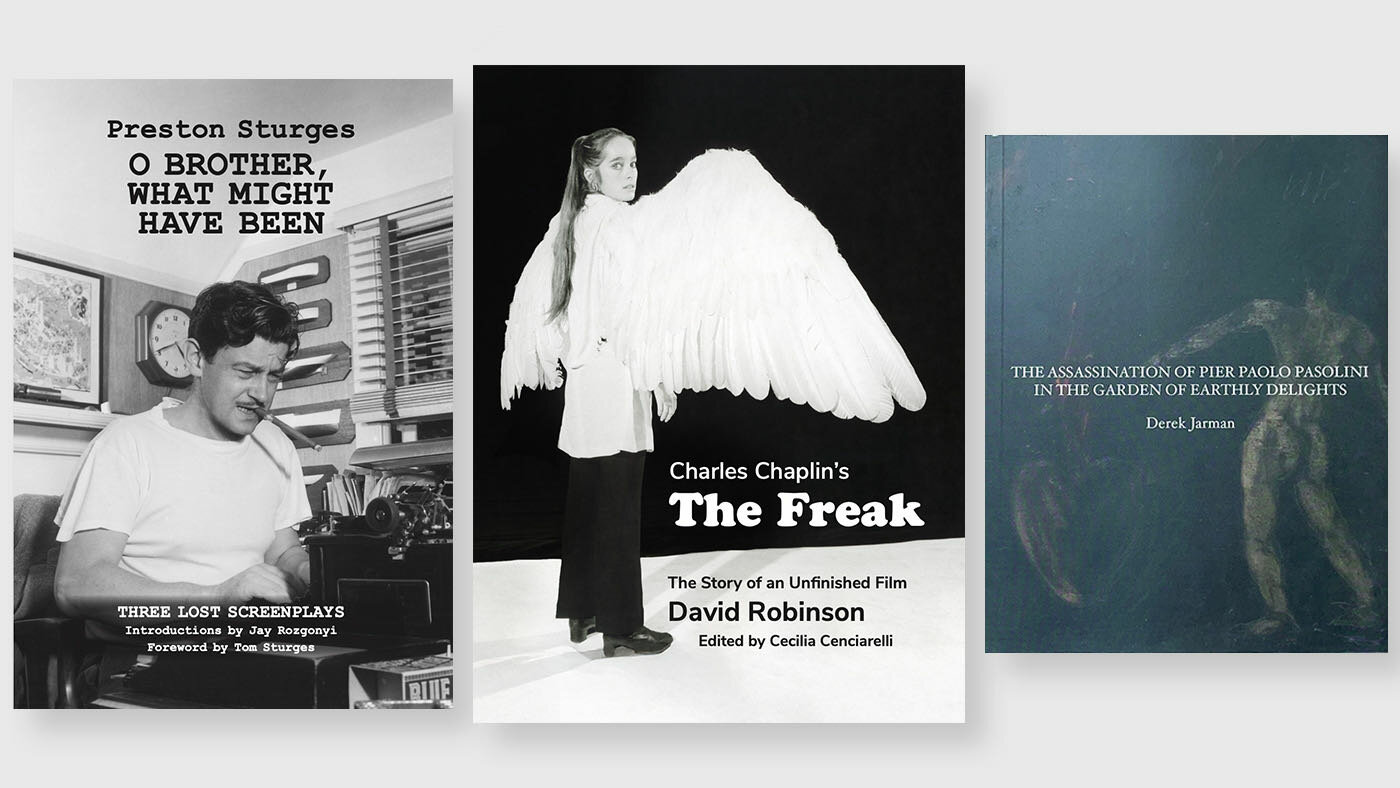
- O Brother, What Might Have Been: Three Lost Screenplays by Preston Sturges (Sticking Place Books)
- Charlie Chaplin’s The Freak: The Story of an Unfinished Film by David Robinson (Sticking Place Books)
- The Assassination of Pier Paolo Pasolini in the Garden of Earthly Delights by Derek Jarman (Pilot Press)
Sticking Place Books (on a hot streak this year) has also published two books dedicated to the unrealized projects of American cinema titans. The first collects three unproduced screenplays by Preston Sturges from throughout his career.
The second presents Charlie Chaplin’s original screenplay for a late-career project that nearly came to fruition, but did not. The Freak, a story of a winged woman, was to start Chaplin’s daughter Victoria, and this volume includes storyboards, designs, production notes, and photographs from its preproduction.
Plus: Pilot Press has released Derek Jarman’s unrealized treatment for a film about Pier Paolo Pasolini, which appears alongside reproductions from the director’s workbook, including notes about cinematography, lighting, sound, costume, casting, and props.
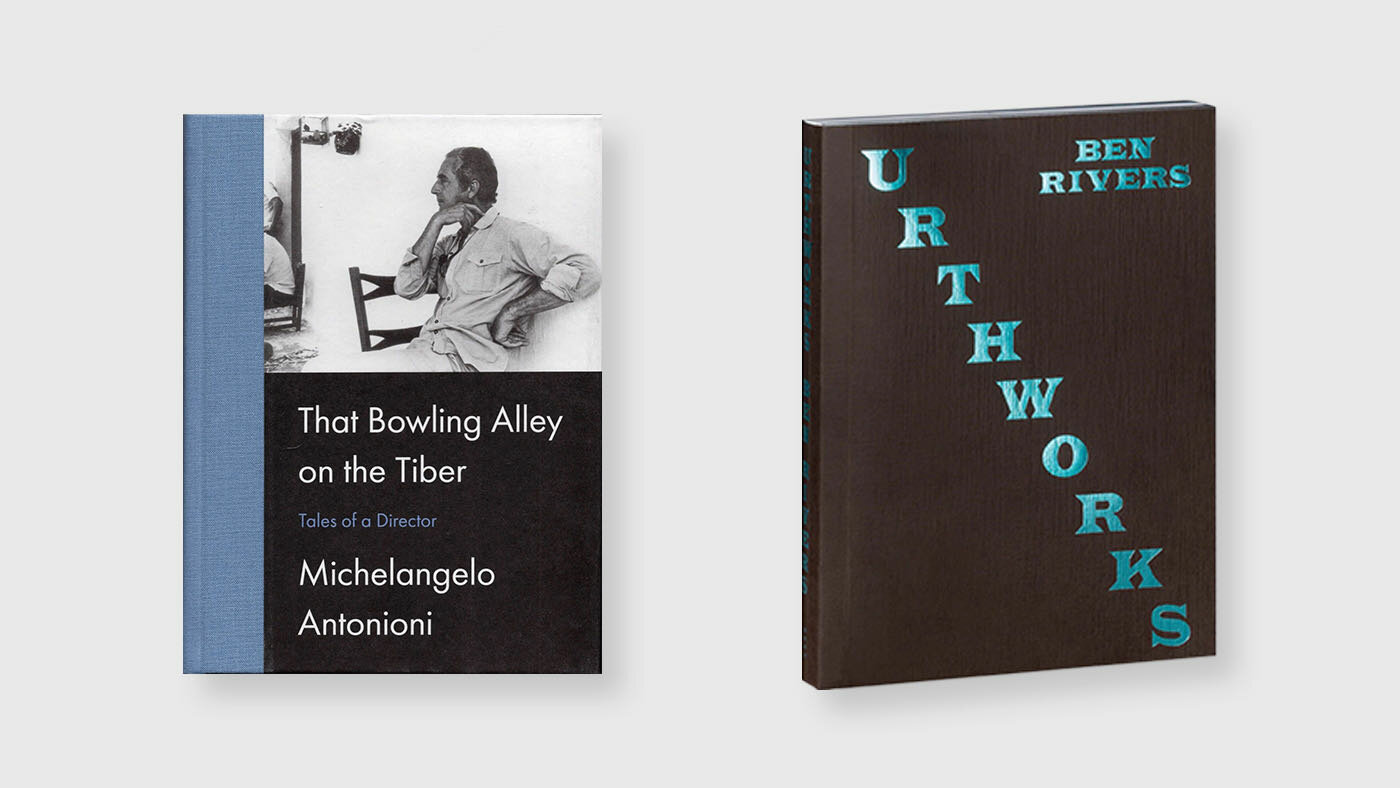
- That Bowling Alley on the Tiber by Michelangelo Antonioni (Film Desk Books)
- Urthworks by Ben Rivers (Mack Books)
Speaking of unrealized projects, a new book collects 33 “narrative nuclei” by Michelangelo Antonioni, each of which might have become a film.
The experimental filmmaker Ben Rivers presents a “visual novel,” pairing his images with texts by Mark von Schlegell to evoke a future after ecological collapse.
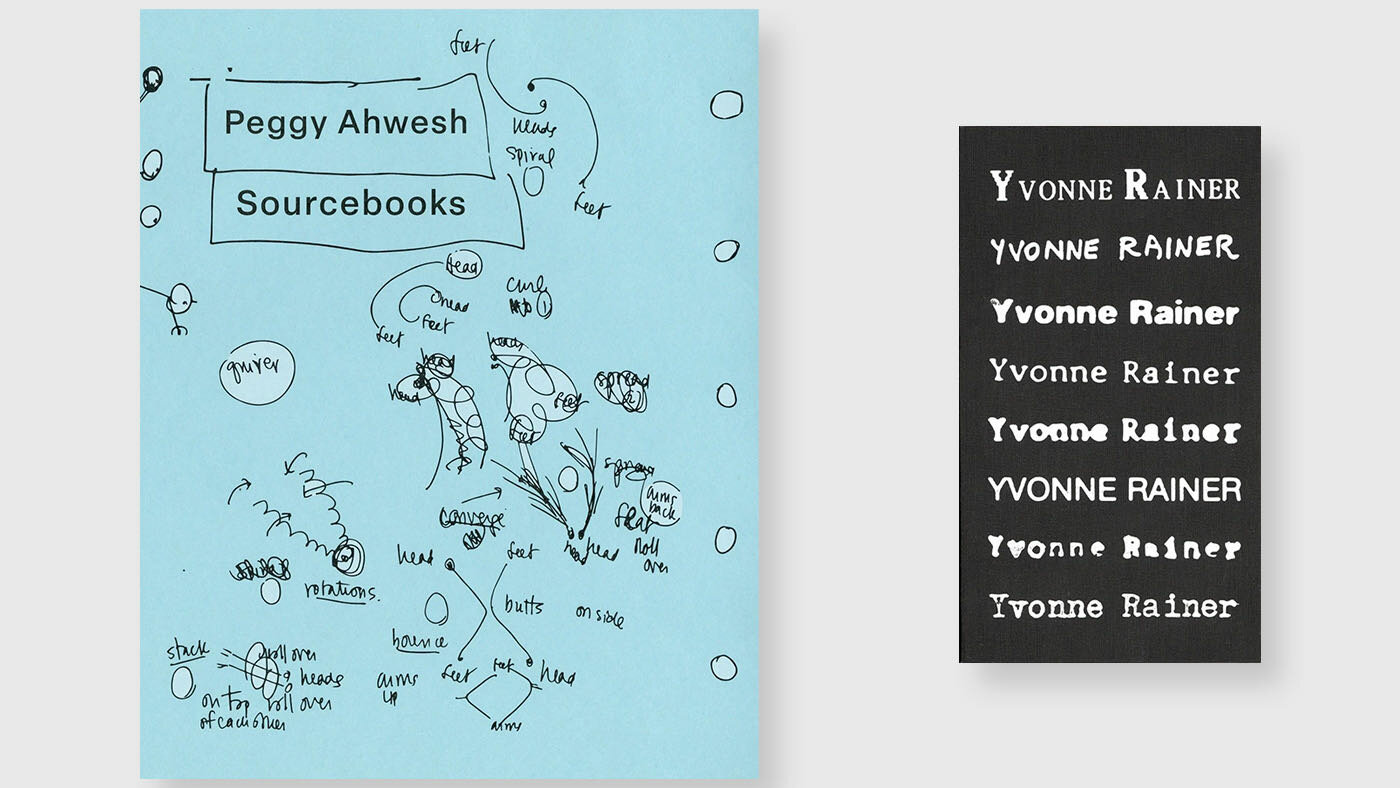
- Sourcebooks by Peggy Ahwesh (Visual Studies Workshop)
- Privilege: An Yvonne Rainer Filmography (At Last Books)
Experimental filmmaker Peggy Ahwesh has compiled the preparatory sourcebooks for some of her most influential works, including Martina’s Playhouse (1989), The Deadman (1990), and She Puppet (2001).
Published on the occasion of the first complete retrospective of Yvonne Rainer’s film work, Privilege includes contributions from Babette Mangolte, Emily LaBarge, Rainer herself, and many others.

- Six Films by Marguerite Duras, translated by Olivia Baes and Emma Ramadan (Inpatient Press)
- Reflections from a Cinematic Cesspool by George and Mike Kuchar (Inpatient Press)
Last year, our friends at Inpatient Press put out a collection of Chris Marker’s early writing, which was excerpted in these pages. This year, they continued to fire on all cylinders. Six Films represents attempts by Marguerite Duras to adapt as prose films with which she was not satisfied, available in English for the first time. Reflections from a Cinematic Cesspool is both a manifesto and a memoir by the brothers Kuchar, the celebrated and scandalous doyens of the American underground. The latter ships in January.
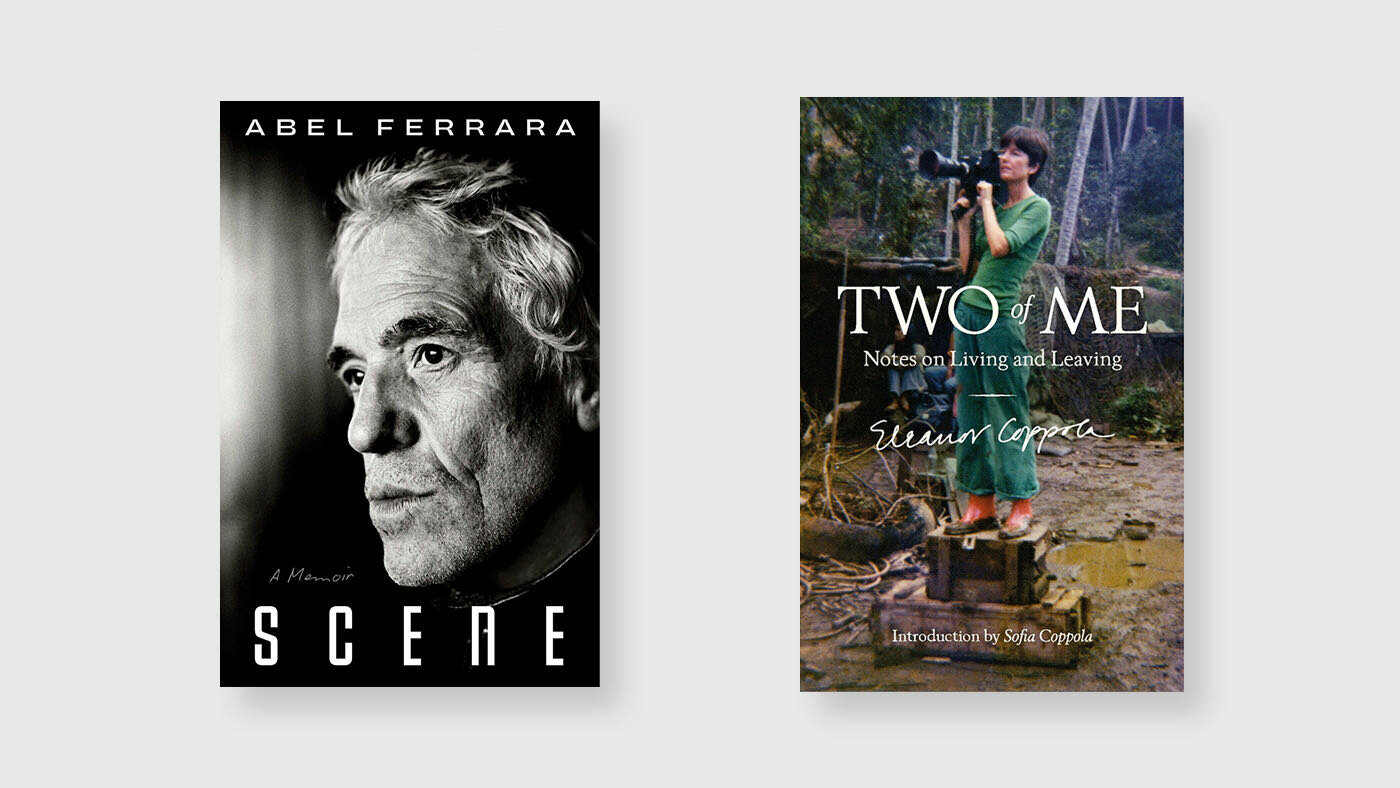
- Scene: A Memoir by Abel Ferrara (Simon and Schuster)
- Two of Me: Notes of Living and Leaving by Eleanor Coppola (Mack)
Abel Ferrara’s memoir offers an unflinching look at the filmmaker’s life and career, including the turbulent production of some of his most celebrated work. “A memoir accords well with the basic demands of sobriety,” Dylan Adamson observes. “There’s an old me and a new me, places I can’t go anymore, friends I can’t see.”
Eleanor Coppola’s posthumous memoir, written after her terminal cancer diagnosis, offers insights into her struggle to balance creative and caregiving roles in her life.
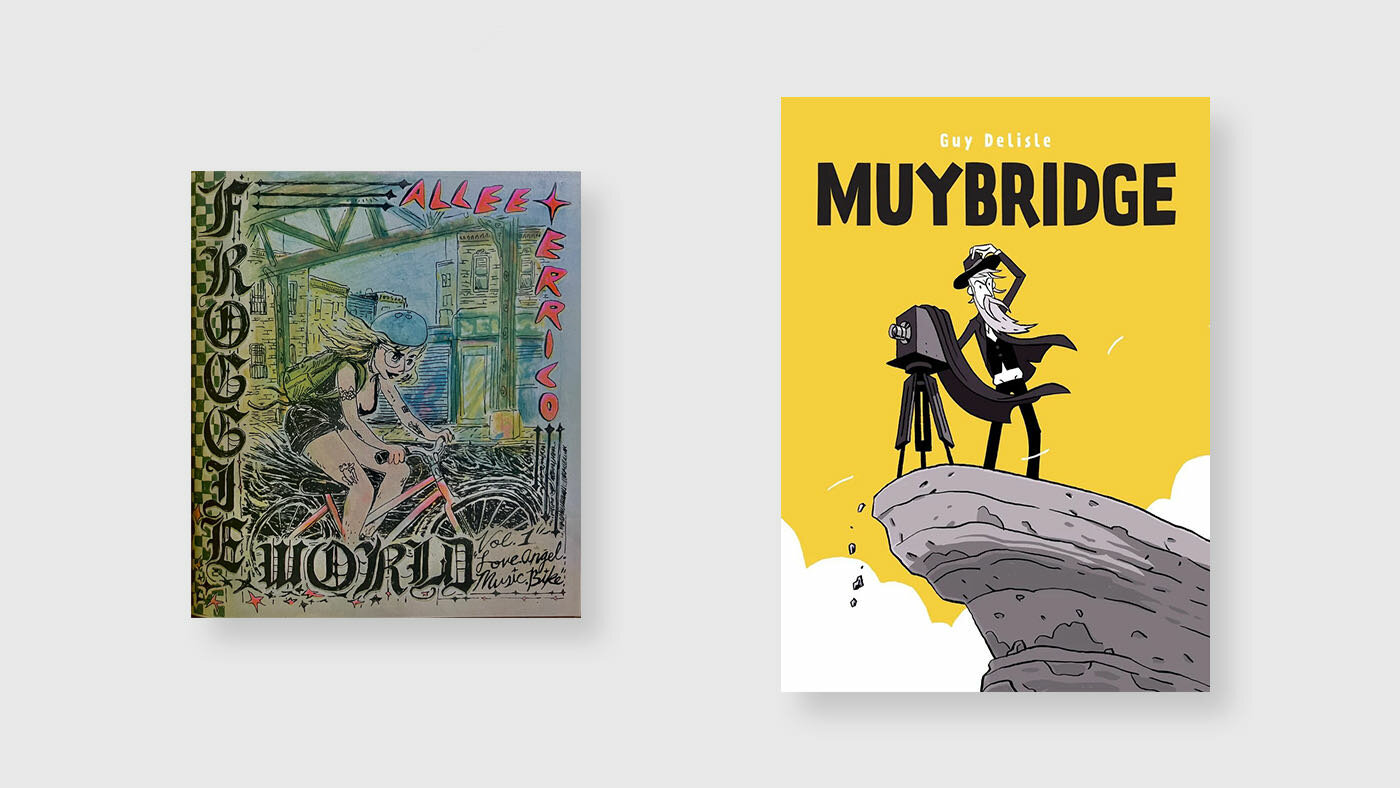
- Froggie World Vol. 1: Love, Angel, Music, Bike by Allee Errico (Cram Books)
- Muybridge by Guy Delisle (Drawn & Quarterly)
Subscribers to our Weekly Edit newsletter will know that we’ve been running serialized comic strips by some of our favorite cartoonists. For the second installment, Allee Errico offered a frenzied and fascinating internal monologue involving Bob Dylan, Tiny Tim, My Cousin Vinny (1992), and much else besides. She also published her first book this year, collecting and organizing her autobiographical comics by theme.
Elsewhere in the world of sequential arts, Guy Delisle’s graphic biography of Eadweard Muybridge is rich with details about the man who inadvertently anticipated cinema while trying to better understand horses.

- Hotels by Jules O’Dwyer (Fordham University Press)
- The Prop by Elena Gorfinkel and John David Rhodes (Fordham University Press)
- Blur by Martine Beugnet, translated by Lindsay Turner (Fordham University Press)
The first three pocket-sized volumes in Erika Balsom and Genevieve Yue’s Cutaways series each offers “a journey through the history of cinema guided by a single motif or formal device.” Earlier this year, we excerpted Elena Gorfinkel and John David Rhodes’s contribution.
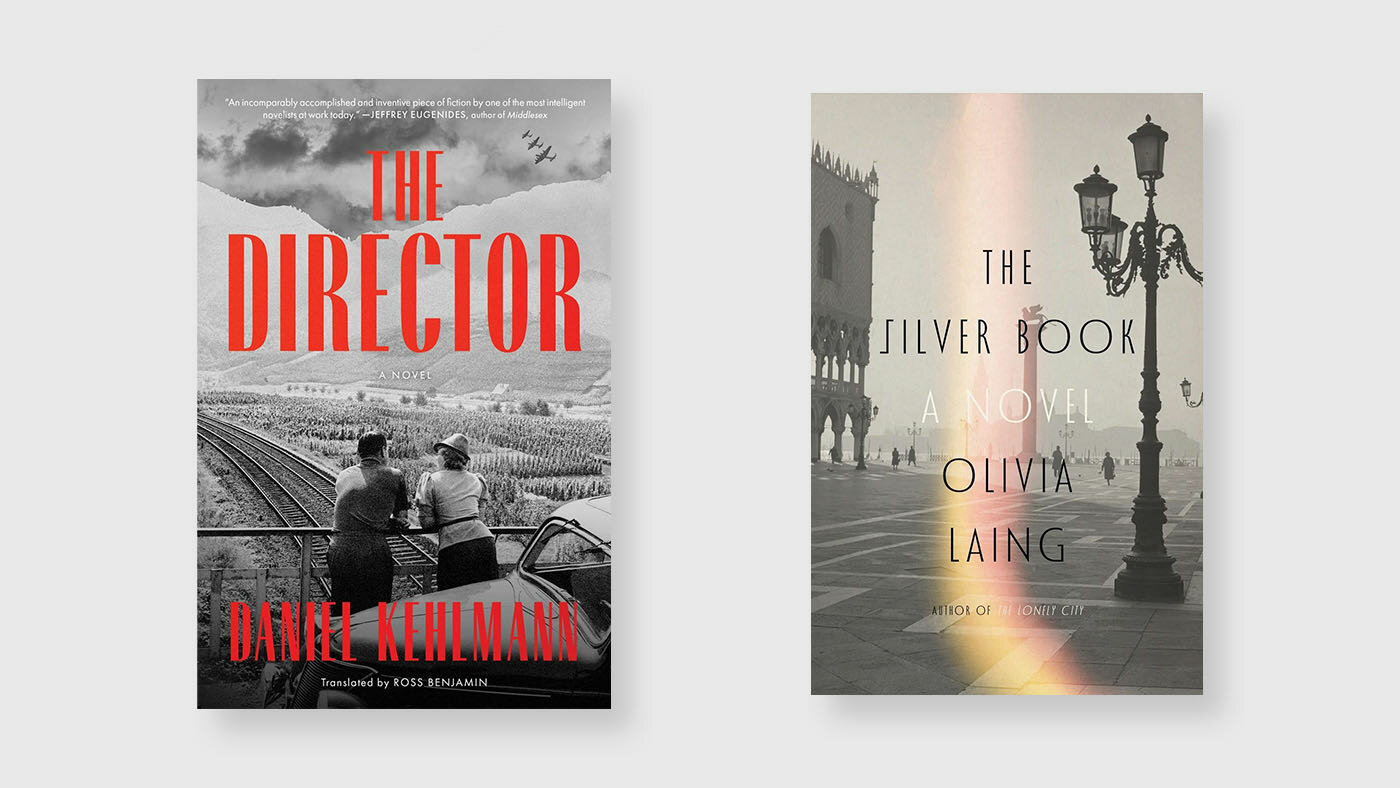
- The Director by Daniel Kehlmann, translated by Ross Benjain (Simon & Schuster)
- The Silver Book by Olivia Laing (Hamish Hamilton)
Two major novels this year compellingly fictionalize the events of filmmakers’ lives. The Director charts G. W. Pabst’s frustrations in Hollywood and return to Germany, where he was enlisted to direct movies for the Third Reich.
The Silver Book, “at once a queer love story and a noirish thriller,” is an account of the celebrated 1970s costume designer Danilo Donati, who worked with Federico Fellini and Pier Paolo Pasolini during Italy’s harrowing “Years of Lead.”

- Conversations With Wang Bing by Michael Guarneri (Piretti Editore)
- I Only Believe In Myself: Conversations with Murielle Joudet by Catherine Breillat, translated by Christine Pichini (Semiotext[e])
Piretti Editore has published Michael Guarneri’s Conversations With Wang Bing, a collection of interviews with the Chinese director on the ways his work highlights the joys and struggles of Chinese life.
Semiotext(e) presents the results of 30 hours of conversation between Murielle Joudet and the French filmmaker Catherine Breillat, discussing each of her works in chronological order.
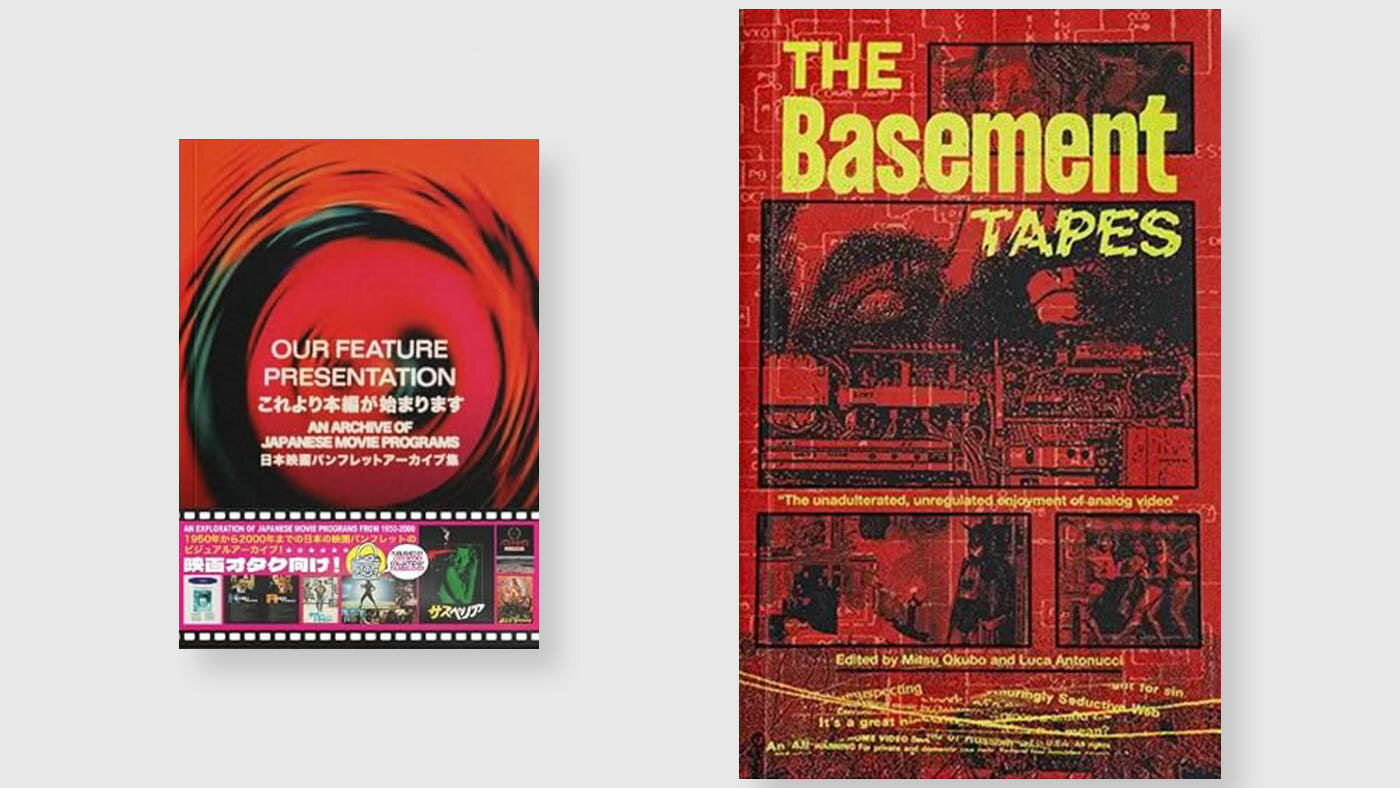
- Our Feature Presentation: An Archive of Japanese Movie Programs (Lock Books)
- The Basement Tapes edited by Luca Antonucci and Mitsu Okubo (VS Press)
A new collection features excerpts from 50 years of Japanese film pamphlets, collectibles sold during a film’s run, often including interviews, production notes, behind-the-scenes accounts, and stills.
In another feast for the eyes, the idiosyncratic VHS archive of The Basement, an art collective in San Francisco’s Mission District, is depicted in all of its glory, with essays by William Bostwick, Jon Dieringer and Luca Antonucci.
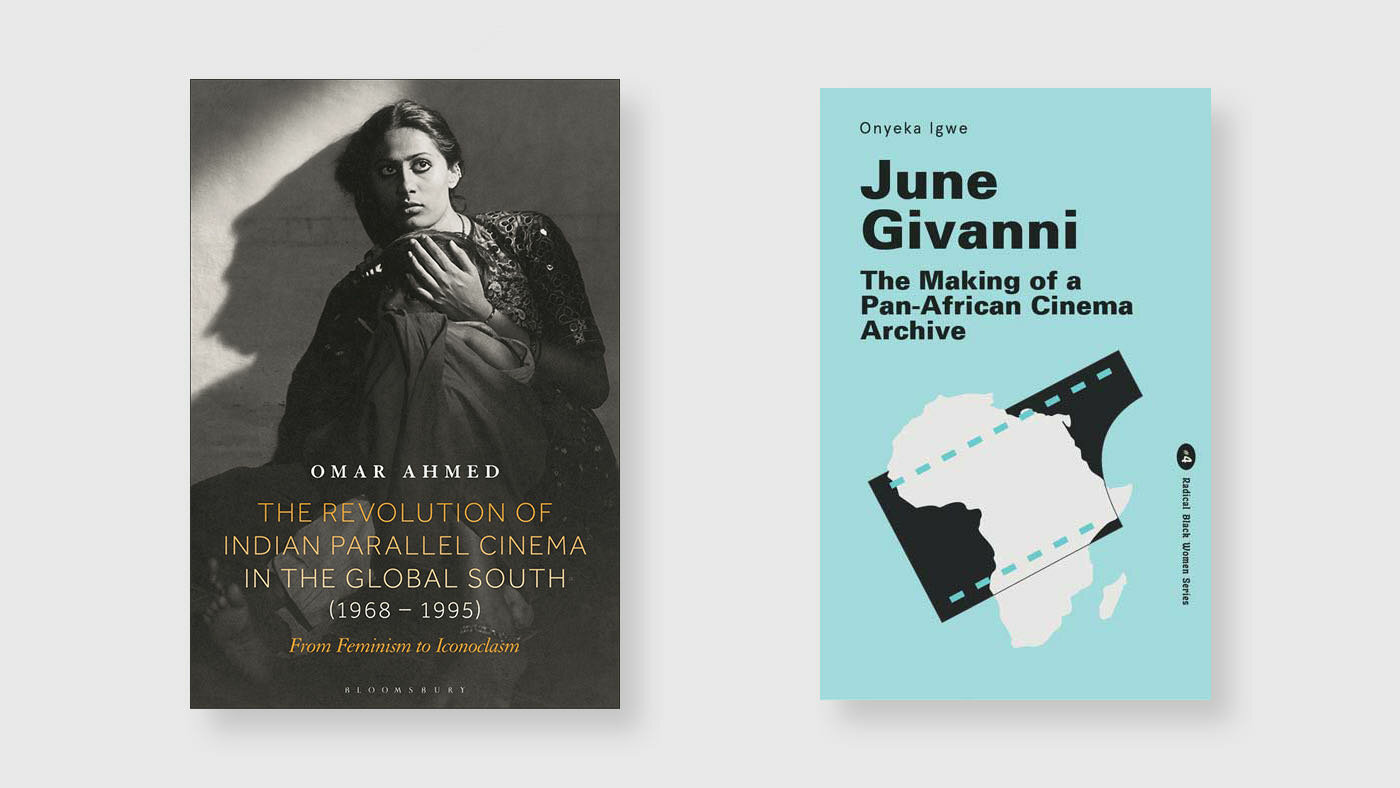
- The Revolution of Indian Parallel Cinema in the Global South, 1968–1995 by Omar Ahmed (Bloomsbury)
- June Givanni: The Making of a Pan-African Cinema Archive by Onyeka Igwe (Lawrence Wishart)
Omar Ahmed’s comprehensive study of Indian Parallel cinema “contextualiz[es] it in the political, economic, and social crucible of a young nation,” writes Arun A. K.
Meanwhile, Onyeka Igwe stages an encounter with June Givanni’s Pan-African Cinema Archive using oral history interviews and ephemera from four film festivals with which the programmer was involved across 40 years.

- Ed Wood: Made in Hollywood USA by Will Sloan (OR Books)
- I Killed Bette Davis by Larry Cohen (Sticking Place Books)
Finally, a couple recommendations for the cult cinema fanatic in your life: Will Sloan’s critical biography of Ed Wood (“the first director to wear the mantle of Worst Ever,” per Ryan Meehan’s review) is an exceptionally well researched engagement with the Poverty Row auteur of Glen or Glenda (1953), Plan 9 from Outer Space (1957), and many others.
Larry Cohen’s posthumous memoir promises, in the director’s words, “all the fun and the fiascos, all the memories, the pain and the pleasures, the films, the battles, the triumphs and misadventures that defined my career,” which includes such favorites as It’s Alive (1974), God Told Me To (1976), and Wicked Stepmother (1984), the final screen appearance of Bette Davis.
HOME VIDEO
Eventually someone will ask if we can stop watching the WPIX Yule Log loop. That’s your cue.
Region-free/Interzone
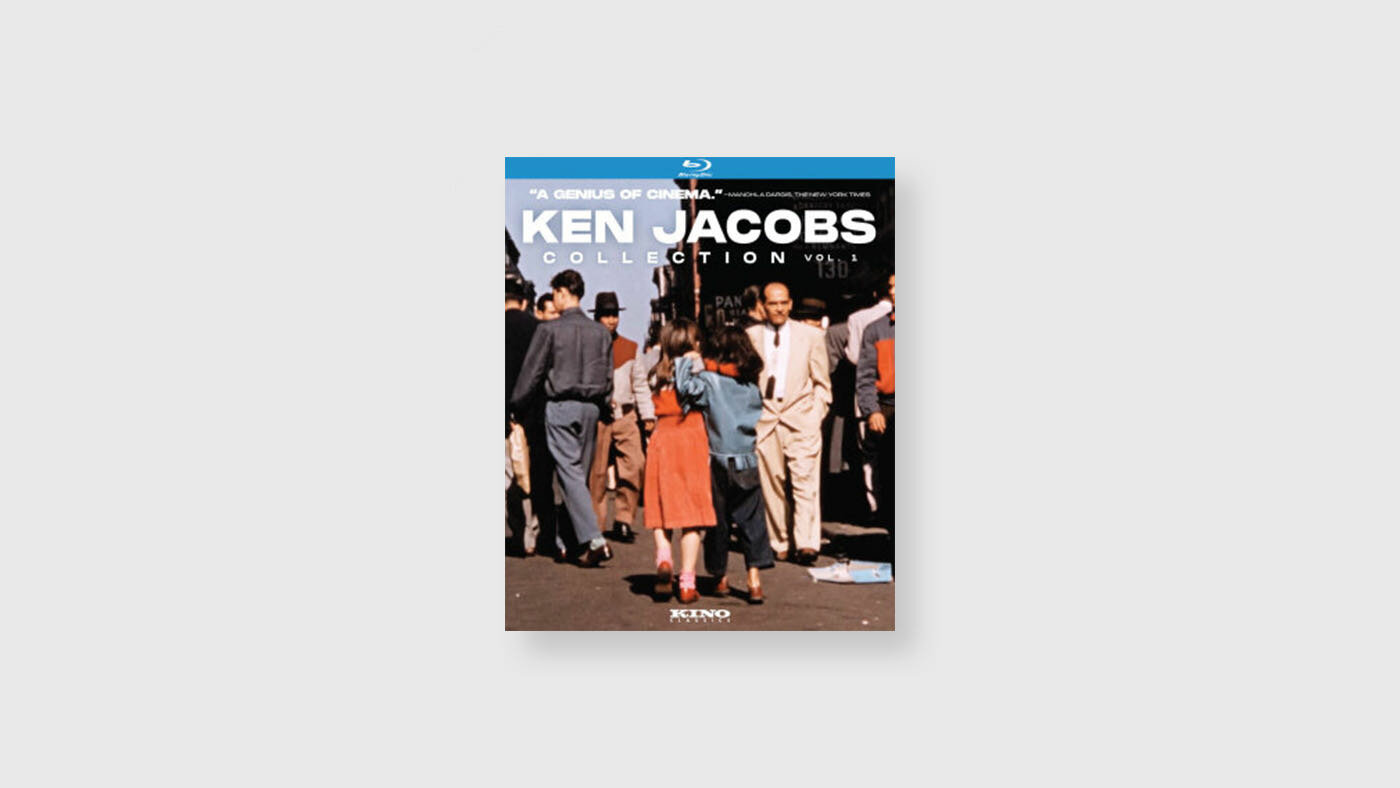
- Ken Jacobs Vol. 1 (Kino Lorber; those outside of US and Canada can buy from Re:voir)
Ken and Flo Jacobs died this year after 64 years of partnership and close collaboration. Kino Lorber’s two-disc first volume of Ken’s work includes such singular films as Orchard Street (1955), Little Stabs at Happiness (1963), and Tom Tom the Piper's Son (1969).
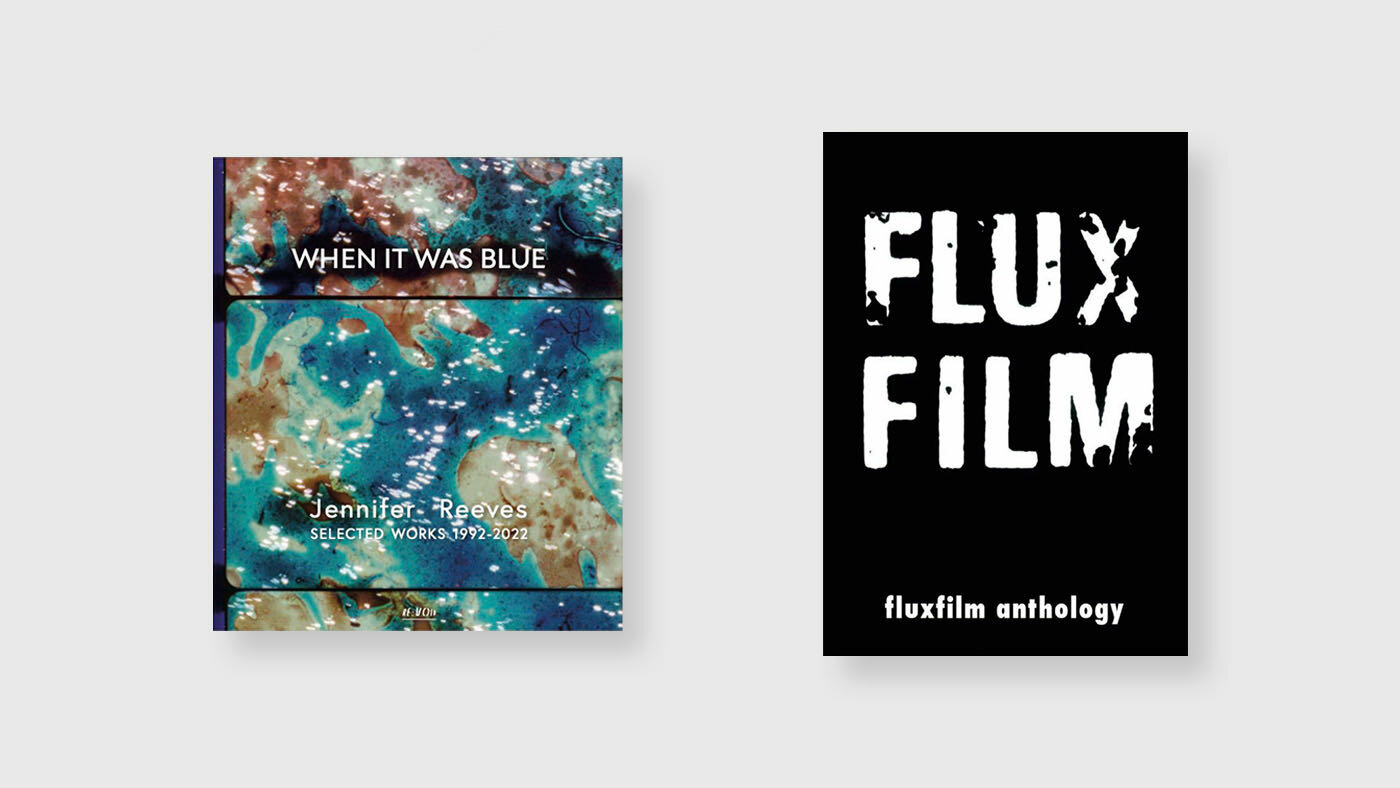
- Jennifer Reeves: When It Was Blue: Selected Works 1992–2022 (Re:voir)
- Fluxfilm Anthology (Re:voir)
Our own Laura Staab and Michael Sicinski contribute essays to a new collection of Jennifer Reeve’s materialist, often tactile experiments with 16mm.
If you’re running out anyway, could you also grab their Fluxfilm Anthology? It includes work by Nam June Paik, Yoko Ono, Paul Sharits, and many more, originally selected by the movement’s founder, George Maciunas.
Region A (North and South America, Japan, Korea, Taiwan, and Southeast Asia)
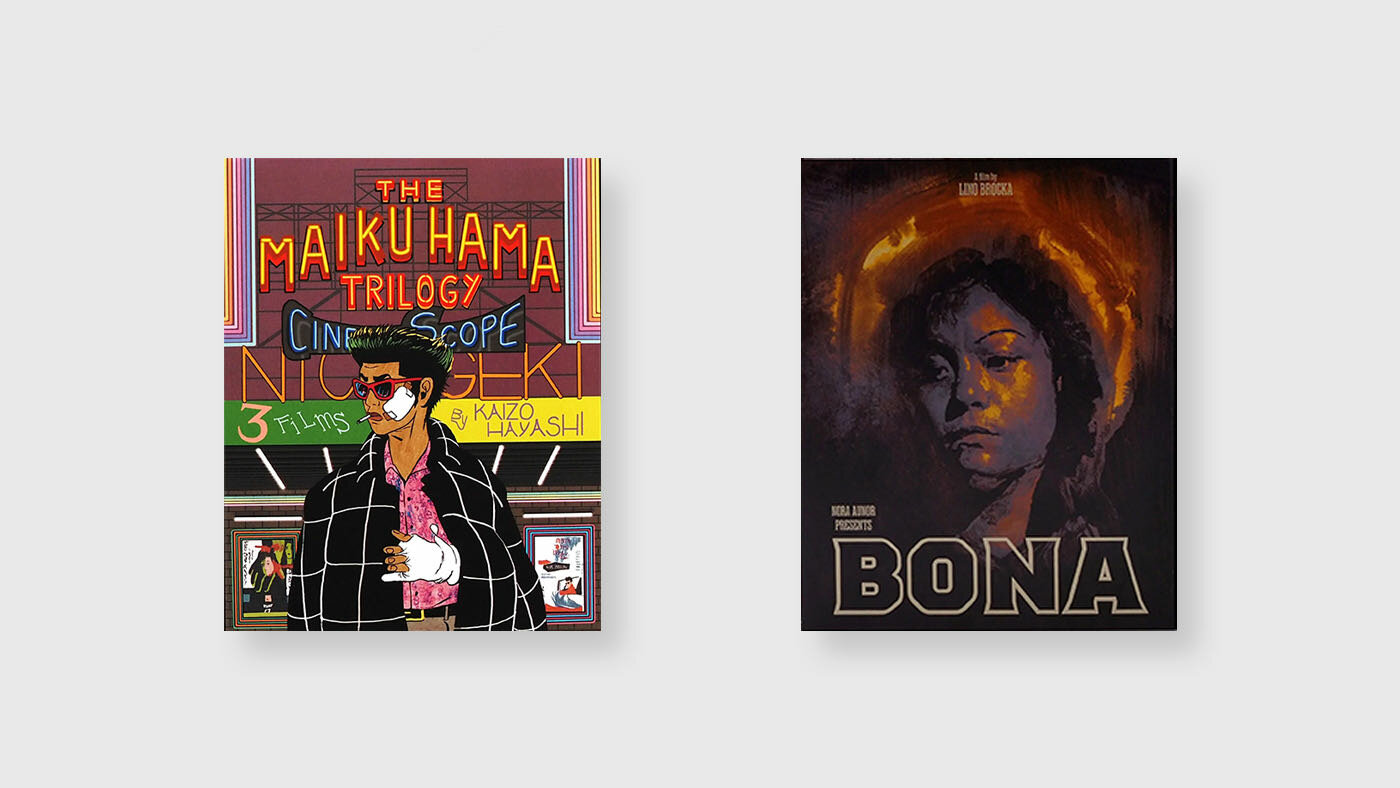
- The Maiku Hama trilogy (Kani Releasing)
- Bona (Kani Releasing)
Kazu Hayashi’s trilogy—The Most Terrible Time in My Life (1994), The Stairway to the Distant Past (1995), and The Trap (1996)—is a Japanese cult favorite starring Masatoshi Nagase as a private investigator with the most wonderful sunglasses.
In Lino Brocka’s Bona (1981), producer-star Nora Aunor is starstruck and tormented by a teen idol bit-player, winking darkly at the actress’s own fame. The film’s original elements were long considered lost but recently resurfaced, allowing this landmark of Filipino cinema to be restored and discovered anew.
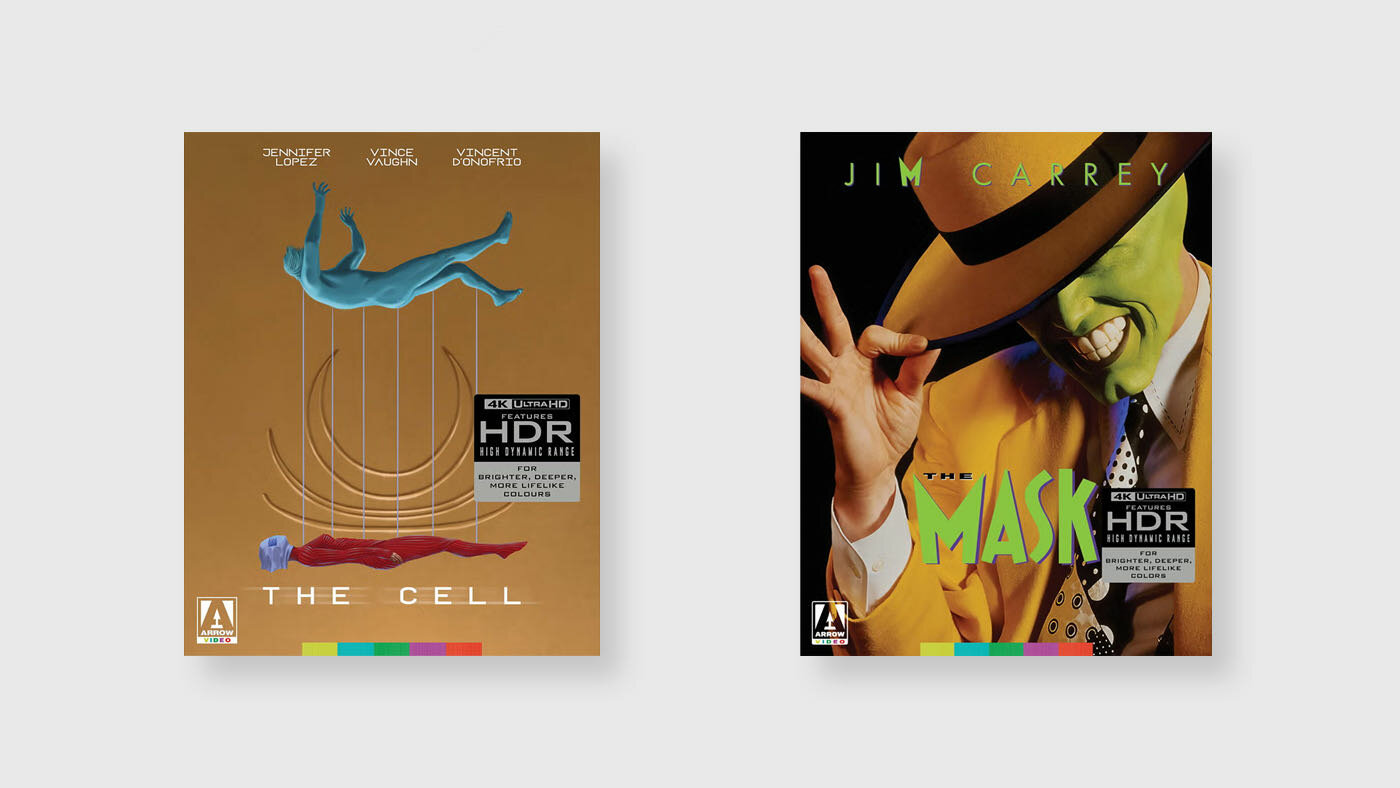
Tarsem recently told us about taking his mother to the premiere of The Cell (2000), only to have her wrap a shawl over her eyes and finger her prayer beads throughout. The film’s theatrical and director’s cuts have now been restored and packaged with a booklet of new essays by Heather Drain, Marc Edward Heuck, Josh Hurtado, and Virat Nehru.
Plus: Nobody stopped him... Arrow’s restoration of The Mask (1994) comes with new video interviews with director Chuck Russell, actress Amy Yasbeck, and several others, including Terriermania, a video essay by critic Elizabeth Purchell on Stanley Ipkiss’s dog, Milo.
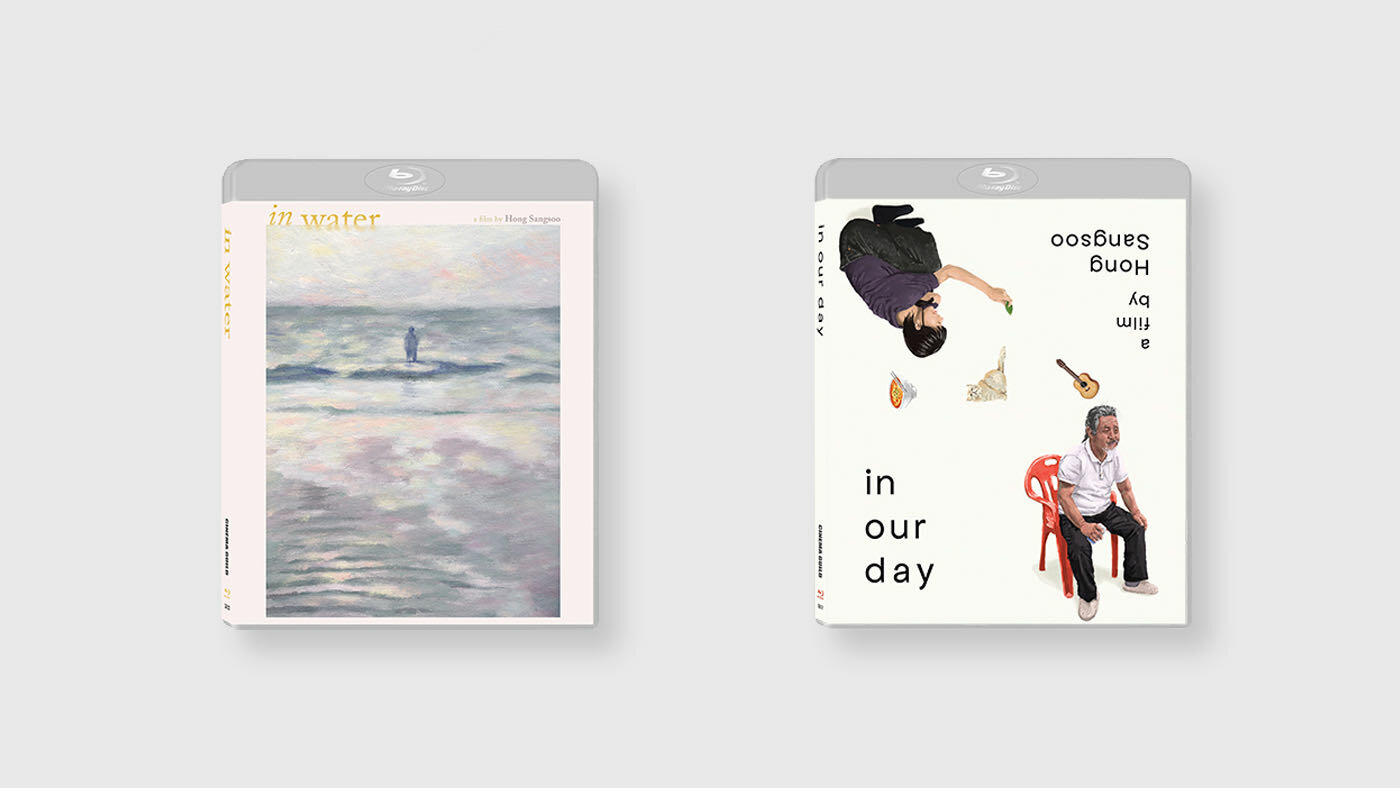
- in water (Cinema Guild)
- In Our Day (Cinema Guild)
Experience the films of Hong Sang-soo as they were meant to be seen: two at a time. The Cinema Guild release of in water (2023) includes the video greeting Hong filmed for New York Film Festival audiences, while the In Our Day (also 2023) booklet features an essay by Matías Piñeiro.
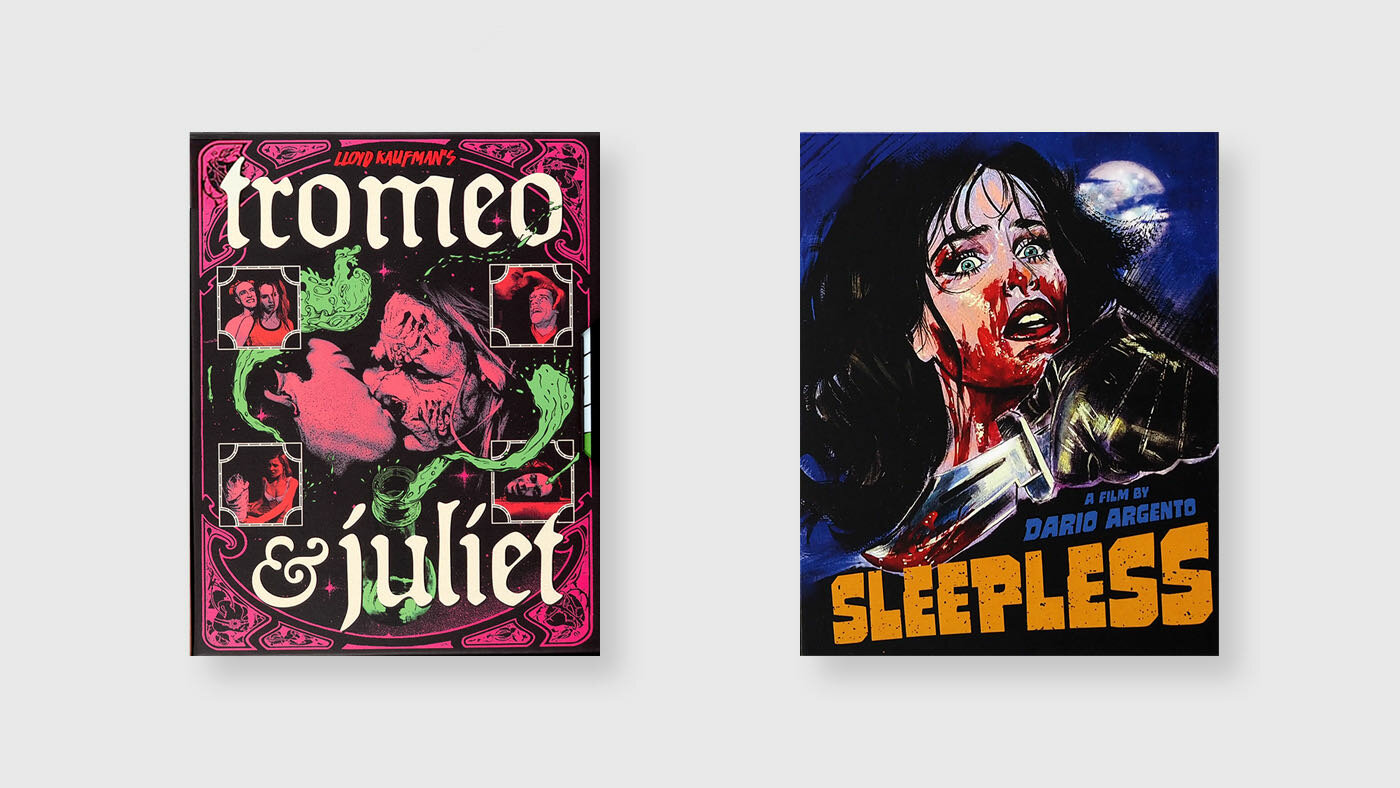
- Tromeo & Juliet (Vinegar Syndrome)
- Sleepless (Vinegar Syndrome)
We recently learned from Alex Ross Perry that a sliver of the poster for Tromeo & Juliet can be seen hanging in David Cross’s video store in Men in Black II (2002). Vinegar Syndrome have released the first of Lloyd Kaufman’s adaptations of the Bard with several commentary tracks including two with cowriter James Gunn, who would go on to fame for superhero films outside the Troma Cinematic Universe. Their release of Dario Argento’s Sleepless (2001), meanwhile, is replete with video interviews, both new and archival.
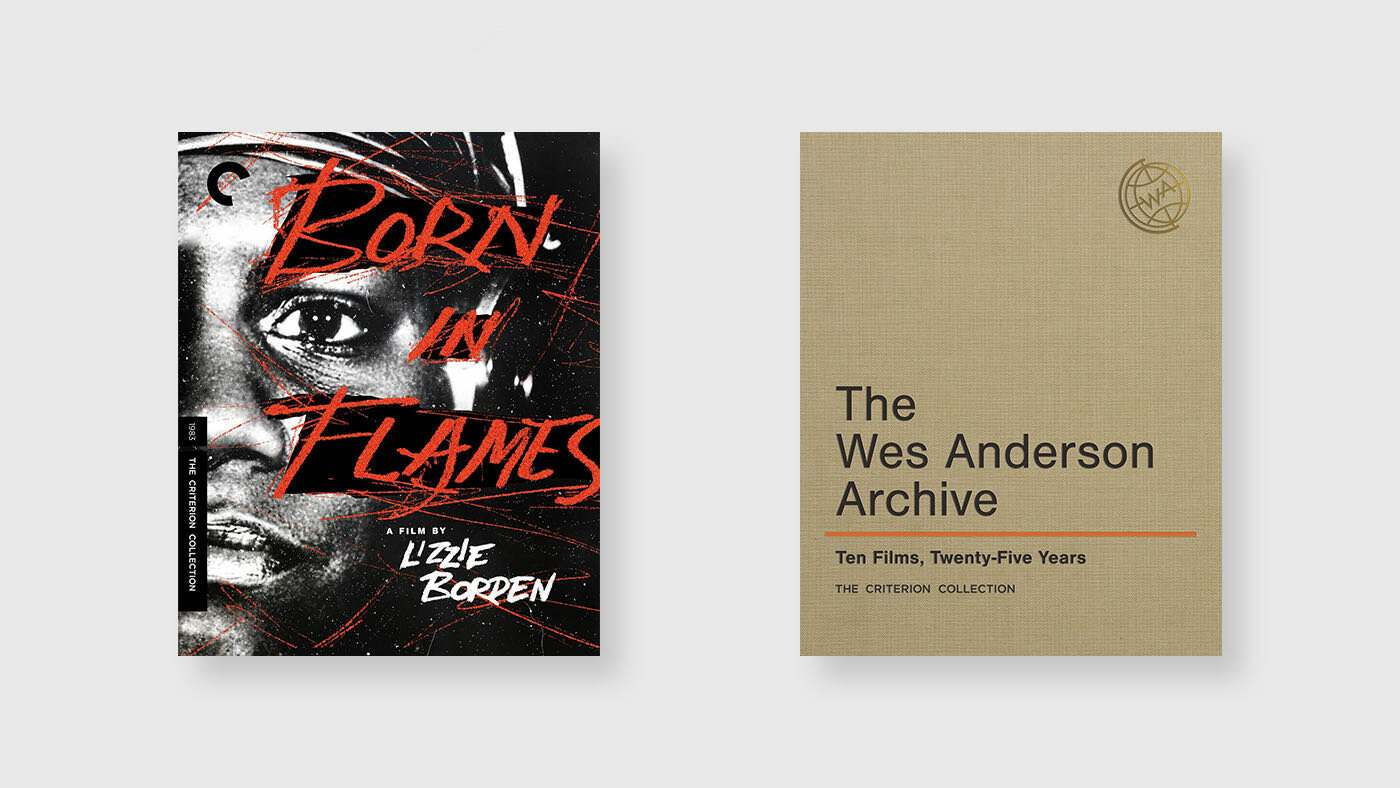
- Born in Flames (Criterion Collection)
- The Wes Anderson Archive: Ten Films, Twenty-Five Years (Criterion Collection)
The Criterion Collection have issued Lizzie Borden’s essential Born in Flames (1983)—set in the near-future democratic-socialist city of New York—alongside the director’s fascinating debut, Regrouping (1976), with essays by Yasmina Price and So Mayer.
Their Wes Anderson box set is a handsome, clothbound affair, like something you might find on Margot Tenenbaum’s shelves.
Region B (Europe, Africa, Middle East, Australia, and New Zealand)
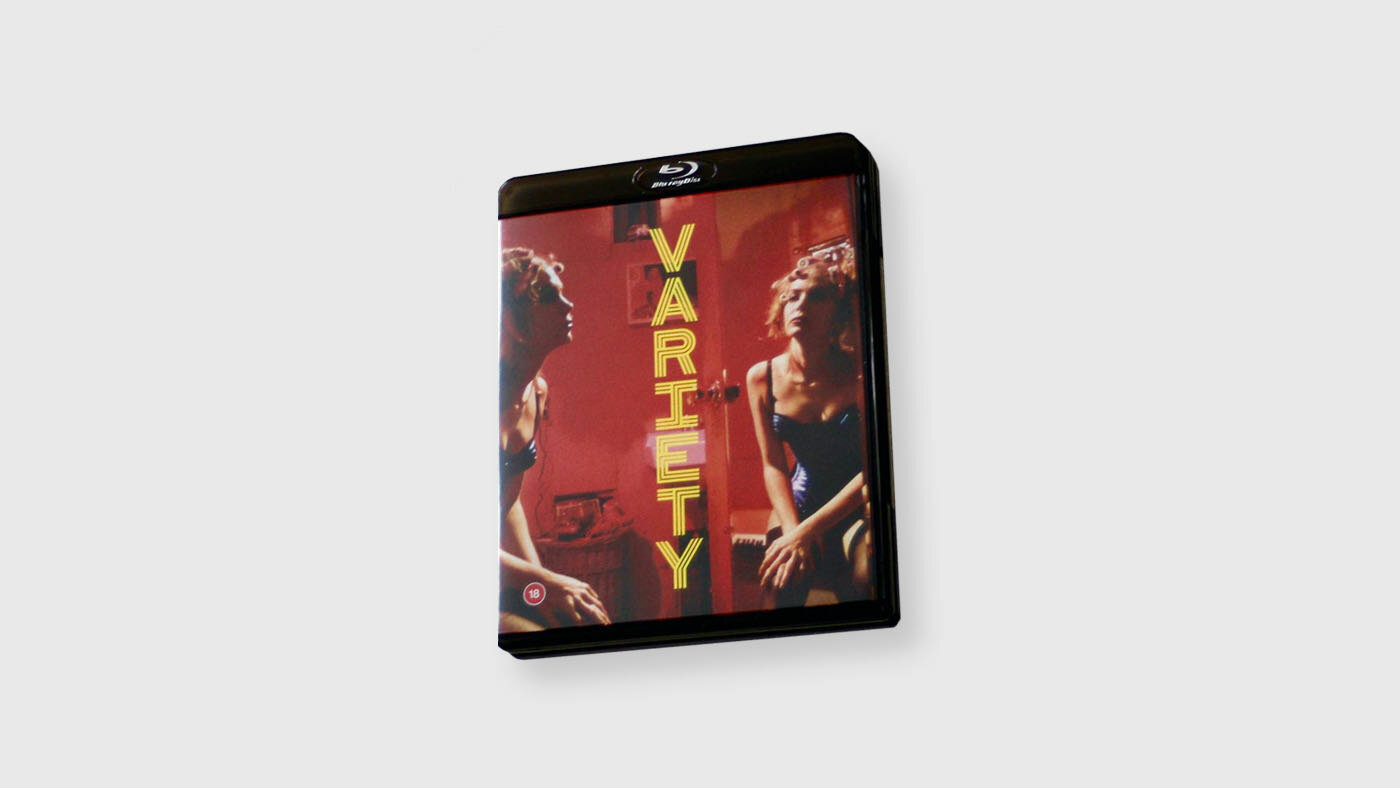
- Variety “Ultimate Voyeur” Bundle (Other Parties)
“I found the Variety by chance and fell in love with it,” Bette Gordon told Saffron Maeve last year. “Everything about it—its porn, its neon, its free-standing booth.… It looked like candy—I wanted to smell it, to eat it.” Her story of the woman working the box office, cowritten by Kathy Acker, restored and rereleased last year, is now available on home video alongside a copy of the theatrical poster.
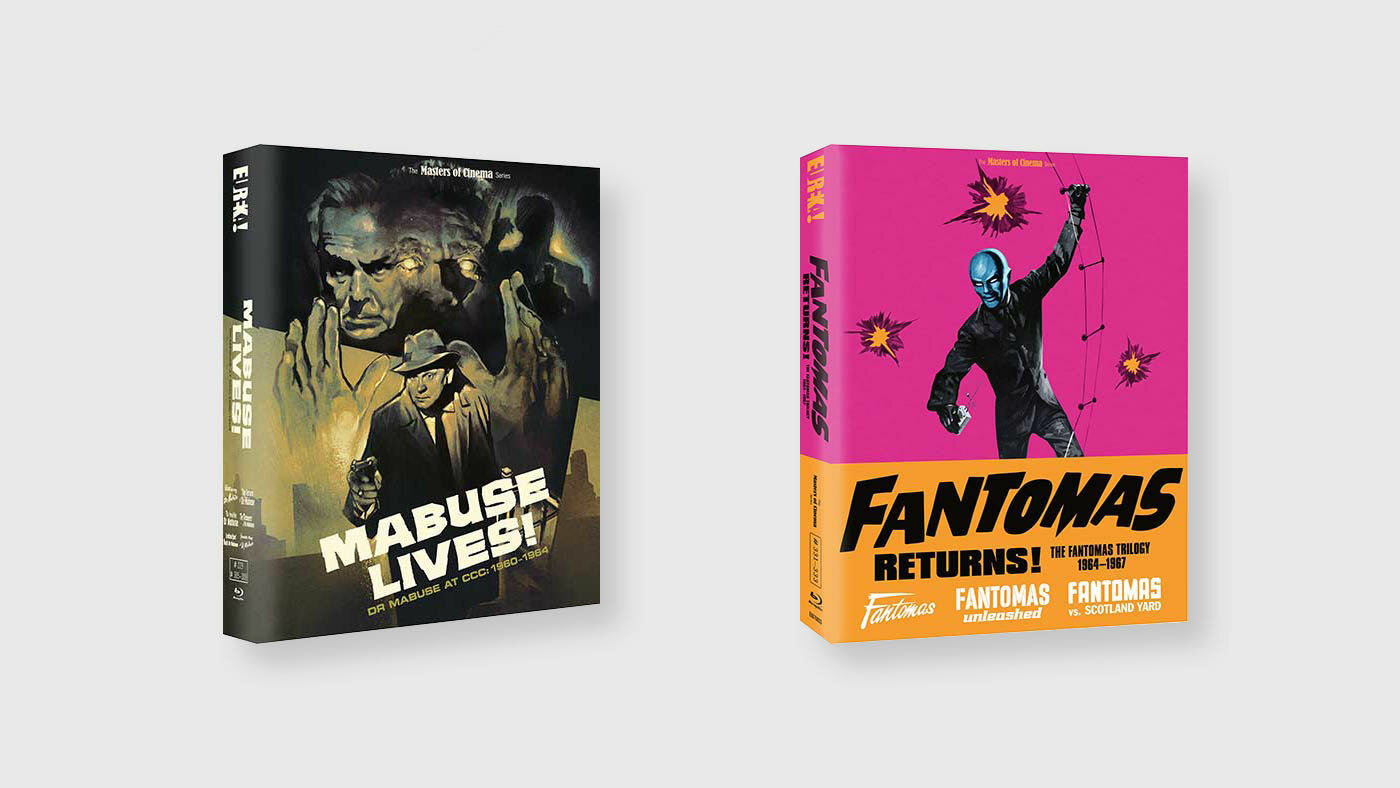
- Mabuse Lives! (Eureka!)
- Fantômas Returns! (Eureka!)
In 1960, producer Artur Brauner persuaded Fritz Lang to direct a third installment of his Dr. Mabuse series, nearly 40 years after the last one. The result was a hit, and CCC proceeded to make five more with various directors, Wolfgang Preiss remaining in the title role. The influence of those films can be felt in André Hunebelle’s Fantômas trilogy a few years later, a comic revival of Louis Feuillade’s silent serial. Eureka!’s releases of both are teeming with bonus features.
MUSIC AND SOUNDTRACKS
For when our throats are hoarse from caroling.
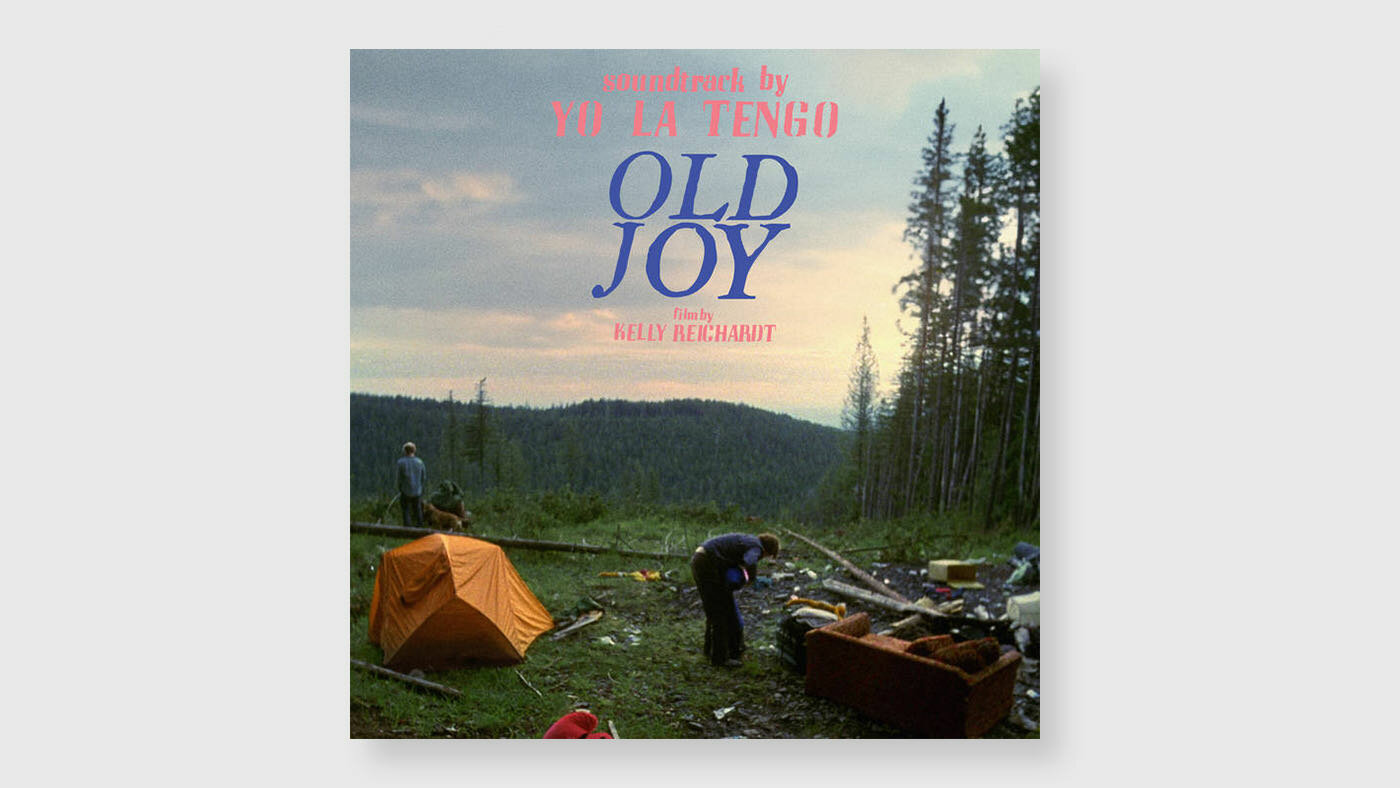
- Old Joy soundtrack (Mississippi Records)
Nineteen years after it was recorded one afternoon in Hoboken, Yo La Tengo’s instrumental, improvised soundtrack to Kelly Reichardt’s Old Joy (2006) is finally available on vinyl.
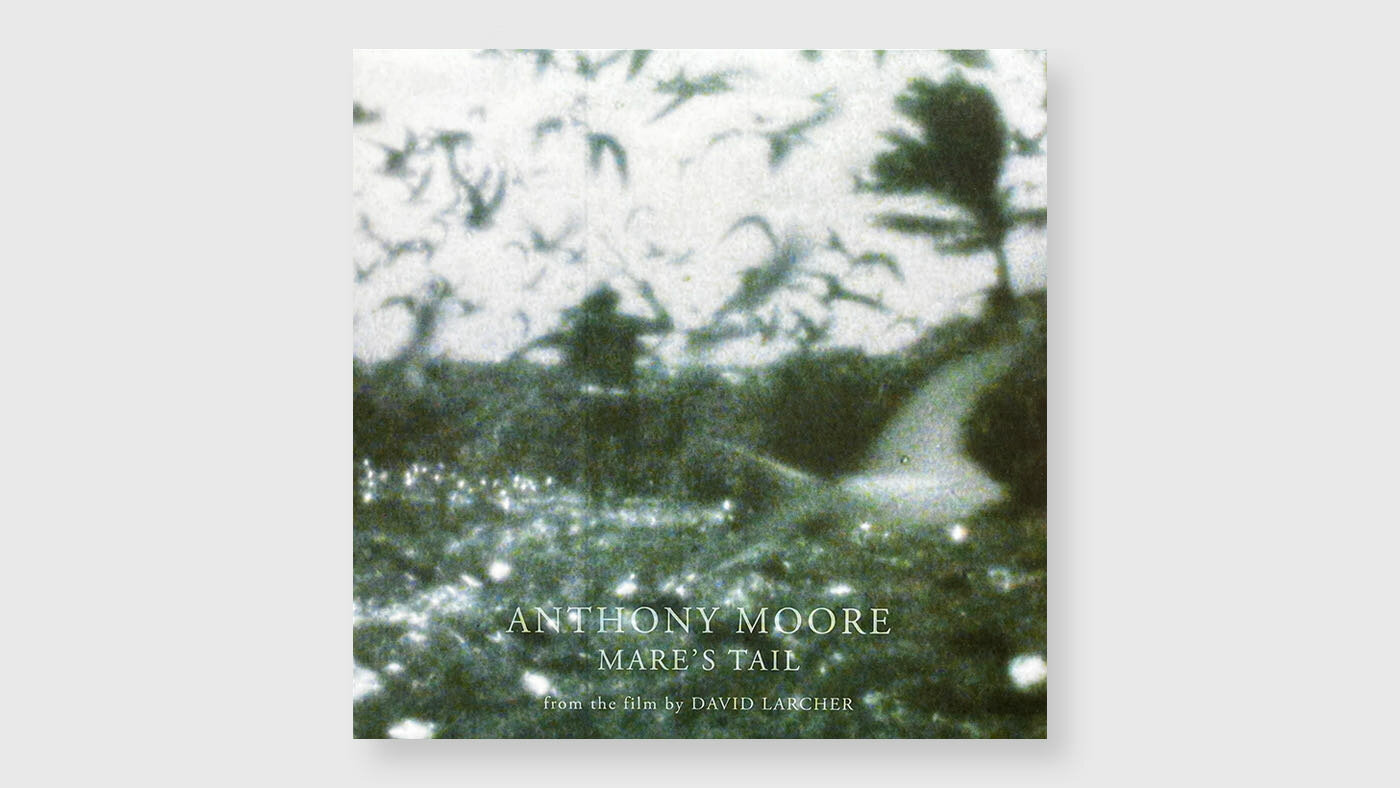
- Mare’s Tail soundtrack (All Night Flight)
When avant-garde musician Anthony Moore first collaborated with the filmmaker David Larcher, both men were at the beginning of their careers and steeped in the heady brew of late-1960s British psychonaut culture. The result is their experimental epic Mare’s Tail (1969), a two-and-a-half-hour accretion of sound and image, found and made. Studying these parts in isolation may yield new epiphanies.
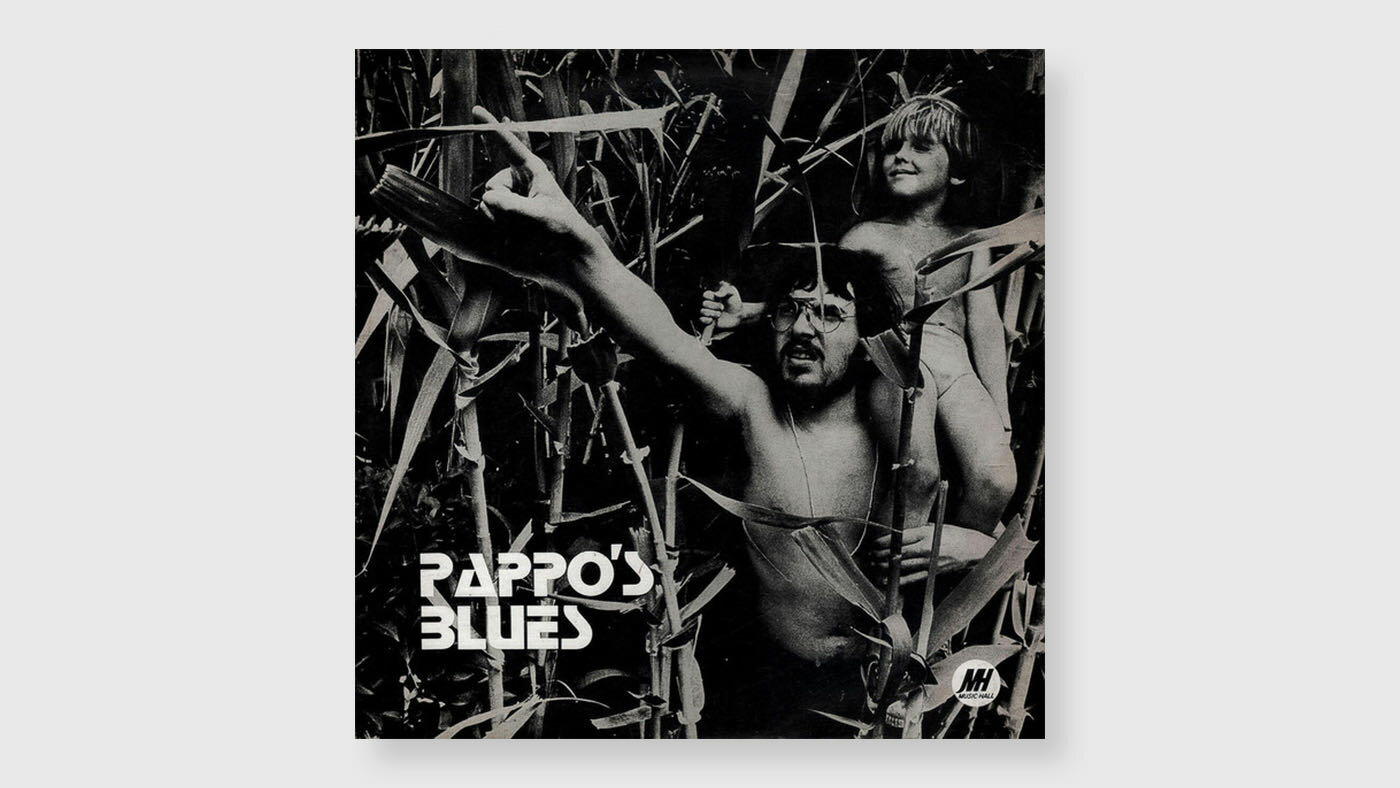
- Pappo’s Blues Vol. 1 (Music Hall)
This probably should have been on our list last year, but it’s never too late to own a copy of the immortal album that the characters of Rodrigo Moreno’s The Delinquents (2023) pass between them throughout the film.
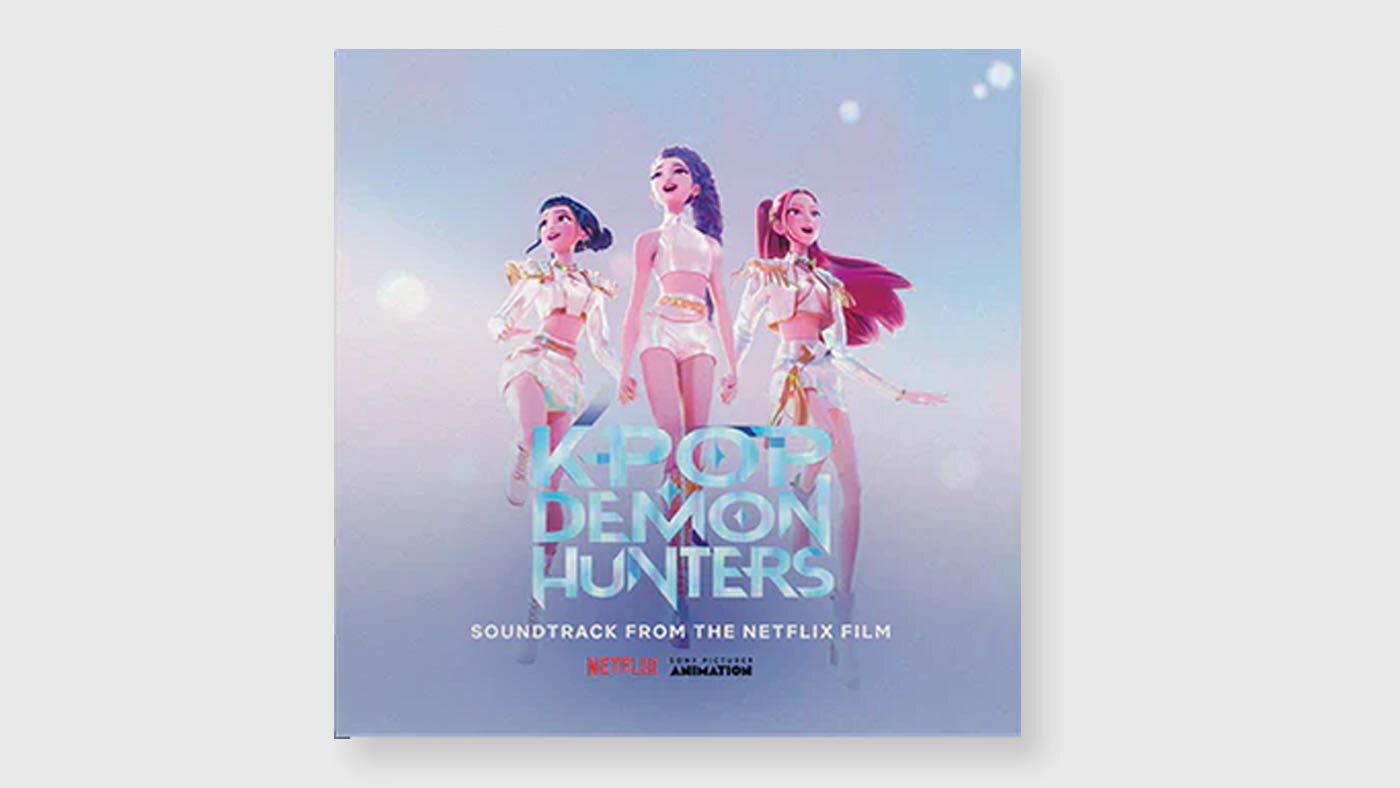
- K-Pop Demon Hunters soundtrack (Island)
Maybe you haven’t heard this enough already?
POSTERS, PRINTS, AND MEMORABILIA
Regular readers of Adrian Curry’s Movie Poster of the Week column will know their chirashi from their quattro fogli. A bare spot of any size on your loved one’s wall can therefore be handily filled with a prize acquisition from our friends at Posteritati.
Those in need of sage counsel or inspiration should refer to the “MUBI Picks at Posteritati” series, in which the likes of John Turturro, Paul Schrader, and Annie Baker discuss their favorites.
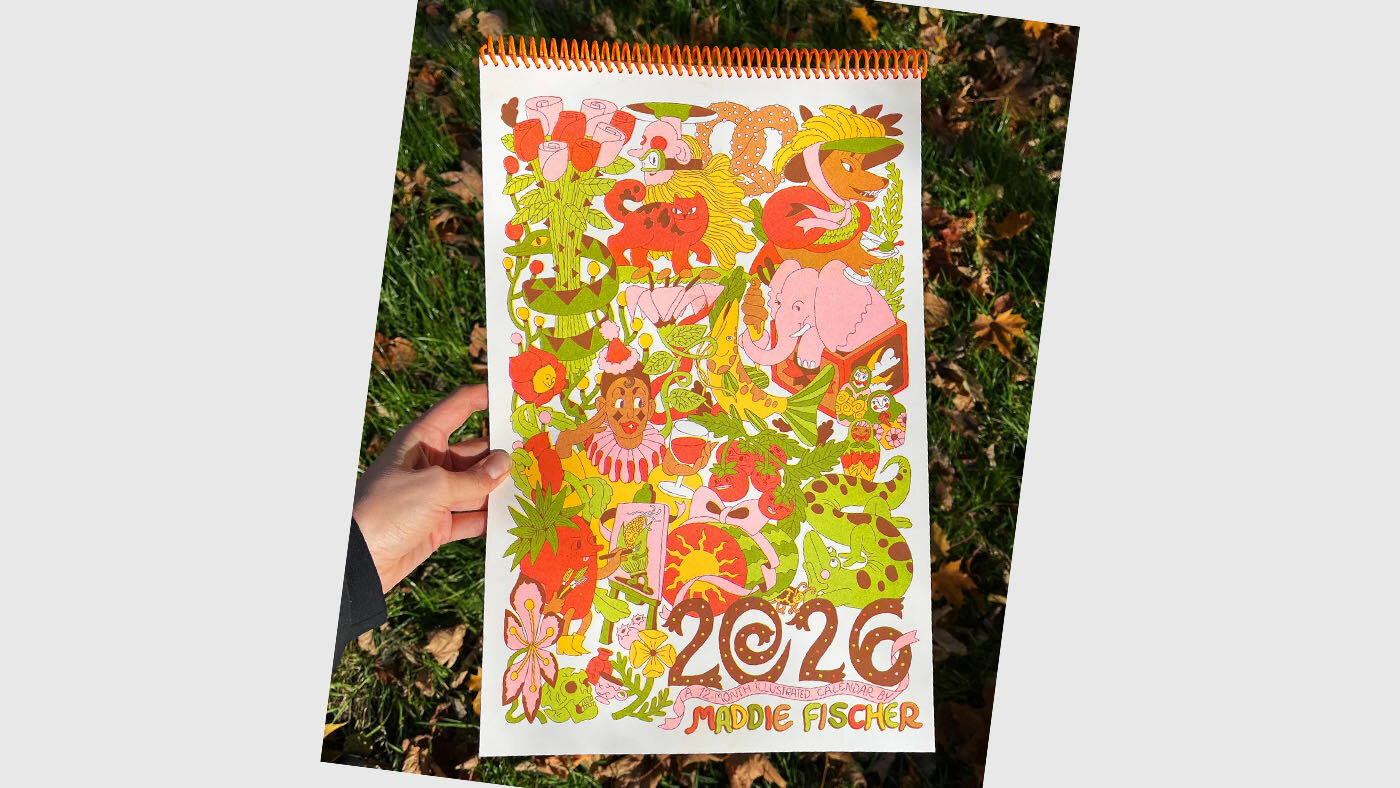
Fans of last year’s festival illustrations by our dear friend Maddie Fischer should treat themselves and others to her fabulous wall calendar, each month hand-drawn and Risograph-printed—the perfect score to our endless procession of days.
APPAREL AND HOME GOODS
Fashions come and go, but their new favorite t-shirt is forever.

“I love the possibility that something will not be perfect,” Ashley Hohman told us when we spoke to her for Notebook Issue 6. This Maya Deren tee is a Terminal Classic all-timer, but real heads know to scroll down and browse the one-of-a-kind test prints.
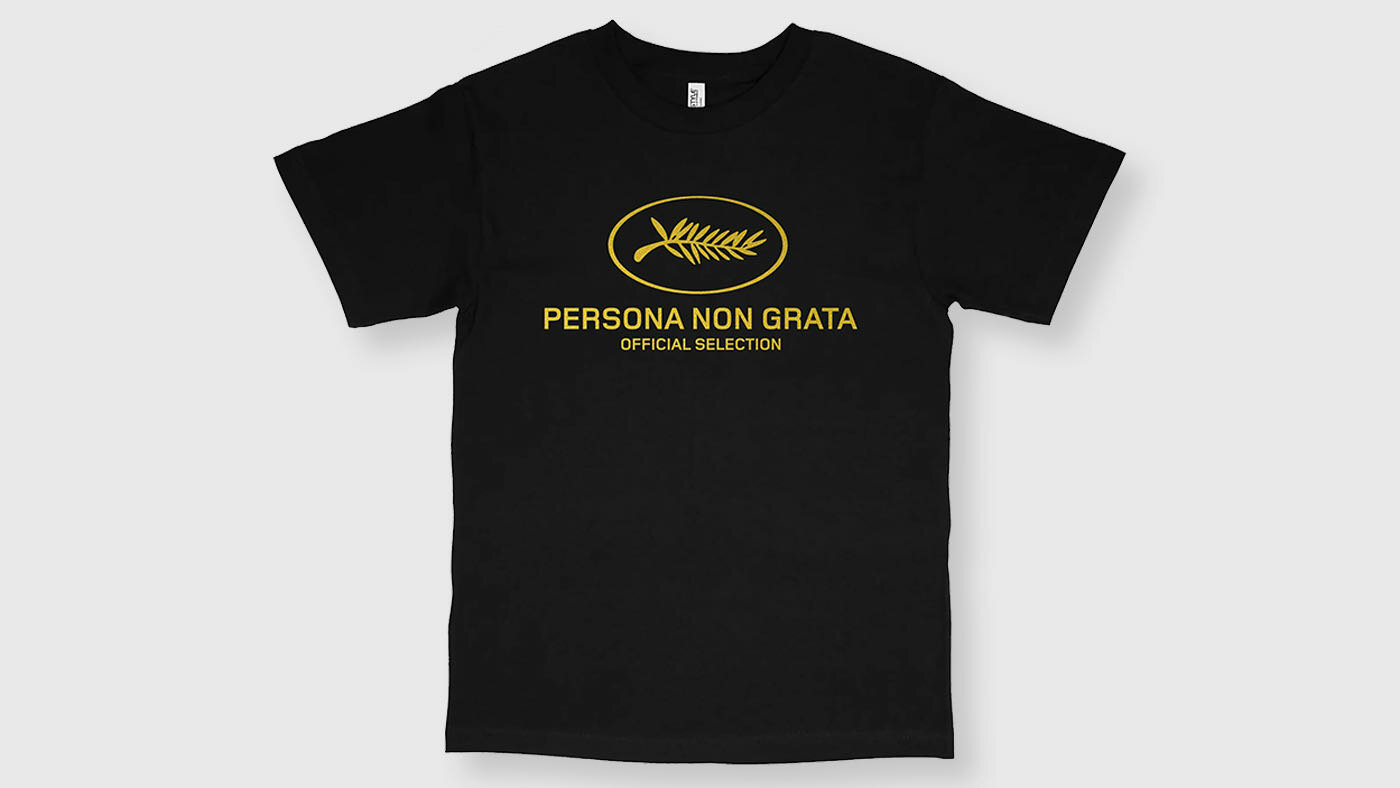
Human Lanterns has bootlegged the shirt Lars von Trier wore to the Berlinale premiere of Nymphomaniac (2014), having been blacklisted from Cannes. Perfect for the person in your life who will never, under any circumstances, be welcome back on the Croisette.
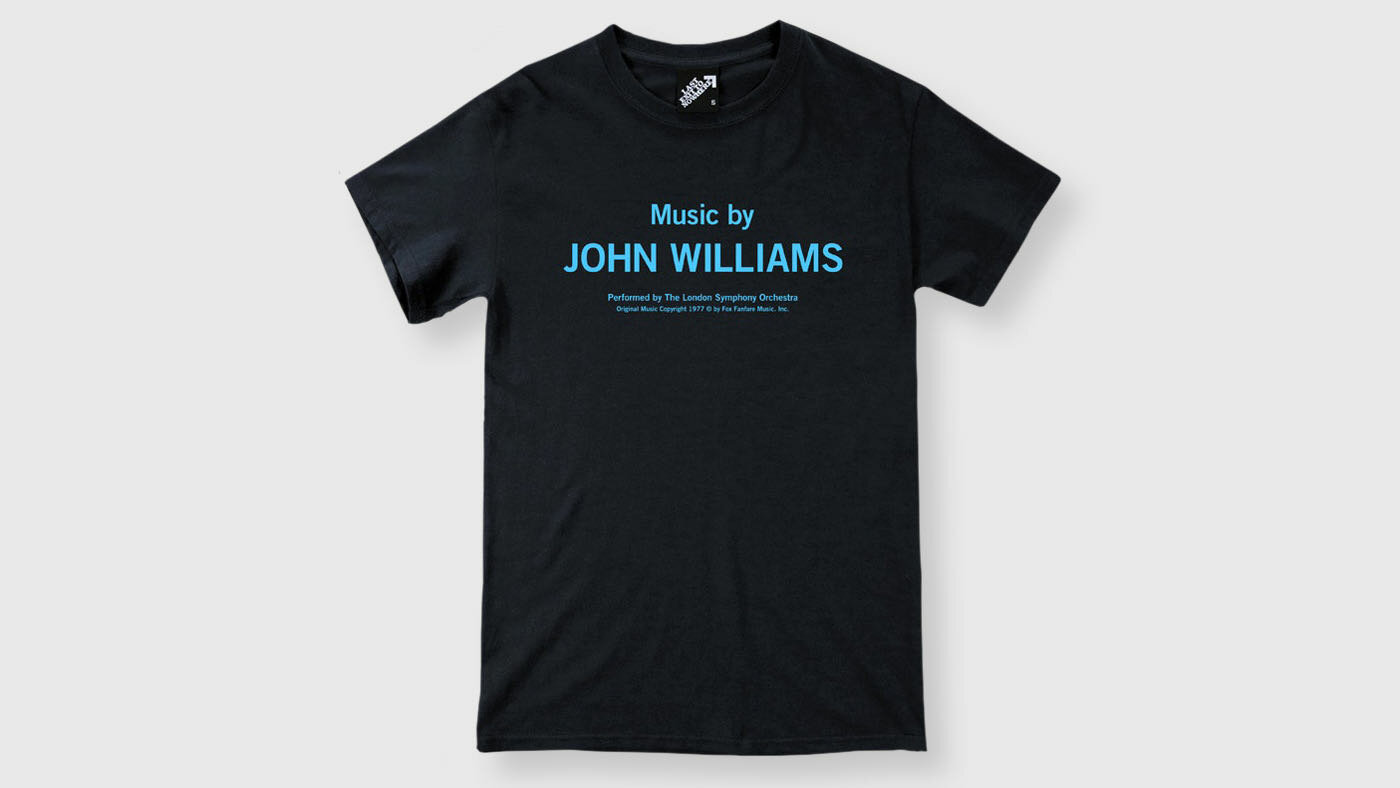
- Music by John Williams t-shirt (Last Exit to Nowhere)
Certain credit lines are guarantors of greatness, and Last Exit to Nowhere makes it possible to wear them across your chest. (Can imagine rocking this one on the subway with “The Imperial March” blasting from a boombox...)
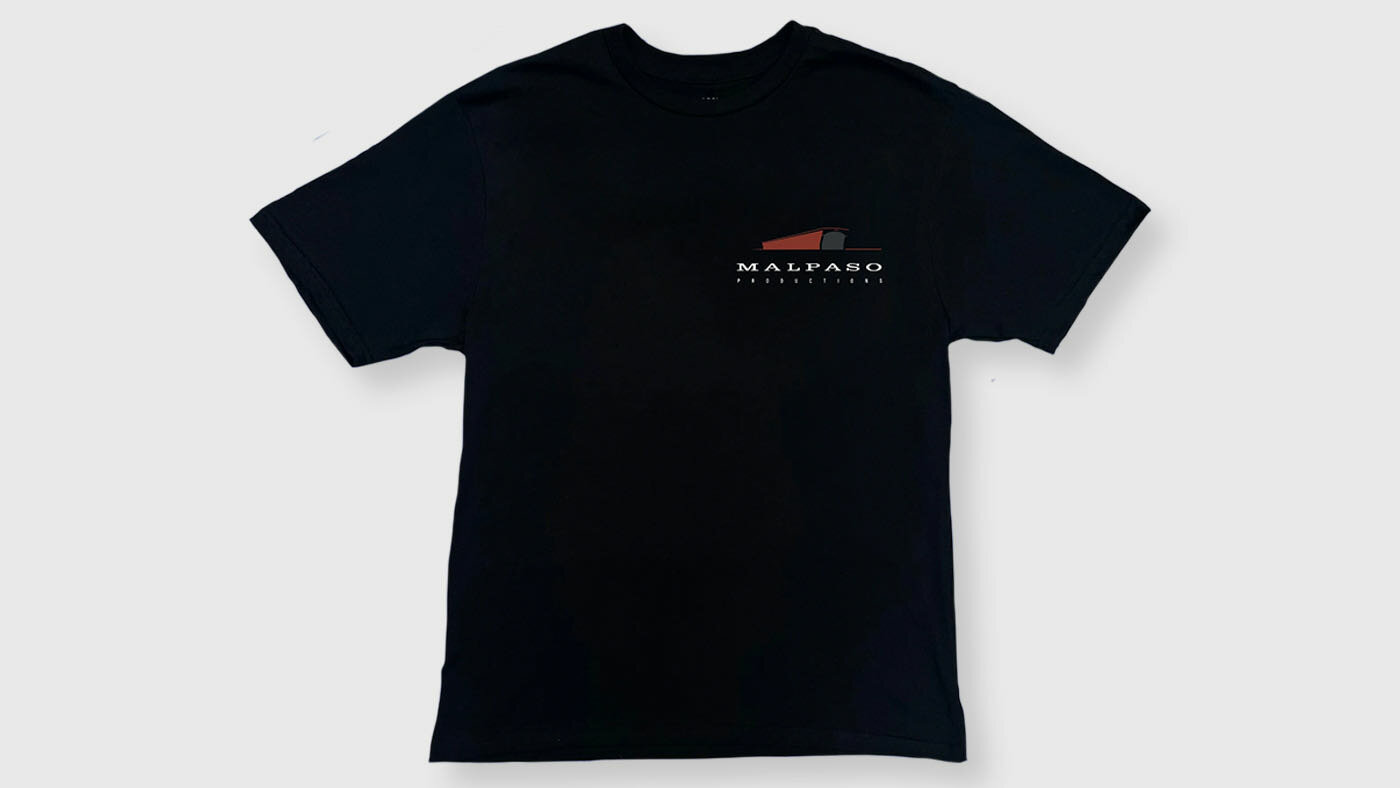
- Malpaso Productions tee (Human Boy Worldwide)
The Clint Eastwood apologist in your life needs this Malpaso Production tee, for those days that absolutely must come in ahead of schedule and under budget.

- The ‘Boogie’ Hat (Director Fits)
- Film Forum hat (Film Forum)
Director Fits recently released a line of Paul Thomas Anderson merchandise to celebrate the release of One Battle After Another. Of those offerings still in stock, we’re particularly fond of this Dirk Diggler hat, which one might imagine pairing with a certain prosthetic, apparently locked away in Mark Wahlberg’s safe. Also for your head: New York’s Film Forum has revived their classic 1991 cap, once modeled by David Byrne.
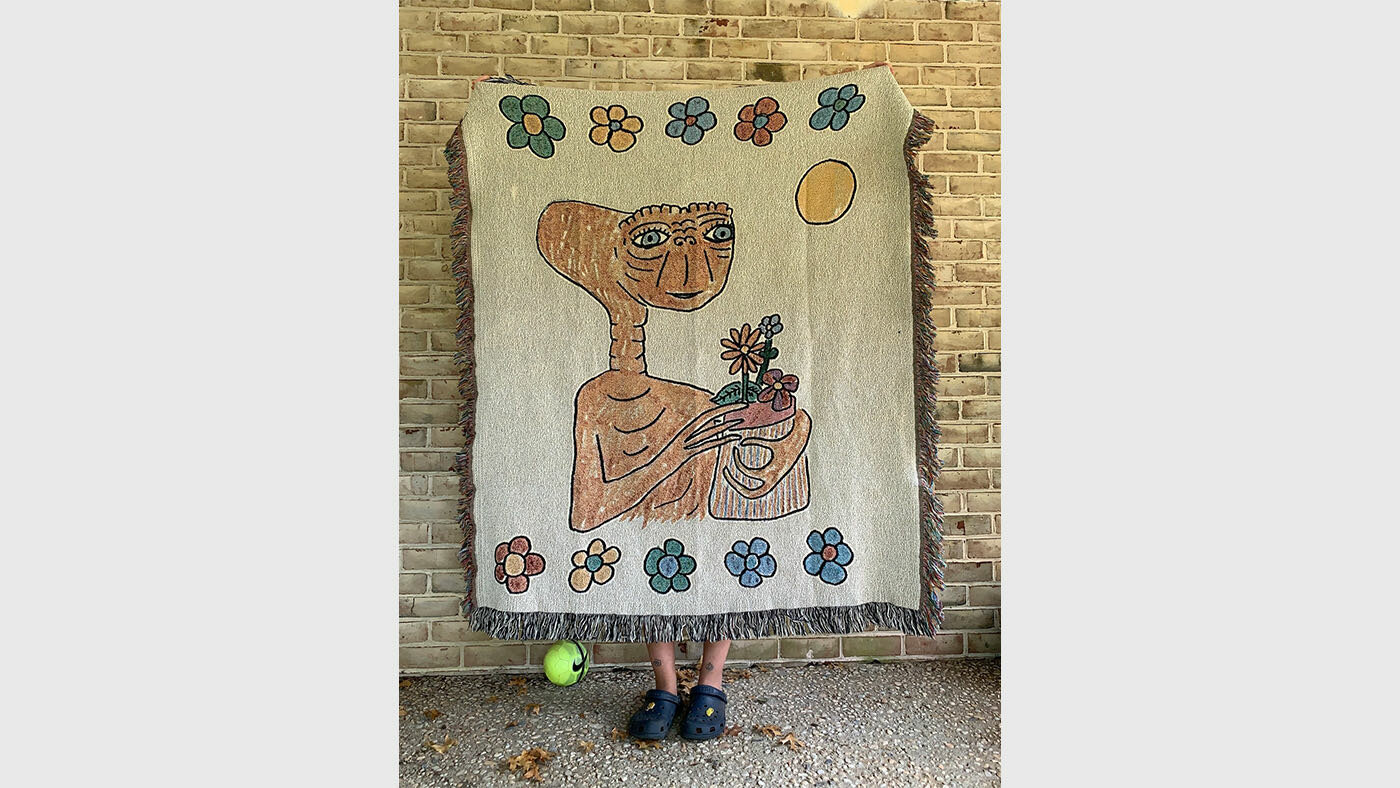
For those cold nights in front of a classic.
And that’s a wrap for this year! Give generously, and remember: the best gift is often sitting down for a movie with the people you love. Happy holidays to you and yours from all of us at Notebook.
All products featured on Notebook are independently selected by our editors. If you purchase a book through a retail link to Bookshop.org, we may earn an affiliate commission, which would be great.

Continue reading Notebook’s 2025 Year in Review.