Get in touch to send in cinephile news and discoveries. To keep up with our latest features, sign up for the Weekly Edit newsletter and follow us @mubinotebook on X and Instagram.
NEWS

Musk (Alex Gibney, 2026).
- As part of Netflix’s recent mass layoffs, the streamer has fired chief content officer Bela Bajaria. Many insiders have expressed shock at her dismissal, believing that the company is using her as a scapegoat for lagging user engagement. “People always blame the content, but you don’t lay off 1,000 people unless there’s a big problem with the business model,” explained an anonymous source.
- TikTok permanently suspended the advertising account for Musk (2026) ahead of its wide release, the latest in a line of behind-the-scenes hurdles director Alex Gibney has faced in the leadup to his exposé on the tech giant.
- Bollywood actor Imran Khan prepares to fight an order from the Bombay High Court to leave India after he attended a protest demanding that Chief Election Commissioner Gyanesh Kumar step down following allegations of widespread electoral fraud.
- Following the Paramount-WBD merger, Warner Bros. president and CEO David Zaslav will leave the company with a $606 million payday. During his tenure, Zaslav was one of the most highly compensated executives, while fielding frequent criticism for his controversial business practices.
DEVELOPING
Schizopolis (Steven Soderbergh, 1996).
- Steven Soderbergh will complete Matt Reeves’s The Batman Part II after the filmmaker had to step away from production to attend to a family matter.
- John Wilson is currently filming pop star Harry Styles during his 30-day Madison Square Garden residency in preparation for an upcoming hybrid concert film/tour documentary.
- Sterling K. Brown is set to co-star in Marielle Heller’s sports comedy The Comebacker opposite Tom Hanks and Callum Turner.
REMEMBERING
North by Northwest (Alfred Hitchcock, 1959).
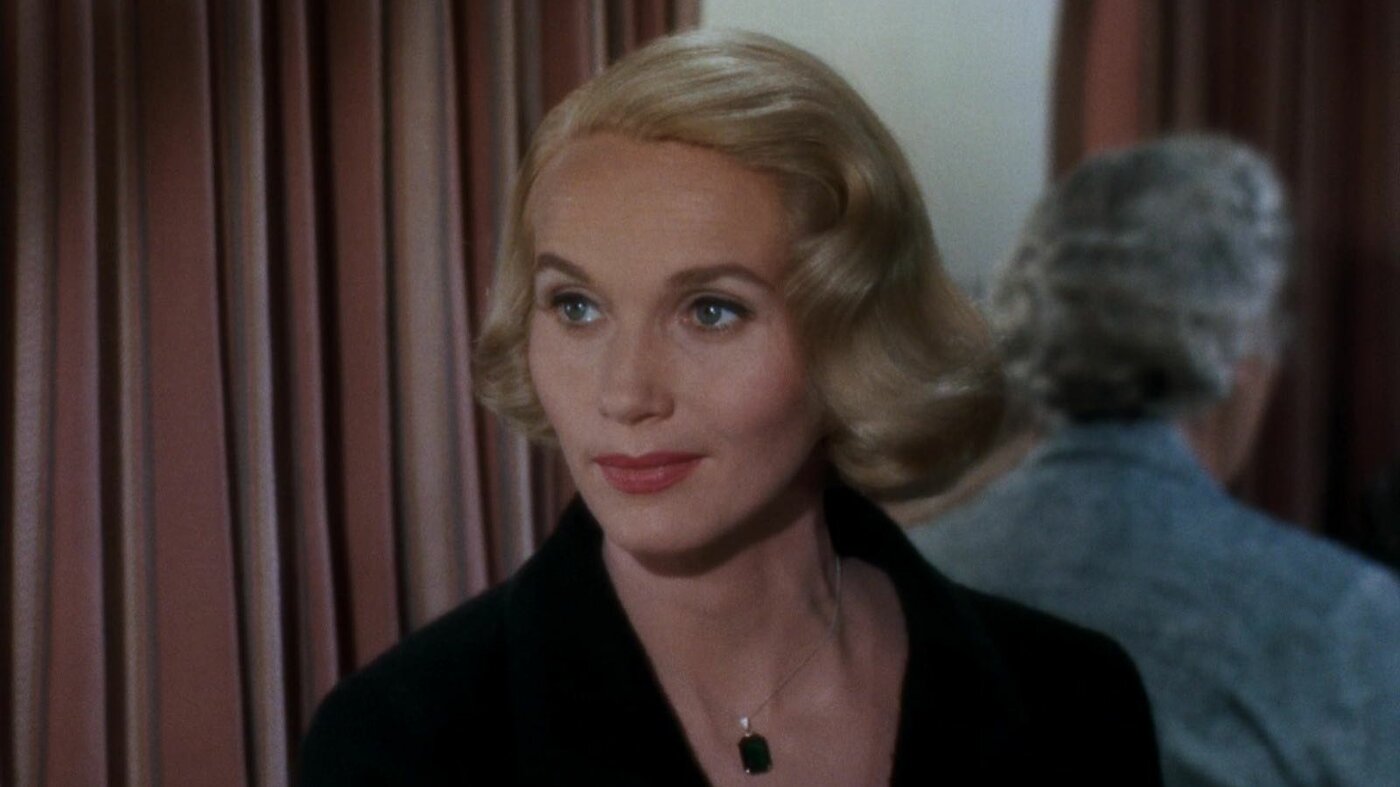
- Eva Marie Saint has died at 102. The American actress began her seven-decade career in television, first as an NBC page then as a regular actress on many dramatic anthology series'. Saint made her feature film debut in Elia Kazan’s On the Waterfront (1954) as Edie Doyle, the love interest of Marlon Brando’s Terry Malloy, for which she won an Oscar for Best Supporting Actress. After co-starring in Edward Dmytryk’s Civil War romance Raintree County (1957) and headlining Fred Zinnemann’s addiction drama A Hatful of Rain (1957), she gave her second-most notable performance in Alfred Hitchcock’s North by Northwest (1959) as femme fatale Eve Kendall. Following that film, Saint chose to be more selective with her career in order to spend time with her family. Over the next decade, she co-starred in Otto Preminger’s Exodus (1960), John Frankenheimer’s All Fall Down (1962), and Vincente Minnelli’s The Sandpiper (1965), as well as two ensemble films: Norman Jewison’s The Russians Are Coming the Russians Are Coming (1966) and Frankenheimer’s Grand Prix (1966). Saint returned to television in the 1970s and ’80s and received Emmy nominations for the miniseries How The West Was Won (1977) and the made-for-TV film Taxi!!! (1978), eventually winning one for her performance in People Like Us (1990). She continued to appear onscreen well into the 2010s, giving her final performance in Winter’s Tale (2014). In her Fresh Air interview from 2000, Saint told a story about being replaced by another actress ahead of her Broadway debut and how she handled such a devastating rejection: “By the time I got home, I decided I was going to try to continue acting, studying and whatever happened…I would never feel this way again. And the ‘feeling this way again’ meant from my neck down, my heart, my soul…You're upset from your neck up, but…your soul will never be crushed again or your heart. And it never has been, I have to say, in all honesty.”
RECOMMENDED READING

You Can See Everything (Nathan Fielder & Lance Oppenheim, 2026).
- “Fielder’s presence also becomes rather curious: what exactly is he doing here? Is he lying to [Elisabeth] Holmes and [Billy] Evans to get closer to them? What does he want out of this situation? A confession of guilt? If not, then is it something more personal? Equally vexing and central to the experience of the film is the question of why these two people, so obsessively preoccupied with how she’s perceived in the media and on screen, would allow this comedian—known for television programs that are often described for their “cringe” humor and proclivity to put people in somewhat mortifying situations—to film their family at all, let alone at such an emotionally loaded, fragile moment… By inviting Fielder and crew into their home, they’re not only encouraging a close-quarters discomfort (befitting their evident narcissism) but also subordinating themselves to his fixed, unsparing camera, agreeing to be players in Fielder’s ongoing anthropology project.” For Reverse Shot, editor Michael Koresky reviews, without spoiling, Nathan Fielder and Lance Oppenheim’s film You Can See Everything (2026), unpacking the “absurd redundancy” inherent in cinematic realism, and the search for truth.
- “[Oleksandr] Dovzhenko—subject of ‘Earth and Empire,’ a new retrospective at Metrograph—is Ukraine’s most famous director, but he’s a complicated hero for a Ukraine at war with Russia… His films are mind-bogglingly beautiful paeans to Ukraine’s land and its people, animals, and plants, but he also played the Soviet game, his work vetted and reviewed by state organs and censors. He likely survived the 1930s only thanks to Stalin’s personal patronage and protection. Ukraine’s greatest director hid his youthful affiliation with Ukrainian nationalism, embraced Bolshevism, and created magnificent works exalting the October Revolution and the collectivization of agriculture, two of the most traumatic moments in Ukraine’s twentieth-century history. His films celebrate the Communist project, but at their best they depict human suffering and survival with a complexity that is alien to propaganda.” For the New York Review of Books, Sophie Pinkham explores the life and career of Oleksandr Dovzhenko in light of Metrograph’s recent retrospective of the Ukrainian filmmaker.
- “Recasting himself as no longer a filmmaker but a man of television, [Roberto] Rossellini insisted that he wasn’t an artist but rather a researcher, archivist, and pedagogue—between the years 1970 and ’74, it may be noted, he was a regular presence at Houston’s Rice University at the behest of art collectors and patrons John and Dominique de Menil, whose only other ‘kept’ filmmaker was one Andy Warhol. As far as one could get from the aloof, politically neutral Warhol, Rossellini viewed himself as taking on the Renaissance role of the artist as a public service-oriented figure, unconcerned with questions of personal expression and individuality. In turning to history, Rossellini looked to the future, to the forging of an enlightened and emancipated citizenry—his histories would provide the facts, but not the conclusions.” For the Metrograph Journal, Nick Pinkerton examines Roberto Rossellini’s Socrates (1970) and the Italian director’s late-career project of historical TV films.
- “Jonas [Mekas] had left in ’74, so he had been gone for like three years, but [arts editor Richard Goldstein] understood historically that the [Village] Voice had covered avant-garde film. He suggested that I do that. Initially, I was able to generate my own assignments. The Whitney had film shows, MoMA had Cineprobes, there was the precursor to Anthology, the Film Makers’ Cinematheque, the Millennium, a bunch of venues where I could cover things. So I would suggest that, assign myself this, maybe every other week, and they gave me more space because I never missed a deadline. I delivered clean copy. I was a very reliable writer; I was not a temperament. So, I was able to expand my purview. And there were things which neither [Andrew] Sarris nor Tom Allen had the slightest bit of interest in covering—sometimes to my utter amazement. I was so excited when Céline and Julie Go Boating (1974) got a commercial opening and these guys didn't care.” For Screen Slate, Mark Asch interviews writer and critic J. Hoberman about his lengthy career and his new collection of film criticism Across the Movi-Verse.
RECOMMENDED EVENTS
The Texas Chain Saw Massacre (Tobe Hooper, 1974).
- Paris, through January 16: Anne-Dominique Toussaint and the Galerie Cinéma present Antonioni the Painter, which will feature more than 30 paintings and drawings by filmmaker Michelangelo Antonioni never before exhibited in France. Calmann Lévy recently published a book tied to the exhibit featuring Antonioni’s work along with an unpublished interview between Bernard Blistène and Dominique Païni.
- Bilbao, through February 21: The Guggenheim Bilbao presents Steve McQueen: 66–76–26, an installation by the British artist and filmmaker featuring two stripped-down recordings of “Wild is the Wind,” one by Nina Simone and another by David Bowie, each playing on opposite sides of a darkened room.
- London, October 22 through December 13: The Institute of Contemporary Arts presents The Lower Depths: The Cinema of Shohei Imamura, the first major retrospective of the Japanese filmmaker in the UK in more than 25 years, including new restorations, guest introductions, and a new monograph tied to the series.
- Brooklyn: October 23 through 29: Brooklyn Academy of Music presents Area Coded: American Regionalism in Film, a program dedicated to films that highlight the unique, diverse regional histories captured on screen, including Giant (1956), Grey Gardens (1975), and Paydirt (1981).
RECOMMENDED VIEWING
- Netflix presents a trailer for Narnia: The Magician's Nephew (2027), Greta Gerwig’s adaptation of C. S. Lewis’s 1955 fantasy novel, the sixth published and first chronological novel in The Chronicles of Narnia series.
- 1-2 Special presents a trailer for La Gradiva (2026), Marine Atlan’s debut feature about a group of French teenagers on a class trip to Naples.
- MUBI presents a trailer for Minotaur (2026), Andrey Zvyagintsev’s thriller about a business exec who discovers his wife is having an affair, based upon Claude Chabrol’s The Unfaithful Wife (1969).
- The New York Film Festival presents the sixth annual Amos Vogel lecture, delivered by Ryûsuke Hamaguchi, who discusses his filmmaking process in relation to his latest film All of a Sudden (2026).
RECENTLY ON NOTEBOOK
The Little Mermaid (John Musker & Ron Clements, 1989).
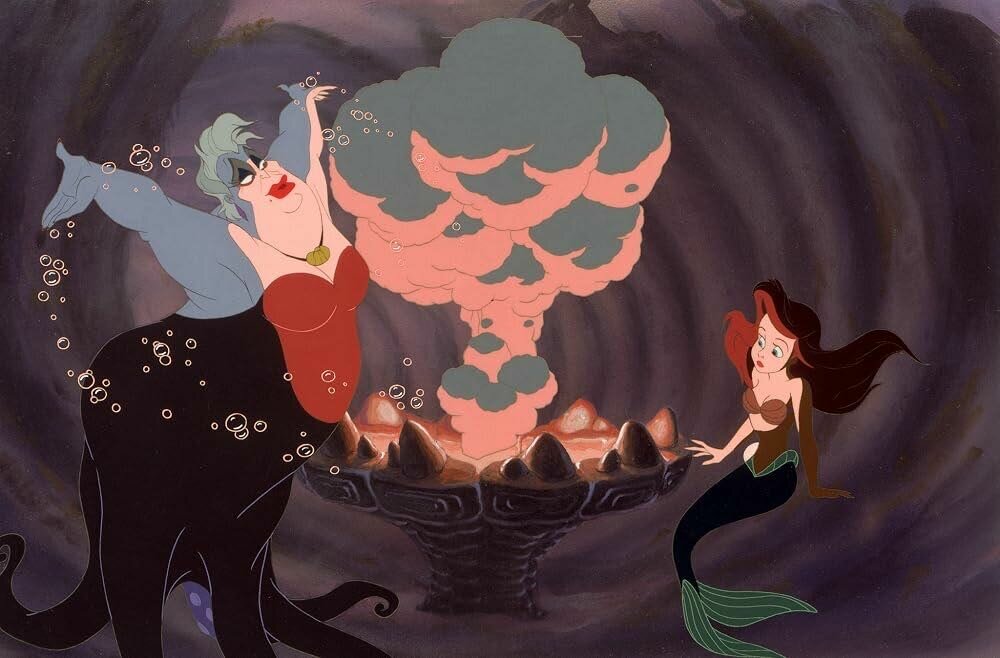
- “When the action moves to land, The Little Mermaid (2023) simply looks like any other movie. The 1989 version captivates audiences with its evident, evidently handmade artistry; the 2023 Little Mermaid aims to convince its audience that its characters are worth caring about. If, acting out Snow White and the Seven Dwarfs (1937), Walt Disney played to an imagined American public comprised of simple folk who would react with simple laughter or tears to things that were happy or dopey or sad, his company now imagines a public that can only be needled into caring once persuaded that the characters have obstacles recognizably similar to our own.” Mark Asch delves deep into the world of live-action Disney remakes and how they suggest a company stuck in a perpetual cycle of “eternal nostaliga and diminishing returns.”
- “[Tai] Katō occupied an unusual place in the cinema of the 1960s. His films could be as formally audacious as those associated with the Japanese New Wave, yet he remained firmly rooted in popular genre cinema. Where Masahiro Shinoda, a leading figure of the New Wave, increasingly used modernist form to challenge established modes of representation, Katō worked through the conventions of chanbara, melodrama, and the yakuza film. In this respect, he was closer to directors such as Yasuzō Masumura or Seijun Suzuki, who also found radical visual possibilities within commercial cinema. Katō’s experiments with framing, depth, obstruction, and widescreen space did not reject genre conventions. They transformed them from within.” Olivier Ronat examines the visual language of Tai Katō in honor of a retrospective of the Japanese filmmaker at the Cinémathèque française.
- “Such an uneven power dynamic is no stranger to those familiar with queer(-coded) coming-of-age films or the mean-girl trope in American teen cinema, with the two sometimes overlapping. What is so special about Water Lilies (2007), however, is the care Sciamma affords the characters on both sides of this dynamic, and especially Floriane. Although much of the story is told from Marie’s perspective, Floriane is never reduced to the attractive yet cruel girl who toys with others’ feelings without caring. Her ending avoids a simple resolution: she is neither subjected to heartless punishment nor let off easily due to her pretty privilege by a sympathetic backstory that feels forced; nor is she converted into a “good girl.” Instead, [Céline] Sciamma gives both girls enough space to be understood on their own terms.” For Notebook’s One Shot column, Cynthia Dong unpacks a shot from Water Lilies to explore the film’s ambiguous emotions inherent in queer girlhood.
- “Despite nothing much happening, Élisabeth demands laborious attention. Its characters are purposefully vaporous, and long reams of talk go by in which unidentified speakers blur together. In one scene, Michel poses as his cousin, Bernard; no reference is made to this doubling in the narration, which only becomes apparent after the fact (and only if you are paying close attention). Locations and characters are divided across a fragmented structure, wrongfooting the reader with unadvertised leaps in perspective and tenses. Even its title is a misdirection; the titular Élisabeth is not, as one would assume, the protagonist of the novel, but a secondary character who sits on the periphery of the narrative.” Oliver Evans writes about Eric Rohmer’s 1946 novel Élisabeth, his only literary work, which was recently translated into English for the first time.
WISH LIST

Fire Festival (Mitsuo Yanagimachi, 1985).
- Fire Festival (1985), Mitsuo Yanagimachi’s drama about a volatile, superstitious lumberjack who takes on developers wanting to construct a marine park in his rural village, is available to preorder on Blu-ray from Third Window Films.
- Popol Vuh’s previously unreleased score for Werner Herzog’s The Great Ecstasy of Woodcarver Steiner (1974) is available to preorder from Bandcamp.
EXTRAS

The Empire Strikes Back (Irvin Kershner, 1980).
- Darth Vader’s lightsaber will be auctioned off by Heritage Auctions this November at its Ultimate Star Wars auction. The prop, which appeared in The Empire Strikes Back (1980) and Return of the Jedi (1983), is expected to go for over $1 million.