Get in touch to send in cinephile news and discoveries. To keep up with our latest features, sign up for the Weekly Edit newsletter and follow us @mubinotebook on X and Instagram.
NEWS
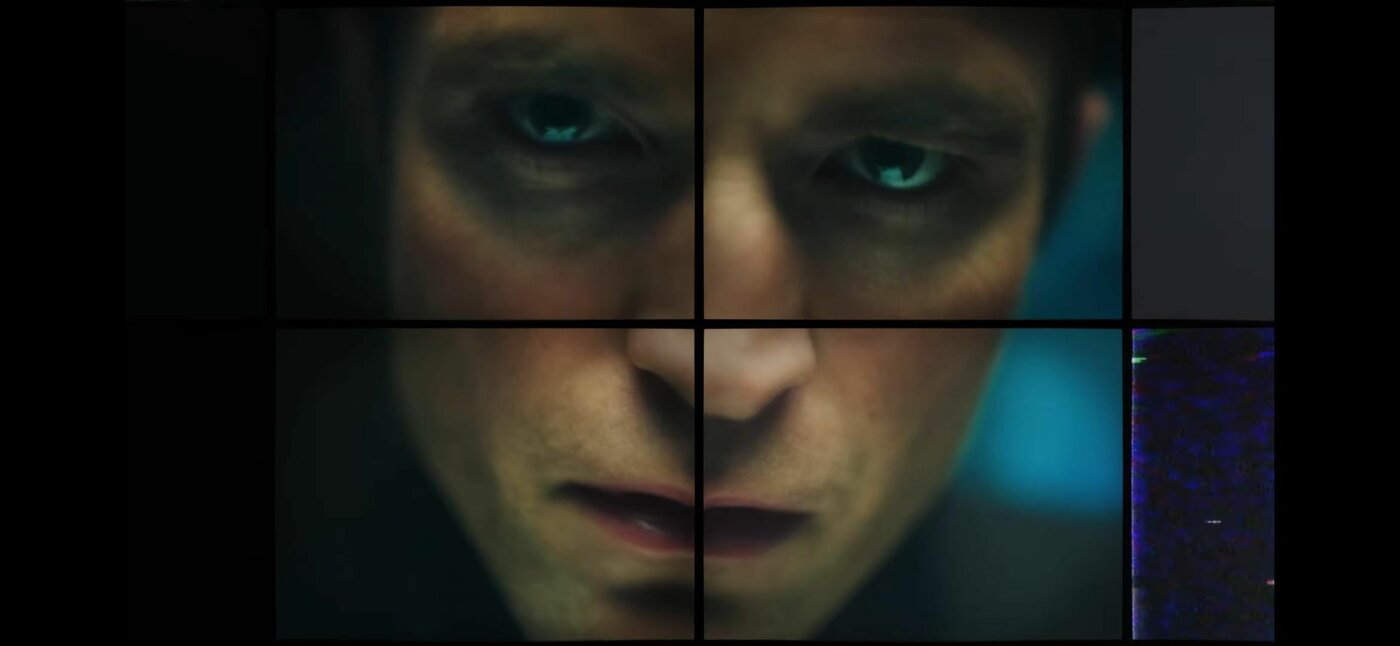
Primtime (Lance Oppenheim, 2026).
- Meryl Streep and Laura Poitras have come aboard as executive producers on Julia Loktev’s upcoming documentary My Undesirable Friends: Part II – Exile (2026), the second part of Loktev’s profile of independent Russian journalists operating in the wake of the invasion of Ukraine, which recently had its world premiere at the Venice Film Festival. In a statement, Streep describes Loktev as “the Samuel Pepys of Putin’s Russia” and describes her films as a “blazing achievement.”
- Two surprises have recently happened on the festival circuit. The first is that Luca Guadagnino’s Artificial (2026), which was dropped by Amazon MGM Studios in June, will have its world premiere at the New York Film Festival followed by a Gala screening at the London Film Festival. Secondly, the Telluride Film Festival’s secret screening was revealed to be Nathan Fielder and Lance Oppenheim’s three-hour documentary You Can See Everything (2026) about Elizabeth Holmes.
- AMC has launched its own distribution company, Leawood Films, which will focus on “small and mid-budget sized movies” from “emerging and established filmmakers.” This arrives on the heels of the success of Taylor Swift: The Eras Tour (2023), which AMC directly released into theaters after striking a deal with the eponymous popstar.
- Television presenter and YouTube personality Chris Hansen has purchased preshow advertising before every screening of Lance Oppenheim’s psychological thriller Primetime (2026), which chronicles Hansen’s tenure hosting To Catch a Predator (2004–07). The ad reportedly directs viewers to Hansen’s streaming network TruBlu where he continues his predator investigations.
DEVELOPING
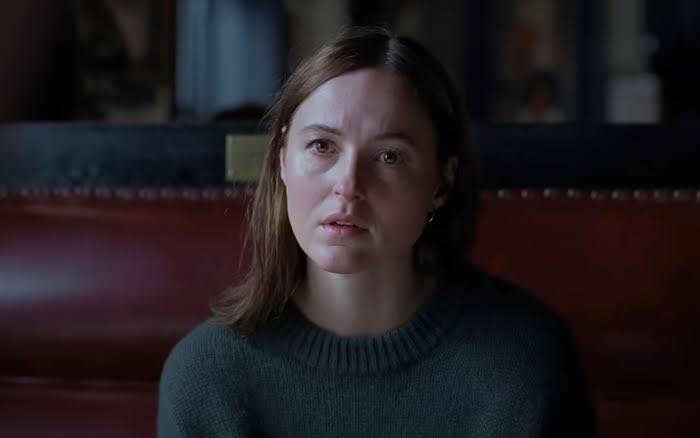
Sentimental Value (Joachim Trier, 2025).
- Lea Seydoux and Bill Murray are set to star in Ursula Meier’s The Quiet Land, which is reportedly influenced by the work of Swiss police photographer Arnold Odermatt, and will be lensed by Agnès Godard.
- Renate Reinsve is set to star as Mary Wollstonecraft in Mia Hansen-Løve’s If Love Should Die, which chronicles the last twelve years of the English writer and philosopher’s life amidst the French Revolution.
REMEMBERING

9 to 5 (Colin Higgins, 1980).
- Dolly Parton has died at 80. The American singer-songwriter and actress achieved initial success in country music by appearing on the weekly variety series The Porter Wagoner Show (1960–81) beginning in the late-1960s. She and Wagoner became a popular duo for nearly ten years before Parton pursued a thriving solo career. In between touring and releasing hit studio records, she starred in her own variety series Dolly! (1976–77), made frequent appearances on The Tonight Show Starring Johnny Carson (1962–92) that boosted her popularity, and co-starred in many television specials headlined by Mac Davis and Cher. She made her feature film debut in 9 to 5 (1980) and wrote the film’s theme song, which was nominated for both an Oscar and a Grammy. She went on to star in a string of films over the next decade: The Best Little Whorehouse in Texas (1982), Rhinestone (1984), Steel Magnolias (1989), and Straight Talk (1992). Up until her death, she continued to regularly appear on television in made-for-TV films and sitcom cameos. Her final film was the Emmy-award winning musical drama Dolly Parton’s Christmas on the Square (2020), for which she produced and wrote the music. “I never knew anyone like her,” remembered former costar Jane Fonda. “She was simultaneously a naughty, playful southern gal from the hollows of Tennessee and a deep, soulful thinker who could see through people right down to their true selves.”
- Tim Curry has died at 80. The English actor quickly garnered international recognition for his performance as Dr. Frank-N-Furter in both The Rocky Horror Show stage production and its 1975 film adaptation. Curry went on to have a prolific career on screen and stage, moving easily between live-action and voice roles. Some of his most memorable live-action film performances include Wadsworth in Clue (1985), Dr. Yevgeniy Petrov in The Hunt for Red October (1990), and Mr. Hector in Home Alone 2: Lost in New York. He also received praise for his turns as Pennywise the Clown in the two-part miniseries It (1990) and Nigel Thornberry in the animated series The Wild Thornberrys (1998–2004). Along with regularly performing on stage, racking up accolades for playing Mozart in Amadeus and King Arthur in Spamalot, he also released three rock albums, voiced numerous audiobooks, and continued to reprise Dr. Frank-N-Furter for various charity and anniversary events. “I don’t fear death,” Curry said a year prior. “I try to avoid it, as I think we all do. But, I suspect that in the end, I will welcome it.”
RECOMMENDED READING
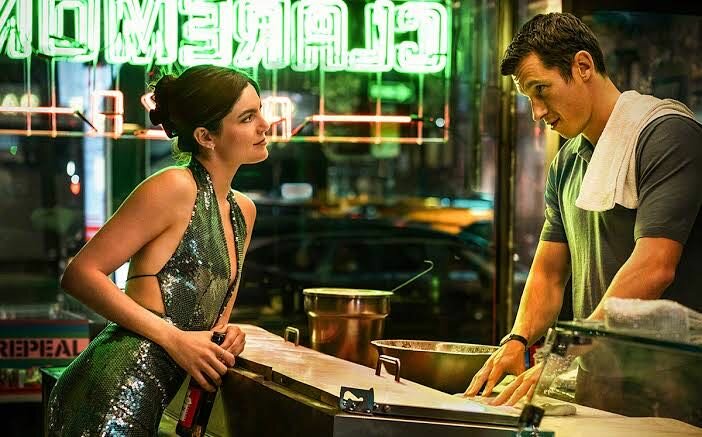
One Night Only (Will Gluck, 2026).
- “The category is a capacious one, encompassing reclusive geniuses, thwarted iconoclasts, and tragic shooting stars. Some of these artists make only one movie. Some make more but resist the temptations of a prolific career, because of their own exacting standards, the challenge of raising money to make films, or forces beyond their control … In all cases, though, the scarcity of the films combines with the often distinctive nature of the work to capture our collective imagination, giving the reticent auteur a magnetism that, while not exactly unearned, also speaks to our own attitudes toward the creative act.” For The Yale Review, Bilge Ebiri examines various “reticent auteurs,” including Charles Laughton, Barbara Loden, and Víctor Erice, and their unique value in an increasingly algorithm-driven economy.
- “The Chronovisor is a hauntological invention, and in her research, Dr. Courte has cause to bring dead tech back to life. In one case she reassembles a video, detangling and manually winding a snarl of magnetic tape. She also watches a segment of the French-Canadian TV newsmagazine Camera ’89 profiling François Brune, a French priest and collaborator of Ernetti, who made his own attempts to use technology to rouse the dead. The media is the medium, though the message is garbled: When Camera ’89 plays a tape of Brune’s, the speech is raspy, barking, an almost entirely incoherent squawk to match the quality of the tape itself. An aura of unreality grows around the subject as information becomes sparser; things that were once common knowledge fade into irrelevance and dispute.” For The Baffler, Mark Asch reviews Kevin Walker and Jack Auen’s Chronovisor (2026) and how it fits within and exemplifies the “academic mystery movie.”
- “[Will] Gluck’s touch is very light, but the movie’s obsession with credibility means most characters we get to meet stop to point out their dislike for the law. Whoever supports this thing is kept carefully offscreen. At most, we get a drunken rockstar going into a ramble about maybe the conservatives had a point because this makes who you pick to spend the night with special, right before getting increasingly creepier and falling into his face. The most chilling moment comes early when Turner remarks that most of his friends got married the previous year, the implication being that they just settled into marriage for convenient intimacy. The real crime is the one against the romantic comedy promise: you are not supposed to marry to find a fuck buddy.” On his Substack, Filipe Furtado unpacks the recent high-concept rom-com One Night Only (2026) and how it embodies the fictions Hollywood loves to tell.
- “The pre-Hitler mood captured in M (1931) finds an echo in films like Civil War (2024) and One Battle After Another (2025). Conflict no longer appears as a temporary crisis but as a permanent condition; politics becomes an endless chain of confrontations rather than a system capable of resolution. Like M, these films imagine a world of eroding norms and ambient violence. Kracauer’s warning, reaching across decades, is not that such outcomes are inevitable but that when a society begins to normalize this atmosphere, it grows more susceptible to the promises of demagogues—and to the conflicts that follow.” For The New Republic, Jimmy So looks back at Siegfried Kracauer’s landmark text From Caligari to Hitler and how the author’s diagnostician lens can be deployed in a contemporary context.
RECOMMENDED EVENTS

Import/Export (Ulrich Seidl, 2007).
- Berlin, through September 24: The Arsenal Institute for Film and Video Art presents Here and Now – The Films of Christoph Hochhäusler, a retrospective of the German filmmaker’s films tied to an exhibition of his materials at the Neuer Berliner Kunstverein.
- Turin, through October 5: The National Museum of Cinema presents My Name Is Orson Welles, which features more than four hundred items across many public and private collections dedicated to the auteur that retrace his unique life and career.
- New York, September 17 through October 13: The Museum of Modern Art presents Yuen Woo-ping: The Number One Martial Arts Director Under the Sky, a retrospective of the filmmaker and action choreographer’s work, from Drunken Master (1978) through Ip Man 4: The Finale (2019).
- Amsterdam, September 19 through January 31: Eye Filmmuseum presents Ulrich Seidl – On Life, Love, and Death, the first exhibition, and a complete retrospective, of the Austrian director’s work in the Netherlands.
RECOMMENDED VIEWING
- A24 presents a surprise teaser for Nathan Fielder and Lance Oppenheim’s new documentary You Can See Everything (2026), which follows disgraced Theranos founder Elizabeth Holmes as she prepares to go to prison.
- Neon presents a trailer for Fjord (2026), Cristian Mungiu’s Palme d’Or-winning legal thriller starring Sebastian Stan and Renate Reinsve as a couple fighting for the custody of their children after their behavior comes under scrutiny by the government.
- Magnolia Pictures presents a trailer for The History of Concrete (2026), John Wilson’s feature-length debut about the documentarian’s efforts to make a documentary about concrete using a Hallmark-approved commercial formula.
- Neon presents a trailer for Once Upon a Time in Harlem (2026), a documentary about a 1972 gathering of the surviving members of the Harlem Renaissance at Duke Ellington’s townhouse, originally shot by William Greaves and completed by his son David.
RECENTLY ON NOTEBOOK

The Samurai and the Prisoner (Kiyoshi Kurosawa, 2026).
- “Markopoulos wrote that ending a film is like tying an intricate surgical knot. One must make ‘the best knot for each work; and it is completed forever.’ It must be clean. It is somewhere near three in the morning when the projection cuts off and, though abrupt, there is a sense of finality. Before the screening, Beavers had asked that when the Temenos ends, we hold a moment of silence. These few minutes of quiet are like a canopy. In the dark, in the absence of the projector’s hum, true silence takes on a thick feeling in the air. The screen loses its violet wash as eyes readjust. We wait, until Beavers releases a thunderous ‘Thank you.’” Emma Fuchs reports on the screening of the final four cycles of Gregory J. Markopoulos’s Eniaios (1948–90), the culmination of the Greek-American experimental filmmaker's magnum opus.
- “The launch of Video Home System (VHS) in the mid-1970s therefore came at the perfect time for Northern Ireland’s cinema lovers, who desired entertainment and escapism but were less willing than ever to leave the comfort and relative safety of their own homes … For the time, the power to control when audiences watched films began to shift from the exhibitors to the audience. Power shifted, too, from producers to consumers, and for the first time people could directly record films or television programs onto blank tapes and play, pause, or rewind at their own leisure.” Sam Manning explores the VHS boom in Northern Ireland during the Troubles, when cinemagoing “became less of a social habit and more of an occasional activity that carried a level of potential risk.”
- “The Samurai and the Prisoner (2026) is set apart from these other works by virtue of its assertive and imperative qualities. Whereas Kurosawa’s past filmography has sought to elucidate, The Samurai and the Prisoner seeks to prescribe—a shift perhaps commensurate with advancing age and stature (an impulse that finds more satirical expression in the coda of Cloud [2024], which ends with a character offering advice). Murashige is seemingly a self-portrait of sorts for Kurosawa, and after decades of diagnosing the ills of a modern world defined by alienation—and putting his observations in literally or figuratively scarifying terms—the filmmaker now wishes to push, calmly but urgently, for a fundamental, structural change.” Alexis Moon examines The Samurai and the Prisoner in the context of Kiyoshi Kurosawa’s career and how the Japanese director has charted a new path with his latest period drama.
- “The contrast with General Muhammad Zia-ul Haq, who overthrew Bhutto in a 1977 military coup and later executed him, has often produced a simplified narrative: of a liberal cultural sphere abruptly replaced by sweeping repression under his ‘Islamization’ drive. Yet Aina (1977) remained in cinemas for a record 401 weeks, well into the Zia period. Censorship until Zia’s death in 1988 undoubtedly affected filmmakers and narrowed the visual grammar of romance, but the shift was uneven rather than absolute: While romancing in an elevator became increasingly unlikely, lovers still had their duets. Far from a total and lasting capture by moral conservatism, post-Zia cinema in the 1990s often turned to overt sexualization to draw audiences back into a struggling exhibition economy.” Manahil Tahira unpacks the legacy of Nazrul Islam’s Aina and the history of erotic depictions within Pakistani culture.
WISH LIST
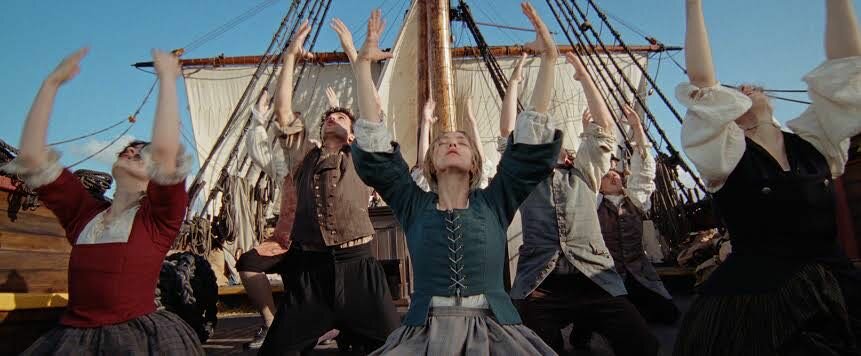
The Testament of Ann Lee (Mona Fastvold, 2025).
- The Philosophy of Time Travel: The Epic Sequel to the Motion Picture Donnie Darko, Richard Kelly’s literary follow-up to his 2001 debut feature is available to preorder.
- Rachel Antonoff presents a “Second Coming” T-shirt inspired by Mona Fastvold’s musical drama The Testament of Ann Lee (2025).
EXTRAS
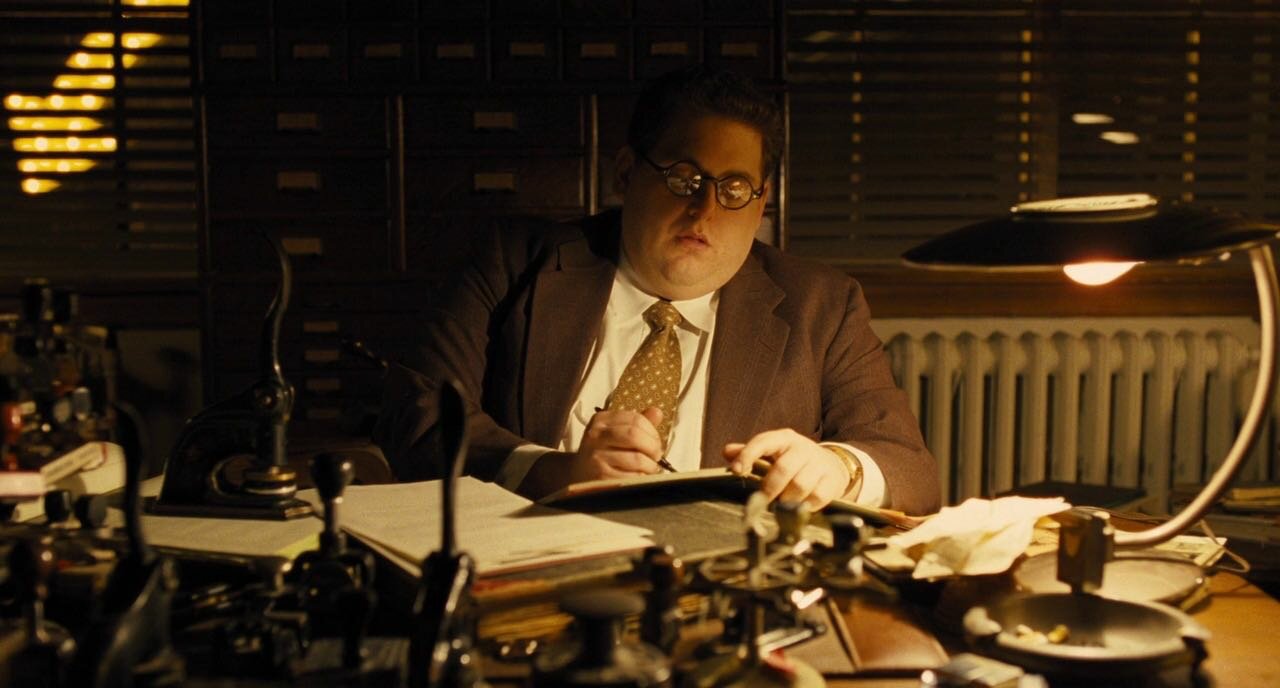
Hail, Caesar! (Joel and Ethan Coen, 2016).
- Screen Slate compiled a list of the 100 most-screened films in New York City across the last fifteen years, sorted by the number of individual screenings, including a column for showtimes.