Get in touch to send in cinephile news and discoveries. To keep up with our latest features, sign up for the Weekly Edit newsletter and follow us @mubinotebook on X and Instagram.
NEWS

Woman Unknown (May el-Toukhy, 2026).
- The Maggie Gyllenhaal-led jury at the 83rd Venice International Film Festival announced its list of winners. May el-Toukhy’s Woman Unknown (2026) won the Golden Lion and Lee Chang-dong’s Possible Love (2026) won the Grand Jury Prize. Meanwhile, Javier Calvo and Javier Ambrossi’s La Bola Negra (2026) won the People’s Choice Award at this year’s Toronto International Film Festival.
- Paramount CEO David Ellison has resolved the antitrust lawsuit filed by twelve states opposing the acquisition of Warner Bros. Discovery, paving the way for the merger to go forward. The news has prompted mixed reactions from the industry: while the DGA, SAG-AFTRA, and IATSE broadly support the settlement, the WGA still believes the merger to be a mistake. Meanwhile, former commissioner of the FTC Alvaro Bedoya and actor Mark Ruffalo believe that California Governor Gavin Newsom and Attorney General Rob Bonta caved to pressure from Ellison, who threatened to leave California if the merger failed.
- After Universal Pictures initially expressed reservations about releasing Alex Gibney’s Musk (2026), a documentary about the controversial tech mogul, due to the impending Paramount-WBD merger and possible political pressure, they are now holding internal talks to push forward with its distribution. Universal bought the international rights to Gibney’s four-hour film back in 2023, which recently premiered at Venice amidst legal threats from Musk himself.
- NAZA (2026) will receive a theatrical release in New York City on September 30 before expanding to Los Angeles the following week ahead of a national rollout. The film’s release arrives on the heels of Israeli culture minister Miki Zohar’s threat to revoke the citizenship of directors Yuval Abraham and Rachel Szor citing treason and IDF chief of staff Eyal Zamir’s order for a legal review of the film to possibly bring a lawsuit against the filmmakers, describing their work as an “attack on the State of Israel.”
DEVELOPING
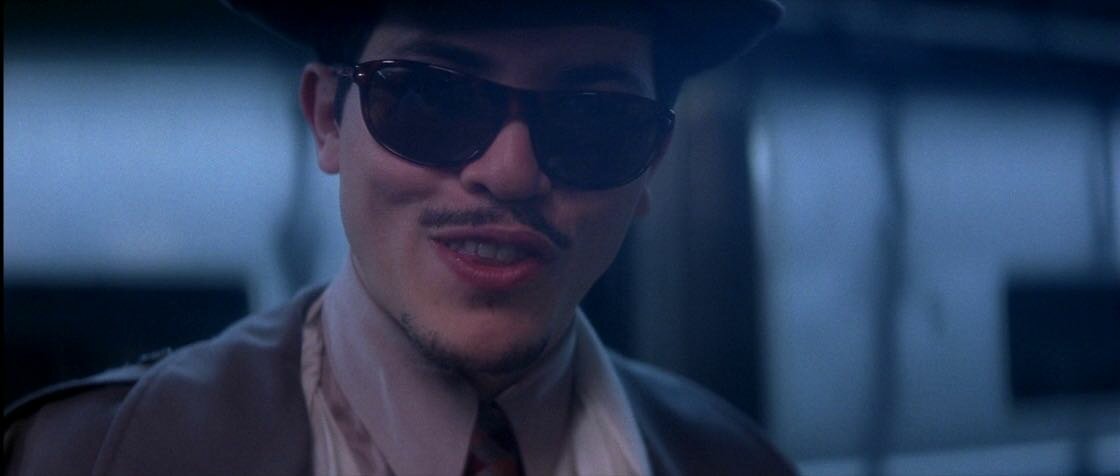
Carlito's Way (Brian De Palma, 1993).
- John Leguizamo is set to join Joseph Kosinski’s Miami Vice ’85 as the main villain opposite Michael B. Jordan and Austin Butler in a new cinematic take on the ’80s NBC crime drama.
REMEMBERING

The Battle of Chile (Patricio Guzmán, 1975-79).
- Jeremy Thomas has died at 77. The son of filmmaker Ralph Thomas, the British producer got his start working as an assistant editor for films like Family Life (1971) and The Harder They Come (1972) before eventually serving as sole editor on Ken Loach’s A Misfortune (1973), an adaptation of an Anton Chekhov short story for television, and Phillipe Mora’s documentary Brother, Can You Spare a Dime? (1975). Though he first produced the Dennis Hopper-starring Australian film Mad Dog Morgan (1976), Thomas gained international prominence with his next production, Jerzy Skolimowski’s The Shout (1978), which won the Grand Prix at Cannes and was the first feature released under his independent production company Recorded Picture Company. RPC went on to produce a number of acclaimed films by directors such as Nicolas Roeg, David Cronenberg, and Takashi Miike. Thomas won the Oscar for Best Picture for producing Bernardo Bertolucci’s The Last Emperor (1987), which led to a decades-long collaboration with the Italian filmmaker. He went on to be the Chairman of the British Film Institute between 1992 and 1997 before directing his sole feature All the Little Animals (1998). “An entrepreneurial spirit is an important element of being a producer, some sort of inner workings that is pushing you forward,” said Thomas. “Because there are a lot of knockbacks and you have to wear a sort of armour so you can continue believing in your films when everybody around you is telling you: ‘Don't do that.’”
- Patricio Guzmán has died at 85. After working for two years at an advertising studio in Madrid, the Chilean documentarian directed his first film, El primer año (1972), a survey of the first year of Salvador Allende’s socialist government, which garnered the attention of French filmmaker Chris Marker. Marker later supplied Guzmán raw film stock from the United States to help film his epic documentary The Battle of Chile (1975–79), which chronicled the fall of the Allende government in real time, ending on the day of General Augusto Pinochet's coup. The footage was smuggled out of the country and the film was completed in Havana after Guzmán went into exile in November 1973 following his illegal detainment by the Pinochet government. Guzmán continued making documentaries in Spain and France before returning to Chile in 1997 to direct Chile, Obstinate Memory (1997), his follow-up to The Battle of Chile about the country’s political amnesia surrounding the military dictatorship. His post-millennium work includes The Pinochet Case (2001), about the failed attempt to prosecute the former dictator, Salvador Allende (2004), a portrait of the politician’s rise to power, and a late-career trilogy about the Andes. His final film My Imaginary Country (2022) was about the youth revolt in Santiago between 2019 and 2020 and the lingering consequences of the protests. “Memory has a gravitational force,” Guzmán told Notebook in 2010. “Cinema suffers without memory in the same way that history suffers without memory. Science would also suffer without memory. The human race suffers. The absence of memory produces a global suffering.”
- Gerrit Graham has died at 77. The American actor is best known for his collaborations with filmmaker Brian De Palma, appearing in four of his films: Greetings (1968), Hi, Mom! (1970), Phantom of the Paradise (1974), and Home Movies (1979). He also costarred in such beloved cult classics like Donald Cammell’s Demon Seed (1977), Robert Zemeckis’s Used Cars (1980), and Alex Cox’s Walker (1987). Graham’s career extended into writing, including cowriting the Disney film The Prince and the Pauper (1990) and a lengthy songwriting collaboration with vocalist and guitarist Bob Weir, penning lyrics for the Grateful Dead as well as multiple Weir side projects. Describing him as a “scene-stealer par excellence,” Edgar Wright paid tribute to the actor’s performance in Phantom of the Paradise, saying that he’s “a constant joy, from his unforgettable line readings to those insane dance moves.”
RECOMMENDED READING

Night on Earth (Jim Jarmusch, 1991).
- “This issue is dedicated to westerns made at the margins, produced with little means and made from the scraps of the studio system: cheap programmers of Poverty Row, seventy-minute features of cowboys with guns ablaze on the backlot. These were films that exploited leftover sets, recycled plotlines ad nauseam, and made use of filmmakers and actors idling between major projects or exiled from the studios proper. At once popular and peripheral, they were the morass upon which American cinema was built, the crude oil that fueled an empire. However, they also exist in another lineage, one that includes the films of Luc Moullet, Paul Vecchiali, Larry Cohen, and any other filmmaker who made art with a poverty of means. Embodying all that is criminal and beautiful in the history of cinema, the B western tells the story of its medium.” The editors of the Narrow Margin Quarterly explain the impetus behind their fourth issue, The Western: From B – Z, featuring writing on Andre de Toth, Budd Boetticher, John Wayne, and more.
- “Look, I think you could look at my life and go: I like standing on the edge of a cliff physically and metaphorically. Meaning, I look at life as an adventure, and I always have, my whole life. I want to understand people. I want to understand life and cultures. We’re looking at life. I wonder: Who are those people? How do they feel? Do they think the way I do? Do they laugh at the same thing? How do I connect with them? And I didn’t want to just be a tourist. I wanted to go make movies there because I also find you really get to know people when you create with them. Everyone has a different subjective reality of what they think about life, about people. And there is common ground in humanity, and I’m looking for that common ground.” For GQ, Zach Baron interviews Tom Cruise for the magazine’s cover story and attempts to break through his elusive shell before the release of Alejandro González Iñárritu’s Digger (2026).
- “Her biography was catnip. She grew up (for a while, anyway) in a commune. Her godfather was Timothy Leary, the counterculture icon infamous for advocating for psychedelic drugs. She suffered from insomnia and called Al Pacino in the middle of the night to talk. She chose ‘Ryder’ as a stage name because her father’s Mitch Ryder and the Detroit Wheels album was playing when the producer called to ask how she should be credited; apparently ‘Horowitz’—her birth name—was assumed to be less than ideal. Was all the talk about Ryder being ‘smart’ a coded way of acknowledging that she was Jewish? Or was it only a way of acknowledging that she had brown hair?” For the Metrograph Journal’s Cracked Actor column, Christine Smallwood unpacks Winona Ryder’s career and how she offered an alternative to the typical Hollywood “it girl.”
- “The filmmakers’ tightness of form extends to a similar elegance of its metaphors—the memory palace was a Greek mnemonic device, revived to more extensive use in the Renaissance (notably by Italian hermetic scholar Giordano Bruno, one of the major dramatis personae of Crowley’s Aegypt books) in which the practitioner would conjure a familiar environment and then methodically ‘place’ pieces of information in certain locations there to be more easily recalled later. What if the world itself was a memory palace that contained everything that had ever happened and we just needed the right tools to see it?” For Reverse Shot, Jeff Reichardt reviews Kevin Walker and Jack Auen’s “singular and strange” debut feature Chronovisor (2026) and the enduring allure of research as a gateway to discovery.
RECOMMENDED EVENTS

Faluyi (Ayo Akingbade, 2022).
- Luxembourg, through November 15: The Casino Luxembourg presents The Day of the Mantis, an immersive film installation by artistic duo M+M (Marc Weis and Martin De Mattia) containing three stereoscopic 3D film installations featuring praying mantises and stick insects.
- Los Angeles, through February 27: The Marciano Art Foundation presents Tacita Dean: FILM, a reprisal of the British European artist’s 2011 installation that takes the form of an enormous 35mm film strip.
- New York, September 24 through January 3: The New Museum presents Arthur Jafa: I Am Tony, the first US museum survey exhibition of the video artist’s career, which endeavored to “find new visual forms to capture the rhythm and realities of Black life in America.”
- Zurich, September 26 through January 10: The Kunsthalle Zürich presents Crossing, the first institutional solo exhibition outside the UK by London-based artist Ayo Akingbade, featuring two new productions juxtaposed with the artist’s earlier works that explore urbanism and architecture.
RECOMMENDED VIEWING
- Netflix presents a trailer for David Fincher’s The Further Mis-Adventures of Cliff Booth (2026), a standalone sequel and spin-off to Once Upon a Time... in Hollywood (2019) written by Quentin Tarantino with Brad Pitt reprising his role as the title character.
- Sony Pictures Classics presents a trailer for Bitter Christmas (2026), Pedro Almodóvar’s tragicomedy about a commercial director’s tumultuous long weekend and a filmmaker’s attempt to adapt it to the screen.
- Neon presents a trailer for Ryusuke Hamaguchi’s All of a Sudden (2026) about a caretaker’s relationship with a terminally ill theater director, starring Virginie Efira and Tao Okamoto.
- NYFF64 presents a trailer for My Undesirable Friends: Part II – Exile (2026), the second part of Julia Loktev’s documentary about a group of independent Russian journalists living in exile in the wake of the Russo-Ukrainian war.
- Film Movement presents the new 4K restoration of Zhang Yimou’s Raise the Red Lantern (1991), which will be released in theaters on the 35th anniversary of its release.
RECENTLY ON NOTEBOOK
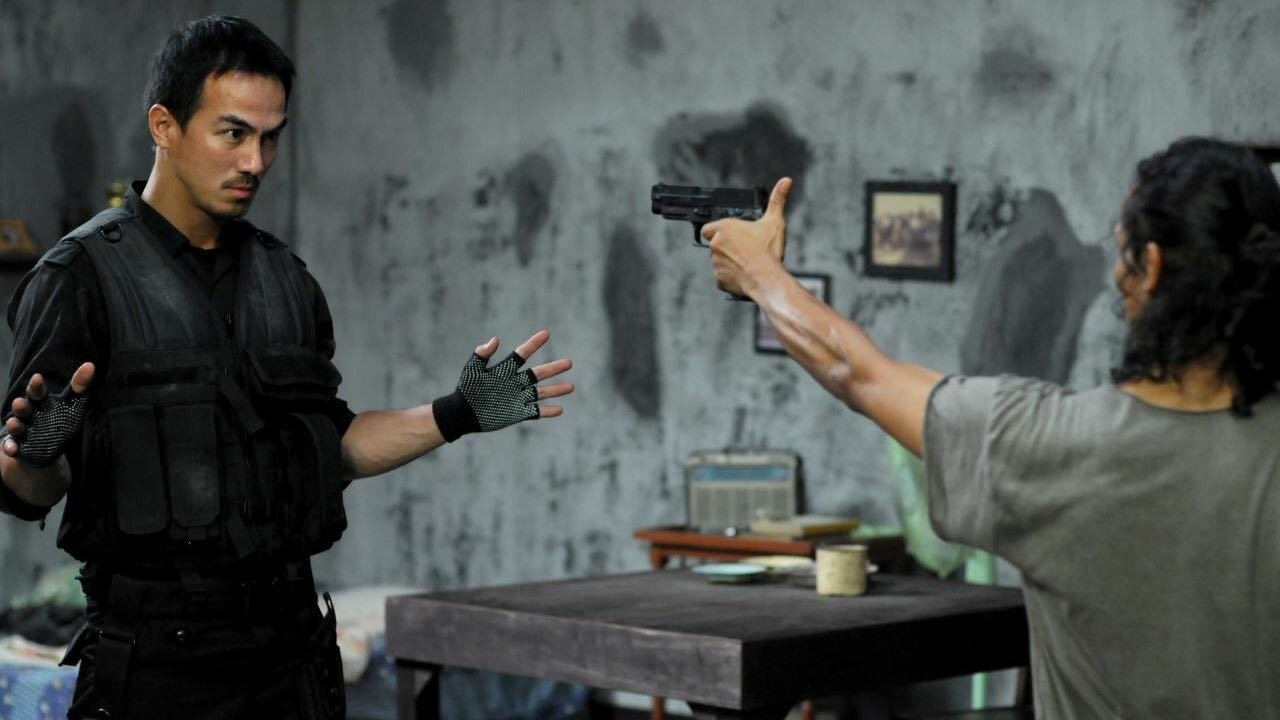
The Raid (Gareth Evans, 2011).
- “It needs virtually no introduction. Fifteen years after its world premiere in the Midnight Madness section of the 2011 Toronto International Film Festival, The Raid (2011) has so shaped the landscape of contemporary action cinema that it’s birthed its own prepositional descriptor: ‘like The Raid’ adorns sundry headlines to describe any action film featuring some combination of a single-location setting, gritty atmosphere, barbarous bloodletting, and no-holds-barred mixed martial arts.” In the latest entry in The Action Scene column, Jonah Jeng revisits Gareth Evans’s The Raid (2011) on its fifteen anniversary and the lasting influence of its kinetic filmmaking.
- “A movie is expected to explain itself on some level. We agree to be nudged along by the crafty and creative individuals who make it easier for us to follow and understand. But this process also entails our unconscious filling in all the blank spots between the projector and the screen (suggesting presence) and those between individual still images (suggesting motion). This adds up to a form of collaboration we can all accept with pleasure, a creative form of acquiescence that we simply experience as moviegoing.” Jonathan Rosenbaum explores the beauty of elusive cinema and the way that absences in clarity unites the audience and filmmaker.
- “Late into this horrifying confessional, a soldier admits he’s helped carry out a genocide, and another that he doesn’t see much of a difference between Israel and Nazi Germany. As their words echo in this sepulchral night, Abraham and Szor linger on the buildings around them. Behind their windows, life in Tel Aviv goes on as normal: people sleep, do yoga, run on treadmills, watch Netanyahu announce the army has blocked trucks carrying humanitarian aid into the Strip. It’s at these interludes that NAZA reminded me of The Zone of Interest (2023)—incidentally, Jonathan Glazer here served as executive producer—another incendiary vivisection of the banality of evil, and all the lies we tell ourselves to deny it and carry on.” Leonardo Goi reports from the 2026 Venice Film Festival and examines some of the films in the lineup including Ilya Khrzhanovsky’s DAU (2026), Lee Chang-dong’s Possible Love, and Mariano Llinás’s Life of Jorge Luis Borges (2026).
- “Watching films at a festival produces a peculiar form of misremembering. By my third day in Locarno, the films I had seen were beginning to bleed into one another. Through the sheer density of images, a morning motif folded into an evening silhouette, and a line of dialogue acquired the phantom inflection of another film. In memory, the consecutive dissolves into the simultaneous. I found myself drawn to films that seemed to work with this instability—pulling experience apart, rearranging the debris, and holding those disparate fragments up to the light.” In partnership with the Locarno Critics Academy, Notebook presents a series of correspondences from burgeoning writers on the ground.
WISH LIST
Cold Water (Olivier Assayas, 1994).
- Assayas on Assayas, a book-length conversation between the French filmmaker and critic Jean-Michel Frodon that is “a springboard for an expansive exploration of cinema, memory, literature, politics, travel, and the creative process,” is available to purchase from Sticking Place Books.
EXTRAS
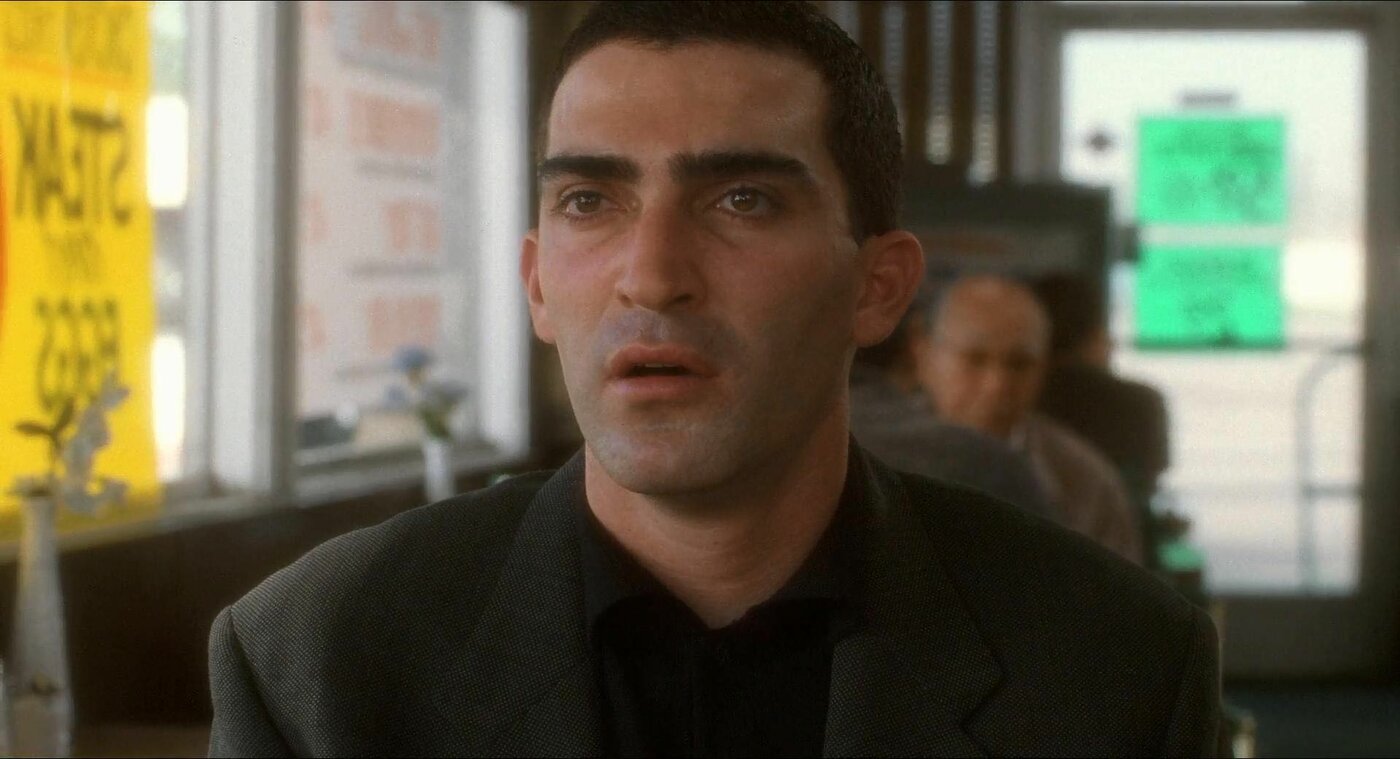
Mulholland Dr. (David Lynch, 2001).
- Amanda Karkoutly details Lynchian landmarks around Los Angeles, including the Big Boy Diner, the Doheny Mansion, and his grave at the Hollywood Forever cemetery.