Get in touch to send in cinephile news and discoveries. To keep up with our latest features, sign up for the Weekly Edit newsletter and follow us @mubinotebook on X and Instagram.
NEWS
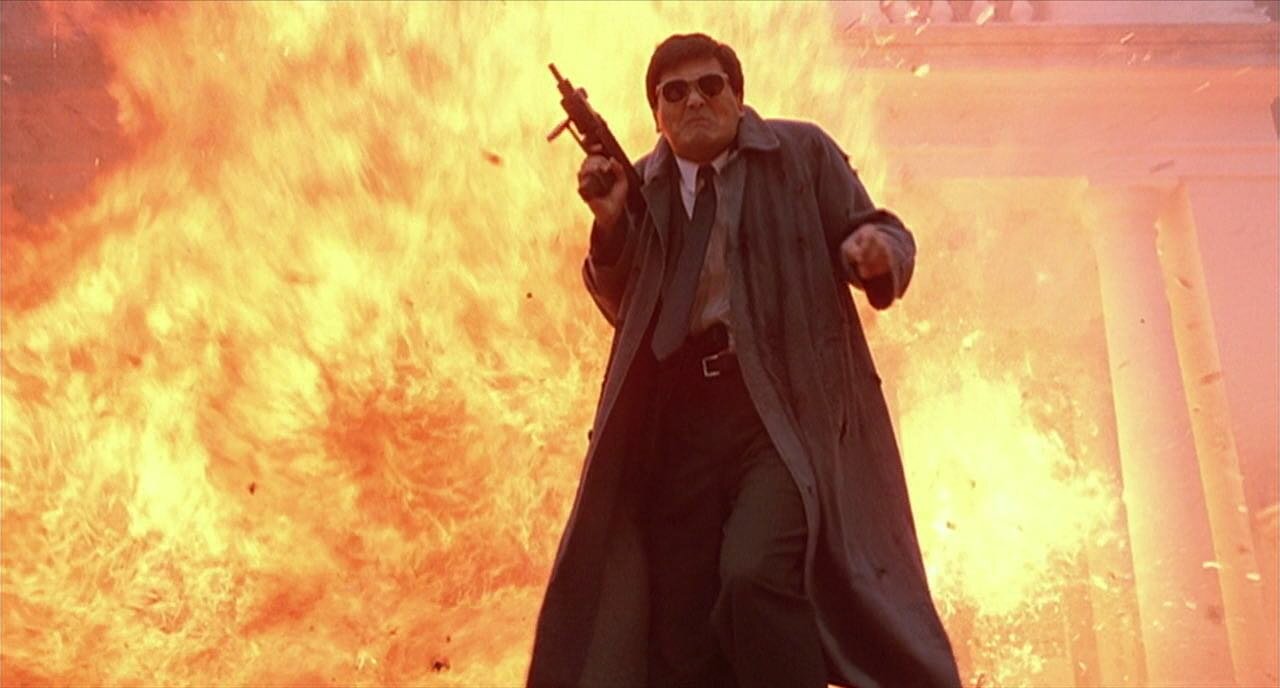
A Better Tomorrow II (John Woo, 1987).
- Over 4,500 film workers—including actors Joaquin Phoenix and Emma Stone, and filmmakers Yorgos Lanthimos and Mike Leigh—have signed Film Workers for Palestine’s “pledge to end complicity,” stating that they will refuse to work with Israeli film institutions “implicated in genocide and apartheid against the Palestinian people.” Paramount has denounced the petition, which it mischaracterizes as an effort “to boycott Israeli filmmakers.” In response, FW4P emphasized that the pledge “does not target individuals based on identity,” and pointed out that Larry Ellison, who recently acquired a controlling stake of Paramount, has a “close relationship” with Israeli prime minister Benjamin Netanyahu.
- The Amazon-backed company Showrunner has announced they will utilize a new generative AI model to reconstruct the lost 43 minutes of Orson Welles’s The Magnificent Ambersons (1942), which were destroyed by RKO Pictures to free vault space. Their efforts won’t be commercialized since Showrunner doesn’t own the film rights, but CEO Edward Saatchi says that their goal is to see the footage “exist in the world after 80 years of people asking ‘might this have been the best film ever made in its original form?’”
- An extended 140-minute workprint cut of John Woo’s A Better Tomorrow II (1987) was recently discovered in the Hong Kong Film Archive, featuring half an hour of material that the director himself believed to have been lost. Audio technician and action-film historian Brandon Bentley tracked down the mislabeled reels after coming across the corresponding audio files in the course of a restoration process. Shout! Studios will release the cut on their upcoming box set of the A Better Tomorrow trilogy (1986–89).
REMEMBERING
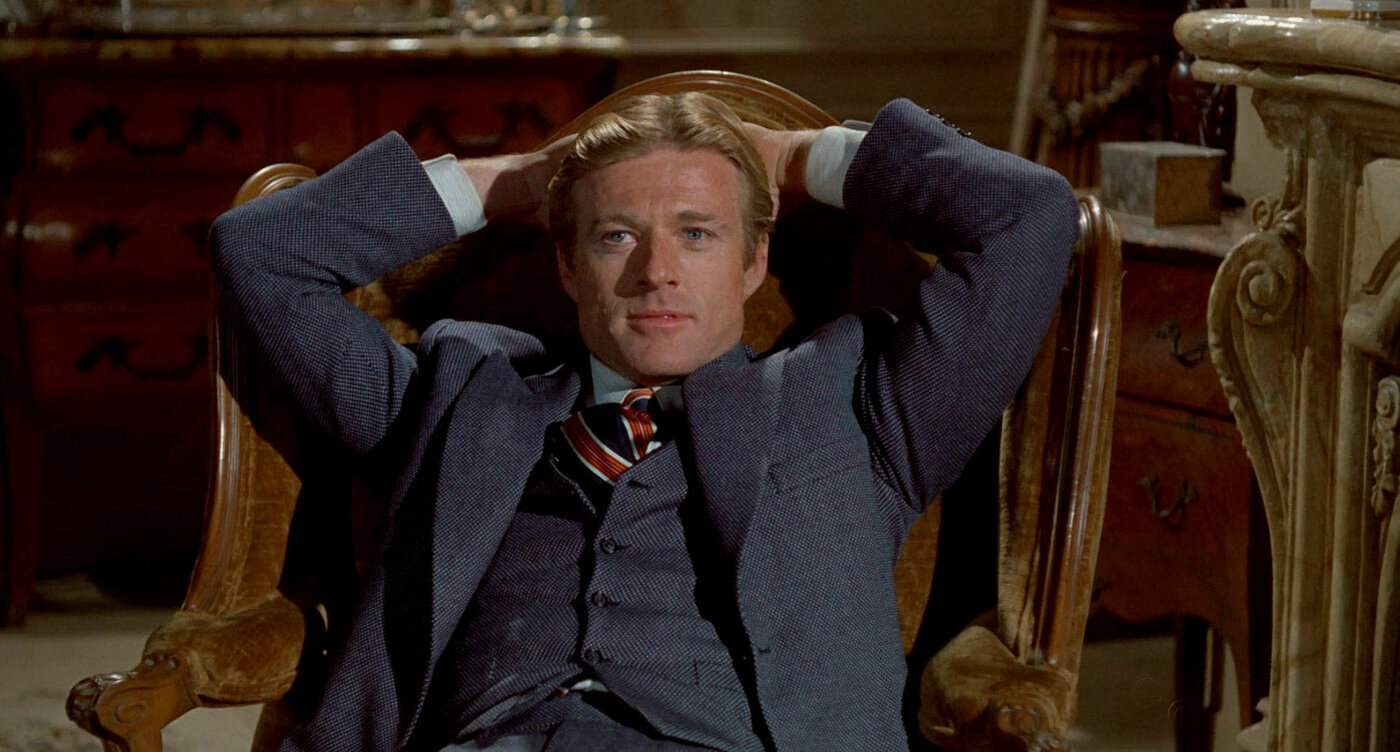
The Sting (George Roy Hill, 1973).
- Robert Redford has died at 89. The American actor began his career on the New York stage, where he made his biggest splash in the original production of Neil Simon’s Barefoot in the Park, directed by Mike Nichols. During the early 1960s, he regularly appeared on television before making his first film appearance in Tall Story (1960), an adaptation of the Broadway play by the same name in which Redford also appeared as a replacement. Redford’s first big role was in Robert Mulligan’s Inside Daisy Clover (1965), for which he won Best Male Newcomer at the Golden Globes. After reprising his role in the film adaptation of Barefoot in the Park (1967), he starred in two major films in 1969 that would raise his profile considerably: George Roy Hill’s Butch Cassidy and the Sundance Kid, opposite Paul Newman, and Michael Ritchie’s debut feature, Downhill Racer. His movie-star era began in earnest in the 1970s with starring roles in such films as the Depression-era caper The Sting (1973), in which he worked again with Hill and Newman; the McCarthy-era romance The Way We Were (1973), and the spy thriller Three Days of the Condor (1975), two of six collaborations with director Sydney Pollack; and Alan J. Pakula’s All the President’s Men (1976), playing Washington Post reporter Bob Woodward. In 1978, he founded the Utah/US Film Festival, later renamed Sundance. He won a Best Director Oscar for his first feature, Ordinary People (1980), and went on to direct nine more, including The Horse Whisperer (1988) and Quiz Show (1994). Though he continued to garner acclaim for his acting up through his final starring role in David Lowery’s The Old Man and the Gun (2018), he also gained notoriety for his staunch environmental activism, including his strong opposition to the construction of the Keystone Pipeline and successful efforts to divest Pitzer College from fossil fuel stocks. “He stood for an America we have to keep fighting for,” said friend and frequent scene partner Jane Fonda in tribute.
RECOMMENDED READING
Dry Leaf (Alexandre Koberidze, 2025).
- “Criticism has been in decline for so long that you can count the full-time staff positions in certain critical fields on one hand—which makes every loss reverberate even louder and the questions more pressing.” For Intelligencer, Charlotte Klein examines the state of cultural criticism after a summer of layoffs, buyouts, and reassignments, trying to chart a path forward for the industry with the help of veteran colleagues.
- “In more ways than one, it becomes clear, the striding, girlish, preening, prickly Riefenstahl’s survival has depended on both repeatedly fielding and leaving unanswered and unanswerable the question of her responsibilities—as an artist, a citizen, and a human being.” For 4 Columns, Michelle Orange reviews Andres Veiel’s documentary Riefenstahl (2024) and the “openness to paradox, if not outright contradiction” needed to engage with the infamous German filmmaker.
- “I make films because I love what I’ve seen…. Art is not like science, where one idea destroys a previous one; with art, you make something and it is in a lineage, it becomes a part of something.” For Tone Glow, Joshua Minsoo Kim interviews filmmaker Alexandre Koberidze ahead of the North American premiere of Dry Leaf (2025), a three-hour-plus odyssey across the Georgian countryside, all shot on a Sony Ericsson cellphone.
- “He wasn’t just American, but freakishly American, and like any good scout was both pathologically self-assured and incurably naive.” For the London Review of Books, Ruby Hamilton confronts the “sanctioned obliquity” with which David Lynch’s films have often been received.
RECOMMENDED EVENTS

Sinofuturism (1839–2046 AD) (Lawrence Lek, 2016).
- Graz, September 20 through November 23: The Grazer Kunstverein presents Paul, an exhibition by American artist Tom Burr that, inspired by Pier Paolo Pasolini’s unrealized film about the life of Saint Paul, “embraces incompletion as a generative method for pushing inherited fragments and unresolved ideas into motion” and will evolve into successive iterations over the course of the run.
- London, September 26 through December 14: Goldsmiths CCA presents Life Before Automation, the largest UK exhibition of London-based artist Lawrence Lek, known for his Sinofuturist creative practice that explores how “the problems and promises of artificial intelligence and China’s technological influence converge.” The exhibition will feature his foundational Sinofuturist trilogy in a hybrid format; Nøtel (2018–), Lek’s ongoing collaboration with writer and musician Kode9; and the multi-channel immersive installation NOX (2023), which will receive its first UK presentation.
- Vienna, through November 16: Secession presents Being John Smith, an exhibition featuring the British avant-garde filmmaker’s latest film and two others, The Black Tower (1985–87) and Dad’s Stick (2012).
- Chicago, through November 23: The Renaissance Society presents Diego Marcon: Krapfen, in which the Italian artist makes his US debut with a newly commissioned musical dance film, Krapfen (2025), that juxtaposes encounters between a child and characters embodied by costume props, American animation and Italian opera, and traditional and digital filmmaking practices.
RECOMMENDED VIEWING
- e-flux, in collaboration with the Lawrence Weiner Estate and Electronic Arts Intermix, presents Lawrence Weiner’s experimental feature A First Quarter (1973), which features “simultaneous realities, altered flashbacks, plays on time and space” as components of the film’s form and content.
- Diversion presents a trailer for Vimukthi Jayasundara’s latest feature, Spying Stars (2025), a sci-fi drama about a bioengineer who returns to Earth after years in space only to discover a pandemic has broken out. The film will premiere next week at the Busan International Film Festival.
- Netflix presents a trailer for Richard Linklater’s Nouvelle Vague (2025), which dramatizes the filming of Jean-Luc Godard’s Breathless (1959) against the backdrop of a sea change in French cinema. The film will be in select theaters on October 31.
- MUBI presents a trailer for Kelly Reichardt’s The Mastermind (2025), starring Josh O’Connor as a 1970s suburban father who moonlights as an art thief. The film will be released in theaters on October 17.
RECOMMENDED LISTENING
- Moirée released four roundtable podcast episodes from the Toronto Film Festival, featuring the reflections of Adam Nayman, Mark Asch, Natalia Keogan, Lawrence Garcia, our very own Daniel Kasman, and more.
RECENTLY ON NOTEBOOK
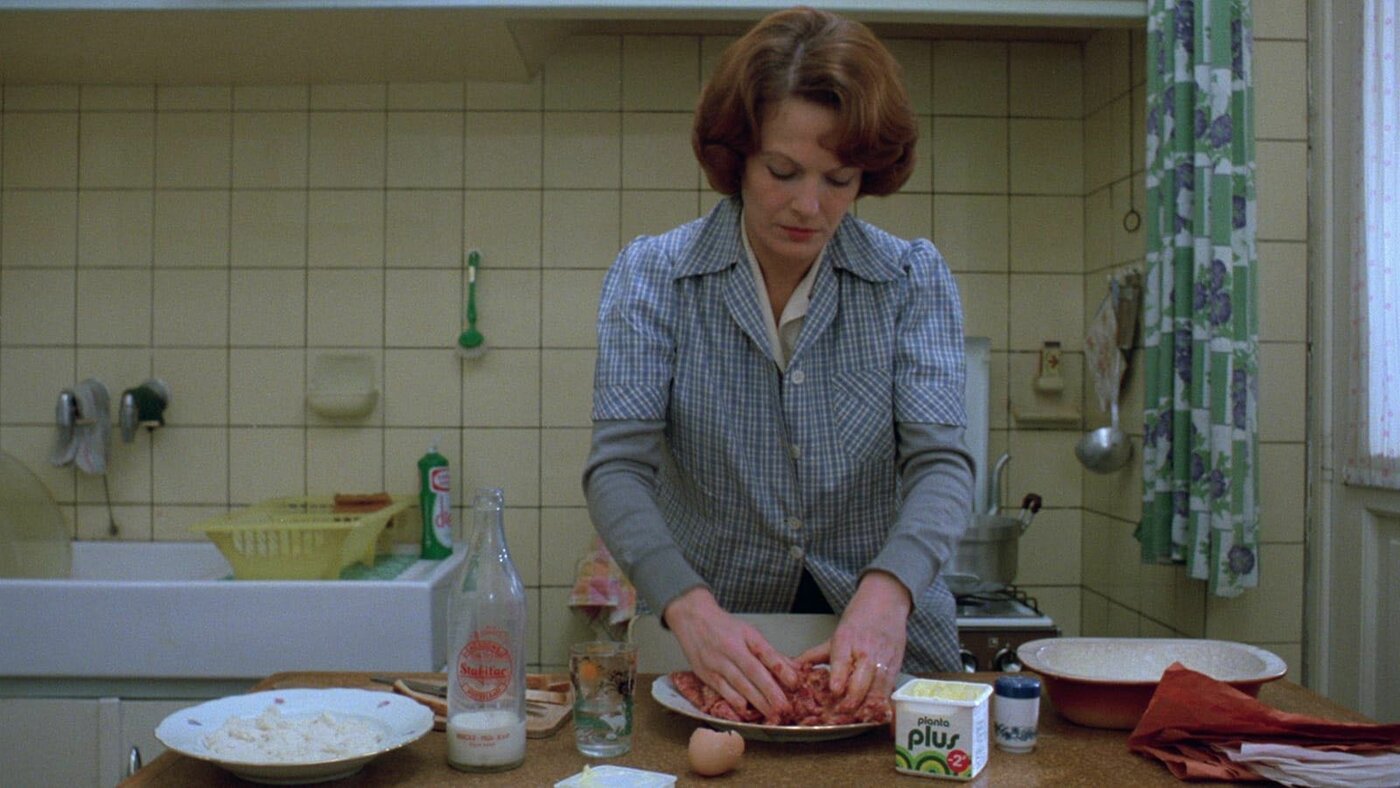
Jeanne Dielmanm, 23, quai du Commerce, 1080 Bruxelles (Chantal Akerman, 1975).
- “With a steady gaze that rewards our attention rather than manipulating our emotions, Akerman invites us to participate in her cinematic interrogations.” On the occasion of a New York retrospective, David Schwartz identifies the sense of placelessness at the center of Chantal Akerman’s cinema.
- “Assembling a competition lineup is undoubtedly an exercise in classically Venetian diplomacy.” Our coverage from Venice concludes with a dispatch by Chloe Lizotte and two by Leonardo Goi, covering the latest films by Kathryn Bigelow, Lucrecia Martel, Guillermo del Toro, Benny Safdie, and more.
- “Though the film is ironically dated by moments that signal Switzerland’s entry into a new era, some community traditions and cultural setpieces cut more easily through time.” Our collaboration with the Locarno Critics Academy continues with Olivia Popp’s consideration of Ernest Albrecht Heiniger’s Impressions of Switzerland (1984), a panoramic film newly restored for virtual reality.
- “Overeating and undereating, respectively, become the sisters’ subconscious means of drawing attention to themselves—or, at least, away from the donkeys.” Also from Locarno: Sonya Vseliubska writes on the disordered appetites and invectives of Rosanne Pel’s Donkey Days (2025).
WISH LIST
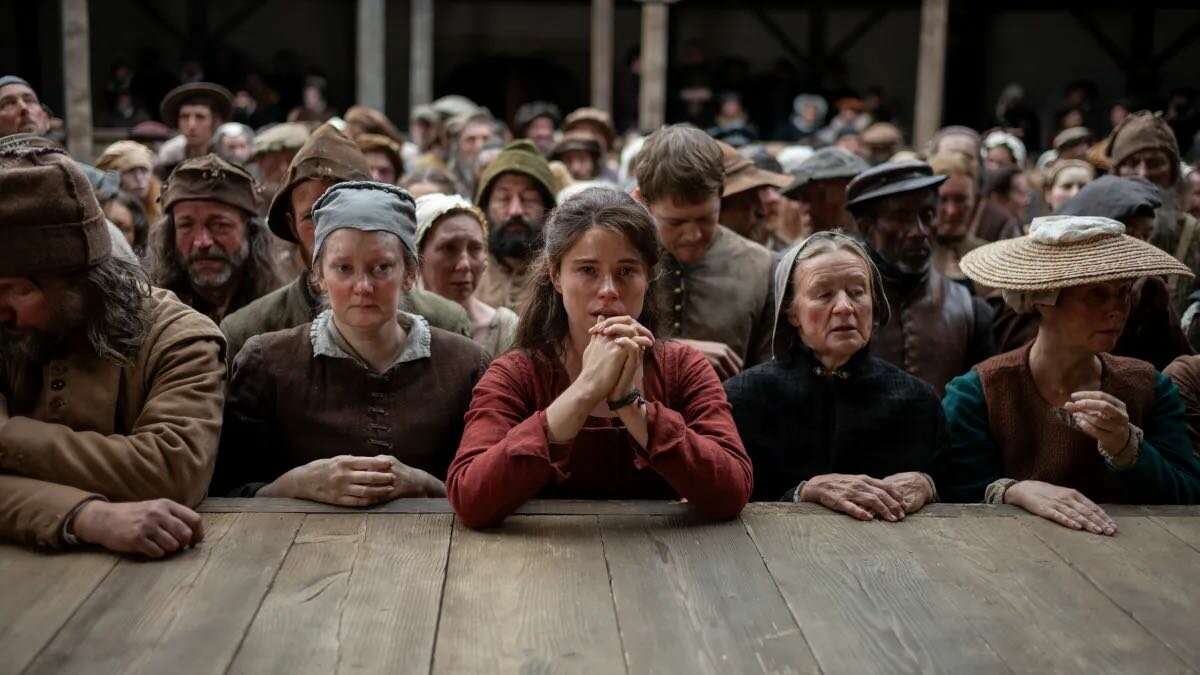
Hamnet (Chloé Zhao, 2025).
- The Hunger: Film Writing, 2012–2024, a collection by Melissa Anderson that includes reviews, essays devoted to single performers, and a wide-ranging discussion between Anderson and critic Erika Balsom, is available to preorder from The Film Desk.
- Even as a Shadow, Even as a Dream, a “quiet companion book” to the upcoming film Hamnet (2025) from director Chloé Zhao, actress Jessie Buckley, and photographer Agata Grzybowska that emerged “from a series of artistic rituals shared between [the] three collaborators,” is available to preorder from Mack.
EXTRAS
- The artist and poet Marcus Merritt has been drawing Objects from Films since August 2020, some of which he has put up for sale.
- The Film-Makers’ Cooperative is raising funds to assist their Executive Director M. M. Serra with the sizable expenses she faces in the aftermath of recent health challenges.