Get in touch to send in cinephile news and discoveries. To keep up with our latest features, sign up for the Weekly Edit newsletter and follow us @mubinotebook on X and Instagram.
NEWS

Once Upon a Time... in Hollywood (Quentin Tarantino, 2019).
- Jafar Panahi was sentenced in absentia to five years and one month in prison by the Tehran Revolutionary Court, which has also ordered the confiscation of his assets, a two-year travel ban, and a two-year ban on social media activities. Panahi’s lawyer says that his bank accounts were frozen and he has three open cases against him. The Iranian filmmaker’s legal troubles date back to his first imprisonment in 2010.
- Michael Mann was hospitalized after shooting himself in the leg at a Los Angeles gun range. The filmmaker was trying to holster a firearm when it was accidentally discharged. Representatives described the wound as “subcutaneous and minor.”
- Elne mayor Steve Fortel changed its French municipality’s theater, named after anti-colonial filmmaker René Vautier, to “Bobine Illibérienn,” a reference to the town’s inhabitants, for the sake of neutrality. The choice was widely condemned by several cinema bodies, on the basis that it “not only reflects a desire to erase the work and struggles of René Vautier, but also alters the cinema’s identity.” Fortel is an independent previously affiliated with France’s far-right movement.
- Cinemark and Regal Cinemas have declined to screen The Further Mis-Adventures of Cliff Booth (2026) on their IMAX theaters when it opens on Thanksgiving in favor of retaining Hunger Games: Sunrise on the Reaping (2026), citing Netflix’s two-week theatrical engagement before its streaming debut as their main reason. The film will exclusively screen on AMC’s IMAX screens worldwide.
DEVELOPING
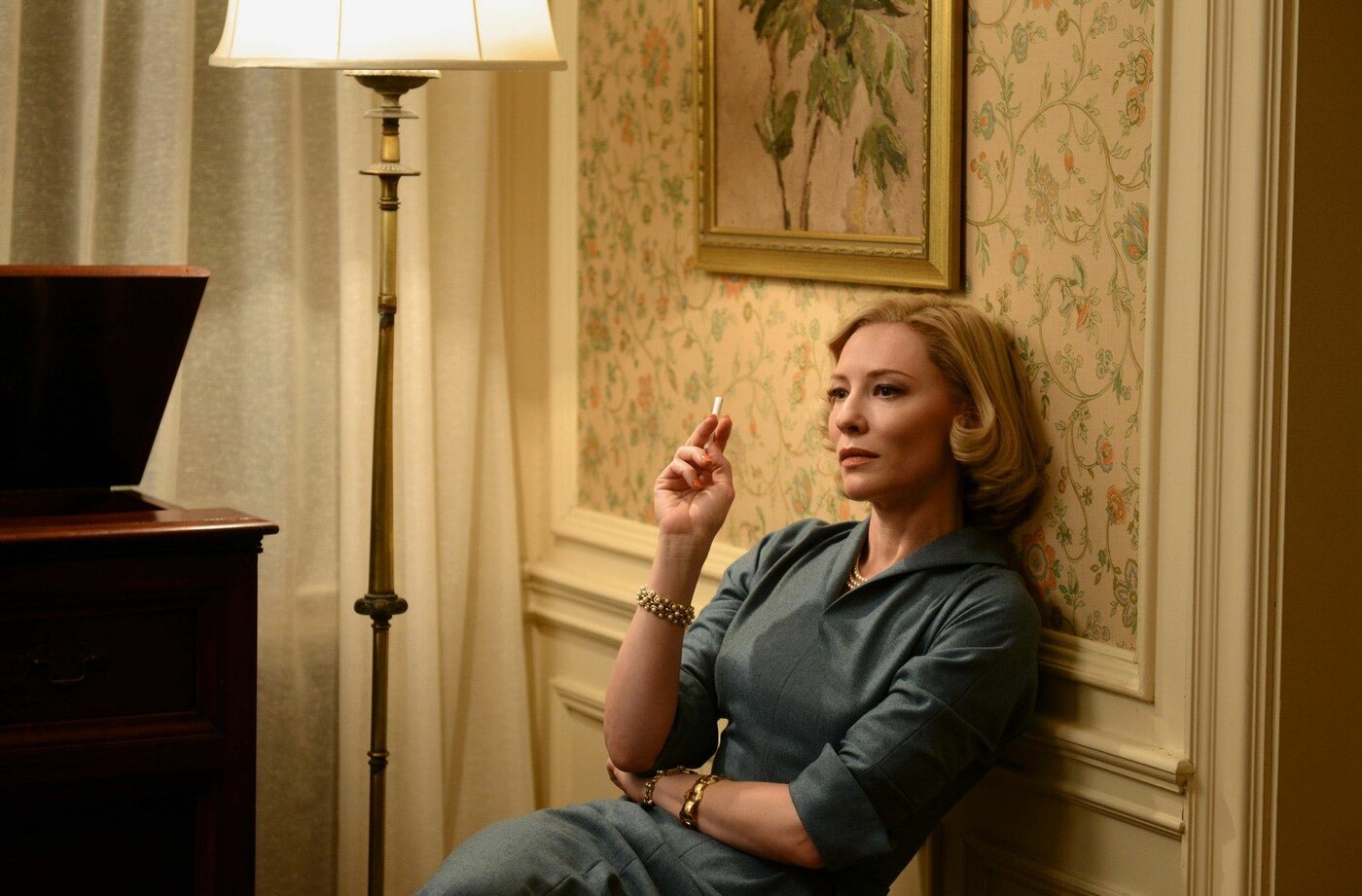
Carol (Todd Haynes, 2015).
- Following the completion of his upcoming film De Noche, Todd Haynes is set to reunite with Cate Blanchett on an adaptation of Jean Genet’s 1947 play The Maids. Blanchett previously starred in a 2013 production of the play alongside Isabelle Huppert and Elizabeth Debicki.
REMEMBERING
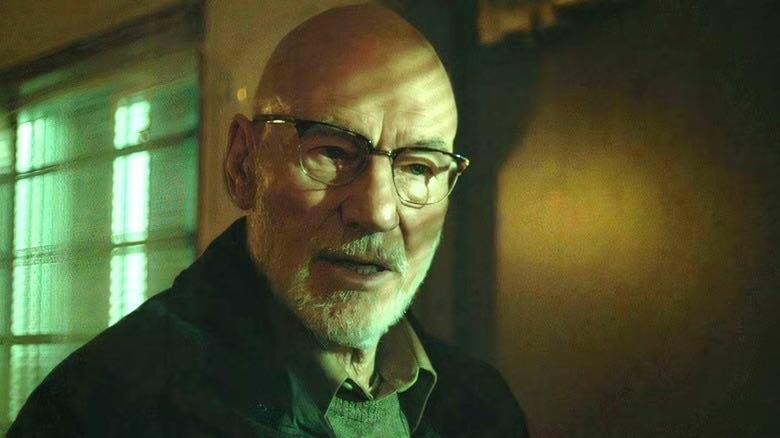
Green Room (Jeremy Saulnier, 2015).
- Patrick Stewart has died at 86. The English actor overcame a poverty-stricken, abuse-riddled childhood to become a thespian in his twenties. He established his early reputation as a Shakespearean actor by regularly working with London’s Royal Shakespeare Company, eventually making his Broadway debut in 1971 in a production of A Midsummer Night’s Dream. Though Stewart regularly appeared in BBC miniseries and TV films in the 1970s and ’80s, he achieved stardom by playing Jean-Luc Picard in Star Trek: The Next Generation (1987–94), a role he later reprised four times on the big screen in Star Trek Generations (1994), Star Trek: First Contact (1996), Star Trek: Insurrection (1998), and Star Trek: Nemesis (2002). He garnered even more prominence with his turn as Professor Charles Xavier in the X-Men franchise, a character he played for over two decades across nine films, including Avengers: Doomsday (2026), which will mark his final posthumous performance. Some of Stewart’s other notable film performances include Gurney Halleck in David Lynch’s Dune (1984), Richard I in Robin Hood: Men in Tights (1991), and skinhead leader Darcy in Green Room (2015). He also starred in the Starz sitcom Blunt Talk (2015–16), published the memoir Making It So in 2023, and was a vocal advocate against domestic violence. “He wore his heart on his sleeve,” wrote his friend Ian McKellan, “which made him a man to rely on, to admire and in my case, love.”
- Tom Skerritt has died at 93. After serving in the Air Force, the American actor got his start on television, appearing in numerous episodes of Western dramas like Death Valley Days (1952–70), Gunsmoke (1955–75), and The Virginian (1962–71). Though his feature film debut was in War Hunt (1962), he first came to prominence by playing Captain Duke Forrest in Robert Altman’s M*A*S*H (1970), a role that led to numerous supporting turns in other New Hollywood productions like Harold and Maude (1971), Thieves Like Us (1974), and Up in Smoke (1978). Skerritt’s performance as Dallas in Alien (1979) also made him a mainstay of action, science-fiction, and horror films, including The Dead Zone (1983), Top Gun (1986), and Contact (1997). He also starred as Sheriff Brock on the drama Picket Fences (1992–96), for which he won an Emmy Award. In addition, Skerritt was a faculty member at TheFilmSchool, a Seattle-based nonprofit film program that operated from 2003 to 2019, and founded the Red Badge Project, which helps veterans work through PTSD through storytelling. “I realized very early on we’re simply the product of all our experiences,” he told Film Comment in 2016. “The creative process is trying to capture something you’ve experienced and that you’re putting together and that you want to communicate and share with other people. No secret to that.”
RECOMMENDED READING
Jonah Who Will Be 25 in the Year 2000 (Alain Tanner, 1976).
- “Sarandos might be a lifelong cinephile whom Netflix originally hired for his deep background in film distribution, but there’s no doubt he’s a tech bro now. I can’t really blame him for that. The guy is both a product and an emblem of his times, and though I’m hard-pressed to think of another studio executive who’s ever made my blood run hotter on such a regular basis, I suspect that the likes of Darryl F. Zanuck and Louis B. Mayer would’ve spouted all the same bullshit had they been tasked with measuring ‘view hours’ and competing against Mr. Beast for our attention. That’s just how tech bros have to talk. Their business models, stock prices, and corporate mystiques require them to act like weird ambassadors from the world of tomorrow—smiling and casual but always bent on destroying whatever it takes to bring their vision of the future to bear.” For Indiewire, David Ehrlich chronicles the history of Netflix’s mission to render theatrical exhibition obsolete—and why exactly the experiment failed.
- “[Nathan] Fielder is not as awkward as he appears when performing as ‘Nathan Fielder’ on The Rehearsal (2022–) and Nathan for You (2013–17), but is still being a bit faux-naive with [Elizabeth] Holmes, offering help-me-understand lifelines that [Billy] Evans usually grabs at first, fawningly explaining that his love ‘just communicates differently…’ There’s much more evidence that Holmes is a habitual liar who knowingly committed fraud than Fielder ever presents to her, or to the audience—he finds her delusions epistemologically compelling, and is gentle with them, because there isn’t much of a movie otherwise. The promise of Theranos, a lie the entire venture-capital investment world of the 2010s was happy to believe, was that its non-functioning machines could find in a single drop of blood enough medical data to basically end premature death. The film is engaged in its own cinematic-forensic attempt at perfect scientific objectivity; as Fielder warms to Holmes, and allows her to flummox him, it suggests that his efforts are as foolish as Theranos was.” For Defector, Mark Asch writes about the connections between Primetime (2026) and You Can See Everything (2026), and the themes of “voluntary surveillance and the ethics of non-fiction” in both works.
- “There are limits to how applicable the experience of a single screening, largely promoted via personal networks, is to the general public. But there were many strangers of varying ages, professional backgrounds, and film tastes in attendance. While I would not expect the overwhelmingly positive response of this first screening to carry over to the general population (or even to the second screening), it was an encouraging indication that many rich viewing experiences were accessible from many different perspectives. Both the Rimbaud expert and the novice happily absorbed the movie. The cinephile and the Netflix enjoyer could both have a meaningful experience.” On his Substack, filmmaker Patrick Wang reflects on the experience of exhibiting his latest film A. Rimbaud (2026), eschewing traditional distribution pathways, and the benefits of persistence when trying to garner an audience.
- “[John] Berger himself, in a 2005 conversation with Michael Ondaatje, described cinematic spectatorship as ‘an image of collaboration, the collaboration of the spectator who is no longer a spectator but [who is] part of the telling of the story.’ This is a refreshing and imaginative account of what films compel us to do. We do not passively consume content. We dream awake, silently and oft-unconsciously, rhapsodizing new ways of organizing our desires and days. It is in the space of the cinema, then, where Berger’s achievements—his vision of a world dynamized by those love-drenched, one-to-one human connections we dare to call ‘friendships’—coalesce.” For the Brooklyn Rail, Carlos Valladares explores John Berger’s film work, how it represents a Cubist approach to art, and the ways it embodies political conceptions of clarity and beauty.
RECOMMENDED EVENTS
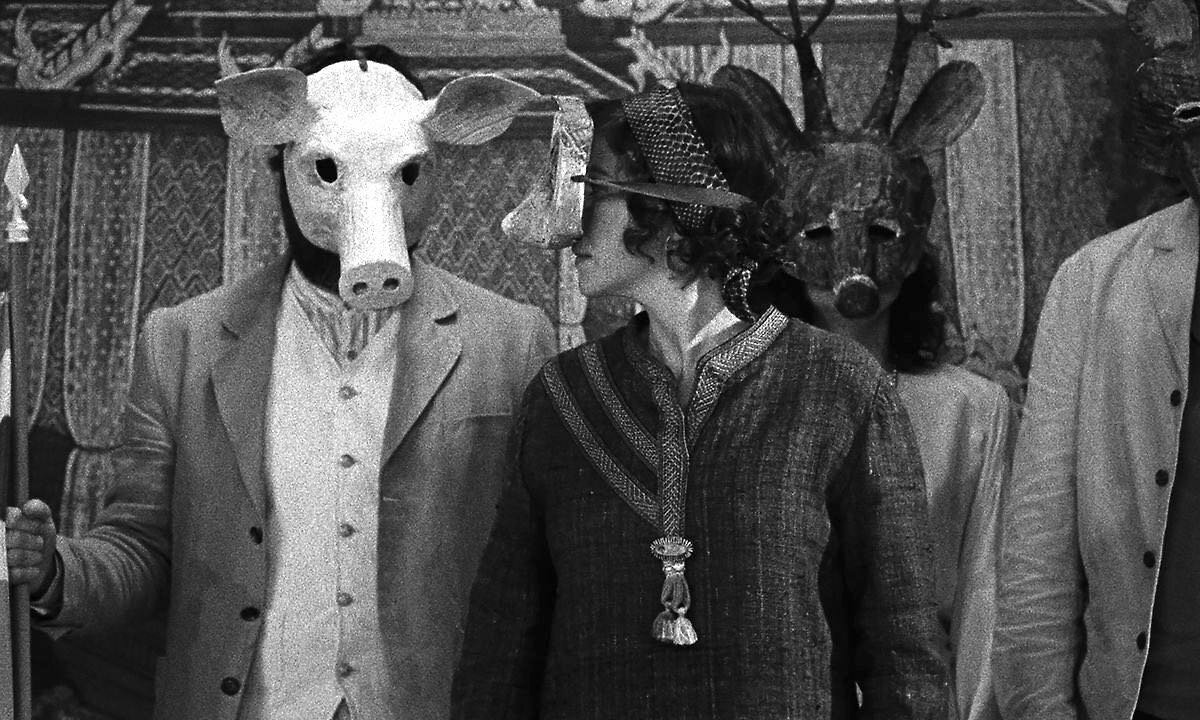
Grand Tour (Miguel Gomes, 2024).
- Paris, through March 21: The Palais de la Porte Dorée presents The History of French Cinema: Maghrebi Legacies, an exhibition dedicated to reframing French film through the lens of North African artists whose influence has radically shaped cultural history.
- Porto, Portugal, through May 30: The Casa do Cinema Manoel de Oliveira presents the first exhibition of Miguel Gomes’s work, bringing together all of his short films and excerpts from his features, alongside materials from their creation.
- New York, November 4 through 11: The Anthology Film Archives presents German Punk, a series that explores German punk culture on film from the 1970s through the ’90s, most of which are rarely screened in the United States. Some titles include Wolfgang Büld’s Bored Teenagers (1979), Thomas Schmitt’s Riots and Love (1981), and Peter Sempel’s Nina Hagen = Punk + Glory (1999).
- London, November 17: The Close-Up Film Centre presents Jenny Baines – Action Films, a program of the British artist’s 16mm work that features her performing a single action “in the time it takes for the clockwork mechanism of her 16mm camera to wind down and the film to run out.”
RECOMMENDED VIEWING
- Searchlight Pictures presents a trailer for Behemoth! (2026), Tony Gilroy’s character drama starring Pedro Pascal as a renowned cellist who returns to Los Angeles to record film scores.
- MUBI presents a trailer for Nuisance Bear (2026), a documentary about the relationship between polar bears and Inuit communities in Canada.
- MUBI also presents a trailer for A Long Winter (2026), Andrew Haigh’s 1950s Rockies-set family drama based on Colm Tóibín’s 2006 novella by the same name.
- Le Cinema Club presents Yasuzō Masumura’s erotic horror film Blind Beast (1969) about “a blind sculptor who kidnaps a model in hopes of turning her into his muse.”
RECENTLY ON NOTEBOOK

One Sings, the Other Doesn't (Agnès Varda, 1977).
- “Many Thai action sequences feel like a series of escalating self-dares: how can we take a Hong Kong-style stunt and make it more extreme, more challenging, more dangerous, more hard-hitting?” For The Action Scene column, Jonah Jeng unpacks the connections between Hong Kong action cinema and Thai martial arts movies, and how the cross-cultural exchange is helping shape the future of both genres.
- “What happens when a veteran director who helped shape postwar German-language cinema in the 1950s and ’60s decides to have one more go at it in his later years?” In the latest Multiplex column, Notebook asks filmmakers, programmers, and writers from around the globe to recommend a horror film from their own region, including Thailand, Pakistan, and Tunisia among others.
- “Tenderness may have been Agnès Varda’s primary subject, or a derivative of what now feels like her guiding principle: Be tender.” Sasha Frere-Jones writes about the tenderness animating the cinema of Agnès Varda in works like Cléo from 5 to 7 (1962), Le bonheur (1965), and One Sings, the Other Doesn’t (1977).
- “Neither of these two Nollywoods are failing on their own terms. They’re built for entirely different audiences, in a market that doesn’t yet have the screen infrastructure or cultural discourse to properly support both at once.” Damilola Dawson explores the current state of Nigerian cinema, which has been flourishing on the festival circuit but struggling with distribution and exhibition in its home country.
- “Iñárritu immerses us in not one but two fictional worlds that are both so cacophonous and off-putting all we long for is to get home and throw a nice bourgeois entertainment on the nearest streaming channel. There’s a difference between being high concept and being high on your own supply.” For his Current Debate column, Leonardo Goi examines the discourse around Alejandro G. Iñárritu’s Digger (2026), its disappointing box-office receipts, and the relative efficacy of its eco-horror message.
WISH LIST

Revolution+1 (Masao Adachi, 2022).
- Cinema + Revolution: The Life and Work of Masao Adachi, a full-length interview and career retrospective of Japanese New Wave filmmaker and leftist militant, is available to preorder from the MIT Press bookstore.
EXTRAS

The Little Irish Girl (Roy Del Ruth, 1926).
- A complete nitrate print of Roy Del Ruth’s The Little Irish Girl (1926) was recently discovered in a private home in Sydney Australia. The silent drama starring Dolores Costello was considered lost until just weeks ago, but now the print has been donated to the National Film and Sound Archive, who are working to preserve and restore the film.