Get in touch to send in cinephile news and discoveries. To keep up with our latest features, sign up for the Weekly Edit newsletter and follow us @mubinotebook on X and Instagram.
NEWS
 Tenet (Christopher Nolan, 2020).
- Robert Pattinson has been cast as the latest James Bond. He marks the eighth actor who has played the character onscreen, and he will bring him to life in the first Bond film produced by Amazon MGM, set to be directed by Denis Villeneuve.
- Palestinian surgeon Dr. Rizk Abu Shaaira, who was featured in Poh Si Teng’s American Doctor (2026), was killed in an Israeli air strike. The documentary, which premiered at this year’s Sundance Film Festival, chronicles three American physicians providing medical aid in Gaza. “This is yet another devastating example of the continued violence against Gaza’s medical community. Hospitals are places of healing, not targets of war,” said Hamza Ali, co-founder of Watermelon Pictures, the film’s North American distributor.
- London judge Joel Bennathan has sentenced English comedian Russell Brand to ten-and-a-half years in prison for rape and sexual assaults. Bennathan described Brand as a “sexual predator” who believed “fame meant you could act how you liked, when you liked, unhindered by the rules by which decent people live.”
- President Trump is reportedly working on bipartisan legislation to boost the US film industry by providing a twenty-percent tax incentive to production companies looking to shoot within the country. According to an MPA report, the program would double film and TV production in the US by 2032 and would create around 143,000 production jobs per year.
DEVELOPING
 Rumours (Guy Maddin, Evan Johnson, and Galen Johnson, 2024).
- Vietnamese filmmaker Trinh T. Minh-ha is set to finish her latest film The Undying Desert, her first about the United States, which will focus on interrogating people’s relationship with the Great Basin Desert.
- Guy Maddin and Evan and Galen Johnson are set to make their third feature The Confessions, described as “part religio-maritime rough-music psychomachy, part hallucinated saltwater shaming parade,” to be produced by Ari Aster and starring Alexander Skarsgård, Hunter Schafer, Maya Hawke, and Harry Melling.
REMEMBERING
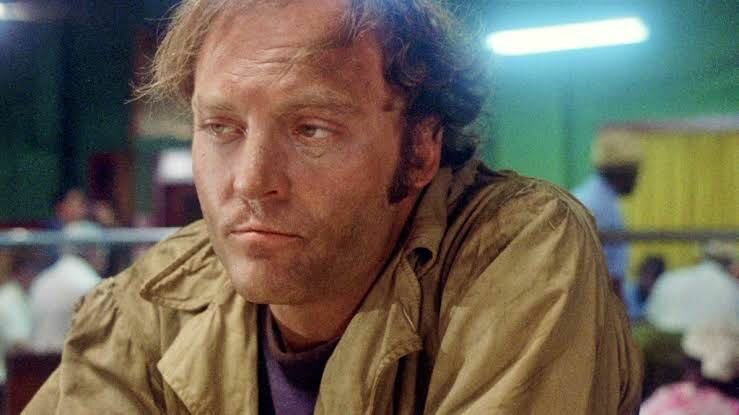 Fat City (John Huston, 1972).
- Stacy Keach has died at 85. Son of theater director Stacy Keach Sr., the American actor became an in-demand thespian not long after returning from studying at the London Academy of Music and Dramatic Art. He quickly established himself as a preeminent stage actor, regularly performing in Shakespearean productions well into the twenty-first century. His early film roles were in anarchic satires like End of the Road (1970) and Brewster McCloud (1970) and Westerns such as The Traveling Executioner (1970) and Doc (1971), in which he played the titular Doc Brown. Over the next decade, Keach starred in New Hollywood classics like Fat City (1972) and The Killer Inside Me (1976). In the 1980s, not long after starring in films like The Ninth Configuration (1980), The Long Riders (1981), and Roadgames (1981), Keach spent a stint in prison for the importation of cocaine, during which he discovered his love of Catholicism. Amidst his legal troubles, he arguably created the definitive onscreen Mike Hammer, Mickey Spillane’s signature detective character, across multiple TV films, the CBS drama series Mickey Spillane's Mike Hammer (1984–87), and the syndicated program Mike Hammer, Private Eye (1997–98). He also starred as the hard-bitten, hard-drinking lewd patriarch Ken Titus in the cult Fox sitcom Titus (2000–02). His final film role was in Noah Baumbach’s Jay Kelly (2025) as the eponymous character’s father; his earliest known film performance was as Death in Suppose, a 1964 Yale student film adapted from a poem by e e cummings, which is currently available to watch on the Yale Film Archive.
RECOMMENDED READING
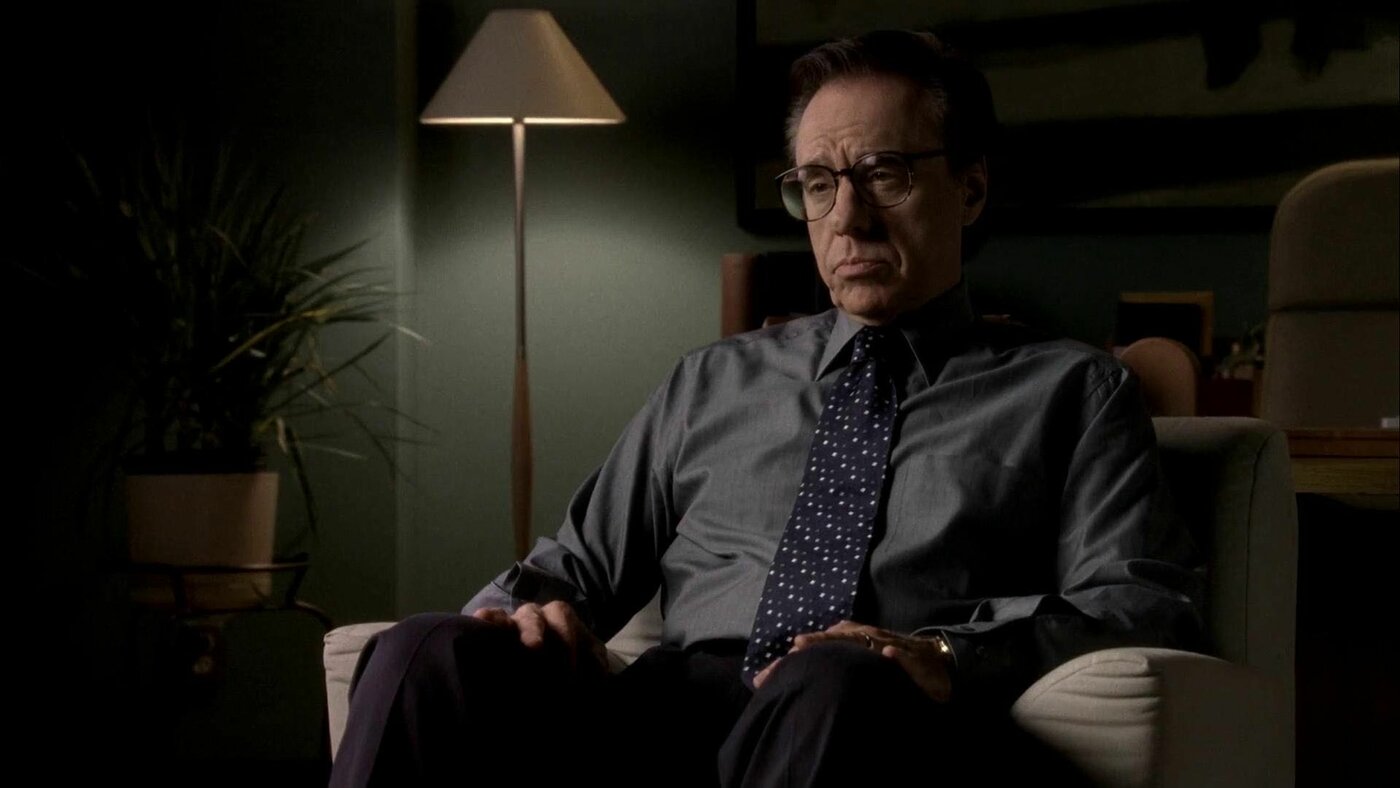 The Sopranos (1999–2007).
- “In interviews with dozens of theater managers, programmers, analysts and film buffs from New York to Cleveland, Milwaukee to Tulare, Calif., there is a growing understanding that although moviegoing in general still lags behind its pre-Covid heights, a new surge of young cineastes has arrived. They will pay extra for an IMAX viewing (more than once), drive hours for a 70mm screen and gladly log every notable film they’ve watched. As for why—well, there are many answers.” For the New York Times, Melena Ryzik reports on the rise of Zoomer cinephiles and how the under-30 sect have reenergized cinemagoing in the age of diminished attention spans.
- “In the early 1900s, it was theater owners like Adolph Zukor, William Fox, Carl Laemmle, and the Warner brothers—not technologists like Thomas Edison—who went on to lead Hollywood’s most successful studios. These men knew what audiences wanted to watch because they were most familiar with the habits of moviegoers. Now, at a time when Hollywood’s largest studios are more interested in consolidating their businesses than they are in figuring out how to make better movies, theater chains like Alamo Drafthouse and AMC are well-positioned to reclaim the advantage.” For Film Comment, Will Tavlin documents his experience watching Butthole Surfers: The Hole Truth and Nothing Butt (2025), the first film distributed by Alamo Exclusives, at the Drafthouse in Lower Manhattan.
- “Aside from a clutch of mildly diverting anecdotes, what one takes away from But What I Really Want to Do Is Direct is an abiding tone of concerted wholesomeness, of labored niceness, that is, alas, terribly American… None of this is necessarily dishonest—there is ample testimony to [Peter] Bogdanovich’s unfailing generosity when he was in the clover—but the project of its publication has the air of an attempt to set the record straight, to rehabilitate a public image that through the years had become tarnished.” For Bookforum, Nick Pinkerton reviews a collection of Peter Bogdanovich’s early journals, the limitations of being a perfunctory diarist, and the gauche impact of reputation laundering.
- “While [Tally] Brown alludes more than once to her various excesses—going days without sleep before the filming of Batman Dracula, ‘the continual enticements’ during her months in Vegas—she comes across in [Rosa von] Praunheim’s film as a sensible hedonist, one whose lust for life stopped short of an appetite for destruction. Or whose bad habits, at the very least, were tempered by more salutary tastes: filmed at a sidewalk café in Little Italy enjoying dessert, Brown holds a cigarette in one hand and a glass of milk in the other.” For the New York Review of Books, Melissa Anderson revisits the recently-restored Tally Brown, New York (1979) and how her presence exemplified pre-AIDS New York City.
- Subscribe to The Holdout, a new publication reporting on the independent film industry, whose thesis is “knowing more about what’s actually happening will create a more robust field and thus conditions for more artistically daring films.”
RECOMMENDED EVENTS
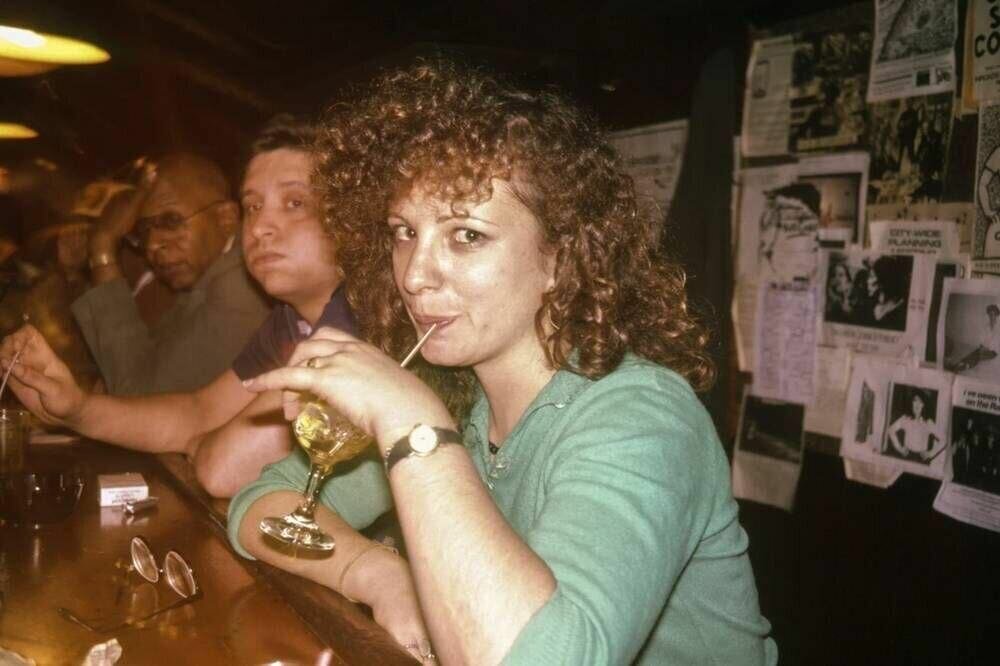 All the Beauty and the Bloodshed (Laura Poitras, 2024).
- New York, November 21 through March 28: The Whitney Museum of American Art presents artport: A History of Internet Art, a celebration of the 25th anniversary of the eponymous online gallery space, with the exhibition structured around the three main commissioning categories of the website.
- London, November 24 through March 14: The Southbank Centre presents Nan Goldin: You Never Did Anything Wrong, an exhibition of four of the American artist and activist’s recent films accompanied by images from her personal archive.
- London, November 28: Sonic Cinema, the Japan Foundation, and the Institute of Contemporary Arts presents three films by Montreal-based artist Daïchi Saïto, projected from his personal 35mm prints. Daïchi will be in person for a Q&A following the rare program.
- Karlsruhe, November 28 through May 30: The ZKM Center for Art and Media presents Hidden on Tape: Early Video Art in Europe, an exhibition that seeks to codify a history of mid-century European video art, presenting a selection of works from more than 26 countries.
RECOMMENDED VIEWING
- Bleecker Street presents a trailer for Mike Leigh’s final film Tender Loving Care (2026), about a child protection worker contending with post-breakup life and her father’s incipient dementia.
- Cinema Guild presents a trailer for Hong Sang-soo’s 34th feature The Day She Returns (2026), which will open in US theaters paired with the South Korean director’s similarly-titled film The Day He Arrives (2011).
- Don Hertzfelt presents his latest short Paper Trail (2026), which won the Special Jury Prize for Creative Vision at this year’s Sundance Film Festival.
- Yanco, an online magazine and streaming library, presents Trick Shots, a skate film collection curated by Emma Daelman and Niels Putman that “highlights various aspects of both the sport itself and the visual culture that emerged around it from the very beginning.”
RECENTLY ON NOTEBOOK
 Possible Love (Lee Chang-dong, 2026).
- “There are summers when Mexico City belongs to cinema. This was not one of them—it belonged to football.” In the first edition of Scene Report, a series that explores a city’s moviegoing culture over a month, Pedro Emilio Segura Bernal examines Mexico City’s varied programming across multiple institutions during World Cup fever.
- “I think love has to be possible. Without that possibility, there is not much left for human beings. No matter how much our lives change or how damaged our relationships become, love is the only thing that can reconcile us.” Lukasz Mankowski interviews Lee Chang-dong about his latest film Possible Love (2026), his relationship to the invisible, and the connection between Polish and Korean cinema.
- “[Richard] Talmadge was very protective of his professional image, and sued Popular Mechanics magazine in 1926 for $500,000 when it wrote that he used dummies for some of his stunt falls (I cannot find a report on the suit’s resolution). Much like how [Tom] Cruise has built up a promise of realism around the Mission: Impossible franchise, Talmadge highlighted the danger of his very real stunts, posing with a broken neck in Pictures and Picturegoer.” R. Emmet Sweeney explores the elusive life and illustrious career of early movie stuntman Richard Talmadge and how he provided a foundation for action authenticity.
- “Just as Wes Craven’s Scream (1996) prompts the dialectically inclined to correctly wonder if what they’re watching is a horror movie or a movie about horror movies, [Jon] Rafman’s recent slew of AI-generated work has, rightly, given many viewers pause to ask themselves: Am I watching AI slop dressed up as a film, or a film about AI slop?” John Christopher Vaughan reports on Jon Rafman’s latest video work and its commentary on technology’s psychic cultural manipulation.
- “The stories that are told well and told often create this imaginary South in the minds of its Southerners, and, importantly, in the minds of everyone else. In the twentieth century, there was no bigger storyteller than Hollywood.” Z.W. Lewis delves deep into the history of Hollywood’s conception of the American South and how it made a tangible image-making impact across the region.
WISH LIST
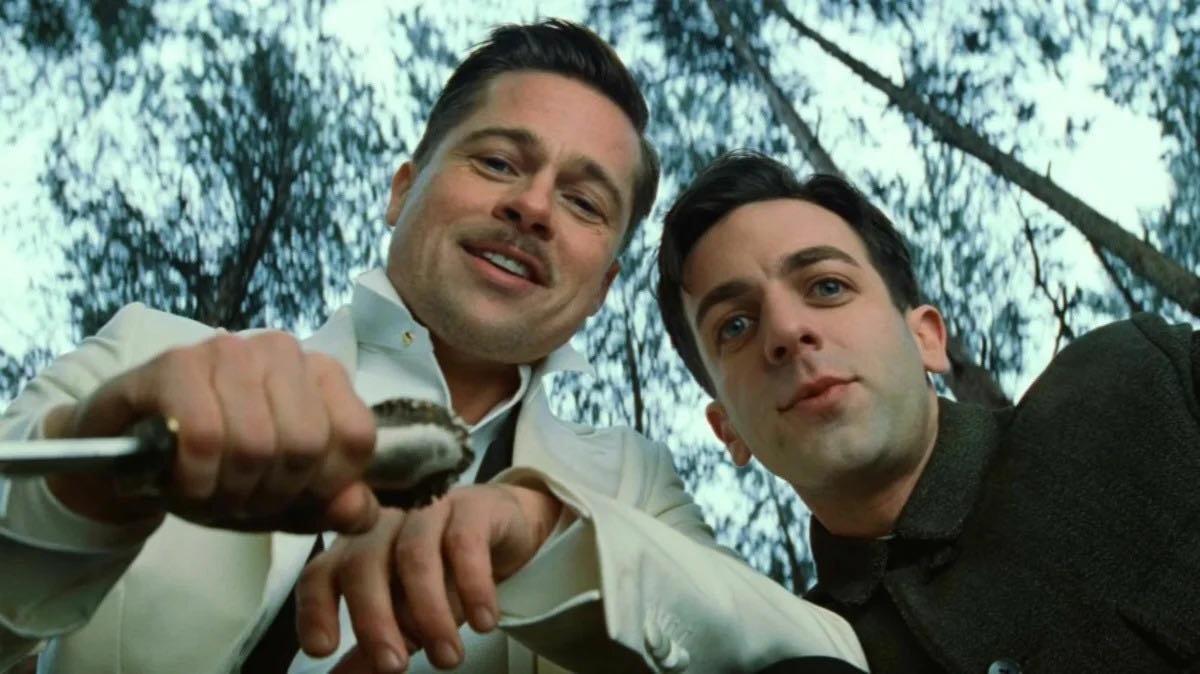 Inglourious Basterds (Quentin Tarantino, 2009).
- The Making of Quentin Tarantino’s Inglourious Basterds, Jay Glennie’s definitive behind-the-scenes examination of the filmmaker’s seventh feature, and the author’s follow-up to his Making of Quentin Tarantino’s Once Upon a Time in Hollywood, is available to purchase from Simon & Schuster.
EXTRAS
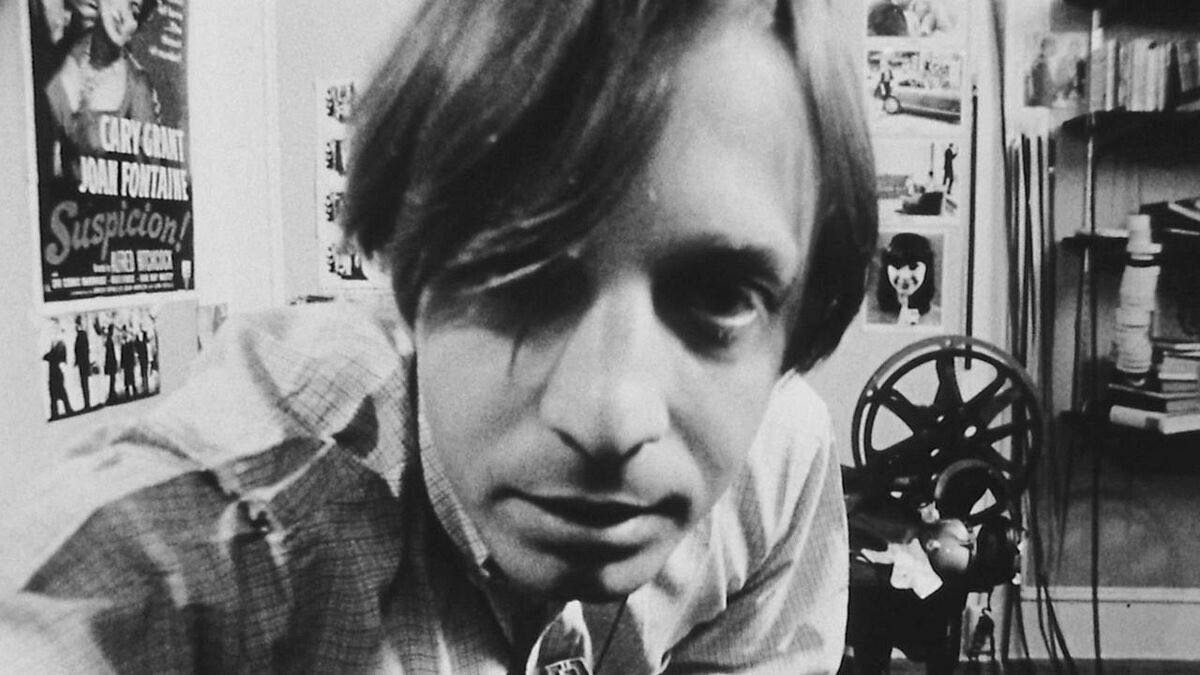 David Holzman's Diary (James McBride, 1967).
- Josh Safdie has crafted a silkscreen of 115 of his favorite New York movies, including titles such as Side Street (1949), David Holzman’s Diary (1967), and Paid in Full (2002). He is selling a limited edition of 50 prints, priced at $6,500 each, with all proceeds going to the IFPDA Foundation.